
Calculating Baking Times for Multiple Thanksgiving Pies Like a Pro

Welcome to BakeWithEase.com, your haven for all things baking!
Ever wondered how to orchestrate the perfect Thanksgiving pie bake, ensuring each slice is golden and delicious? This article dives deep into the art of Thanksgiving pie baking times, offering a strategic approach to managing multiple pies simultaneously. Discover the secrets to perfectly timed pies and unlock the confidence to conquer your holiday baking with ease!
- Bake Thanksgiving Pies Efficiently: Mastering Baking Times
- Understanding Thanksgiving Pie Baking Time Fundamentals
- Calculating Baking Times for Multiple Pies: The Pro Approach
- Thanksgiving Pie Baking Time Guide: By Pie Type
- Troubleshooting Thanksgiving Pie Baking Time Issues
- Tips for Accurate Thanksgiving Pie Baking Times
- Thanksgiving Pie Baking Time Chart: Quick Reference
- Final Thoughts: Perfecting Your Thanksgiving Pie Baking Strategy
-
Frequently Asked Questions
- What is the most crucial factor to consider when adjusting baking times for multiple Thanksgiving pies?
- Should I adjust the oven temperature when baking multiple pies at once?
- How do I prevent the bottom crust of my pies from becoming soggy when baking multiple pies?
- What is the best way to determine if my pies are done when baking multiple pies simultaneously?
- How much should I increase the baking time when baking multiple pies at the same time?
- Final Reflection: Mastering the Thanksgiving Pie Bake-Off
- Conquer Your Thanksgiving Pie Lineup!
Bake Thanksgiving Pies Efficiently: Mastering Baking Times
Thanksgiving dinner often revolves around the star dessert: pie! But when you're tasked with baking not just one, but several pies for your feast, calculating the right Thanksgiving pie baking times can feel daunting. Juggling different types of pies, various pan sizes, and a single oven requires a strategy. Mastering the art of baking multiple pies simultaneously or sequentially is key to ensuring every crust is golden, and every filling is perfectly set. This guide will walk you through the fundamentals and advanced techniques to make your Thanksgiving pie baking times manageable and your results spectacular.
Getting your Thanksgiving pie baking times right is crucial for a stress-free holiday. Imagine pulling out perfectly baked pies, each one ready to be enjoyed by your guests. This level of precision comes from understanding the variables involved and planning your baking schedule effectively. Whether you're making a classic pumpkin pie, a gooey pecan, or a fruity apple, knowing how to manage their specific needs within the confines of your oven is an invaluable skill for any holiday baker aiming for efficiency and deliciousness.
Understanding Thanksgiving Pie Baking Time Fundamentals
Factors Affecting Pie Baking Times
Several variables significantly influence the total Thanksgiving pie baking times. The type of filling is paramount; wet fillings like pumpkin or sweet potato require longer, gentler baking to set compared to fruit fillings which need time for the fruit to soften and juices to thicken. The size and depth of your pie pan also play a critical role.
A standard 9-inch pie dish is common, but using a deeper dish means the filling is thicker and will take longer to reach the correct internal temperature and set properly. For instance, a deep-dish apple pie might need 60-75 minutes at 375°F, while a standard 9-inch pumpkin pie typically bakes for 45-55 minutes total (including an initial high-heat period).
The material of your pie pan also impacts baking times and crust quality. Glass pans conduct heat slowly and evenly, often resulting in a beautifully browned bottom crust, though they might add a few minutes to the overall Thanksgiving pie baking times compared to metal. Metal pans heat up quickly and are excellent for crisping the bottom crust, while ceramic pans behave similarly to glass but can take slightly longer to heat through. Understanding these nuances helps you anticipate adjustments needed when calculating your pie baking times, especially when using a mix of pan types.
The Importance of Oven Temperature for Pies
Accurate oven temperature is arguably the most critical factor in achieving perfect Thanksgiving pie baking times. An oven that runs too hot can lead to burnt crusts and unset fillings, while one that's too cool will result in soggy bottoms and undercooked interiors.
Most custard pies, like pumpkin and pecan, benefit from starting at a higher temperature, such as 400-425°F, for the first 15 minutes to help set the crust edges quickly, then reducing the temperature to 350-375°F for the remainder of the baking time. This two-stage approach helps manage Thanksgiving pie baking times effectively, ensuring both crust and filling cook correctly.
Using an oven thermometer is highly recommended to verify your oven's actual temperature. Ovens can be off by as much as 25-50°F from the set temperature. Knowing the true temperature allows you to make necessary adjustments. For example, if your oven runs 25°F cool, you might need to increase the set temperature slightly or add a few minutes to the estimated Thanksgiving pie baking times. Consistent temperature is key to consistent results, particularly when baking multiple pies simultaneously, as each one relies on the oven's environment performing as expected.
Pie Crust Baking Time: Blind Baking vs. Filled Pies
The baking time for pie crust depends heavily on whether you are blind baking it (pre-baking without filling) or baking it with the filling already added. Blind baking is often required for pies with very wet fillings or fillings that don't require baking, like cream pies, to prevent a soggy bottom crust.
A typical blind bake involves lining the pie crust with parchment paper, filling it with pie weights or dried beans, and baking at 375-400°F for 15-20 minutes until the edges are set. The weights are then removed, and the crust is baked for another 5-10 minutes until the bottom is lightly golden.
When baking the crust with the filling, the crust's cooking time is integrated into the overall Thanksgiving pie baking time for the entire pie. The edges of the crust will brown much faster than the center of the filling sets, especially with longer baking times. This is why techniques like tenting the edges with foil are essential.
The total time for a filled pie can range from 45 minutes to over an hour, depending on the filling and temperature. The crust edges should be golden brown and the bottom crust cooked through by the time the filling is done, which is a key consideration when calculating Thanksgiving pie baking times for different recipes.
Calculating Baking Times for Multiple Pies: The Pro Approach
Planning Your Thanksgiving Pie Baking Schedule
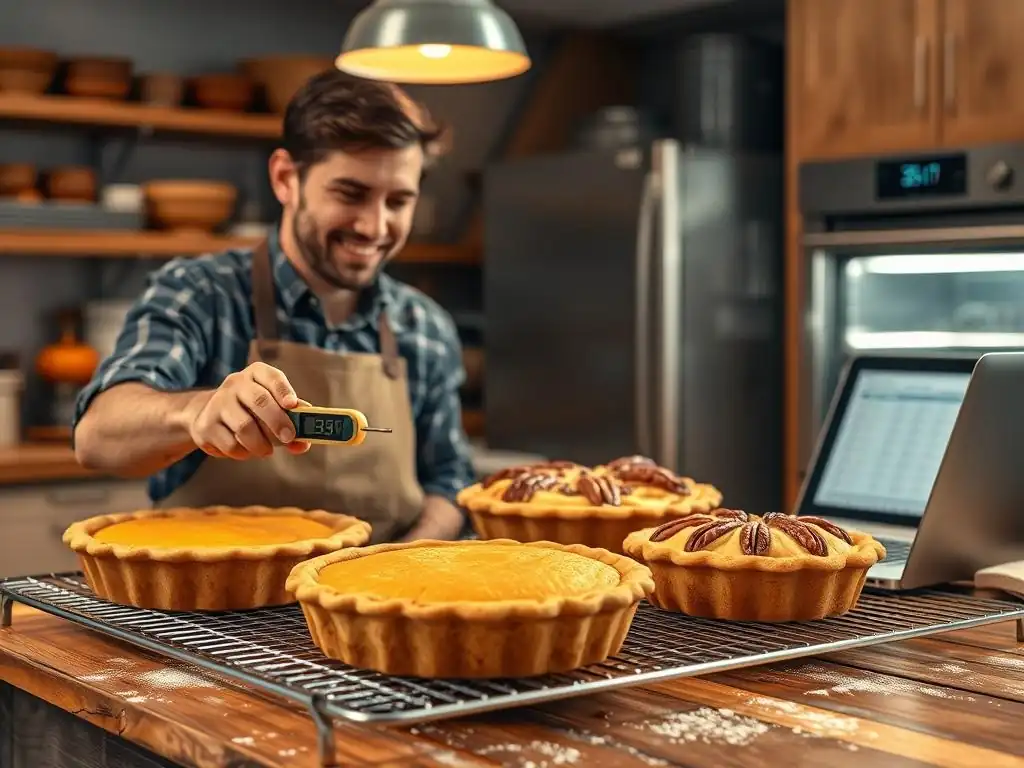
Effective planning is the cornerstone of successful Thanksgiving pie baking times when tackling multiple pies. Start by listing all the pies you plan to bake and note their typical baking times and temperatures.
- [ ] List all pies and recipes.
- [ ] Identify required baking temperatures for each.
- [ ] Note estimated baking times for each.
- [ ] Determine if any pies require blind baking.
- [ ] Check if any pies can share an oven temperature.
- [ ] Estimate total oven time needed.
- [ ] Schedule baking slots, considering cooling times.
Consider which pies can bake at the same temperature. For example, many fruit pies bake well around 375°F, while pumpkin and pecan pies often finish at 350°F after an initial higher heat. If you have two pies that bake at the same temperature, they can likely go in the oven together, potentially doubling your output in one oven cycle. However, remember that baking multiple items can slightly increase the overall baking time due to the oven needing to reheat after opening and the increased thermal mass inside. Factor in an extra 5-10 minutes per pie when baking multiples.
Optimizing Oven Space for Multiple Pies
To optimize Thanksgiving pie baking times when baking multiple pies, proper oven placement is crucial. Avoid overcrowding the oven, as this restricts air circulation, leading to uneven baking and potentially longer times. Ideally, pies should be placed on racks with adequate space between them and the oven walls. If baking two pies, place them on separate racks, ensuring neither is directly above or below the other to allow heat to circulate freely. Staggering them side-by-side on two different racks works well in most standard ovens.
If you must bake three or four pies at once, especially if they require the same temperature, you might need to utilize multiple racks. Place pies on the upper and lower-middle racks, ensuring they are not touching. During the baking process, particularly for longer bakes exceeding 45 minutes, rotate the pies and switch their rack positions halfway through. This helps compensate for any hot or cool spots in your oven and promotes even browning, ensuring all your Thanksgiving pie baking times align for perfectly cooked results across the board.
Staggering Baking Times for Different Pie Types
When your selection includes pies with significantly different temperature or time requirements, staggering their baking becomes necessary to manage Thanksgiving pie baking times effectively. For instance, a pumpkin pie might start at 425°F for 15 minutes and then drop to 350°F, while an apple pie bakes steadily at 375°F for over an hour. You can't bake these simultaneously at their optimal temperatures.
Plan to bake pies that require the same temperature together. Then, adjust the oven temperature for the next batch. A common strategy is to bake pies requiring the highest temperature first, then lower the temperature for subsequent batches. Alternatively, bake pies that can finish at a lower temperature together after the initial high-heat phase for other pies is complete. This methodical approach minimizes oven temperature adjustments and helps you accurately predict the total Thanksgiving pie baking times needed for your entire pie lineup.
Thanksgiving Pie Baking Time Guide: By Pie Type
Pumpkin Pie Baking Time: Achieving the Perfect Set
Pumpkin pie requires careful management of Thanksgiving pie baking times to achieve that classic creamy, yet firm, texture without cracking. A standard 9-inch pumpkin pie typically bakes at 425°F for the first 15 minutes, then the temperature is reduced to 350°F for an additional 35-45 minutes. The initial high heat helps the crust set quickly, while the lower temperature allows the custard filling to cook gently. Doneness is usually indicated when the edges are set, but the center still jiggles slightly, like gelatin. The internal temperature should register around 175°F at the center.
If baking multiple pumpkin pies, place them on different racks and ensure good air circulation. You may need to add 5-10 minutes to the total baking time compared to baking a single pie. Tenting the crust edges with foil early on is essential to prevent burning during the relatively long bake time. The pie will continue to set as it cools, so don't overbake it thinking the center must be completely firm in the oven.
Pecan Pie Baking Time: Preventing Over-Browning
Pecan pie fillings, rich with sugar and eggs, can easily over-brown or become tough if baked incorrectly. The typical Thanksgiving pie baking time for a pecan pie is around 45-60 minutes at 350-375°F. The key is to bake it long enough for the filling to set around the edges and be slightly jiggly in the center, but not so long that the nuts or crust burn. The internal temperature should reach about 200-205°F in the center.
To prevent the top from over-browning, especially the pecan topping, you might need to tent the entire pie loosely with foil for the last 15-20 minutes of baking. If baking multiple pecan pies, place them on separate racks and rotate them halfway through the estimated Thanksgiving pie baking times. Keep a close eye on the edges of the crust, tenting them with foil strips as soon as they reach a golden brown to avoid burning before the filling is fully set.
Apple Pie Baking Time: Ensuring Tender Apples
Apple pie Thanksgiving pie baking times are primarily dictated by how long it takes for the apples to soften and the juices to thicken, which can vary based on the apple type and how thinly they are sliced. A typical double-crust apple pie bakes at 375-400°F for 50-70 minutes. You'll know it's done when the crust is golden brown and you can see the filling bubbling through the vents or cracks in the top crust. To check the apples' tenderness without cutting, gently insert a sharp knife through a vent; it should slide in easily.
Baking multiple apple pies might add 5-15 minutes to the total time. If the top crust starts browning too quickly before the apples are tender, loosely tent the entire pie with foil. Some recipes recommend starting at a higher temperature (e.g., 425°F for 15-20 min) to set the bottom crust and then reducing the heat, which is a good strategy for managing Thanksgiving pie baking times and ensuring a crisp bottom.
Sweet Potato Pie Baking Time: A Creamy Delight
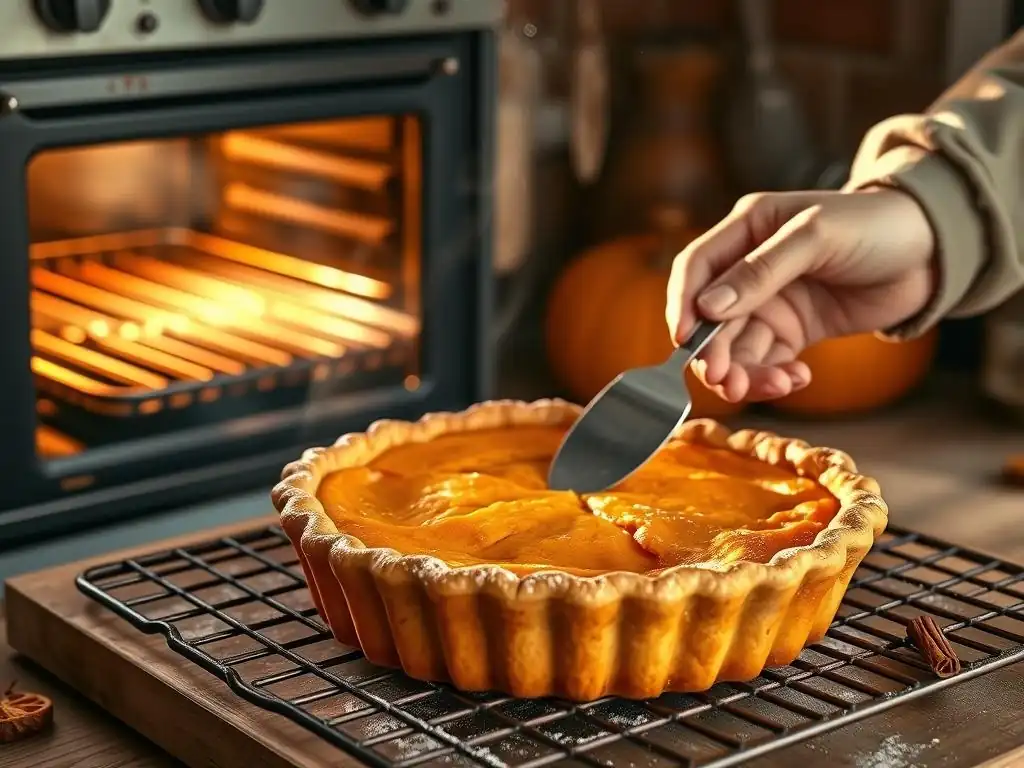
Sweet potato pie is similar to pumpkin pie in its custard base but often requires slightly different Thanksgiving pie baking times due to the density of the sweet potato puree. A standard 9-inch sweet potato pie typically bakes at 400°F for the first 15 minutes, then reduced to 350°F for an additional 30-45 minutes. Like pumpkin pie, the center should be slightly jiggly when done, and the edges set. The internal temperature should be around 175°F.
Ensure your sweet potato puree is smooth and lump-free for even baking. When baking multiple sweet potato pies, follow the same guidelines as for pumpkin pies: use separate racks, rotate, and add a few minutes to the estimated Thanksgiving pie baking times if necessary. Tenting the crust edges with foil is also crucial to prevent them from burning before the filling is cooked through.
Cherry Pie Baking Time: Achieving a Bubbling Filling
Cherry pie Thanksgiving pie baking times are centered around getting the filling to bubble and thicken properly while ensuring the crust is perfectly golden. A standard 9-inch cherry pie, typically double-crusted, bakes at 375-400°F for 50-60 minutes. You need to see the filling bubbling vigorously in the center, not just around the edges, to know the starches have thickened the filling.
If the crust is browning too quickly, tent the entire pie with foil for the remaining time. Baking multiple cherry pies together might slightly extend the baking time. Ensure there is enough space around each pie for hot air to circulate freely, promoting even cooking of both the crust and the filling. Seeing that robust bubbling is the key visual cue that the cherry pie baking time is complete.
Troubleshooting Thanksgiving Pie Baking Time Issues
Pie Crust Burning Before Filling is Cooked
This is a common issue when Thanksgiving pie baking times are long, especially with fruit or custard pies. The delicate edges of the crust brown much faster than the dense filling cooks.
- Solution: Use foil strips or a pie crust shield to protect the edges. Apply these as soon as the crust edges reach your desired golden brown color, usually about 15-20 minutes into the baking process. Simply mold strips of aluminum foil around the edges of the pie or use a reusable silicone shield.
Using foil or a shield effectively manages the crust's exposure to heat, allowing the filling to catch up. This simple step is vital for achieving perfect Thanksgiving pie baking times without sacrificing the crust. Remember to check under the foil occasionally to ensure the edges aren't steaming or browning too slowly after being covered.
Filling Not Setting Properly
An unset filling means the pie hasn't baked long enough or the oven temperature wasn't correct. This is particularly common with custard pies like pumpkin, pecan, or sweet potato.
- Solution: Continue baking the pie. If the crust edges are already golden, tent the entire pie loosely with foil to prevent further browning. Check for doneness more frequently, perhaps every 5-10 minutes. For custard pies, use an instant-read thermometer; it should read around 175°F for pumpkin/sweet potato or 200-205°F for pecan. For fruit pies, look for robust bubbling across the entire surface, not just the edges.
If the filling is still very liquid after significant extra baking time, your oven temperature might be too low, or your recipe proportions might be off. Ensure your oven thermometer is accurate. For fruit pies, ensure you used a thickener (like flour, cornstarch, or tapioca) in the correct amount. Proper Thanksgiving pie baking times depend on accurate temperature and sufficient duration.
Uneven Baking in Multiple Pies
Baking multiple pies at once can sometimes lead to one pie baking faster or browning more on one side than another. This is often due to hot spots in the oven or poor air circulation.
- Solution: Rotate the pies halfway through the estimated Thanksgiving pie baking times. If you have pies on different racks, switch their positions as well. For example, move the pie from the top rack to the bottom rack and the pie from the bottom rack to the top rack.
Rotating and switching racks helps expose each pie equally to the oven's heat. This simple step significantly improves the consistency of your Thanksgiving pie baking times across multiple pies, ensuring each one bakes evenly from edge to center and top to bottom.
Tips for Accurate Thanksgiving Pie Baking Times
Use an Oven Thermometer
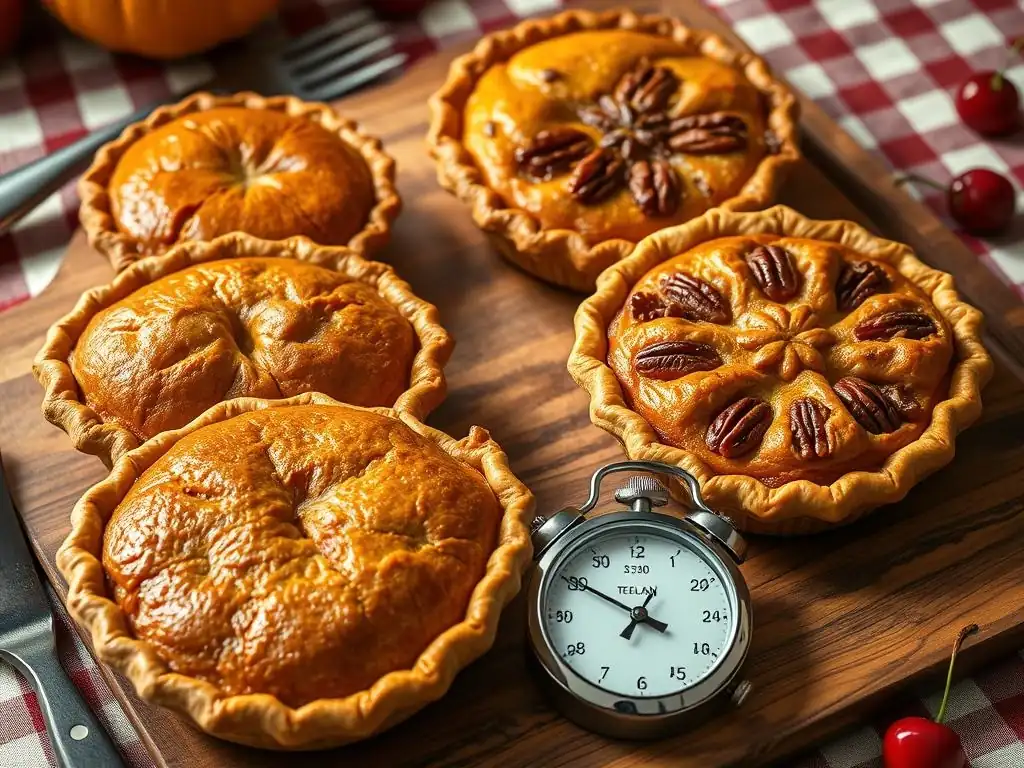
As mentioned earlier, oven thermometers are inexpensive tools that provide invaluable accuracy. They show you the true temperature inside your oven, which can differ significantly from the dial setting.
An oven thermometer is your best friend for consistent baking results, especially when calculating Thanksgiving pie baking times for multiple pies. Knowing the real temperature allows you to adjust your strategy if your oven runs hot or cool.
Place the thermometer near the center of the oven on the main rack you'll be using. Check it after the oven has preheated for at least 15-20 minutes. If the temperature is consistently off, you can adjust your oven setting accordingly (e.g., if it reads 325°F when set to 350°F, set it to 375°F for future bakes). This accuracy is fundamental to predicting and managing Thanksgiving pie baking times.
Rotate Pies During Baking
Rotating pies is a simple yet effective technique to combat uneven oven heat and ensure consistent browning and cooking. For pies with longer Thanksgiving pie baking times (over 40-45 minutes), plan to rotate them 180 degrees halfway through the expected baking duration.
If baking multiple pies on different racks, rotate each pie and swap their rack positions simultaneously. This exposes all sides of each pie to different areas of the oven, minimizing the impact of hot spots and ensuring each pie receives similar heat distribution throughout its Thanksgiving pie baking time.
Tent Pies with Foil to Prevent Over-Browning
Protecting the delicate pie crust edges from burning is crucial, especially for pies with long Thanksgiving pie baking times like fruit or custard pies. Once the crust edges are a beautiful golden brown (usually within the first 15-25 minutes), cover them with strips of aluminum foil or a reusable pie crust shield.
For fillings that brown too quickly (like the pecan topping), you may need to loosely tent the entire pie with foil for the last portion of the baking time. This allows the filling to finish setting without the top becoming too dark. Mastering when and how to tent is key to achieving perfect Thanksgiving pie baking times.
Check for Doneness Using Visual Cues and Temperature
Relying solely on the recipe's estimated Thanksgiving pie baking time can be risky, as oven variations and ingredient temperatures can affect the actual time needed. Always use visual cues and, ideally, an internal thermometer to confirm doneness.
- Custard Pies: Edges should be set, center slightly jiggly. Internal temperature ~175°F (pumpkin/sweet potato) or ~200-205°F (pecan).
- Fruit Pies: Filling should be bubbling vigorously across the entire surface, not just the edges. Crust should be golden brown.
Using a combination of time, visual cues, and temperature provides the most accurate way to determine when your pies have reached their perfect Thanksgiving pie baking times. Don't be afraid to bake a little longer if needed, using tenting to prevent burning.
Thanksgiving Pie Baking Time Chart: Quick Reference
Here's a quick reference guide for common Thanksgiving pie baking times and temperatures. Remember these are estimates and may need adjustment based on your oven, pan, and specific recipe.
| Pie Type          | Temp Stage 1        | Time Stage 1 | Temp Stage 2        | Time Stage 2   | Total Time (Approx.) | Doneness Cues                                 |
| :---------------- | :------------------ | :----------- | :------------------ | :------------- | :------------------- | :-------------------------------------------- |
| Pumpkin           | 425°F (optional)    | 15 min       | 350-375°F           | 35-45 min      | 50-60 min            | Edges set, center slightly jiggly (~175°F)  |
| Pecan             | 350-375°F           | -            | 350-375°F           | 45-60 min      | 45-60 min            | Edges set, center slightly jiggly (~200-205°F)|
| Apple (Double)    | 375-400°F           | -            | 375-400°F           | 50-70 min      | 50-70 min            | Crust golden, filling bubbling vigorously     |
| Sweet Potato      | 400°F (optional)    | 15 min       | 350°F               | 30-45 min      | 45-60 min            | Edges set, center slightly jiggly (~175°F)  |
| Cherry (Double)   | 375-400°F           | -            | 375-400°F           | 50-60 min      | 50-60 min            | Crust golden, filling bubbling vigorously     |
Note: Times are for standard 9-inch pies. Deep-dish pies may require longer Thanksgiving pie baking times.
Final Thoughts: Perfecting Your Thanksgiving Pie Baking Strategy
Calculating Thanksgiving pie baking times for multiple pies doesn't have to be a source of holiday stress. By understanding the factors that influence baking, planning your approach, optimizing your oven space, and using tools like oven thermometers and foil, you can confidently bake a variety of pies to perfection. Remember to check for doneness using visual cues and temperature, rather than strictly relying on the clock.
With practice and a solid strategy for managing Thanksgiving pie baking times, you'll be able to produce a beautiful array of pies, each one a testament to your baking skill, ready to be the crowning glory of your Thanksgiving feast. Happy baking!
Frequently Asked Questions
What is the most crucial factor to consider when adjusting baking times for multiple Thanksgiving pies?
The most crucial factor is oven crowding. A full oven can significantly lower the temperature, requiring you to increase baking time to ensure the pies are fully cooked.
Should I adjust the oven temperature when baking multiple pies at once?
It's generally not recommended to drastically adjust the oven temperature. Instead, monitor the pies closely and add baking time as needed if they are browning too quickly or not cooking through.
How do I prevent the bottom crust of my pies from becoming soggy when baking multiple pies?
Blind baking the crust partially before adding the filling can help. Also, ensure the oven is properly preheated and consider using a baking stone to distribute heat evenly.
What is the best way to determine if my pies are done when baking multiple pies simultaneously?
Check for internal temperature using a food thermometer (around 190-200°F for most fruit pies), a golden-brown crust, and a filling that is set but still slightly jiggly.
How much should I increase the baking time when baking multiple pies at the same time?
There's no fixed rule, but start by adding about 10-15 minutes to the recommended baking time and then check for doneness frequently. The amount of time will vary depending on your oven and the types of pies.
Final Reflection: Mastering the Thanksgiving Pie Bake-Off
The art of perfectly timed Thanksgiving pies isn't just about avoiding a soggy bottom; it's about orchestrating a culinary symphony of flavors and textures, ensuring every pie takes center stage on your holiday table. This year, more than ever, with families gathering and traditions renewed, the pressure to deliver flawless pies is higher than ever. Mastering the timing, as detailed in this guide, is key to achieving that coveted Thanksgiving perfection.
The pursuit of the ideal pie baking schedule has always been a fascinating blend of science and intuition. It's a testament to the enduring power of tradition, the joy of shared meals, and the simple pleasure of a perfectly baked pie. The pressure to get it right, the anticipation of the feast, and the satisfaction of a job well done – these are the elements that make Thanksgiving baking so uniquely rewarding. The best things in life are homemade.
This sentiment, often applied to pies, speaks to the heart of the matter: it's not just about the recipe, but the care and precision poured into the process.
This Thanksgiving, as you embark on your pie-baking journey, remember the strategies outlined here. Don't be afraid to experiment, to adjust the timings based on your oven and your pies' unique characteristics. Embrace the challenge, and let the aroma of baking pies fill your home with the warmth and joy of the season. The perfect pie isn't just a delicious dessert; it's a symbol of love, care, and the culmination of a year's worth of anticipation. Let your pies be a testament to your skill and a source of happiness for all who share in your Thanksgiving feast.
Conquer Your Thanksgiving Pie Lineup!
Thanks for spending some time with us and learning how to perfectly time your Thanksgiving pie baking! We hope you feel more confident tackling that delicious pie lineup this year. Now, let's put that knowledge into action:
- Master your pie timing: Download our free Thanksgiving Pie Baking Schedule template (link to a downloadable pdf on bakewithease.com) to plan your baking strategy and avoid the last-minute kitchen chaos. This is the key to perfectly timed pies.
- Share your pie-baking prowess: Show off your perfectly baked pies and tag us on social media using #BakeWithEaseThanksgiving! We'd love to see your creations.
- Experiment with flavors: Try out a new pie recipe this year, using the time-management techniques you learned today! Let us know in the comments which unexpected flavor combinations you want to try.
What innovative pie flavor will you be adding to your Thanksgiving table this year?