
How to Ensure Consistency in Large Baking Batches

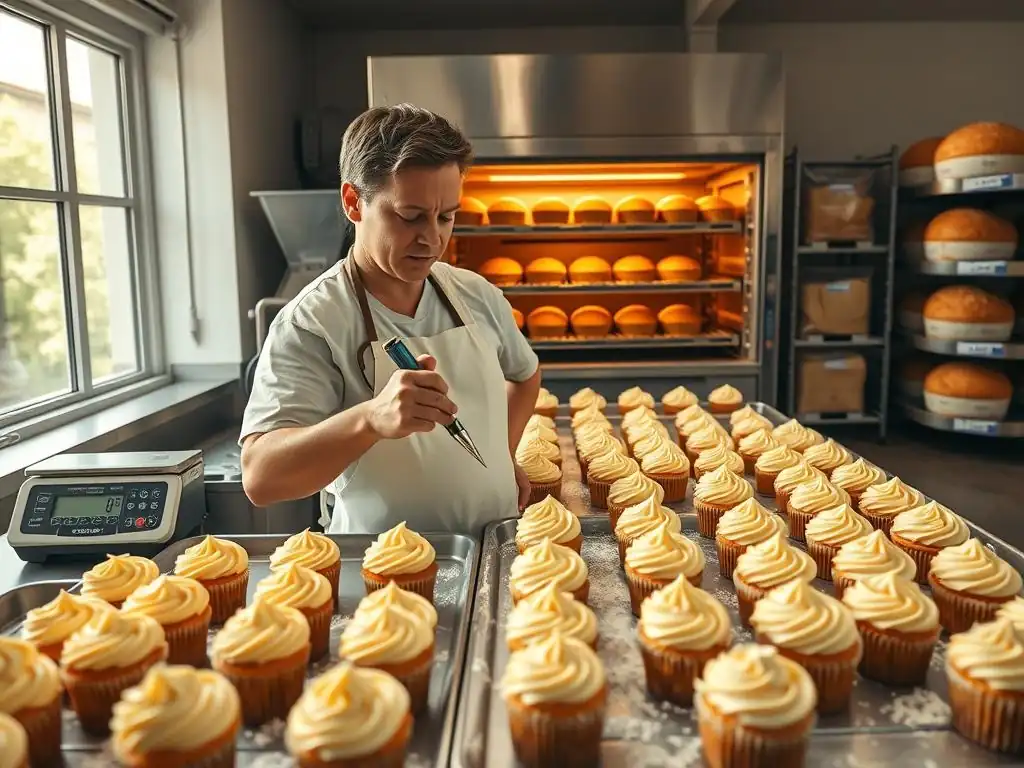
Welcome to BakeWithEase, your haven for baking brilliance! Ever wrestled with inconsistent results when scaling up your favorite recipes? This guide dives deep into the secrets of consistent large batch baking, unlocking techniques to ensure every cookie, cake, and pastry emerges perfectly, no matter the quantity. Curious how to achieve uniform deliciousness for your next big event? Let's get baking!
- How to Ensure Consistency in Large Baking Batches: Bake with Ease
- Introduction to Consistent Large Batch Baking
- Planning for Successful Large Batch Baking
- Mastering Baking Techniques for Large Quantities
- Equipment and Tools for Large Batch Baking
- Key Factors Affecting Consistency in Baking
- Troubleshooting Common Large Batch Baking Issues
- Storage and Handling of Large Baking Batches
- Advanced Techniques for Achieving Baking Consistency
- Conclusion: Achieving Consistent Large Batch Baking with BakeWithEase
-
Frequently Asked Questions
- How can I ensure all my baked goods cook evenly in a large batch?
- What's the best way to scale a small recipe for a large batch without compromising quality?
- How important is measuring ingredients accurately when baking large batches?
- What are some common problems encountered when baking large batches, and how can I avoid them?
- How can I efficiently cool large batches of baked goods?
- Final Reflection: The Sweet Science of Consistent Baking
- Unlock Your Baking Consistency!
How to Ensure Consistency in Large Baking Batches: Bake with Ease
Introduction to Consistent Large Batch Baking
Why Consistency Matters in Large Baking
Achieving consistent results is paramount when undertaking large batch baking. Whether you're preparing treats for a school bake sale, a family reunion, or simply stocking up your freezer, ensuring every cookie tastes the same, every loaf of bread has the same texture, and every cake rises evenly is the mark of a skilled baker. Inconsistent results can lead to wasted ingredients, unhappy recipients, and frustration.
For those aiming for consistent large batch baking, understanding the subtle nuances that change when scaling up is the first step towards success. It's not just about multiplying ingredients; it's about maintaining quality and predictability across dozens or even hundreds of items.
For businesses or serious home bakers, consistency is directly linked to reputation and satisfaction. Imagine selling 50 loaves of sourdough where half are perfectly airy and the other half are dense – that inconsistency can significantly impact feedback. On BakeWithEase.com, we emphasize that mastering consistent large batch baking builds confidence and allows you to scale your passion or business effectively. It means being able to reliably produce the same delicious outcome time after time, regardless of the quantity, ensuring that the last muffin from a batch of 72 is just as delightful as the first.
Challenges of Baking in Large Quantities
Scaling a recipe from a small batch designed for 12 cookies to a large batch for 120 presents numerous challenges beyond simple multiplication. The dynamics of mixing, temperature, and time change dramatically. For instance, mixing a large quantity of dough generates more friction and heat, potentially overdeveloping gluten or melting butter prematurely compared to a small bowl mix.
Ovens behave differently when fully loaded; temperatures can fluctuate more, and air circulation is restricted, leading to uneven baking. A recipe that bakes perfectly in 15 minutes for a small batch might require 20-25 minutes for a large batch, and even then, items on the edges might bake faster than those in the center.
Furthermore, handling larger volumes of ingredients requires different equipment and techniques. Pouring 10 pounds of flour into a mixer is different from pouring 1 pound. The sheer volume means ingredients at the bottom might mix differently from those at the top. Ensuring consistent large batch baking requires careful attention to these scaled-up processes – from accurately weighing bulk ingredients to managing the temperature of a large mass of dough or batter, and finally, navigating the complexities of baking many items simultaneously in an oven.
BakeWithEase's Guide to Consistent Results
At BakeWithEase, we believe that consistent large batch baking is an achievable goal for any baker willing to learn and adapt. Our guide breaks down the process into manageable steps, focusing on the critical factors that influence outcomes when scaling up recipes. We cover everything from the foundational principles of accurate measurement and ingredient selection to mastering advanced techniques and troubleshooting common issues encountered in high-volume baking.
This guide is designed to equip you with the knowledge and practical tips needed to confidently tackle consistent large batch baking. We'll explore how to properly scale recipes, choose the right equipment, understand oven dynamics, and refine your techniques to ensure uniform texture, flavor, and appearance across your entire batch. By focusing on precision and understanding the science behind baking, you'll be well on your way to achieving the consistent results you desire, making baking for any large gathering a stress-free and rewarding experience.
Planning for Successful Large Batch Baking
Scaling Recipes Accurately for Large Batches
Accurately scaling recipes is the cornerstone of consistent large batch baking. Simply multiplying every ingredient quantity by a factor (like 5x or 10x) often leads to issues because the ratios of certain ingredients, especially liquids, leaveners, and flavorings, might need slight adjustments. For example, the surface area to volume ratio changes, affecting evaporation rates during baking. A liquid amount perfectly balanced for a small batch might result in a slightly dry or too wet product when scaled up linearly. It's crucial to approach scaling with precision and an understanding of how ingredients interact in larger volumes.
A common rule of thumb suggests that liquid might need a slight reduction (perhaps 5-10%) when scaling up significantly, while leaveners like baking soda and powder should often be increased by the exact multiplier, but sometimes require testing to prevent an overly strong chemical taste or too rapid rising. Salt and spices should generally be scaled linearly, but it's always wise to taste and adjust for large batches if possible, as a large volume can sometimes mute or amplify flavors unexpectedly. Accurate scaling is the first critical step towards achieving consistent large batch baking outcomes.
Using a Baking Percentage Calculator
Baking percentage (or baker's percentage) is an invaluable tool for consistent large batch baking, especially when scaling. In baker's percentage, the weight of flour is always 100%, and all other ingredients are expressed as a percentage of the flour weight. This method allows bakers to easily scale recipes up or down while maintaining the precise ratios between ingredients. For example, if a recipe uses 1000g flour, 600g water (60% hydration), and 20g salt (2%), scaling up 5x means you need 5000g flour, 3000g water (still 60% of the new flour weight), and 100g salt (still 2%).
Using a calculator or spreadsheet to manage baking percentages for consistent large batch baking simplifies the scaling process significantly. You enter the original recipe's ingredients by weight, calculate their percentages relative to the flour, and then input your desired new total flour weight. The calculator automatically computes the required weight for all other ingredients based on their percentages. This removes the guesswork from linear multiplication and helps maintain the delicate balance of ingredients crucial for consistent results across large volumes. Many online tools and apps offer baking percentage calculators specifically for this purpose.
Converting Recipes for Different Pan Sizes
When moving to consistent large batch baking, you'll likely use larger or multiple pans, and converting recipes to fit these new dimensions is essential. The key is to calculate the total volume or surface area of the new pan(s) compared to the original pan. For example, if a recipe uses an 8-inch round cake pan (approximately 50 sq inches surface area) and you want to use a 9x13 inch rectangular pan (117 sq inches), you're roughly doubling the surface area (117/50 ≈ 2.34). You would then scale your recipe quantities by this factor.
However, simply scaling by surface area isn't always perfect, especially for items like bread or muffins where volume and height matter. For cakes, calculating the volume of the batter needed is often more accurate. An 8-inch round pan that is 2 inches deep has a volume of about 100 cubic inches. A 9x13 pan that is 2 inches deep has a volume of 234 cubic inches.
Scaling by volume (234/100 = 2.34) is consistent with the surface area method in this case. For consistent large batch baking across various pan sizes, calculate the volume of batter or dough your original recipe yields and then determine the volume of the new pan(s) to find the appropriate scaling factor. Remember that baking times and temperatures will still need adjustment based on pan size and oven load.
Choosing the Right Ingredients for Large-Scale Baking
The quality and type of ingredients used play a significant role in achieving consistent large batch baking. Using the same brand and type of flour, sugar, butter, and leaveners is crucial from batch to batch.
Slight variations in protein content in flour, moisture levels in sugar, or fat content in butter can significantly impact dough hydration, texture, and rise, especially when working with large volumes where these small differences are amplified. For example, using a different brand of all-purpose flour might mean needing to adjust the liquid slightly to achieve the same dough consistency you got with your previous flour.
For consistent large batch baking, it's also important to consider the form of ingredients. Using unsalted butter allows you to control the salt level precisely, which is easier to scale accurately. Opting for granulated sugar over superfine or vice versa without adjusting the recipe can affect creaming and texture. Ensure leaveners are fresh; expired baking powder or soda will lead to flat, inconsistent results. Using reliable, high-quality ingredients from reputable sources provides a stable foundation for predictable outcomes in your large baking projects.
Ingredient Quality and Consistency
The quality of your ingredients directly impacts the consistency of your final baked goods, particularly in large batches where variations are harder to mask. Flour quality, for instance, varies based on the wheat source, milling process, and protein content. A high-protein bread flour will behave differently than a lower-protein cake flour, affecting gluten development and structure.
Using the same flour type and ideally the same brand consistently is vital for predictable hydration and dough handling in consistent large batch baking. Similarly, butter's fat and water content can vary by brand and type (e.g., American vs. European style), influencing tenderness and flakiness.
Leaveners, like baking powder and yeast, must be fresh and active. Using old baking powder can lead to poor rise and dense products across an entire batch. Yeast activity can be affected by temperature and storage. For consistent large batch baking, store ingredients properly (e.g., flour in airtight containers, yeast in the refrigerator or freezer) and check expiration dates. Investing in high-quality, reliable ingredients minimizes variables and provides a stable base for achieving uniform results every time you bake a large quantity.
Bulk Ingredient Sourcing Tips
Sourcing ingredients in bulk is often necessary for consistent large batch baking, but it requires careful planning. When buying large quantities of flour, sugar, or other dry goods, consider storage. They need to be kept in cool, dry, airtight conditions to prevent spoilage, pest infestation, and absorption of moisture or odors, which can affect baking performance. Large food-grade bins or buckets are ideal. Buying in bulk can also mean using ingredients over a longer period, so monitoring freshness is important.
Look for suppliers who specialize in providing ingredients for bakeries or food service. They often offer larger sizes and consistent quality across batches. Building relationships with local mills or suppliers can also be beneficial for securing fresh, high-quality ingredients for consistent large batch baking. Before committing to a large purchase of a new ingredient, it's wise to test a small quantity to ensure it performs as expected in your recipes. Consider factors like organic vs. conventional, bleached vs. unbleached flour, or different types of sugar (cane vs. beet) as these can subtly affect outcomes.
Mastering Baking Techniques for Large Quantities
Mixing Techniques for Consistent Dough and Batter
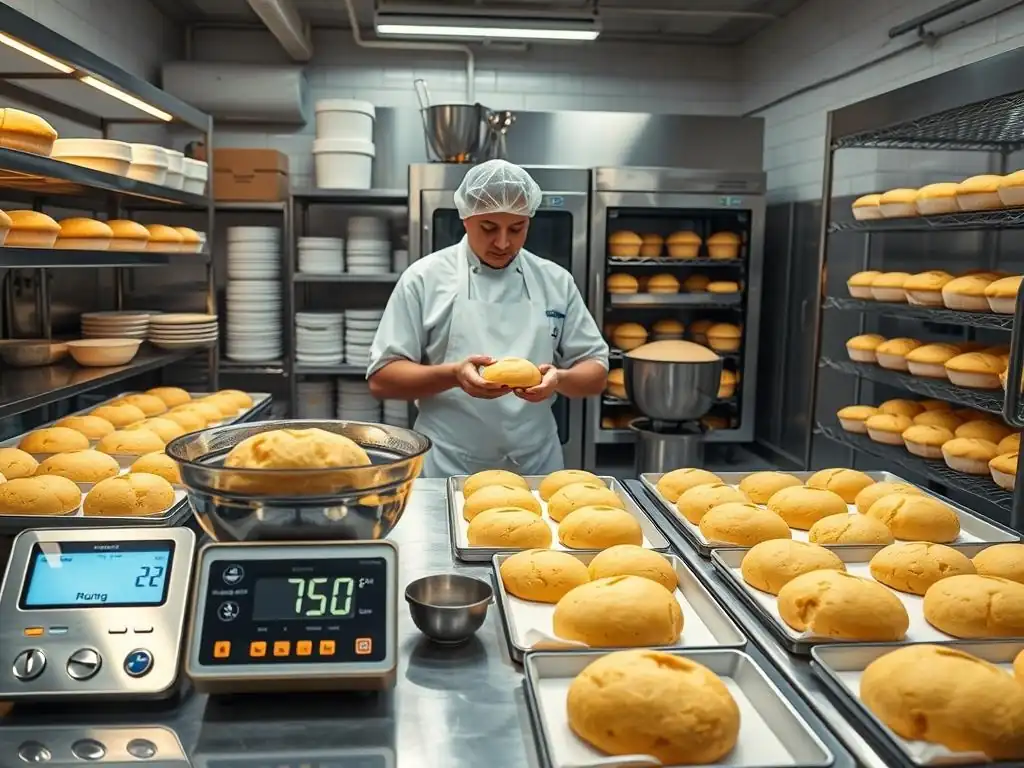
Mixing is one of the most critical steps affecting consistency in large batch baking. When scaling up, the volume and weight of ingredients significantly impact the mixing process compared to a small KitchenAid mixer batch. Over-mixing or under-mixing large quantities of dough or batter can lead to dramatic variations in texture and structure across the final product. The goal is to ensure all ingredients are uniformly incorporated without overworking the mixture.
For large batches of dough, like bread or cookies, the mixing time and speed often need adjustment. A mixer working through 10 pounds of dough will generate more heat from friction than with 2 pounds. Monitoring dough temperature during mixing is essential to prevent it from getting too warm, which can affect gluten development and yeast activity. For batters, like cakes or muffins, ensuring dry and wet ingredients are just combined without tough gluten development is key to tenderness. Mastering large-scale mixing techniques is fundamental for consistent large batch baking.
The Importance of Even Mixing
Even mixing ensures that every part of your large batch of dough or batter has the same distribution of ingredients. This is crucial for consistent large batch baking because it means leaveners are spread uniformly for an even rise, fats are distributed for consistent tenderness, and flavorings are consistent throughout. In large mixers, ingredients at the bottom or sides can sometimes be less incorporated than those in the center. Scraping down the bowl periodically is vital, especially when creaming butter and sugar or mixing in dry ingredients.
For doughs, even mixing ensures gluten is developed uniformly, leading to a consistent crumb structure across all loaves or rolls. Uneven gluten development can result in some parts of a loaf being dense while others are airy. For batters, consistent incorporation of dry ingredients prevents pockets of flour or leavener, which would cause uneven rising or texture. Taking the time to ensure thorough, even mixing, even if it means stopping the mixer to scrape the bowl multiple times, is a non-negotiable step for consistent large batch baking.
Avoiding Over-Mixing in Large Batches
Over-mixing is a common pitfall in consistent large batch baking, particularly with doughs and batters that rely on minimal gluten development for tenderness. When mixing large volumes, it's easy to let the mixer run too long, thinking the sheer quantity requires more time. However, large mixers are powerful, and the increased friction can develop gluten rapidly. For cakes, muffins, and quick breads, over-mixing develops too much gluten, resulting in a tough or rubbery texture. Mix only until ingredients are just combined, and the batter is smooth.
For yeast doughs, while gluten development is desired, over-mixing can still be an issue. It can lead to dough that is too elastic and difficult to shape, or it can cause the dough to overheat, negatively impacting yeast activity. Pay close attention to the dough's appearance and texture rather than relying solely on time. A properly mixed dough for consistent large batch baking should be smooth and elastic, pulling away from the sides of the bowl, but not sticky or overly resistant. Stop mixing as soon as the desired consistency is reached.
Temperature Control for Uniform Baking
Maintaining precise temperature control is absolutely vital for consistent large batch baking. This applies not only to the oven temperature but also to ingredient temperatures and dough/batter temperature during mixing and proofing. Variations in temperature can dramatically affect leavening, spread, browning, and overall texture. For example, baking cookies on pans that are too warm can cause them to spread too much too quickly, resulting in flat, inconsistent cookies.
When baking large quantities, managing temperature becomes more complex. A large volume of dough or batter will take longer to change temperature than a small one. Ensuring your ingredients are at the correct temperature before mixing (e.g., room temperature butter and eggs) is even more critical. During proofing, a large mass of dough will retain heat differently. And most significantly, the oven's ability to maintain a consistent temperature drops when loaded with many items. Precise temperature monitoring throughout the process is key to consistent large batch baking outcomes.
Oven Calibration for Large Batch Baking
Oven temperature accuracy is paramount for consistent large batch baking, and home ovens are often less precise than their thermostats indicate. They can also have significant hot spots. When you load an oven with multiple pans for a large batch, the temperature inside drops, and the oven works hard to recover, potentially overshooting or undershooting the set temperature. Using an independent oven thermometer (or several, placed in different locations) is essential to verify the actual temperature and identify any hot spots.
Calibrating your oven means understanding how it truly performs with a large load. You might find you need to set your oven slightly higher or lower than the recipe specifies to achieve the desired internal temperature. Regular checks with an accurate thermometer are crucial. For consistent large batch baking, consider rotating pans during the baking process to compensate for temperature variations within the oven cavity, ensuring all items bake evenly.
Monitoring Internal Temperatures
While baking time is a guideline, monitoring the internal temperature of your baked goods is the most reliable way to ensure they are done consistently, especially in large batch baking. A simple instant-read thermometer is an invaluable tool. For bread, the internal temperature should typically reach 190-210°F (88-99°C) depending on the type. Cakes are usually done when they reach 200-210°F (93-99°C). Cookies are harder to temp, but for items like muffins or quick breads, 200°F is a good indicator.
Checking the internal temperature removes the guesswork associated with visual cues or relying solely on the baking time specified for a smaller batch. When baking many items, some may be ready sooner than others due to their position in the oven or slight variations in size. For consistent large batch baking, check the internal temperature of several items from different parts of the oven load to ensure they have all reached the target temperature before declaring the batch finished.
Baking Time Adjustments for Large Quantities
One of the biggest challenges in consistent large batch baking is adjusting the baking time. You cannot simply multiply the time by the same factor you used for ingredients. Loading an oven with multiple pans significantly changes the environment inside – it lowers the initial temperature, restricts airflow, and increases the total thermal mass that needs to be heated. As a result, large batches almost always require longer baking times than small ones, even if the temperature is the same.
The exact increase in baking time is difficult to predict precisely without testing, as it depends on the specific oven, the type of baked good, and the density of the load. However, a general rule is to expect an increase of 15-30% or even more for very large, dense batches. For consistent large batch baking, start checking for doneness (using visual cues and internal temperature monitoring) earlier than your estimated time, but be prepared for the bake to take longer than a small batch.
Calculating Correct Baking Times
Calculating correct baking times for consistent large batch baking is less about a formula and more about educated estimation and vigilant monitoring. Start with the baking time for your original small batch recipe. Estimate a potential increase based on the size of your large batch and oven load – perhaps a 20% increase as a starting point. So, if a small batch takes 15 minutes, estimate the large batch might take around 18 minutes.
However, this is just a starting point. Begin checking for doneness (color, firmness, internal temperature) a few minutes before your estimated time. When baking multiple pans, remember that items on different racks or in different positions may bake at different rates. For consistent large batch baking, rotate pans halfway through the estimated baking time to promote even baking. The most reliable method remains checking the internal temperature, especially for cakes, breads, and muffins. Keep notes on how long it actually takes for different large batches in your specific oven to build a reliable estimate for future baking.
Adjusting for Oven Load
The density of the oven load has a direct impact on baking time and consistency in large batch baking. A fully loaded oven takes longer to reach and maintain the target temperature compared to baking a single tray. This is because the items themselves absorb heat, and their presence restricts the circulation of hot air. Overcrowding the oven is detrimental to consistent large batch baking; air needs space to circulate around each item and pan for even heat distribution.
If you are baking a very large quantity, it might be better to bake in multiple, smaller batches rather than cramming everything into the oven at once. While this takes more time overall, it allows each batch to bake more consistently.
If you must bake a full load, ensure there is at least an inch or two of space between pans and the oven walls. For consistent large batch baking with a heavy load, you may need to slightly increase the oven temperature (e.g., from 350°F to 360°F) to compensate for the temperature drop, and definitely expect a longer baking time, rotating pans halfway through.
Equipment and Tools for Large Batch Baking
Recommended Mixing Equipment for Large Batches
Mixing large quantities of ingredients by hand is often impractical and can lead to inconsistent results. For consistent large batch baking, having the right mixing equipment is essential. A standard home stand mixer (like a 5-quart or 6-quart model) is suitable for moderately large batches, perhaps doubling or tripling a typical home recipe. However, for significantly larger quantities, especially heavy doughs, a more robust mixer is necessary.
Commercial-style stand mixers or spiral mixers are designed to handle much larger volumes of ingredients and heavier doughs without overheating or straining the motor. They also often have features like multiple speeds and timers that allow for more precise control over the mixing process, contributing significantly to consistent large batch baking outcomes. Choosing equipment that can comfortably handle the volume you intend to bake is a critical investment in achieving repeatable success.
Stand Mixers vs. Commercial Mixers
For consistent large batch baking, the choice between a heavy-duty home stand mixer and a commercial mixer depends on the volume and frequency of your baking. A high-capacity home stand mixer (7-8 quarts) can handle doughs made with up to 4-6 pounds of flour, which is sufficient for many large family gatherings or small events. They are versatile and fit well in a home kitchen.
However, if you are regularly baking for very large groups (50+ people) or making dense doughs with more than 6-8 pounds of flour, a commercial mixer is often the better choice for consistent large batch baking. These mixers (planetary or spiral) are built for continuous use and can handle significantly larger loads (often 20+ quarts, capable of mixing doughs with 10-25+ pounds of flour). While more expensive and requiring more space, their power and capacity ensure ingredients are mixed thoroughly and consistently, preventing motor strain and ensuring even dough development across massive batches.
Dough Hooks and Paddle Attachments
Using the correct attachment for your mixer is crucial for consistent large batch baking. For yeast doughs, a dough hook is essential. It kneads the dough by pulling and stretching it against the sides of the bowl, developing gluten effectively. Using a paddle attachment for kneading dough can overwork and tear the gluten structure, leading to tough, inconsistent bread. Ensure your dough hook is appropriate for the size of your mixer and the quantity of dough you are mixing.
For batters (cakes, muffins, cookies), the paddle attachment (sometimes called the flat beater) is typically used for creaming butter and sugar and mixing in dry and wet ingredients. For very large batches of batter, ensure the paddle reaches the bottom and sides of the bowl effectively to ensure all ingredients are incorporated evenly.
Some mixers also come with a whisk attachment, ideal for whipping egg whites or cream, though less frequently used for the main mixing in consistent large batch baking of cakes or cookies. Using the right tool for the job ensures optimal mixing and contributes to uniform results.
Baking Pans and Liners for Uniform Results
The type and quality of your baking pans have a significant impact on consistent large batch baking. Pans made of heavier gauge metal, like aluminum or aluminized steel, conduct heat more evenly than flimsy pans. This helps prevent hot spots on the pan surface that can lead to uneven browning or burning on the bottom or edges of your baked goods. Using pans of the same material and color is also important; dark pans absorb more heat and will cause faster browning than lighter, shiny pans.
For consistent large batch baking, using multiple identical pans is ideal. This ensures that each item within the batch is exposed to similar heating conditions from the pan itself. If using a mix of pan types, be aware that baking times may vary between them, requiring extra vigilance. Using parchment paper or silicone liners not only aids in easy release but also provides a consistent, non-stick surface across all pans, preventing sticking that could tear or damage baked goods and contribute to inconsistency.
Choosing the Right Pan Material
The material of your baking pans significantly affects how heat is transferred to your baked goods, impacting browning and overall consistency in large batch baking. Aluminum pans are excellent conductors of heat, providing even baking and preventing hot spots. They are often preferred for cakes, muffins, and quick breads. Aluminized steel combines the strength of steel with the even heating of aluminum and is commonly used for baking sheets and bread pans.
Dark-coated pans or non-stick pans absorb more radiant heat, leading to faster browning. While this can be desirable for some items, it can also lead to over-browning or burning of edges and bottoms if not monitored carefully, especially in consistent large batch baking where items spend more time in the oven.
Glass or ceramic pans conduct heat more slowly and retain heat longer, which can be beneficial for casseroles but might require temperature or time adjustments for typical baked goods compared to metal pans. For the most consistent results across large batches, using commercial-grade, heavy-gauge metal pans of the same material is recommended.
Proper Pan Preparation Techniques
Properly preparing your baking pans is a small step with a big impact on consistent large batch baking. This includes greasing and flouring, using parchment paper, or applying non-stick spray, depending on the recipe and the pan type. For cakes and muffins, greasing and flouring ensures clean release and prevents sticking that can ruin the appearance or texture of the baked item. For consistent results, ensure the grease and flour coating is even across the entire interior surface of the pan.
Using parchment paper cut to fit the bottom (and sometimes sides) of cake pans or lining baking sheets provides a reliable non-stick surface every time, ensuring easy release and uniform bottoms on cookies or pastries. For consistent large batch baking, using parchment eliminates the variable of uneven greasing. Silicone baking mats are another excellent option for baking sheets, offering a reusable non-stick surface that promotes even browning on the bottom. Whatever method you choose, apply it consistently to every pan in your large batch to ensure uniform release and appearance.
Oven Considerations for Large-Scale Baking
Understanding your oven's behavior is paramount for consistent large batch baking. Home ovens often have significant temperature fluctuations and hot spots. When baking multiple pans simultaneously, these issues are amplified. The oven's ability to recover heat after the door is opened and its capacity to maintain a stable temperature with a large thermal load are crucial factors.
For serious consistent large batch baking, a convection oven is often preferred. Convection ovens use a fan to circulate hot air, which helps distribute heat more evenly throughout the oven cavity and reduces hot spots. This leads to more uniform baking and often slightly shorter baking times compared to conventional ovens. However, even in a convection oven, proper pan spacing and potential pan rotation are still necessary for optimal consistent large batch baking.
Understanding Oven Hotspots
Oven hotspots are areas within the oven cavity that are significantly hotter than others. These are common in home ovens and can lead to inconsistent large batch baking, with items in hotspots baking faster and potentially burning while others bake slowly. Hotspots can be caused by the location of the heating element, poor insulation, or uneven airflow. You can map your oven's hotspots by arranging slices of bread or cookies evenly across a baking sheet and observing how they brown.
Once you identify your oven's hotspots, you can take steps to mitigate their impact on consistent large batch baking. Avoid placing pans directly in known hot spots. Rotate your pans halfway through the baking time, moving pans from hotter spots to cooler spots and vice versa. If your oven has multiple racks, swapping racks can also help. For items that are particularly sensitive to uneven heating, like delicate cookies or cakes, consider baking fewer items at a time to allow for better air circulation and more even heat distribution, which aids in consistent large batch baking.
Using Convection Ovens Effectively
Convection ovens are excellent tools for achieving consistent large batch baking due to their ability to circulate air and distribute heat more evenly. The fan helps to quickly transfer heat to the surface of the baked goods, promoting even browning and often reducing baking times by 15-25% compared to conventional ovens. When using a convection oven for consistent large batch baking, you may need to lower the temperature by about 25°F (15°C) from the recipe's conventional oven temperature to prevent the outsides from cooking too quickly before the inside is done.
While convection improves consistency, it doesn't eliminate the need for careful monitoring. Items closest to the fan might still bake slightly faster. Ensure there is adequate space between pans to allow the air to circulate freely. Overcrowding a convection oven will reduce its effectiveness and still lead to inconsistent results. For optimal consistent large batch baking in a convection oven, use multiple racks if possible, maintain proper spacing, and still consider rotating pans if you notice any unevenness.
Key Factors Affecting Consistency in Baking
Ingredient Measurement Accuracy
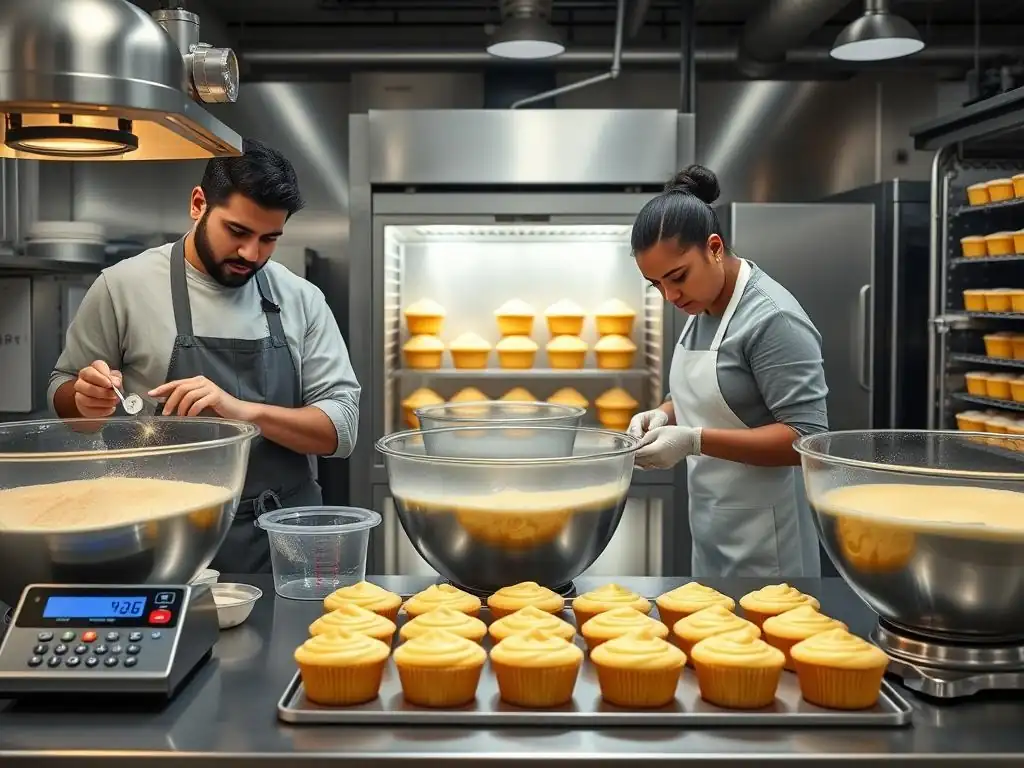
Precise ingredient measurement is perhaps the single most critical factor in achieving consistent large batch baking. Even slight errors in measuring can have a magnified effect when scaling up a recipe. For example, adding an extra tablespoon of flour in a small batch might not be noticeable, but an extra cup of flour in a large batch can significantly alter the hydration and texture of dough or batter. Volume measurement (using cups and spoons) is inherently less accurate than weight measurement because ingredients can pack differently.
For consistent large batch baking, measuring ingredients by weight using a kitchen scale is highly recommended. This ensures you are using the exact quantity specified in the recipe every time, regardless of how packed the flour is or how finely the sugar is granulated. Investing in a good quality scale that can handle the weight of your largest ingredients is essential for repeatable, consistent results.
The Importance of Weighing Ingredients
Weighing ingredients is the gold standard for accuracy in baking, especially for consistent large batch baking. A cup of flour can weigh anywhere from 120g to 150g depending on how it's scooped and leveled. Over a large batch requiring many cups, this variation can add up to a significant difference in the total amount of flour, directly impacting the hydration and structure of the baked good. Water, milk, and eggs are also best measured by weight (1ml water ≈ 1g).
Using weight measurements eliminates this variability. If a recipe calls for 500g of flour, you weigh out exactly 500g every time, ensuring the flour-to-liquid ratio remains constant, which is vital for consistent large batch baking. This precision is crucial for scaling recipes accurately using baker's percentages and for replicating results reliably batch after batch. While measuring small amounts of spices or leaveners by volume (teaspoons/tablespoons) is often acceptable due to their small quantity, weighing major ingredients like flour, sugar, fats, and liquids is non-negotiable for achieving consistent large batch baking.
Standardized Measuring Techniques
Even when using volume measurements (though weighing is preferred for consistent large batch baking), employing standardized techniques is important to minimize variability. For flour, the standard method is to lightly spoon the flour into the measuring cup and level it off with a straight edge without packing it down. Scooping directly from the bag can compact the flour, resulting in significantly more than intended.
For liquids, use clear measuring cups with spouts and place them on a flat surface to read the measurement at eye level. For smaller volumes of dry ingredients like baking powder or soda, level the spoon after scooping. While these techniques help, they still have inherent variability compared to weighing. For the utmost accuracy and consistent large batch baking, transition to weighing all key ingredients. If a recipe provides both volume and weight, always prioritize the weight measurement.
Gluten Development and Dough Handling
Gluten development is a critical factor in the texture and structure of many baked goods, particularly bread, but it also plays a role in cakes and pastries. Controlling gluten development is key to consistent large batch baking. Gluten, formed when proteins in flour (glutenin and gliadin) combine with liquid and are agitated (mixed or kneaded), provides the elastic network that traps gases produced by leaveners, allowing baked goods to rise and hold their shape.
In large batches, the mixing process can generate more heat and friction, potentially leading to faster or excessive gluten development. Understanding when to stop mixing or kneading is vital. Over-developed gluten in bread can result in a dense, tough crumb. Under-developed gluten leads to a weak structure and poor rise. For consistent large batch baking, paying close attention to the dough's texture and elasticity during mixing, rather than relying solely on time, is crucial for achieving the desired gluten structure.
Controlling Gluten Development
Controlling gluten development is essential for achieving the desired texture in consistent large batch baking. For bread, adequate kneading is required to build a strong gluten network. However, over-kneading, especially in powerful large mixers, can break down the gluten, leading to a sticky, slack dough that results in dense bread. Use the windowpane test (gently stretching a small piece of dough to see if it forms a thin, translucent membrane) to assess gluten development.
For items where tenderness is desired (cakes, muffins, pastries), minimal gluten development is key. Use low mixing speeds and mix only until ingredients are just combined. Over-mixing cake batter develops gluten, resulting in a tough cake. The order of adding ingredients can also help control gluten; adding fat (like butter or oil) before liquid can coat the flour particles and inhibit gluten formation, a technique used in some tender cake recipes. Mastering these techniques ensures consistent texture across your large batches.
Proper Dough Resting and Proofing
Resting and proofing are vital steps for yeast doughs in consistent large batch baking. Resting allows the gluten to relax after mixing or kneading, making the dough easier to handle and shape. Skipping or shortening the rest period can result in dough that springs back excessively, making uniform shaping difficult.
Proofing (fermentation) is when yeast produces carbon dioxide gas, causing the dough to rise. Proper proofing is essential for achieving the desired volume and texture. Temperature and humidity during proofing significantly impact the rate of fermentation.
A large mass of dough will proof differently than a small one – it will generate and retain more heat. For consistent large batch baking, monitor the dough's volume increase and use the poke test (gently poking the dough; if the indentation slowly springs back, it's ready) rather than relying solely on time, as proofing times can vary based on ambient conditions and dough temperature. Ensure the proofing environment is consistent for all dough portions.
Environmental Conditions and Their Impact
Environmental factors like ambient temperature and humidity can significantly affect consistent large batch baking outcomes, particularly for doughs and batters exposed to the air. High humidity can cause flour to absorb more moisture from the air, potentially requiring a slight reduction in liquid in the recipe. Low humidity can cause doughs and batters to dry out and form a skin, which can impede rise and affect texture.
Temperature affects ingredient temperatures and the rate of fermentation in yeast doughs. Warm temperatures can speed up yeast activity, while cold temperatures slow it down. For consistent large batch baking, try to maintain a stable environment in your kitchen or baking area. If the environment fluctuates, be prepared to make small adjustments to your process, such as slightly increasing or decreasing liquid, or adjusting proofing times based on observation rather than strict adherence to a clock.
Adjusting for Humidity and Temperature
Humidity and temperature are variables that can impact consistent large batch baking and often require subtle adjustments. In high humidity, flour absorbs moisture, meaning you might need slightly less liquid (water, milk, etc.) to achieve the desired dough or batter consistency. Conversely, in very dry conditions, you might need a touch more liquid. Pay attention to the feel of your dough or batter – does it feel stickier or drier than usual?
Ambient temperature directly affects yeast activity. In a warm kitchen (above 75°F or 24°C), dough will proof faster. In a cooler kitchen (below 70°F or 21°C), proofing will take longer. For consistent large batch baking, aim for a stable proofing temperature, ideally between 75-80°F (24-27°C). If your environment is warmer, check the dough more frequently. If cooler, allow more time or find a slightly warmer spot for proofing. Understanding how your environment affects your dough allows you to make informed adjustments for consistent results.
Altitude Baking Considerations
Baking at high altitude presents unique challenges for consistent large batch baking due to lower atmospheric pressure, which affects leavening and moisture evaporation. Gases expand more readily at higher altitudes, causing baked goods to rise faster, potentially before their structure is set, leading to collapse. Liquids also evaporate faster.
Adjustments for altitude baking often include:
- Reducing leavening agents (baking powder/soda, yeast) by 10-25%.
- Increasing liquid slightly to compensate for faster evaporation.
- Increasing oven temperature by 15-25°F (8-14°C) to help the structure set faster before leavening gases expand too much.
- Sometimes slightly increasing flour or decreasing sugar to strengthen the structure.
For consistent large batch baking at altitude, test your recipe with small adjustments first and keep detailed notes. What works at 5,000 feet might differ from 7,000 feet. Be prepared to experiment to find the right balance for your specific location and recipe.
Troubleshooting Common Large Batch Baking Issues
Uneven Baking and Dark Spots
Uneven baking, where some items are perfectly done while others are undercooked or burnt, is a frustrating issue in consistent large batch baking. This is often caused by uneven heat distribution in the oven, including hotspots and poor air circulation due to overcrowding. Dark spots or uneven browning on the bottom or edges of baked goods are frequently related to pan material, color, or direct exposure to a hotspot or heating element.
To troubleshoot uneven baking, first verify your oven's temperature accuracy with an external thermometer and identify any hotspots. Ensure you are not overcrowding the oven, leaving sufficient space for air circulation around all pans. Use pans of the same material and color for a batch. If using dark pans, you may need to reduce the oven temperature slightly or shorten the baking time. Rotating pans halfway through the baking process is a simple yet effective technique to promote more even baking and achieve consistent large batch baking.
Identifying and Correcting Hotspots
As mentioned earlier, identifying oven hotspots is the first step to correcting uneven baking in consistent large batch baking. Use the bread or cookie test to map your oven. Place slices of white bread or plain cookies evenly across a baking sheet filling the entire rack space. Bake until they begin to brown. The areas that brown fastest indicate hotspots. Repeat on other racks if you use them.
Once identified, avoid placing delicate items directly in these hotspots. When arranging multiple pans for consistent large batch baking, position them to avoid the hottest zones. During baking, rotate pans regularly (e.g., every 10-15 minutes for cookies, or halfway through for cakes/breads) to ensure all items spend some time in different temperature zones, averaging out the heat exposure and leading to more uniform results. Some bakers use baking stones or trays of water to help stabilize oven temperature and humidity, which can also help mitigate hotspots.
Using Baking Stones or Sheets
Baking stones or heavy-gauge baking sheets can help improve consistency in large batch baking by providing a stable heat source. Placing a baking stone or heavy steel plate on an oven rack (usually the bottom or middle) and allowing it to preheat thoroughly can help stabilize the oven temperature and radiate heat evenly to the pans placed on or above it. This is particularly useful for items baked directly on a surface, like pizza or some breads, but can also benefit items baked in pans by providing a consistent heat base.
For consistent large batch baking of cookies or pastries on baking sheets, using heavy-gauge sheets prevents warping and promotes more even browning on the bottom compared to thin, flimsy sheets. Using two sheets stacked together can also provide insulation, preventing the bottoms from browning too quickly. Ensure your baking stones or sheets are fully preheated with the oven for the best results.
Dry or Dense Baked Goods
Dryness or excessive density in large batch baking can result from several factors, including inaccurate ingredient measurements, over-mixing, over-baking, or baking at too high a temperature. A dry product often indicates too much flour or not enough liquid/fat. Density can stem from under-leavening, over-mixing (developing too much gluten in tender items), or insufficient baking.
To troubleshoot dry or dense results in consistent large batch baking, revisit your recipe scaling and measurement methods – ensure you are weighing ingredients accurately. Check your mixing technique to avoid over-mixing batters. Verify your oven temperature with a thermometer and ensure you are not over-baking; use internal temperature as a guide for doneness rather than just visual cues or time. Adjusting liquid or fat content slightly in future batches might be necessary if the issue persists despite correct technique and temperature.
Adjusting Liquid and Fat Content
If you consistently get dry results in your consistent large batch baking, you may need to slightly increase the liquid or fat content in your scaled recipe. As noted earlier, scaling can sometimes require more liquid than a simple linear multiplication due to increased evaporation in the oven or slight differences in flour absorption in larger quantities. Try increasing the liquid (milk, water, eggs) by 2-5% in your next large batch.
Conversely, if your baked goods are consistently too wet or don't set properly, you might have too much liquid or not enough flour. Double-check your measurements. Sometimes, adding a small amount of additional flour (e.g., 1-2% of the total flour weight) can help absorb excess moisture. For consistent large batch baking, making small, incremental adjustments to liquid or fat based on the outcome of previous batches is often necessary to perfect a scaled recipe. Keep careful notes of any changes you make.
Avoiding Over-Baking
Over-baking is a primary cause of dry or dense results in consistent large batch baking. Because large batches take longer to bake, there's a higher risk of leaving them in the oven for too long. Visual cues like golden brown color are helpful but can be misleading, especially with variations in pan color or oven hotspots.
The most reliable method to avoid over-baking in consistent large batch baking is to use an instant-read thermometer to check the internal temperature of your baked goods. Remove items from the oven as soon as they reach the target temperature range. For items like cookies, which don't have a clear internal temperature indicator, rely on visual cues like the edges setting and the center still looking slightly soft, and remove them from the hot pan quickly to stop the residual cooking. Checking items in different parts of the oven load ensures you don't over-bake some while waiting for others.
Inconsistent Texture Throughout the Batch
Inconsistent texture within a single large batch – some parts being airy, others dense, some tender, others tough – is a classic sign of uneven mixing or inconsistent baking conditions. This can happen if ingredients aren't fully incorporated, if dough or batter is over-mixed or under-mixed in different sections of the bowl, or if parts of the batch bake at different rates due to oven variations.
To address inconsistent texture in consistent large batch baking, focus on your mixing technique to ensure uniform incorporation and proper gluten development (or lack thereof). Ensure your oven is properly calibrated and manage hotspots by rotating pans. If you are baking multiple types or sizes of items in the same batch, consider separating them or adjusting their positions to account for different baking times.
Ensuring Proper Mixing and Ingredient Distribution
As discussed earlier, proper mixing is paramount for uniform texture in consistent large batch baking. When mixing large quantities, take extra care to scrape down the sides and bottom of the mixing bowl frequently to ensure all ingredients are incorporated. For doughs, watch for signs of proper gluten development (smoothness, elasticity, windowpane test) rather than just mixing for a set time.
For batters, ensure dry ingredients are fully incorporated into wet ingredients without over-mixing. Pockets of unmixed flour or leavener will lead to dense spots or uneven rising. If adding inclusions like chocolate chips, nuts, or fruit to a large batch, ensure they are evenly distributed throughout the dough or batter, which is easier to achieve with the mixer running on low speed or by folding them in by hand towards the end of mixing. Even ingredient distribution is key to consistent large batch baking texture.
Correcting Dough or Batter Consistency
Sometimes, even with accurate measurements, environmental factors or slight variations in ingredient absorption can lead to dough or batter that is too wet or too dry for consistent large batch baking. It's important to be able to recognize the correct consistency and make minor adjustments if needed.
If your dough is too sticky and difficult to handle, add a small amount of flour (a tablespoon or two at a time) and mix until the desired consistency is reached. If it's too dry and crumbly, add a small amount of liquid (a teaspoon or two at a time). For batters, if too thick, add a splash of liquid; if too thin, add a tablespoon of flour.
These adjustments should be minimal. For consistent large batch baking, learn to recognize the target consistency described in the recipe or based on your experience and trust your judgment to make these small corrections before baking.
Storage and Handling of Large Baking Batches
Proper Cooling Techniques for Baked Goods
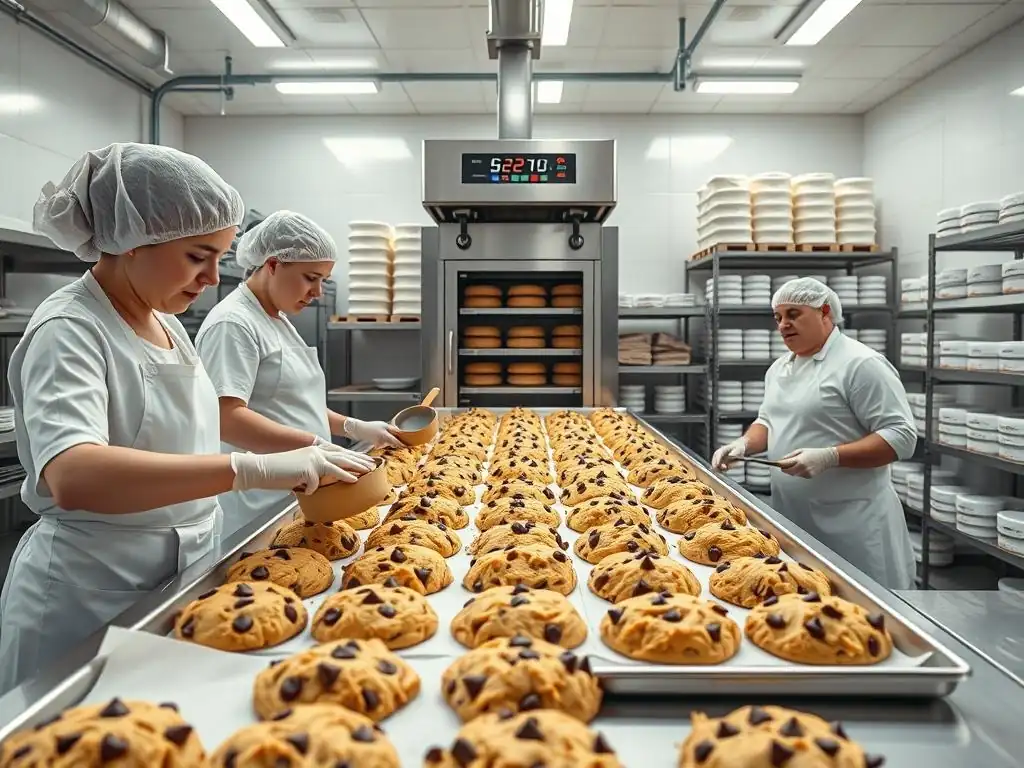
Proper cooling is an often-overlooked step that is crucial for consistent large batch baking, affecting texture, moisture, and shelf life. Baked goods continue to cook slightly from residual heat after being removed from the oven. Leaving them in hot pans will lead to over-baking, especially on the bottoms and sides, and can cause sogginess due to trapped steam.
For consistent large batch baking, transfer most baked goods (cakes, breads, muffins, cookies) from their pans to cooling racks within a few minutes of coming out of the oven. Cooling racks allow air to circulate around the entire item, promoting even cooling and preventing condensation buildup on the bottom. Allow items to cool completely before storing or packaging, as packaging warm goods traps steam, leading to sogginess and creating an environment for mold growth.
Avoiding Condensation
Condensation is the enemy of consistent large batch baking during the cooling phase. When hot baked goods are placed in a cool, enclosed space or packaged while still warm, the moisture escaping as steam hits the cooler surface and turns back into water. This condensation makes surfaces soggy and can ruin the texture.
To avoid condensation, always cool baked goods completely on wire racks with good air circulation before storing or packaging. Ensure the cooling area is not excessively humid. If baking in a humid environment, ensure good ventilation. For consistent large batch baking, allow ample space between items on the cooling racks. Do not stack items until they are fully cooled. Once completely cool, they can be stored or packaged appropriately.
Maintaining Texture
Proper cooling techniques are essential for maintaining the desired texture achieved through consistent large batch baking. For crusty breads, cooling on a wire rack is vital to allow the crust to crisp up as steam escapes. Placing hot bread on a solid surface will trap steam and result in a soggy bottom crust. For cakes and muffins, cooling on a rack prevents the bottom from becoming dense or mushy.
Cookies should be moved from the hot baking sheet to a cooling rack after a minute or two to stop the residual cooking and allow them to firm up without becoming hard or brittle. Cooling completely before storing prevents them from steaming and becoming soft. For consistent large batch baking, follow the cooling instructions specific to the type of baked good to preserve the texture you worked hard to achieve.
Packaging and Storage for Maximum Freshness
Proper packaging and storage are the final steps in ensuring consistent large batch baking maintains its quality over time. The right packaging protects baked goods from drying out, absorbing odors, or becoming stale. The storage method should extend freshness while preserving texture and flavor.
For consistent large batch baking, choose packaging materials appropriate for the item. Breads that should remain crusty are best stored at room temperature in paper bags or loosely wrapped to allow air circulation, preventing the crust from softening (though this means they stale faster). Soft-crusted breads, cakes, muffins, and cookies should be stored in airtight containers or wrapped tightly in plastic wrap or foil to prevent drying out.
Choosing the Right Packaging Materials
The choice of packaging material impacts the freshness and texture of your consistent large batch baking.
- Plastic wrap and airtight containers: Ideal for cakes, muffins, soft cookies, and loaves of bread with a soft crust. They prevent moisture loss and keep items soft.
- Aluminum foil: Good for wrapping bread loaves or preventing specific areas of cakes from drying out. Less effective than airtight containers for preventing moisture loss over longer periods.
- Paper bags: Best for crusty breads to maintain crust crispness, but they allow moisture to escape, leading to faster staling of the interior.
- Freezer bags and wraps: Essential if you plan to freeze portions of your consistent large batch baking. Ensure they are specifically designed for freezing to prevent freezer burn.
Ensure packaging is clean and dry before use. For consistent large batch baking, seal packaging tightly to minimize exposure to air, which causes staling and oxidation.
Extending Shelf Life
Extending the shelf life of consistent large batch baking allows you to enjoy the fruits of your labor for longer or manage distribution for events. Proper cooling and airtight packaging are the first steps. Most baked goods stored at room temperature in airtight containers will last 2-4 days.
For longer storage, freezing is an excellent option for consistent large batch baking. Most baked goods freeze well. Wrap items individually or in small portions in plastic wrap, then place in a freezer bag or wrap tightly in foil. This double layer prevents freezer burn. Label packages with the date and contents. Frozen baked goods can maintain quality for 1-3 months. Thaw items at room temperature in their packaging to prevent condensation. Refreshing bread or muffins briefly in a warm oven can help restore texture after thawing.
Advanced Techniques for Achieving Baking Consistency
Using Dough Conditioners and Emulsifiers
For those consistently engaged in large batch baking, especially bread, dough conditioners and emulsifiers can be valuable tools for improving consistency and handling. Dough conditioners are ingredients or blends (often containing enzymes, ascorbic acid, or emulsifiers) that improve dough handling properties, strengthen the gluten structure, and enhance volume and texture. They can help make dough more extensible (stretchable) and elastic (springs back), leading to more consistent shaping and a better crumb structure.
Emulsifiers, like lecithin or DATEM (Diacetyl Tartaric Acid Esters of Monoglycerides), help to evenly disperse fat and water throughout the dough or batter, improving texture and increasing shelf life. They can contribute to a finer crumb in cakes and help bread stay softer longer. While not typically used in simple home baking, understanding these additives can be beneficial for achieving highly reliable and consistent large batch baking results, particularly in professional or semi-professional settings. Use them according to manufacturer instructions and be aware of their specific functions.
Understanding the Role of Additives
Additives like dough conditioners and emulsifiers play specific roles in altering the properties of dough and batter to achieve desired outcomes in consistent large batch baking. Enzymes, such as amylase, break down starches into sugars, providing more food for yeast and improving fermentation and crust browning. Ascorbic acid (Vitamin C) is an oxidant that strengthens the gluten network, leading to better volume and structure in bread.
Emulsifiers stabilize mixtures of ingredients that don't naturally mix, like oil and water. In bread dough, they help fat distribute evenly, resulting in a softer crumb. In cake batters, they help incorporate fats and liquids smoothly, leading to a finer, more consistent texture and preventing ingredients from separating. For consistent large batch baking, these additives can help compensate for variations in flour quality or mixing conditions, providing an extra layer of control over the final product.
Choosing Safe and Effective Additives
When considering additives for consistent large batch baking, it's crucial to choose food-grade products from reputable suppliers and understand their proper usage. Additives are typically used in very small quantities relative to the total flour weight (often less than 1%). Using too much can have negative effects on texture or flavor.
Many commercial dough conditioners are blends designed for specific purposes (e.g., for lean bread doughs, enriched doughs, or frozen doughs). Read product descriptions carefully to choose one that matches your baking needs. Emulsifiers like soy lecithin are commonly available. Always follow the recommended usage rates provided by the manufacturer. While additives can aid consistent large batch baking, they are not a substitute for good technique, accurate measurement, and quality ingredients. They are best used to fine-tune results or address specific challenges in scaling up recipes.
Pre-Ferments and Sourdough Starters for Enhanced Flavor and Texture
Using pre-ferments (like poolish or biga) or a sourdough starter is an advanced technique that can significantly enhance the flavor, texture, and consistency of bread in large batch baking. These are portions of dough or batter mixed hours or days in advance, allowing yeast (commercial or wild in sourdough) to ferment slowly, developing complex flavors and aromas.
Incorporating a pre-ferment or sourdough starter into your main dough mixture can improve the dough's structure, leading to a more open crumb and better volume. The acidity developed during the long fermentation also strengthens the gluten network and can improve the dough's handling properties. While adding an extra step, using pre-ferments or sourdough can lead to more reliable and consistent large batch baking results for bread, especially for recipes aiming for artisanal quality.
Improving Consistency with Pre-Ferments
Pre-ferments contribute to consistent large batch baking of bread in several ways. By allowing a portion of the dough to ferment for a long period, you build a strong base of flavor and structure before mixing the final dough. This long, slow fermentation is less susceptible to minor fluctuations in ambient temperature than the faster fermentation of a straight dough.
A poolish (equal parts flour and water by weight, plus a small amount of yeast) or a biga (lower hydration than poolish, more like a stiff dough) adds maturity to the final dough, leading to more predictable fermentation and rise. The developed acidity helps condition the gluten, making the dough easier to handle and shape consistently, which is a significant advantage in large batch baking where handling large volumes can be challenging. Using pre-ferments helps ensure each loaf in a large batch benefits from this improved structure and flavor.
Managing Sourdough Starters
For consistent large batch baking using sourdough, maintaining a healthy and active starter is fundamental. A sourdough starter is a living culture of wild yeast and bacteria. Its activity level and flavor profile depend on consistent feeding, temperature, and hydration. An inconsistent starter will lead to unpredictable rise and flavor in your bread.
To ensure consistency, feed your starter regularly with the same type of flour and water, maintaining a consistent hydration level (e.g., 100% hydration, meaning equal parts flour and water by weight). Store it in a stable environment, ideally at a consistent temperature. Before using it in a large batch, ensure it is active and bubbly, ideally after a recent feeding. Keeping a consistent feeding schedule and temperature helps ensure your starter performs predictably every time, contributing to consistent large batch baking outcomes for your sourdough bread.
Conclusion: Achieving Consistent Large Batch Baking with BakeWithEase
Recap of Key Strategies
Achieving consistent large batch baking requires a systematic approach, building upon the foundational principles of baking while adapting techniques for increased volume. Key strategies include:
- Accurate Scaling: Utilizing weight measurements and baker's percentages for precise ingredient ratios.
- Quality Ingredients: Selecting consistent, high-quality ingredients and storing them properly.
- Mastering Techniques: Adapting mixing times, monitoring dough/batter temperature, and understanding the nuances of handling larger quantities.
- Oven Management: Calibrating your oven, understanding hotspots, and managing load density and temperature for even baking.
- Proper Handling: Cooling baked goods correctly and packaging them appropriately for storage.
By paying diligent attention to these areas, you can significantly improve the predictability and uniformity of your large batch baking, ensuring every cookie, cake, or loaf is as good as the last. Consistent large batch baking is within reach with careful planning and execution.
Resources for Further Learning
BakeWithEase.com offers a wealth of resources to help you master consistent large batch baking and expand your baking skills. Explore our articles on specific scaling challenges, ingredient science, and detailed guides on using various types of mixers and ovens.
- Detailed guides on baker's percentage calculations.
- Tips for choosing and maintaining baking equipment.
- In-depth articles on gluten development and fermentation.
- Troubleshooting guides for common baking issues.
- Recipes specifically designed for scaling or large quantities.
We encourage you to delve deeper into the topics covered here and continue practicing. Consistent large batch baking is a skill that improves with knowledge and experience. Visit BakeWithEase.com for more tips, techniques, and recipes to help you bake with ease, no matter the batch size.
Frequently Asked Questions
How can I ensure all my baked goods cook evenly in a large batch?
Ensure even cooking by rotating your baking sheets halfway through the baking time. Also, maintain a consistent oven temperature and avoid overcrowding the oven.
What's the best way to scale a small recipe for a large batch without compromising quality?
Use a recipe scaling calculator or spreadsheet to accurately adjust ingredient quantities. Be mindful of potential changes in baking time and texture, and test a small batch first.
How important is measuring ingredients accurately when baking large batches?
Accurate measurements are crucial for consistent results, especially in large batches. Use a kitchen scale for dry ingredients and measuring cups for liquids.
What are some common problems encountered when baking large batches, and how can I avoid them?
Common issues include uneven cooking, over- or under-mixing, and ingredient incorporation problems. Avoid these by using high-quality ingredients, mixing correctly, and monitoring baking closely.
How can I efficiently cool large batches of baked goods?
Cooling racks are essential for allowing air to circulate around the baked goods. Make sure to cool them completely before storing or frosting to prevent condensation and spoilage.
Final Reflection: The Sweet Science of Consistent Baking
The pursuit of perfectly consistent large-batch baking isn't just about efficiency; it's about ensuring quality and upholding a brand's reputation. Whether you're a professional baker scaling up for a large event or a passionate home baker tackling a holiday feast, the principles discussed throughout this article are crucial for success. The difference between a batch of perfectly uniform cookies and one with inconsistent texture and browning can mean the difference between delight and disappointment.
The impact of mastering consistent large-batch baking extends far beyond the immediate outcome of a single bake. It speaks to a broader understanding of precision, planning, and the inherent artistry within baking. The meticulous attention to detail required fosters a deeper appreciation for the science behind the craft. Baking is a science, but it's also an art. The more you understand the science, the better you can express your art.
– This quote, while not directly from a baker, perfectly encapsulates the essence of achieving consistent results through understanding the underlying principles.
Now, consider your own baking journey. What techniques from this article resonate most with your experiences? Perhaps it's the importance of precise measurements, the value of pre-weighed ingredients, or the power of a well-calibrated oven. I encourage you to experiment, adapt these methods to your specific needs, and embrace the challenge of achieving consistent results in your own kitchen. The reward – a batch of perfectly baked goods, every single time – is well worth the effort.
Unlock Your Baking Consistency!
Thanks for taking the time to explore the art of consistent large-batch baking! You’ve now got the knowledge to create flawlessly uniform treats every time. Ready to put your new skills to the test?
- Bake a test batch this week: Choose your favorite recipe and focus on mastering the techniques we discussed. Pay close attention to detail – this is where you’ll solidify your new skills!
- Share your baking journey: Post a picture of your successful batch on social media – let’s inspire other bakers! Use #BakeWithEase to connect with our community.
- Consider experimenting with a completely new recipe, adapting your newfound knowledge to tackle a more challenging bake.
What delicious creation will you tackle next, and what challenges are you most excited (or nervous!) to overcome?