
Why Measurement Matters (But Is Easy!): SliceandBake Baking Science

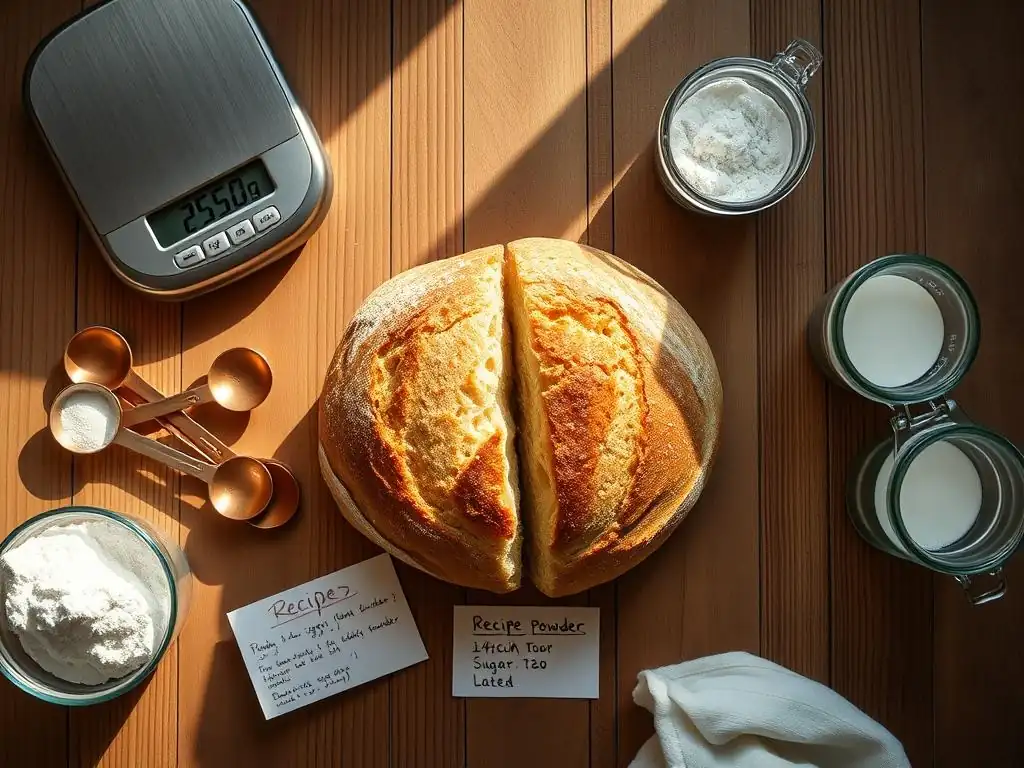
Welcome to BakeWithEase, where baking dreams become delicious realities! Ever wondered why some recipes succeed while others fall flat? The secret often lies in the details. This week, we unravel the mysteries of easy baking measurement techniques, showing you how precise (yet simple!) methods can elevate your creations from good to absolutely unforgettable. Prepare to unlock the science behind perfect bakes – it's easier than you think, and the results will speak for themselves! Get ready to bake with confidence!
- The Science of Baking: Achieving Perfect Chocolate Chip Cookies
- Understanding Baking Measurement Techniques for Delicious Chocolate Chip Cookies
- Simple Baking Measurement Guide
- Chocolate Chip Cookie Dough: Measurement Tips & Tricks
- Converting Recipes: Baking Measurement Conversions
- Troubleshooting Chocolate Chip Cookies: Measurement Mistakes to Avoid
- Perfect Chocolate Chip Cookies Every Time: The Power of Accurate Measurements
-
Frequently Asked Questions
- What are some easy baking measurement techniques for beginners?
- Why is accurate measurement so important in baking, and what happens if I don't follow the measurement techniques?
- What is the best way to measure flour using easy baking measurement techniques?
- Can I convert between volume and weight measurements for baking ingredients using easy baking measurement techniques?
- Where can I find more easy baking measurement techniques and recipes for all skill levels?
- Final Reflection: The Sweet Science of Precise Baking
- Unlock Your Baking Potential: Master the Metrics!
Getting started with baking, especially something as beloved as chocolate chip cookies, can feel like a mix of art and science. While creativity is wonderful, baking science, particularly in measurement, is the foundation for consistent, delicious results. Think of your measuring tools as the essential lab equipment in your kitchen! Mastering easy baking measurement techniques is the first step toward baking success, ensuring that every batch of cookies turns out just the way you intended. It’s not about being overly rigid, but about understanding how precision impacts the final product.
Baking is different from cooking because it relies on precise chemical reactions. Ingredients like flour, sugar, leavening agents (baking soda/powder), and fats interact in specific ways when heated. The ratios of these ingredients determine the texture, rise, spread, and flavor of your bake. Even a slight deviation in measurement can throw off this delicate balance. For example, using too much flour can result in a dry, dense cookie, while too little might make it spread too much and become overly thin. Therefore, understanding and applying easy baking measurement techniques is crucial for predictable and delightful outcomes.
Accurate measurements are absolutely critical when preparing chocolate chip cookie dough. Unlike some cooking where a pinch of this or a dash of that is fine, baking requires ingredients in very specific proportions. The chemical reactions between ingredients like baking soda (sodium bicarbonate) and acidic components (like brown sugar or buttermilk, if used) rely on these exact ratios to produce the right amount of carbon dioxide gas for leavening. If you add too much baking soda without enough acid, you can end up with a metallic taste and excessive, uncontrolled spread.
Furthermore, the hydration level in your dough is determined by the precise balance of wet and dry ingredients. Flour absorbs liquid, and the amount of liquid available directly affects gluten development and the dough's consistency. Using too much flour (a common mistake when scooping directly from the bag) can significantly dry out the dough, leading to cookies that don't spread properly and have a crumbly, cake-like texture instead of a chewy or crisp one. Accurate measurements ensure the correct moisture level for the desired cookie texture.
How Precise Baking Measurements Impact Texture, Flavor, and Spread
Precise baking measurements directly dictate the texture, flavor, and spread of your chocolate chip cookies. Let's consider the ratio of sugar to flour. More sugar generally leads to a chewier, flatter cookie with more spread, as sugar melts and spreads when heated. Less sugar results in a thicker, puffier cookie that spreads less.
Similarly, the type and amount of fat (butter, shortening) profoundly impact texture and spread. Melted butter, for instance, typically results in a thinner, chewier cookie compared to softened butter, which yields a puffier, cakeier one. The exact amount of fat is key to achieving the desired chewiness or crispness.
Leavening agents are another prime example. Baking soda is alkaline and reacts with acids to produce spread and a slightly crisp edge. Baking powder is double-acting, reacting when wet and again when heated, providing lift and a puffier texture. The precise quantity of each (or both, depending on the recipe) is calibrated to achieve a specific rise and spread.
Using too much can cause excessive, uneven spread and a bitter flavor, while too little will result in cookies that are dense and don't spread adequately. Flavor is also directly tied to ingredient ratios; too much salt can make cookies unpleasantly savory, while too little can make them taste flat and uninteresting. Precision ensures the intended balance of sweet, salty, and rich flavors.
Simple Baking Measurement Guide
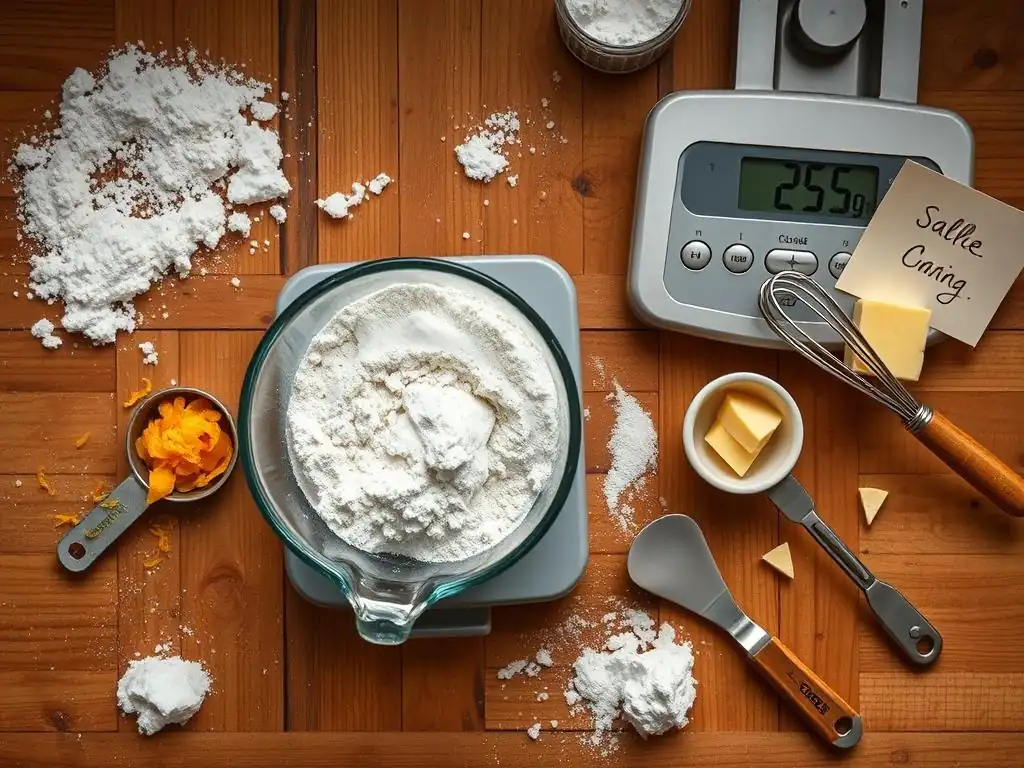
Embarking on your baking journey doesn't require complex techniques. Focusing on easy baking measurement techniques is the most effective way to ensure consistent results from the start. It's about building good habits with basic tools. Understanding the difference between measuring by volume (using cups and spoons) and measuring by weight (using a scale) is fundamental. Both methods have their place, but one is generally considered more accurate, especially for dry ingredients like flour.
The goal of a simple baking measurement guide is to demystify the process. It's not about achieving scientific perfection every time, but about minimizing variables that can lead to unexpected results. By using the right tools correctly and understanding the principles behind measuring different types of ingredients, you significantly increase your chances of baking success. These easy baking measurement techniques are designed to be accessible to everyone, turning potential frustration into predictable delight.
Essential Tools for Accurate Baking Measurements
Having the right tools is half the battle won in accurate baking measurement. For volume measurements, you'll need a set of dry measuring cups (usually nesting cups ranging from 1/4 cup to 1 cup) and a set of measuring spoons (ranging from 1/4 teaspoon to 1 tablespoon). It's important to use dry measuring cups for dry ingredients and liquid measuring cups (typically with a spout and markings on the side) for liquids. Liquid measuring cups allow you to check the measurement at eye level for accuracy.
Beyond cups and spoons, a digital kitchen scale is arguably the most essential tool for truly accurate baking. While not always listed in older or simpler recipes, many modern recipes provide measurements by weight (grams or ounces) for greater precision. A straight-edged spatula or knife is also helpful for leveling off dry ingredients in measuring cups. These basic tools, used correctly, form the foundation of easy baking measurement techniques.
Kitchen Scales vs. Measuring Cups: Which is Best?
When it comes to accuracy, kitchen scales are superior to measuring cups, especially for dry ingredients like flour, sugar, and oats. The primary issue with volume measurement (cups) is inconsistency. How tightly flour is packed into a cup can vary significantly from person to person, or even based on humidity levels. Scooping flour directly from the bag can pack it down, resulting in using much more flour than intended – sometimes up to 20-30% more!
Measuring by weight (grams) eliminates this variability. A gram of flour is always a gram of flour, regardless of how it's packed. This consistency is why professional bakers and serious home bakers often prefer scales. While using cups and spoons is a perfectly valid and common method, particularly for beginners or in recipes specifically designed for volume, using a scale is an easy baking measurement technique that instantly improves accuracy and reproducibility. For liquids, volume measurement with a liquid measuring cup is generally accurate enough for most home baking.
Recommended Baking Measurement Tools for Consistent Results
For consistent baking results, especially with popular items like chocolate chip cookies, a combination of tools is recommended.
- A good quality digital kitchen scale that can measure in grams and ounces. Look for one with a tare function (to zero out the weight of the container).
- A set of dry measuring cups made of metal or sturdy plastic, with clearly marked sizes.
- A liquid measuring cup (or two, different sizes like 1-cup and 2-cup) made of clear glass or plastic, with markings for cups, ounces, and milliliters.
- A set of measuring spoons, also clearly marked.
- A straight-edged tool, like a knife or spatula, for leveling dry ingredients.
Investing in these few basic tools is an easy baking measurement technique in itself, setting you up for success. While scales offer the highest accuracy, using standard cups and spoons correctly can still yield excellent results for many recipes, especially those specifically written with volume measurements in mind.
Mastering Common Baking Measurements: Volume vs. Weight
Mastering baking measurements involves understanding the two main methods: volume and weight. Volume measurement, using cups and spoons, measures the space an ingredient occupies. Weight measurement, using a scale, measures the mass of an ingredient. While volume is intuitive and common in many home recipes, weight is more precise because density can vary. For example, a cup of sifted flour weighs less than a cup of flour scooped directly from the bag.
Learning to use both methods is beneficial. For ingredients like liquids (water, milk, oil), extracts (vanilla), and leavening agents (baking soda, baking powder), volume measurement with appropriate tools (liquid measuring cups for liquids, measuring spoons for small quantities) is usually sufficient and easy baking measurement techniques. However, for dry ingredients like flour, sugar, oats, and chocolate chips, measuring by weight offers significantly higher accuracy, leading to more reliable and consistent baking outcomes.
Measuring Dry Ingredients Accurately
Accurately measuring dry ingredients like flour, sugar, cocoa powder, and oats is where many baking errors occur when using volume measures. The key is to avoid compacting the ingredient. For flour, the widely recommended "spoon and sweep" method (detailed below) is an easy baking measurement technique to achieve a more accurate cup measurement than scooping directly. For granular sugars (granulated, brown), slightly different techniques apply. Granulated sugar can often be scooped and leveled, but brown sugar, due to its moisture content, should be packed firmly into the cup unless the recipe specifies otherwise (like "lightly packed").
When using a scale, measuring dry ingredients becomes much simpler and more accurate. Simply place your bowl on the scale, tare it to zero, and add the ingredient until the desired weight is reached. This eliminates any variability caused by packing or scooping technique. It's an easy baking measurement technique that provides peace of mind knowing your primary dry ingredients are measured correctly.
Measuring Wet Ingredients Accurately
Measuring wet ingredients like milk, water, oil, and melted butter is generally more straightforward using a liquid measuring cup. Place the cup on a flat, level surface and pour the liquid until it reaches the desired marking. Bend down so your eye is level with the marking to ensure you are reading the measurement accurately at the bottom of the meniscus (the slight curve on the surface of the liquid).
For smaller amounts of wet ingredients, such as extracts (vanilla, almond) or syrups, measuring spoons are used. Fill the spoon to the rim, being careful not to spill. For sticky liquids like honey or molasses, lightly greasing the measuring spoon with a little oil or non-stick spray beforehand can help the ingredient slide out easily, ensuring you get the full amount measured. These are simple, easy baking measurement techniques for liquids.
Making perfect chocolate chip cookie dough relies heavily on getting the measurements right. Even small errors can lead to significant differences in the final cookie. Beyond just using the right tools, applying specific techniques for common cookie ingredients like flour and sugar is crucial. These tips are all about making the process of accurate measurement an easy baking measurement technique rather than a chore.
Understanding how ingredients behave and how different measurement methods can affect the outcome empowers you to troubleshoot and even adapt recipes. For instance, knowing that scooping flour directly adds too much will help you understand why your cookies might be dry and dense. These tips and tricks are designed to help you build confidence and achieve delicious, consistent results with your favorite chocolate chip cookie recipe.
Leveling Dry Ingredients: The Key to Accurate Cup Measurements
Leveling dry ingredients is a fundamental easy baking measurement technique when using measuring cups. After gently spooning or scooping the ingredient into the measuring cup (depending on the ingredient and desired method), use the straight edge of a knife or spatula to sweep across the top of the cup, removing any excess. This ensures the ingredient is level with the rim of the cup, providing a more consistent volume measure.
This technique is especially important for flour, where over-measuring is common. Simply scooping a measuring cup into a bag of flour can compact it significantly, leading to using far more flour than the recipe intended. By leveling, you remove the excess that would otherwise contribute to a denser, drier dough. It's a simple step that makes a big difference in the accuracy of your cup measurements.
The Spoon and Sweep Method: A Simple Technique for Flour Measurement
The "spoon and sweep" method is the gold standard for accurately measuring flour using volume cups. It's an easy baking measurement technique specifically designed to avoid compacting the flour. Instead of scooping the measuring cup directly into the flour bag or container, use a spoon to gently spoon the flour into the measuring cup until it is overflowing.
Once the cup is overfilled, use a straight-edged knife or spatula to sweep across the top, leveling off the excess flour back into the container. This method results in a much lighter, more accurate cup of flour compared to scooping, which can pack the flour down. While measuring by weight is still more precise, consistently using the spoon and sweep method is the best way to achieve reliable results when your recipe calls for flour by volume.
Understanding How Flour Density Affects Your Bake
Flour density varies depending on how it's handled and stored. Flour that has been sitting for a while or has been shaken/compacted in its bag is denser than freshly sifted or lightly fluffed flour. This variation in density is why measuring flour by volume (cups) can be inconsistent. A cup of densely packed flour can weigh significantly more than a cup of lightly spooned flour.
Using too much flour due to density variation (e.g., scooping instead of spooning and sweeping) is a leading cause of baking failures, resulting in dry, dense, or crumbly baked goods like cookies. Conversely, using too little flour can lead to excessive spread and cookies that are too thin or greasy. Understanding that flour density impacts volume measurement highlights why measuring by weight is often preferred for accuracy, or why consistently using the spoon and sweep method is vital for reliable results when using cups.
Converting Recipes: Baking Measurement Conversions
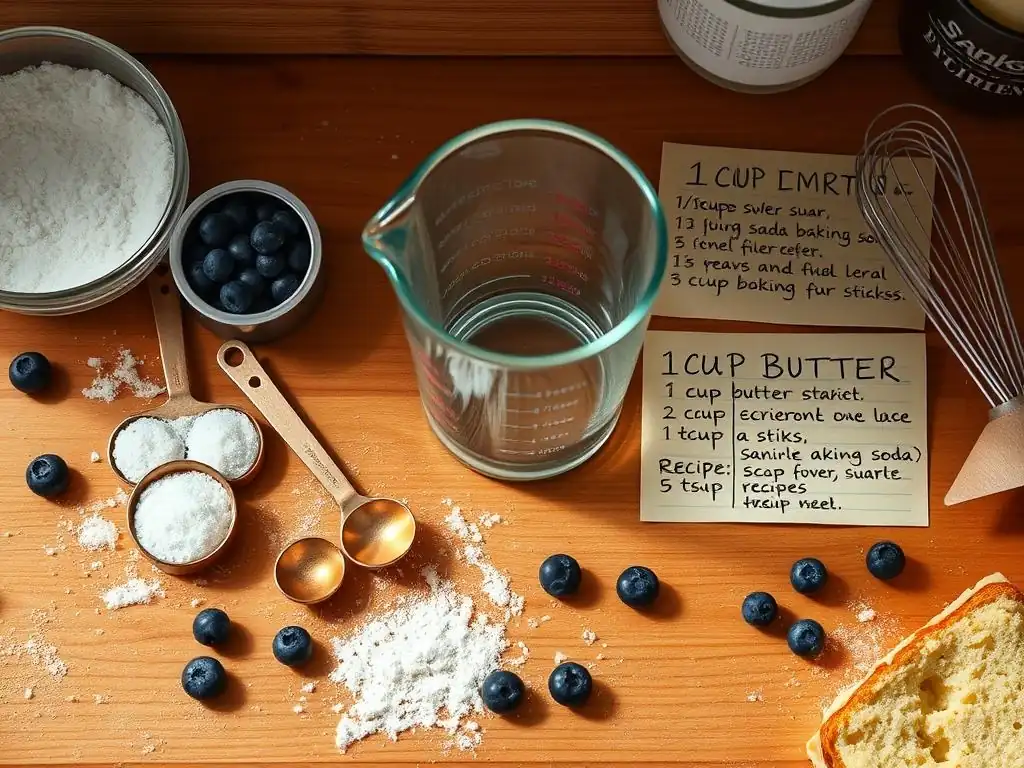
Sometimes you find a great recipe, but the measurements are in a different system than you're used to (e.g., grams instead of cups, or tablespoons instead of milliliters). Being able to convert measurements is a useful skill for any baker, and thankfully, it's an easy baking measurement technique with the right resources. While precise conversions can sometimes be tricky due to the density issue mentioned earlier, understanding basic equivalents and using reliable tools makes it manageable.
Converting recipes allows you to use a wider range of recipes and can also help you switch to measuring by weight for increased accuracy, even if the original recipe is in cups. It's about making recipes accessible and adaptable to your preferred measurement method and tools.
Understanding Baking Measurement Equivalents: Cups, Tablespoons, Teaspoons
Familiarizing yourself with standard baking measurement equivalents is very helpful for scaling recipes or making minor adjustments. Here are some common equivalents:
- 3 teaspoons = 1 tablespoon
- 16 tablespoons = 1 cup
- 1/4 cup = 4 tablespoons
- 1/2 cup = 8 tablespoons
- 1 cup = 8 fluid ounces (for liquids)
- 1 pint = 2 cups
- 1 quart = 4 cups
These volume equivalents are standard and apply regardless of the ingredient. However, remember that these are volume conversions. Converting between volume and weight (e.g., cups to grams) is ingredient-specific because different ingredients have different densities. Knowing these basic equivalents is an easy baking measurement technique that helps you navigate recipes written with different units.
Converting Grams to Cups: A Practical Guide for Precise Baking
Converting grams to cups (or vice versa) requires knowing the approximate weight of one cup of a specific ingredient. This is where the density issue comes into play, so conversions are often based on averages. For example:
- 1 cup All-Purpose Flour ≈ 120-130 grams (using the spoon and sweep method)
- 1 cup Granulated Sugar ≈ 200-220 grams
- 1 cup Brown Sugar (packed) ≈ 200-220 grams
- 1 cup Butter ≈ 227 grams (or 1 stick ≈ 113 grams)
- 1 cup Milk ≈ 237 grams (or milliliters)
- 1 cup Chocolate Chips ≈ 150-180 grams (varies by chip size/type)
To convert a recipe from grams to cups, divide the weight in grams by the approximate grams per cup for that specific ingredient. For example, if a recipe calls for 250 grams of flour, and you use 125 grams/cup as your estimate, you'd need approximately 2 cups of flour (250 / 125 = 2). It's important to use reliable conversion charts, as the exact weight per cup can vary slightly based on the source and ingredient type.
Online Baking Measurement Conversion Tools
Fortunately, you don't have to memorize all these conversions. There are many excellent online baking measurement conversion tools and charts available on baking websites (like BakeWithEase!). These tools allow you to simply input the ingredient and the amount in one unit (e.g., 250 grams of flour) and get the equivalent in another unit (e.g., cups).
Using an online converter is an incredibly easy baking measurement technique for handling recipes with unfamiliar units. Just be aware that cup conversions from weight are estimations based on average densities. For maximum accuracy, especially with flour, measuring by weight is always the most reliable method. However, online tools are perfect for quickly understanding approximate equivalents and making recipes accessible.
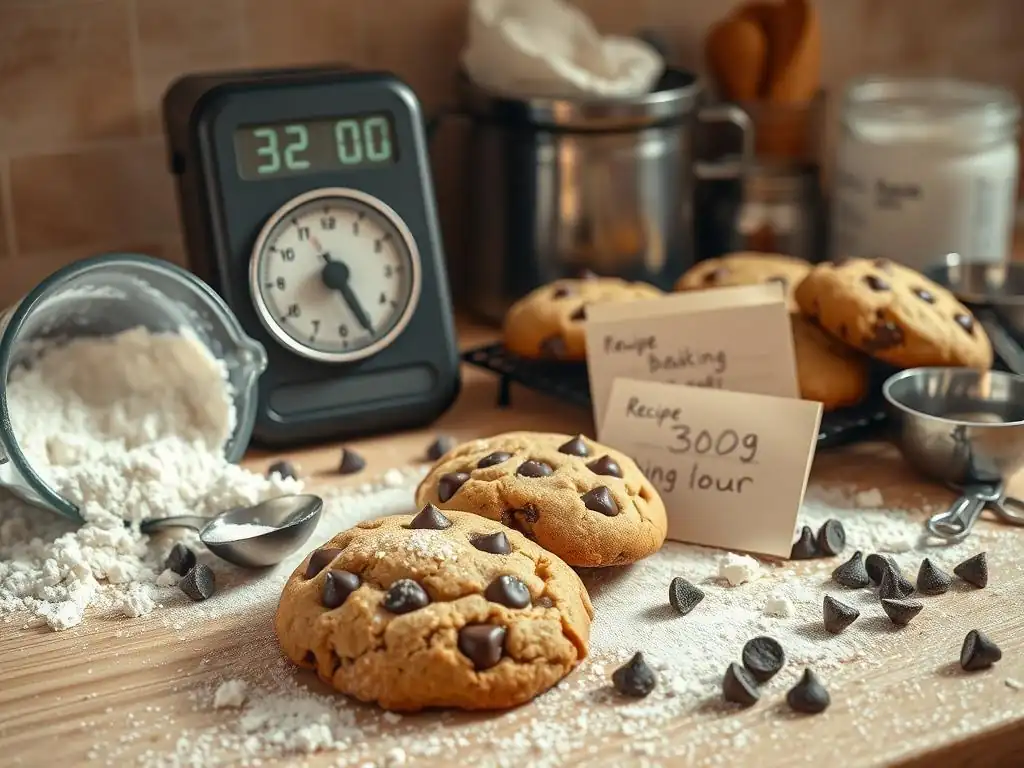
Even with the best intentions and tools, measurement mistakes can happen. Recognizing common errors and understanding their impact on your chocolate chip cookies is key to troubleshooting and improving your baking skills. Most common cookie issues – spreading too much, not spreading enough, being too dry, or too cakey – can often be traced back to inaccurate ingredient measurements.
Learning to identify the symptoms of measurement errors helps you understand what went wrong and how to correct it in future batches. It turns a potentially frustrating experience into a learning opportunity. Understanding these pitfalls is part of mastering easy baking measurement techniques and achieving consistent results.
Common Measurement Errors and How to Fix Them
One of the most frequent measurement errors is over-measuring flour when using cups, usually by scooping instead of using the spoon and sweep method. This results in too much dry ingredient, leading to dry, dense, and poorly spreading cookies. Fix: Use the spoon and sweep method, or ideally, measure flour by weight using a kitchen scale.
Another common issue is incorrectly measuring leavening agents (baking soda/powder). Using too much can cause excessive, rapid spread, thin cookies, and a strong, sometimes metallic, aftertaste. Using too little results in minimal spread and dense, puffy cookies. Fix: Carefully level off measuring spoons when measuring baking soda or powder. Double-check the recipe amount.
Under-measuring sugar can lead to cookies that don't spread enough and are less sweet than desired. Over-measuring sugar can cause excessive spread, thin, crispy (sometimes greasy) cookies. Fix: Level off granulated sugar; pack brown sugar firmly unless specified otherwise. Measure by weight for best accuracy, especially with sugar.
What Happens When You Use Too Much or Too Little Baking Soda?
The amount of baking soda (and baking powder, if used) is critical for the texture and spread of chocolate chip cookies. Baking soda is an alkaline leavener that reacts with acidic ingredients (like brown sugar, molasses, or sometimes added ingredients like vinegar or buttermilk) to produce carbon dioxide gas. This gas expands during baking, causing the cookies to rise and spread.
Using too much baking soda will cause an excessive, rapid release of gas, leading to cookies that spread too much, become very thin, and may have a crumbly texture. It can also leave a distinctly unpleasant, soapy or metallic aftertaste. Conversely, using too little baking soda means less gas is produced, resulting in cookies that don't spread adequately and remain thick, dense, and potentially cakey. The precise amount specified in the recipe is carefully balanced for the other ingredients to achieve the desired outcome.
How to Adjust Your Recipe Based on Measurement Issues
If you've baked a batch of chocolate chip cookies and they didn't turn out as expected, think back to how you measured.
- Cookies didn't spread enough, are thick/cakey, or dry? You likely used too much flour (especially if measuring by volume and scooping), or possibly too little fat or leavening. Adjustment for next time: Measure flour more accurately (spoon and sweep or by weight). Double-check fat and leavening amounts.
- Cookies spread too much, are very thin, or have a weird aftertaste? You likely used too much sugar or too much leavening (especially baking soda). Adjustment for next time: Measure sugar and leavening agents carefully, leveling precisely. Consider measuring sugar by weight.
- Cookies are greasy? Could be too much butter, or they spread too much due to other measurement errors (like too much sugar or leavening) causing the fat to separate. Adjustment for next time: Double-check butter measurement. Ensure other ingredients are measured accurately to control spread.
By correlating the cookie's outcome with potential measurement errors, you can make informed adjustments to your technique or the recipe amounts for your next baking attempt. This iterative process is how bakers learn and perfect their craft.
Achieving consistently perfect chocolate chip cookies isn't a matter of luck; it's a result of understanding the science and applying reliable techniques. At the heart of this consistency lies accurate measurement. When you measure ingredients precisely, you control the variables that impact texture, flavor, and spread, ensuring that each batch is as good as the last (or even better! ).
Embracing easy baking measurement techniques, whether it's mastering the spoon and sweep for flour, using a kitchen scale, or simply leveling off your measuring spoons correctly, empowers you to take control of your baking. It removes guesswork and replaces it with predictable results.
The true secret to consistent chocolate chip cookie results, batch after batch, is undeniably accurate ingredient measurement. While factors like oven temperature, baking time, and ingredient quality play a role, even the best ingredients and perfect timing won't save a cookie dough made with incorrect proportions.
Think about it: every single ingredient contributes to the final structure and flavor. The precise ratio of flour provides structure, sugar contributes sweetness and tenderness, fat adds richness and moisture, eggs bind everything together and add richness, and leavening agents control rise and spread. When these components are balanced according to a well-tested recipe, the outcome is predictable and delicious. By adopting easy baking measurement techniques and making precision a habit, you unlock the door to baking perfection every time.
Baking Resources: Your Resource for Mastering Baking Measurements and Recipes
BakeWithEase.com is designed to be your ultimate resource for mastering baking, starting with fundamental skills like accurate measurement. We provide simple guides, clear explanations, and recipes that emphasize the importance of proper technique. Whether you're using cups or scales, our goal is to make easy baking measurement techniques accessible to every home baker.
Explore our collection of beginner-friendly recipes, including simple slice-and-bake options, and find detailed tips on measuring various ingredients. With practice and the right resources, you'll gain confidence in your measuring abilities and consistently bake delicious treats like perfect chocolate chip cookies. Happy baking!
Frequently Asked Questions
What are some easy baking measurement techniques for beginners?
Beginners can use leveling tools for dry ingredients and measuring spoons for small amounts. Also, using a kitchen scale is highly recommended for accuracy.
Why is accurate measurement so important in baking, and what happens if I don't follow the measurement techniques?
Accurate measurements are crucial because baking relies on chemical reactions. Inaccurate measurements can lead to failed recipes, like flat cookies or dense cakes.
What is the best way to measure flour using easy baking measurement techniques?
The best way to measure flour is by weight using a kitchen scale. If measuring by volume, spoon the flour into the measuring cup and level it off without packing it.
Can I convert between volume and weight measurements for baking ingredients using easy baking measurement techniques?
Yes, you can convert, but it's important to use reliable conversion charts because ingredient densities vary. Using the correct conversion is key for consistent results.
Where can I find more easy baking measurement techniques and recipes for all skill levels?
BakeWithEase.com offers a wealth of simple recipes, techniques, and tips. You'll find step-by-step guides for pastries, breads, cakes, and more, suitable for all baking abilities.
Final Reflection: The Sweet Science of Precise Baking
The pursuit of perfectly baked goods hinges on accurate measurement; it's not just about following a recipe, but about understanding the fundamental science behind each ingredient. Ignoring this crucial aspect can lead to disappointing results, transforming a potential masterpiece into a culinary catastrophe. Yet, mastering precise measurement doesn't require a PhD in chemistry – it simply requires a little attention to detail and the right techniques.
The impact of accurate measurement extends far beyond the individual baker's kitchen. It's a cornerstone of culinary arts, influencing everything from professional pastry chefs' creations to the consistent quality of mass-produced baked goods. Baking is a science, not an art. You can't just throw things together and hope for the best.
– (This quote needs to be sourced to a relevant baking authority). Understanding the "why" behind each measurement fosters a deeper appreciation for the process, transforming baking from a mere task into a creative and rewarding experience. This understanding empowers us to troubleshoot, adapt, and ultimately, innovate in the kitchen.
Now, consider your own baking journey. What small adjustments in your measuring techniques could elevate your results? Perhaps investing in a kitchen scale will unlock a new level of precision, or maybe simply taking the time to properly level off ingredients will make all the difference. I encourage you to embrace the science of baking, to experiment with different techniques, and to discover the joy of consistently achieving delicious, perfectly baked creations. The journey of mastering measurement is a rewarding one, leading to a deeper connection with the art and science of baking.
Here's a CTA tailored to the provided information:
Unlock Your Baking Potential: Master the Metrics!
Thanks for taking the time to explore the world of baking science with us! We hope you've gained a new appreciation for how simple measurements can lead to incredible results. Ready to put your newfound knowledge into practice?
- Bake a batch using precise measurements: Challenge yourself to follow a recipe exactly, focusing on accurate measurements. Note the difference! This is the best way to solidify your understanding.
- Share your baking triumph (or even your challenges!) with our community in the comments below. Let's learn from each other!
- Explore our other articles on baking science to continue your journey towards baking mastery.
What small, precise measurement will you master next to elevate your baking game?