
Essential Tools for StressFree Beginner Baking

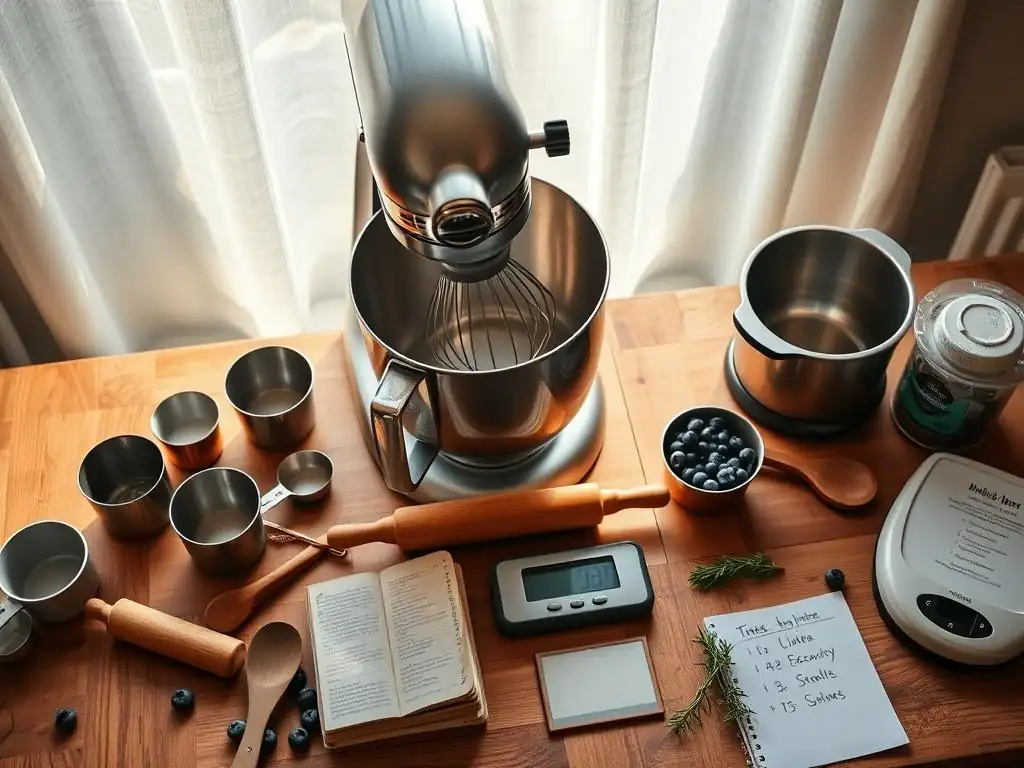
Welcome to BakeWithEase, your haven for conquering the kitchen, one delicious recipe at a time! Are you ready to transform from a baking novice into a confident creator? This article dives into the essential tools for stress-free beginner baking, but that's just the start. Curious about what simple additions can drastically improve your baking experience and set you up for success? Keep reading to discover our curated list and unlock the secrets to effortless baking!
- Introduction to Beginner Baking: Setting Up Your Kitchen for Success
- Must-Have Mixing Tools for New Bakers
- Measuring Tools: Accuracy is Key in Beginner Baking
- Baking Pans and Dishes: The Foundation of Your Baked Goods
- Cutting and Shaping Tools: Creating Beautiful Baked Goods
- Other Helpful Baking Tools for Beginners
- Building Your Beginner Baking Toolkit: [Budget-Friendly Options]
- Tips for Maintaining Your Beginner Baking Tools
- Conclusion: Bake with Confidence – Your Journey to Baking Success Starts Here!
-
Frequently Asked Questions
- What are the absolute essential tools a beginner baker needs to start?
- I'm on a budget. Which of the essential baking tools can I skip initially?
- How important is accuracy when measuring ingredients for baking?
- What's the best type of baking sheet for a beginner to purchase?
- Where can I find reliable beginner baking recipes and guidance?
- Final Reflection: Unlocking Joy in the Kitchen: Beginner Baking's Essential Tools
- Unleash Your Inner Baker: Start Baking Stress-Free Today!
Introduction to Beginner Baking: Setting Up Your Kitchen for Success
Why Having the Right Baking Tools Matters for Beginners
Embarking on your beginner baking journey should be exciting, not intimidating. One of the biggest secrets to stress-free baking, especially when you're just starting out, is having the right equipment at your fingertips. Think of your kitchen tools as your baking partners; they help ensure ingredients are measured accurately, mixtures are properly combined, and your delicious creations bake evenly. Trying to make cookies without a baking sheet or measure flour precisely with a coffee scoop can lead to frustrating results and might discourage you from continuing.
Having the essential baking tools for beginners makes following recipes much simpler and increases your chances of success significantly. For instance, using proper measuring cups versus guessing can be the difference between a perfectly risen cake and a dense disaster. A basic set of reliable tools removes much of the guesswork and potential for error, allowing you to focus on learning techniques and enjoying the process. Investing a little time and effort into gathering these beginner baking essential tools will pay off with consistently better results and a much more enjoyable baking experience.
Sally's Baking Addiction's Guide to Essential Baking Equipment
Building a solid foundation of baking equipment doesn't require a massive investment or a kitchen overflowing with gadgets. For beginner bakers, the focus should be on versatile tools that serve multiple purposes and are fundamental to most recipes, from simple muffins to classic cookies. While specialized tools exist for advanced techniques, the initial goal is to equip yourself for common baking tasks like measuring, mixing, and baking in pans.
Consider this guide as a roadmap to stocking your kitchen with the most impactful essential baking tools for beginners. We'll cover everything from basic measuring spoons to key pans and helpful accessories that streamline the baking process. By prioritizing these core items, you'll be well-prepared to tackle a wide range of beginner-friendly recipes with confidence and ease, setting the stage for many successful baking adventures ahead.
Must-Have Mixing Tools for New Bakers
The Importance of a Good Mixing Bowl for Baking Beginners
A mixing bowl is perhaps the most fundamental vessel in any baker's kitchen. For beginners, having a set of sturdy, appropriately sized mixing bowls is crucial. They need to be large enough to comfortably combine ingredients without spills, and ideally, have non-slip bottoms for stability while whisking or mixing. Materials like glass, stainless steel, or durable plastic are common, with glass offering visibility (though heavier) and stainless steel being lightweight and non-reactive. A set often includes bowls ranging from about 1.5 quarts for whisking eggs to 5 quarts or more for mixing cake batter or bread dough.
Using the right size bowl prevents ingredients from flying out as you mix and gives you ample space to incorporate dry and wet components thoroughly. For example, whipping cream or egg whites requires a bowl with enough height and diameter to allow the whisk to incorporate air effectively – a small bowl just won't cut it. Having two or three different sizes available means you're ready for recipes that require separating ingredients, like whisking egg whites in one bowl and mixing yolks with sugar in another.
Hand Mixer vs. Stand Mixer: Choosing the Right One for You
When it comes to power mixing, beginners have two main options: a hand mixer or a stand mixer. A hand mixer is a fantastic starting point for many beginner bakers. It's affordable, typically ranging from $20 to $50, requires less storage space, and is perfect for tasks like whipping cream, beating eggs, or mixing small batches of cookie dough. While it requires you to hold the mixer and bowl, it's versatile enough for most common baking tasks.
A stand mixer, while a larger investment (often $200+), offers significant advantages, especially if you plan on baking frequently or tackling more demanding tasks like kneading bread dough or mixing large batches. It frees up your hands, allowing you to add ingredients while it mixes, and generally has more power and capacity. For a beginner, a hand mixer is usually sufficient to start, covering the needs for cakes, cookies, and batters. You can always upgrade to a stand mixer later if your baking passion grows.
Whisks and Spatulas: Essential for Combining Ingredients
Whisks and spatulas are the workhorses of combining ingredients by hand. A good balloon whisk is essential for aerating ingredients like eggs and cream, or for smoothly combining wet ingredients like sauces or batters. The wires are designed to incorporate air efficiently, which is key for fluffy outcomes in things like meringues or whipped cream. You might also find a flat whisk useful for scraping the bottom of pans or bowls.
Spatulas, particularly those made of heat-resistant silicone, are indispensable for scraping down the sides of bowls, folding ingredients gently (like folding egg whites into batter), and transferring batters or doughs. A sturdy rubber or silicone spatula ensures you get every last bit of batter out of the bowl, minimizing waste. An offset spatula, with its angled blade, is perfect for spreading frosting or leveling batters in pans. These simple, affordable tools are vital beginner baking essential tools for achieving smooth, well-combined mixtures.
Measuring Tools: Accuracy is Key in Beginner Baking
Dry Measuring Cups: Ensuring Precise Ingredient Amounts
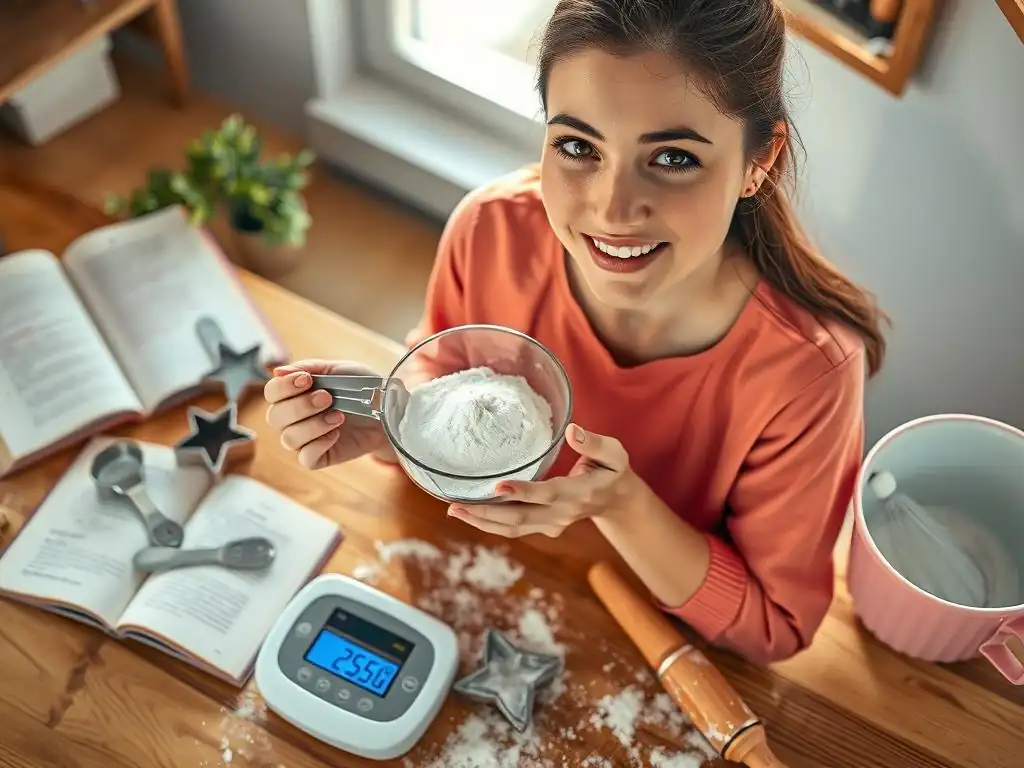
Baking is often described as a science, and accurate measurement is the foundation of successful results. Dry measuring cups are designed to measure ingredients like flour, sugar, cocoa powder, and oats using the "scoop and level" method. A standard set usually includes 1/4 cup, 1/3 cup, 1/2 cup, and 1 cup sizes. It's crucial to use these correctly: lightly spoon the dry ingredient into the cup until overflowing, then level it off with a straight edge (like a knife or the back of a spatula) without packing it down, especially flour.
Using dry measuring cups precisely prevents common beginner mistakes like adding too much flour, which can result in dry, dense baked goods. For example, incorrectly scooping flour directly from the bag can add up to 25% more flour than intended. Having a reliable set of metal or sturdy plastic dry measuring cups is a non-negotiable part of your beginner baking essential tools kit.
Liquid Measuring Cups: Measuring Liquids with Confidence
Liquid measuring cups are distinctly different from dry ones and are designed for ingredients like water, milk, oil, and syrups. They are typically made of clear glass or plastic, have a spout for easy pouring, and feature measurement markings on the side. To use them correctly, place the cup on a flat surface and bend down to eye level to check the measurement line. This ensures you account for the meniscus (the curve of the liquid surface).
Using liquid measuring cups ensures you add the exact amount of wet ingredients required by the recipe. Adding too much or too little liquid can significantly alter the consistency and outcome of your batter or dough. For instance, just a tablespoon or two of extra milk in a cookie dough can make them spread too much in the oven. A standard 2-cup liquid measuring cup is a versatile size for most beginner recipes.
Kitchen Scales: The Ultimate Tool for Accurate Baking Measurements
While measuring cups are useful, a digital kitchen scale is the most accurate way to measure ingredients, particularly dry ones like flour and sugar. Many professional bakers and serious amateurs swear by weighing because it eliminates the inconsistencies inherent in volume measurements (like how tightly flour is packed). A typical recipe might call for "1 cup of flour," which can vary in weight by several ounces depending on how it's scooped and leveled. Weighing ensures you have the exact amount every time.
Many modern recipes provide ingredient weights in grams or ounces, making a scale incredibly useful. A good digital scale can measure in both grams and ounces and often has a tare function to zero out the weight of the container. Scales are relatively affordable, often costing between $15 and $30. While not strictly essential for every single beginner recipe, adding a kitchen scale to your collection of beginner baking essential tools significantly elevates your accuracy and consistency, leading to better results, especially in recipes where precision is paramount, like bread or delicate pastries.
Baking Pans and Dishes: The Foundation of Your Baked Goods
Cake Pans: Round, Square, and Beyond - What You Need to Start
Cake pans are fundamental for baking cakes, brownies, and sometimes even savory dishes. For beginners, starting with a couple of versatile sizes is a smart move. Two 8-inch or 9-inch round cake pans are perfect for baking layer cakes, a classic beginner project. A 9x13 inch rectangular pan is incredibly versatile for sheet cakes, brownies, bar cookies, and casseroles.
Choosing pans made from light-colored metal, like aluminum, is often recommended as they conduct heat evenly and prevent edges from over-browning too quickly compared to darker pans. Having just these two types of pans will allow you to bake a vast majority of beginner-friendly cake and brownie recipes.
Muffin Tins and Cupcake Liners: Baking Perfect Treats
Muffins and cupcakes are popular choices for beginner bakers due to their relatively simple recipes and quick baking times. A standard 12-cup muffin tin is an essential tool for creating these portioned treats. Look for one made from non-stick metal or coated metal for easier release.
Using paper or silicone cupcake liners makes cleanup a breeze and helps the baked goods release cleanly from the tin. While not strictly necessary (you can grease and flour the tin), liners are highly recommended for convenience. Having one standard muffin tin opens the door to baking not only sweet muffins and cupcakes but also savory items like mini quiches or cornbread muffins.
Baking sheets, also commonly called cookie sheets, are arguably the most versatile pan in a beginner's kitchen. They are flat or have low sides and are primarily used for baking cookies, pastries, scones, and roasting vegetables. A standard "half sheet" size (approximately 13x18 inches) is ideal as it fits most home ovens and provides ample surface area.
Look for a sturdy aluminum baking sheet, as it provides even heat distribution. While some have a non-stick coating, many bakers prefer using parchment paper or silicone baking mats on regular sheets for easy cleanup and non-stick properties. Having one or two reliable baking sheets is critical for any beginner baking project that involves drop cookies, cut-out cookies, or freeform pastries.
Cutting and Shaping Tools: Creating Beautiful Baked Goods
Rolling Pins: Achieving Even Dough Thickness
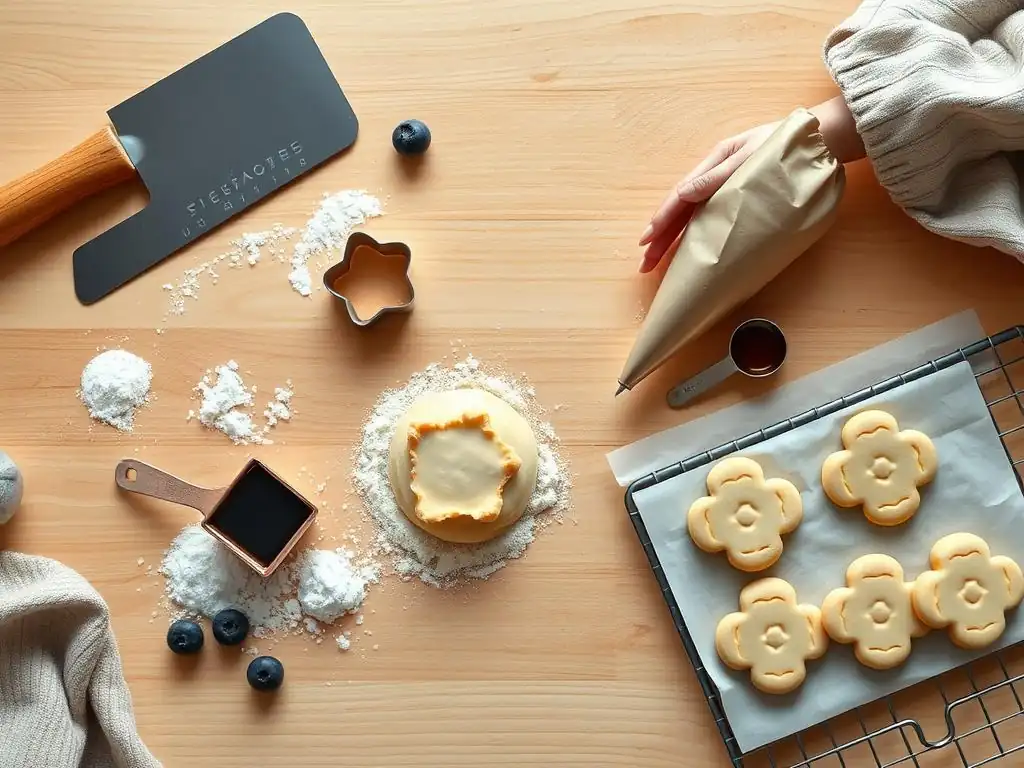
Many beginner baking recipes, from pie crusts and biscuits to cut-out cookies, require rolling out dough to a uniform thickness. A rolling pin is the essential tool for this task. Simple wooden rolling pins are classic and effective. American-style pins have handles, while French-style pins are tapered dowels without handles, allowing for more direct feel of the dough.
Achieving even thickness is crucial for consistent baking; thin spots will burn while thick spots remain undercooked. A rolling pin helps you evenly flatten dough, ensuring everything bakes at the same rate. For beginners, a basic wooden pin is a great starting point.
While not strictly essential for all beginner baking, cookie cutters add a layer of fun and creativity, especially if you're baking with or for kids. Simple shapes like circles, squares, stars, or hearts are easy to use and yield recognizable results. Metal cutters provide clean cuts, while plastic ones can be safer for little hands.
Using cookie cutters turns a simple batch of dough into festive treats. They are particularly useful for sugar cookies or gingerbread. While you can always cut shapes with a knife, cookie cutters make the process quicker, more uniform, and visually appealing.
Bench Scrapers: A Versatile Tool for Dough Handling
A bench scraper, also known as a dough scraper, is a simple yet incredibly useful tool for anyone working with dough. It's a flat, rectangular piece of metal or plastic with a handle. It's perfect for dividing dough into portions (like for rolls or scones), lifting sticky dough from a counter surface, and cleaning up flour and dough scraps from your workspace.
For beginners tackling bread or biscuit recipes, a bench scraper makes handling the often-sticky dough much easier and less messy. It helps you keep your workspace tidy and efficiently manage dough without resorting to using your hands for everything, which can lead to stickiness overload.
Other Helpful Baking Tools for Beginners
Oven Thermometer: Ensuring Accurate Oven Temperature
Did you know that many home ovens can be inaccurate, sometimes by as much as 25-50°F (approximately 15-30°C)? Baking relies heavily on precise temperature control for proper rising, browning, and doneness. An inexpensive oven thermometer, typically costing around $10-$15, hangs or sits inside your oven and provides a true reading of the internal temperature.
Relying solely on your oven's built-in thermostat can lead to inconsistent results – cookies that burn on the bottom or cakes that sink in the middle because the temperature wasn't what you thought it was. An oven thermometer is a small but mighty tool that removes this variable, helping you bake more consistently and successfully, making it a valuable addition to your beginner baking essential tools.
Cooling Racks: Preventing Soggy Bottoms
After taking your beautiful baked goods out of the oven, they need to cool properly. Placing hot cakes, cookies, or bread directly onto a solid surface traps steam, leading to soggy bottoms. A wire cooling rack allows air to circulate around the entire item, promoting even cooling and preventing condensation from ruining the texture.
Cooling racks come in various sizes and grid patterns. A standard rectangular rack that fits a half baking sheet is a good starting point. Allowing items to cool on a rack for the time specified in the recipe is crucial for setting properly and achieving the desired texture, especially for cookies and loaves of bread.
Parchment Paper & Silicone Baking Mats: Non-Stick Baking Solutions
Parchment paper and silicone baking mats are lifesavers for preventing sticking and making cleanup significantly easier. Parchment paper is disposable paper treated to be non-stick and heat-resistant. You can line baking sheets or pans with it. A roll costs approximately $5-$10 and lasts for many baking sessions.
Silicone baking mats (like Silpat) are reusable alternatives. They are placed directly on a baking sheet and provide an excellent non-stick surface for cookies, pastries, and meringues. While more expensive upfront (typically $10-$20 per mat), they can be washed and reused hundreds of times, making them an eco-friendly and cost-effective option over time. Both options are fantastic for ensuring your baked goods release cleanly without leaving a sticky mess behind, streamlining your beginner baking experience.
Building Your Beginner Baking Toolkit: [Budget-Friendly Options]
Starting Small: Affordable Baking Tool Recommendations
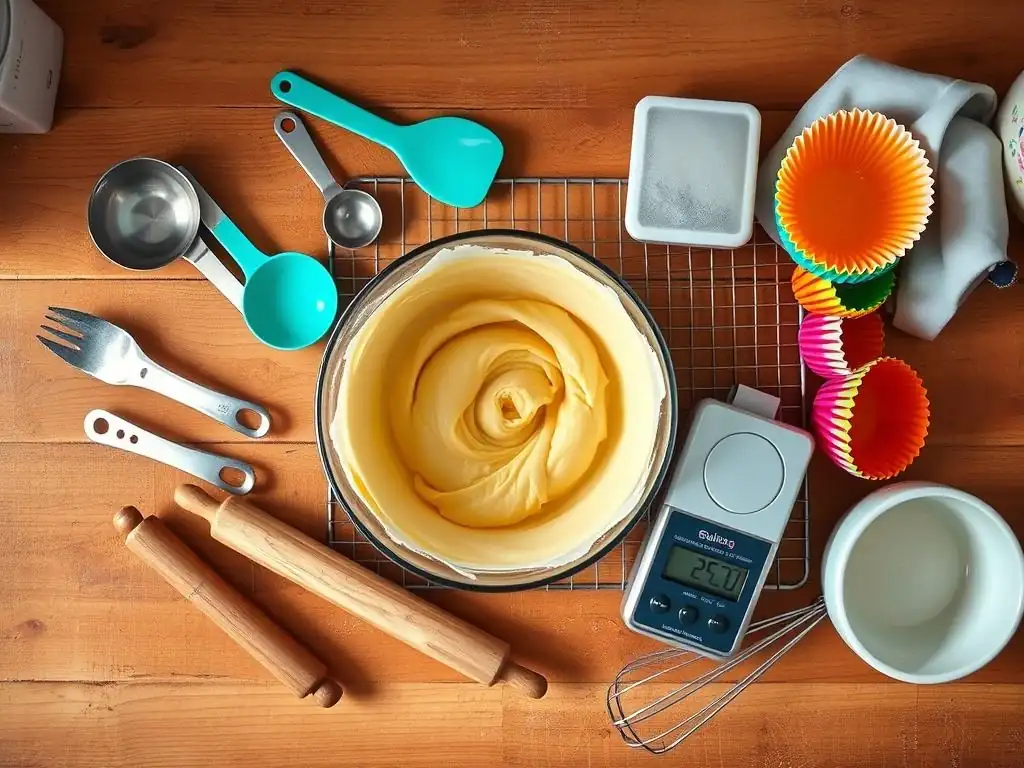
You don't need to buy every tool mentioned above all at once to start baking. A great strategy for beginners is to start with a few truly essential, multi-purpose tools that fit your budget. For under $100, you can assemble a very functional beginner baking toolkit. Consider prioritizing:
- A set of dry measuring cups and spoons (approx. $10-$20)
- A 2-cup liquid measuring cup (approx. $5-$10)
- A set of 2-3 mixing bowls (approx. $20-$30)
- A whisk and a couple of silicone spatulas (approx. $10-$20)
- One half-sheet baking sheet (approx. $15-$25)
- One 9x13 inch baking pan (approx. $10-$20)
- Parchment paper (approx. $5-$10)
This basic selection of beginner baking essential tools will allow you to make countless recipes, from simple cookies and brownies to cakes and muffins. You can gradually add more specialized tools as you discover new recipes and techniques you want to try.
Investing in Quality: Long-Lasting Baking Tools for Beginners
While starting with budget-friendly options is smart, there are certain tools where investing a bit more upfront can pay off in durability and performance over time. For instance, heavy-gauge aluminum baking sheets resist warping better than thin ones. Sturdy stainless steel mixing bowls are virtually indestructible.
If you find yourself baking frequently and want to upgrade, tools like a reliable stand mixer (while a significant investment, often $200+), a high-quality digital scale that measures to 0.1g precision, or durable non-stick cake pans can make a noticeable difference in ease of use and consistency of results. As you progress in your beginner baking journey, consider which tools you use most often and might benefit from a quality upgrade that will last for years.
Tips for Maintaining Your Beginner Baking Tools
Cleaning and Storing Your Baking Essentials
Proper care ensures your beginner baking essential tools stay in good condition and are ready for your next baking session. Most measuring cups, spoons, whisks, and spatulas are dishwasher safe, but checking manufacturer instructions is always wise. Hand washing and immediately drying metal pans and baking sheets is often recommended to prevent rust and maintain non-stick surfaces (if applicable). Avoid using abrasive scrub pads on non-stick coatings.
Storing your tools neatly not only keeps your kitchen organized but also protects the equipment. Stack mixing bowls by size, hang measuring cups and spoons on hooks, and store pans vertically using dividers or racks if possible to prevent scratching. Proper cleaning and storage extend the lifespan of your tools and make baking a more pleasant experience.
Extending the Lifespan of Your Baking Equipment
Taking a few extra steps can help your beginner baking tools last longer. For instance, avoid cutting directly on non-stick surfaces like baking mats or coated pans, as this can damage the finish. Use silicone or wooden utensils instead of metal ones in non-stick pans. For items like rolling pins, a simple wipe-down is usually sufficient, avoiding soaking in water which can cause wood to crack.
Regular maintenance, like occasionally tightening screws on mixer attachments or properly drying metal items, prevents common issues like rust or loosening parts. By treating your essential baking tools for beginners with care, you ensure they perform reliably for many batches to come, saving you money and frustration in the long run.
Conclusion: Bake with Confidence – Your Journey to Baking Success Starts Here!
Embracing the Fun of Baking with the Right Tools
Stepping into the world of beginner baking is an exciting adventure filled with delicious possibilities. While recipes provide the instructions, having the right beginner baking essential tools is like having a reliable co-pilot in the kitchen. These tools don't just make the job easier; they help ensure accuracy, consistency, and ultimately, successful outcomes that build confidence. From accurately measuring your flour with a dry cup to ensuring your oven is the correct temperature with a thermometer, each tool plays a role in transforming simple ingredients into delightful treats.
Don't feel overwhelmed by the array of baking gadgets available. Focus on acquiring the core essential baking tools for beginners discussed here – they are more than sufficient to get you started on countless recipes. With your basic toolkit assembled, you're well-equipped to tackle new challenges, learn fundamental techniques, and most importantly, enjoy the creative and rewarding process of baking. So gather your tools, pick a recipe, and start baking with confidence – your journey to sweet success begins now!
Frequently Asked Questions
What are the absolute essential tools a beginner baker needs to start?
A beginner should focus on basic tools like measuring cups & spoons, a mixing bowl, a spatula, and a baking sheet. These allow you to follow most simple recipes without unnecessary expense.
I'm on a budget. Which of the essential baking tools can I skip initially?
You can initially skip specialized items like stand mixers or pastry blenders. Focus on acquiring accurate measuring tools and a good quality baking sheet first.
How important is accuracy when measuring ingredients for baking?
Accuracy is crucial for baking success. Even slight variations in measurements can significantly impact the final result, especially for things like leavening agents.
What's the best type of baking sheet for a beginner to purchase?
A light-colored, non-stick baking sheet is a great starting point. It helps prevent burning and makes releasing baked goods much easier.
Where can I find reliable beginner baking recipes and guidance?
Websites like BakeWithEase.com offer step-by-step guides and easy-to-find ingredient lists, specifically designed for beginner bakers seeking stress-free experiences.
Final Reflection: Unlocking Joy in the Kitchen: Beginner Baking's Essential Tools
The pursuit of stress-free baking, especially for beginners, isn't about achieving perfection; it's about cultivating a joyful experience. Mastering the fundamentals, armed with the right tools, transforms the potential frustration of a failed recipe into the satisfaction of a delicious creation. This is more relevant than ever in a world that often prioritizes instant gratification over mindful processes.
The impact of accessible, enjoyable baking extends far beyond the kitchen. It fosters creativity, encourages experimentation, and builds confidence. The simple act of kneading dough or carefully measuring ingredients can be incredibly therapeutic. As Julia Child famously said, Find something you're passionate about and keep tremendously interested in it.
Baking, with the right tools and mindset, can be that passion. It's a skill that connects us to tradition, allows for self-expression, and provides a tangible reward for our efforts.
Now, it's your turn. Consider which tools resonate most with you from those discussed. Don't feel pressured to acquire everything at once; start small, build your collection gradually, and most importantly, embrace the process. Remember, the most essential tool in your baking arsenal is your willingness to learn, experiment, and enjoy the journey. So, grab your apron, gather your ingredients, and let the joy of baking begin!
Unleash Your Inner Baker: Start Baking Stress-Free Today!
Thanks for joining us on this baking journey! We hope you've picked up some valuable tips and tricks to make your baking adventures easier and more enjoyable. Now it’s time to put your new skills into action.
- Begin with your favorite recipe: Choose a simple recipe that excites you and gather your tools. Don’t be afraid to start small and build your confidence.
- Share your baking journey: Post a picture of your creation on social media and tag us @BakeWithEase. We’d love to see what you’ve made!
- Explore our other resources: Dive deeper into the world of baking with our library of helpful guides and recipes available on our website. There’s plenty to help you along the way.
What simple recipe will you try first to kickstart your stress-free baking experience?