
Don't Decorate Without These: MustHave Essential Tools List

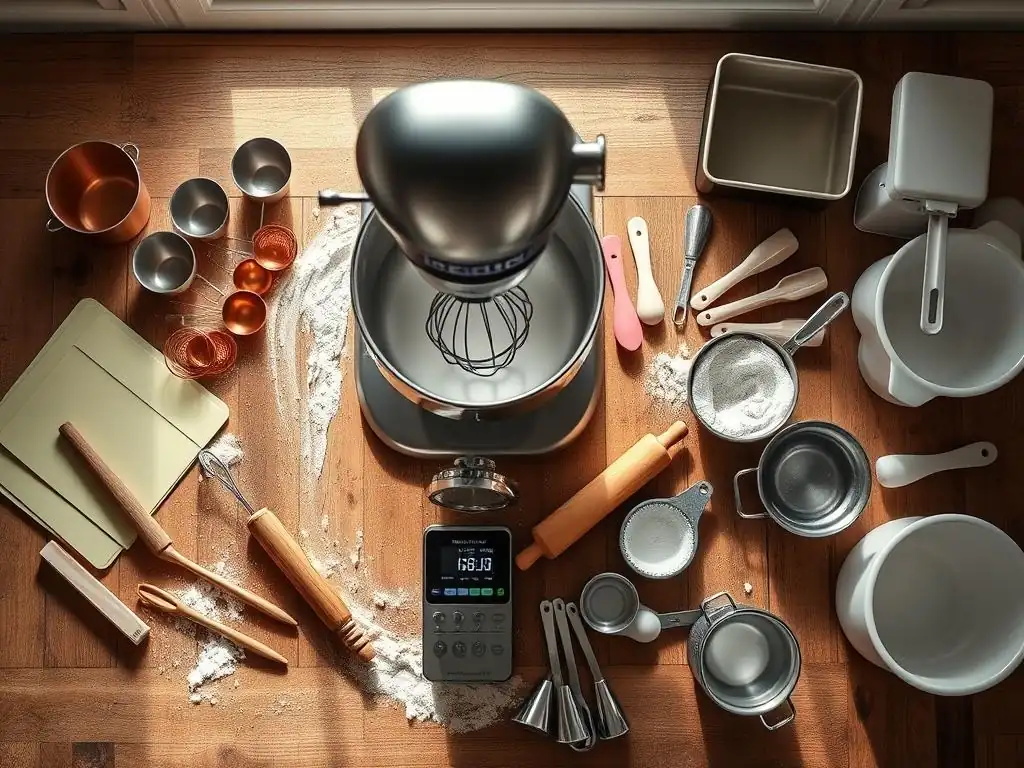
Welcome to BakeWithEase, your trusted guide to a sweeter kitchen experience! Ever wondered if you have everything you need before diving into that ambitious baking project? This article cuts through the clutter. Dive in to discover our essential baking tools checklist and ensure you're perfectly equipped to create delicious masterpieces. Ready to transform your baking game? Let's get started!
- Don't Decorate Without These: Must-Have Essential Baking Tools List
- Essential Baking Tools Checklist for Cake Decorating: Your Complete Guide
- The Must-Have Essential Baking Tools Checklist for Cake Decorating: A Buyer's Guide
- Choosing the Right Essential Cake Decorating Tools: A Buyer's Guide Summary
- Mastering Cake Decorating: Tips and Tricks
- Conclusion: Your Essential Baking Tools Checklist for Cake Decorating Success.
-
Frequently Asked Questions
- What are the most essential baking tools for a beginner?
- How important is a stand mixer versus a hand mixer?
- What type of measuring tools are most accurate for baking?
- Beyond the basics, what's one specialty tool that can greatly improve baking results?
- Where can I find a comprehensive essential baking tools checklist?
- Final Reflection: Baking Bliss Begins with the Right Tools
- Unleash Your Inner Baker: Get Baking!
Don't Decorate Without These: Must-Have Essential Baking Tools List
Essential Baking Tools Checklist for Cake Decorating: Your Complete Guide
Why a Baking Tools Checklist is Crucial for Cake Decorating Success
Embarking on the journey of cake decorating, whether for a simple birthday cake or an elaborate wedding masterpiece, requires more than just creativity; it demands the right equipment. Having a well-thought-out essential baking tools checklist is absolutely fundamental. Think of it as your blueprint for success, ensuring you have the necessary instruments at your fingertips to execute techniques flawlessly and achieve professional-looking results without frustration. Without the proper tools, tasks like smoothing buttercream, piping intricate designs, or leveling cake layers can become incredibly difficult, leading to uneven finishes, messy details, and overall disappointment.
A comprehensive essential baking tools checklist helps you stay organized and prepared. It prevents those last-minute scrambles to find a specific tip or the realization mid-task that you lack a crucial item like an offset spatula. By systematically acquiring the tools on your list, you build a reliable foundation for any decorating project.
This proactive approach not only saves time and reduces stress but also encourages experimentation with different techniques, allowing you to grow your skills and tackle more complex designs with confidence. Having the right essential baking tools for baking cakes and decorating them truly empowers you to bring your sweetest visions to life.
The Must-Have Essential Baking Tools Checklist for Cake Decorating: A Buyer's Guide
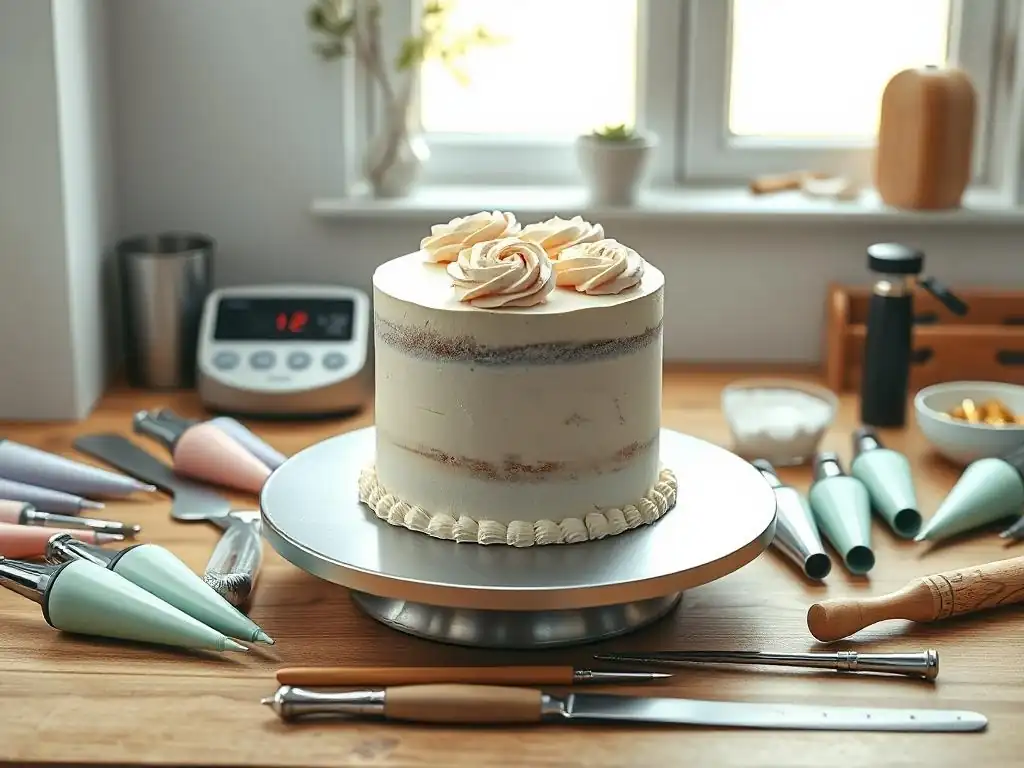
Tier 1: Foundation Tools - Essential for Every Cake Decorator
1. Offset Spatulas: The Cake Decorator's Best Friend
Offset spatulas are arguably the most indispensable tools on any essential baking tools checklist for decorators. These spatulas, featuring a blade that is bent at an angle from the handle, are perfect for spreading frosting smoothly and evenly across the top and sides of a cake. They come in various sizes, typically ranging from small 4-inch blades for detailed work or cupcakes to larger 8-inch or 10-inch blades ideal for quickly covering larger cakes. A good set usually includes at least one small and one medium-sized offset spatula, often with stainless steel blades for durability and easy cleaning.
The angled design of the offset spatula is key to its functionality. It allows you to keep your knuckles away from the cake surface, preventing accidental bumps or smudges as you spread frosting. This is particularly crucial when applying a crumb coat or the final layer of buttercream.
Using smooth, consistent strokes with an 8-inch offset spatula, you can cover the sides of a 9-inch round cake in just a few minutes, achieving a relatively even base before moving on to smoothing. For detail work, like filling small gaps or lifting delicate decorations, a smaller 4-inch offset spatula is invaluable.
2. Cake Scrapers: Achieve Perfectly Smooth Sides
Once your cake is covered in frosting, achieving those coveted sharp edges and perfectly smooth sides requires a cake scraper. These simple tools, often flat pieces of plastic or metal (like stainless steel), come in various heights, commonly 6 inches or 8 inches, to match standard cake heights. Holding the scraper against the side of the rotating cake while applying gentle pressure helps remove excess frosting and fill in imperfections, resulting in a professional, smooth finish that's difficult to achieve with just a spatula.
Using a cake scraper transforms the look of your finished cake from homemade to bakery-quality. For instance, taking an 8-inch metal scraper and holding it perpendicular to your turntable while spinning the cake allows you to level off buttercream on the sides of a two-layer cake, creating a consistent, smooth surface. Some scrapers even have textured edges, allowing you to create decorative patterns like stripes or waves directly in the frosting as you scrape. Including a basic smooth-edged cake scraper is a must for your essential baking tools checklist.
3. Piping Bags and Tips: Unleash Your Creativity
Piping bags and a collection of tips are essential for adding decorative borders, writing messages, creating rosettes, stars, leaves, and countless other designs with buttercream, royal icing, or ganache. Piping bags come in disposable plastic, reusable silicone, or canvas materials. Disposable bags are convenient for quick color changes and easy cleanup, often sold in rolls of 100 or more. Reusable bags are more environmentally friendly and durable, though they require thorough washing.
Piping tips, usually made of metal (like stainless steel), come in a vast array of shapes and sizes, each producing a different effect. A basic starter set might include 12-24 common tips, such as various sizes of round tips (for writing and dots), star tips (for borders and rosettes), and petal tips (for flowers).
For example, a Wilton 1M open star tip is incredibly popular for creating large, swirled rosettes on cupcakes or cakes, while a small #3 round tip is perfect for fine line work and writing. Having a versatile set of piping tools is key on any comprehensive essential baking tools checklist.
4. Turntable (Rotating Cake Stand): For Effortless Decorating
A turntable, also known as a rotating cake stand, is a game-changer for cake decorating. It allows you to easily spin the cake as you apply frosting, smooth the sides with a scraper, or pipe decorations, eliminating the need to constantly move around the cake yourself. This results in smoother, more consistent application and allows for continuous piping lines without awkward stops and starts. Turntables range from basic plastic models to more sturdy metal ones with smooth-gliding ball bearings.
Investing in a good quality turntable can significantly improve your decorating efficiency and the final look of your cake. A typical plastic turntable might have a diameter of around 11-12 inches and stand about 3-5 inches high, offering enough surface area for most standard cakes. Metal turntables, often preferred by professionals, can support heavier cakes and offer smoother, more controlled rotation, allowing for precise detail work or effortless smoothing of large surfaces. It's an essential item for anyone serious about their essential baking tools checklist for decorating.
5. Cake Leveler: Achieve Even Cake Layers
Building a stable, professional-looking layered cake starts with even cake layers. A cake leveler is a simple tool designed to slice through a baked cake horizontally, ensuring each layer is uniform in thickness. This prevents your cake from leaning and makes stacking and frosting much easier, resulting in a neater final product. Cake levelers typically consist of a wire or serrated blade attached to a frame, often with adjustable height settings to cut layers of different thicknesses, perhaps from 0.5 inches up to 2 inches.
Using a cake leveler is far more reliable than trying to slice layers with a knife freehand, which often results in uneven, sloped layers. By placing the leveler on a flat surface and pulling the wire or blade through the cake, you get a clean, straight cut every time. This consistency is vital for stacking multiple layers securely and ensuring your cake stands tall and proud. Adding an adjustable cake leveler to your essential baking tools checklist is a small investment that makes a big difference in the structure and appearance of your layered cakes.
Tier 2: Enhancing Your Cake Decorating Arsenal - Recommended Tools
1. Fondant Tools: Working with Fondant Like a Pro
If you plan to work with fondant, a specific set of tools is necessary to roll, cut, shape, and smooth this pliable sugar paste. While not strictly part of a basic essential baking tools checklist focused solely on buttercream, fondant tools are crucial for anyone expanding their decorating repertoire. A basic fondant kit often includes a non-stick rolling pin (wider than a standard pastry pin), a fondant smoother (a flat, smooth tool to remove air bubbles and create a polished finish), a cutting wheel (like a small pizza cutter specifically for fondant), and various modeling tools.
Working with fondant opens up a world of possibilities, from covering entire cakes with a smooth finish to creating intricate figures and decorations. Tools like a ball tool are used to thin edges of petals for realistic flowers, while a pointed tool can be used to create impressions or details. Using a fondant smoother on a fondant-covered cake, for example, helps adhere the fondant to the buttercream underneath and eliminates any bumps or wrinkles, achieving that perfectly smooth, almost porcelain-like finish.
2. Airbrush System: Add Depth and Dimension
An airbrush system for cake decorating uses compressed air to spray food-grade coloring onto cakes, creating smooth gradients, vibrant colors, and detailed designs that are difficult to achieve with traditional methods. While a more advanced tool, it's a fantastic addition for adding dimension and a professional touch. A typical system includes a small compressor, a hose, and an airbrush gun with a reservoir for liquid food coloring.
Airbrushing allows for quick, even color application over large areas or precise application for shading and highlighting. For instance, you can airbrush a sunset gradient onto a cake or add realistic shading to sculpted figures or sugar flowers. Different nozzles and pressure settings on the compressor allow for varying spray widths and intensities. While requiring some practice, an airbrush system can elevate your cake decorating skills significantly beyond the fundamental essential baking tools for baking and basic piping.
3. Cookie Cutters: Versatile for Cake Decorations
While primarily used for baking cookies, cookie cutters are incredibly versatile tools for cake decorating, earning them a spot on an expanded essential baking tools checklist. They can be used to cut shapes from rolled-out fondant, gum paste, or even thin layers of cake or brownie to create decorative elements. Cutters come in countless shapes and sizes, from simple geometric forms like circles and stars (a 2-inch star cutter is great for creating borders) to intricate seasonal designs.
Using cookie cutters simplifies the process of creating consistent shapes for repeating patterns or specific themes on a cake. For example, you can cut out dozens of fondant snowflakes using a small cutter for a winter-themed cake or use alphabet cutters to create edible lettering. Their ease of use makes them perfect for adding quick, clean decorative elements without needing advanced sculpting skills.
4. Measuring Cups & Spoons: Precision for Perfect Results
Though seemingly basic, accurate measuring cups and spoons are absolutely critical components of any essential baking tools checklist, even when focusing on decorating. While they are fundamental for baking the cake itself, they are equally important for preparing frostings, glazes, and icings where precise ingredient ratios are key to achieving the correct consistency for piping, spreading, or sculpting.
For instance, royal icing, used for intricate piping and flooding techniques, requires exact measurements of powdered sugar, meringue powder, and liquid. Just a slight variation in liquid can change the consistency from stiff (good for piping details) to flood consistency (good for filling in areas). Using standard dry measuring cups (leveled off) and liquid measuring cups (read at eye level) along with a reliable set of measuring spoons (e.g., 1/4 tsp to 1 tbsp) ensures your frostings and decorative elements turn out exactly as intended, making your decorating process smoother and more successful.
Tier 3: Specialized Cake Decorating Tools - For Advanced Techniques
1. Modeling Tools: Sculpting Realistic Decorations
For decorators who delve into creating realistic sugar flowers, figures, or intricate edible sculptures using gum paste or modeling chocolate, a set of modeling tools is indispensable. These small, handheld tools, often with various tips on each end (like balls, points, knives, and shell shapes), allow you to shape, sculpt, and add fine details to your edible creations. A typical set might include 8-10 different tools, providing a range of options for various techniques.
Modeling tools enable you to transform simple sugar paste into detailed works of art. For example, a ball tool can be used to thin the edges of gum paste petals, giving them a delicate, lifelike quality, while a veining tool can impress realistic leaf patterns. A pointed tool is excellent for creating textures like fur or hair on animal figures. Mastering the use of these tools, alongside your other essential baking tools for baking and decorating, allows for highly detailed and personalized cake designs.
2. Stencils: Creating Intricate Patterns Effortlessly
Cake stencils are thin sheets, usually made of plastic, with patterns cut out of them. They are used to transfer designs onto a cake surface using various mediums like royal icing, buttercream, or airbrush colors. Stencils allow decorators to easily create complex, repeating patterns or detailed images on cakes that would be very time-consuming or difficult to pipe by hand, such as damask patterns, geometric shapes, or lace effects.
To use a stencil, it's typically held or lightly adhered to the side or top of a chilled, frosted cake. Then, a medium like royal icing is spread thinly over the stencil using an offset spatula or scraper, pressing it through the cut-out areas. The stencil is then carefully peeled away, leaving the design on the cake. Alternatively, they can be used with an airbrush to spray color through the pattern. Stencils are excellent for adding sophisticated patterns quickly and consistently, making them a valuable tool for expanding your essential baking tools checklist for advanced techniques.
Choosing the Right Essential Cake Decorating Tools: A Buyer's Guide Summary
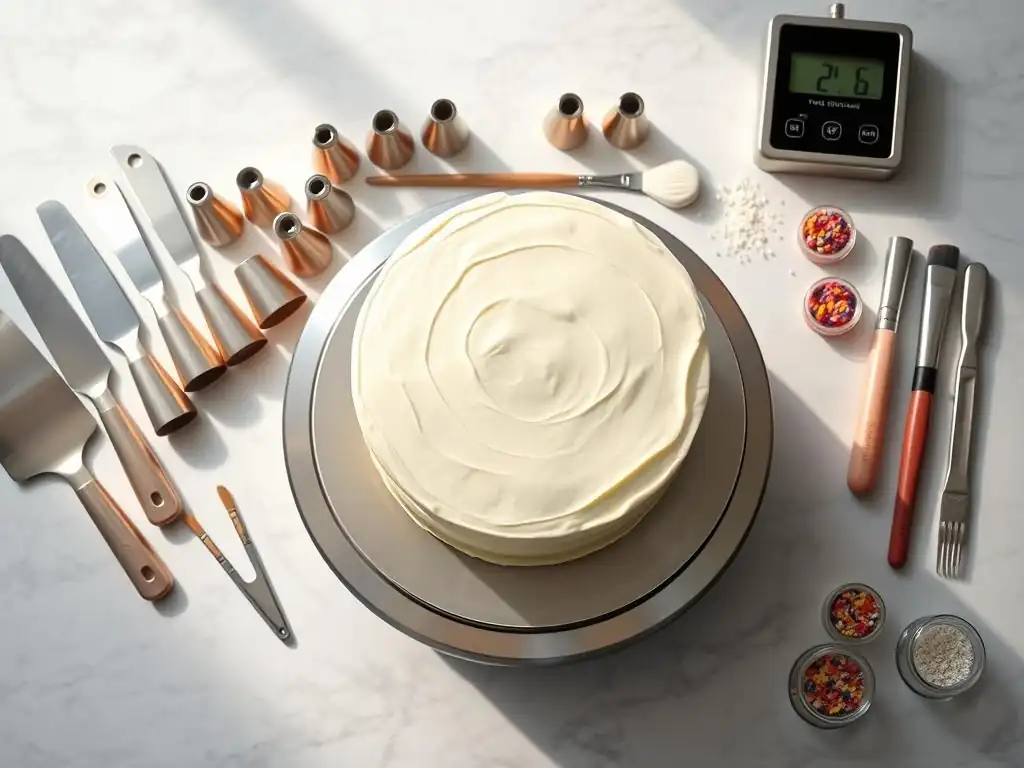
Considerations Before Buying Your Baking Tools Checklist
Before you rush out and buy every tool on this or any other essential baking tools checklist, take a moment to consider your current skill level, the types of cakes you plan to decorate, and your budget. Are you just starting out and need the absolute basics for smoothing buttercream and piping simple borders? Or are you ready to try more advanced techniques like working with fondant or airbrushing? Start with the Tier 1 foundation tools, as they are truly essential for almost any decorating task.
Think about quality versus cost. While some basic tools are inexpensive, investing a little more in durable, well-made items like stainless steel spatulas or a sturdy turntable can save you money in the long run as they will perform better and last longer. Consider storage space – some tools, like an airbrush system, require more space than a set of spatulas. Finally, look for tools that are easy to clean and maintain, as hygiene is paramount in baking and decorating. Building your essential baking tools checklist strategically based on your needs will be the most effective approach.
Where to Buy Your Essential Baking Tools
Your essential baking tools checklist can be fulfilled from a variety of sources, both online and in brick-and-mortar stores. Dedicated cake decorating supply stores often offer the widest selection of specialized tools, tips, and equipment, and staff can often provide expert advice. Large craft stores with a baking or cake decorating section are also great resources, stocking many of the fundamental and some intermediate tools.
General kitchen supply stores or departments in larger retail stores will carry many of the basic items like spatulas, measuring tools, and sometimes piping bags and tips. Online retailers, including large marketplaces and specialized baking supply websites, offer convenience and often competitive pricing, with a vast selection of tools from basic to highly specialized. Comparing prices and reading reviews online can help you make informed decisions before purchasing items on your essential baking tools checklist.
Mastering Cake Decorating: Tips and Tricks
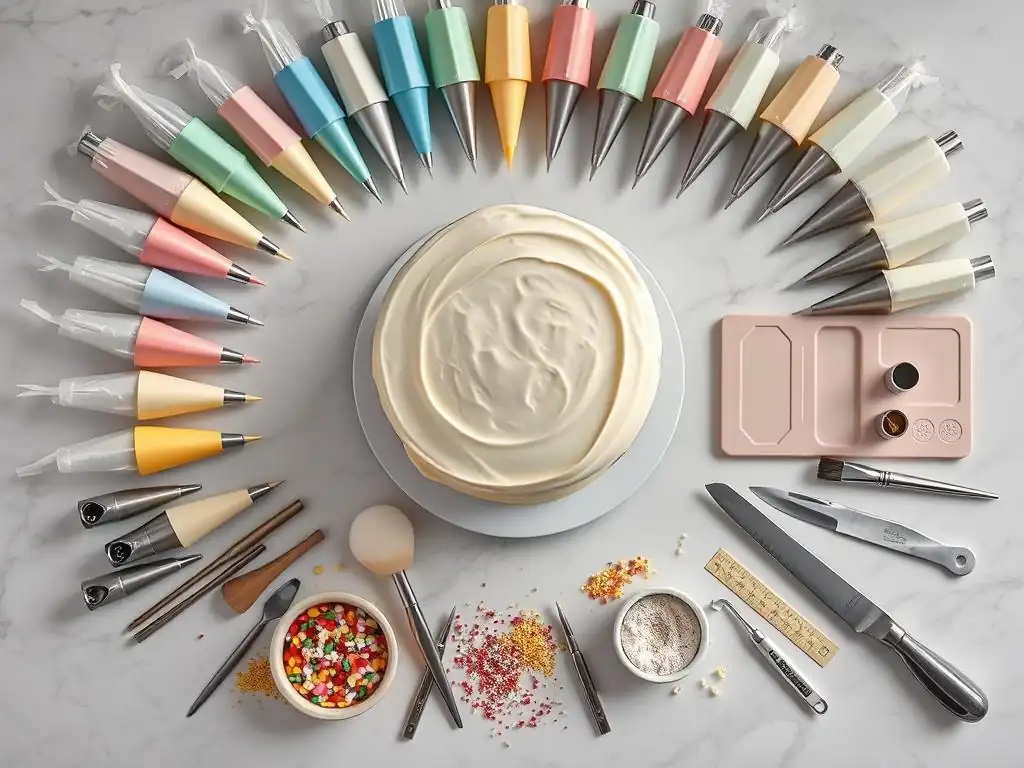
Essential Techniques for Using Your New Baking Tools
Acquiring your essential baking tools checklist is just the first step; learning how to use them effectively is key to mastering cake decorating. Practice makes perfect! Start by familiarizing yourself with each tool. For example, practice holding your offset spatula at different angles to apply and smooth frosting on a dummy cake or even an overturned bowl. Experiment with different piping tips and consistencies of buttercream on parchment paper before attempting to decorate your actual cake.
Learn the basic techniques: applying a crumb coat (a thin layer of frosting to trap crumbs), applying the final coat of frosting smoothly using your spatula and scraper, and piping simple borders like stars or shells. Watch tutorials (while we don't link here, searching for video demonstrations on using specific tools is helpful) to see the tools in action. Understanding how the tool interacts with the frosting or fondant is crucial.
For instance, the speed at which you spin your turntable directly impacts the smoothness you can achieve with your scraper. Don't be afraid to experiment and make mistakes – they are part of the learning process!
Best Practices for Cleaning and Storing Your Baking Tools
Proper cleaning and storage of your essential baking tools for baking and decorating are vital for maintaining their condition, ensuring food safety, and keeping them ready for your next project. As soon as possible after use, clean your tools. For most tools like spatulas, scrapers, and measuring cups/spoons, washing with warm, soapy water is sufficient. Piping bags and tips require thorough cleaning to remove all traces of frosting; reusable bags should be turned inside out and washed, and tips can be soaked and cleaned with a small brush to get into crevices.
Dry your tools completely before storing them to prevent rust on metal items like tips or spatulas, and to prevent mold on reusable piping bags. Store metal tips upright in a container or organizer. Keep spatulas and scrapers in a drawer or utensil holder. Piping bags, once dry, can be folded or rolled. Modeling tools often come with their own cases. Proper storage keeps your essential baking tools checklist organized, protected from damage, and easily accessible for when inspiration strikes.
Conclusion: Your Essential Baking Tools Checklist for Cake Decorating Success.
Building your collection of cake decorating tools should be an exciting process. Starting with a solid essential baking tools checklist that includes foundation items like offset spatulas, cake scrapers, piping tools, a turntable, and a cake leveler will set you up for success in creating beautiful, delicious cakes. As you gain confidence and explore new techniques, you can gradually add tools from the recommended and specialized tiers, such as fondant tools, airbrush systems, or modeling tools.
Remember that having the tools is only half the battle; practicing using them is what truly hones your decorating skills. With the right essential tools for baking and decorating, coupled with patience and practice, you'll be well-equipped to tackle a wide range of designs, transforming simple baked goods into stunning edible art. Refer back to this guide as you build and expand your essential baking tools checklist and enjoy the rewarding journey of cake decorating!
Frequently Asked Questions
What are the most essential baking tools for a beginner?
A good starting point includes measuring cups and spoons, a mixing bowl, a whisk, a spatula, and a baking sheet. These cover the basics for many simple recipes.
How important is a stand mixer versus a hand mixer?
While not strictly essential for beginners, a stand mixer is a significant time-saver for more complex recipes, especially those requiring extensive mixing or kneading. A hand mixer is a good budget-friendly alternative.
What type of measuring tools are most accurate for baking?
Using a digital kitchen scale for measuring ingredients by weight is the most accurate method. However, a set of dry and liquid measuring cups and spoons are generally sufficient for most recipes.
Beyond the basics, what's one specialty tool that can greatly improve baking results?
A pastry blender or dough cutter is incredibly helpful for making pie crusts or biscuits, ensuring the butter is properly incorporated for a flaky texture. It allows for a more consistent bake.
Where can I find a comprehensive essential baking tools checklist?
Websites like BakeWithEase.com offer detailed checklists, categorized by baking type, to help you build your essential baking tools collection based on your needs and interests.
Final Reflection: Baking Bliss Begins with the Right Tools
The pursuit of culinary excellence, particularly in the sweet science of baking, hinges on more than just a good recipe; it demands the right tools. A well-equipped baker isn't just someone who follows instructions; they're an artist wielding precision instruments to craft edible masterpieces. This list, therefore, isn't merely a checklist; it's a roadmap to unlocking your baking potential.
The impact of having the correct tools extends far beyond mere convenience. It fosters a deeper connection with the process, allowing for greater creativity and a more satisfying outcome. The joy of perfectly browned edges on a cookie, the satisfying rise of a fluffy cake, these are all amplified by the right equipment. As Julia Child famously said, Find something you're passionate about and keep tremendously interested in it.
For me, that passion is baking, and the tools detailed in this article are integral to that passion. They are the keys that unlock the door to countless culinary adventures.
Now, I invite you to take this list and make it your own. Don't just passively read through the items; actively consider how each tool can enhance your baking journey. Which ones do you already own? Which ones are you excited to add to your collection? Embrace the process of building your baking arsenal, and remember that every perfectly crafted treat begins with the right tools in hand. Happy baking!
Unleash Your Inner Baker: Get Baking!
Thanks for joining us on this journey to baking bliss! We hope you now feel armed with the essential tools to create delicious treats. Ready to transform your kitchen into a baking haven?
- Get baking! Choose your favorite recipe and start creating. Don't be afraid to experiment!
- Share your baking triumphs (or funny fails!) with us on social media using #BakeWithEase. We'd love to see what you create.
- Explore our other articles for more baking inspiration and tips. You might just discover your new favorite recipe!
What delicious masterpiece will you bake first?