
Scaling Up Your Favorite Recipes: An Easy Guide for Large Batches

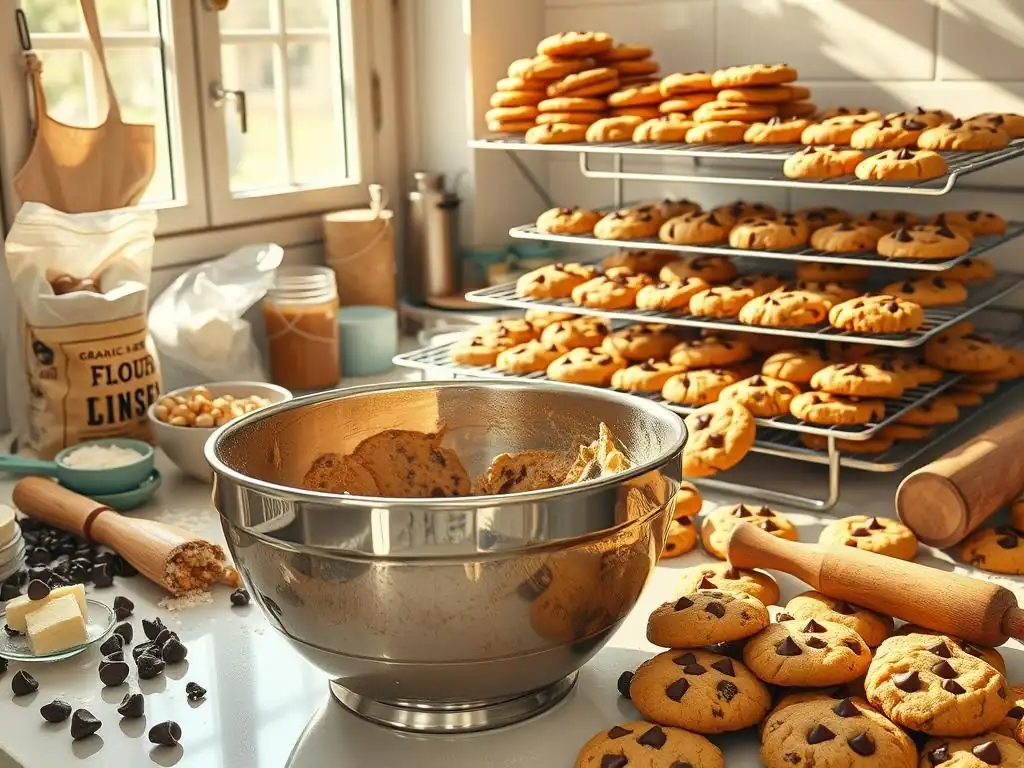
Welcome to BakeWithEase, your trusted guide to baking bliss! Are you ready to conquer the world of large batch baking? Whether you're prepping for a party, stocking up for the week, or simply love to share, scaling up recipes can feel daunting. Dive in to discover our easy strategies and expert tips that will transform you into a large batch baking master, making every occasion a delicious success! Curious how to avoid common pitfalls when baking in bulk? Let's get started!
- Scaling Up Recipes for Large Batches: A Baker's Guide
- Scaling Recipes: From Small Batch to Crowd-Pleaser
- Why Scale Up Recipes?
- Understanding Baking Ratios
- Scaling Guide: Step-by-Step
- Scaling Specific Recipes: Tips
- Essential Tools
- Troubleshooting Scaling Issues
- Recipe Scaling Examples
- Storing and Freezing Techniques
- Sharing Your Creations
- Conclusion: Bake Confidently for Any Crowd
-
Frequently Asked Questions
- How do I accurately scale up a recipe for a large batch without compromising taste?
- What are some common pitfalls to avoid when baking large batches?
- Where can I find reliable resources for converting recipes for large-scale baking?
- What type of equipment is essential for easy large batch baking?
- How do I ensure even baking when making a large batch of cookies or cupcakes?
- Final Reflection: The Joy of Abundant Baking
- Unleash Your Inner Baking Boss!
Scaling Up Recipes for Large Batches: A Baker's Guide
Scaling Recipes: From Small Batch to Crowd-Pleaser
Scaling up your favorite baking recipes can seem like a daunting task, but with a little understanding and careful planning, it becomes an achievable goal. Whether you're preparing for a family gathering, a holiday party, or just want to stock up your freezer, mastering the art of making larger batches of baked goods is incredibly rewarding. It allows you to share your passion and delicious creations with more people without spending endless hours repeating the same steps multiple times. Embracing easy large batch baking means efficiency and abundance.
The transition from a small batch to a crowd-pleaser involves more than just multiplying ingredients. It requires attention to ratios, equipment, and even baking times and temperatures. A recipe designed for a dozen cookies behaves differently when scaled up to yield four dozen. The mass of the dough or batter changes, affecting how heat penetrates during baking and how leavening agents react. This guide will walk you through the process, making easy large batch baking accessible and successful for any home baker.
Why Scale Up Recipes?
Scaling up recipes offers numerous practical advantages that make it a worthwhile skill for any avid baker. The most immediate benefit is efficiency; you can produce a significantly larger quantity of baked goods in less time than it would take to make multiple small batches sequentially. This is particularly valuable when preparing for events like bake sales, parties, or holiday feasts where time is often of the essence. Furthermore, baking in larger quantities can sometimes be more cost-effective, especially if you purchase ingredients in bulk.
Beyond the practical benefits, scaling up allows you to share your baking talents more widely. Imagine bringing a generous supply of homemade treats to a potluck or gifting dozens of cookies during the holidays. Easy large batch baking enables this level of generosity and makes celebrating special occasions with delicious homemade goods much more feasible. It transforms baking from a single-serving or small-group activity into a way to connect with and treat a larger community of friends and family.
Benefits of Batch Baking
One of the primary benefits of batch baking is the significant time saving involved. Consider a simple cookie recipe that takes 30 minutes to prepare and 10 minutes to bake a dozen cookies in two batches. To make four dozen, you'd typically repeat this process four times, totaling roughly 2 hours of active work plus baking time.
By scaling the recipe up to make four dozen at once, you might spend 45 minutes on preparation and then bake in perhaps four larger batches or on more sheets simultaneously, potentially cutting the total time down to closer to 1.5 hours, including baking time. This efficiency gain becomes even more pronounced with recipes requiring complex mixing or dough handling.
Another key advantage is cost efficiency. Buying larger bags of flour, sugar, or chocolate chips often results in a lower price per unit compared to smaller packages. When you're planning for easy large batch baking, purchasing ingredients like 10-pound bags of flour instead of 5-pound bags, or bulk chocolate chips, can lead to noticeable savings over time. While the initial outlay might be higher, the cost per cookie or slice of cake decreases, making it a more economical way to produce baked goods in quantity.
Avoiding Common Scaling Mistakes
One frequent error when scaling recipes is simply multiplying every ingredient by the desired factor without considering ratios or potential interactions. For instance, doubling a recipe might require doubling the flour, sugar, and eggs, but the leavening agent (like baking powder or soda) might not need a full doubling if the original recipe was already quite generous. Too much leavening can cause rapid, unstable rising and collapse, or leave a bitter, soapy taste.
A general rule of thumb for baking powder is to use about 1 to 1.5 teaspoons per cup of flour (120-130g), and slightly less for baking soda (about 1/4 teaspoon per cup of flour when used with an acidic ingredient). Deviating too far from these general guidelines when scaling up can lead to issues.
Another common pitfall is underestimating the impact of the larger volume on mixing and baking. A stand mixer that handles a single cake batter perfectly might struggle or even overheat when mixing a quadruple batch. Similarly, a dense mass of cookie dough on a single baking sheet might bake unevenly compared to smaller, spread-out portions.
Ignoring the need for larger equipment or adjusting baking times/temperatures based on the increased volume can result in burnt edges, raw centers, or uneven textures. It's crucial to acknowledge that scaling isn't just math; it's also about understanding how ingredient mass and heat transfer change.
Understanding Baking Ratios
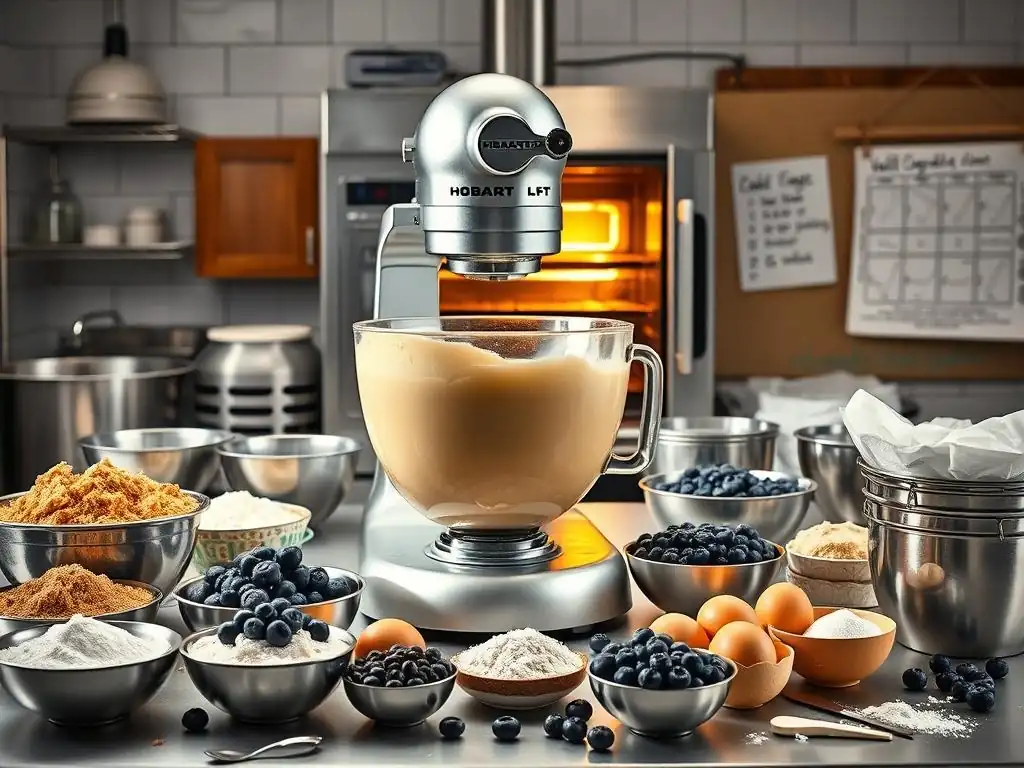
Baking is often described as a science because it relies heavily on precise measurements and the chemical reactions between ingredients. Understanding basic baking ratios provides a framework for predicting how ingredients will interact and helps identify potential issues when scaling. Ratios exist for everything from bread dough (flour to water, typically around 5:3 by weight) to cakes (flour, sugar, fat, eggs often in a 1:1:1:1 or 1:1:1:2 weight ratio). While not every recipe fits a perfect ratio, knowing the general proportions helps you spot potential imbalances when multiplying ingredients.
For example, a standard pound cake ratio is roughly 1 pound each of flour, sugar, butter, and eggs. If you scale this up to make a much larger cake, maintaining this 1:1:1:1 weight ratio is key.
However, consider a very light and airy sponge cake where the ratio of eggs to flour might be much higher, and fat is minimal or absent. When scaling this, you need to ensure the structural components (eggs, flour) are scaled proportionally to support the increased volume, while also considering how the leavening (often air whipped into eggs) will perform in a larger batter mass.
Accurate Measurements
Accuracy in measuring ingredients is paramount in baking, and it becomes even more critical when scaling recipes for easy large batch baking. While volume measurements (cups, tablespoons) are common in many home recipes, they can be notoriously inaccurate due to variations in how ingredients are scooped or packed. For example, a cup of flour can weigh anywhere from 100 grams (lightly spooned) to 150 grams (heavily packed). This 50% variation can significantly impact the outcome, especially when multiplied across a large batch.
Using a digital kitchen scale to measure ingredients by weight is the most reliable method for scaling. Weight measurements are consistent and reproducible. If a recipe calls for 2 cups of flour and you know from experience or a reliable source that 1 cup of that specific flour weighs 125 grams, you would use 250 grams.
If you scale this recipe by a factor of 4 for easy large batch baking, you simply multiply the weight: 250 grams * 4 = 1000 grams (1 kilogram) of flour. This eliminates the variability of scooping and ensures your ingredient proportions are exact, which is vital for consistent results in larger volumes.
Ingredient Ratios & Baking Outcomes
Maintaining correct ingredient ratios is fundamental to achieving the desired texture, structure, and flavor in your baked goods, especially when scaling up. The balance between wet and dry ingredients, fats and flour, and leavening agents and structure builders dictates the final product. For instance, in cookies, the ratio of fat and sugar to flour affects spread and chewiness.
A higher fat/sugar ratio often leads to more spread and a chewier cookie. When scaling, if you slightly miscalculate one ingredient, say adding proportionally too much fat, the effect on spread will be amplified in a large batch, potentially resulting in cookies that merge into one giant, thin mass.
Similarly, in cakes, the ratio of leavening agents to flour and liquid is critical for rise and crumb structure. Too little leavening in a large batch means the batter won't rise sufficiently against its increased weight and volume, resulting in a dense cake. Too much can cause the cake to rise too quickly and then collapse, leading to a coarse or sunken texture. Understanding these basic ratios and ensuring they are accurately maintained through weight measurement during easy large batch baking is key to consistent, high-quality results.
Gluten Development: Flour and Liquid Balance
The interaction between flour and liquid is crucial for gluten development, particularly in breads, but also in cakes, muffins, and pastries. Gluten, formed when proteins in flour (glutenin and gliadin) combine with water and are worked through mixing or kneading, provides structure and elasticity. The ratio of liquid to flour dictates the hydration level of the dough or batter, which in turn affects gluten development. A higher hydration dough is typically stickier but can result in a lighter, airier crumb, while a lower hydration dough is easier to handle but might yield a denser product.
When scaling up recipes for easy large batch baking, maintaining the correct flour-to-liquid ratio by weight is essential. Even a small percentage error in liquid can significantly impact the consistency and handling of a large volume of dough or batter. For instance, in bread baking, a 60% hydration dough means the water weighs 60% of the flour weight.
If you scale a recipe using 500g flour and 300g water (60% hydration) to use 2000g flour, you need exactly 1200g of water (60% of 2000g). Getting this wrong, even by 50-100g, will change the dough's consistency noticeably in a large batch, affecting kneading time, proofing, and the final crumb structure.
Scaling Guide: Step-by-Step
Scaling recipes for easy large batch baking doesn't have to be complicated. By following a systematic approach, you can minimize errors and increase your chances of success. This step-by-step guide breaks down the process into manageable actions, making it straightforward to adapt your favorite smaller recipes to feed a crowd. Each step builds upon the last, ensuring you consider all the critical factors from quantity goals to equipment needs.
Approaching scaling methodically helps prevent overlooking crucial details that can impact the final outcome. It's not just about multiplying numbers; it's about understanding the recipe's mechanics and how increasing the volume changes the dynamics of mixing, rising, and baking. By taking the time to plan properly, you set yourself up for efficient and successful easy large batch baking experiences.
Step 1: Define Target Yield
The first crucial step in scaling a recipe is to clearly define the target yield you need. How many cookies, muffins, or servings of cake do you need? Look at the original recipe's yield and determine how many times you need to multiply it to reach your goal. For example, if a cookie recipe yields 12 cookies and you need 60 for an event, your target yield is 60 cookies.
Once you have the original yield and the target yield, you can calculate your scaling factor. This factor is simply the target yield divided by the original yield (60 cookies / 12 cookies = a scaling factor of 5). This factor will be used in the next step to adjust your ingredient quantities. Clearly stating your goal upfront ensures you know exactly what you're working towards and provides the necessary figure for all subsequent calculations in your easy large batch baking project.
Step 2: Calculate Scaling Factors
With your target yield defined and the original recipe's yield known, calculating the scaling factor is a simple division:
Scaling Factor = Target Yield / Original Recipe Yield
If your original cake recipe makes one 8-inch round cake serving 8 people, and you need enough cake for 24 people, your target yield is 24 servings. The scaling factor is 24 / 8 = 3. This means you will need to multiply most ingredients by 3.
It's highly recommended to convert all ingredient volumes to weights before multiplying, as discussed earlier. If the original recipe calls for 1.5 cups of sugar, and you know 1 cup of sugar is typically 200 grams, that's 300 grams of sugar. Multiplying by the factor of 3 means you'll need 900 grams of sugar for your easy large batch baking project.
Multiply the weight of each ingredient by your calculated scaling factor. Be mindful of small quantities, especially leavening agents and strong flavorings (like extracts or spices), as these sometimes don't scale perfectly linearly in very large batches, requiring slight adjustments based on observation and experience. However, for most standard easy large batch baking scenarios (scaling factors up to 3 or 4), a direct multiplication works well, provided you are using weight measurements for accuracy.
Step 3: Adjust Baking Parameters
Scaling a recipe impacts more than just ingredient amounts; it also affects the baking process itself. A larger volume of batter or dough will take longer to heat through and bake evenly. Therefore, you will likely need to adjust the baking time. While a small batch of cookies might bake in 10-12 minutes, a full sheet pan of scaled-up cookies might require 14-16 minutes, or even slightly longer depending on how many sheets are in the oven. Similarly, a cake baked in a larger or deeper pan will need more time than its smaller counterpart.
Sometimes, adjusting the oven temperature slightly is also beneficial for easy large batch baking. Reducing the temperature by 10-25°F (5-15°C) can help prevent the outside of the baked good from burning before the center is cooked through, especially for thicker items like cakes or loaves of bread. It's crucial to monitor the baked goods closely using visual cues (golden brown edges, spring back when lightly touched) and internal temperature (using a thermometer) rather than relying solely on the original recipe's time.
Step 4: Select Appropriate Equipment
Having the right tools is essential for successful easy large batch baking. Your small hand mixer might not be sufficient for quadrupling a cake batter; you'll likely need a sturdy stand mixer with a large capacity bowl (e.g., 6-quart or larger). Similarly, mixing a large volume of bread dough by hand can be incredibly challenging; a stand mixer with a dough hook or a powerful bread machine designed for larger loaves is highly recommended.
Consider your bakeware as well. Do you have baking sheets, cake pans, or loaf pans large enough and in sufficient quantity to handle the scaled-up batch? Baking multiple items simultaneously requires adequate oven space and potentially rotating pans for even baking. Ensure your oven is properly calibrated and preheated, as inconsistent oven temperatures can be magnified when baking large quantities. Investing in larger mixing bowls, sturdy spatulas, and potentially additional bakeware is a worthwhile step for frequent easy large batch baking.
Scaling Specific Recipes: Tips
Different types of baked goods present unique challenges when scaling. The structure of a cookie is different from a cake, which is different from bread. Understanding these differences and applying specific techniques can significantly improve your results when attempting easy large batch baking for various recipes. Tailoring your approach to the type of recipe ensures that critical elements like texture, rise, and spread are maintained.
Paying attention to the nuances of each recipe type will save you frustration and wasted ingredients. While the general principles of scaling apply, specific considerations for leavening, gluten, and structure are vital for success. Let's look at some common recipe types and tips for scaling them effectively.
Scaling cookie recipes is generally one of the more straightforward easy large batch baking tasks, but attention is still needed to ensure consistent results. The main challenge often lies in managing the dough volume and achieving uniform baking across multiple sheets. Ensure all your ingredients, especially butter, are at the correct temperature specified by the recipe, as this significantly impacts cookie spread and texture. When multiplying, use weight measurements for flour, sugar, butter, and chocolate chips or mix-ins for maximum accuracy.
Once the large batch of dough is mixed, handling it correctly is key. Avoid overworking the dough, which can lead to tough cookies. If the recipe requires chilling, a large mass of dough will take considerably longer to chill through compared to a small batch. Divide the dough into smaller portions if necessary to speed up the chilling process. When portioning cookies, aim for consistent size and shape using a scoop or scale to ensure they bake evenly.
Achieving Uniform Baking
Achieving uniform baking is critical when baking a large number of cookies for easy large batch baking. Using multiple baking sheets simultaneously can lead to uneven results depending on your oven's hot spots and airflow. Ideally, bake one sheet at a time in the center of the oven for the most consistent outcome, though this negates some of the time-saving benefits of batch baking.
If baking multiple sheets at once, ensure there is adequate space between them for air circulation – avoid crowding the oven. Rotate the baking sheets halfway through the baking time (moving top to bottom, front to back) to compensate for temperature variations within the oven. Using parchment paper or silicone mats helps prevent sticking and promotes even browning on the bottom of the cookies. Monitor the cookies on different sheets closely, as some may finish baking faster than others.
Scaling cake recipes for easy large batch baking requires careful consideration of leavening agents, mixing technique, and baking time/temperature. Cakes rely heavily on the correct balance of ingredients and the proper incorporation of air and chemical leaveners for their structure and texture. When multiplying ingredients, particularly for delicate cakes like sponges or chiffons, ensure your mixing equipment can handle the increased volume without overmixing or undermixing.
Using weight measurements is non-negotiable for scaling cakes accurately. Pay close attention to fats and liquids, as their ratio to dry ingredients is crucial for moisture and tenderness. When scaling, you might find that very large batches of batter require slightly less leavening per unit of flour than the original recipe, or that the leavening needs to be exceptionally well distributed during mixing to ensure an even rise throughout the large volume.
Leavening Agent Adjustments
Chemical leavening agents like baking powder and baking soda are designed to produce gas (carbon dioxide) to make cakes rise. Their effectiveness depends on factors like moisture, temperature, and acidity. While you typically multiply them by the scaling factor, for very large cakes (scaling factor 4x or more), you might consider slightly reducing the multiplied amount by 5-10%.
For example, if the original recipe called for 2 teaspoons of baking powder and your scaling factor is 4, you'd calculate 8 teaspoons. You might choose to use 7.5 or even 7 teaspoons instead, especially if the original recipe resulted in a very high rise.
This slight reduction can help prevent the cake from rising too quickly and then collapsing, a risk with large volumes of batter. It also helps avoid a potential metallic or soapy taste that can result from excessive leavening. Ensure the leavening agents are thoroughly whisked into the dry ingredients before combining with wet ingredients to guarantee even distribution throughout the large quantity of batter during your easy large batch baking process.
Scaling Bread Recipes
Scaling bread recipes involves working with larger quantities of dough, which impacts mixing, kneading, and proofing times. Bread relies on gluten development for its structure and yeast activity for its rise. When scaling, ensure your mixer can handle the dough volume; a large batch of bread dough can be quite heavy and put a strain on smaller machines. Kneading time might need to be adjusted; while the total time might increase, the dough might reach optimal development faster per unit of dough due to the increased mass retaining heat from friction.
Monitoring dough temperature is crucial in easy large batch baking of bread. Larger dough masses retain heat more effectively, which can accelerate fermentation. You may need to use cooler water than usual or adjust mixing speed to prevent the dough from getting too warm, which can lead to over-proofing or off-flavors. Pay close attention to the dough's feel and appearance rather than strictly adhering to the original recipe's timing for kneading.
Proofing Considerations
Proofing, or fermentation, is the process where yeast produces carbon dioxide, causing the dough to rise. A larger mass of dough will generate and retain more heat than a smaller one, potentially leading to faster proofing. This means the proofing time for a scaled-up recipe might be shorter than simply multiplying the original time. It's essential to rely on visual cues (dough doubling in size, passing the poke test) rather than the clock when proofing large batches for easy large batch baking.
The bulk fermentation (first rise) and proofing after shaping (second rise) both need careful monitoring. If proofing multiple loaves or rolls simultaneously, ensure they have enough space between them. The increased volume might also require slightly longer baking times to ensure the center is fully cooked and reaches the correct internal temperature (around 190-210°F or 88-99°C for most bread).
Essential Tools
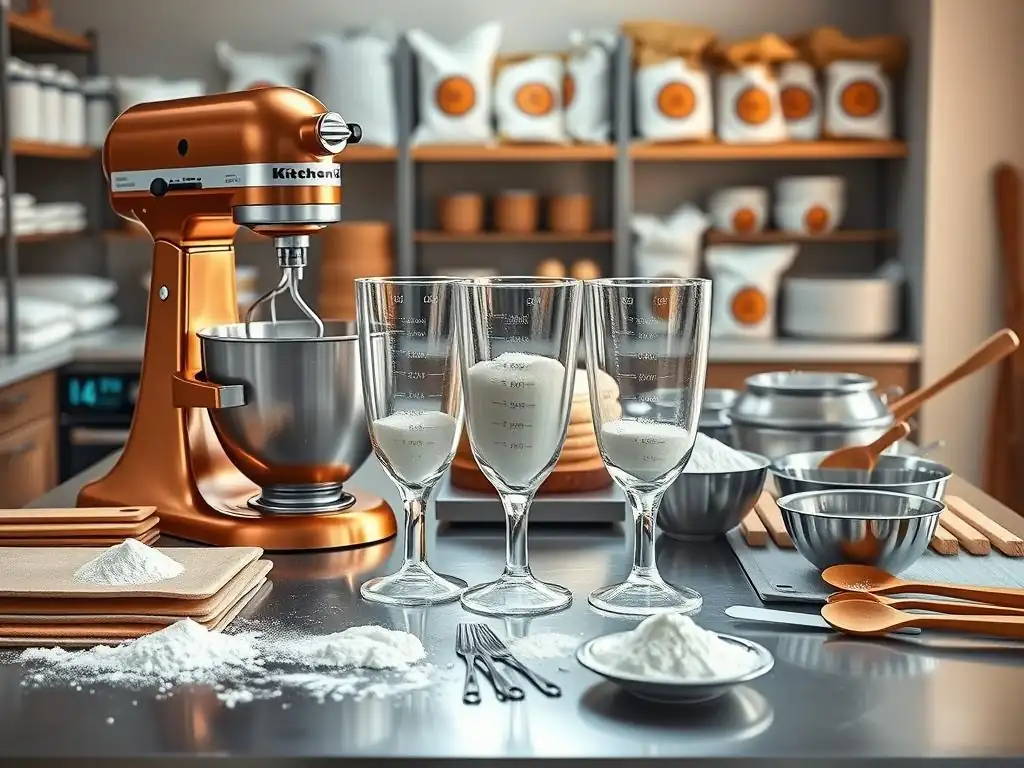
Having the right tools can make the difference between a frustrating experience and successful easy large batch baking. While you might already own some of these items, scaling up often necessitates larger capacities or more robust versions of standard kitchen equipment. Investing in quality tools tailored for larger volumes will streamline your process and improve your results.
From accurately measuring ingredients to efficiently mixing large quantities and ensuring even baking, the appropriate tools are your allies in the easy large batch baking endeavor. Don't underestimate the importance of having equipment that can handle the task at hand safely and effectively.
Accurate Measuring Tools
For easy large batch baking, accurate measurement by weight is non-negotiable. A reliable digital kitchen scale is the most important tool you can have. Look for a scale with a capacity of at least 5-10 kilograms (11-22 pounds) to handle large quantities of flour, sugar, or other bulk ingredients. The scale should have a tare function to allow you to zero out the weight of your container.
While weight is preferred for dry ingredients and fats, you will still need accurate volume measures for liquids like water, milk, or oil. Use clear liquid measuring cups with markings at eye level. For smaller quantities of extracts, spices, or leavening agents, use a set of standard measuring spoons, ensuring they are level scoops. Having multiple sets can be helpful when measuring several small ingredients for a large batch.
Large Capacity Mixing Equipment
Mixing large volumes of dough or batter requires equipment with sufficient power and capacity. For easy large batch baking of cakes, muffins, or cookie dough, a sturdy stand mixer with a bowl capacity of 6 quarts (approx. 5.7 liters) or larger is highly recommended. Ensure the motor is powerful enough to handle dense doughs.
For bread dough, which is often heavier and requires more vigorous kneading, an even larger stand mixer (7-8 quarts or more) or a dedicated dough mixer might be necessary depending on the batch size. If mixing by hand, you will need extra-large, sturdy mixing bowls (ceramic, glass, or stainless steel) and heavy-duty spatulas or wooden spoons that can withstand mixing thick batter or dough.
Oven Capacity and Airflow
Your oven is a critical piece of equipment for easy large batch baking. Ensure your oven is large enough to accommodate multiple baking sheets or large pans with adequate space between them for proper air circulation. Crowding the oven can lead to uneven baking, with items on the edges browning faster than those in the center, or the bottoms cooking faster than the tops.
Consider your oven's rack positions and any known hot spots. For best results with large batches, use the convection setting if your oven has one, as it helps circulate hot air more evenly. If baking multiple items, rotate their positions halfway through the baking time. An oven thermometer is also useful to verify that your oven is preheating to and maintaining the correct temperature, which is vital when baking large volumes that require precise heat control.
Troubleshooting Scaling Issues
Even with careful planning and accurate measurements, scaling recipes can sometimes present unexpected challenges. Understanding common issues and knowing how to address them is part of mastering easy large batch baking. Problems can range from uneven texture and poor rise to inconsistent baking results. Being prepared to identify and correct these issues will save your batch and improve your scaling skills for future endeavors.
Many troubleshooting steps involve revisiting the basic principles of baking and scaling: checking measurements, ensuring proper mixing, verifying oven temperature, and adjusting baking time. Don't get discouraged if your first attempt at scaling isn't perfect; each batch provides valuable learning experiences.
Preventing Overmixing
Overmixing dough or batter is a common issue, particularly when using powerful stand mixers for easy large batch baking. A larger volume of ingredients takes longer to come together, and it's easy to let the mixer run for too long. Overmixing cake batter can overdevelop gluten, resulting in a tough or dense cake. Overmixing cookie dough can lead to a less tender cookie with excessive spread.
Pay close attention to the visual cues described in the original recipe for when to stop mixing (e.g., just combined, smooth batter, dough pulling away from the bowl). For large batches, you might need to mix on a slightly lower speed or stop the mixer more frequently to scrape down the sides and bottom of the bowl, ensuring everything is incorporated without overworking the mixture. Err on the side of slightly undermixing rather than overmixing, especially for tender baked goods.
Addressing Uneven Baking
Uneven baking is a frequent problem when baking large quantities, often due to inconsistent oven temperature or poor air circulation. If your cookies are browning on one side faster than the other, or your cake is dome-shaped and cracked with raw edges, it indicates uneven heat distribution.
To combat this during easy large batch baking, ensure your oven is fully preheated and consider using an oven thermometer to verify its accuracy. If baking multiple items, leave ample space between them on the racks and avoid placing pans directly against the oven walls. Rotating pans halfway through the baking time is a simple yet effective strategy to promote even browning and cooking.
If using a convection oven, ensure the fan is on for better air circulation. For items like cakes, using baking strips around the pan can help the edges bake slower, allowing the center to catch up.
Correcting Texture Problems
Texture issues in scaled-up recipes, such as toughness, dryness, or crumbliness, often stem from incorrect ingredient ratios (despite scaling), over/undermixing, or improper baking. If your cake is tough, it might be due to overmixing the batter and developing too much gluten, or a slight imbalance in the flour-to-fat ratio. If cookies are dry, it could be too much flour or too long baking time.
Review your scaled ingredient measurements, double-checking your calculations and ensuring you used weight where possible. Assess your mixing technique; were you careful not to overmix? Did you scrape the bowl adequately? Finally, consider your baking process. Was the oven temperature accurate? Did you bake for the correct amount of time based on the larger volume? Troubleshooting texture often involves isolating which stage of the easy large batch baking process went awry and making adjustments in future attempts.
Recipe Scaling Examples
Seeing how scaling works with specific recipes can help demystify the process. Let's look at two common examples: a classic chocolate chip cookie and a simple vanilla cake. These examples will illustrate how to apply the scaling principles and calculations discussed earlier to real-world easy large batch baking scenarios.
These examples are simplified to highlight the core scaling calculation using weight measurements. Remember that real recipes may have more ingredients, but the process of calculating the scaling factor and multiplying weights remains the same.
Let's say an original recipe yields 24 chocolate chip cookies and calls for:
- 225g all-purpose flour
- 5g baking soda
- 3g salt
- 170g unsalted butter, softened
- 150g granulated sugar
- 100g packed brown sugar
- 1 large egg (approx 50g without shell)
- 5ml vanilla extract
- 170g chocolate chips
You need to make 120 cookies for a party.
- Define Target Yield: 120 cookies.
- Original Yield: 24 cookies.
- Calculate Scaling Factor: 120 / 24 = 5.
- Scale Ingredients (by multiplying weight by 5):
- Flour: 225g * 5 = 1125g
- Baking Soda: 5g * 5 = 25g (Note: For very large batches, you might consider slightly less, maybe 23-24g, based on experience)
- Salt: 3g * 5 = 15g
- Butter: 170g * 5 = 850g
- Granulated Sugar: 150g * 5 = 750g
- Brown Sugar: 100g * 5 = 500g
- Eggs: 50g * 5 = 250g (approx. 5 large eggs)
- Vanilla Extract: 5ml * 5 = 25ml
- Chocolate Chips: 170g * 5 = 850g
For easy large batch baking of cookies, you would then proceed with mixing this large quantity of dough, potentially dividing it for chilling if needed, portioning the 120 cookies evenly (each cookie will use approx. 1125g + 25g + 15g + 850g + 750g + 500g + 250g + 850g / 120 cookies = approx. 35g per cookie), and baking them across multiple sheets, rotating pans for evenness.
Scaling a Vanilla Cake Recipe
Suppose a vanilla cake recipe makes one 8-inch round cake (serves 8) and requires:
- 150g all-purpose flour
- 10g baking powder
- 2g salt
- 150g unsalted butter, softened
- 150g granulated sugar
- 2 large eggs (approx 100g)
- 50ml milk
- 5ml vanilla extract
You need enough cake for 24 people, perhaps for a tiered cake or multiple layers.
- Define Target Yield: 24 servings.
- Original Yield: 8 servings.
- Calculate Scaling Factor: 24 / 8 = 3.
- Scale Ingredients (by multiplying weight/volume by 3):
- Flour: 150g * 3 = 450g
- Baking Powder: 10g * 3 = 30g (Again, consider slightly less for very large cakes, maybe 28-29g)
- Salt: 2g * 3 = 6g
- Butter: 150g * 3 = 450g
- Granulated Sugar: 150g * 3 = 450g
- Eggs: 100g * 3 = 300g (approx. 6 large eggs)
- Milk: 50ml * 3 = 150ml
- Vanilla Extract: 5ml * 3 = 15ml
For easy large batch baking of this cake, you would mix this larger volume of batter using a suitable mixer. You might divide the batter between multiple pans (e.g., three 8-inch pans, or larger pans like two 9x13 inch pans, adjusting baking time). Baking time will be longer than for a single 8-inch cake, and you might slightly reduce the oven temperature (e.g., from 350°F/175°C to 335-340°F / 165-170°C) to ensure even cooking without burning the edges. Always test for doneness with a skewer or internal thermometer (should read around 205-210°F or 96-99°C).
Storing and Freezing Techniques
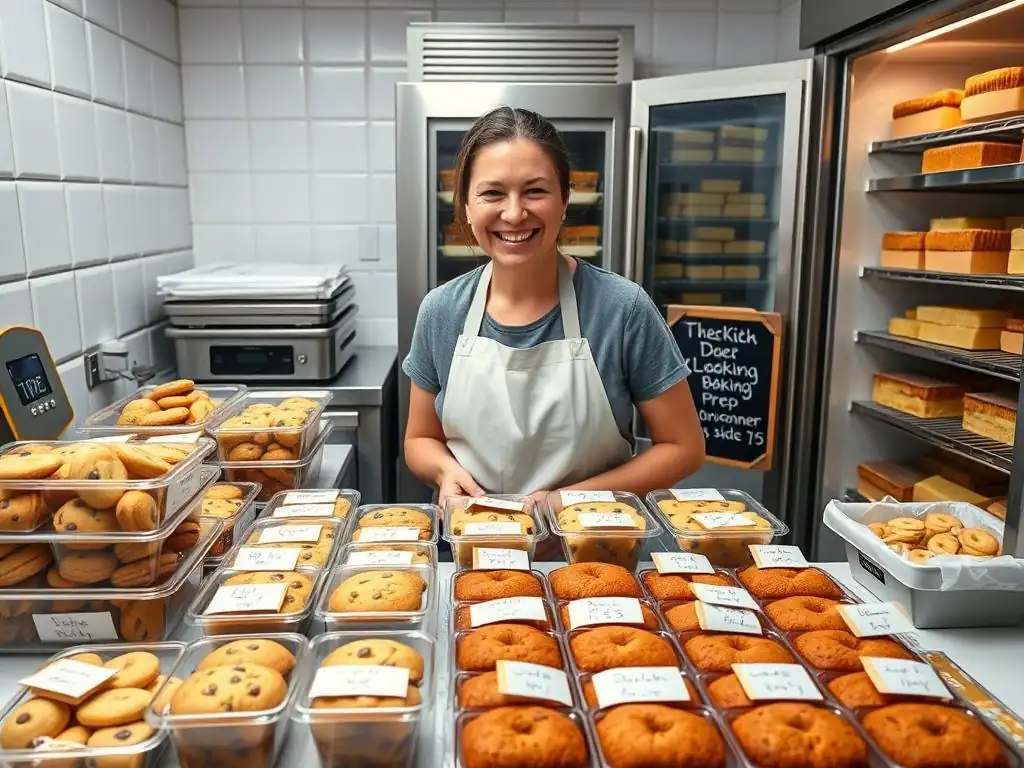
Once you've successfully tackled easy large batch baking, you'll likely have a surplus of delicious treats. Proper storage is essential to maintain freshness and quality. Freezing is an excellent option for preserving baked goods for future enjoyment, allowing you to bake ahead for occasions or simply have homemade treats on hand. Understanding the best techniques for cooling, freezing, and thawing will ensure your efforts don't go to waste.
The goal is to protect your baked goods from freezer burn, moisture loss, and absorbing unwanted odors. Using the right packaging and following simple steps will keep your cookies, cakes, and breads tasting as fresh as the day they were baked, making your easy large batch baking efforts even more rewarding.
Cooling Techniques
Allowing baked goods to cool properly is a critical step before storing or freezing. Hot items create steam, which can lead to sogginess if trapped. Cookies should be transferred to a wire rack shortly after coming out of the oven to cool completely. Cakes are often cooled in their pans for a short period (10-20 minutes depending on size) before being inverted onto a wire rack to cool fully. Bread loaves should cool completely on a wire rack to allow steam to escape and the crumb to set.
Attempting to store or freeze warm baked goods will result in condensation forming inside the packaging, leading to ice crystals and freezer burn. Ensure items are at room temperature throughout before moving on to packaging for storage or freezing from your easy large batch baking session. This can take anywhere from 1-2 hours for cookies to several hours for large cakes or loaves of bread.
Freezing Best Practices
For freezing easy large batch baking items, proper packaging is key to preventing freezer burn, which dries out food and affects texture. Most baked goods benefit from a two-layer wrapping method. First, wrap individual items or small portions tightly in plastic wrap, pressing out as much air as possible. For cookies, you can stack them with parchment paper in between before wrapping.
Second, place the plastic-wrapped items into a freezer bag or an airtight container. Squeeze out any remaining air from bags. Label the bags or containers with the contents and the date. Most baked goods can be frozen for 2-3 months without significant loss of quality. Items with high fat content (like butter cookies) might last longer, while those with delicate textures or fillings (like cream-filled pastries) should be consumed sooner.
Thawing and Reheating
Thawing baked goods correctly helps preserve their texture and flavor after freezing from your easy large batch baking efforts. The best way to thaw most items is slowly in the refrigerator overnight. This allows moisture to redistribute gradually. For quicker thawing, smaller items like cookies or muffins can often be thawed at room temperature for a few hours. Avoid thawing in the microwave, as it can make items rubbery or tough.
Some baked goods benefit from a brief reheating after thawing. Cookies can be crisped up in a preheated oven at 300-325°F (150-160°C) for 5-10 minutes. Bread loaves can be refreshed in a 350°F (175°C) oven for 10-20 minutes until warmed through. Cakes are usually best served at room temperature after thawing. Always ensure items are fully thawed before reheating or serving.
The ultimate joy of easy large batch baking is sharing the fruits of your labor. Whether you're bringing treats to a potluck, gifting them to friends, or serving them at a party, presentation matters. Making your baked goods look as good as they taste enhances the experience for those you're sharing with.
Consider simple ways to elevate the presentation, even for rustic items like cookies or bread. Thoughtful packaging or serving arrangements show care and pride in your easy large batch baking efforts.
Serving Suggestions
When serving easy large batch baking items, think about how they will be presented and consumed. For cookies, arranging them neatly on platters or in baskets makes them easy for guests to grab. For cakes, consider how you will slice and serve them; having the right tools like a sharp cake knife and server is helpful.
For breads, a simple bread basket with a linen cloth is often sufficient. If serving multiple types of baked goods, arrange them attractively on a dessert table, perhaps varying heights and colors. Providing small plates and napkins is a practical detail for easy enjoyment.
Presentation Tips
Simple presentation techniques can make a big difference for your easy large batch baking creations. For cookies, a dusting of powdered sugar, a drizzle of glaze, or adding a few sprinkles after baking can add visual appeal. Stacking them in alternating patterns or colors on a platter creates an attractive display.
For cakes, clean frosting lines, a sprinkle of crumbs or nuts around the base, or a simple garnish like fresh berries or edible flowers can elevate the look. Even unfrosted items like muffins or scones look lovely arranged in baskets lined with parchment paper or colorful liners. Using attractive boxes or bags tied with ribbon makes baked goods perfect for gifting.
Conclusion: Bake Confidently for Any Crowd
Scaling up your favorite baking recipes for easy large batch baking is a skill that empowers you to share your passion and delicious treats with more people. While it involves more than simple multiplication, by understanding the principles of accurate measurement (especially by weight), recognizing the impact of volume on mixing and baking, and adjusting your techniques and equipment accordingly, you can successfully scale almost any recipe.
Don't be intimidated by the prospect of baking for a crowd. With the steps outlined in this guide – from defining your target yield and calculating scaling factors to adjusting baking parameters and selecting the right tools – easy large batch baking becomes a manageable and enjoyable process. Practice makes perfect, so start with a familiar recipe and gradually work your way up. Soon, you'll be baking confidently for any gathering, big or small, making every occasion a little sweeter with your homemade touch.
Frequently Asked Questions
How do I accurately scale up a recipe for a large batch without compromising taste?
The key is to calculate ingredient ratios accurately and maintain a consistent mixing process. Use a kitchen scale for precise measurements to avoid errors.
What are some common pitfalls to avoid when baking large batches?
Overmixing is a common problem. Also, be mindful of oven capacity and baking time. Large batches might require longer baking times at a slightly lower temperature.
Where can I find reliable resources for converting recipes for large-scale baking?
BakeWithEase.com offers simple recipes and step-by-step guides perfect for scaling up. Many online converters can help with basic conversions, but test results are best.
What type of equipment is essential for easy large batch baking?
A large capacity mixer is a must-have. Also, consider investing in multiple baking sheets and a commercial-grade oven for consistent results.
Rotate baking sheets halfway through the baking time. Make sure to maintain consistent oven temperature and space the items evenly on the sheets.
Final Reflection: The Joy of Abundant Baking
The ability to effortlessly scale up your favorite recipes is not just a culinary skill; it's a key to unlocking joy and generosity in the kitchen. Imagine the satisfaction of sharing a mountain of freshly baked cookies with friends, family, or even your community. This isn't about mere quantity; it's about amplifying the pleasure of baking and extending its warmth to others.
Scaling recipes successfully has profoundly impacted my own baking journey, transforming it from a solitary pursuit into a way to connect with people. It's allowed me to contribute to potlucks, bake for celebrations, and even experiment with new flavors on a larger scale without the fear of failure. Baking is at its heart a labor of love, and scaling up allows that love to reach more people.
This simple act of multiplying a recipe has become a powerful symbol of sharing and community.
Now, I invite you to consider how you can apply this newfound skill in your own life. Don't be afraid to experiment, to double, triple, or even quadruple your favorite recipes. Embrace the abundance, the joy of sharing, and the satisfaction of creating something delicious and meaningful for those around you. Let the aroma of freshly baked goods fill your home and spread warmth to all who share it. The possibilities are as limitless as your imagination!
Unleash Your Inner Baking Boss!
Thanks for taking the time to explore the art of scaling up your favorite recipes! We hope you've gained the confidence to tackle larger batches with ease. Now it's time to put your newfound skills into action.
- Your First Challenge: Choose a recipe and triple it!: Don't be shy; experiment with a beloved recipe and see how effortlessly you can adapt it. This is where the real magic happens!
- Share Your Success: Snap a photo of your amazing creation and post it on social media, tagging #BakeWithEase and #ScalingUpRecipes. Let's inspire other bakers!
- Consider writing a short review of your experience below. What challenges or surprises did you encounter while scaling up your recipe?
Ready to transform your baking game? What recipe will you tackle first?