
Beyond the Box: How to Bake Authentic German Chocolate Cake

Welcome to BakeWithEase!
Ever wondered if you could actually bake a German Chocolate Cake that rivals the bakery? You're in the right place. Forget the box mixes – we're diving deep into creating an authentic masterpiece. Our German chocolate cake recipe easy to follow guide will show you how. Get ready to unlock the secrets to a rich, decadent, and unforgettable dessert. Intrigued? Let's get baking!
- Beyond the Box: Baking an Authentic German Chocolate Cake
- Introduction: Discovering the Delight of a Classic Chocolate Cake
- Understanding a Classic Chocolate Cake: Key Ingredients and Flavors
- German Chocolate Cake Recipe Easy: Step-by-Step Baking Guide
- Assembling Your German Chocolate Cake: Layering and Frosting Techniques
- Tips and Tricks for the Best German Chocolate Cake Recipe
- Troubleshooting Your German Chocolate Cake: Common Problems and Solutions
- Conclusion: Enjoying Your Homemade German Chocolate Cake
- Frequently Asked Questions
- Final Reflection: The Enduring Allure of a Simple Cake
- Unleash Your Inner Bäckermeister: Bake the Perfect German Chocolate Cake!
Beyond the Box: Baking an Authentic German Chocolate Cake
Introduction: Discovering the Delight of a Classic Chocolate Cake
BakeWithEase Presents: An Easy German Chocolate Cake Recipe
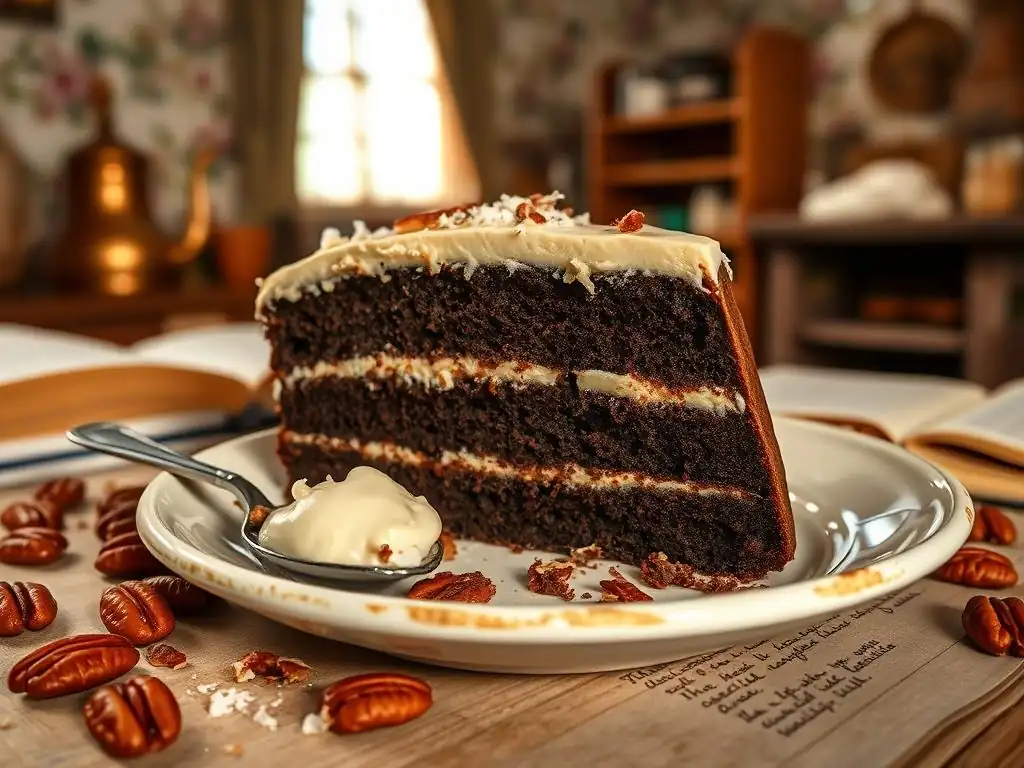
Welcome to BakeWithEase, where we believe that every baker, regardless of experience, can create showstopping desserts right in their own kitchen. Today, we're diving into a true American classic with a fascinating history: German Chocolate Cake. This isn't your average chocolate cake; it's defined by its unique, cooked coconut-pecan frosting, a sweet, gooey topping that sets it apart from all others. Forget the box mix; mastering this cake from scratch is incredibly rewarding, and we're here to show you how simple it can be.
While often mistakenly thought to originate in Germany, this beloved cake actually traces its roots to the United States, named after Samuel German, who developed a type of dark baking chocolate in 1852. The iconic recipe featuring the specific coconut-pecan frosting gained widespread popularity in the 1950s. Our goal is to guide you through baking this traditional treat with clear, easy-to-follow steps, making the process approachable and enjoyable, proving that a fantastic German chocolate cake recipe easy is well within your reach.
Why This German Chocolate Cake Recipe is Easier Than You Think
Many bakers shy away from German Chocolate Cake, intimidated by the multi-step process or the seemingly complex cooked frosting. However, our approach simplifies key areas without compromising on that authentic, rich flavor and texture you crave. We focus on straightforward techniques for the moist chocolate cake layers and break down the frosting creation into manageable steps, ensuring success even for those new to cooked frostings.
We'll share tips like using readily available ingredients and focusing on precise measurements, which are crucial for consistent results in baking. By demystifying the process and highlighting the 'why' behind each step, you'll build confidence as you bake. Our aim is to provide a German chocolate cake recipe easy enough for a weekend project, transforming potential baking anxiety into a delightful culinary achievement.
Understanding a Classic Chocolate Cake: Key Ingredients and Flavors
The Secret to Rich Flavor: High-Quality Cocoa Powder Explained
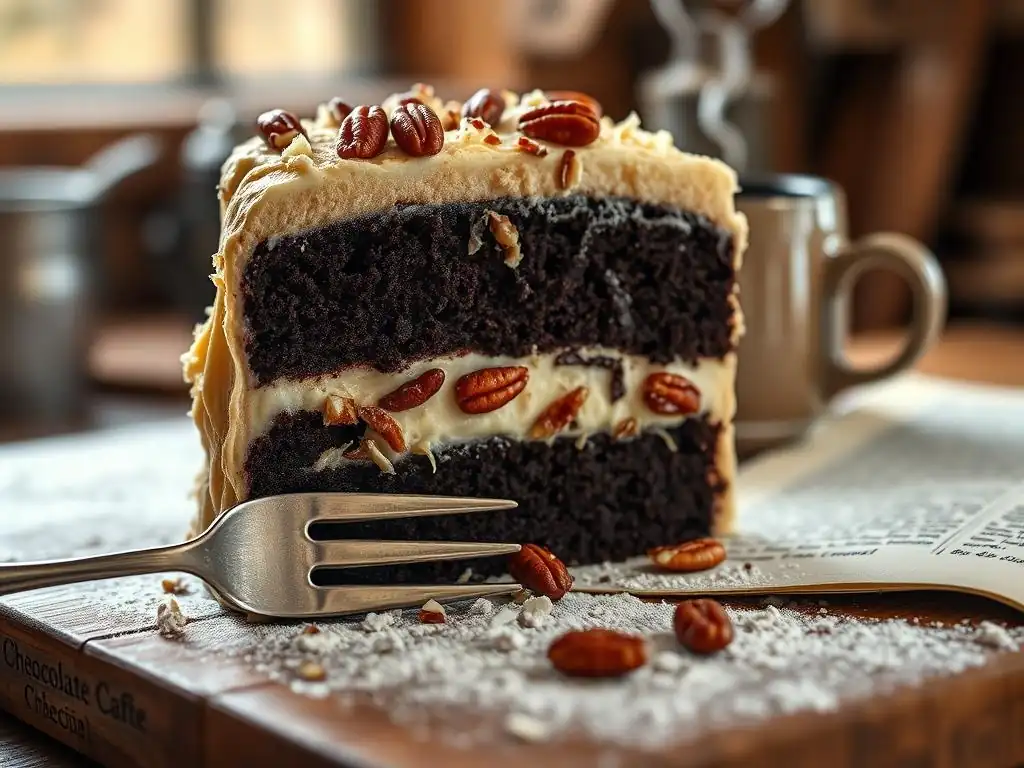
The foundation of a great German Chocolate Cake is a moist, flavorful chocolate cake layer. The depth of chocolate flavor largely depends on the quality and type of cocoa powder used. There are two main types: natural cocoa powder (like Hershey's or Ghirardelli's natural) and Dutch-process cocoa powder (often labeled "processed with alkali"). Natural cocoa is acidic and reacts with baking soda to provide lift, while Dutch-process cocoa is neutral and produces a darker color and smoother, less sharp chocolate flavor, relying solely on baking powder for leavening.
For a rich, deep chocolate flavor in our German chocolate cake recipe easy, we often recommend a high-quality natural cocoa powder. Its slight acidity can contribute to the cake's tenderness when paired with baking soda, and it typically offers a more intense, pure chocolate taste compared to some milder Dutch-process varieties. Look for cocoa powders that list a higher percentage of cocoa butter, around 20-24%, as this contributes significantly to flavor and richness. Investing in a good quality cocoa makes a noticeable difference in the final cake.
The Signature Coconut-Pecan Frosting: A Flavor Profile
While the cake layers are important, the true star of German Chocolate Cake is its distinctive cooked frosting. This isn't a simple buttercream; it's a rich, custard-like creation made on the stovetop. The unique flavor profile comes from the combination of evaporated milk, egg yolks, butter, sugar, shredded coconut, and chopped pecans, cooked together until thickened into a luscious, caramel-hued spread. It's sweet, yes, but balanced by the nutty pecans and chewy coconut.
The cooking process caramelizes the sugars and cooks the egg yolks, resulting in a dense, gooey, and slightly translucent frosting that is unlike any other. The texture is deliberately chunky from the generous additions of coconut and pecans. This signature frosting is traditionally spread thickly between the cake layers and piled high on top, often allowing it to cascade down the sides, creating an invitingly rustic look that perfectly complements the cake's rich flavor. Mastering this component is key to an authentic German chocolate cake recipe easy.
Avoiding Common Mistakes in Chocolate Cake Baking
Even with a simple German chocolate cake recipe easy, certain pitfalls can affect the outcome of your cake layers. One common mistake is overmixing the batter once the wet and dry ingredients are combined. Overmixing develops the gluten in the flour too much, leading to a tough or dense cake texture instead of a tender crumb. Another error is using cold ingredients; ensure butter, eggs, and any liquid ingredients (like milk or buttermilk) are at room temperature for proper emulsification and a smoother batter.
Inaccurate measuring, particularly of flour and leavening agents (baking soda/powder), is also a frequent cause of issues like a sunken cake or a dry texture. Using the "spoon and level" method for flour (gently spooning flour into the measuring cup and leveling the top with a straight edge, rather than scooping directly from the bag) can prevent adding too much flour. Following the recipe's specified temperatures and times precisely, and resisting the urge to open the oven door too early, helps ensure even baking and prevents temperature fluctuations that can cause problems.
German Chocolate Cake Recipe Easy: Step-by-Step Baking Guide
Preparing the Chocolate Cake Batter: A Simplified Approach
Creating the perfect chocolate cake layers for your German Chocolate Cake doesn't have to be complicated. This German chocolate cake recipe easy focuses on a method that ensures moistness and a rich flavor with minimal fuss. We'll guide you through combining ingredients efficiently to build a tender crumb structure that pairs beautifully with the gooey frosting.
The process typically involves whisking together dry ingredients, creaming butter and sugar, then alternately adding wet and dry ingredients. Some easy recipes might even use a simpler "dump and mix" method or incorporate melted butter or oil for moisture. Whichever specific technique is used in your chosen German chocolate cake recipe easy, the goal is to create a smooth, well-combined batter without overworking it, setting the stage for perfectly baked layers.
Step 1: Blooming the Cocoa for Intense Flavor
Blooming cocoa is a simple yet powerful technique that significantly boosts the chocolate flavor in your cake. It involves whisking the cocoa powder with a hot liquid, such as hot water or freshly brewed hot coffee, before adding it to the rest of the batter. The heat helps to release the flavor compounds in the cocoa, making the chocolate taste more intense and complex.
For this step in your German chocolate cake recipe easy, you'll typically whisk the specified amount of cocoa powder into a small amount of very hot liquid until a smooth, thick paste forms. This paste is then incorporated into the wet ingredients. Using hot coffee instead of water can further enhance the chocolate flavor, adding subtle depth without making the cake taste like coffee. This small extra step yields big results in the final taste of your chocolate layers.
Step 2: Creaming Butter and Sugar for a Light and Airy Cake
Creaming butter and sugar is a fundamental step in many cake recipes, including a classic German chocolate cake recipe easy, as it incorporates air into the batter, contributing to the cake's rise and tender texture. Softened, but not melted, butter is beaten with sugar until the mixture becomes light in color and fluffy in texture. This process creates tiny air pockets that expand during baking.
Using room temperature butter is crucial here; cold butter won't cream properly, and melted butter won't hold the necessary air. Beat the butter and sugar on medium speed for several minutes, scraping down the sides of the bowl occasionally, until the mixture is visibly lighter and airy. This step lays the groundwork for a cake crumb that is both moist and light, providing a perfect base for the rich coconut-pecan frosting.
Step 3: Combining Wet and Dry Ingredients Seamlessly
Properly combining the wet and dry ingredients is key to achieving a smooth, uniform batter without overdeveloping gluten. In many cake recipes, this is done by adding the dry ingredients (flour, leavening, salt) and wet ingredients (milk, eggs, vanilla, etc.) alternately to the creamed butter and sugar mixture, often starting and ending with the dry ingredients.
This alternating method allows for easier incorporation of both components and reduces the risk of overmixing. Mix on low speed only until just combined after each addition. A few streaks of flour are acceptable; final mixing happens when the last of the ingredients are added. This careful approach ensures your chocolate cake layers are tender and moist, a perfect canvas for the signature German chocolate frosting.
Baking the Chocolate Cake Layers: Achieving Perfect Texture
Once your batter is ready, preparing it for the oven is the next step towards baking a delicious German Chocolate Cake. Ensure your cake pans are properly prepared to prevent sticking. This usually involves greasing the pans generously with butter or baking spray, then dusting them with flour or cocoa powder, and often lining the bottoms with parchment paper circles. For two 9-inch round cake pans, typically use about 1-2 tablespoons of butter/spray and a few tablespoons of flour/cocoa per pan.
Divide the batter evenly between the prepared pans. Using a kitchen scale to weigh the batter in each pan is the most accurate way to ensure even layers that will bake uniformly. Smooth the tops of the batter gently with a spatula. Placing a damp baking strip around the outside of the pans (if desired) can help the cakes bake more evenly with flat tops, reducing the need for significant leveling.
Oven Temperature and Baking Time: Tips for Even Baking
Accurate oven temperature is vital for baking success. Preheat your oven to the temperature specified in your German chocolate cake recipe easy, typically around 325°F to 350°F (160°C to 175°C). Using an oven thermometer is highly recommended, as many ovens' thermostats are inaccurate by 25°F or more. Place the cake pans on the center rack of the oven, ensuring there is space between them and the oven walls for air circulation.
Baking time will vary depending on your specific oven and the size of your pans, but for standard 8 or 9-inch layers, it's often in the range of 25 to 35 minutes. Avoid opening the oven door during the first 20-25 minutes, as the sudden temperature drop can cause cakes to sink. Look for visual cues like the edges pulling slightly away from the pan and the center looking set before performing the doneness test.
Testing for Doneness: The Toothpick Test
The toothpick test is the most common and reliable method for determining if your chocolate cake layers are fully baked. Towards the end of the estimated baking time, gently insert a clean toothpick into the center of one of the cake layers. Be careful not to insert it too close to the edge, where the cake bakes faster.
If the toothpick comes out clean or with only a few moist crumbs attached, the cake is done. If it comes out with wet batter clinging to it, the cake needs more time. Continue baking for a few more minutes and test again. Overbaking can lead to a dry cake, so it's better to err on the side of slightly underbaked (it will continue to cook slightly from residual heat) than significantly overbaked.
Crafting the Coconut-Pecan Frosting: The Heart of the Cake
Now for the star of the show in this German chocolate cake recipe easy: the unique coconut-pecan frosting. Unlike simple buttercreams, this is a cooked frosting that creates a rich, gooey texture. It requires a bit more attention on the stovetop, but the result is well worth the effort and is the defining characteristic of an authentic German Chocolate Cake.
The process involves cooking butter, evaporated milk, sugar, and egg yolks until thickened, then stirring in shredded coconut and chopped pecans. The cooking step is essential for both thickening the frosting and ensuring the egg yolks are cooked through. This cooked frosting, with its caramel notes and chunky texture, is what elevates a standard chocolate cake to the iconic German Chocolate Cake we know and love.
Making the Frosting Base: A Smooth and Creamy Texture
The base of the coconut-pecan frosting is created by combining butter, evaporated milk, granulated sugar, and lightly beaten egg yolks in a saucepan. This mixture is then cooked over medium-low heat, stirring constantly with a whisk or wooden spoon. Constant stirring is crucial to prevent the egg yolks from scrambling and the mixture from scorching on the bottom of the pan.
Continue cooking and stirring until the mixture thickens to a custard-like consistency, thick enough to coat the back of a spoon without dripping off immediately. This usually takes about 10-15 minutes, depending on the heat and quantity. The mixture will also deepen slightly in color as it cooks. Once thickened, remove the pan from the heat immediately to proceed to the next step.
Achieving the Right Consistency: Tips and Tricks
After removing the cooked base from the heat, stir in vanilla extract, shredded coconut, and chopped pecans. The heat from the cooked base will soften the coconut slightly and meld the flavors. Stir until everything is evenly distributed throughout the frosting.
The frosting will be quite warm at this point and too runny to spread easily. It needs to cool and thicken further before assembling the cake. Let the frosting cool at room temperature for about 30-60 minutes, stirring occasionally. It should thicken as it cools but remain spreadable. If it becomes too stiff, you can gently warm it slightly over very low heat or in a microwave for a few seconds, stirring well, but be cautious not to overheat it. The ideal consistency is thick and gooey, with the coconut and pecans suspended throughout.
Assembling Your German Chocolate Cake: Layering and Frosting Techniques
Cooling and Leveling the Cake Layers: Preparation is Key
Once your chocolate cake layers are baked, allow them to cool in their pans on a wire rack for about 10-15 minutes. This allows the cakes to firm up slightly before being removed. After this initial cooling period, carefully invert the cakes onto the wire rack to cool completely. Ensure the cakes are entirely cool before attempting to level or frost them; warm cakes are fragile and will melt the frosting. This cooling step is essential for a successful German chocolate cake recipe easy assembly.
If your cake layers have domed tops, you may want to level them using a serrated knife or a cake leveler. Hold the knife parallel to the work surface and carefully slice off the dome to create a flat surface. This makes stacking easier and results in a more stable and visually appealing cake. You can save the cake scraps for snacking or other uses.
Frosting the Cake: Achieving a Beautiful and Even Finish
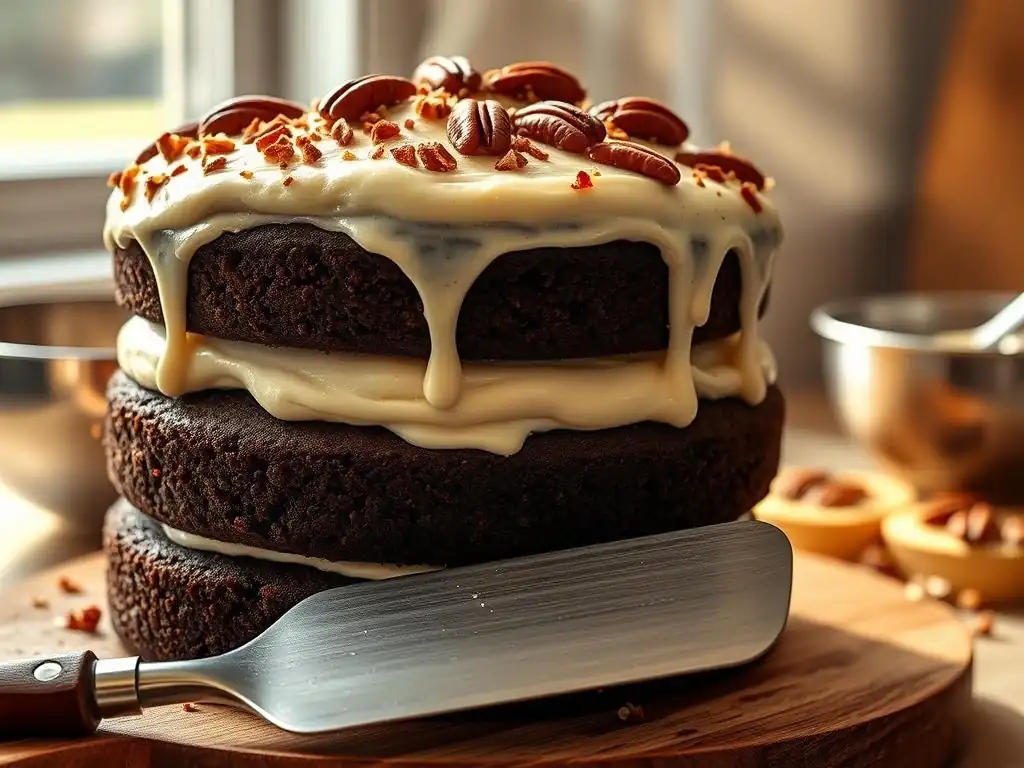
Assembling a German Chocolate Cake is unique because the frosting is typically applied very generously and doesn't require the smooth, precise finish of a buttercream cake. The rustic, chunky nature of the coconut-pecan frosting is part of its charm. Place the first cooled, leveled cake layer on your serving plate or cake stand.
Spoon about half of the cooled coconut-pecan frosting onto the first layer and spread it evenly, leaving a slight border if desired. The frosting is thick, so just gently push it towards the edges. Carefully place the second cake layer on top. Spoon the remaining frosting onto the top of the second layer and spread it out, allowing it to spill over the sides if you like the traditional look. Don't worry about trying to smooth the sides perfectly; the beauty is in the visible texture of the coconut and pecans.
Adding Finishing Touches: Chocolate Shavings and Decorations [Optional]
While the coconut-pecan frosting is decorative enough on its own, adding a few finishing touches can elevate the presentation of your homemade German Chocolate Cake. A classic addition is chocolate shavings or curls. You can make these by running a vegetable peeler or sharp knife along the edge of a bar of German's Sweet Chocolate or another semi-sweet or dark chocolate bar held at room temperature.
Sprinkle the chocolate shavings around the base of the cake or pile them in the center on top of the frosting. You can also reserve a few perfect pecan halves to arrange artfully on top of the frosting. Keep decorations simple to let the unique texture and appearance of the signature frosting remain the focal point of this delicious German chocolate cake recipe easy.
Tips and Tricks for the Best German Chocolate Cake Recipe
Maintaining Moisture: Preventing a Dry Cake
A common complaint about chocolate cakes is dryness. To ensure your German Chocolate Cake layers are wonderfully moist, several factors are key. Using ingredients like oil or melted butter instead of just softened butter can contribute to moisture, as oil remains liquid at room temperature. Incorporating buttermilk or sour cream adds tenderness and moisture due to their acidity and fat content.
Crucially, avoid overbaking at all costs. Even a few extra minutes in the oven can turn a moist cake into a dry one. Start checking for doneness at the earliest recommended time. Also, ensure you are accurately measuring your dry ingredients, especially flour and cocoa powder; too much dry ingredient will absorb excessive moisture from the batter, resulting in a drier cake. Following a well-tested German chocolate cake recipe easy minimizes these risks.
Variations and Substitutions: Adapting the Recipe to Your Preferences
While the classic German Chocolate Cake is defined by its specific components, you can explore minor variations once you've mastered the basic German chocolate cake recipe easy. For example, you could add a teaspoon of espresso powder or instant coffee granules to the hot liquid when blooming the cocoa for an even deeper chocolate flavor that pairs well with the caramel-like frosting.
Regarding the frosting, while pecans and coconut are traditional, you could potentially substitute walnuts for pecans if preferred, though pecans offer a distinct flavor profile. Adjusting the ratio of coconut to pecans is also possible based on personal preference. Remember that significant changes to the cooked frosting base may affect its texture and stability, so experiment cautiously.
Gluten-Free Chocolate Cake Options
Adapting a standard German chocolate cake recipe easy to be gluten-free is achievable. The most straightforward method is to use a high-quality, all-purpose gluten-free flour blend as a direct substitute for the wheat flour called for in the cake layers. Look for blends that are specifically formulated for baking and contain a mix of flours and starches, often including xanthan gum to provide structure.
While a 1:1 substitution is often possible, some gluten-free blends may absorb liquids differently. You might find you need a tiny bit more liquid (like an extra tablespoon or two of milk or buttermilk) to achieve the correct batter consistency. Baking times can also sometimes vary slightly with gluten-free flours, so rely on the toothpick test for doneness. The coconut-pecan frosting is naturally gluten-free, making the cake layers the primary focus for this adaptation.
Dairy-Free Chocolate Cake Alternatives
Creating a dairy-free version of the German Chocolate Cake layers is also quite feasible. Substitute the butter in the cake batter with a dairy-free stick margarine or oil (like vegetable or canola oil) in the specified amounts. Replace any dairy milk or buttermilk with unsweetened plant-based alternatives such as almond milk, soy milk, oat milk, or coconut milk. Using a plant-based milk with a slightly higher fat content (like soy or oat) can help maintain moisture.
Making the traditional cooked coconut-pecan frosting dairy-free is more challenging due to the reliance on evaporated milk and butter. While dairy-free evaporated milk alternatives exist, and dairy-free butter can be used, achieving the exact same texture and flavor can be tricky. Some dairy-free German Chocolate Cake recipes use a modified frosting base, perhaps using coconut cream or condensed coconut milk, which will result in a slightly different but still delicious frosting. Focus on perfecting the dairy-free cake layers first.
Storing Your German Chocolate Cake: Keeping it Fresh
Proper storage is key to keeping your homemade German Chocolate Cake delicious and moist. If the cake is frosted, it's best stored in an airtight container at room temperature for 1-2 days. Due to the cooked frosting containing egg yolks, many recommend refrigerating the cake, especially in warmer or humid climates. Refrigerated cake should also be stored in an airtight container and is typically good for 3-4 days.
If refrigerating, let the cake sit at room temperature for 20-30 minutes before serving to allow the cake layers and frosting to soften slightly for the best texture. For longer storage, unfrosted cake layers can be tightly wrapped in plastic wrap and then foil and frozen for up to 2-3 months. The cooked frosting can also be stored separately in an airtight container in the refrigerator for a few days or frozen, though its texture may change slightly upon thawing.
Troubleshooting Your German Chocolate Cake: Common Problems and Solutions
Cake Layers Sinking: Identifying and Preventing Collapses
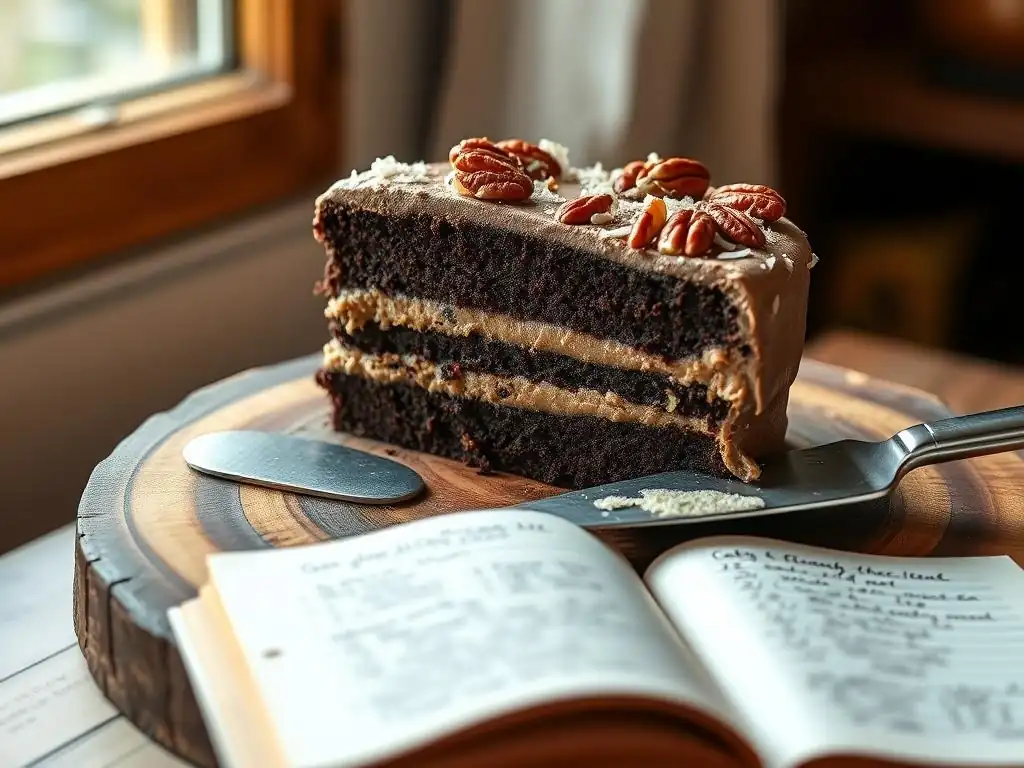
Seeing your beautiful cake layers sink in the middle after removing them from the oven is frustrating. Common causes include underbaking (the structure hasn't set), incorrect leavening (too much or too little baking soda/powder, or expired leavening), or opening the oven door too early in the baking process, causing a sudden temperature drop.
To prevent sinking, ensure your leavening agents are fresh (test baking powder by adding a teaspoon to hot water; it should fizz vigorously). Measure leavening precisely. Trust the baking time and the toothpick test, ensuring the center is fully cooked. Avoid opening the oven door until the cake is nearing the end of its expected baking time and looks mostly set around the edges. Baking at a slightly lower temperature for a bit longer can also sometimes help ensure the center cooks through before the edges overbake.
Frosting Too Runny or Too Thick: Adjusting Consistency
The cooked coconut-pecan frosting can sometimes present consistency challenges. If your frosting is too runny even after cooling, it likely did not cook long enough to thicken properly on the stovetop, or the egg yolks weren't incorporated correctly. If it's too thick and stiff to spread, it might have been cooked too long, or it has cooled too much.
If the frosting is too runny, you can try gently returning it to the saucepan and cooking it for a few more minutes over low heat, stirring constantly, until it reaches the desired thickness. If it's too thick, gently warm it slightly, either over very low heat on the stovetop or in short bursts in the microwave (stirring well after each burst), and stir in a tiny amount (start with a teaspoon) of milk or evaporated milk until it becomes spreadable. Be careful not to add too much liquid at once or overheat, which can cause it to separate.
Dry Cake: Addressing Lack of Moisture
A dry chocolate cake is disappointing, especially after the effort of making that delicious frosting. As mentioned earlier, the primary culprits are usually overbaking or an imbalance in the dry-to-wet ingredients, often due to inaccurate measurement of flour or cocoa.
Unfortunately, once a cake is baked dry, there's little you can do to add moisture back into the crumb itself. Prevention during the baking process is key. For a dry finished cake, serving it with a sauce (like a chocolate ganache or caramel sauce, though not traditional for German Chocolate Cake) can help mask the dryness. However, the best approach is to learn from the experience and implement the tips for maintaining moisture (accurate measurement, room temperature ingredients, correct baking time) the next time you make this German chocolate cake recipe easy.
Conclusion: Enjoying Your Homemade German Chocolate Cake
Frequently Asked Questions
What makes a German Chocolate Cake "German"?
It's not German in origin! The name comes from Samuel German, an American baker who developed a type of baking chocolate used in the original recipe.
Can I use regular chocolate instead of German's Sweet Chocolate?
While you can, it won't be the same. German's Sweet Chocolate is milder and sweeter than semi-sweet or dark chocolate, impacting the overall flavor profile. You might need to adjust the sugar.
What's the secret to a moist German Chocolate Cake?
Using oil instead of butter in the cake batter helps keep it moist. Also, don't overbake it! A toothpick should come out with a few moist crumbs attached.
Why is the coconut-pecan frosting so important?
The coconut-pecan frosting is a defining characteristic of German Chocolate Cake. It provides a rich, nutty, and sweet counterpoint to the chocolate cake layers.
What if I don't like coconut or pecans?
While they're traditional, you could try substituting other nuts for the pecans. However, omitting the coconut would significantly change the cake's signature flavor.
Final Reflection: The Enduring Allure of a Simple Cake
The seemingly simple act of baking a German Chocolate Cake transcends mere culinary creation; it's a journey into history, culture, and the enduring power of a well-loved recipe. This exploration into the authentic preparation of this iconic dessert has highlighted not only the precise steps involved, but also the rich tapestry of influences that have shaped its enduring popularity. The ease of the recipe, as emphasized throughout, makes it accessible to all, regardless of baking experience.
The impact of this cake extends far beyond the kitchen. It's a symbol of shared experiences, family gatherings, and the comforting familiarity of a classic dessert. It's a reminder that even the most seemingly simple things can hold profound meaning. Food is symbolic of love when words are inadequate.
- Alan D. Wolfelt. This quote perfectly encapsulates the emotional connection we forge with food, and the German Chocolate Cake, with its rich history and simple preparation, is a prime example of this.
Now, I invite you to consider your own relationship with baking and tradition. Perhaps this recipe will inspire you to try your hand at creating this classic, or maybe it will spark a memory of a cherished cake from your past. Regardless, I hope this exploration has not only provided you with an easy and authentic recipe, but also encouraged you to appreciate the simple joys and profound connections found in the act of baking and sharing a delicious treat. Go forth and bake!
Unleash Your Inner Bäckermeister: Bake the Perfect German Chocolate Cake!
Thanks for joining us on this delicious journey into the world of authentic German Chocolate Cake! We hope you've gained valuable insights and a newfound appreciation for this classic dessert. Now it's time to put your knowledge to the test.
- Bake your own masterpiece! Use the recipe and tips from this article to create your own unforgettable German Chocolate Cake. Don't be afraid to experiment – baking is all about having fun!
- Share your creation: Post a picture of your cake on social media using #BakeWithEaseGermanChocolate and tag us – we’d love to see your baking triumphs!
- Explore our other recipes: Discover more amazing cake recipes and baking tips on BakeWithEase.com – we have a whole world of deliciousness waiting for you!
Ready to take on the challenge and impress your friends and family with an authentic German Chocolate Cake? What unique twist will you add to your baking adventure?