
Perfecting Delicate Bakes: Ovens Gentle Enough for Meringues & Macarons

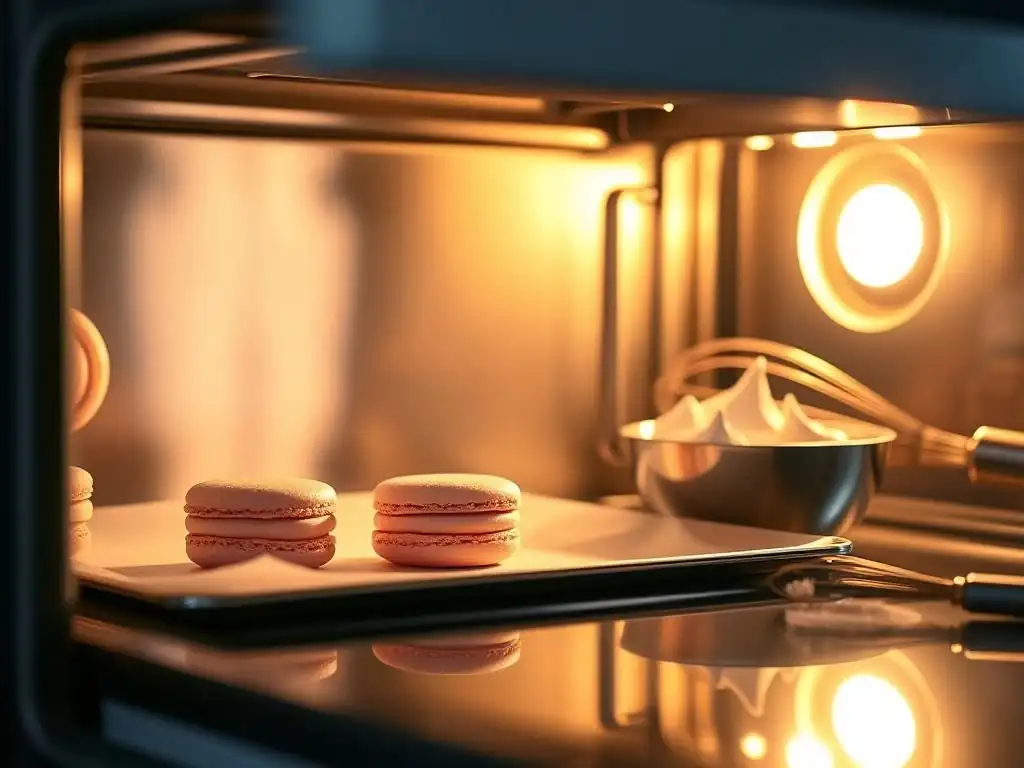
Welcome to BakeWithEase, where your baking dreams take flight! Are you ready to conquer the notoriously delicate world of meringue macarons? Discover how the right oven can transform your baking experience and unlock the secrets to achieving that perfect, chewy-centered, crisp-shelled treat. Learn more about gentle oven meringue macarons, and how to find the perfect oven for the job! Let’s explore the ovens that promise consistent temperatures and even heat distribution, essential for mastering these delightful delicacies.
- Perfecting Delicate Bakes: Finding the Best Gentle Oven for Meringues & Macarons
- Key Features to Look for in a Gentle Baking Oven for Meringues & Macarons
- Top Gentle Ovens for Meringues & Macarons: A Comparative Review
- Achieving Meringue & Macaron Perfection: Essential Baking Accessories
- Tips for Baking Meringues & Macarons in Your Gentle Oven
- Conclusion: Choosing the Right Gentle Oven for Your Baking Needs.
-
Frequently Asked Questions
- What makes an oven "gentle" enough for meringues and macarons?
- Why are meringues and macarons so sensitive to oven temperature?
- What oven features should I look for when baking meringues and macarons?
- How can I test if my oven is gentle enough for these recipes?
- What are some common mistakes to avoid when baking meringues and macarons?
- Final Reflection: The Gentle Art of Baking Perfection
- Unleash Your Inner Pastry Chef: Master Delicate Baking!
Perfecting Delicate Bakes: Finding the Best Gentle Oven for Meringues & Macarons
Baking meringues and macarons is a delicate art, requiring precision, patience, and most importantly, the right equipment. Among the essential tools, your oven plays the most critical role. Achieving that perfect crisp shell on a meringue or the smooth, footed base of a macaron relies heavily on how your oven distributes heat and maintains temperature.
This is where the concept of a gentle oven meringue macarons friendly environment comes into play. It's not just about setting a temperature; it's about the oven's ability to create a stable, controlled atmosphere that coaxes these finicky confections to perfection without burning, cracking, or collapsing.
Achieve Baking Perfection: Why a Gentle Oven Matters for Meringues and Macarons
Meringues, essentially whipped egg whites and sugar, are incredibly sensitive to temperature fluctuations and harsh heat. Too high a temperature or uneven heat distribution will cause them to brown too quickly, become brittle, or even collapse entirely. A gentle oven for meringue macarons baking ensures a slow, consistent drying process, which is key to developing that light, airy, melt-in-your-mouth texture and a beautiful, crack-free surface. Think of it as a slow, controlled dehydration process rather than rapid baking.
Similarly, macarons demand a specific environment to form their characteristic "foot" and achieve a smooth, unblemished shell. They require a brief period of moderate heat to set the shell, followed by a consistent, lower temperature to bake the interior without burning the delicate exterior. An oven that blasts heat unevenly or spikes in temperature can lead to cracked shells, hollow interiors, or failure of the foot to rise.
A gentle oven meringue macarons ideal ensures the heat is consistent and controlled, allowing the macaron batter to rise predictably and bake evenly from all sides. Many bakers find that ovens struggling with temperature stability are the primary culprit behind macaron failures.
Key Features to Look for in a Gentle Baking Oven for Meringues & Macarons
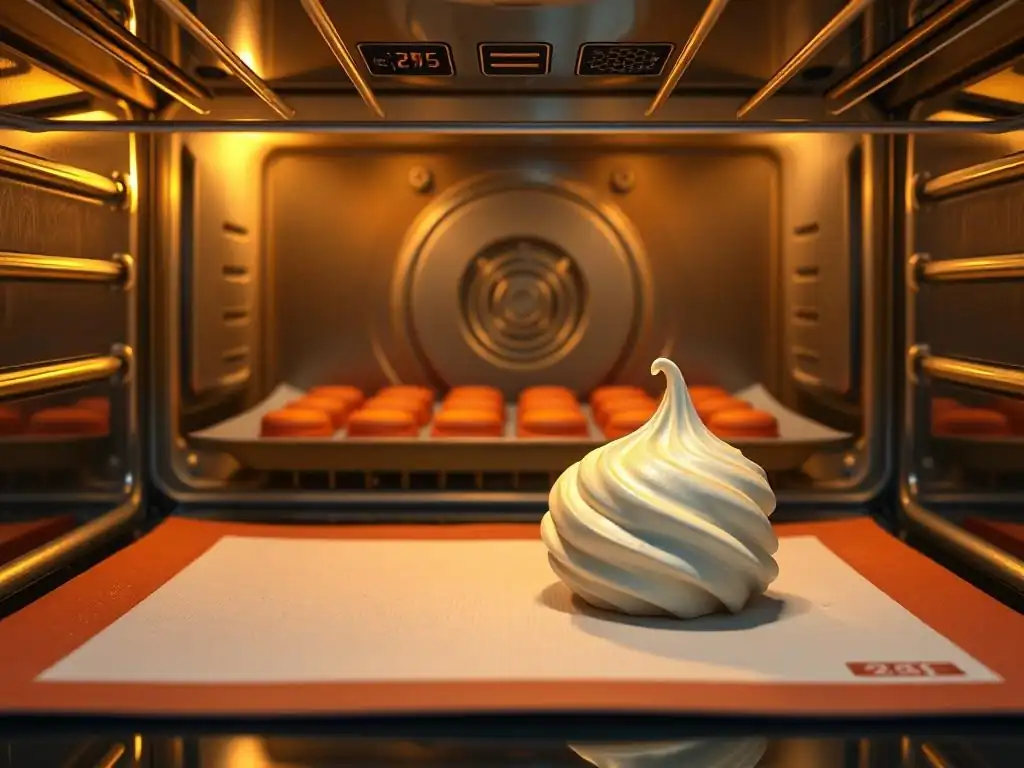
When seeking a gentle oven for meringue macarons success, several key features stand out. These characteristics work together to create the stable, low-stress environment that delicate bakes require. Understanding these features will guide you in selecting an oven that supports your baking ambitions rather than hindering them. It's not just about the maximum temperature it can reach, but how it behaves at lower, more critical temperatures for these specific treats.
Precise Temperature Control: The Foundation of Perfect Meringues and Macarons
Precise temperature control is arguably the single most important factor for baking meringues and macarons in a gentle oven meringue macarons setup. These recipes often call for specific temperatures, sometimes as low as 180°F or 200°F, maintained for extended periods. An oven that fluctuates wildly by more than 5-10°F can spell disaster. For example, baking meringues at 200°F allows them to dry out slowly, preserving their white color. A spike to 220°F or 230°F could cause rapid browning or even burning before the meringue is fully set inside.
High-quality ovens designed for precision often boast temperature stability within a few degrees of the set point, even during long baking cycles. This level of accuracy prevents the thermal shock that can cause delicate structures to crack or collapse. When researching ovens, look for reviews or specifications that mention temperature accuracy and stability, particularly at lower baking temperatures relevant to gentle oven meringue macarons techniques. Some advanced models even offer digital readouts that show the actual oven temperature, providing an extra layer of assurance.
Convection Baking: Enhancing Even Heat Distribution
Convection baking, which uses a fan to circulate hot air, can be a double-edged sword for delicate bakes, but in a gentle oven meringue macarons context, it's often a benefit if used correctly. When set to a low speed or a specific "gentle bake" or "pastry" mode (if available), convection helps distribute heat more evenly throughout the oven cavity. This reduces hot spots, which are notorious for causing some meringues or macarons to brown or crack while others remain underbaked on the same tray.
For meringues, low-speed convection at a low temperature (e.g., 190°F) can significantly speed up the drying process while still maintaining an even bake. For macarons, a very gentle convection setting can help develop the foot evenly. However, too strong a fan or too high a temperature with convection can cause the delicate surfaces to set too quickly or crack. Many bakers recommend reducing the temperature by 25°F when using convection compared to conventional baking for meringues and macarons. Experimentation with your specific oven's convection settings is key to mastering gentle oven meringue macarons with this feature.
Low Temperature Settings: Avoiding Over-Browning and Cracking
The ability to maintain very low temperatures is fundamental for a gentle oven meringue macarons environment. Meringues often bake at temperatures between 180°F and 225°F for several hours to achieve that crisp-yet-chewy texture without browning. Macarons typically start at a slightly higher temperature, perhaps 300°F to 325°F, for a short period to set the shell, then require a stable temperature, often around 275°F or 300°F, for the remainder of the bake.
An oven that struggles to hold these low temperatures accurately, perhaps cycling too high or too low, will compromise the bake. If the temperature dips too low, the meringues won't dry properly. If it spikes too high, the macarons will crack or brown prematurely. Look for ovens that explicitly state their capability to hold low temperatures consistently. Some ovens have dedicated "warm" or "proof" settings that can sometimes be adapted for very low-temperature drying, but a true baking oven should be able to perform reliably in the 180°F to 225°F range for extended periods, making it a truly gentle oven meringue macarons companion.
Consistent Heat Distribution: Say Goodbye to Uneven Baking
Beyond just temperature precision, the way heat is distributed throughout the oven cavity is crucial for uniform results. Hot spots and cold spots are the bane of delicate bakes, leading to trays where some items are perfectly done while others are underbaked or burnt. A gentle oven meringue macarons friendly environment minimizes these variations, ensuring that every meringue peak or macaron shell on the baking sheet receives the same amount of heat.
Ovens with multiple heating elements (top, bottom, and sometimes rear for convection) that are well-calibrated tend to offer better heat distribution. The design of the oven cavity itself, including the position of the fan and heating elements, plays a significant role.
While no oven is perfectly uniform, a good gentle oven meringue macarons oven will have minimal temperature variance across the racks. Testing your oven with bread slices or cookies placed evenly on a sheet can help identify hot spots, but investing in an oven known for its even baking performance is a better starting point for tackling delicate recipes.
Humidity Control: The Macaron Secret Weapon
While not a standard feature on all ovens, advanced models sometimes offer humidity control or steam injection, which can be a secret weapon for achieving perfect macaron shells. Macarons require a delicate balance of drying the surface before baking to prevent cracking, but too dry an environment in the oven can also hinder the foot from rising properly. A touch of humidity can help create a slightly more forgiving environment during the initial stages of baking.
Ovens with specific pastry modes or steam functions can introduce controlled amounts of moisture. This can help keep the surface of the macaron shells pliable just long enough for the interior to expand and push up the foot. While not strictly necessary for a gentle oven meringue macarons setup (many bakers achieve perfect results without steam), it's a feature that can elevate macaron baking consistency and is worth considering if macarons are a frequent project. Understanding how humidity affects baking is key to utilizing such features effectively.
Top Gentle Ovens for Meringues & Macarons: A Comparative Review
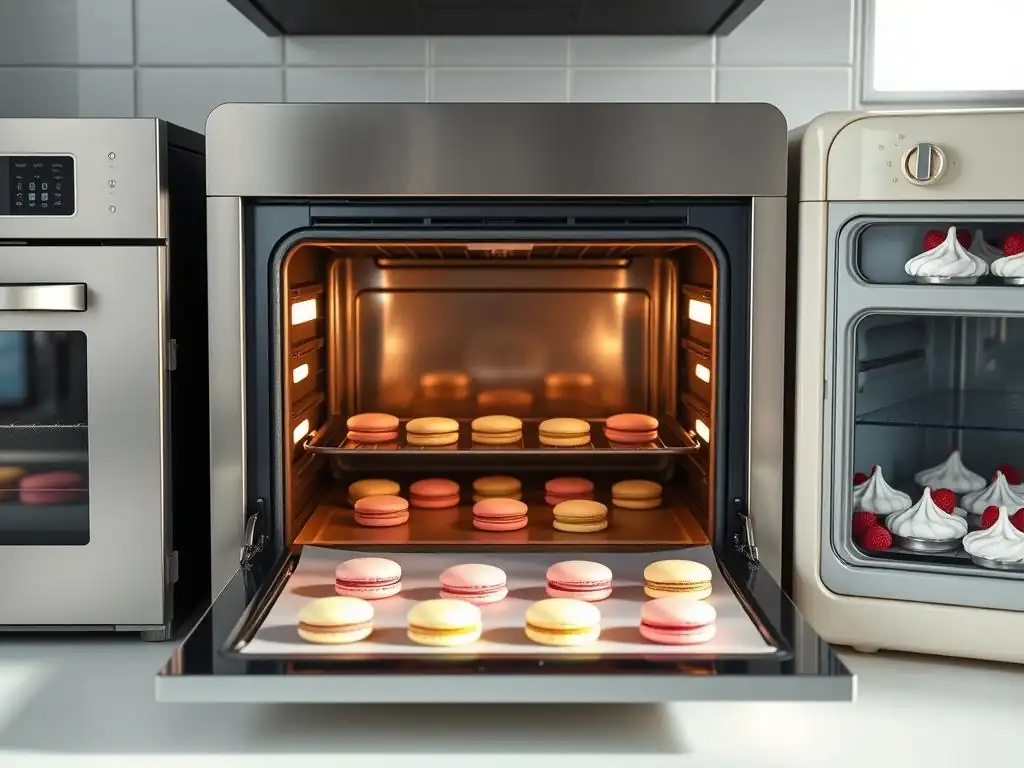
Selecting the perfect gentle oven meringue macarons can be challenging with so many models on the market. While specific model availability and features change rapidly, focusing on ovens that exemplify the features discussed above – precise temperature control, excellent low-temperature performance, and even heat distribution – will lead you to suitable options. Here we describe types of ovens that fit the bill, using placeholder names to represent categories of performance.
[Oven Model A]: The Precision Master
This type of oven is renowned for its exceptional temperature accuracy and stability, making it a top contender for a gentle oven meringue macarons role. Ovens in this category often boast advanced digital controls and insulation that minimize heat loss and prevent temperature swings. Tests might show it holding temperatures like 200°F within a remarkable +/- 1°F or 2°F range for hours, a level of consistency essential for slowly drying meringues without browning.
Its even heat distribution, often aided by sophisticated convection systems that allow for variable fan speeds, ensures that whether you're baking one tray or two, results are uniform across the board. While these ovens often come at a premium price point, their reliability and precision significantly reduce the frustration associated with delicate bakes. Bakers who prioritize perfect results and tackle challenging recipes frequently often gravitate towards ovens in this performance class, finding the investment pays off in consistent quality.
[Oven Model B]: The Budget-Friendly Baking Companion
Finding a gentle oven meringue macarons option doesn't always require breaking the bank. This category represents ovens that offer surprisingly good performance for their price. While they might not have the absolute pinpoint accuracy of high-end models, they often provide stable enough low-temperature baking and reasonably even heat distribution for successful delicate bakes with careful monitoring and potentially slight adjustments.
These ovens might require the use of an external oven thermometer to verify internal temperature accuracy, as their built-in thermostats can sometimes be off by 10-15°F. However, once the true temperature is known, they can often hold it consistently enough for meringues at 200°F or macarons at 300°F. They demonstrate that with attention to fundamental features like insulation and heating element quality, a more affordable oven can still serve as a capable gentle oven meringue macarons tool for enthusiastic home bakers.
[Oven Model C]: The Steam Injection Specialist
Ovens in this category stand out for their integrated steam functions, offering a unique advantage for macaron bakers seeking a gentle oven meringue macarons setup with added control over humidity. These models allow you to introduce precise amounts of steam at specific points in the baking cycle. For macarons, a burst of steam at the beginning can help create that ideal environment for the foot to develop and the shell to remain smooth.
While not essential for meringues, the steam function can sometimes be utilized in very low settings for certain pastry applications. The primary benefit here is for macaron consistency, helping to mitigate issues like cracking or uneven feet often caused by overly dry oven air. These ovens often combine their steam capability with excellent temperature control and even heat, providing a versatile platform for a wide range of baking, solidifying their place as a sophisticated gentle oven meringue macarons option.
[Oven Model D]: The Smart Oven for Perfect Meringues
Representing modern innovation, this type of oven leverages smart technology to assist with delicate baking, aiming to simplify the process of achieving a gentle oven meringue macarons environment. These ovens might offer pre-programmed settings optimized for specific recipes like meringues or macarons, automatically adjusting temperature and time based on algorithms or user input. They often connect to apps, allowing for remote monitoring and control of the baking process.
While the "smart" features are a convenience, the core performance – temperature precision and evenness – is still paramount. A smart oven that can truly maintain a stable 190°F for meringues or execute a precise temperature transition for macarons using its intelligent controls can take much of the guesswork out of delicate baking. They are designed to be intuitive, guiding the user towards successful results and making the goal of a perfect gentle oven meringue macarons bake more accessible through technology.
Achieving Meringue & Macaron Perfection: Essential Baking Accessories
Even with the best gentle oven meringue macarons setup, certain accessories are indispensable for consistent success. These tools complement your oven's capabilities and help ensure that your ingredients are prepared and baked under optimal conditions. They provide the necessary support for the delicate structures of meringues and macarons throughout their journey from batter to finished treat.
Oven Thermometers: Ensuring Accurate Temperature Readings
A reliable oven thermometer is a non-negotiable tool for any baker, especially when tackling delicate recipes that demand precise temperatures. Built-in oven thermostats can be inaccurate, sometimes by as much as 25°F or more. Using an independent oven thermometer placed inside the oven cavity allows you to verify the actual temperature, ensuring that your gentle oven meringue macarons is truly operating at the temperature you've set.
This is particularly critical for low-temperature baking, where even a small deviation can significantly impact the outcome. For example, if your recipe calls for 200°F for meringues, but your oven is actually holding at 220°F, they will brown too quickly. Checking the thermometer allows you to adjust your oven's setting accordingly (e.g., setting it to 180°F if the thermometer reads 200°F) to achieve the desired internal oven temperature. This simple accessory empowers you to take control and achieve more consistent results with your gentle oven meringue macarons efforts.
Baking Mats: Preventing Sticking and Promoting Even Baking
Silicone baking mats, such as Silpat, or high-quality parchment paper are essential for baking meringues and macarons. They provide a non-stick surface, ensuring that your delicate bakes release cleanly from the tray without breaking. Beyond preventing sticking, they also contribute to even baking by providing a consistent surface across the entire sheet.
For macarons specifically, baking mats often come with printed macaron templates, which help pipe uniform shells – a key factor for successful macaronage. The even surface of a good mat or parchment also helps insulate the bottom of the meringues or macarons slightly, preventing the bottoms from cooking too fast or browning before the rest of the confection is done. Using these on a sturdy baking sheet is crucial for transferring the delicate items safely into and out of your gentle oven meringue macarons.
Piping Bags and Tips: Achieving Consistent Macaron Shells
Consistency is key in both meringue drops and macaron shells. Using piping bags and appropriate tips allows you to create uniformly sized and shaped pieces. For meringues, a simple round tip can be used for dollops or kisses. For macarons, a plain round tip, typically 1/2 inch or 3/8 inch in diameter, is standard for piping the shells onto your baking mat or parchment.
Piping bags allow for controlled deposition of the batter, ensuring that each piece is roughly the same size and height. This uniformity is vital for even baking in your gentle oven meringue macarons. If shells or meringue drops are significantly different sizes, smaller ones will overbake while larger ones are still raw. Mastering the piping technique is an important step in achieving perfect, uniform results alongside having a reliable gentle oven meringue macarons.
Tips for Baking Meringues & Macarons in Your Gentle Oven
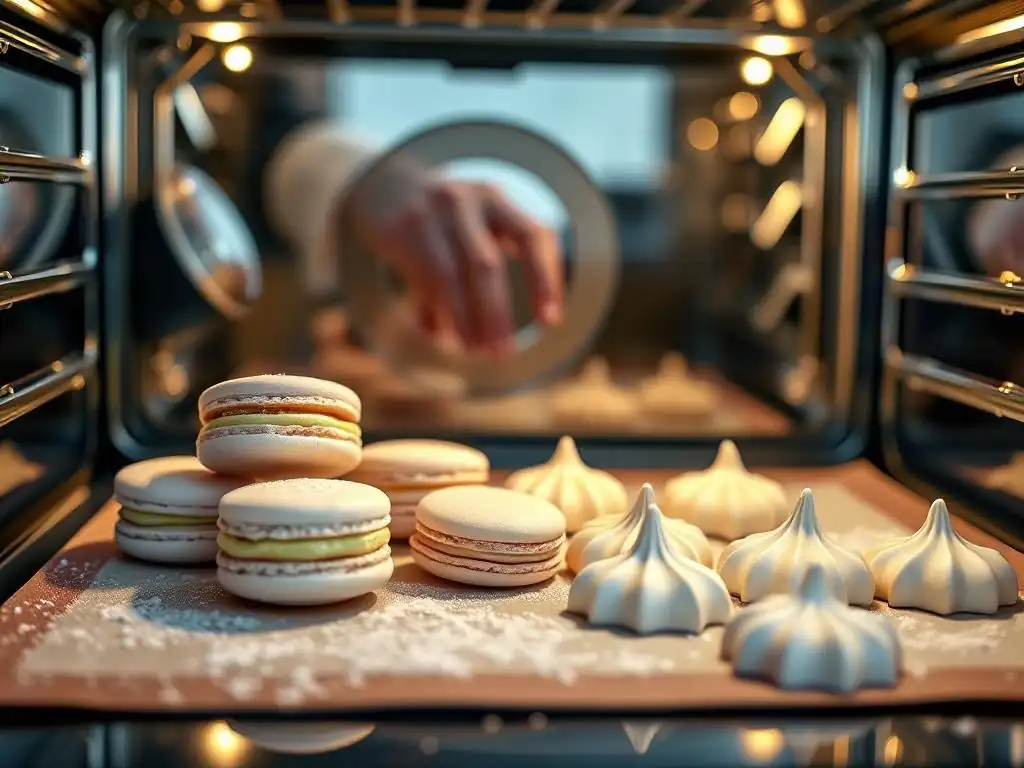
Even with a superb gentle oven meringue macarons setup and the right accessories, technique matters. Here are some tips to help you achieve consistent success with these notoriously tricky, yet rewarding, bakes.
Mastering the Meringue: Techniques for Stiff Peaks and Glossy Texture
Achieving the perfect meringue starts with the whip.
- Use clean, grease-free equipment. Any trace of fat can prevent egg whites from whipping properly.
- Ensure egg whites are at room temperature; they whip to a greater volume.
- Add sugar slowly, a tablespoon at a time, after the egg whites have reached soft peaks. This allows the sugar to dissolve properly, resulting in a smooth, glossy meringue.
- Whip until stiff, glossy peaks form. When you lift the whisk, the peaks should stand straight up.
- Don't overwhip. Overwhipped meringue can become grainy and separate.
Once piped, bake your meringues in your gentle oven meringue macarons at a low temperature ( 180°F to 225°F) for a long duration (1-3 hours, depending on size) until they are dry and crisp throughout. Turn the oven off and leave them inside as it cools completely to prevent cracking.
Perfecting Macaronage: Achieving the Ideal Batter Consistency
Macaronage is the critical step where the dry ingredients (almond flour and powdered sugar) are folded into the meringue. The goal is to deflate the meringue just enough to create a batter that flows slowly and smoothly, like lava.
- Sift your dry ingredients twice for the finest texture.
- Add the dry ingredients to the meringue in stages, folding gently with a spatula.
- Use a folding motion, scraping down the sides and pushing the batter through the center.
- Test the consistency frequently. The batter should fall off the spatula in a continuous ribbon and settle back into the bowl within 20-30 seconds.
- Avoid overmixing. Overmixed batter will be too runny and won't form feet. Undermixed batter will be too stiff and crack.
After piping, let the macaron shells rest at room temperature until a skin forms (they should be dry to the touch and not stick to your finger). This drying time is crucial before they enter the gentle oven meringue macarons for baking.
Troubleshooting Common Meringue & Macaron Baking Problems
Even with a gentle oven meringue macarons, issues can arise. Here are a few common problems and potential causes:
- Meringues Browning: Oven temperature too high or baking time too long. Verify actual oven temperature with a thermometer.
- Meringues Collapsing/Cracking: Oven temperature fluctuations, removing from oven too soon, or opening the oven door during baking. Ensure stable, low temperature in your gentle oven meringue macarons setup.
- Macarons Cracking: No skin formed before baking, oven temperature too high, or uneven oven heat. Allow sufficient drying time, verify oven temperature, check for hot spots.
- Macarons with No Feet: Batter undermixed, oven temperature too low, or insufficient resting time. Ensure proper macaronage consistency and resting time before using your gentle oven meringue macarons.
- Hollow Macarons: Oven temperature too high or too low, or overmixing the batter. Precise temperature control in your gentle oven meringue macarons is key.
By understanding the role of your gentle oven meringue macarons and pairing it with careful technique and the right tools, you can significantly improve your success rate with these delightful and challenging pastries.
Conclusion: Choosing the Right Gentle Oven for Your Baking Needs.
Frequently Asked Questions
What makes an oven "gentle" enough for meringues and macarons?
A gentle oven maintains a stable and low temperature, crucial for preventing cracking and uneven baking. This often involves better temperature control and distribution than standard ovens. It also helps to prevent the rapid expansion of air within the meringue or macaron.
Why are meringues and macarons so sensitive to oven temperature?
These delicate treats rely on precise baking conditions. High or fluctuating temperatures can lead to cracking, browning too quickly, or a hollow interior. Achieving the proper rise and texture depends on consistent, gentle heat.
What oven features should I look for when baking meringues and macarons?
Look for ovens with accurate temperature control, a convection setting (if used carefully), and good insulation. Some newer models have specialized baking modes specifically designed for delicate pastries.
How can I test if my oven is gentle enough for these recipes?
Use an oven thermometer to verify the accuracy of your oven's temperature. You can also try a test batch of meringues or macarons to assess the results before committing to a full recipe. Monitor the baking process closely.
What are some common mistakes to avoid when baking meringues and macarons?
Avoid overmixing the batter, opening the oven door frequently, and using old or improperly stored ingredients. Temperature and humidity play a crucial role, so be mindful of your baking environment.
Final Reflection: The Gentle Art of Baking Perfection
The pursuit of the perfect meringue or macaron isn't just about achieving culinary artistry; it's about understanding the delicate dance between heat and ingredients. A gentle oven, as this article has explored, is the key to unlocking that mastery, transforming frustrating failures into consistently beautiful and delicious results. This isn't just a niche interest; it's a testament to the power of precision and patience in the kitchen.
The impact of understanding oven temperature control extends far beyond the realm of delicate pastries. It speaks to a broader appreciation for the nuances of cooking, a recognition that even the smallest details can significantly impact the final product. The difference between something good and something great is attention to detail.
This quote, while often applied to other fields, rings profoundly true in the world of baking. The journey to mastering these techniques is a rewarding one, teaching us the value of observation, adaptation, and the quiet satisfaction of a perfectly browned meringue.
Now, consider your own baking journey. What seemingly small adjustments have yielded the biggest improvements? Perhaps it's time to reassess your oven's capabilities, to invest in a thermometer, or simply to slow down and pay closer attention to the subtle cues your batter provides. Embrace the gentle approach; let the oven be your partner, not your adversary, in the creation of culinary masterpieces. The path to baking perfection is paved with patience and precision – and a little bit of gentle heat.
Unleash Your Inner Pastry Chef: Master Delicate Baking!
Thanks for taking the time to explore the world of delicate baking with us! We hope you gained valuable insights into achieving perfectly crisp meringues and flawless macarons. Ready to put your new knowledge into practice?
- Bake your masterpiece: Try one of the recipes mentioned in the article and share your creation with us – we’d love to see it!
- Experiment with oven temperatures: Adjust your oven settings slightly based on the tips provided to find the perfect sweet spot for your baking style. Even a small change can make a big difference!
- Join our baking community: Share your baking triumphs (and challenges!) in the comments below. Let's learn and grow together!
What unexpected tip from the article will you use first in your next baking adventure?