
Scaling Classic Cookie Recipes for Beginners

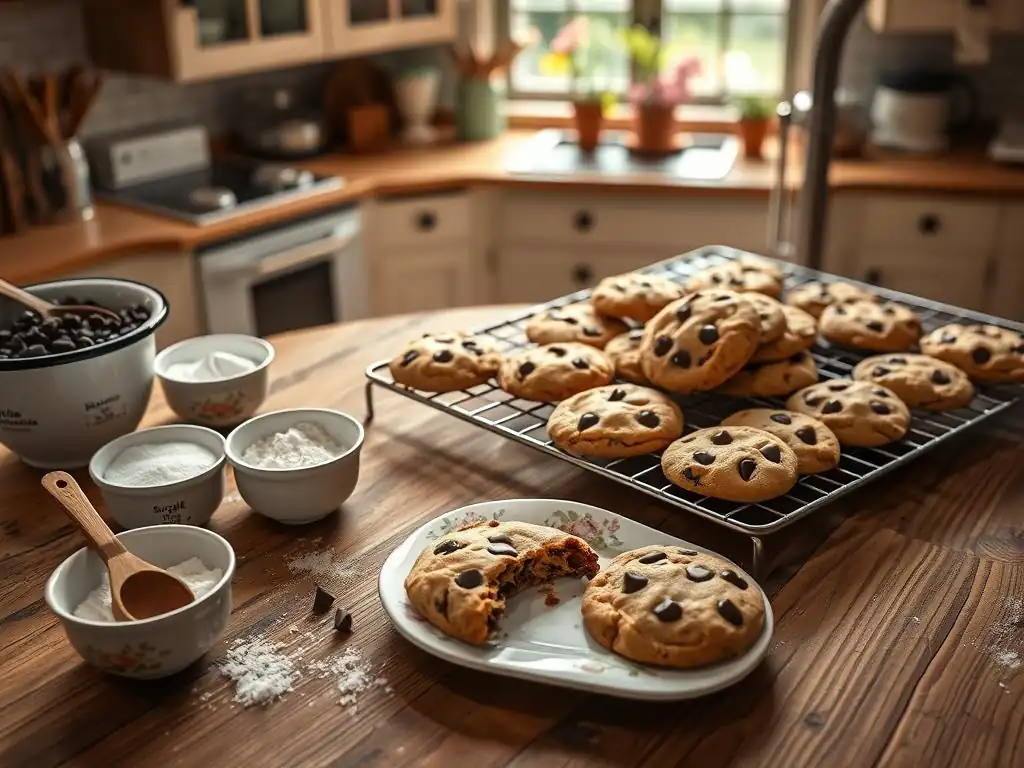
Welcome to BakeWithEase, where effortless baking begins! Ever wondered how to perfectly adjust your favorite cookie recipe for a larger gathering, or perhaps just a personal treat? Dive into our guide on easy cookie recipe scaling and unlock the secrets to consistently delicious results, regardless of batch size. Get ready to transform your baking game – let's get started!
- Scaling Cookie Recipes: A Practical Guide
- Introduction to Cookie Recipe Scaling
- Understanding Basic Baking Ratios for Cookies
- Step-by-Step Guide to Scaling Cookie Recipes
- Example: Scaling a Sugar Cookie Recipe
- Tips for Successful Cookie Recipe Scaling
- Common Mistakes to Avoid
- Troubleshooting Scaled Cookie Recipes
- Advanced Techniques
- Conclusion
- Frequently Asked Questions
- Final Reflection: The Sweet Science of Scaling Success
- Unleash Your Inner Baker: Scale Up Your Cookie Game!
Scaling cookie recipes is a valuable skill for any home baker, whether you're new to the kitchen or have been baking for years. It allows you to customize the yield of a recipe to fit your specific needs, preventing waste or ensuring you have enough treats for a crowd. Mastering easy cookie recipe scaling opens up a world of flexibility in your baking adventures.
This guide will walk you through the fundamental principles and practical steps involved in adjusting cookie recipes, ensuring delicious results every time you scale. We'll cover everything from understanding ingredient ratios to troubleshooting common issues, making the process straightforward and achievable for beginners.
Scaling a recipe means adjusting the quantity of each ingredient to produce a different yield than the original recipe. This could mean doubling a recipe for a large party, halving it for a small household, or even scaling down to make just a test batch. It's a practical application of basic math that significantly enhances your baking efficiency and enjoyment.
Understanding how to properly scale avoids the common pitfalls of simply multiplying or dividing ingredient lists without considering the science behind baking. Baking is often more precise than cooking, and small inaccuracies in scaling can lead to noticeable differences in texture, spread, and overall quality of your cookies.
There are numerous reasons why a home baker might want to scale a cookie recipe. Perhaps you've found a fantastic recipe that yields 4 dozen cookies, but you only need 1 dozen for a small family dessert. Or conversely, you might want to make 10 dozen for a school bake sale from a recipe that originally makes only 2 dozen. Scaling provides the flexibility to meet these varying demands without having to bake multiple small batches or end up with far too many cookies.
Furthermore, scaling can be useful when experimenting with a new recipe. You might want to bake just a quarter batch to test the flavor profile or texture before committing to a full batch of ingredients and time. This kind of easy cookie recipe scaling saves resources and reduces potential disappointment if the recipe isn't exactly what you were hoping for. It's a smart step in becoming a more confident and adaptable baker.
Successful scaling hinges on understanding the underlying ingredient ratios, not just the absolute quantities. Baking is chemistry, and the proportion of flour, sugar, fat, and liquid ingredients dictates the final structure and texture of a cookie. For instance, a recipe with a high fat-to-flour ratio will likely produce a more tender, crumbly cookie, while a higher sugar ratio can lead to more spread.
When you scale a recipe, you are essentially maintaining these critical ratios. If you simply double or halve every ingredient without considering their interaction, you might inadvertently throw off the delicate balance. For example, doubling the baking soda might lead to excessive leavening and a strange texture, even if all other ingredients are doubled perfectly. Focusing on maintaining the proportion of ingredients is key to achieving consistent results when scaling baking recipes for cookies.
At its core, a cookie recipe relies on a balance of key ingredients that interact during the baking process. While specific ratios vary greatly depending on the desired cookie type (chewy, crisp, soft, etc. ), a fundamental understanding of how these ingredients function is crucial for effective scaling. Think of it as a foundational framework for easy cookie recipe scaling.
Typical cookie recipes involve a ratio of flour, fat, sugar, and sometimes eggs and liquid. A common starting point for many cookie types might resemble something like 3 parts flour, 2 parts fat, and 1 part sugar by weight, though this is a vast simplification. The nuances come from the type of flour, fat (butter, shortening, oil), sugar (granulated, brown, powdered), and the inclusion of eggs or leaveners like baking soda or powder. Understanding these roles helps predict how changes in quantity will affect the outcome.
The Importance of Accurate Measurements
Accuracy in measuring ingredients is paramount when baking, and it becomes even more critical when scaling. Small errors are magnified when you multiply or divide ingredient quantities. For example, if your initial cup of flour is slightly over-measured by 10 grams, scaling a recipe by a factor of three means you'll have an extra 30 grams of flour, which can significantly alter the dough consistency and final cookie texture.
Using a kitchen scale for weight measurements (grams or ounces) is the most reliable method for accuracy, especially when scaling. Volume measurements (cups, tablespoons) can be inconsistent due to variations in how ingredients are packed or scooped. For example, a cup of flour can weigh anywhere from 120 to 150 grams depending on how it's measured. When scaling, these variations add up quickly, making weight measurements essential for dependable results.
Key Ingredients and Their Roles
Understanding the primary function of each main ingredient helps you anticipate how scaling will affect the dough and the final cookie. This knowledge is fundamental to successful easy cookie recipe scaling and troubleshooting.
Flour: Structure and Texture
Flour provides the primary structure for cookies. Gluten, developed when flour is mixed with liquid, gives the dough elasticity and helps the cookies hold their shape. The type of flour (all-purpose, cake, pastry) affects gluten development and the final texture. Too much flour can lead to dry, crumbly, or tough cookies, while too little results in excessive spread and weak structure.
When scaling, accurately measuring flour is vital. A slight over-measurement, especially when multiplying, can drastically change the flour-to-fat/liquid ratio, resulting in a stiff dough that yields dry cookies. Conversely, under-measuring will make the dough too wet and cause excessive spreading during baking.
Sugar: Sweetness and Moisture
Sugar contributes sweetness, aids in browning, and affects texture by interfering with gluten development (making cookies more tender) and absorbing moisture. Different types of sugar have different properties: granulated sugar promotes spread and crispness, while brown sugar adds moisture and chewiness due to molasses content.
Scaling sugar accurately is important because it significantly impacts spread and texture. Too much sugar will cause cookies to spread excessively and become thin and potentially greasy. Too little sugar will result in pale, cakey cookies that don't spread enough. The ratio of granulated to brown sugar also needs to be maintained when scaling to preserve the intended texture.
Fat: Richness and Tenderness
Fat (like butter, shortening, or oil) adds richness, flavor, and tenderness to cookies by coating flour particles and inhibiting gluten formation. It also contributes to spread during baking. The state of the fat (melted, softened, cold) heavily influences the final texture. Creaming softened butter and sugar incorporates air, contributing to leavening and texture.
When scaling, maintaining the fat ratio is crucial for tenderness and spread. Too much fat makes cookies greasy and causes excessive spread. Too little fat results in tough, dry cookies. If the recipe relies on creaming softened butter, ensure the scaled amount of butter is also properly softened, not melted or cold, to achieve the intended aeration.
Eggs: Binding and Leavening
Eggs act as binders, holding ingredients together, and contribute to structure. The protein in eggs sets during baking, providing stability. Eggs also add moisture and fat (from the yolk) and contribute to leavening, especially when whipped (though less common in standard cookie recipes). The number of eggs can significantly affect the outcome.
Scaling recipes that call for a fraction of an egg can be tricky. While you can sometimes approximate (e.g., use a small egg for 0.75 eggs), for precision, you might need to weigh the egg. A large egg typically weighs about 50 grams without the shell. If your scaled recipe calls for 2.5 eggs, you would aim for approximately 125 grams of whisked egg. Using too many eggs can make cookies cakey and tough, while too few can lead to crumbly cookies that don't hold together.

Easy cookie recipe scaling can be broken down into a few simple steps. By following this process methodically, you can confidently adjust any cookie recipe to your desired yield.
Step 1: Determine the Original Recipe Yield
The first step is to identify how many cookies the original, unscaled recipe is intended to make. This information is usually stated at the beginning or end of a recipe (e.g., "Yields about 24 cookies" or "Makes 3 dozen"). If the yield isn't explicitly stated, you might need to estimate it by looking at the size of the cookies described or by baking a small test batch.
Knowing the precise original yield is critical because it forms the baseline for all subsequent calculations. Without an accurate starting point, your scaling factor will be incorrect, leading to proportionally wrong ingredient amounts and potentially disappointing results.
Step 2: Calculate the Desired Yield
Next, decide exactly how many cookies you want to end up with. Do you need 1 dozen for a small treat? 50 cookies for a party? Be specific about your target number.
Having a clear desired yield allows you to determine the necessary adjustment factor. Whether you need more or fewer cookies than the original recipe provides, this number will guide your scaling calculations.
Step 3: Find the Scaling Factor
The scaling factor is the number you will multiply each original ingredient quantity by. You calculate it by dividing your desired yield by the original recipe yield:
Scaling Factor = Desired Yield / Original Recipe Yield
For example, if the original recipe makes 24 cookies and you want to make 36, your scaling factor is 36 / 24 = 1.5. If you want to make 12 cookies from the same recipe, your scaling factor is 12 / 24 = 0.5. This factor tells you exactly how much larger or smaller each ingredient quantity needs to be.
Step 4: Adjust Ingredient Quantities
Now, multiply the quantity of each ingredient in the original recipe by the scaling factor you calculated in Step 3. This includes not only the main ingredients like flour, sugar, and fat but also smaller amounts of leaveners, salt, and flavorings like vanilla extract.
It's helpful to create a new ingredient list with the calculated amounts. Pay close attention to units (cups, tablespoons, teaspoons, grams, ounces). For instance, if the original recipe calls for 2 cups of flour and your scaling factor is 1.5, your new amount is 2 * 1.5 = 3 cups of flour. If it calls for 1/2 teaspoon of baking soda and the factor is 0.5, your new amount is 0.5 * 0.5 = 0.25 teaspoons (or 1/4 teaspoon).
Step 5: Verify Calculations and Round Appropriately
Once you've multiplied every ingredient quantity by the scaling factor, take a moment to review your new list. Check for any calculations that seem drastically off. Also, consider the practicality of the resulting measurements. While a scaling factor of 1.5 might give you 2.25 cups of sugar or 0.75 teaspoons of baking soda, which are easily measurable, a factor that results in, say, 0.18 teaspoons might require rounding to a more practical measurement like 1/8 teaspoon, or ideally, using a small, precise scale for milligrams if accuracy is critical.
Rounding should be done cautiously, especially with potent ingredients like leaveners, salt, and extracts. Small errors here can have a big impact. For larger quantities of flour or sugar, slight rounding is less critical, but precision is always better. Using weight measurements from the start minimizes the need for tricky volume conversions and rounding.
Let's walk through an example of easy cookie recipe scaling using a hypothetical sugar cookie recipe.
Here's our starting recipe:
- 1 cup (227g) Unsalted Butter, softened
- 1.5 cups (300g) Granulated Sugar
- 2 large Eggs
- 1 teaspoon Vanilla Extract
- 2.75 cups (344g) All-Purpose Flour
- 0.5 teaspoon Baking Soda
- 0.25 teaspoon Salt
This recipe yields approximately two dozen classic sugar cookies.
Suppose you need exactly three dozen cookies for a gathering.
Scaling Factor: 1.5
Using the formula: Desired Yield (36) / Original Yield (24) = 1.5. Our scaling factor is 1.5.
Scaled Recipe: (Adjusted Ingredient List)
Now, we multiply each original ingredient quantity by the scaling factor (1.5):
- Unsalted Butter: 1 cup * 1.5 = 1.5 cups (or 227g * 1.5 = 340.5g) - Using weight is clearly easier here.
- Granulated Sugar: 1.5 cups * 1.5 = 2.25 cups (or 300g * 1.5 = 450g) - 2.25 cups is measurable, but 450g is more precise.
- Large Eggs: 2 eggs * 1.5 = 3 eggs.
- Vanilla Extract: 1 teaspoon * 1.5 = 1.5 teaspoons.
- All-Purpose Flour: 2.75 cups * 1.5 = 4.125 cups (or 344g * 1.5 = 516g) - 4.125 cups is hard to measure; 516g is straightforward with a scale.
- Baking Soda: 0.5 teaspoon * 1.5 = 0.75 teaspoons (or 1/2 tsp + 1/4 tsp).
- Salt: 0.25 teaspoon * 1.5 = 0.375 teaspoons (or 3/8 tsp).
So, the scaled recipe for 36 cookies would be:
- 1.5 cups (340.5g) Unsalted Butter, softened
- 2.25 cups (450g) Granulated Sugar
- 3 large Eggs
- 1.5 teaspoons Vanilla Extract
- 4.125 cups (516g) All-Purpose Flour
- 0.75 teaspoons Baking Soda
- 0.375 teaspoons Salt
This example clearly shows where weight measurements simplify the process and improve accuracy, especially for flour and butter amounts like 4.125 cups or 340.5g.
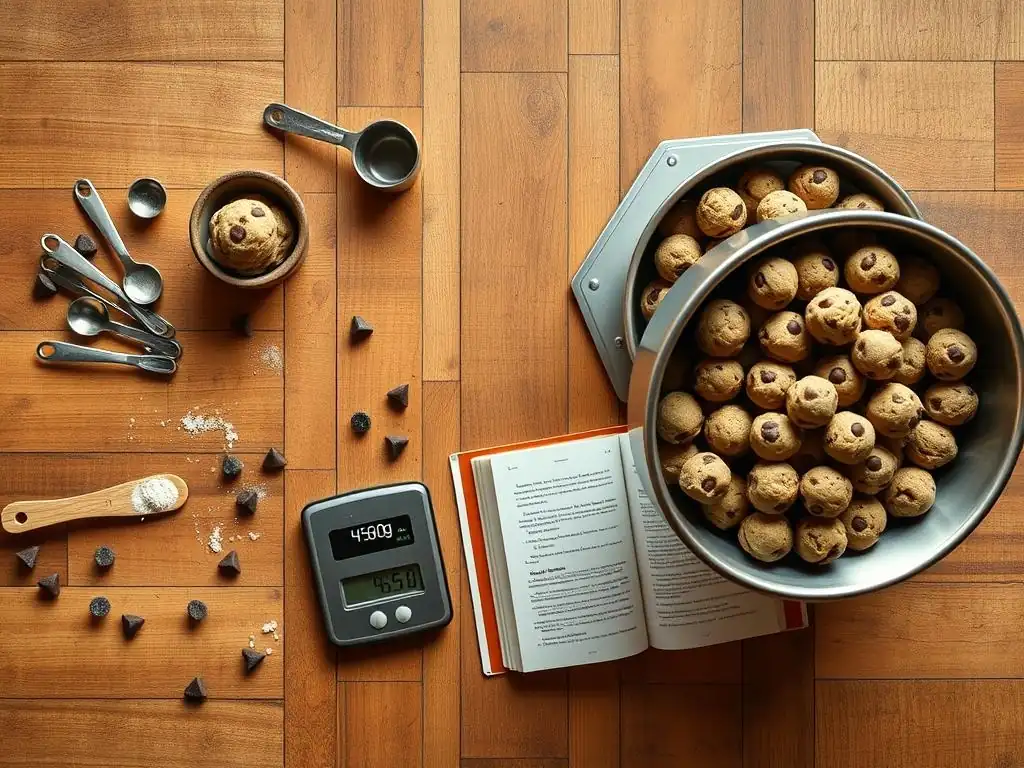
Beyond the mathematical calculations, several practical tips can help ensure your scaled cookie recipes turn out perfectly. These are especially helpful for easy cookie recipe scaling for beginners.
Use a Kitchen Scale for Accuracy
As highlighted in the example, using a digital kitchen scale to weigh ingredients, particularly flour, sugar, and fat, is the single best way to ensure accuracy when scaling. Volume measurements (cups, spoons) are inherently less precise due to factors like how densely an ingredient is packed. A difference of just 10-20 grams of flour per cup in the original recipe can become a significant error when scaled up, leading to a dough that is too dry or too wet.
Investing in a simple digital scale that measures in grams and ounces is highly recommended for anyone serious about consistent baking results, especially when attempting easy cookie recipe scaling. It removes the guesswork from ingredient measurements and ensures that the critical ratios are maintained precisely.
Monitor Dough Consistency
Even with perfect measurements, scaling can sometimes slightly alter the dough's consistency. This might be due to factors like humidity, ingredient temperature variations, or slight inaccuracies in measuring very small amounts of leaveners. As you mix the scaled dough, pay attention to how it feels. Is it too sticky? Too dry?
Be prepared to make minor adjustments. If the dough seems too dry and crumbly, add a tiny bit more liquid (like milk or a splash more vanilla extract), perhaps a teaspoon at a time. If it's too wet and sticky, add flour, again, a tablespoon at a time, mixing minimally until the desired consistency is reached. These small, intuitive adjustments, based on experience, can save a scaled batch.
Consider Batch Baking for Testing
If you are scaling a recipe significantly (e.g., doubling or tripling it for the first time, or scaling it down dramatically), consider baking a small test batch before baking the entire amount. Take a portion of the scaled dough, perhaps enough for 3-4 cookies, and bake them according to the recipe's instructions.
Observing how this test batch spreads, bakes, and tastes can reveal potential issues before you commit the entire large or small batch of dough to the oven. This allows you to make final tweaks to the remaining dough, such as adding a touch more flour if they spread too much or chilling the dough longer, ensuring the main batch is successful.
Adjust Baking Time and Temperature
Scaling a recipe changes the total volume of dough, which can affect baking time. A larger batch of cookies on multiple trays in the oven might take slightly longer to bake than a single tray from the original recipe, as the oven temperature might fluctuate more. Conversely, a much smaller batch might bake faster.
Start checking for doneness a few minutes before the original recipe's minimum baking time, especially with scaled-down batches. For scaled-up batches, you might need to add a few minutes. Pay attention to visual cues: the edges of the cookies turning golden brown, the centers looking set. You may also need to rotate trays in the oven halfway through baking to ensure even cooking, particularly if baking multiple trays simultaneously.
Common Mistakes to Avoid
While easy cookie recipe scaling is achievable, certain common errors can derail your efforts. Being aware of these pitfalls can help you avoid them and ensure your scaled cookies are a success.
Neglecting Ingredient Ratios
One of the most frequent mistakes when scaling is focusing solely on multiplying or dividing quantities without considering the crucial ratios between ingredients. Simply doubling every number on the list might seem intuitive, but it doesn't always work, especially with ingredients like leaveners (baking soda/powder) or eggs, which have specific chemical functions that don't always scale linearly in their effects on texture and rise.
For example, doubling a recipe might not require exactly double the baking powder if the original recipe already used a generous amount for a smaller volume. While for most basic cookie recipes, a direct multiplication works well, understanding why each ingredient is there helps you spot potential issues and makes you a more adaptable baker when attempting easy cookie recipe scaling.
Overworking the Dough
Scaling up a recipe often means handling a larger volume of dough. It's easy to overmix or overwork the dough when combining scaled ingredients, especially after the flour has been added. Overworking develops gluten excessively, leading to tough, less tender cookies. This is particularly true for recipes intended to produce soft or tender cookies.
Mix the dough until just combined, especially after adding dry ingredients. Use a light hand or a stand mixer on a low speed. If you're scaling up significantly, you might even consider dividing the scaled dough into smaller portions to mix, ensuring you don't overwork the mass.
Using Inaccurate Measurements
Relying solely on volume measurements (cups, tablespoons) when scaling, particularly for dry ingredients like flour and granulated sugar, significantly increases the risk of inaccuracy. The variability in scooping and packing can lead to substantial errors when multiplied by a scaling factor.
As mentioned, using a kitchen scale for weight measurements is the gold standard for accuracy when scaling. If you must use volume, be as consistent as possible: gently spoon flour into the measuring cup and level it off without packing. Avoid scooping directly from the bag. Precise measurements are fundamental to successful easy cookie recipe scaling.
Overlooking Baking Time Adjustments
Assuming the baking time will be exactly the same for a scaled batch as for the original recipe is another common mistake. As discussed, the volume of dough, the number of trays in the oven, and even the thickness of the scaled cookies (if the dough consistency changed slightly) can all affect how long they need to bake.
Always start checking for doneness earlier than the original recipe's stated time, especially when baking smaller batches. For larger batches, be prepared for them to potentially take longer. Use visual cues – golden edges, set centers – rather than strictly adhering to the clock, and rotate trays for even baking.
Even with careful scaling, sometimes things don't go exactly as planned. Here are some common issues you might encounter when scaling cookie recipes and potential reasons why, often related back to ingredient ratios or baking adjustments.
If your scaled cookies turn out dry and crumbly, it could be due to several factors. You might have accidentally added too much flour, throwing off the flour-to-fat/liquid ratio. This is a common issue if relying on volume measurements or making rounding errors when scaling flour. Another possibility is insufficient fat or liquid.
Alternatively, the cookies might have been overbaked. Scaling can affect baking time, and leaving them in the oven too long will inevitably result in dry cookies. Ensure you are checking for doneness based on visual cues rather than just the clock, and consider using an oven thermometer to verify your oven temperature is accurate.
Cookies that spread excessively and end up too thin can be caused by too much sugar or fat relative to flour. Sugar melts during baking, contributing to spread, and too much will make the cookies flatten out excessively. Similarly, too much fat or using melted fat when softened is specified can cause over-spreading.
Another common culprit is warm dough. If the scaled batch of dough is particularly large, it might warm up more during mixing and handling. Baking warm dough causes it to spread immediately in the oven before the structure sets. Chilling the scaled dough thoroughly before baking is often the solution for excessive spread, especially for recipes that rely on chilled dough.
If your scaled cookies have a cake-like texture rather than a typical cookie texture, it's often related to the flour-to-liquid ratio or overmixing. Too much flour, or flour measured inaccurately (especially by volume), can lead to a denser, cakey crumb. Overmixing the dough develops too much gluten, resulting in a tougher, more cake-like texture rather than a tender cookie.
Excessive leavening (baking soda or powder) can also contribute to a cakey texture. If you scaled the leavener quantity slightly incorrectly, it might cause the cookies to rise too much, resulting in a cakey interior. Ensure leaveners are measured precisely, ideally using a very small, accurate scale for tiny amounts if scaling significantly.
Advanced Techniques
While the basic principles cover most easy cookie recipe scaling scenarios, some situations require slightly more nuanced approaches.
Scaling sturdy drop cookies like chocolate chip or oatmeal cookies is generally straightforward using the multiplication method described. However, scaling more delicate or finicky cookie types, like macarons or certain types of shortbread that rely on very specific dough consistencies and ratios, can be more challenging. These recipes might be less forgiving of even minor scaling inaccuracies or changes in mixing technique due to larger volumes.
For highly structured or delicate cookies, it's often advisable to stick to the original recipe yield if possible. If scaling is necessary, consider scaling by weight exclusively and be prepared for extensive testing (small batches) to ensure the scaled recipe behaves as expected.
High Altitude Adjustments
Scaling a recipe does not negate the need for high-altitude adjustments if you live at a significant elevation (generally above 3,000 feet). High altitude affects baking due to lower atmospheric pressure and lower humidity. Baked goods tend to rise more quickly and excessively, and moisture evaporates faster.
If you are scaling a recipe at high altitude, you will likely need to apply standard high-altitude adjustments after scaling the base recipe. These adjustments typically involve slightly reducing leaveners and sugar, increasing liquid, and sometimes increasing flour or baking temperature. Consult a reliable high-altitude baking guide in addition to your scaling calculations.
Converting Measurements
Accurate scaling, especially for complex recipes or significant scaling factors, is greatly improved by converting all measurements to weight (grams or ounces) before scaling. While many recipes provide both volume and weight, some only list volume.
Having reliable conversion charts or resources (like online calculators or appendices in baking books that list ingredient weights per volume) is invaluable. Convert the original recipe's volume measurements to weight first, then multiply the weights by the scaling factor. This minimizes errors introduced by variable volume measurements and makes the scaled quantities very precise.
Conclusion
Mastering easy cookie recipe scaling is a skill that empowers you to take control in the kitchen, tailoring cookie batches to perfectly fit your needs. By understanding the fundamental principles of ingredient ratios, prioritizing accurate measurements (especially by weight), and following a systematic scaling process, you can confidently adjust almost any classic cookie recipe.
No more baking a mountain of cookies when you only needed a handful, or scrambling to make multiple batches for a large event! With the ability to scale recipes, you can easily produce the exact number of cookies required, saving time, ingredients, and reducing waste. This flexibility makes baking more enjoyable and less daunting.
Practice makes perfect, and applying these scaling techniques to your favorite cookie recipes will build your confidence. Start with simple recipes and smaller scaling factors, then gradually work up to more complex recipes or larger adjustments. Enjoy the process of creating custom-sized batches of delicious cookies, perfectly suited for any occasion.
Further Resources for Baking
To continue honing your baking skills, explore resources that delve deeper into the science of baking, ingredient functions, and accurate measurement techniques. Understanding why ingredients behave the way they do will further enhance your ability to troubleshoot and adapt recipes, including mastering easy cookie recipe scaling for a wide variety of baked goods. Happy baking!
Frequently Asked Questions
Scaling a cookie recipe means to adjust the quantities of ingredients to make a larger or smaller batch of cookies than the original recipe yields. This is done while maintaining the correct ratios to ensure the final product tastes the same.
Accurate scaling ensures that the flavor and texture of the cookies remain consistent, regardless of batch size. Incorrect scaling can lead to imbalanced ingredients and undesirable results, like dry or overly sweet cookies.
The easiest method is to use a scaling factor. Divide the desired yield (number of cookies) by the original yield to find the factor, then multiply each ingredient by that factor.
While most cookie recipes can be scaled, some may be more sensitive than others. Recipes that rely heavily on precise ratios or specific techniques might require more care and testing when scaled.
BakeWithEase.com offers step-by-step guides and tips specifically designed to help beginners successfully scale various cookie recipes, including those with more complex ingredients or techniques.
Final Reflection: The Sweet Science of Scaling Success
Scaling classic cookie recipes isn't just about making more cookies; it's about unlocking a world of baking possibilities. Mastering this simple skill empowers you to confidently adapt your favorite recipes, whether you're baking for a crowd, stocking your freezer, or simply experimenting with different flavors and sizes. This newfound control over your baking translates to delicious, personalized results every time.
The joy of baking lies not only in the final product but also in the process of creation. Learning to scale recipes successfully opens up a creative avenue, allowing you to tailor treats to specific occasions and preferences. Baking is at once child's play and adult joy. And cooking is all that and a whole lot more.
- Alma Flor Ada. This quote perfectly encapsulates the simple yet profound satisfaction derived from mastering a skill like recipe scaling, transforming a seemingly mundane task into a fulfilling experience.
Now, it's your turn to embark on this delicious journey. Don't be afraid to experiment! Try scaling your favorite cookie recipe, adjust the ingredients to your liking, and most importantly, enjoy the process. The confidence you gain from mastering this fundamental baking skill will empower you to explore countless other recipes and culinary adventures. So, grab your apron, gather your ingredients, and let the sweet science of scaling begin!
Thanks for joining us on this delicious journey into scaling classic cookie recipes! You've now got the confidence to bake bigger batches and share the joy. Ready to take the next step?
- Master the art of scaling: Download our free printable guide with step-by-step instructions and helpful conversion charts – specifically designed to prevent those common baking mishaps! (This is the primary action)
- Share your baking triumphs: Show off your perfectly scaled cookies on social media using #BakeWithEaseScaleUp – let's inspire others!
- Join our baking community: Head over to our forum and ask any questions you have – our experienced bakers are eager to help!
So, what incredible cookie creation will you scale up first?