
Setting Up Shop: Organizing Your Kitchen for Home Bakery Success

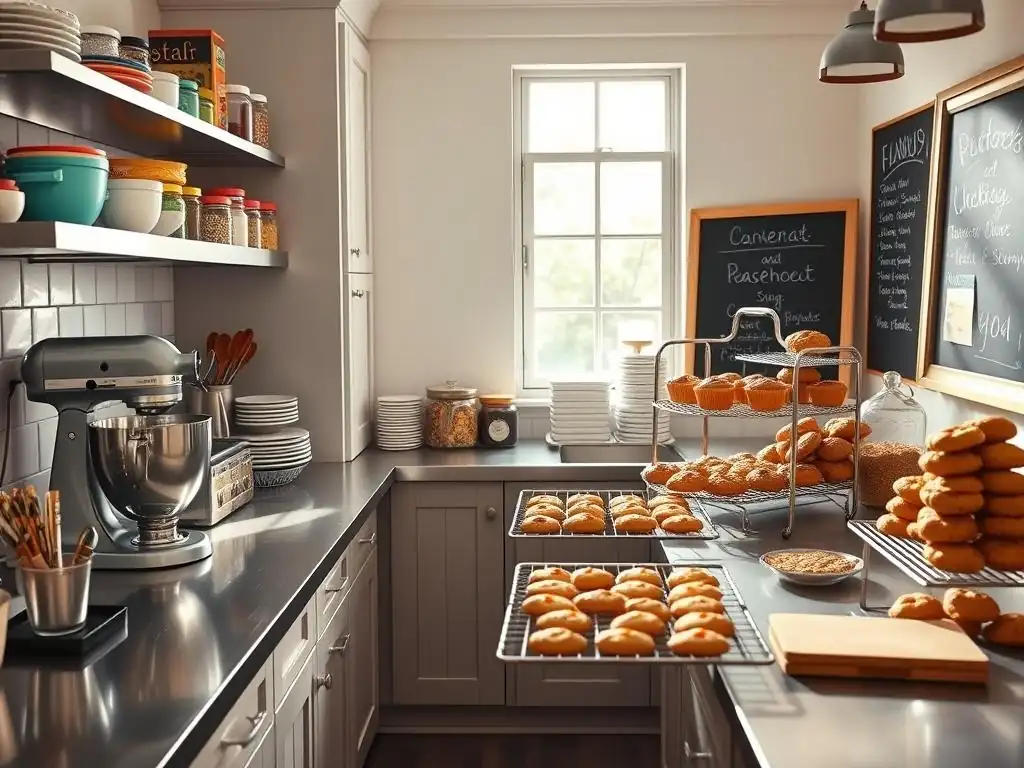
Welcome to BakeWithEase, your trusted partner in all things baking! Are you ready to transform your kitchen into a haven for creativity and delicious treats? This week, we're diving deep into the essential topic of kitchen organization for home bakers. Discover how a well-organized space can not only streamline your baking process but also unlock new levels of efficiency and enjoyment. Intrigued? Keep reading to learn the secrets to setting up your shop for success!
- Optimizing Your Baking Space: Essential Kitchen Organization for Home Bakeries
- Streamlining Your Home Bakery: Smart Kitchen Organization for Efficiency
- Why Efficient Kitchen Organization is Key for Home Bakery Businesses
- Practical Kitchen Organization Strategies for Home Bakers
- Targeted Kitchen Organization Tips for Home Baking
- Advanced Efficiency: Kitchen Organization Techniques for Home Bakeries
- Sustaining an Organized Kitchen for Long-Term Success
- Conclusion: The Foundation for Baking Excellence: An Organized Kitchen
-
Frequently Asked Questions
- How important is kitchen organization for a home baker?
- What are some key areas to focus on when organizing my baking kitchen?
- What are some effective storage solutions for baking ingredients like flour and sugar?
- How can I maximize limited counter space in my baking kitchen?
- What are some tips for maintaining a clean and organized baking kitchen?
- Final Reflection: The Sweet Success of a Well-Organized Kitchen
- Unleash Your Inner Baker: Take the Next Step!
Optimizing Your Baking Space: Essential Kitchen Organization for Home Bakeries
Streamlining Your Home Bakery: Smart Kitchen Organization for Efficiency
Running a successful home bakery involves more than just mastering recipes; it requires a well-organized and efficient workspace. Effective kitchen organization for home bakers is the bedrock upon which productivity and quality are built. Imagine spending precious minutes searching for a specific piping tip or realizing you're out of flour mid-batch because ingredients aren't properly managed.
These seemingly small inefficiencies can add up, impacting your ability to fulfill orders on time and maintain consistency in your baked goods. Implementing smart organizational strategies transforms a potentially chaotic kitchen into a smooth-running operation, essential for any aspiring or growing home baking business.
Beyond simply finding things faster, optimizing your baking space through thoughtful kitchen organization for home bakers directly influences your bottom line. A cluttered environment can lead to wasted ingredients, duplicated purchases, and even increased stress, which can dampen creativity and enjoyment. By taking the time to set up your kitchen logically, you create a dedicated sanctuary for baking that promotes focus and reduces errors. This foundational step is critical for building a sustainable and profitable home bakery, allowing you to scale your operations and delight more customers with your delicious creations.
Why Efficient Kitchen Organization is Key for Home Bakery Businesses
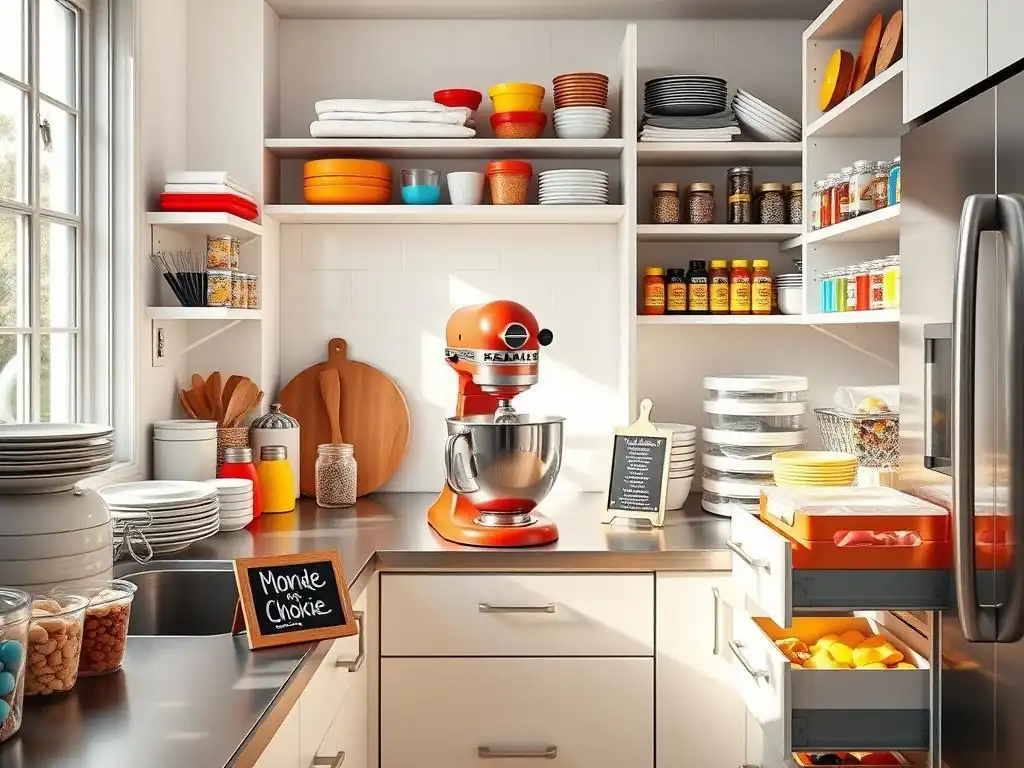
Efficient kitchen organization is not merely about having a tidy space; it's a strategic imperative for home bakery businesses aiming for sustainability and growth. A disorganized kitchen can be a major bottleneck, slowing down production, increasing costs due to waste, and even posing risks to food safety. For bakers operating from home, where space might be limited and distractions present, a structured environment is even more crucial. It separates the professional baking operation from everyday household chaos, creating a focused zone dedicated to crafting high-quality goods.
Investing time in proper kitchen organization for home bakers pays dividends in multiple areas. It directly impacts your workflow, from ingredient prep to packaging, ensuring each step is smooth and logical. Furthermore, a well-organized kitchen instills confidence in your process and helps maintain a professional standard, even when working from home. This focus on order and efficiency is a hallmark of successful businesses, regardless of their size or location.
Enhancing Baking Efficiency and Productivity
Maximizing efficiency is paramount when running a home bakery, especially when juggling multiple orders or tight deadlines. Effective kitchen organization directly contributes to this by reducing time spent searching for ingredients or tools. Consider a baker preparing a batch of 50 cupcakes; if they save just 5 minutes per batch by having everything readily accessible, across several batches a week, this can translate into hours of saved time. This saved time can then be reinvested in baking more products, marketing, or even taking a well-deserved break.
Studies, even those in larger commercial kitchens, highlight that optimized layouts and organized storage can increase productivity by 10-15%. While a home kitchen differs, the principle holds: less time wasted on searching or fetching means more time dedicated to actual baking and decorating. Proper kitchen organization for home bakers ensures that mixing bowls are near the mixer, measuring cups are with the ingredients, and cooling racks are close to the oven, creating a seamless flow that boosts output and allows you to handle a higher volume of orders without feeling overwhelmed.
Ensuring Food Safety and Hygiene Standards
Maintaining impeccable food safety and hygiene is non-negotiable for any food business, including a home bakery. An organized kitchen is fundamentally easier to keep clean and sanitary. When ingredients are stored in airtight containers and properly labeled, the risk of cross-contamination or spoilage is significantly reduced. For instance, storing raw eggs separately from ready-to-eat ingredients, or keeping allergens clearly segregated, is much simpler in a well-structured environment.
Moreover, a clutter-free workspace allows for easier and more thorough cleaning of surfaces, equipment, and storage areas. Imagine trying to sanitize a counter piled high with miscellaneous items versus one with only the necessary tools neatly arranged. Regulatory bodies often emphasize clean and organized workspaces during inspections, even for home-based businesses in some jurisdictions. Implementing robust kitchen organization for home bakers is a proactive step towards meeting these standards, protecting your customers, and building a reputation for safety and quality.
Baking, especially for a business, can be demanding, and disorganization only adds to the pressure. The frustration of not finding a crucial tool or realizing you're missing an ingredient at the last minute can be incredibly stressful. Proper kitchen organization for home bakers minimizes these frustrating moments, creating a calmer and more enjoyable baking experience. When you know exactly where everything is, your focus remains on the creative process and the quality of your baked goods, rather than on managing chaos.
Think about the time saved: sorting through a jumbled drawer for a specific cookie cutter might take several minutes, repeated multiple times per baking session. In contrast, having tools neatly arranged in a dedicated organizer means grabbing the right one in seconds. Over a week, these saved minutes accumulate, potentially freeing up an hour or more that can be used for crucial business tasks like packaging, customer communication, or planning for future orders. This not only boosts productivity but also reduces the mental load, making your home baking venture more sustainable and less likely to lead to burnout.
Practical Kitchen Organization Strategies for Home Bakers
Implementing effective kitchen organization for home bakers requires a systematic approach. It's not about buying expensive containers but about creating a logical system that supports your specific baking workflow. This involves assessing your current space and inventory, identifying pain points, and then implementing practical strategies to optimize every corner of your kitchen dedicated to your business.
The goal is to create a workspace where everything has a designated place and is easily accessible when needed. This foundation of order simplifies every task, from measuring flour to decorating cakes, making the entire baking process more efficient and enjoyable. Let's delve into actionable steps to achieve this level of kitchen organization.
1. Decluttering Your Baking Area: A Systematic Approach
Before you can organize, you must declutter. This initial step is perhaps the most impactful for improving kitchen organization for home bakers. It involves a thorough assessment of everything you own and use for baking.
Identifying and Removing Redundant Items
Go through your baking tools, equipment, and ingredients drawer by drawer, shelf by shelf. Identify items you haven't used in the past year or those you have duplicates of unnecessarily. For example, do you really need five spatulas of the exact same size and material, or three different types of muffin tins? Be honest about what is truly essential for your current baking repertoire. Setting aside items that are redundant frees up valuable space and reduces visual clutter, making your workspace feel instantly more manageable.
Repurposing or Discarding Unused Baking Equipment
Once identified, decide the fate of unused items. Equipment in good condition that you no longer need could be donated to a local charity, sold online, or given to a friend starting their baking journey. Broken or worn-out items should be properly discarded. Consider if any items could be repurposed for other uses before discarding. For instance, an old cooling rack might serve as a makeshift drying rack for small tools after washing. Clearing out these items creates a clean slate for effective kitchen organization for home bakers.
Establishing Designated Zones for Specific Tasks
Think about your baking process and divide your kitchen space into logical zones. You might designate one counter area for ingredient prep (measuring, sifting), another for mixing, a clear space for decorating, and an area near the oven for tray preparation and cooling. Having a specific 'home' for each stage of the process minimizes movement and keeps related tools and ingredients together.
For example, setting up a "decorating zone" with piping bags, tips, food coloring, and sprinkles stored nearby streamlines the final touches on your baked goods. This zone-based approach is a cornerstone of efficient kitchen organization for home bakers.
2. Optimizing Storage Solutions for Baking Ingredients
Proper storage of ingredients is vital for freshness, accessibility, and managing inventory. Effective kitchen organization for home bakers heavily relies on smart ingredient storage.
Using Airtight, Transparent Containers for Ingredient Storage
Transfer bulk ingredients like flour, sugar, oats, and chocolate chips into airtight, transparent containers. This protects them from moisture, pests, and spoilage, extending their shelf life. Transparent containers allow you to see at a glance how much of an ingredient you have left, making inventory management easier. Using uniform containers also creates a neater, more organized pantry or shelf space. For instance, storing various flours (all-purpose, bread, cake) in identical clear containers stacked neatly makes it easy to grab the right one quickly. A typical 5-pound bag of flour fits well in a 6-quart container.
Maximizing Vertical Space with Shelving Units
In many home kitchens, vertical space is underutilized. Install shelving units or use stackable containers to take advantage of the height of your pantry or cabinets. This allows you to store more ingredients or equipment without taking up additional counter space.
For example, adding a simple wire shelf insert can effectively double the storage capacity within a single cabinet for spices or extracts. Taller shelves can house bulkier items like mixers or large bowls, keeping them off the counter until needed. Efficient use of vertical space is a key aspect of good kitchen organization for home bakers, especially in compact kitchens.
Implementing a Clear Labeling System for Easy Identification
Label everything. Use clear, easy-to-read labels on all ingredient containers. Include the ingredient name, purchase date (or date opened), and potentially the expiration date or best-by date. This prevents confusion between similar-looking ingredients (like baking soda and baking powder) and helps you use older stock first. A simple label maker or even handwritten labels on masking tape work well. For instance, labeling containers for "Granulated Sugar," "Powdered Sugar," and "Brown Sugar" with dates ensures you always grab the correct type and know when it's time to restock. This simple step significantly improves kitchen organization for home bakers.
3. Organizing Baking Tools and Equipment for Accessibility
Having your tools and equipment easily accessible is crucial for a smooth baking process. Digging through drawers for a whisk or searching for a specific cookie cutter wastes valuable time.
Grouping Tools by Functionality (Mixing, Measuring, Decorating)
Organize your tools based on how you use them. Keep all measuring cups and spoons together, whisks and spatulas in one area, and all decorating tools (piping tips, couplers, food coloring) grouped separately. This functional grouping means you can go to one designated spot for all the tools needed for a specific task. For example, having a drawer dedicated to mixing tools near your stand mixer streamlines the initial stages of most recipes. This logical grouping is a cornerstone of efficient kitchen organization for home bakers.
Positioning Tools for Easy Access During Baking
Store frequently used tools within easy reach. Items like measuring spoons, spatulas, and whisks could be kept in a utensil crock on the counter near your primary workspace or in a top drawer. Less frequently used items, like seasonal cookie cutters or specialized pans, can be stored higher up or in less accessible cabinets. The principle is to minimize steps and reaching during your active baking time. Imagine needing a spatula multiple times per batch; having it right next to your mixing bowl saves countless small movements. Thoughtful positioning is essential for practical kitchen organization for home bakers.
Utilizing Drawer Inserts and Organizers for Utensils
Drawer inserts and organizers prevent utensils from becoming a tangled mess. Use dividers to separate items like cookie cutters, piping tips, and small measuring tools. This keeps everything neat and visible, eliminating the need to rummage. For example, a simple plastic tray with compartments can keep piping tips sorted by size, making it easy to select the right one quickly. Similarly, adjustable drawer dividers can separate spatulas from whisks and other hand tools. These small investments in organizers make a big difference in the overall efficiency of kitchen organization for home bakers.
4. Designing an Efficient Baking Workflow
Beyond organizing physical items, designing a logical workflow is a critical aspect of kitchen organization for home bakers. It's about planning your movements and tasks to minimize wasted time and effort.
Mapping Out Your Baking Process
Take a moment to visualize or even sketch out the steps involved in your most common baking tasks, from gathering ingredients to cooling and packaging. Where do you start? Where do you move next? Identifying the sequence of operations helps you arrange your zones, ingredients, and tools in a way that supports this natural flow. For instance, if you always measure dry ingredients before wet ones, ensure your dry ingredient storage is near your measuring station. Understanding your process is key to optimizing kitchen organization for home bakers.
Arranging Ingredients and Tools in Sequential Order
Based on your mapped workflow, arrange ingredients and tools in the order you typically use them. If a recipe calls for dry ingredients first, then wet, then mixing, ensure your dry goods are accessible, followed by wet ingredients, and then your mixing tools and stand mixer. This sequential arrangement reduces back-and-forth movement across the kitchen.
For example, having your flour, sugar, baking powder, and salt containers together, followed by your eggs, milk, and vanilla extract, positioned near your mixing area, significantly streamlines the initial stages of baking. This logical flow is a powerful element of effective kitchen organization for home bakers.
Minimizing Unnecessary Movement
The ultimate goal of workflow design is to minimize steps. Arrange your space so that related tasks can be performed in close proximity. If you frequently use your oven and cooling racks together, ensure your cooling rack storage is near the oven area.
If you do a lot of decorating after baking, set up your decorating station away from the high-heat oven zone but with easy access to finished goods. Reducing unnecessary trips across the kitchen saves time and energy, allowing you to bake more efficiently. Consider how often you move between stations and look for ways to consolidate tasks or rearrange your space to reduce this movement – a core principle of efficient kitchen organization for home bakers.
Targeted Kitchen Organization Tips for Home Baking
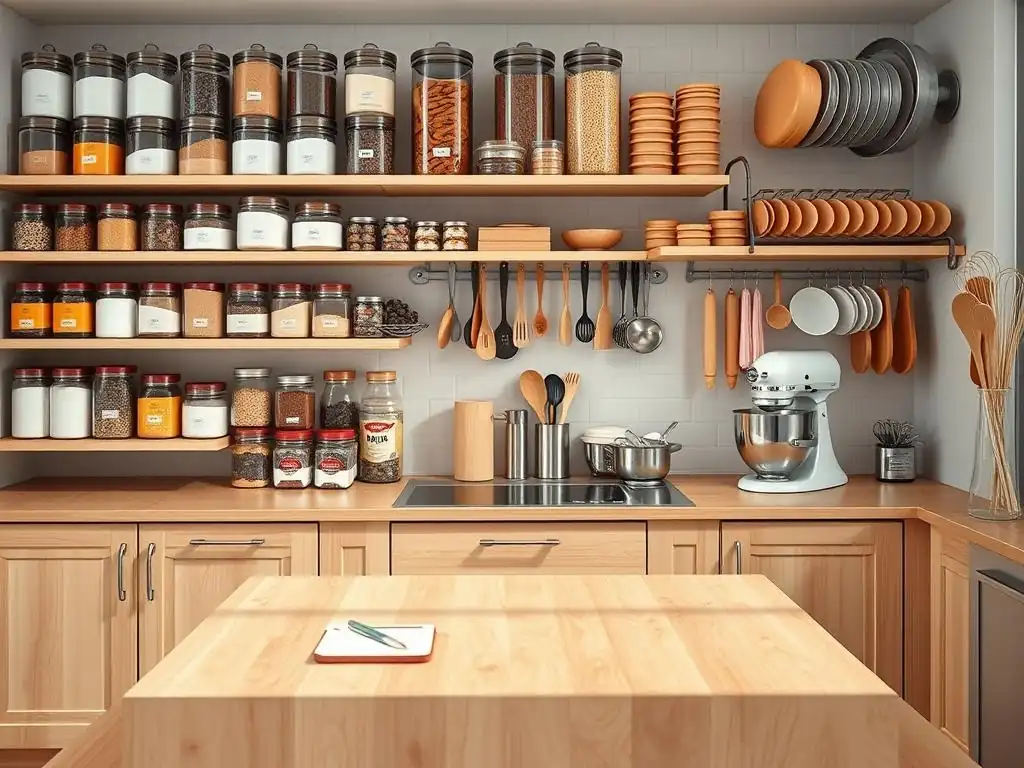
Specific areas within your kitchen require targeted organization strategies to maximize efficiency for a home bakery business. Focusing on these zones can have a significant impact on your overall productivity and the quality of your baked goods.
Organizing Your Pantry for Baking Essentials
Your pantry or designated ingredient storage area is the heart of your home bakery's supply chain. Effective kitchen organization for home bakers starts here. Store frequently used baking essentials like flour, sugar, leaveners (baking powder, baking soda), salt, and extracts on easily accessible shelves, ideally at eye level. Less frequently used items, such as specialty flours or seasonal sprinkles, can be stored higher or lower.
Consider using tiered organizers for spices and extracts to make labels visible. For example, a three-tier spice rack can hold 15-20 small bottles, preventing you from having to search through a crowded shelf. Keeping your pantry well-stocked and organized ensures you're rarely caught without a key ingredient, crucial for fulfilling orders promptly.
Group similar items together – all nuts and seeds on one shelf, all chocolates and cocoa powders on another, all oils and vinegars together. This categorical organization makes inventory checks faster and shopping lists more accurate. For instance, knowing exactly where your almond flour is and seeing you only have about 1/4 bag left (approx. 1 lb) allows you to add it to your grocery list before you run out entirely. Maintaining a dedicated "baking essentials" zone within your pantry simplifies ingredient retrieval and is a fundamental aspect of good kitchen organization for home bakers.
Creating a Dedicated Baking Prep Area
Designating a specific counter space solely for baking preparation is invaluable. This area should be kept clear of non-baking items and be large enough to handle tasks like measuring, sifting, and mixing. Ideally, this area is near your ingredient storage and your stand mixer. Having a dedicated zone minimizes the need to constantly clear space or move items around before you can start prepping. For example, if your primary baking counter is 3 feet wide, keep it clear except for your stand mixer, allowing ample space (approx. 2 feet) for measuring and combining ingredients.
Equip this prep area with frequently used tools stored nearby – perhaps in a utensil crock or top drawer right beside it. This might include measuring cups and spoons, spatulas, whisks, and mixing bowls. Having everything you need for the initial stages of a recipe within arm's reach dramatically speeds up the process. Consider installing a small shelf above this area for frequently used spices or extracts. A well-maintained, dedicated prep area is a hallmark of efficient kitchen organization for home bakers, making the start of every baking session smoother.
Optimizing Refrigerator Space for Baking Ingredients
Many baking ingredients require refrigeration, such as butter, eggs, milk, cream cheese, and often flavorings or prepared fillings. Designate specific shelves or drawers in your refrigerator for baking-related items to keep them separate from everyday groceries and prevent cross-contamination. Use clear bins or containers within the fridge to group similar items. For example, keeping all your dairy products (butter, milk, cream, cream cheese) together in one bin makes them easy to locate.
Ensure temperature-sensitive ingredients are stored at the correct temperature (typically below 40°F or 4°C) and are clearly labeled with purchase or expiration dates. This is particularly important for dairy and eggs. Storing butter for baking in a designated butter compartment or bin ensures it's always available. Keeping eggs in their original carton or a dedicated egg container in the main part of the fridge (not the door, which is warmer) maintains their freshness. Effective refrigerator organization is a often overlooked but crucial part of kitchen organization for home bakers, ensuring ingredients are fresh and safe to use.
Maintaining a Hygienic Baking Environment
Cleanliness and organization go hand-in-hand in a food preparation environment. A cluttered space is difficult to clean thoroughly, while an organized space facilitates regular sanitization. Establish a routine for cleaning as you go – wiping down surfaces after measuring, washing tools immediately after use, and sweeping up spills.
Store cleaning supplies (disinfectant spray, cloths, paper towels) conveniently but separately from food items. Having them easily accessible encourages frequent cleaning. For example, keeping a spray bottle of food-safe sanitizer and a clean cloth under the sink or in a nearby cabinet means you can quickly address spills or sanitize surfaces before and after baking. Regularly cleaning and sanitizing all surfaces, tools, and equipment used in your home bakery operation is not just about tidiness; it's a fundamental requirement for food safety and a core component of responsible kitchen organization for home bakers.
Advanced Efficiency: Kitchen Organization Techniques for Home Bakeries
Once you have the basic kitchen organization for home bakers down, you can implement more advanced techniques to further enhance efficiency and professionalism. These methods borrow principles from larger operations and adapt them for the home setting.
Implementing a First-In, First-Out (FIFO) System
The FIFO principle is essential for managing perishable and shelf-stable ingredients. It means that the oldest inventory is used first, reducing waste due to spoilage or expiration. When storing ingredients, place new purchases behind existing stock. For example, when buying a new 5lb bag of flour, place it behind the partially used bag on the shelf. Similarly, when storing containers of prepared frosting or fillings in the fridge, place newer batches behind older ones.
Using clear labels with dates (purchase date, date opened, or expiration date) is crucial for making FIFO work effectively. Regularly rotating stock ensures you are always using the freshest ingredients while minimizing losses from expired goods. Implementing FIFO is a key practice for efficient inventory management and a sign of sophisticated kitchen organization for home bakers.
Using Google Sheets for Inventory Management
For a home bakery, keeping track of ingredients can become complex, especially as your business grows and you handle more orders. While physical organization is key, digital inventory management adds another layer of efficiency. A simple Google Sheet can be used to track key ingredients, quantities on hand, and reorder points. Create columns for Ingredient Name, Current Stock (e.g., in cups, pounds, count), Unit, Minimum Stock Level, and Notes (e.g., storage location).
Regularly updating this sheet (e.g., weekly or after a large baking session) allows you to see at a glance what you need to repurchase, preventing last-minute dashes to the store. For instance, if your minimum stock for all-purpose flour is 5 lbs, and your sheet shows you have 3 lbs left, you know to add it to your next grocery list. This digital tool complements your physical kitchen organization for home bakers, providing valuable data for planning and purchasing.
Enhancing Lighting for Improved Visibility
Good lighting is crucial for tasks requiring precision, such as decorating, measuring, and inspecting the quality of your baked goods. Relying solely on overhead kitchen lighting might not be sufficient. Consider adding task lighting directly over your main prep area or decorating station. This could be under-cabinet lighting, a small adjustable lamp, or even a portable LED light.
Improved visibility not only makes detailed work easier but also helps you spot crumbs, spills, or potential hygiene issues more readily. For example, bright light directly over your decorating area makes intricate piping work much clearer. Investing in adequate lighting is a simple yet effective way to improve both the functionality and safety aspects of your kitchen organization for home bakers.
Sustaining an Organized Kitchen for Long-Term Success
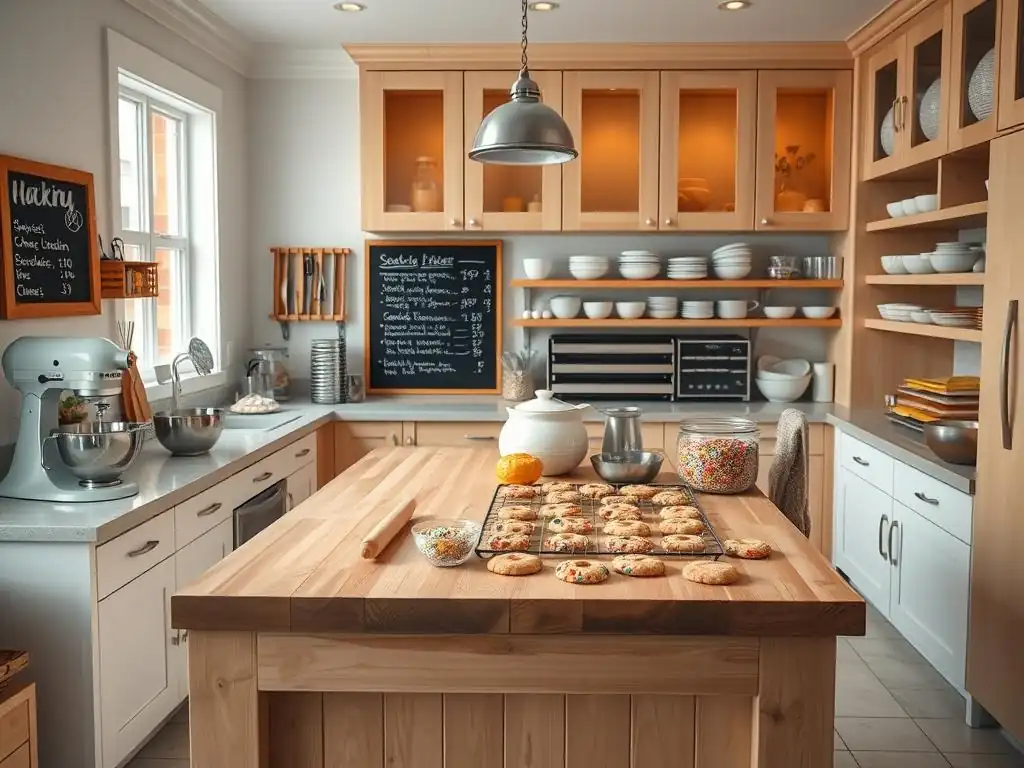
Organization is not a one-time project; it's an ongoing process. To maintain the benefits of good kitchen organization for home bakers, you need to establish habits and routines that keep your space functional and efficient over time.
Establishing a Routine Cleaning and Organization Schedule
Schedule regular time slots for cleaning and re-organizing your baking space. This could be 15-20 minutes at the end of each baking session for a quick tidy-up, an hour weekly for deeper cleaning and stock rotation, or a more thorough declutter quarterly. Consistency is key. For example, dedicating 30 minutes every Sunday evening to wipe down shelves, check ingredient levels, and put away any stray items prevents clutter from accumulating and ensures your kitchen is ready for the week ahead.
Treat this scheduled time as important as baking itself. It's an investment in your business's efficiency and longevity. A routine schedule makes maintaining your kitchen organization for home bakers less daunting than facing a massive cleanup every few months.
Maintaining Consistent Organizational Habits
Encourage yourself to develop consistent habits. Put items back in their designated place immediately after use. Clean tools and bowls as you go whenever possible. Don't let things pile up. This "clean as you go, organize as you go" mentality is perhaps the most powerful tool for sustaining kitchen organization for home bakers.
For instance, after measuring flour, immediately seal the container and put it back on the shelf. Once a batch of cookies is on the cooling rack, wash the mixing bowl and spatulas. These small, consistent actions prevent clutter from taking hold and make the larger scheduled cleaning sessions much quicker and easier.
Adapting Your System to Business Growth
As your home bakery grows, your needs will change. You might introduce new product lines requiring different ingredients or equipment, or you might increase your production volume, requiring more storage space. Your kitchen organization system needs to be flexible and adaptable. Periodically review your layout and storage solutions to see if they still meet your needs.
Perhaps you need to invest in larger storage containers, reorganize a cabinet to accommodate a new piece of equipment, or even explore off-site storage options if space becomes a major constraint. Being willing to refine and adjust your kitchen organization for home bakers as your business evolves ensures that your workspace continues to support your growth rather than hindering it.
Conclusion: The Foundation for Baking Excellence: An Organized Kitchen
Effective kitchen organization for home bakers is more than just tidiness; it's a fundamental strategy for building a successful, efficient, and sustainable home baking business. By streamlining your workspace, optimizing storage, organizing tools, and designing a logical workflow, you enhance productivity, ensure food safety, reduce stress, and save valuable time. Implementing practical steps like decluttering, using proper containers, labeling everything, and creating dedicated zones lays the groundwork for a functional baking environment.
Moving to advanced techniques like FIFO inventory management and leveraging digital tools further refines your operation. Most importantly, maintaining consistent organizational habits and adapting your system as you grow ensures that your kitchen remains a supportive foundation for your baking excellence. Investing time and effort into robust kitchen organization for home bakers is one of the smartest decisions you can make for your business, allowing you to focus on what you do best: creating delicious baked goods that bring joy to your customers.
Frequently Asked Questions
How important is kitchen organization for a home baker?
Kitchen organization is crucial for efficiency and enjoyment. A well-organized space saves time, reduces stress, and allows you to focus on the creative process of baking.
What are some key areas to focus on when organizing my baking kitchen?
Prioritize organizing your ingredients, baking tools, and workspace. Having a designated area for each category will greatly improve your workflow.
What are some effective storage solutions for baking ingredients like flour and sugar?
Use airtight containers to keep ingredients fresh and protected from pests. Label everything clearly with the ingredient name and expiration date. This ensures easy identification and prevents spoilage.
How can I maximize limited counter space in my baking kitchen?
Utilize vertical storage solutions like shelves and hanging organizers. Consider a rolling kitchen island for extra prep space that can be tucked away when not in use.
What are some tips for maintaining a clean and organized baking kitchen?
Clean as you go to prevent buildup of mess. Develop a regular decluttering routine to get rid of unused items. Store things back in their designated places immediately after use.
Final Reflection: The Sweet Success of a Well-Organized Kitchen
The efficiency and joy found in a meticulously organized kitchen are not mere luxuries for the home baker; they are the foundational ingredients for success. A well-planned workspace translates directly into less stress, more creativity, and ultimately, tastier treats. This isn't just about aesthetics; it's about streamlining your baking process from flour to finished product.
The impact of a well-organized kitchen extends far beyond the immediate act of baking. It fosters a sense of calm and control, allowing you to fully appreciate the creative process. This mindful approach to your workspace mirrors a mindful approach to life itself. As the renowned chef Julia Child once said, Find something you're passionate about and keep tremendously interested in it.
A well-organized kitchen, a space designed for your passion, is a crucial step in nurturing that interest and allowing it to flourish. It becomes a sanctuary, a place where creativity can thrive amidst order.
Now, consider your own kitchen. What adjustments can you make to better support your baking endeavors? Perhaps it's a simple decluttering, a strategic reorganization of your pantry, or the investment in a few key storage solutions. Take this opportunity to transform your kitchen into a space that reflects your passion and empowers your creativity. Embrace the process, enjoy the journey, and let the sweet scent of success fill your home.
Unleash Your Inner Baker: Take the Next Step!
Thanks for taking the time to explore the world of home baking with us! We hope you've gained valuable insights into organizing your kitchen for maximum baking efficiency. Ready to turn your newfound knowledge into delicious reality?
- Start baking your favorite recipe today! Use the organizational tips you just learned to make the process smoother and more enjoyable.
- Share your baking journey with our community on social media using #BakeWithEase – let's inspire each other!
- Consider creating a personalized baking inventory list to easily track your ingredients and supplies.
What's your first baking project now that your kitchen is organized and ready to roll?