
Beyond Mixing: The Science of Emulsification for Perfect Baking Texture

Welcome to BakeWithEase, your portal to unlocking baking brilliance! Ever wondered how to achieve that perfect, melt-in-your-mouth texture in your cakes and pastries? Prepare to delve into the fascinating world of emulsification, where science meets deliciousness. Discover the secrets behind achieving unparalleled texture – it's more than just mixing! Get ready to explore the Emulsification Baking Texture Secrets that will transform your baking forever.
- Introduction to Emulsification in Baking: The Key to Texture
- Understanding Emulsions: The Building Blocks of Baking
- The Science Behind Emulsification: How It Works
- Mastering Emulsification Techniques for Optimal Baking Texture
- Common Emulsification Problems and Solutions in Baking
- Advanced Emulsification Techniques
- Emulsification in Different Recipes: Examples
- Emulsification: A Summary
-
Frequently Asked Questions
- What is emulsification and why is it important in baking?
- How does emulsification affect the texture of baked goods?
- What are some common ingredients used as emulsifiers in baking?
- What are some signs that an emulsion has broken in a baking recipe?
- How can I improve my emulsification technique to achieve better baking results?
- Final Reflection: Unveiling the Magic Behind Perfect Baked Goods
- Unlock Your Baking Potential: Master Emulsification Today!
Introduction to Emulsification in Baking: The Key to Texture
Baking is often described as a science, and for good reason! While mixing ingredients seems simple, complex chemical and physical processes are at play. One of the most fundamental, yet often overlooked, processes is emulsification. Understanding emulsification is crucial for achieving that desired light, fluffy, or tender texture in your baked goods. It's one of the core emulsification baking texture secrets.
Emulsification is the process of combining two liquids that don't naturally mix, like oil and water, into a stable mixture. Think of salad dressing – oil and vinegar separate unless shaken. In baking, this process is vital for creating smooth, consistent batters and doughs. Without proper emulsification, you can end up with greasy, heavy, or uneven textures. Mastering this technique unlocks a new level of control over your baking results.
Why Emulsification Matters for Baking
Emulsification is the hidden hero behind many beloved baking textures. It allows fats (like butter or oil) and liquids (like milk or eggs) to coexist harmoniously, preventing separation and ensuring even distribution of ingredients. This stability is particularly important during mixing, resting, and especially during the baking process itself.
Consider a simple cake batter. It contains fat (butter/oil), water (from milk, eggs, sugar syrup), and dry ingredients (flour, sugar). Emulsification keeps the fat particles suspended within the liquid phase, rather than pooling separately. This even distribution means fat can properly coat flour particles, inhibiting excessive gluten development (which leads to toughness) and contributing to a tender crumb. A well-emulsified batter bakes up evenly, resulting in a consistent, desirable texture throughout.
The Impact of Emulsification on Baking Texture
The degree and stability of emulsification directly influence the final texture of baked goods. A strong, stable emulsion in a cake batter, for instance, helps trap air bubbles incorporated during creaming or whipping. These trapped air cells expand during baking, contributing to a light, airy, and fine crumb structure.
Conversely, poor emulsification can lead to textural defects. If the fat and liquid separate, you might end up with a greasy layer at the bottom of your cake, a tough or dense crumb due to uncontrolled gluten development, or even a completely collapsed structure. Understanding how to achieve and maintain a stable emulsion is therefore a key emulsification baking texture secret for consistent, high-quality results.
Understanding Emulsions: The Building Blocks of Baking
At its core, an emulsion is a mixture of two immiscible liquids (liquids that don't mix) where one liquid is dispersed throughout the other in tiny droplets. In baking, these liquids are typically some form of fat (like melted butter or oil) and a water-based liquid (like milk, eggs, or even just the water content in ingredients).
While they appear uniform, emulsions are inherently unstable. Without help, the dispersed droplets will eventually coalesce and separate, like oil and vinegar left to stand. This is where emulsifiers come in – they act as mediators, helping to keep the two phases mixed.
Defining Emulsions: Oil and Water Harmony
An emulsion is a colloidal dispersion where one liquid is dispersed as tiny droplets within another liquid. Imagine microscopic spheres of oil floating in a sea of water, or vice versa. The key is that these droplets are small enough (often between 0.1 and 10 micrometers) to remain suspended for a period, creating a cloudy or opaque appearance, unlike a clear solution where substances are dissolved at a molecular level.
In baking, achieving this "oil and water harmony" is critical. For example, in a standard butter cake recipe, you're mixing butter (around 80-82% fat, 16-18% water) with eggs (around 75% water, 12% fat) and milk (around 87% water, 3.5% fat). Simply combining them wouldn't work well. Emulsification is the process that binds these disparate liquid components together into a smooth, homogenous batter, which is essential for proper aeration and structure development during baking.
Types of Emulsions in Baking: Oil-in-Water vs. Water-in-Oil
There are two primary types of emulsions relevant to baking, defined by which liquid forms the continuous phase and which is dispersed:
- Oil-in-Water (O/W) Emulsions: Here, tiny droplets of oil are dispersed throughout a continuous water phase. Many cake batters and cookie doughs are O/W emulsions. Think of mayonnaise, where oil droplets are suspended in vinegar (mostly water) with the help of egg yolks (containing lecithin). In baking, this type of emulsion is common in recipes where the liquid ingredients (eggs, milk) are dominant over the fat volume, even if the fat weight is significant. A typical pound cake batter, for example, starts with creaming butter and sugar, then adding eggs and flour. The liquid from the eggs and butter's water content forms the continuous phase, with fat dispersed within it.
- Water-in-Oil (W/O) Emulsions: In this case, tiny droplets of water are dispersed throughout a continuous oil phase. Butter and margarine are classic examples of W/O emulsions. Butter is about 16-18% water dispersed in about 80-82% fat. This structure is crucial for its properties in baking, particularly in methods like creaming. When you cream butter and sugar, the sharp sugar crystals disrupt the water droplets within the butter, creating pockets that trap air. This initial aeration relies heavily on the butter's pre-existing W/O emulsion structure.
Understanding which type of emulsion you are trying to create or work with in a recipe helps predict how ingredients will behave and how to troubleshoot issues. For instance, adding too much liquid too quickly to a W/O system like creamed butter can cause it to 'break' and separate.
Key Ingredients Involved in Emulsification: Fats, Water, and Emulsifiers
Three main players are essential for emulsification in baking:
- Fats: These include butter, oil, shortening, and even the fat naturally present in egg yolks. Fats are hydrophobic, meaning they repel water. They form the dispersed phase in O/W emulsions or the continuous phase in W/O emulsions. The type of fat used affects the stability and texture; for example, solid fats like butter contain natural emulsifiers and have a W/O structure, while liquid oils are purely the dispersed phase in O/W systems.
- Water: Found in milk, eggs, buttermilk, yogurt, and the small amount in butter and sugar. Water is hydrophilic, meaning it attracts water. It forms the continuous phase in O/W emulsions or the dispersed phase in W/O emulsions. The amount of water is critical; too little or too much can prevent a stable emulsion from forming or cause an existing one to break. For instance, a standard ratio for a stable O/W emulsion often requires a sufficient volume of the water phase to surround the oil droplets.
- Emulsifiers: These are the magic ingredients that make the impossible mix possible. Emulsifiers have a unique molecular structure with both a hydrophilic (water-attracting) head and a hydrophobic (fat-attracting) tail. They position themselves at the interface between the fat and water phases, reducing the tension between them and creating a stable barrier around the dispersed droplets, preventing them from rejoining. Common natural emulsifiers in baking include lecithin (found in egg yolks and soy), proteins (in eggs, milk, and flour), and some components of butter. Manufactured emulsifiers like mono- and diglycerides are also used in commercial baking and some margarines to enhance stability and shelf life.
The Science Behind Emulsification: How It Works
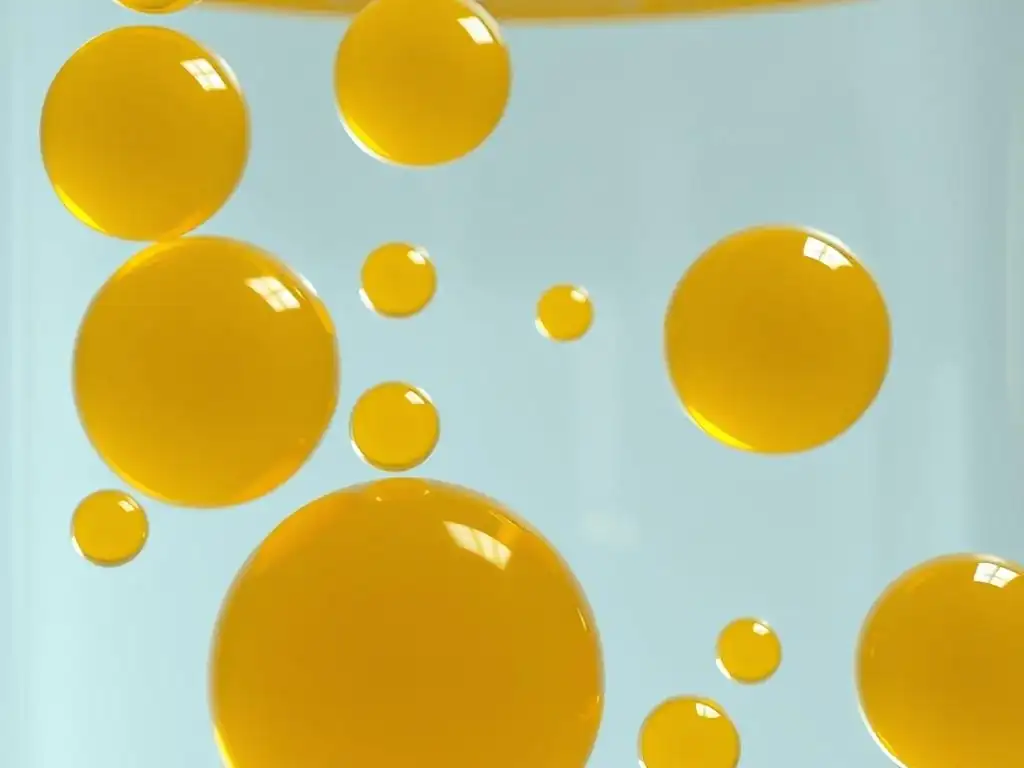
Emulsification is a physical process aided by chemical compounds (emulsifiers) and mechanical energy (mixing). It's about overcoming the natural tendency of oil and water to separate.
When you mix oil and water vigorously, you temporarily break the liquids into tiny droplets, dispersing one phase within the other. However, these droplets quickly try to rejoin because of surface tension, which pulls molecules together. This is where emulsifiers and mechanical energy play their roles.
The Role of Emulsifiers: Stabilizing the Mixture
Emulsifiers are key to achieving a stable emulsion. Their dual nature – part water-loving (hydrophilic) and part fat-loving (hydrophobic) – allows them to act as a bridge between the two phases. Imagine an emulsifier molecule: its hydrophobic tail burrows into an oil droplet, while its hydrophilic head sticks out into the surrounding water.
By coating the surface of the dispersed droplets, emulsifiers reduce the interfacial tension (the tension specifically at the boundary between the two liquids). This lowered tension makes it easier to break the liquids into smaller droplets during mixing. More importantly, the layer of emulsifier molecules around each droplet creates a physical and electrical barrier that prevents the droplets from coalescing and separating. For example, lecithin from egg yolks is a powerful natural emulsifier; adding egg yolks to a mixture of fat and water helps keep them combined by forming stable membranes around the fat globules.
Surface Tension and Interfacial Tension: The Underlying Physics
Surface tension is the property of a liquid's surface layer that allows it to resist an external force, due to the cohesive nature of the molecules. Water has high surface tension because its molecules are strongly attracted to each other. Oil also has surface tension, but generally lower than water. When oil and water meet, the high tension between their different types of molecules causes them to pull away from each other, leading to separation.
Interfacial tension is a specific type of surface tension that occurs at the boundary (interface) between two immiscible liquids, like oil and water. This tension is what makes it difficult to mix them and causes them to separate when left undisturbed. Emulsifiers work primarily by dramatically reducing this interfacial tension.
By positioning themselves at the interface, they disrupt the strong cohesive forces that cause the separation. A reduction in interfacial tension from, say, 50 millinewtons per meter (mN/m) for pure oil and water to under 10 mN/m with a good emulsifier makes it much easier to create and maintain a stable dispersion of droplets.
How Emulsification Impacts Gluten Development: Texture Control
Emulsification plays a significant, indirect role in controlling gluten development, which is crucial for texture in many baked goods. Gluten is formed when proteins in flour (glutenin and gliadin) hydrate and are worked (kneaded or mixed). Over-development of gluten can lead to tough, chewy textures, desirable in some breads but not in tender cakes or pastries.
In a well-emulsified batter or dough containing fat, the fat droplets are evenly dispersed throughout the mixture. These fat particles can coat the flour particles, creating a barrier that prevents the gluten-forming proteins from fully hydrating and interacting with each other. This 'shortening' effect, where fat interferes with gluten development, results in a more tender crumb. If the emulsion breaks, the fat pools together rather than coating the flour evenly, leading to less interference with gluten formation and potentially a tougher texture in those areas.
Mastering Emulsification Techniques for Optimal Baking Texture
Different baking methods are essentially different ways of achieving and managing emulsification to create specific textures. The order of adding ingredients and the mixing technique significantly impact how well the fat and liquid phases combine.
Understanding these methods through the lens of emulsification helps troubleshoot issues and predict outcomes. Whether you're aiming for a light, airy cake or a dense, fudgy brownie, the technique you choose dictates the emulsion type and stability, directly influencing the final texture.
Creaming Method: Achieving Light and Airy Cakes
The creaming method is a classic technique for cakes and cookies, starting by beating softened butter (or other solid fat) with sugar. From an emulsification perspective, this step leverages the water-in-oil emulsion structure of butter. As the butter and sugar are beaten, the sharp sugar crystals cut into the butter, creating tiny pockets. Air is simultaneously incorporated into these pockets. This forms a stable network of fat and air.
Eggs are then added gradually. Egg yolks contain lecithin, a powerful emulsifier. As eggs are mixed in, the lecithin helps to emulsify the water content from the eggs and the butter's inherent water into the fat-sugar-air matrix.
This creates a stable fat-in-water emulsion where fat and air are dispersed in the liquid phase from the eggs and later, milk or other liquids. Proper creaming ensures a high volume of trapped air (up to 50% of the batter volume before flour is added in some recipes), leading to a light, fine crumb structure. Adding eggs too quickly can overwhelm the emulsifying capacity and cause the mixture to curdle or separate.
Reverse Creaming Method: For Tender and Moist Results
The reverse creaming method flips the traditional order: dry ingredients (flour, sugar, leaveners, salt) are mixed with softened butter first, before any liquid is added. This coats the flour particles with fat before they come into significant contact with liquid.
From an emulsification standpoint, this technique focuses on coating the flour with fat early on. The butter's fat is dispersed among the dry ingredients. When liquids (like eggs and milk, often whisked together) are gradually added, they are emulsified into the fat-coated dry mixture. This method is particularly effective at minimizing gluten development because the fat barrier is established from the outset. The resulting texture is typically very tender and moist, with a fine, velvety crumb, though often slightly denser than cakes made with the traditional creaming method because less air is initially incorporated with the fat and sugar.
One-Bowl Method: Simplifying Emulsification
The one-bowl method aims for simplicity, often adding all liquid ingredients together first, then beating in the softened fat and finally adding the dry ingredients. This method relies heavily on the emulsifying power of ingredients like eggs and often requires specific types of fat or flour.
In this method, the initial mix of liquids and fat forms an oil-in-water emulsion, stabilized by emulsifiers present in the eggs or added ingredients. The mechanical action of the mixer disperses the fat into the liquid phase. Dry ingredients are then folded in.
While convenient, this method requires careful attention to mixing times to avoid overdeveloping gluten once the flour is hydrated. Recipes designed for the one-bowl method often use fats with added emulsifiers (like some margarines or shortenings) or specify ingredients high in natural emulsifiers (like sour cream or buttermilk) to help achieve a stable emulsion quickly without extensive mixing.
Common Emulsification Problems and Solutions in Baking
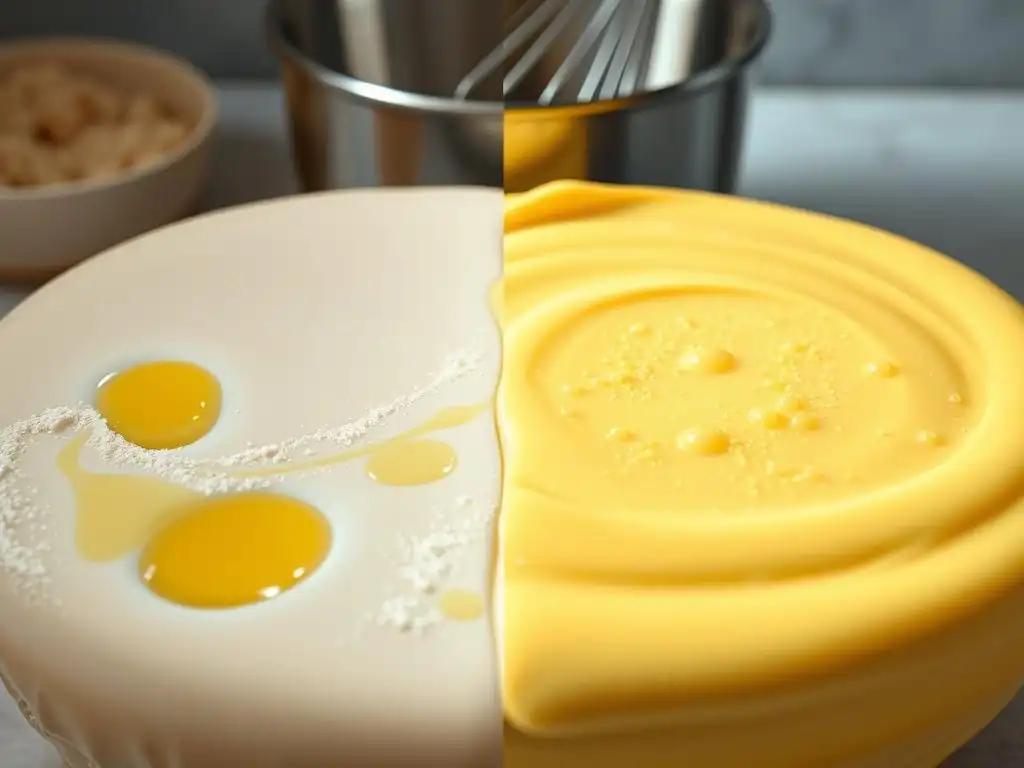
Even experienced bakers encounter issues with emulsification. Recognizing these problems and understanding their causes is key to troubleshooting and achieving consistent results.
Common problems include mixtures that appear curdled, separated, or result in a greasy final product. These are all signs that the fat and liquid phases haven't been properly or stably combined.
Emulsion Breakdown: Causes and Prevention
Emulsion breakdown, often seen as a curdled or separated mixture (like curdled cake batter), occurs when the dispersed phase droplets coalesce and separate from the continuous phase. Causes include:
- Adding liquids too quickly: Overwhelming the emulsifying capacity of the mixture.
- Temperature extremes: Ingredients that are too cold or too warm can prevent emulsification or cause it to break. For instance, adding cold eggs to creamed butter can cause the fat to seize and separate.
- Insufficient mixing: Not providing enough mechanical energy to break down and disperse the droplets finely.
- Incorrect ingredient ratios: Too much fat or liquid relative to the emulsifiers present.
To prevent breakdown:
- Ensure ingredients are at the specified temperature (often room temperature, around 68-72°F or 20-22°C, for methods like creaming).
- Add liquids gradually, allowing each addition to be fully incorporated before adding more.
- Mix at the correct speed and duration as specified in the recipe.
- Follow recipe ratios carefully.
### Emulsion Breakdown Troubleshooting Checklist:

- [ ] Are ingredients at room temperature?
- [ ] Were liquids added slowly?
- [ ] Was the mixture mixed sufficiently?
- [ ] Were ingredient ratios followed?
Oily or Greasy Texture: Troubleshooting Tips
An oily or greasy texture in the final baked product can indicate that the emulsion was not stable during mixing or baking, leading to fat pooling. This often happens when:
- The emulsion broke during mixing: If your batter looked curdled and you proceeded without fixing it, the separated fat will likely result in a greasy texture.
- Overmixing after adding flour: This can break a delicate emulsion and also overdevelop gluten, contributing to a tough-greasy texture hybrid.
- Too high baking temperature: Can cause fat to melt and separate too quickly before the structure sets.
If your batter looks curdled:
- Warm gently: Sometimes gently warming the bowl over a warm water bath while whisking can help re-emulsify it.
- Add a tablespoon of flour: In cake batters, adding a tablespoon or two of the measured flour can sometimes help absorb excess liquid and bring the emulsion back together.
- Add a small amount of warm liquid: Occasionally, adding a tiny bit of warm milk or water while mixing vigorously can help.
If the final product is greasy, review your process for the points above. Ensure ingredients are at the right temperature before mixing and avoid overmixing, especially after flour is incorporated.
Separated Batter: Rescue Techniques
Separated batter, often looking like curdled milk with clumps of fat, is a clear sign of emulsion failure. This typically happens when adding liquids to a fat-based mixture (like creamed butter and sugar) too quickly or if the temperatures are off.
Rescue attempts depend on the stage:
- During creaming/egg addition: If the mixture curdles when adding eggs, stop adding liquid. Beat the mixture for an extra minute or two to try and bring it back together. If it's still separated, gently warm the bowl over a warm water bath for a few seconds while mixing. Alternatively, beat in 1-2 tablespoons of the measured flour; the starch can help absorb excess liquid and stabilize the mixture. Once smooth, continue adding remaining liquids very slowly.
- After adding dry ingredients: If the batter separates after flour is added, it's much harder to fix without altering the texture significantly. Overmixing to re-emulsify at this stage will likely overdevelop gluten. It might be best to proceed and accept a slightly different texture, or in severe cases, start over.
Prevention is easier than rescue: ensure ingredients are at room temperature and add liquids gradually, especially when using the creaming method.
Advanced Emulsification Techniques
Once you understand the basics, you can explore more advanced ways to manipulate emulsification for specific baking outcomes. This involves considering factors like temperature, the specific type of fat used, and incorporating additional emulsifiers.
These techniques allow for greater control over moisture distribution, tenderness, and the overall stability of batters and doughs, contributing to nuanced textural differences in the final product.
Temperature's Influence on Emulsification
Temperature is a critical factor in emulsification. Ingredients that are too cold can prevent fats from dispersing properly or cause existing emulsions (like the W/O in butter) to become too rigid. For example, attempting to cream cold butter and sugar is difficult; the butter won't aerate well, and it will struggle to emulsify liquids added later. Softened butter (around 65-68°F or 18-20°C) is ideal for creaming as its fat crystals are pliable enough to trap air and its water phase is ready to disperse.
Conversely, ingredients that are too warm can also cause problems. Overly warm butter might melt, losing its W/O structure needed for creaming and air incorporation. Adding hot liquids to a batter can break an emulsion by causing the fat to melt and separate. Maintaining ingredients within the optimal temperature range specified by a recipe (often room temperature for many components) is vital for successful emulsification and thus, optimal emulsification baking texture secrets.
Choosing the Right Fats for Different Baking Applications
The type of fat significantly impacts emulsification and texture.
- Butter: A W/O emulsion (approx. 80% fat, 16-18% water). Its water content and natural emulsifiers (like monoglycerides and diglycerides) help create stable emulsions in batters. Butter contributes flavor and tenderness. Its melting point also influences spread in cookies and flakiness in pastries.
- Oil: Pure fat (100%). Oils are excellent at coating flour particles, leading to very tender results (e.g., in oil-based cakes). They readily form O/W emulsions when vigorously mixed with liquids containing emulsifiers (like eggs). However, they contribute less to aeration unless specifically emulsified into a stable foam.
- Shortening: Typically 100% fat, often hydrogenated vegetable oil. Many commercial shortenings contain added emulsifiers (mono- and diglycerides) to enhance creaming ability and contribute to a fine, soft crumb. Shortening can often hold more air than butter during creaming and creates a tender texture.
- Margarine: Composition varies, but often 80% fat and 20% water, with added emulsifiers. Like butter, it's a W/O emulsion. Its performance depends heavily on the specific formulation and added emulsifiers.
Choosing a fat involves considering its flavor, melting point, and how its inherent structure and emulsifying properties will interact with the other ingredients and the chosen mixing method to achieve the desired texture. For example, using oil in place of butter in a creaming method cake won't work because oil lacks the W/O structure needed for initial aeration.
Using Lecithin to Enhance Emulsification
Lecithin is a naturally occurring phospholipid found abundantly in egg yolks and soybeans. It's a highly effective emulsifier due to its amphiphilic structure (both water-attracting and fat-attracting).
In baking, egg yolks are a primary source of natural lecithin. Adding eggs to a batter provides emulsifying power that helps keep fats and liquids combined. For instance, a standard cookie recipe might use 1-2 large eggs for every cup of butter and sugar.
The lecithin in these eggs is crucial for preventing the fat from separating and ensuring a smooth dough that spreads predictably. Commercially, lecithin is extracted (often from soy) and used as an additive in products like margarine, chocolate, and packaged mixes to improve texture, stability, and moisture retention. Adding a small amount of supplemental lecithin (available as granules or liquid) can sometimes help stabilize tricky emulsions or improve the texture of low-fat baked goods.
Emulsification in Different Recipes: Examples
Let's look at how emulsification plays out in some common baked goods. Understanding the role it plays in these familiar recipes helps solidify the concepts and highlights their practical application in achieving specific emulsification baking texture secrets.
From the delicate crumb of a cake to the chewy interior of a cookie or the rich softness of brioche, emulsification is quietly working behind the scenes.
Emulsification in Cakes: Victoria Sponge Cake
A classic Victoria Sponge relies heavily on the creaming method, making emulsification central to its light, airy texture. The process begins by creaming equal weights of softened butter and sugar until pale and fluffy. This incorporates air into the butter's W/O matrix.
Eggs are then whisked and added gradually. The lecithin in the egg yolks is essential here. As the eggs are incorporated, the lecithin helps to emulsify the water from the eggs and the butter into the fat-sugar-air mixture, creating a stable O/W emulsion (fat and air dispersed in the liquid).
For a recipe using 225g butter, 225g sugar, 4 large eggs (approx. 200g), and 225g flour, the 80g of water from the butter and 150g of water from the eggs need to be emulsified into the 180g of fat from the butter and 25g of fat from the eggs. Adding the eggs slowly, perhaps 25g at a time, allows the emulsifiers time to work, preventing the mixture from curdling and ensuring the air pockets remain intact, leading to a fine, even crumb.
Chocolate chip cookies demonstrate how emulsification affects spread and chewiness. Many recipes start by creaming softened butter with sugar. This incorporates air and begins to emulsify the butter's water into the fat-sugar mix.
Eggs are added next. The lecithin in the eggs further stabilizes the emulsion, binding the fat and liquid. For a recipe with 1 cup (approx. 227g) butter, 3/4 cup (approx. 150g) sugar, and 2 large eggs (approx.
100g), the ~40g of water from the butter and ~75g of water from the eggs are emulsified into the ~180g of fat from the butter and ~12g from the eggs. A well-emulsified dough prevents the fat from separating and pooling too quickly on the baking sheet. This controlled spread contributes to the cookie's thickness and chewiness. If the dough is poorly emulsified, the fat might leak out rapidly, resulting in thin, greasy cookies.
Emulsification in Breads: Brioche
While not as obvious as in cakes, emulsification is also important in enriched breads like brioche, which contains significant amounts of fat (butter) and eggs. The goal in brioche is a rich, tender crumb, not the chewy texture of lean bread.
In brioche, eggs and melted butter are often incorporated into the dough after the initial mixing of flour, water/milk, and yeast. The lecithin from the eggs and the natural emulsifiers in butter help to emulsify the fat into the water-based dough. For a brioche recipe using 500g flour, 4 large eggs (approx.
200g), 150g milk, and 250g butter, the ~150g water from eggs and milk needs to emulsify the ~200g fat from the butter and ~25g from the eggs. This even distribution of fat coats the gluten strands, limiting their development and resulting in a soft, tender crumb characteristic of brioche. The emulsified fat also contributes to moisture retention, keeping the bread fresh longer.
Emulsification: A Summary
Emulsification is far more than just mixing; it's a fundamental scientific process that underpins the texture of countless baked goods. It's about creating and stabilizing the delicate balance between fats and liquids, preventing separation, and ensuring ingredients are evenly distributed.
Mastering the emulsification baking texture secrets involves understanding the roles of fats, liquids, and emulsifiers, recognizing how different mixing techniques achieve emulsification, and troubleshooting common issues. By paying attention to ingredient temperatures, mixing speeds, and the order of addition, you can gain greater control over your baking outcomes.
Key Takeaways for Perfect Emulsification
- Emulsification is the stable mixing of immiscible liquids like oil and water, crucial for baking texture.
- Natural emulsifiers like lecithin (in egg yolks) and proteins help stabilize emulsions in batters and doughs.
- Different mixing methods (creaming, reverse creaming, one-bowl) utilize emulsification in distinct ways to achieve specific textures.
- Ingredient temperature and gradual addition of liquids are key factors in preventing emulsion breakdown.
- A well-emulsified mixture leads to even fat distribution, which controls gluten development and contributes to tender, consistent textures.
- Recognizing and addressing issues like curdling or greasiness involves understanding the principles of emulsion stability.
Further Resources for Baking
To deepen your understanding of baking science, including emulsification and other processes:
- Explore resources on the chemistry of baking ingredients like fats, proteins, and starches.
- Read detailed guides on different mixing methods and how they influence structure.
- Study the function of specific ingredients, such as how egg yolks contribute to richness and stability.
- Practice different recipes, paying close attention to the texture of the batter or dough at each stage and how it corresponds to the final baked good.
- Consult reputable baking science books and online educational content (like articles on BakeWithEase.com!) to expand your knowledge.
Frequently Asked Questions
What is emulsification and why is it important in baking?
Emulsification is the process of combining two immiscible liquids, like oil and water, into a stable mixture. It's crucial in baking because it directly affects the texture and consistency of the final product, creating a smoother, more uniform batter.
How does emulsification affect the texture of baked goods?
Proper emulsification leads to a tender and moist crumb. It prevents the oil from separating during baking, which can result in a greasy or uneven texture. It also helps to create a uniform distribution of air for a lighter result.
What are some common ingredients used as emulsifiers in baking?
Common emulsifiers include egg yolks, which contain lecithin, and mustard, which contains mucilage. Other options are honey and sometimes even finely ground spices can act as emulsifiers.
What are some signs that an emulsion has broken in a baking recipe?
A broken emulsion is noticeable by a separated or curdled appearance in the batter. You might see visible oil or water pooling separately. This usually results in a greasy or uneven final product.
How can I improve my emulsification technique to achieve better baking results?
Ensure ingredients are at room temperature for better combination. Slowly add the liquid ingredients to the dry ingredients while mixing continuously. Avoid overmixing, as this can also break the emulsion.
Final Reflection: Unveiling the Magic Behind Perfect Baked Goods
The science of emulsification isn't just a culinary curiosity; it's the key to unlocking consistently perfect textures in our baked creations. Understanding the intricate dance of fats, liquids, and emulsifiers allows us to move beyond guesswork and into a realm of predictable, delicious results, transforming even the simplest recipes into masterpieces.
The impact of mastering emulsification extends far beyond the individual baker. It's a fundamental principle that underpins the entire culinary landscape, influencing everything from the airy lightness of a soufflé to the rich, creamy texture of a custard. The proof of the pudding is in the eating,
as the old saying goes, and the proof of a well-emulsified batter is in its flawlessly consistent texture. This knowledge empowers us not only to create better baked goods ourselves but also to appreciate the artistry and precision involved in the baking process on a deeper level.
Now, it's your turn to experiment. Don't be afraid to delve into the world of emulsifiers, to explore the subtle differences between various fats, and to meticulously observe the effects of each ingredient on your final product. The journey to mastering emulsification is a journey of discovery, one that will reward you with a deeper understanding of baking and, more importantly, with consistently delicious results. Embrace the science, embrace the art, and embrace the joy of creating perfect baked goods, one emulsion at a time.
Unlock Your Baking Potential: Master Emulsification Today!
Thanks for diving deep into the science of emulsification! You've now got the knowledge to create truly exceptional baked goods. Ready to put your newfound expertise into practice?
- Try a new recipe: Challenge yourself with a recipe that heavily relies on emulsification, like a classic mayonnaise cake or a delicate mousse. Note the texture difference!
- Experiment with emulsifier types: Compare the results using different emulsifiers (like egg yolks, lecithin, or xanthan gum) in the same recipe. What subtle changes do you notice?
- Share your baking triumphs (and challenges!): Let's build a community of bakers exploring the world of emulsification. Post photos and insights on our BakeWithEase forum!
What unique texture will you create with your newfound emulsification mastery?