
Bake Cake Like a Pro: Ovens Recommended for Fluffy Layers

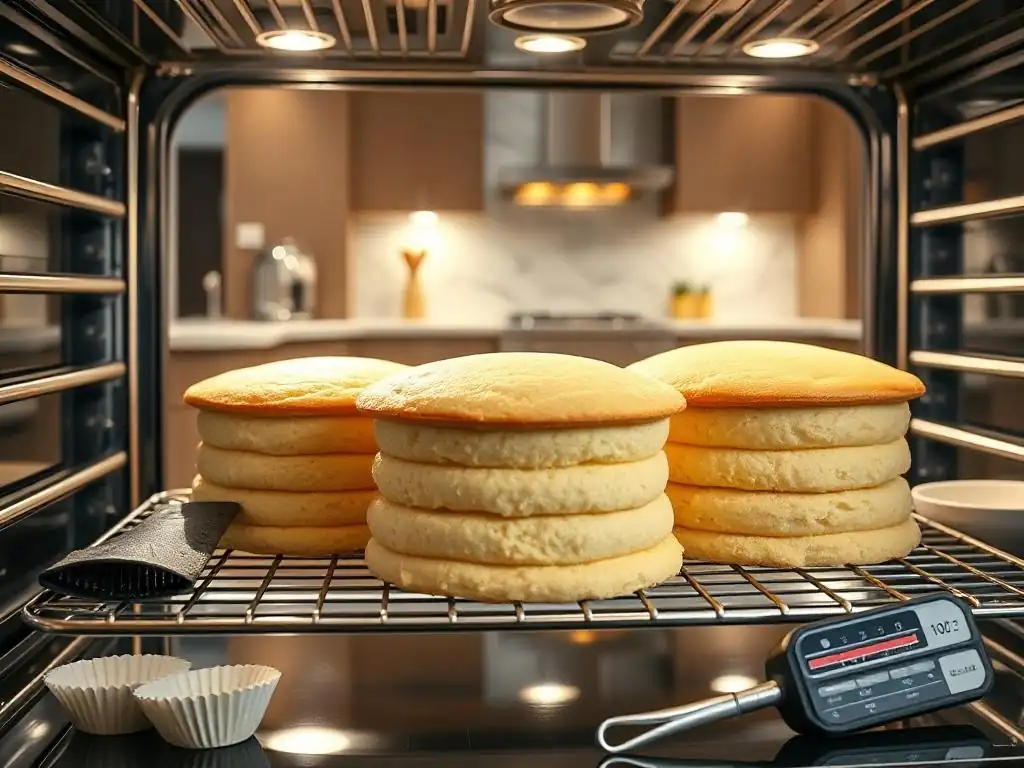
Welcome to BakeWithEase, your trusted guide to baking bliss! Ever wondered what the secret ingredient is to achieving those perfectly fluffy cakes you see in magazines? It might not be what you think! Dive into our latest article where we unveil the best ovens for fluffy cakes, demystifying the technology and features that can elevate your baking game. Curious to know which oven will help you consistently bake light and airy masterpieces? Let's explore the options and unlock the secrets to cake perfection together!
- Achieve Cake Perfection: Finding the Best Oven for Fluffy Cakes
- Top Ovens for Baking Fluffy Cakes: A Comparative Review
- Key Features to Consider When Choosing an Oven for Cake Baking
- The Best Oven Types for Baking Cakes: Standalone vs Built-In
- Mastering the Art of Fluffy Cake Baking: Tips and Techniques
- Elevate Your Baking: Recommended Baking Accessories to Pair With Your Oven
- Conclusion: Choosing the Right Oven for Your Cake Baking Journey
-
Frequently Asked Questions
- What features should I look for in an oven to bake fluffy cakes?
- Is a gas or electric oven better for achieving fluffy cakes?
- How important is oven calibration for baking fluffy cakes?
- Can the type of baking pan affect how fluffy my cake turns out?
- What temperature setting is best for baking fluffy cakes?
- Final Reflection: The Perfect Rise: Achieving Cake Perfection Through the Right Oven
- Unleash Your Inner Pastry Chef!
Achieve Cake Perfection: Finding the Best Oven for Fluffy Cakes
Baking a truly fluffy cake is a rewarding experience, resulting in layers that are light, tender, and melt-in-your-mouth delicious. While ingredients and technique are crucial, the oven you use plays a surprisingly significant role in achieving that perfect texture. An oven that heats unevenly or fluctuates in temperature can turn a potentially glorious cake into a dense or dry disappointment. This is why selecting the best oven for fluffy cakes is a key step for any serious home baker.
Understanding how your oven impacts the baking process is fundamental. Heat distribution, temperature accuracy, and even features like convection can dramatically affect how a cake rises, sets, and develops its crumb structure. We'll explore what makes an oven ideal for baking cakes and review some top contenders that consistently deliver excellent results, helping you find the best oven for fluffy cakes for your kitchen.
Why Oven Choice Matters for Cake Baking Success
The oven is essentially the engine of your baking process, and its performance dictates how well your batter transforms into a baked good. A primary reason oven choice is critical for cake success is consistent heat. Cakes require a stable temperature to rise properly; significant fluctuations can cause them to collapse or bake unevenly. Imagine a cake batter gently expanding in a steady 350°F environment – the structure forms uniformly. Now picture that temperature dipping and spiking by 20-30 degrees; this thermal inconsistency can stress the delicate cake structure, leading to a tougher texture or a lopsided bake.
Beyond consistency, the way heat is delivered matters. Hot spots within an oven can cause one part of your cake to brown and set faster than another, leading to dry edges and an underbaked center. An oven designed with good insulation and efficient heating elements minimizes these issues.
For example, some ovens feature multiple heating elements or sophisticated airflow systems to ensure that every inch of your cake receives the same amount of heat at the same time. This even heat is paramount for achieving that desirable uniform rise and incredibly tender, fluffy crumb that defines a perfectly baked cake. Choosing the right oven addresses these variables, giving your cakes the best possible environment to thrive.
Top Ovens for Baking Fluffy Cakes: A Comparative Review
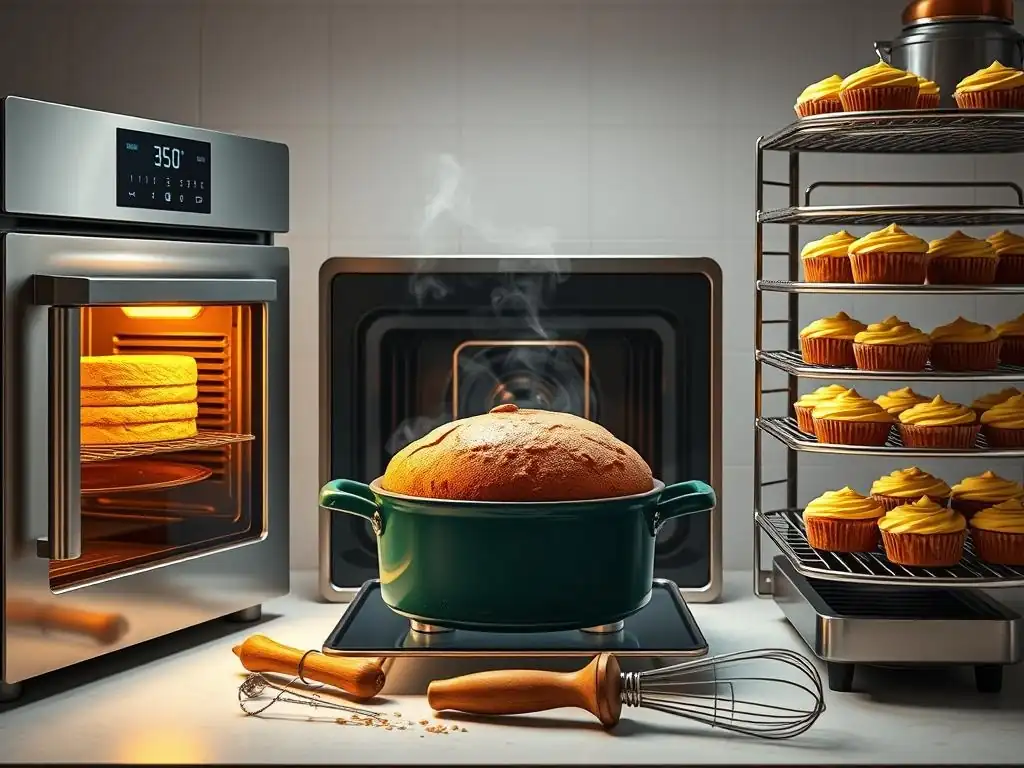
Breville BOV800XL Smart Oven: The Consistent Heat Champion
The Breville BOV800XL Smart Oven, often a favorite among countertop models, earns its place as a strong contender for baking fluffy cakes primarily due to its Element IQ technology. This system intelligently distributes heat where and when it's needed, utilizing five independent quartz heating elements. Instead of just turning on one or two elements, the Element IQ adjusts the power of each element in real-time based on the cooking function and the stage of the process.
For cake baking, this means the oven works actively to maintain a remarkably stable temperature throughout the bake cycle, minimizing the temperature swings that can negatively impact a cake's rise and texture. Users often report consistent results, noting that cakes baked in this oven rise evenly and brown beautifully without requiring mid-bake rotation.
Furthermore, the convection fan in the BOV800XL, when engaged, provides gentle air circulation. While some bakers are wary of convection for delicate cakes, the Breville's system is designed to circulate air without creating harsh currents that can dry out the surface.
This even airflow helps distribute the heat more uniformly around the cake, reducing the likelihood of hot spots and promoting an even, consistent bake from edge to center. The ability to achieve such thermal stability in a relatively compact countertop unit makes it a popular choice for bakers who may not have a full-sized oven or need a reliable secondary baking space, solidifying its reputation as a great oven for baking fluffy cakes.
- Features: Convection baking, Element IQ technology, temperature probe (useful for meats, less so for cakes), 10 pre-set functions.
- Benefits: Exceptional temperature consistency, even baking results, reduces hot spots, saves energy compared to a full-size oven for small batches.
- Drawbacks: Smaller capacity (fits a standard 9x13 inch pan or a few smaller rounds), higher price point for a countertop model (often $250 - $350 range).
- Why it's great for fluffy cakes: The Element IQ technology and effective convection ensure incredibly stable and even heat, which is absolutely crucial for a light, uniform rise and tender crumb in cakes.
KitchenAid KCO223CU Countertop Oven: The Budget-Friendly Baking Powerhouse
The KitchenAid KCO223CU Countertop Oven offers a more accessible entry point into reliable home baking, and it performs surprisingly well for its price range (often found between $150 - $200). Its key feature for cake baking is the Even-Heat Technology, which KitchenAid employs across various oven models. While not as technologically complex as some high-end systems, this technology aims to distribute heat effectively using a combination of heating elements and oven cavity design.
For many standard cake recipes, which typically bake at temperatures around 325°F to 375°F, this oven maintains a reasonably consistent temperature, allowing cakes to rise and set without dramatic issues caused by large fluctuations. It's a significant step up from basic toaster ovens or older, less precise full-size ranges.
The usability of the KitchenAid KCO223CU also contributes to its appeal for home bakers. Its digital display and nine pre-set functions, including a dedicated "Bake" setting, make it straightforward to operate. While temperature accuracy might not be laboratory-grade perfect, it's generally reliable enough for everyday cake baking.
For instance, a yellow cake recipe baked in this oven typically exhibits a decent rise and even browning across the top, provided the batter is prepared correctly. It demonstrates that you don't necessarily need the most expensive oven to achieve satisfyingly fluffy cakes; a well-designed, budget-friendly option with features like Even-Heat Technology can still deliver good results for the home baking enthusiast.
- Features: 9 pre-set functions (including Bake, Broil, Toast, Warm), digital display, Even-Heat Technology, 12" capacity (can fit a 12" pizza or standard cake pans).
- Benefits: More affordable price point, easy to use, versatile for different cooking tasks, relatively compact footprint.
- Drawbacks: Temperature accuracy can sometimes vary slightly compared to high-end models, potentially shorter overall lifespan or less robust build than professional units.
- Why it's great for fluffy cakes: Its Even-Heat Technology helps promote a more consistent baking environment than basic models, aiding in even cake rise and texture formation without significant hot spots.
Wolf 30" E Series Professional Oven: The Professional Baker's Choice
Stepping into the high-end, professional-grade territory, the Wolf 30" E Series Professional Oven is often considered the gold standard for serious bakers and chefs, and it excels at creating perfectly fluffy cakes. Its defining feature is the dual convection system, utilizing two fans and multiple heating elements to ensure unparalleled heat distribution.
This system circulates air evenly throughout the spacious oven cavity, eliminating hot spots and ensuring that every square inch of your cake, from the center to the edges, bakes at the exact same rate. When baking multiple cake layers simultaneously, this dual convection system is invaluable, providing consistent results across all racks – a feat many standard ovens struggle with.
Beyond convection, the Wolf E Series boasts incredibly precise temperature control, often calibrated to within a few degrees of the set temperature and maintaining that stability throughout the entire bake cycle. This level of accuracy is crucial for delicate cake batters that are highly sensitive to temperature fluctuations.
For instance, a high-ratio cake recipe, which contains more sugar and liquid relative to flour, requires precise, steady heat to set properly without collapsing or becoming gummy. The Wolf's robust insulation and advanced controls make this precision possible, allowing bakers to achieve consistently predictable and superior results, easily making it a contender for the absolute best oven for fluffy cakes if budget is no constraint.
- Features: Dual convection system, ten cooking modes (including Bake, Roast, Broil, Proof), precise temperature control with advanced thermostat, large capacity (typically 4.5-5 cubic feet).
- Benefits: Exceptional heat distribution and consistency, highly accurate temperature control, durable construction, ideal for large batches or complex baking projects.
- Drawbacks: Very high price point (often $5,000 - $8,000+), requires professional installation, takes up significant kitchen space.
- Why it's great for fluffy cakes: The dual convection and precise temperature control offer the most stable and even baking environment possible, ensuring cakes rise uniformly, bake perfectly, and achieve the ultimate fluffy texture every single time.
Key Features to Consider When Choosing an Oven for Cake Baking
Convection vs. Conventional Baking: Which is Better for Fluffy Cakes?
The debate between convection and conventional baking for cakes is common among bakers, and the answer often depends on the specific cake and the oven's design. Conventional ovens use heating elements (usually at the bottom and sometimes the top) to heat the air inside the cavity. Heat transfers to the food primarily through radiation and natural convection (hot air rising).
This can sometimes lead to uneven heating, with the bottom of the oven being hotter than the top, potentially causing the bottom of a cake to set faster than the top. For some dense or sturdy cakes, this isn't a major issue, but for delicate, fluffy cakes, it can result in a less uniform rise and texture.
Convection ovens, on the other hand, add a fan to circulate the hot air throughout the oven cavity. This forced air movement significantly improves heat distribution, reducing hot spots and cooking food more evenly and often faster. For many cakes, particularly those baked in multiple pans or on different racks, convection can promote a more consistent rise and browning.
However, the increased airflow can sometimes dry out the surface of a cake or cause it to dome excessively if the fan is too strong or the temperature isn't adjusted. Many bakers recommend reducing the temperature by 25°F (around 15°C) and checking for doneness a bit earlier when using convection for cakes. Some advanced ovens offer different convection modes (like gentle convection) or the ability to turn the fan off, providing flexibility that makes them excellent for baking fluffy cakes.
Precise Temperature Control: The Secret to Avoiding Over-Baking
Precise temperature control is arguably the most critical feature for achieving consistently fluffy cakes. Baking is a delicate chemical process, and the temperature at which it occurs directly impacts everything from how leavening agents react to how quickly proteins and starches set. If your oven temperature fluctuates significantly – say, swinging 20 degrees above or below the set point – your cake will experience inconsistent heat exposure.
A sudden spike can cause the outside to set too quickly before the inside has properly risen, leading to a dense center or cracking. Conversely, a dip in temperature can slow down the setting process, potentially causing the cake to collapse.
High-quality ovens designed for baking utilize sophisticated thermostats and insulation to maintain the set temperature with minimal variation, often within a few degrees. This stability allows the cake to rise steadily and evenly, developing a fine, tender crumb structure. For example, baking a delicate sponge cake requires a stable temperature around 350°F (175°C) for the egg foam to structure correctly.
An oven that holds this temperature precisely ensures the sponge sets without deflating. While you can use an external oven thermometer to monitor, an oven with inherently precise control built-in provides the most reliable environment for achieving that perfect fluffy texture without the risk of over-baking or uneven setting.
Moisture Retention: Keeping Your Cakes Soft and Moist
Moisture retention is another crucial factor often influenced by oven design, particularly important for preventing cakes from becoming dry and crumbly. During baking, moisture from the batter evaporates, and excessive moisture loss can result in a dense or dry cake. While factors like recipe ingredients and baking time play a large role, the oven's ability to create a relatively humid environment or at least minimize rapid moisture escape can help.
Ovens with good insulation and a tight door seal are generally better at retaining moisture. Think of it like a well-sealed container; less steam escapes, keeping the environment inside more humid.
Furthermore, the type of heat delivery impacts moisture. Aggressive convection (a strong, dry fan) can sometimes strip moisture away from the surface of a cake too quickly. This is why some bakers prefer conventional heat or a gentle convection mode for delicate cakes.
Some high-end ovens even offer steam-assisted baking features, which introduce a small amount of steam into the oven cavity at the start of the bake. This steam keeps the surface of the cake moist initially, allowing it to rise more fully before a crust forms, and can contribute to a softer crumb. While steam ovens are a more advanced feature, even a standard oven with good insulation and minimal air leaks contributes positively to moisture retention, helping you bake cakes that are not just fluffy but also wonderfully moist.
The Best Oven Types for Baking Cakes: Standalone vs Built-In
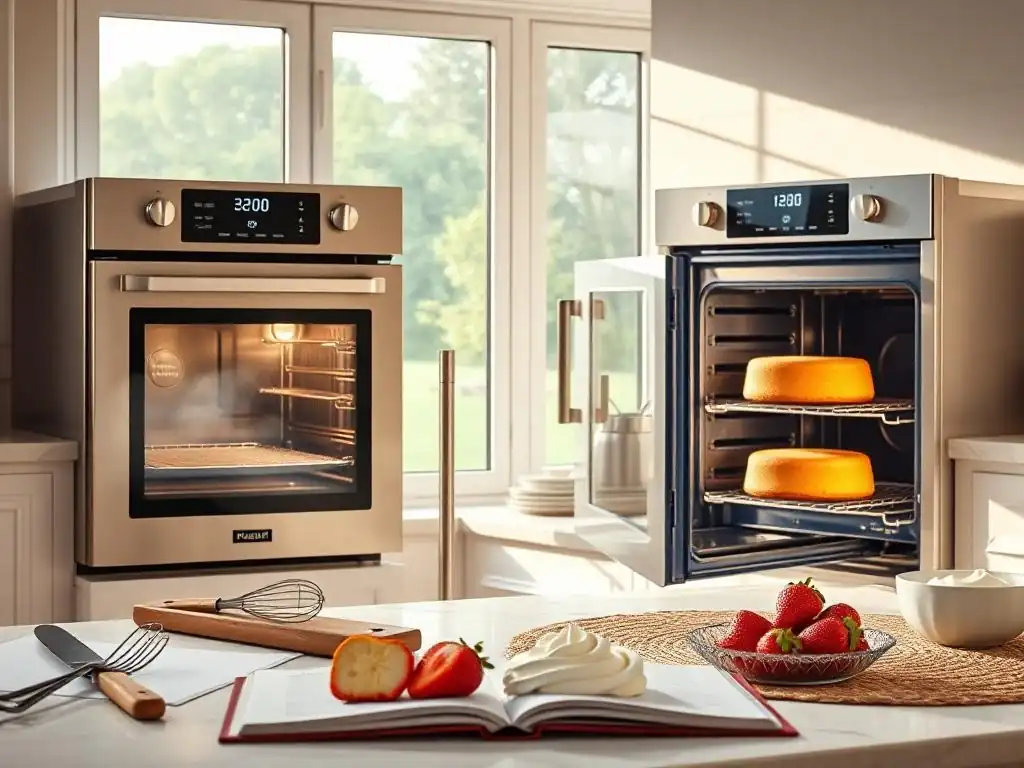
Standalone Ovens: Flexibility and Portability
Standalone ovens, often referred to as range ovens (part of a stove with burners on top) or countertop ovens, offer distinct advantages, particularly concerning flexibility. A range oven provides a complete cooking solution, combining a stovetop and oven in one unit. Countertop ovens, like the Breville or KitchenAid models discussed, are smaller, portable units that sit on your counter.
The primary benefit of standalone units, especially countertop models, is their flexibility. They don't require permanent installation and can be moved if needed. This makes them ideal for smaller kitchens, renters, or as a secondary oven for baking when your main oven is in use or less reliable.
For baking fluffy cakes, a good quality standalone range oven with convection can perform just as well as a built-in model of comparable quality. Countertop ovens, while smaller, can be excellent for baking smaller cakes or individual layers, offering consistent heat in a compact package.
Many home bakers find a reliable countertop oven to be a game-changer for frequently baking smaller batches without heating up a large oven. While their capacity is limited (typically fitting a 9x13 inch pan or smaller), their efficiency and often precise controls make them a viable option, and for some, the best oven for fluffy cakes in a limited space.
Built-In Ovens: Seamless Integration and High Performance
Built-in ovens are installed directly into kitchen cabinetry, offering a seamless, integrated look. They are typically larger than countertop ovens, providing more capacity, often 4-5 cubic feet or more, which is ideal for baking multiple cake layers or larger celebration cakes. One of the main advantages of built-in ovens, particularly higher-end models like the Wolf E Series, is their focus on performance and precision. Because they are designed as dedicated ovens (often paired with a separate cooktop), manufacturers can prioritize features that enhance baking performance, such as advanced insulation, powerful and even heating elements, and sophisticated convection systems.
Built-in ovens often feature more robust construction and better insulation than many standalone ranges, which contributes to more stable temperatures and better moisture retention – both critical for fluffy cakes. Their larger size also means heat has more space to circulate evenly, especially with effective convection.
While they require professional installation and are a permanent fixture, a high-quality built-in oven represents a significant investment in your baking capabilities. If you have the space and budget and are serious about consistently baking excellent cakes, a top-tier built-in model is often considered the ultimate best oven for fluffy cakes due to its superior performance, capacity, and durability.
Mastering the Art of Fluffy Cake Baking: Tips and Techniques
Achieving a truly fluffy cake isn't solely about the oven; technique plays an enormous role. Even with the best oven for fluffy cakes, poor technique can result in a flat or dense cake.
Preheating Your Oven: The Foundation of Perfect Baking
Properly preheating your oven is a non-negotiable step for cake baking success. When a recipe calls for baking at a specific temperature, it means the oven cavity must be at that temperature when the cake goes in. Placing cake batter into an oven that is still heating up exposes it to inconsistent, rising temperatures, which can negatively impact the leavening process. The outside might start to set before the inside has fully expanded, leading to a denser crumb or a less uniform rise.
Most ovens have an indicator light or sound that signals when the set temperature is reached, but this often only indicates that the thermostat has registered the temperature, not that the entire cavity and its walls are heated through. For consistent results, it's best practice to allow the oven to preheat for at least 15-20 minutes after the indicator says it's ready, especially for temperatures 350°F (175°C) and above.
This ensures the oven walls and racks are also hot, creating a stable thermal environment from the moment your cake enters. Using an independent oven thermometer can help verify true oven temperature and readiness.
Oven Rack Placement: Optimizing Heat Distribution
Where you place your cake in the oven significantly impacts how it bakes, even in the best oven for fluffy cakes. Heat circulates differently depending on the rack position. In most conventional ovens, the middle rack is the sweet spot because it's furthest from the direct heat sources (usually at the bottom and sometimes top), allowing for the most even heat distribution. Baking on the bottom rack can lead to a cake with a dark, potentially tough bottom crust, while baking too high can result in the top browning too quickly or the bottom being underbaked.
When baking one standard cake, the center rack is almost always recommended. If you're baking multiple cakes or layers, try to arrange them on a single rack with adequate space between them for air circulation.
If you must use two racks, place them in the upper and lower thirds of the oven and consider rotating the cakes halfway through the baking time to ensure even cooking. However, for the most consistent results, particularly with delicate fluffy cakes, baking one cake at a time on the middle rack is often the simplest way to ensure it receives uniform heat from all sides.
Avoiding Common Baking Mistakes: Ensuring Consistent Results
Even with the best oven for fluffy cakes, common mistakes can derail your efforts. One frequent error is overmixing the batter after adding the dry ingredients. Overmixing develops gluten, which is desirable in bread but results in tough, dense cakes. Mix just until the ingredients are combined. Another common mistake is opening the oven door too frequently during baking.
Every time you open the door, the oven temperature drops significantly – potentially by 50-100°F (approx. 30-55°C)! This sudden temperature change can cause a partially set cake to collapse. Avoid peeking until the cake is close to the minimum baking time specified in the recipe and appears mostly set around the edges.
Incorrect measuring is another major pitfall. Baking is a science, and precise measurements, especially of flour and leavening, are critical. Using too much flour, for instance, can lead to a dry, dense cake, regardless of your oven. Similarly, using expired baking powder or soda will result in a cake that doesn't rise properly.
Finally, be patient and trust the process. Don't pull the cake out of the oven too early because the top looks done. Use a toothpick or cake tester inserted into the center to check for doneness – it should come out clean or with just a few moist crumbs. Avoiding these common errors, combined with a reliable oven, sets you up for consistent fluffy cake success.
Elevate Your Baking: Recommended Baking Accessories to Pair With Your Oven
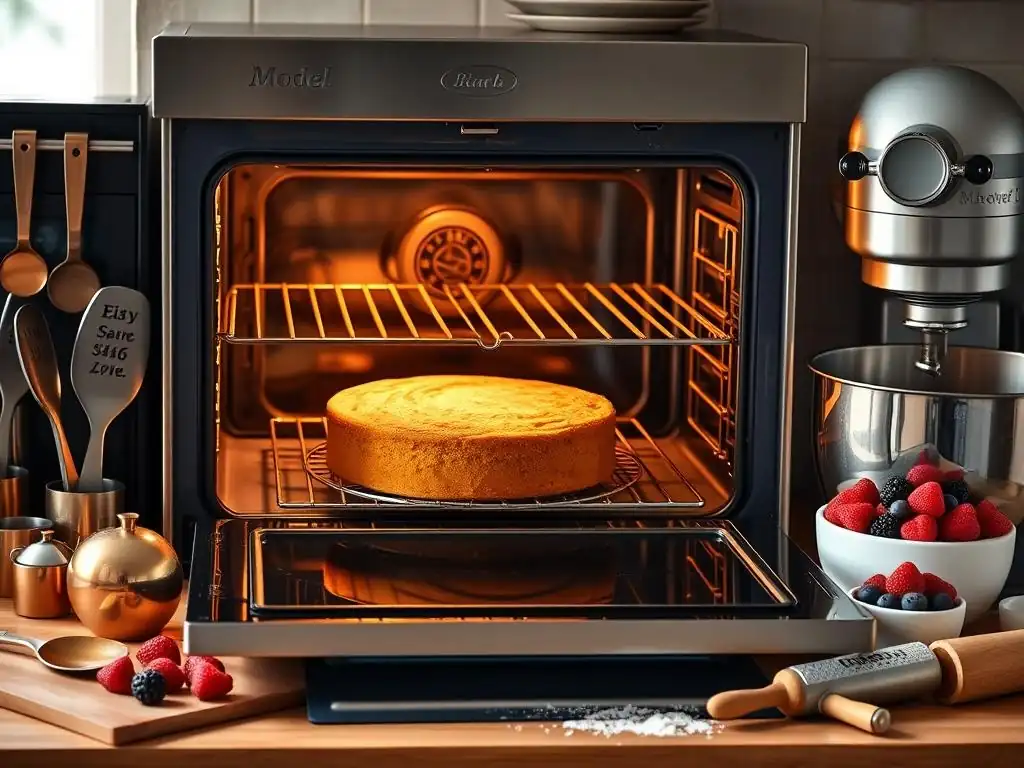
Having the right tools can make a significant difference in your baking results, complementing the performance of even the best oven for fluffy cakes.
High-Quality Bakeware: Investing in the Right Tools
The pans you bake in directly interact with the oven's heat. Using high-quality bakeware ensures even heat distribution to the cake batter itself. Pans made from materials like aluminum or light-colored steel are generally preferred for cakes because they conduct heat efficiently and evenly, promoting uniform browning and preventing the edges from overcooking before the center is done. Dark-colored pans absorb more heat and can cause the crust to brown too quickly or become too dark; if using dark pans, you may need to reduce the oven temperature by 25°F (approx. 15°C).
Investing in sturdy, well-constructed cake pans, whether round, square, or loaf pans, will provide consistent results over time. Pans that are warped or have thin spots can lead to uneven baking. Using parchment paper or greasing and flouring the pans properly ensures the cake releases cleanly, preserving its shape and structure. While your oven provides the heat, quality bakeware ensures that heat is transferred effectively and uniformly to the batter, which is essential for achieving that desired fluffy texture.
Oven Thermometers: Ensuring Accurate Temperature Readings
Even the manufacturers of the best oven for fluffy cakes acknowledge that oven thermostats can drift over time. An inexpensive, standalone oven thermometer is an invaluable tool for verifying your oven's actual temperature. Place it inside the oven, ideally clipped to the middle rack, and let the oven preheat fully with the thermometer inside.
Check the reading against the oven's display. If there's a significant discrepancy (more than 15-20°F or about 8-11°C), you'll know to adjust your oven setting accordingly. For example, if your oven reads 350°F but the thermometer says 325°F, you'll need to set your oven to 375°F to achieve the desired temperature for your cake.
Relying solely on your oven's internal thermostat without verification can lead to inconsistent results. A cake recipe tested at a true 350°F will behave differently if your oven is actually baking at 320°F or 380°F. By using an oven thermometer, you remove a major variable, allowing you to bake with confidence and make precise adjustments based on accurate information. This simple accessory helps you get the most out of your oven, ensuring your cakes bake at the correct temperature for optimal fluffiness.
Baking Scales: Precise Measurements for Perfect Results
While not directly related to the oven itself, using a digital baking scale for measuring ingredients, especially flour, is a technique that dramatically improves consistency and is essential for utilizing your oven's capabilities to their fullest. Volume measurements (using cups) can be notoriously inaccurate due to variations in how ingredients are scooped or packed. A cup of flour can weigh anywhere from 4 to 5.5 ounces (approx. 113 to 156 grams) depending on how it's measured. This variance can significantly alter the ratio of dry to wet ingredients in your cake batter, directly impacting its texture.
Baking by weight (using grams or ounces) provides a much more accurate and repeatable way to measure ingredients. Most professional recipes and serious home bakers prefer weight measurements for this reason. By using a scale, you ensure that your batter consistently has the correct balance of ingredients, which in turn allows your oven to bake the cake as intended by the recipe developer. Precise measurement combined with accurate oven temperature creates the ideal environment for your cake to rise uniformly and achieve that light, fluffy texture you're aiming for. It's a fundamental step toward consistent baking success.
Conclusion: Choosing the Right Oven for Your Cake Baking Journey
Selecting the best oven for fluffy cakes is a crucial step in elevating your baking skills. We've explored why oven performance, particularly consistent and even heating, is paramount for achieving that desirable light and tender crumb. Features like precise temperature control, effective convection, and even moisture retention capabilities all play a significant role in turning simple batter into a baking triumph.
Recap of Top Oven Recommendations
We reviewed several types of ovens that perform well for cake baking:
- The Breville BOV800XL Smart Oven stands out for its excellent temperature consistency in a countertop format, ideal for smaller batches.
- The KitchenAid KCO223CU offers a budget-friendly option with Even-Heat Technology that provides reliable performance for everyday cake baking.
- The Wolf 30" E Series Professional Oven represents the high end, offering unparalleled precision and capacity with its dual convection system, making it a top choice for serious volume bakers.
Ultimately, the best oven for fluffy cakes for you depends on your budget, kitchen space, and baking volume. Whether you choose a high-tech countertop model, a reliable standard range, or a professional built-in unit, understanding its features and how they impact baking is key.
Level Up Your Baking Skills with Baking Resources
Beyond the oven, remember that mastering techniques like accurate measuring, proper preheating, and understanding rack placement are equally important. Pairing a good oven with quality bakeware and essential tools like an oven thermometer and baking scale will further enhance your results.
At BakeWithEase.com, we provide a wealth of resources to help you perfect your cake baking journey. Explore our detailed recipes, technique guides, and tips designed for bakers of all levels. With the right knowledge, the right tools (starting with a great oven! ), and a little practice, you'll be baking consistently fluffy, delicious cakes that impress every time. Happy baking!
Frequently Asked Questions
What features should I look for in an oven to bake fluffy cakes?
When selecting an oven for fluffy cakes, consider models with consistent temperature control and even heat distribution. Look for features like convection baking to ensure your cakes rise evenly.
Is a gas or electric oven better for achieving fluffy cakes?
Both gas and electric ovens can bake fluffy cakes, but electric ovens generally offer more precise temperature control. This precision is crucial for achieving the desired rise and texture in your cakes.
How important is oven calibration for baking fluffy cakes?
Oven calibration is extremely important. An uncalibrated oven can lead to uneven baking and impact the fluffiness of your cakes. Regular calibration ensures accurate temperature readings.
Can the type of baking pan affect how fluffy my cake turns out?
Yes, the baking pan does matter. Using the correct size pan is crucial, as is opting for a pan material that promotes even heat distribution. Avoid dark-colored pans, as they can over-bake the edges.
What temperature setting is best for baking fluffy cakes?
Generally, baking cakes at a temperature between 325°F to 350°F (160°C to 175°C) is ideal. This allows the cake to bake slowly and evenly, resulting in a light and fluffy texture.
Final Reflection: The Perfect Rise: Achieving Cake Perfection Through the Right Oven
The quest for the perfect, fluffy cake is a timeless pursuit, and the oven plays a pivotal role in achieving that airy, melt-in-your-mouth texture. Choosing the right appliance isn't just about baking; it's about unlocking the potential for culinary artistry, transforming simple ingredients into a delightful masterpiece. The right oven, as we've explored, can be the difference between a dense disappointment and a cloud-like creation.
This journey through oven technology and its impact on cake baking has underscored the importance of understanding the nuances of heat distribution and temperature control. The seemingly simple act of baking a cake becomes a complex interplay of science and art, and the oven is the conductor of this delicate symphony. The best oven is the one that allows you to fully express your creativity,
a renowned pastry chef once said, and I believe this rings true for every baker, from novice to expert. The right tools empower us to achieve our culinary dreams.
Now, consider your own baking journey. What kind of oven do you use? Does it consistently deliver the fluffy cakes you desire? I encourage you to reflect on your baking experience and consider whether an upgrade might elevate your baking game. Perhaps it's time to explore the models we've discussed, or perhaps this article has inspired you to delve deeper into the science of baking. Regardless, remember that the pursuit of perfection is a rewarding journey, and the perfect cake is always within reach with the right tools and a little passion.
Unleash Your Inner Pastry Chef!
Thanks for joining us on this delicious journey into the world of perfect cake layers! We hope you gained valuable insights into choosing the right oven for achieving that fluffy, dreamy texture. Ready to take your baking to the next level?
- Bake your dream cake: Grab your favorite recipe and put your newfound oven knowledge to the test! Don't forget to share a picture of your masterpiece – we'd love to see it!
- Experiment with different baking techniques: Try adjusting baking times or temperatures based on your oven's specific characteristics. You might discover your new signature technique!
- Join our Baking Community: Share your experiences and tips on our forum, and connect with other passionate bakers. Let's learn and grow together!
What incredible cake creation will you bake next?