
The Best Stand Mixers for Beginner Bakers: Simple & Effective Picks


Welcome to BakeWithEase, your guide to unlocking the joy of baking! Ready to ditch the hand mixer and embrace the power of a stand mixer? This guide dives into the best stand mixers for beginners, offering simple and effective picks to elevate your baking game. But which one is right for you? Keep reading to discover the perfect machine to help you conquer any recipe, from cookies to cakes, with ease.
- Introduction: Making Baking Easier with the Right Stand Mixer
- Why a Stand Mixer is Essential for New Bakers
- Top Picks: Best Stand Mixers for Beginners (2024)
- Stand Mixer Buying Guide for Beginners: Key Considerations
- Comparing the Top Stand Mixers: Side-by-Side Analysis
- Beginner Baking Recipes to Test Your New Stand Mixer
- Tips and Tricks for Using Your Stand Mixer Effectively
- Conclusion: Choosing the Right Stand Mixer for Your Baking Journey
-
Frequently Asked Questions
- What makes a stand mixer ideal for beginner bakers?
- What are some key features to look for in a stand mixer for beginners?
- How much should a beginner baker expect to spend on a good stand mixer?
- Are there specific stand mixer brands that are recommended for beginners?
- What are the most common mistakes beginner bakers make when using a stand mixer?
- Final Reflection: The Joy of Baking, One Stand Mixer at a Time
- Unleash Your Inner Baker: Get Mixing!
Introduction: Making Baking Easier with the Right Stand Mixer
Stepping into the world of baking can feel exciting, yet sometimes a little daunting. You've got recipes, ingredients, and enthusiasm, but what about the tools that truly make a difference? For many beginner bakers, the thought of tackling complex doughs or lengthy whipping tasks by hand can be tiring.
This is where the right stand mixer comes in. It's not just a fancy gadget; it's a foundational piece of equipment that can significantly simplify your baking journey, allowing you to focus on the joy of creating delicious treats rather than the strain of mixing. Choosing the best stand mixer beginners can rely on is key to building confidence and skill in the kitchen.
A good stand mixer acts as a tireless assistant, handling repetitive tasks like kneading, mixing, and whipping with consistent power and speed. This frees up your hands and energy for other steps in the recipe, like preparing pans or measuring ingredients accurately. For someone just starting out, this hands-free advantage is invaluable. It helps prevent common issues like over- or under-mixing, leading to more successful results right from your first batch of cookies or loaf of bread. Finding a simple yet effective stand mixer for beginners is the first step towards mastering countless recipes with ease.
Why a Stand Mixer is Essential for New Bakers
Saves Time and Effort: The Hands-Free Advantage
One of the most immediate benefits a beginner baker experiences with a stand mixer is the significant reduction in manual labor and time. Imagine trying to knead a sticky bread dough by hand for 10-15 minutes – it's a workout! A stand mixer, equipped with a dough hook, can typically achieve the same result in about 5-8 minutes, unattended. This hands-free operation means you can be prepping your baking pan, preheating the oven, or cleaning up while the mixer does the heavy lifting.
Consider whipping egg whites for a meringue. Achieving stiff peaks manually with a whisk can take 15-20 minutes of continuous, vigorous effort. A stand mixer with a whisk attachment can often reach stiff peaks in just 3-5 minutes, depending on the mixer's power and speed setting. This drastic time saving and reduced physical strain make more complex recipes accessible and less intimidating for those new to baking, truly highlighting the value of a best stand mixer beginners can easily operate.
Consistent Results: Achieving Perfect Batters Every Time
Consistency is a cornerstone of successful baking, and something that can be challenging to achieve manually, especially for beginners. Uneven mixing can lead to tough cookies, dense cakes, or flat bread. A stand mixer, with its planetary mixing action (where the attachment spins in one direction while the head spins in the opposite direction around the bowl), ensures that ingredients are thoroughly and evenly incorporated every single time.
This consistent mixing action is crucial for developing gluten properly in bread doughs or creaming butter and sugar to the ideal fluffy texture for cakes and cookies. For example, achieving the perfect "creamed" state for cookie dough requires beating butter and sugar together until light and airy, often taking several minutes. A stand mixer automates this process, ensuring consistent aeration, which directly impacts the texture and rise of your baked goods. This reliability makes a beginner stand mixer a valuable tool for building confidence through predictable outcomes.
Versatility Beyond Baking: Expanding Your Culinary Horizons
While stand mixers are stars in the baking world, their utility extends far beyond cakes and cookies. For a beginner exploring various culinary pursuits, a stand mixer can be a surprisingly versatile kitchen appliance. Standard attachments like the whisk, paddle, and dough hook cover a wide range of tasks, from whipping cream and mashing potatoes to shredding cooked chicken or mixing meatballs.
Many stand mixer models, particularly popular ones suitable for beginners, also offer optional attachments that can transform the mixer into other appliances. Think pasta makers, spiralizers, meat grinders, or even ice cream makers. While these are often separate purchases, the potential to expand the mixer's functionality means your initial investment serves multiple purposes in the kitchen as you grow your skills, making a stand mixer for beginners a long-term asset.
Top Picks: Best Stand Mixers for Beginners (2024)
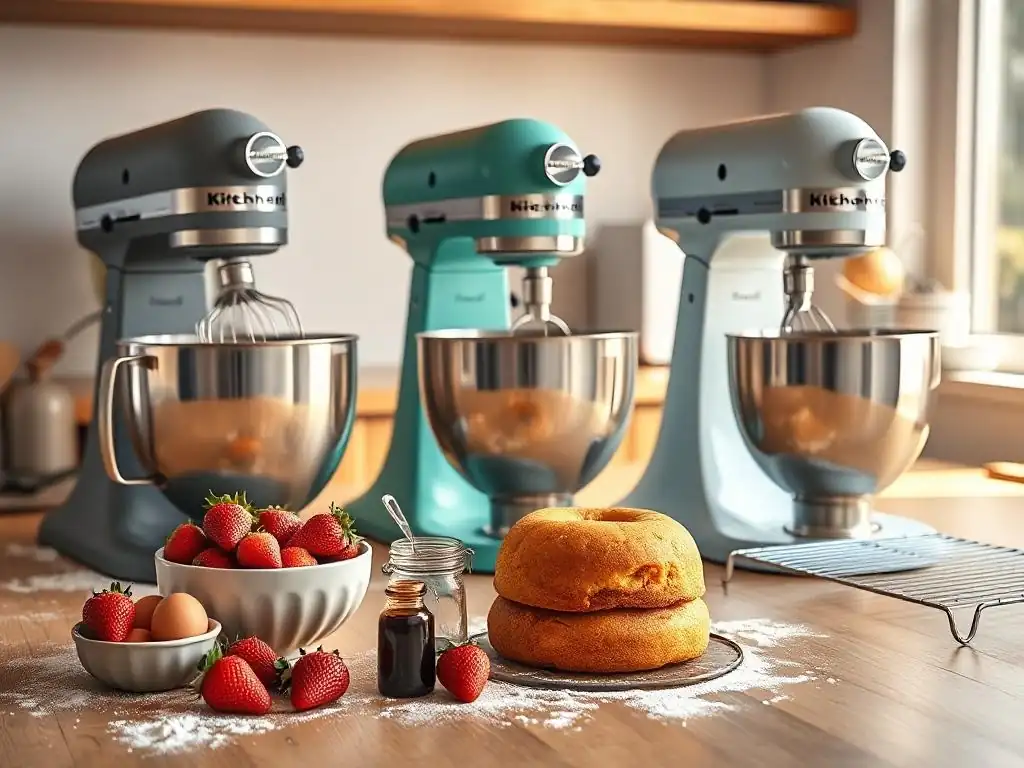
The KitchenAid Artisan: A Beginner's Dream
The KitchenAid Artisan series is often considered the gold standard for home bakers, and it's remarkably suitable as a beginner stand mixer. While not the cheapest option, its reputation for durability, ease of use, and iconic design makes it a popular choice for those investing in their baking future. It strikes a balance between power and user-friendliness that appeals strongly to newcomers.
This mixer typically features a substantial motor, often around 325 watts, capable of handling everything from light meringues to stiff bread doughs in its standard 5-quart bowl. Its tilt-head design allows easy access to the bowl and beater, and the single attachment hub at the front is simple to use for adding accessories later. The intuitive speed control lever is easy to adjust, making it simple for beginners to follow recipe instructions regarding mixing speed.
Key Features of the KitchenAid Artisan
The KitchenAid Artisan comes standard with three essential attachments: a flat beater for general mixing, a wire whisk for whipping, and a dough hook for kneading. These cover the vast majority of beginner baking tasks. The 5-quart stainless steel bowl is large enough for most home baking recipes, capable of handling dough for about 9 dozen cookies or 4 loaves of bread.
It features 10 distinct speed settings, offering precise control from a gentle stir (Speed 1) to a very fast whip (Speed 10). The durable all-metal construction ensures stability during mixing and a long lifespan. The tilt-head design makes adding ingredients and scraping the bowl straightforward, a helpful feature when you're still getting comfortable with mixing techniques.
Why It's Great for Beginners: Simple Controls and Intuitive Design
The primary reason the KitchenAid Artisan is an excellent stand mixer for beginners is its sheer simplicity of operation combined with reliable performance. There are no complicated digital displays or confusing buttons – just a single lever to control the speed. The attachments click easily into place, and the tilt-head mechanism is simple to engage.
Its robust construction means it doesn't wobble or walk across the counter, even when kneading tougher doughs, providing a sense of safety and stability. The clear markings for speed settings on the side make it easy to follow recipe instructions precisely. Beginners appreciate that it consistently delivers good results with minimal fuss, helping them build confidence with foundational recipes.
Price and Where to Buy: Affiliate Links and Best Deals
The KitchenAid Artisan series typically ranges in price from approximately $380 to $450 USD, depending on the retailer, color, and specific model variations (like custom colors). This price point represents a significant investment for a beginner, but many bakers view it as a worthwhile long-term purchase due to its durability and versatility.
These mixers are widely available at major department stores, home goods retailers, and large online marketplaces. While we cannot provide specific links here, searching these common retail channels will allow you to compare prices and find current deals. Look out for holiday sales or special promotions, which can sometimes bring the price down.
The Hamilton Beach Electric Stand Mixer: Compact Champion for Small Spaces
For beginners working with limited kitchen space or a tighter budget, the Hamilton Beach Electric Stand Mixer often stands out as a practical choice. It offers the core functionality of a stand mixer in a more compact and affordable package, making it an accessible stand mixer for beginners who aren't ready to commit to a larger, more expensive model.
This mixer typically features a smaller footprint and lighter weight compared to larger models like the KitchenAid Artisan. It usually comes with a motor in the 300-watt range and a 4-quart or 4.5-quart bowl, suitable for smaller batch baking – perfect for a single person or small family. While it may not handle extremely stiff doughs or massive quantities as easily as more powerful mixers, it is more than capable of tackling standard cookie doughs, cake batters, and whipped cream.
Space-Saving Design: Ideal for Apartment Kitchens
One of the most appealing aspects of the Hamilton Beach Electric Stand Mixer for many beginners is its size. Measuring significantly smaller in width and height than many premium mixers, it fits more comfortably on limited counter space and is easier to store in smaller cabinets. Its lighter weight also makes it less cumbersome to move in and out of storage.
For individuals living in apartments, dorm rooms, or homes with compact kitchens, this space-saving design is a major advantage. It allows them to enjoy the benefits of a stand mixer without sacrificing valuable counter real estate, making it a practical and user-friendly beginner stand mixer option.
Powerful Performance: Handles Basic Baking Tasks with Ease
Despite its smaller size and lower wattage compared to professional-grade mixers, the Hamilton Beach Electric Stand Mixer provides ample power for common beginner baking tasks. Its 300-watt motor and planetary mixing action effectively cream butter and sugar, mix cake batters, and whip egg whites to stiff peaks.
It typically includes standard attachments like a flat beater, whisk, and dough hook, allowing beginners to experiment with a variety of recipes. While it might struggle with kneading large quantities of very stiff dough, it performs reliably for typical cookie, cake, and brownie recipes, which are staples for most new bakers.
Budget-Friendly Option: Excellent Value for Money
The Hamilton Beach Electric Stand Mixer is significantly more affordable than many other stand mixer brands, often priced between $100 and $150 USD. This makes it an excellent entry-level option for beginners who want to experience the benefits of a stand mixer without a large financial commitment.
For its price point, it offers solid performance and includes the essential attachments needed for core baking activities. It provides a cost-effective way for new bakers to determine how much they will use a stand mixer and whether they eventually want to upgrade to a more powerful or larger model. It represents great value as a first stand mixer for beginners.
The Cuisinart SM-50: All-Around Winner with Attachments
The Cuisinart SM-50 series positions itself as a robust, mid-range stand mixer that offers a great balance of power, features, and value, making it another strong contender for the best stand mixer beginners could consider. It typically boasts a more powerful motor than many entry-level models and comes with a good set of standard attachments, providing versatility from the start.
This model often features a 500-watt motor, which is considerably more powerful than the typical beginner-focused mixers, allowing it to handle denser doughs and larger batches more comfortably. It usually includes a 5.5-quart stainless steel bowl, offering a slightly larger capacity than standard 4.5 or 5-quart models. Its design is user-friendly, typically with a tilt-back head and intuitive speed dial.
Versatile Attachments: Expanding Your Baking Repertoire
The Cuisinart SM-50 usually comes equipped with a substantial set of standard attachments: a chef's whisk, a flat mixing paddle, and a dough hook. These are robust and well-designed for effective mixing. The more powerful motor ensures these attachments perform optimally, whether you're whipping 12 egg whites or kneading multiple loaves worth of dough.
Furthermore, like other popular brands, Cuisinart offers a range of optional attachments that connect to a power take-off port, typically located at the front of the mixer head. These can include a pasta roller and cutter, a meat grinder, or a spiralizer, significantly expanding the mixer's utility beyond just baking and allowing beginners to explore new culinary areas as they gain confidence.
Durable Construction: Built to Last for Years
The Cuisinart SM-50 is generally constructed with a mix of sturdy metal and durable plastic components, designed for longevity. The powerful motor is built to handle regular use without overheating or straining, even with thicker mixtures. The tilt-back head is secured with a robust locking mechanism, ensuring stability during operation.
Investing in a mixer with durable construction means it will withstand the test of time and frequent use as a beginner hones their skills. The sturdy build minimizes vibration and noise during operation, contributing to a more pleasant baking experience. This durability makes the Cuisinart SM-50 a reliable long-term stand mixer for beginners.
Slightly Higher Price Point: Worth the Investment for Long-Term Use
The Cuisinart SM-50 typically falls into a slightly higher price bracket than budget options like Hamilton Beach, often ranging from $200 to $300 USD, depending on the retailer and specific model features. This price reflects its more powerful motor, larger capacity bowl, and robust construction.
While it's more expensive than the most basic beginner mixers, it offers enhanced performance and durability that can justify the cost for those planning to bake frequently or tackle more challenging recipes as they progress. For a beginner looking for a step up from entry-level or wanting a mixer that can grow with their skills, the Cuisinart SM-50 represents a solid investment with excellent long-term value.
Stand Mixer Buying Guide for Beginners: Key Considerations
Choosing your first stand mixer can feel like a big decision. With various models and features available, it helps to know what factors are most important for a beginner baker. Focusing on key aspects like power, capacity, ease of use, and essential attachments will help you find the best stand mixer beginners can confidently rely on to start their baking journey.
Consider your typical baking needs and kitchen setup. Are you baking small batches for yourself, or do you plan to make larger quantities for family and friends? How much counter or storage space do you have? Answering these questions will guide your decision towards a mixer that is not only effective but also practical for your specific situation as a new baker exploring the world of stand mixers.
Power and Capacity: Choosing the Right Size for Your Needs
The power of a stand mixer is typically measured in watts. For beginners, a motor ranging from 250 watts to 500 watts is usually sufficient. Lower wattage (around 250-300W) is fine for light batters and whipping, while higher wattage (350W+) is better for handling thicker doughs like bread or pizza dough more easily. Don't get too fixated on wattage alone; the motor's efficiency and the mixer's gearing also play a significant role in performance.
Bowl capacity is another crucial factor, measured in quarts. Common sizes for home use range from 4.5 quarts to 6 quarts. A 4.5 or 5-quart bowl is ample for most beginner baking tasks, handling standard batches of cookies (around 4-5 dozen) or a couple of loaves of bread. If you plan to bake larger quantities regularly or tackle double batches, a 6-quart mixer might be a better fit, but remember it takes up more space.
Speed Settings: Understanding the Importance of Control
Most stand mixers for beginners offer multiple speed settings, typically ranging from 3 to 12 speeds. Having a range of speeds is important because different baking tasks require different mixing intensities. A slow "stir" speed (usually Speed 1) is essential for gently combining dry and wet ingredients without creating a cloud of flour or overdeveloping gluten too early.
Medium speeds (often 2-6) are used for creaming butter and sugar, mixing batters, and kneading dough. High speeds (7+) are primarily for whipping air into ingredients like egg whites or heavy cream to achieve volume and stiffness. For beginners, having at least 5-6 distinct speeds provides enough control for most recipes. An intuitive speed control mechanism, like a simple dial or lever, is also helpful for ease of use.
Attachments: What You Need and What You Don't
For beginners, the three standard attachments are the most important: the flat beater (sometimes called a paddle), the wire whisk, and the dough hook. The flat beater is your workhorse for creaming butter and sugar, mixing batters, and combining ingredients. The wire whisk is essential for whipping air into eggs, cream, and light batters. The dough hook is specifically designed for kneading yeast doughs for bread, pizza, and pasta.
While many mixers offer compatibility with numerous optional attachments (pasta makers, grinders, etc. ), you don't need these right away as a beginner. Focus on finding a mixer that includes durable, high-quality versions of the three core attachments. You can always purchase specialized attachments later if your baking interests expand.
Ease of Cleaning: A Crucial Factor for Beginner Bakers
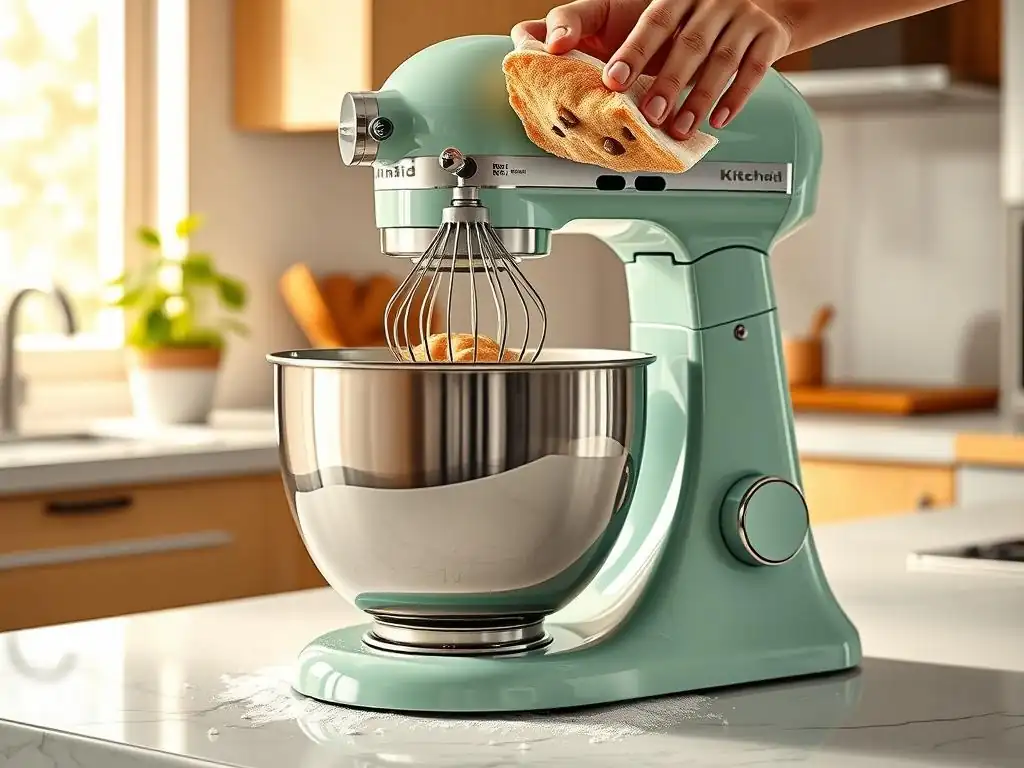
Let's be honest: cleanup is part of baking. For beginners, minimizing cleanup hassle can make the difference between baking regularly and letting the mixer gather dust. Look for mixers with bowls and attachments that are dishwasher-safe, as this significantly simplifies the post-baking routine.
Consider the mixer's design. A tilt-head mixer generally allows easier access to the bowl for scraping and adding ingredients, but a bowl-lift model might be more stable for very heavy doughs. Smooth surfaces and minimal crevices on the mixer body make wiping it down easier. Check if the splash guard (if included) is easy to attach and remove for cleaning. A stand mixer for beginners should not add unnecessary steps to the cleaning process.
Price and Warranty: Protecting Your Investment
Stand mixers vary widely in price, from under $100 to well over $500. For beginners, a good starting point is often in the $100-$300 range, which offers a balance of performance and affordability. Decide on your budget beforehand, but remember that investing a little more upfront can sometimes mean getting a more durable mixer that performs better and lasts longer.
Check the warranty offered by the manufacturer. A longer warranty (e.g., 1 or 2 years for the entire unit, sometimes longer for the motor) provides peace of mind, especially for an appliance that undergoes significant strain. Understanding the warranty terms will protect your investment in your new best stand mixer beginners purchase.
Comparing the Top Stand Mixers: Side-by-Side Analysis
Choosing among the top contenders can be tough. Let's look at a side-by-side comparison focusing on aspects important for beginners, using the KitchenAid Artisan and the Hamilton Beach Electric Stand Mixer as prime examples of different price and feature points. This helps highlight the trade-offs and benefits of each type of stand mixer for beginners.
Understanding these differences allows a new baker to evaluate which mixer aligns best with their current needs, space constraints, and budget. While both are capable stand mixers for beginners, they cater to slightly different priorities.
KitchenAid Artisan vs. Hamilton Beach Electric Stand Mixer: A Detailed Comparison Chart
Here's a breakdown comparing key features relevant to a beginner baker:
- Motor Power (Approximate):
- KitchenAid Artisan: ~325 watts
- Hamilton Beach Electric: ~300 watts
- Bowl Capacity:
- KitchenAid Artisan: 5 quarts
- Hamilton Beach Electric: 4 or 4.5 quarts
- Speed Settings:
- KitchenAid Artisan: 10 speeds
- Hamilton Beach Electric: Typically 6 speeds + Pulse
- Construction:
- KitchenAid Artisan: Mostly Metal
- Hamilton Beach Electric: Mix of Plastic and Metal
- Design:
- KitchenAid Artisan: Tilt-Head
- Hamilton Beach Electric: Tilt-Head
- Standard Attachments:
- KitchenAid Artisan: Flat Beater, Wire Whisk, Dough Hook
- Hamilton Beach Electric: Flat Beater, Wire Whisk, Dough Hook
- Optional Attachments Compatibility:
- KitchenAid Artisan: Extensive range via power hub
- Hamilton Beach Electric: Limited to none
- Approximate Price Range:
- KitchenAid Artisan: ~$380 - $450 USD
- Hamilton Beach Electric: ~$100 - $150 USD
- Footprint/Size:
- KitchenAid Artisan: Larger, heavier
- Hamilton Beach Electric: Smaller, lighter
Power and Performance Comparison
While the wattage numbers (325W vs 300W) might seem similar, the KitchenAid Artisan's motor and gearing are generally more robust, allowing it to handle denser doughs or larger volumes within its 5-quart capacity more effectively and with less strain than the Hamilton Beach. The Hamilton Beach's 300W motor is perfectly adequate for standard cookie doughs, cake batters, and whipping in its smaller 4-4.5 quart bowl.
For a beginner primarily making cakes, cookies, and occasional lighter doughs in standard batches, both offer sufficient power. However, if tackling multiple loaves of dense bread or double batches of stiff cookie dough is a goal, the KitchenAid provides a performance edge that justifies its higher price for some.
Feature-by-Feature Breakdown
The KitchenAid Artisan offers more precise speed control with its 10 speeds compared to the Hamilton Beach's typical 6 speeds plus pulse. This granular control can be beneficial as a beginner's skills advance. KitchenAid's extensive ecosystem of optional attachments via its power hub is a major feature difference; the Hamilton Beach generally does not have this capability.
Both feature a tilt-head design, which is user-friendly for beginners as it allows easy access to the bowl. Both come with the essential three attachments. The material construction is a key difference, with the KitchenAid's predominantly metal build contributing to its weight, stability, and perceived durability, while the Hamilton Beach uses more plastic to keep costs and weight down.
Price and Value Analysis
The Hamilton Beach Electric Stand Mixer offers exceptional value for its price point, providing the fundamental functions of a stand mixer at a very accessible cost. It's an excellent way for beginners to get started without a large financial outlay. Its compact size also adds value for those with limited space.
The KitchenAid Artisan is a significantly larger investment, but its value lies in its renowned durability, potentially longer lifespan, consistent powerful performance, wider range of speeds, and the ability to expand its functionality with numerous attachments. For a beginner who is serious about baking and sees themselves using a stand mixer frequently for many years, the KitchenAid's value is in its quality and versatility over time.
Beginner Baking Recipes to Test Your New Stand Mixer
Once you've chosen your best stand mixer beginners model, it's time to put it to work! Starting with simple, classic recipes is a great way to get comfortable with your new appliance and build confidence. These recipes utilize the basic attachments and help you understand how different speeds affect your ingredients.
Don't be afraid to experiment and learn by doing. Pay attention to how the mixer handles the different stages of each recipe – creaming, mixing, and kneading. This hands-on experience is invaluable for mastering your new stand mixer for beginners.
This is a perfect recipe to start with your new stand mixer. You'll primarily use the flat beater attachment.
- Creaming: Use a medium speed (like 4-6) to cream together softened butter and sugar until light and fluffy, typically for 2-3 minutes. Watch how the mixture changes texture.
- Adding Wet Ingredients: Incorporate eggs and vanilla extract on a lower speed (like 2-3), mixing just until combined.
- Adding Dry Ingredients: Switch to the lowest speed (Speed 1 or Stir) to gradually add flour, baking soda, and salt. Mix only until the dry ingredients are just incorporated to avoid overmixing.
- Adding Chocolate Chips: Use the lowest speed or mix by hand to stir in the chocolate chips.
This recipe teaches you how to cream effectively, mix gently, and avoid overworking the dough – all fundamental skills using your beginner stand mixer.
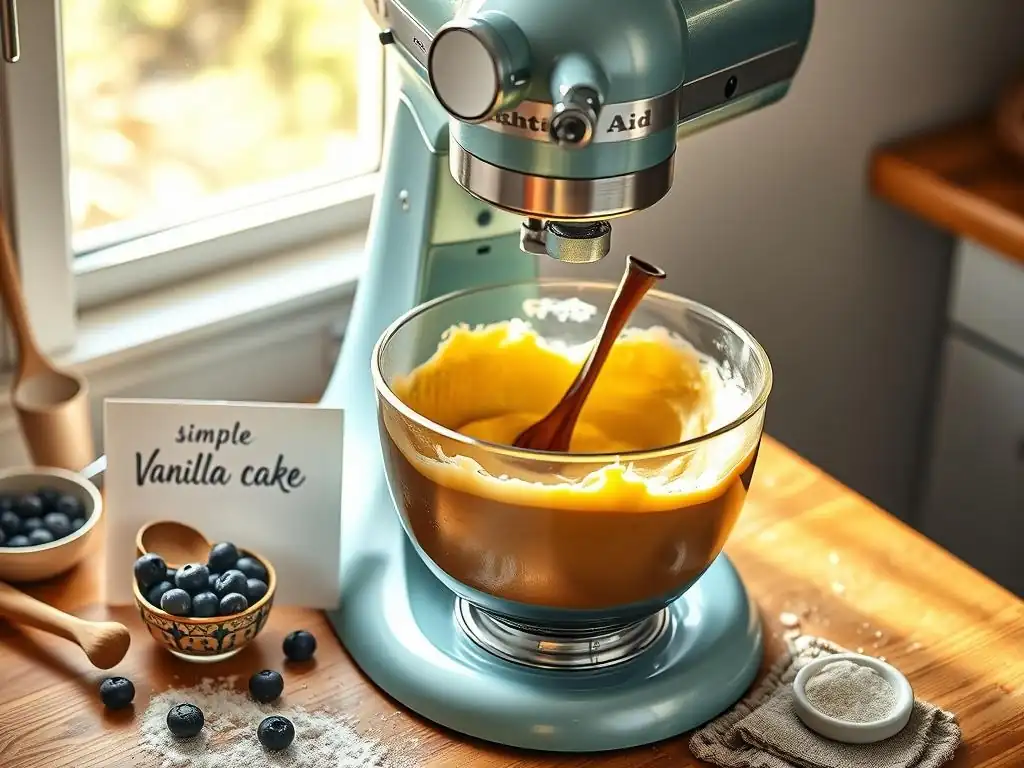
Easy Vanilla Cake: A Perfect Starting Point for Cake Baking
Making a simple vanilla cake is another excellent way to use your stand mixer, primarily with the flat beater and sometimes the whisk.
- Creaming: Like cookies, you'll start by creaming butter and sugar on a medium speed (4-6) until pale and fluffy.
- Adding Eggs: Add eggs one at a time on a medium speed, mixing well after each addition.
- Alternating Dry and Wet: This is where you'll practice alternating additions. On a low speed (1-2), add a portion of the dry ingredients (flour, baking powder, salt) followed by a portion of the wet ingredients (milk, vanilla), starting and ending with the dry. Mix only until just combined after each addition.
- Final Mix: Increase speed briefly to medium (3-4) for about 30 seconds to ensure everything is fully incorporated, but do not overmix.
This process highlights the importance of proper ingredient incorporation and avoiding overmixing, which can lead to tough cakes.
Basic Bread Dough: Learning the Fundamentals of Bread Making
If your stand mixer came with a dough hook, making a simple white bread or pizza dough is a great way to test its kneading capabilities. This recipe requires the dough hook and often a higher speed than cakes or cookies.
- Combining Ingredients: On a low speed (1-2), combine warm water, yeast, a pinch of sugar, and some flour. Let it sit briefly if required by the recipe.
- Adding Remaining Ingredients: Gradually add the remaining flour, salt, and any other ingredients (like oil or more sugar) on a low speed. Once the dough starts to come together, increase the speed.
- Kneading: Increase the speed to medium (typically 2-4, check your mixer's manual for recommended kneading speed) and let the mixer knead the dough for the time specified in the recipe, often 5-8 minutes. Watch the dough wrap around the hook and pull away from the sides of the bowl.
- Checking for Gluten Development: Stop the mixer and perform the windowpane test (gently stretch a small piece of dough – if you can stretch it thin enough to see light through it without tearing, gluten is developed).
This recipe demonstrates the power of the dough hook and teaches you about proper kneading and gluten development using your stand mixer for beginners.
Tips and Tricks for Using Your Stand Mixer Effectively
Getting the most out of your best stand mixer beginners model involves more than just turning it on. A few simple tips and techniques can significantly improve your results and make your baking experience smoother and more enjoyable. Mastering these basics will help you leverage the full potential of your new appliance.
Think of your stand mixer as a partner in the kitchen. Understanding its nuances and how to use it correctly will lead to consistent success and fewer baking frustrations. These tips are especially helpful when you're just starting out with a stand mixer for beginners.
Proper Attachment Usage: Avoiding Common Mistakes
Using the correct attachment for the task is fundamental. The flat beater is for general mixing, creaming, and combining ingredients; do not use it for kneading yeast dough. The wire whisk is strictly for whipping air into liquids like egg whites or cream; do not use it for heavy batters or doughs, as this can damage the whisk wires. The dough hook is only for kneading yeast doughs; do not use it for cake batter or cookie dough.
Another common mistake is not scraping down the sides and bottom of the bowl periodically. Ingredients can stick to the bowl, especially dry ones or butter, and not get fully incorporated. Stop the mixer every minute or two when mixing batters or doughs and use a rubber spatula to scrape everything back into the center of the bowl before continuing. This ensures even mixing and prevents lumps or unmixed pockets.
Speed Control Mastery: Achieving the Right Consistency
Understanding when to use low, medium, and high speeds is crucial. Low speeds (1-2) are for gentle stirring, combining dry and wet ingredients, and slowly adding flour or liquids to prevent splashing. Using too high a speed when adding flour, for instance, can overdevelop gluten, resulting in tough baked goods.
Medium speeds (3-6) are ideal for creaming butter and sugar, mixing cake and cookie batters, and initial kneading of doughs. High speeds (7+) should be reserved for whipping air into ingredients like egg whites, heavy cream, or some frostings. Using high speed for heavy doughs can strain the motor and cause the mixer to wobble excessively. Always start mixing on a low speed and gradually increase it as needed by the recipe. Consult your mixer's manual for recommended speeds for specific tasks.
Cleaning and Maintenance: Keeping Your Mixer in Top Condition
Regular cleaning is essential for keeping your stand mixer for beginners in good working order. Always unplug the mixer before cleaning. Wash the bowl and attachments immediately after use; letting ingredients dry on them makes cleaning much harder. Check your manual to see which parts are dishwasher-safe. Stainless steel bowls and most standard attachments (flat beater, dough hook) are often dishwasher-safe, but wire whisks might require hand washing to maintain their shape.
Wipe down the body of the mixer with a damp cloth (not wet) and mild soap to remove splatters. Pay attention to the area around the attachment hub and the speed control. Ensure the mixer is completely dry before storing it. Periodically check the beater-to-bowl clearance (how close the attachment comes to the bottom of the bowl) and adjust if necessary according to your manual – this ensures thorough mixing. Proper maintenance ensures your best stand mixer beginners investment lasts for many years of happy baking.
Conclusion: Choosing the Right Stand Mixer for Your Baking Journey
Embarking on your baking adventure with a stand mixer can significantly elevate your experience, transforming challenging tasks into simple steps. The best stand mixer beginners can choose is one that fits their budget, kitchen space, and initial baking goals. Whether it's the durable and versatile KitchenAid Artisan, the compact and budget-friendly Hamilton Beach Electric Stand Mixer, or the powerful Cuisinart SM-50, each offers unique benefits for the novice baker.
Ultimately, the right choice is the one that empowers you to bake more confidently and more often. A good stand mixer for beginners removes physical barriers and helps ensure consistent, delicious results, encouraging you to try new recipes and build your skills. Invest wisely, take the time to learn how to use your new appliance effectively, and get ready to enjoy the sweet rewards of your baking efforts!
Frequently Asked Questions
What makes a stand mixer ideal for beginner bakers?
A stand mixer for beginners should be easy to use, reliable, and affordable. It needs to have simple controls and be durable enough for frequent use without breaking the bank.
What are some key features to look for in a stand mixer for beginners?
Look for a mixer with multiple speed settings, a decent bowl size (4-5 quarts is often sufficient), and sturdy attachments like a whisk, paddle, and dough hook.
How much should a beginner baker expect to spend on a good stand mixer?
While high-end models can be expensive, beginners can find excellent options in the $100-$300 range. This price point offers a good balance between quality and affordability.
Are there specific stand mixer brands that are recommended for beginners?
Certain brands are known for their reliability and beginner-friendly features. Look into brands like KitchenAid (Artisan Mini), Hamilton Beach, and Cuisinart for models suitable for new bakers.
What are the most common mistakes beginner bakers make when using a stand mixer?
Overmixing is a frequent issue, so pay attention to the recipe instructions. Also, ensure the bowl and attachments are properly secured before starting to avoid messes and potential damage.
Final Reflection: The Joy of Baking, One Stand Mixer at a Time
The perfect stand mixer can be a game-changer for beginner bakers, transforming a potentially daunting hobby into a genuinely enjoyable experience. Finding the right tool unlocks a world of culinary creativity, empowering aspiring bakers to confidently tackle new recipes and discover their own unique baking style. This isn't just about choosing an appliance; it's about investing in a passion.
The impact of readily available, high-quality kitchen equipment on the rise of home baking cannot be overstated. We've seen a resurgence in home baking, fueled in part by the accessibility of information and tools like the stand mixer. It's become a communal activity, a source of comfort, and a way to connect with loved ones. Baking is at once child's play and adult joy. And love, of course.
- Alma Flor Ada. This quote perfectly captures the essence of what a good stand mixer can help achieve: transforming a simple act into something deeply meaningful.
Now, it's your turn. Don't let the fear of complexity hold you back. Consider the advice shared in this article, choose a stand mixer that suits your needs and budget, and embark on your baking journey. Embrace the flour dust, the sweet aromas, and the satisfaction of creating something delicious with your own hands. The world of baking awaits – go forth and create!
Unleash Your Inner Baker: Get Mixing!
Thanks for taking the time to explore the world of stand mixers with us! We hope you've found the perfect tool to kickstart your baking journey. Now it's time to put that knowledge into action.
- Choose your champion: Head back up to the article and select the stand mixer that best fits your needs and budget. Imagine all the delicious treats you'll be creating!
- Share the baking love: Tell your friends and family about your newfound baking expertise – and maybe even bake them something yummy using your new stand mixer!
- Explore new recipes: Try out a new recipe you’ve been eyeing – or even challenge yourself with a complex cake that seemed daunting before. Let’s see what you create!
What incredible baked good will you make first with your new stand mixer? Let us know in the comments below!