
Building Your Home Artisan Bakery: Key Equipment Investments

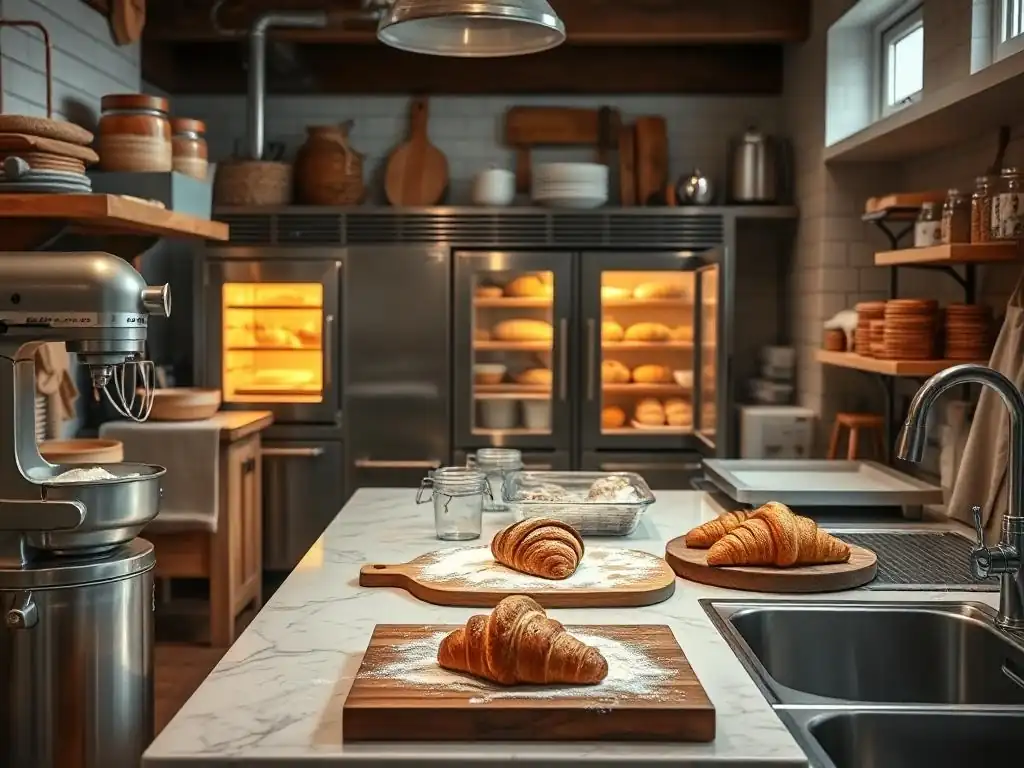
Welcome to BakeWithEase!
Ever dreamed of filling your home with the irresistible aroma of freshly baked artisanal breads and pastries? This is your starting point. In this guide, we'll unlock the secrets to creating your own home artisan bakery by revealing the key equipment investments that will elevate your baking game. Curious which essential tools will transform your kitchen into a haven for delicious creations? Let's explore!
Welcome to the journey of transforming your kitchen into a personal haven for crafting exquisite bread. Building a home artisan bakery is a rewarding endeavor that requires not just passion and skill, but also the right tools. This guide will walk you through the essential equipment investments needed to elevate your bread-making from hobbyist to artisan. Whether you're just starting out or looking to upgrade your existing setup, understanding the purpose and value of each piece of equipment is crucial for consistently achieving professional-quality results right from your own home.
- Home Artisan Bakery Equipment Guide: Essential Tools for Success
- The Heart of Your Bakery: Investing in a Quality Stand Mixer
- Achieving Bread Perfection: The Importance of Baking Stones and Dutch Ovens
- Precision is Key: Thermometers and Scales for Consistent Results
- Shaping and Proofing Essentials: Baskets and Dough Scrapers
- Advanced Equipment: Expanding Your Baking Capabilities
- Maintaining Your Equipment: Ensuring Longevity
- Conclusion: Investing in Quality for Baking Success
-
Frequently Asked Questions
- What are the essential pieces of equipment for starting a home artisan bakery?
- How important is a stand mixer compared to a hand mixer for artisan baking?
- What type of oven is best for achieving artisan-style bakes at home?
- Are there specific types of baking sheets that are better suited for artisan baking?
- Where can I find affordable, yet reliable, equipment for my home artisan bakery?
- Final Reflection: The Sweet Rewards of Artisan Baking at Home
- Unleash Your Inner Baker: Start Building Your Dream Bakery Today!
Home Artisan Bakery Equipment Guide: Essential Tools for Success
Embarking on the path of artisan bread making at home requires a thoughtful approach to selecting your tools. Think of this as building the foundation for your creative process. The right equipment won't magically make you a master baker, but it will certainly make the process smoother, more efficient, and significantly improve the quality of your final product. This comprehensive home artisan bakery equipment guide covers everything from fundamental mixing tools to specialized baking surfaces and precision instruments, ensuring you have the knowledge to make informed decisions.
Setting Up Your Home Bakery: A Baker's Equipment Checklist
Getting started with your own home artisan bakery can feel overwhelming with the sheer variety of tools available. However, a focused checklist helps prioritize the most impactful items. At a minimum, every aspiring artisan baker needs reliable mixing bowls, sturdy spatulas, a good quality kitchen scale, a digital thermometer, a dough scraper, and a sharp lame or razor for scoring. These basic tools are the workhorses of the bakery, used in nearly every step from measuring ingredients to shaping and preparing loaves for the oven.
Beyond the absolute basics, consider your goals. If you're serious about sourdough, banneton baskets are essential for proofing. A quality stand mixer can save significant time and effort on kneading, especially for larger or stiffer doughs. Baking stones or Dutch ovens are critical for achieving that coveted crust and oven spring. Building your home artisan bakery setup is a process; start with the essentials and gradually add more specialized equipment as your skills and ambitions grow, always referring back to this home artisan bakery equipment guide.
The Heart of Your Bakery: Investing in a Quality Stand Mixer
For many home bakers, particularly those dealing with large batches or stiff doughs, a stand mixer is an invaluable piece of equipment. While hand kneading is a meditative and effective technique, a stand mixer can handle the strenuous work of developing gluten structures efficiently and consistently. Investing in a robust model means less physical strain and more time focusing on other crucial aspects of the baking process, such as fermentation and shaping.
A high-quality stand mixer provides consistent power and speed settings, allowing for precise control over the kneading process. This consistency is key to developing strong gluten networks, which are essential for the structure and texture of artisan bread. Furthermore, many stand mixers come with various attachments, such as dough hooks, whisks, and paddle attachments, making them versatile tools not just for bread but for a wide range of baking tasks, from whipping meringue to mixing cake batter. This versatility makes a stand mixer a central and often indispensable component of any serious home artisan bakery equipment guide.
Why a Stand Mixer is Crucial for Artisan Bread Making
Artisan bread making often involves doughs with high hydration levels or those requiring extended kneading times to develop elasticity and strength. Manual kneading can be physically demanding and time-consuming, sometimes requiring 10-15 minutes of continuous work for a single loaf. A stand mixer equipped with a dough hook can typically achieve the same level of gluten development in significantly less time, often within 5-8 minutes, depending on the dough type and mixer power. This efficiency is particularly beneficial for bakers who make multiple loaves or bake frequently.
Moreover, a stand mixer ensures uniform kneading throughout the dough. Unlike hand kneading, where consistency can vary depending on technique and fatigue, the mechanical action of the dough hook provides an even and thorough development of gluten. This leads to a more consistent crumb structure and improved oven spring in the final loaf. For anyone serious about optimizing their process and achieving repeatable results in their home artisan bakery, a stand mixer is often seen as a non-negotiable investment.
Stand Mixer Recommendation: KitchenAid Artisan vs. Ankarsrum Assistent Original
When considering a stand mixer for your home artisan bakery, two popular and highly-regarded options often come up: the KitchenAid Artisan and the Ankarsrum Assistent Original. The KitchenAid Artisan is a widely recognized and versatile mixer, known for its planetary mixing action where the head orbits the bowl while the attachment spins. It's excellent for a variety of tasks, including mixing and kneading doughs up to a certain capacity, typically handling dough for 1-2 standard loaves (around 800-1000g of flour total). Its wide range of attachments also makes it a multi-purpose kitchen appliance.
The Ankarsrum Assistent Original, on the other hand, uses a different mixing mechanism where the bowl rotates while the dough hook (or roller) remains relatively stationary, mimicking hand kneading. It is particularly renowned for its ability to handle very large quantities of dough, easily managing dough made with 1.5 kg or even 2 kg of flour, making it ideal for bakers who produce multiple loaves at once or work with very stiff doughs.
While it has a steeper price point and a different aesthetic compared to the KitchenAid, its robust motor and unique design make it a favorite among dedicated bread bakers focused on high volume or heavy-duty tasks within their home artisan bakery.
Achieving Bread Perfection: The Importance of Baking Stones and Dutch Ovens
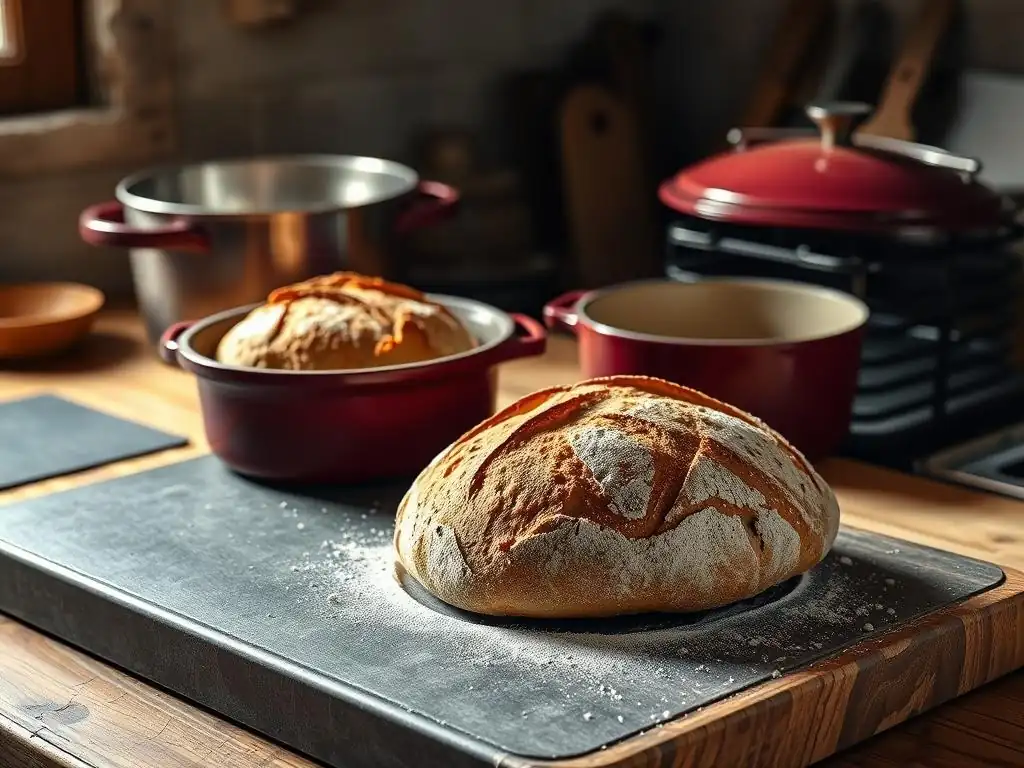
The final transformation of dough into a perfectly baked loaf happens in the oven, and the right baking surface plays a critical role. For artisan bread, achieving a crispy crust and a well-risen interior often depends on providing intense, consistent heat from below and managing steam effectively. This is where baking stones and Dutch ovens become indispensable tools in a home artisan bakery equipment guide. They help recreate some of the conditions found in professional deck ovens, which typically have heavy thermal mass and the ability to inject steam.
Using a preheated baking stone or Dutch oven ensures that the dough receives a powerful burst of heat as soon as it enters the oven. This initial heat is crucial for "oven spring," the rapid expansion of the dough before the crust sets. Without sufficient heat transfer, the loaf might spread out rather than rise upwards. Both tools contribute significantly to this process, albeit through slightly different mechanisms, ultimately leading to superior crust development and a more open crumb structure, hallmarks of true artisan bread.
Baking Stone Benefits: Even Heat Distribution for Crusty Bread
A baking stone, typically made of ceramic, cordierite, or even cast iron, serves as a thermal mass in your oven. When preheated properly (often for an hour or more at a high temperature like 450-500°F or 230-260°C), it stores a significant amount of heat. When the dough is placed directly onto the hot stone, this stored heat is transferred rapidly and evenly to the bottom of the loaf. This intense heat transfer from below is essential for creating a strong, crispy bottom crust and contributing to maximum oven spring.
Beyond the initial heat boost, a baking stone maintains a consistent temperature throughout the baking process. Unlike a standard metal baking sheet which can fluctuate in temperature, the stone's thermal mass helps stabilize the oven environment around the bread.
This consistent heat ensures even baking and contributes to a more uniform crust development across the entire surface of the loaf. For bakers using a stone, creating steam within the oven (often by placing a tray of hot water below the stone) is the complementary technique to achieve that desirable chewy interior and thin, crackly crust, making it a key part of the home artisan bakery equipment guide.
Dutch Oven Mastery: Creating Steam for a Perfect Loaf
The Dutch oven method is widely popular among home artisan bakers, particularly for sourdough and other high-hydration doughs. A heavy, lidded pot, usually made of cast iron, serves a dual purpose. First, like a baking stone, when preheated, its heavy mass provides intense heat from all sides (bottom and walls) to promote excellent oven spring. Second, and perhaps more importantly, the lid traps the moisture released by the dough as it bakes. This trapped moisture turns into steam, creating a humid micro-environment around the loaf during the critical initial phase of baking.
Steam is vital for artisan bread because it keeps the surface of the dough pliable for longer, allowing the loaf to expand fully before the crust hardens. This results in significantly better oven spring and a thinner, crispier crust.
After the initial 20-30 minutes of baking with the lid on, removing the lid allows the steam to escape, and the dry heat of the oven then works to brown and crisp the crust to perfection. The Dutch oven method simplifies steam management significantly compared to trying to create sufficient steam in an open oven, making it a highly recommended tool in any home artisan bakery equipment guide.
Dutch Oven Recommendations: Le Creuset vs. Lodge - A Head-to-Head Comparison
Choosing a Dutch oven for your home artisan bakery often comes down to balancing quality, performance, and budget. Two prominent names in cast iron cookware are Le Creuset and Lodge. Le Creuset is renowned for its high-quality enameled cast iron Dutch ovens. They are beautiful, incredibly durable, offer excellent heat retention and distribution, and the enamel coating makes them relatively easy to clean and prevents rust. However, they come with a premium price tag, often ranging from $250 to $400+ depending on size.
Lodge offers a more budget-friendly option with their pre-seasoned cast iron Dutch ovens. While not enameled (though they do offer some enameled lines), their standard cast iron pots are workhorses. They provide comparable heat retention and distribution to Le Creuset and are extremely durable. They require proper seasoning and care to prevent rust, but they deliver exceptional baking results for a fraction of the cost, typically ranging from $50 to $100. Both brands are excellent choices for a home artisan bakery, with the decision often hinging on budget and preference for enameled vs. traditional cast iron care.
Precision is Key: Thermometers and Scales for Consistent Results
Baking, perhaps more than any other culinary art form, relies heavily on precision. Unlike cooking, where adjustments can often be made on the fly based on taste and appearance, baking is a chemical process where ingredient ratios and temperatures are critical. Using accurate measuring tools is fundamental to achieving repeatable success in your home artisan bakery. Eyeballing ingredients or relying on volume measurements (like cups) can lead to significant variations that impact dough consistency, fermentation rates, and ultimately, the final quality of your bread.
Investing in reliable digital scales and thermometers removes much of the guesswork from the baking process. Scales ensure you're using the exact weight of flour, water, salt, and yeast specified in a recipe, which is essential for controlling hydration and flavor development. Thermometers allow you to monitor the temperature of your dough and your oven, providing critical information for fermentation timing and ensuring proper baking conditions. These tools are non-negotiable for anyone serious about consistency in their home artisan bakery equipment guide.
The Importance of Digital Kitchen Scales for Accurate Measurements
In artisan bread making, recipes are almost always provided by weight (grams or ounces) rather than volume (cups or tablespoons). This is because flour, especially, can vary significantly in weight depending on how it's scooped and its moisture content. A cup of all-purpose flour can weigh anywhere from 120g to 140g or more.
Using a digital kitchen scale ensures you're using the precise amount of each ingredient every time you bake. For example, a recipe calling for 500g of flour and 350g of water will always have a consistent 70% hydration level when measured by weight, leading to predictable dough behavior.
Accuracy in measuring small amounts, like salt and yeast, is also crucial. Even a slight variation in salt can drastically affect fermentation speed and flavor, while too much or too little yeast/starter impacts rise. A digital scale, ideally one accurate to at least 1 gram, allows for these precise measurements, eliminating a major variable in the baking process. For a consistent home artisan bakery, a reliable digital scale is perhaps the single most important measuring tool.
Achieving Perfect Dough Temperature: Thermometer Recommendations
Dough temperature is a critical, yet often overlooked, factor in bread making, particularly when working with yeast or sourdough starters. The activity of these microorganisms is highly dependent on temperature. A dough that is too cold will ferment slowly, while one that is too warm can ferment too quickly, leading to issues with flavor development and structure. Many recipes specify a target dough temperature after mixing (often referred to as the "desired dough temperature" or DDT), typically ranging from 75°F to 80°F (24°C to 27°C) for standard yeasted doughs.
Monitoring dough temperature throughout bulk fermentation and proofing is also beneficial. A simple digital instant-read thermometer is perfect for this task. Insert the probe into the center of the dough ball to get an accurate reading.
Using a thermometer allows you to adjust fermentation times or ambient temperatures to keep your dough on schedule, ensuring consistent results. Some advanced bakers even use infrared thermometers to check the surface temperature of their baking stone or oven walls. For repeatable success in your home artisan bakery, a good thermometer is an essential tool recommended in any comprehensive home artisan bakery equipment guide.
Shaping and Proofing Essentials: Baskets and Dough Scrapers
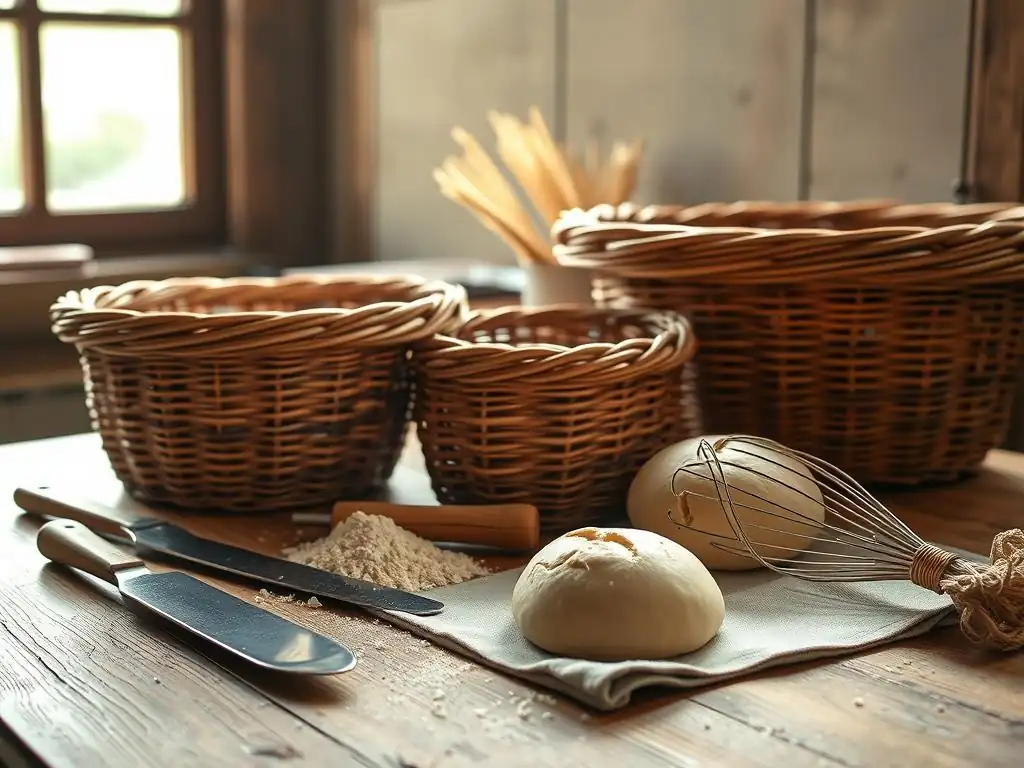
Once your dough has successfully completed its bulk fermentation, it's time to shape it and prepare it for its final rise, known as proofing. The tools you use during this stage significantly impact the final form and structure of your loaf. Proper shaping builds tension and structure, while controlled proofing allows the dough to develop its final volume and airy texture before baking. Two simple, yet highly effective, tools for this stage are banneton baskets and dough scrapers.
These tools, while not as high-tech as stand mixers or as dramatic as Dutch ovens, are fundamental to the artisan process. They allow the baker to handle the often-sticky dough effectively, shape it with precision, and provide the ideal environment for the final rise. Incorporating these into your process, guided by a good home artisan bakery equipment guide, will markedly improve the aesthetics and texture of your finished loaves.
Banneton Baskets: The Secret to Beautifully Shaped Loaves
Banneton baskets, also known as proofing baskets, are traditionally made from rattan or coiled cane, though plastic versions are also available. They are used for the final proofing of shaped dough. After shaping, the dough is placed seam-side up (or seam-side down depending on the desired final look and baking method) into a floured banneton. As the dough rises, the basket provides support, helping the loaf maintain its shape and preventing it from spreading outwards.
The spiral pattern of the basket leaves a distinctive, attractive imprint on the surface of the loaf, which becomes the top crust after baking (if baked seam-side down in a Dutch oven or on a stone). More importantly, the porous material of the banneton helps wick away a small amount of surface moisture from the dough. This creates a slight skin, which makes scoring easier and contributes to a crispier crust. Using banneton baskets is a classic technique for achieving the characteristic look and improved crust of artisan loaves in your home artisan bakery.
Dough Scrapers: A Baker's Best Friend
A dough scraper, also called a bench scraper or bench knife, is a simple flat tool, typically made of metal or plastic, with a straight edge and a handle. Despite its simplicity, it is incredibly versatile and useful throughout the bread-making process. During mixing and kneading, a bench scraper is invaluable for gathering sticky dough from the counter and cleaning up surfaces. It allows you to handle wet doughs without them adhering completely to your hands.
During shaping, a bench scraper is used to divide dough into portions and to maneuver and shape the dough on the work surface. The straight edge is perfect for creating tension in the dough by pulling it towards you or pushing it away. A flexible plastic bowl scraper is also essential for cleanly removing dough from mixing bowls. Together, these scrapers are fundamental tools that make handling dough much more manageable, especially for beginners, and are a must-have in any home artisan bakery equipment guide.
Advanced Equipment: Expanding Your Baking Capabilities
As you gain experience and confidence in your home artisan bakery, you might find yourself looking to expand your capabilities and refine your process further. While the core equipment discussed so far is sufficient for producing excellent artisan bread, certain specialized tools can offer greater control over specific aspects of baking or improve the presentation of your final product. These items are not strictly necessary when you're starting out, but they can be valuable additions for the dedicated home baker looking to take their craft to the next level.
Adding advanced equipment is often driven by a desire for more consistency, efficiency, or the ability to tackle more complex techniques. For instance, precise control over fermentation conditions can significantly improve the outcome of long-fermented doughs. Similarly, achieving uniform slices can elevate the presentation of your beautiful loaves. Considering these tools is a natural progression for anyone deeply invested in perfecting their home artisan bakery.
Proving Cabinets: Controlling the Fermentation Process (Optional)
Controlling the temperature and humidity during fermentation (both bulk and final proofing) is crucial for consistent bread baking, especially with sourdough. Environmental factors like ambient room temperature can cause significant variations in fermentation time and dough development. A proving cabinet or proofing box provides a stable, controlled environment for dough to rise. These cabinets typically allow you to set a specific temperature, often ranging from 70°F to 95°F (21°C to 35°C), and maintain high humidity levels.
Using a proving cabinet ensures that your dough ferments at the optimal rate regardless of the weather or temperature in your kitchen. This leads to more predictable rise times and better flavor development, particularly important for long, slow ferments. While not essential for every home artisan bakery, it's a valuable tool for those who bake frequently, experiment with different fermentation schedules, or live in areas with fluctuating temperatures, offering a level of control that's hard to achieve otherwise.
Bread Slicers: Achieving Uniform Slices for Presentation
After all the effort put into mixing, kneading, shaping, and baking a perfect artisan loaf, the way you slice it can impact the eating experience. While a good bread knife is sufficient for slicing, achieving perfectly uniform slices can be challenging, especially with rustic loaves that have a hard crust. A bread slicer provides a stable jig or guide that helps you cut even slices every time.
Bread slicers range from simple wooden guides that you cut through with a knife to more complex electric slicing machines. For a home artisan bakery, a manual wooden or bamboo slicer is often sufficient. It provides slots that guide your knife, ensuring each slice is the same thickness. This not only makes for a more aesthetically pleasing presentation but also ensures consistency when serving or toasting slices. While a luxury rather than a necessity, a bread slicer is a nice addition for those who value presentation and uniformity.
Maintaining Your Equipment: Ensuring Longevity
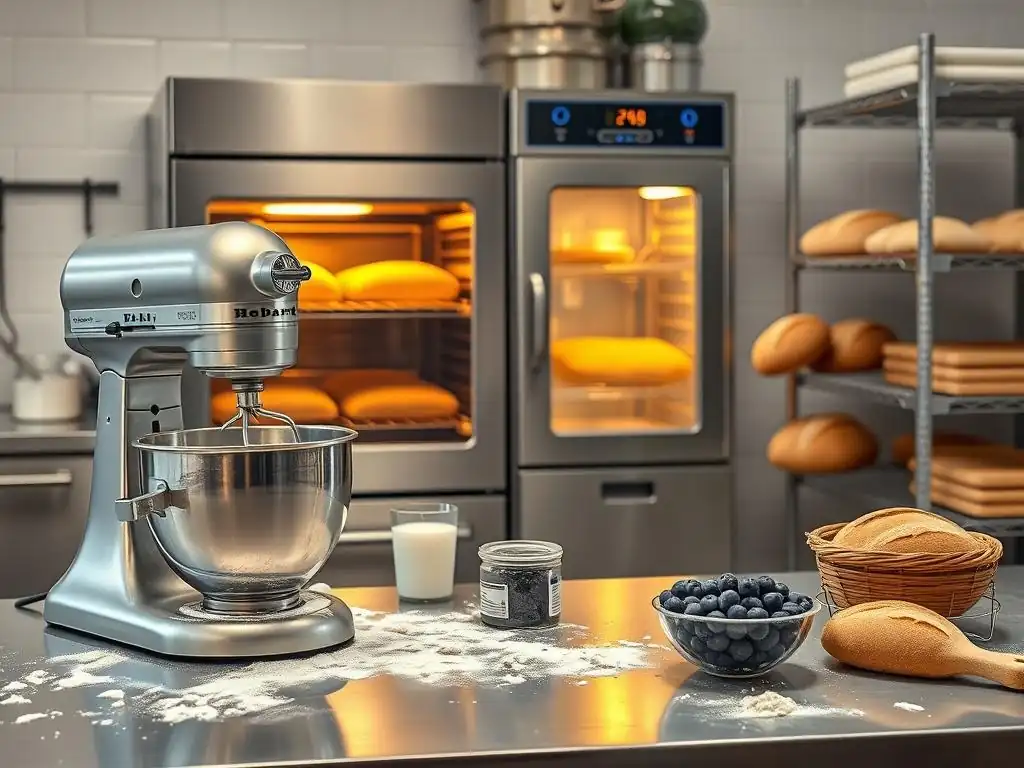
Investing in quality equipment for your home artisan bakery is a significant step, and proper maintenance is key to protecting that investment and ensuring your tools perform reliably for years to come. Cleanliness is paramount in any food preparation environment, and baking equipment is no exception. Dough and flour can get into nooks and crannies, and neglecting cleaning can lead to residue buildup, affect performance, and even harbor unwanted bacteria.
Regular cleaning and appropriate care for each type of material – from cast iron and stainless steel to wood and plastic – will prevent rust, corrosion, and damage. Establishing a routine for cleaning after each use and performing occasional deeper maintenance will extend the lifespan of your tools, ensuring they are always ready for your next baking project. This final section of our home artisan bakery equipment guide focuses on keeping your gear in top shape.
Cleaning and Care Tips for Your Artisan Bakery Equipment
Different tools in your home artisan bakery require specific care. For cast iron Dutch ovens and baking stones, avoid soap as it can strip away seasoning or penetrate porous surfaces; instead, scrape off residue and wipe clean with a damp cloth, then dry thoroughly (for cast iron, re-season if needed). Stainless steel stand mixer bowls and attachments can typically be washed with soap and water, but check manufacturer instructions. For wooden banneton baskets, simply brush out excess flour after use and let them air dry completely to prevent mold. Never soak wooden tools.
Digital scales and thermometers should be wiped clean with a damp cloth, avoiding getting moisture into the electronic components. Store equipment properly to prevent damage – stack carefully, protect sharp edges like lames, and keep items like bannetons in a dry, well-ventilated area. Following these simple cleaning and care tips will ensure your home artisan bakery equipment guide remains a list of tools that are always ready to help you bake your best bread.
Conclusion: Investing in Quality for Baking Success
Building a home artisan bakery is an exciting and fulfilling journey. While skill and practice are the most important ingredients, having the right equipment makes the process smoother, more enjoyable, and significantly improves the quality and consistency of your results. From essential tools like scales and scrapers to key investments like stand mixers and Dutch ovens, each piece plays a role in transforming simple ingredients into beautiful, delicious artisan bread.
By investing in quality equipment and understanding how to use and maintain it, you are setting yourself up for baking success. This home artisan bakery equipment guide provides a roadmap for selecting the tools that will best support your baking ambitions. Remember to start with the essentials and gradually add more specialized items as your needs evolve. Happy baking!
Frequently Asked Questions
What are the essential pieces of equipment for starting a home artisan bakery?
The essential equipment includes a reliable oven, a stand mixer (or sturdy hand mixer), good quality baking sheets, and accurate measuring tools like scales and cups. These form the foundation for most artisan recipes.
How important is a stand mixer compared to a hand mixer for artisan baking?
While a hand mixer can work, a stand mixer is highly recommended for artisan baking. Its power handles larger dough volumes and allows for hands-free kneading, crucial for developing gluten in bread doughs.
What type of oven is best for achieving artisan-style bakes at home?
Ideally, an oven that maintains a consistent temperature is best. Many bakers appreciate ovens with convection settings for even browning and enhanced crust development. A steam injection feature is also useful for artisan bread.
Are there specific types of baking sheets that are better suited for artisan baking?
Yes, heavy-gauge baking sheets are preferred. They distribute heat evenly, preventing hot spots and ensuring consistent baking. Parchment paper is also essential for preventing sticking and easy cleanup.
Where can I find affordable, yet reliable, equipment for my home artisan bakery?
Look for sales at restaurant supply stores, check online marketplaces for used equipment in good condition, and compare prices across different retailers. Start with the essentials and gradually upgrade as needed.
Final Reflection: The Sweet Rewards of Artisan Baking at Home
Building your dream home artisan bakery isn't just about acquiring equipment; it's about cultivating a passion and sharing the fruits of your labor. The journey, as detailed in this guide, requires careful consideration of essential tools, from the humble stand mixer to the crucial proofing baskets. Investing wisely in these key pieces of equipment is the foundation upon which your baking success is built.
The impact of home baking, particularly the artisan variety, extends far beyond the delicious aroma filling your kitchen. It's a connection to a richer, slower way of life, a return to handcrafted quality in a world of mass production. It's about sharing the joy of creation with loved ones and fostering a sense of community through the simple act of gifting homemade bread or pastries. Baking is at once child’s play and adult joy. And love, of course.
– This sentiment perfectly encapsulates the heart of home artisan baking, connecting us to something deeper than mere sustenance.
Now, it's your turn. Take the knowledge gained from this equipment guide and use it to build your dream baking space. Don't be afraid to start small, to experiment, and to learn from your mistakes. Embrace the process, savor the aromas, and most importantly, share the delicious results with those you love. The journey of building your home artisan bakery is a rewarding one, filled with the sweet taste of success and the enduring satisfaction of creating something beautiful, one loaf at a time.
Unleash Your Inner Baker: Start Building Your Dream Bakery Today!
Thanks for taking the time to explore the essential equipment for your home artisan bakery! We hope you now feel empowered and ready to take the next step towards baking delicious creations. Here's how to get started:
- Prioritize your top 3 must-have items: Based on your baking style and budget, create a shopping list featuring the most crucial equipment from the article. This focused approach will ensure you invest wisely.
- Source unique, handcrafted tools: Consider exploring local artisan shops or online marketplaces for unique baking tools – you might discover hidden gems that elevate your baking experience!
- Share your baking journey: Join our BakeWithEase community (on [mention platform if applicable, otherwise remove this bullet point]) and share your progress and any unique equipment discoveries! We love to see what our readers are creating.
Ready to transform your kitchen into a haven of delicious aromas? What's the first piece of equipment you're excited to acquire for your home bakery?