
Say Goodbye to Uneven Bakes: Ovens Praised for Consistent Heating


Welcome to BakeWithEase, your kitchen companion for baking brilliance! Tired of uneven bakes and unpredictable results? Then you've come to the right place. In this guide, we dive deep into the world of ovens, spotlighting models renowned for their exceptional consistent oven heating, a crucial factor for achieving perfectly golden pastries, evenly risen cakes, and crusty, delicious breads. Discover which ovens consistently deliver the heat you need, and finally say goodbye to baking frustrations. Ready to unlock the secret to reliably perfect baked goods? Let's get started!
- Consistent Oven Heating Problems: A Baker's Nightmare
- Top Ovens for Consistent Baking: Our Recommendations for BakeWithEase Users
- Addressing Common Oven Heating Issues Beyond the Oven
- Choosing the Right Oven for Your Baking Needs: A Summary
- Frequently Asked Questions
- Final Reflection: The Pursuit of Perfect Baking—and a Perfectly Heated Oven
- Unleash Your Inner Baking Pro: Perfect Results Every Time!
Consistent Oven Heating Problems: A Baker's Nightmare
The Frustration of Inconsistent Oven Temperatures
Few things are more disheartening for a baker than pulling a batch of cookies or a cake from the oven only to find parts are burnt while others are undercooked. This classic sign of inconsistent oven heating is a persistent problem that plagues kitchens everywhere.
Imagine spending hours meticulously measuring ingredients, carefully mixing batters, and patiently waiting for your creation to bake, only for uneven temperatures to ruin your hard work. This issue isn't just cosmetic; it fundamentally affects the texture, rise, and overall success of baked goods, turning what should be a joyful activity into a source of significant frustration.
Tackling consistent oven heating problems is crucial for anyone aspiring to bake truly perfect items. Whether you're attempting delicate macarons that demand precise, stable heat or a robust sourdough loaf requiring even browning and a consistent crust, temperature fluctuations within the oven cavity can throw everything off. Many bakers report experiencing this frustration, sometimes even leading them to abandon challenging recipes altogether. Understanding the root causes and potential solutions is the first step toward achieving reliable results every single time you bake.
How Uneven Heating Impacts Your Baking Results
The direct consequence of uneven heating is, quite simply, unpredictable and often disappointing results. A cake baked in an oven with inconsistent heat might have a dome that rises too quickly on one side and sinks on the other, or edges that are dry and overbaked while the center remains moist and underdone. Cookies can brown unevenly, with some perfectly crisp and others still pale and soft. For bread, uneven heat can lead to crusts that are thick and tough in spots and thin in others, impacting the oven spring and overall crumb structure.
Furthermore, inconsistent temperatures make it incredibly difficult to follow recipes accurately. A recipe might call for baking at 350°F (175°C) for 25 minutes, but if your oven swings wildly between 320°F and 380°F, that time estimate becomes meaningless. This variability forces bakers to constantly monitor their goods, rotating pans mid-bake or adjusting times based on guesswork, which is far from ideal for achieving consistency from batch to batch. Addressing consistent oven heating problems is essential for unlocking the full potential of your recipes and achieving the desired texture and appearance.
Understanding Hot Spots and Cold Spots in Ovens
The phenomenon of uneven heating is primarily caused by the presence of hot spots and cold spots within the oven cavity. Hot spots are areas where the temperature is significantly higher than the oven's set temperature, often due to proximity to the heating element (whether electric or gas) or poor air circulation. These areas cause food placed near them to cook or brown much faster, leading to burnt edges or tops.
Conversely, cold spots are areas that remain cooler than the set temperature, typically found near the door or in corners where air circulation is minimal. Food in these areas will cook slower and may not brown properly.
These temperature variations are not always obvious and can differ from oven to oven, even within the same model. Factors contributing to hot and cold spots include the design of the heating elements, the oven's insulation, the efficiency of the convection fan (if present), and even how tightly the door seals. Understanding where these inconsistencies lie in your specific oven, perhaps through testing with bread slices or cookies spread across a sheet pan, is a valuable step in managing consistent oven heating problems, though ideally, you want an oven designed to minimize them.
Top Ovens for Consistent Baking: Our Recommendations for BakeWithEase Users
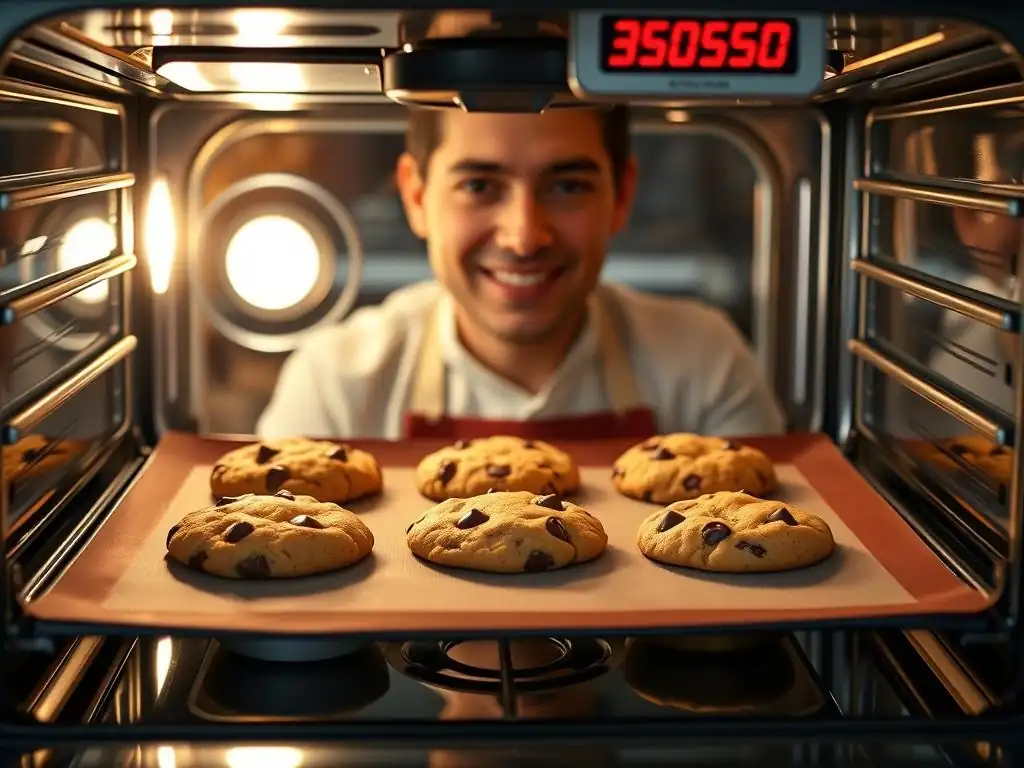
Option 1: Breville BOV800XL Smart Oven - Even Baking Guaranteed
The Breville BOV800XL Smart Oven is a popular countertop oven renowned for its ability to tackle inconsistent oven heating problems head-on, largely thanks to its advanced heating technology. This model features five independent quartz heating elements that are strategically placed within the oven cavity.
Unlike traditional ovens that might have just a single element at the bottom or top, the multiple elements in the Smart Oven allow for more precise and even heat distribution from above and below the food. This design helps to minimize the temperature swings that can plague smaller ovens, ensuring that items like cookies, muffins, and roasted vegetables cook uniformly.
Beyond the element placement, the Breville BOV800XL employs integrated sensors that monitor the temperature inside the oven in real-time. These sensors communicate with the heating elements and the oven's internal computer, allowing for constant adjustments to maintain the set temperature. This dynamic regulation means that if the temperature drops when the door is opened or if one area starts heating up too quickly, the system can compensate instantly. This level of responsiveness is key to achieving consistent oven heating, preventing the hot spots and cold spots that lead to baking failures.
Features of the Breville BOV800XL Smart Oven for Consistent Heat
The Breville BOV800XL's primary feature ensuring consistent heat is its Element IQ technology. This system intelligently distributes power among the five heating elements based on the selected cooking function (e.g., baking, roasting, broiling, toasting). For baking, Element IQ typically focuses power on the bottom elements initially to ensure a good rise and then balances the heat from top and bottom for even browning. The oven can preheat to 350°F (175°C) in under 10 minutes, a testament to its efficient heating system.
Furthermore, the oven features a convection fan option, which circulates hot air throughout the cavity. While convection can sometimes introduce its own set of hot spots if not well-designed, the Breville's system is integrated with the Element IQ technology to ensure the circulated air is uniformly heated. This combination helps reduce baking time by up to 30% and promotes exceptionally even browning on items like pastries and sheet pan dinners. The oven also has a non-stick interior coating, which while not directly related to heat, makes cleanup easier after a consistently successful bake.
Why Element IQ Technology Solves Uneven Baking
Element IQ technology is the brain behind the Breville BOV800XL's consistent performance. It doesn't just turn heating elements on and off; it micro-manages their power output and distribution. For example, when baking delicate items like custards or cheesecakes, the system might prioritize gentle, even heat from the bottom, using less intense power. For a sheet of cookies, it will ensure heat is distributed evenly across the entire surface. This level of control prevents the common problem of one side of the pan browning faster than the other, a frequent symptom of consistent oven heating problems in less sophisticated appliances.
By continuously monitoring the temperature and adjusting the power to each element, Element IQ creates a stable thermal environment. This eliminates the significant temperature swings (sometimes 20-30°F or more) that basic ovens experience, especially during longer baking cycles. The result is food that cooks evenly from edge to center, rises uniformly, and achieves consistent browning across the entire surface. This precision makes the Breville a favorite for bakers who demand reliability from their equipment.
Pricing and Where to Buy: [Affiliate Link to Retailer]
Option 2: KitchenAid KCO223CU Countertop Oven - Precision Temperature Control
The KitchenAid KCO223CU Countertop Oven is another excellent choice for bakers prioritizing precision and consistent temperatures in a compact form factor. Countertop electric ovens, in general, often offer better temperature stability than many full-sized ranges because their smaller cavities heat up quickly and are easier for sensors to monitor and control. This KitchenAid model leverages this advantage with advanced digital controls designed to maintain a steady temperature throughout the baking cycle, directly addressing consistent oven heating problems often found in less sophisticated units.
This oven features a powerful heating system and robust insulation, which work together to minimize heat loss and maintain the target temperature. Unlike older mechanical thermostat models, the digital interface allows for setting temperatures in precise increments, often as small as 5°F (about 3°C). This level of granularity, combined with sensitive internal temperature probes, ensures that the oven cavity stays remarkably close to the desired setting, providing the stable environment needed for delicate baking tasks.
Benefits of Electric Ovens for Maintaining Consistent Temperatures
Electric ovens are often praised for their dry heat and ability to maintain a stable temperature once preheated, making them well-suited for many baking applications. Unlike gas ovens, which produce moisture as a byproduct of combustion and can have more fluctuation due to the cycling of the flame, electric heating elements provide a steady source of radiant heat. This consistent radiant heat, combined with convection (if available), helps to create a more uniform temperature throughout the oven cavity, reducing the likelihood of significant hot or cold spots.
The heating elements in electric ovens typically cycle on and off to maintain the set temperature, but advanced models like the KitchenAid KCO223CU use sophisticated algorithms to minimize the amplitude and frequency of these cycles. This results in much smaller temperature swings compared to basic models. For bakers, this means less guesswork and more predictable results, whether you're baking a single loaf of bread or a tray of cupcakes, directly combating consistent oven heating problems.
Key Features of the KitchenAid KCO223CU Countertop Oven: Digital Controls and Temperature Sensors
The KitchenAid KCO223CU stands out with its intuitive digital display and precise temperature control capabilities. The digital interface allows bakers to set temperatures accurately and select from various cooking modes, including Bake, Broil, Toast, and Keep Warm. The oven utilizes internal temperature sensors that constantly feed information back to the control system, enabling it to make real-time adjustments to the heating elements. This feedback loop is crucial for maintaining temperature stability, often within a few degrees of the set point.
Furthermore, this KitchenAid model often includes features like a preheat indicator that accurately tells you when the oven has reached the actual target temperature, not just when it thinks it has. Some ovens alert you prematurely, but the KCO223CU aims for true temperature accuracy. Its compact size also means less air volume to heat, contributing to faster preheating and quicker recovery times if the door is briefly opened. These features combine to offer a high degree of temperature precision, which is invaluable when baking delicate items that are sensitive to heat fluctuations.
Ideal for: Delicate Pastries
Pricing and Availability: [Affiliate Link to Retailer]
Option 3: GE JGBP84SEJSS Gas Range - Enhanced Heat Distribution
While electric ovens are often highlighted for consistency, modern gas ranges like the GE JGBP84SEJSS have made significant strides in addressing consistent oven heating problems inherent in older gas models. This GE range incorporates design features aimed at distributing the heat generated by the gas burner more evenly throughout the oven cavity. For many bakers, a gas range is a necessity, and finding one that offers reliable, even heat is a top priority. The JGBP84SEJSS aims to provide that performance for bakers who prefer gas.
The key to this GE model's enhanced consistency lies in a combination of intelligent burner placement and optimized air circulation pathways within the oven. While gas heat originates from a single burner (usually at the bottom), the design works to diffuse this heat and circulate it effectively, reducing the severity of hot spots directly above the burner and cold spots near the door or top. This allows for more predictable baking results across multiple racks, which is a common challenge in gas ovens.
How GE Gas Ovens Achieve Consistent Heat
GE gas ovens like the JGBP84SEJSS utilize design elements focused on heat diffusion and convection (if equipped). The primary heat source is the gas burner, typically located beneath the oven floor. Modern designs incorporate baffles or heat shields above the burner to help spread the radiant heat more evenly before it rises into the main cavity. Additionally, the oven cavity's shape and vent placement are optimized to encourage natural convective air movement, helping to distribute the heat originating from the burner.
For models with true convection, a fan is added, often with a third heating element around it, though in gas ovens the fan primarily circulates the heat from the main burner. This forced air circulation actively moves the hot air throughout the oven, minimizing temperature stratification and reducing the difference between hot and cold spots. While gas ovens will always produce some moisture, the improved heat distribution in these models helps mitigate the impact of consistent oven heating problems on baking performance, leading to more uniform browning and cooking.
Features: Insulated Walls and Optimized Burner Design
The GE JGBP84SEJSS incorporates robust insulation in its walls and door, which is critical for maintaining a stable temperature in any oven, including gas models. Good insulation minimizes heat loss to the surrounding kitchen air, meaning the oven's heating system doesn't have to work as hard or cycle as frequently to maintain the set temperature. This contributes directly to better temperature stability and energy efficiency. The door seal is also designed to be tight, preventing heat from escaping and cool air from entering.
The burner design itself is optimized not just for heating quickly but also for promoting even heat distribution. While specific technical details vary, modern gas burners and the oven floor plates above them are engineered to help radiate heat outward rather than just straight up.
This, combined with the overall cavity design that encourages air movement, helps to reduce the temperature gradient from the bottom of the oven to the top and from the back to the front. These features make the GE JGBP84SEJSS a strong contender for bakers seeking to overcome consistent oven heating problems in a gas range.
Best For: Bread Baking
Pricing and Purchase Information: [Affiliate Link to Retailer]
Addressing Common Oven Heating Issues Beyond the Oven

Using an Oven Thermometer for Accurate Temperature Readings
One of the simplest yet most effective tools for diagnosing and managing consistent oven heating problems is an independent oven thermometer. The thermostat and display on your oven might indicate it has reached a specific temperature, but this reading often reflects the temperature near the sensor, which may not be representative of the entire oven cavity. An inexpensive oven thermometer placed on a rack can give you a real-time reading of the actual air temperature where your food is baking.
Using a thermometer allows you to verify if your oven is heating accurately and consistently. You might find your oven runs 25°F (about 14°C) hotter or colder than the setting, or that the temperature fluctuates significantly throughout the baking cycle. By knowing the actual temperature, you can adjust your oven dial accordingly (e.g., setting it to 375°F if it consistently reads 350°F) and understand the true baking environment. This simple step is crucial for anyone struggling with unpredictable results due to consistent oven heating problems.
Recommended Oven Thermometers: [Affiliate Links to Products on Amazon/Retailer]
The Importance of Proper Rack Placement for Even Baking
Even in an oven with relatively good temperature consistency, the placement of your baking pans on the racks can significantly impact how evenly your food bakes. Heat rises, and in many ovens, the bottom rack tends to be hotter due to proximity to the heating element (especially in gas ovens or electric ovens with a visible bottom element), while the top rack can be cooler. The middle rack is generally the most stable and is often recommended for single items or when using only one rack.
When baking multiple items, such as two sheets of cookies, it's often best to rotate them halfway through the baking time to ensure even exposure to any slight temperature variations. Placing pans too close together or too close to the oven walls can also impede air circulation, creating localized cold spots. For optimal results and to minimize consistent oven heating problems related to placement, leave adequate space around each pan and consider baking one sheet at a time for critical items like delicate cakes or pastries.
Calibrating Your Oven for Optimal Performance
If your oven consistently reads significantly higher or lower than the set temperature, calibration might be necessary. Oven calibration is the process of adjusting the oven's thermostat to match the actual temperature more closely. This can often be done through the oven's control panel settings, allowing you to offset the displayed temperature by a specific number of degrees (e.g., +15°F or -10°F). Referencing your oven's manual is key here, as the process varies by model.
To calibrate, you'll need an accurate oven thermometer. Place it in the center of the oven and preheat the oven to a standard baking temperature like 350°F (175°C). Let the oven stabilize for at least 20-30 minutes, then check the thermometer reading. Repeat this several times. If the thermometer consistently reads, say, 365°F when the oven is set to 350°F, you would calibrate it to -15°F. While calibration won't fix severe hot/cold spots, it will ensure the average temperature is closer to your setting, helping mitigate some consistent oven heating problems.
The Role of Baking Stones and Baking Steels in Even Heat Distribution
Baking stones and steels are dense, heat-retentive surfaces that can dramatically improve the consistency of heat transferred to the bottom of your baked goods and help stabilize the oven's overall temperature. Made from ceramic, cordierite (for stones), or steel, these accessories absorb heat from the oven's heating elements and then radiate it steadily. Placing a stone or steel on a rack in your oven, usually on a lower rack, helps to create a more stable thermal mass.
When you place dough or batter onto a preheated stone or steel, it provides an intense, even burst of heat to the bottom of the item. This is particularly beneficial for bread, helping to achieve a strong oven spring and a crisp bottom crust, or for pizza, ensuring a perfectly cooked base.
Furthermore, the stone or steel acts as a heat reservoir, absorbing some of the temperature fluctuations within the oven and radiating heat back out steadily, contributing to a more consistent environment and helping to reduce consistent oven heating problems, especially for items baked directly on them or on a rack above them.
Recommended Baking Stones/Steels: [Affiliate Links to Products on Amazon/Retailer]
Choosing the Right Oven for Your Baking Needs: A Summary
Comparing the Top Ovens for Consistent Heating: Breville vs. KitchenAid vs. GE
When tackling consistent oven heating problems, selecting the right appliance is a major step. The Breville BOV800XL Smart Oven excels in precise temperature control for smaller batches, leveraging Element IQ technology for exceptional evenness, particularly in a countertop format. The KitchenAid KCO223CU Countertop Oven also offers high precision with digital controls, making it ideal for delicate tasks where exact temperatures matter.
The GE JGBP84SEJSS Gas Range demonstrates how full-sized gas ovens have evolved, offering enhanced heat distribution features for bakers who prefer gas, especially for items like bread. Each offers a different approach and form factor to achieve better temperature consistency.
Factors to Consider Before Buying a New Oven: Size, Features, and Budget
Before investing in a new oven specifically to combat consistent oven heating problems, consider your baking habits and needs. What size oven do you need – a full range or a countertop model? Do you require features like convection, proofing settings, or self-cleaning? Set a realistic budget, as ovens designed for higher precision often come at a higher price point. Also, think about the fuel type you prefer (gas or electric) and the specific types of baking you do most frequently, as some ovens are better suited for certain tasks than others.
Say Goodbye to Uneven Bakes and Hello to Baking Perfection!
Frequently Asked Questions
What are some common signs of inconsistent oven heating?
The most common signs include unevenly baked goods, hot spots that burn food in certain areas, and longer-than-expected baking times.
Why is consistent oven heating important for baking success?
Consistent oven heating ensures that your baked goods cook evenly throughout, resulting in a better texture and flavor. It also helps prevent burning or undercooking.
What factors can contribute to inconsistent oven heating?
Several factors can contribute, including a faulty heating element, a miscalibrated thermostat, and poor oven insulation.
How can I test my oven for consistent heating?
You can test it by placing slices of bread evenly across the oven rack and baking them until lightly toasted. Observe if they toast uniformly, indicating consistent heating.
What can I do to improve inconsistent oven heating in my oven?
Consider calibrating your oven, using an oven thermometer to monitor the temperature, and avoiding overcrowding the oven with too many baking sheets.
Final Reflection: The Pursuit of Perfect Baking—and a Perfectly Heated Oven
The quest for consistent oven heating isn't just about perfectly browned cakes; it's about the reliability of our kitchens, the heart of our homes. Uneven baking, a frustratingly common problem, impacts not only the quality of our food but also our confidence in the tools we use daily. This article has explored the various causes of inconsistent heating and highlighted oven models praised for their superior performance, offering solutions to a problem that affects countless home bakers and cooks.
The impact of consistent oven heating extends far beyond the individual kitchen. It speaks to a larger conversation about product quality, consumer expectations, and the evolving technology shaping our domestic spaces. The kitchen is the heart of the home,
a phrase often repeated, holds true because it's where we nourish ourselves and our loved ones. A reliable oven is crucial to that process, fostering a sense of comfort and control in a space that should be a source of joy and creativity.
Now, consider your own oven. Reflect on its performance, its quirks, and the impact it has on your cooking experience. Are you satisfied with its consistency? If not, this article has provided you with the tools and knowledge to investigate the issue and potentially find a solution. Perhaps it's time for an upgrade, or maybe a simple cleaning will suffice. Take control of your kitchen, embrace the pursuit of perfection, and enjoy the delicious rewards of consistently baked goods.
Unleash Your Inner Baking Pro: Perfect Results Every Time!
Thanks for taking the time to learn about ovens that deliver consistent heat! We hope you now feel more confident in achieving flawlessly baked goods. Ready to take the next step?
- Find your perfect oven: Research the models we highlighted and compare features to find the one that best suits your baking style and needs. This is your chance to upgrade your baking game!
- Share your baking triumphs (or challenges!) with us in the comments below. Let's build a supportive community of bakers!
- Try a new recipe: Challenge yourself with a recipe you’ve always wanted to make, confident in your oven’s even heating.
What's the first recipe you'll tackle with your perfectly heated oven?