
Essential Equipment for HighHydration Doughs

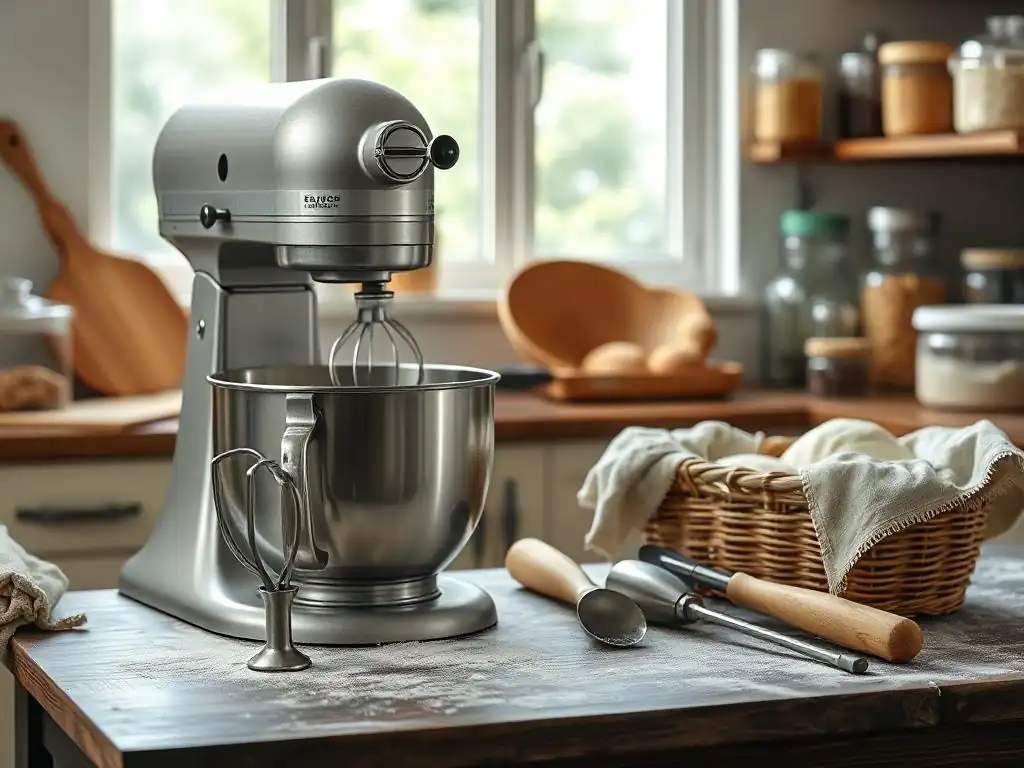
Welcome to BakeWithEase, your trusted companion on your baking journey! Ever wondered if you have the right tools to unlock the secrets of creating perfectly airy and flavorful high-hydration doughs? Discover our guide to High Hydration Dough Equipment and uncover the essential tools that will transform your baking from good to extraordinary. Let's explore how the right equipment can make all the difference!
- Essential Equipment for High-Hydration Doughs: BakeWithEase Guide
- Mastering High-Hydration Dough: The Artisan Baker's Toolkit
- The Core High-Hydration Dough Equipment: Essential Tools
- Advanced Equipment for High-Hydration Doughs: Taking Your Baking to the Next Level
- Optimizing Your High-Hydration Dough Baking: Tips and Techniques
- High-Hydration Dough Equipment: Comparing Options and Finding the Best Fit
-
Frequently Asked Questions
- What exactly is high-hydration dough, and why does it require special equipment?
- What are the most essential pieces of equipment for working with high-hydration dough?
- Why is a bench scraper so important when working with high-hydration dough?
- Can I bake high-hydration dough without a Dutch oven? What are the alternatives?
- Where can I find reliable recipes and tutorials for using high-hydration dough equipment?
- Final Reflection: Mastering the Art of High Hydration Dough
- Unleash Your Inner Dough Whisperer!
Essential Equipment for High-Hydration Doughs: BakeWithEase Guide
Mastering High-Hydration Dough: The Artisan Baker's Toolkit
Understanding High-Hydration Doughs and Their Challenges
High-hydration doughs—typically defined as containing 75% water or more relative to flour weight—are celebrated for their open crumb, blistered crust, and moist interior. For example, the renowned Tartine Country Loaf runs at about 85% hydration, creating large irregular holes that many artisan bakers covet. The extra water encourages enzymatic activity and gas retention, but it also transforms dough into a slippery, hard-to-manipulate mass.
Handling these wet doughs demands finesse: shaping, bench rest, and bulk fermentation become more time-sensitive. Without the right equipment, bakers can face tearing dough on the bench, difficulty in transferring loaves to baking surfaces, and uneven fermentation. Proper tools help maintain dough structure during stretch and fold cycles and ensure consistent oven spring.
Why Specific Equipment Matters for Wet Dough
Wet doughs behave fundamentally differently from stiffer mixes. Heavy, slack dough will cling to surfaces, pooling instead of holding shape. This makes bench scrapers indispensable: they release dough effortlessly and enable precise folding. Similarly, using a dutch oven with tight-fitting lid traps steam, critical for crust formation when baking at 450°F.
Moreover, accurate temperature monitoring—via dough thermometers—and stable proofing environments prevent overproofing. A simple metal bowl can radiate heat unevenly, while a quality plastic or stainless bowl insulates dough, maintaining ambient temperature. Investing in high hydration dough equipment is not indulgent, but essential for predictable, bakery-quality results.
The Core High-Hydration Dough Equipment: Essential Tools
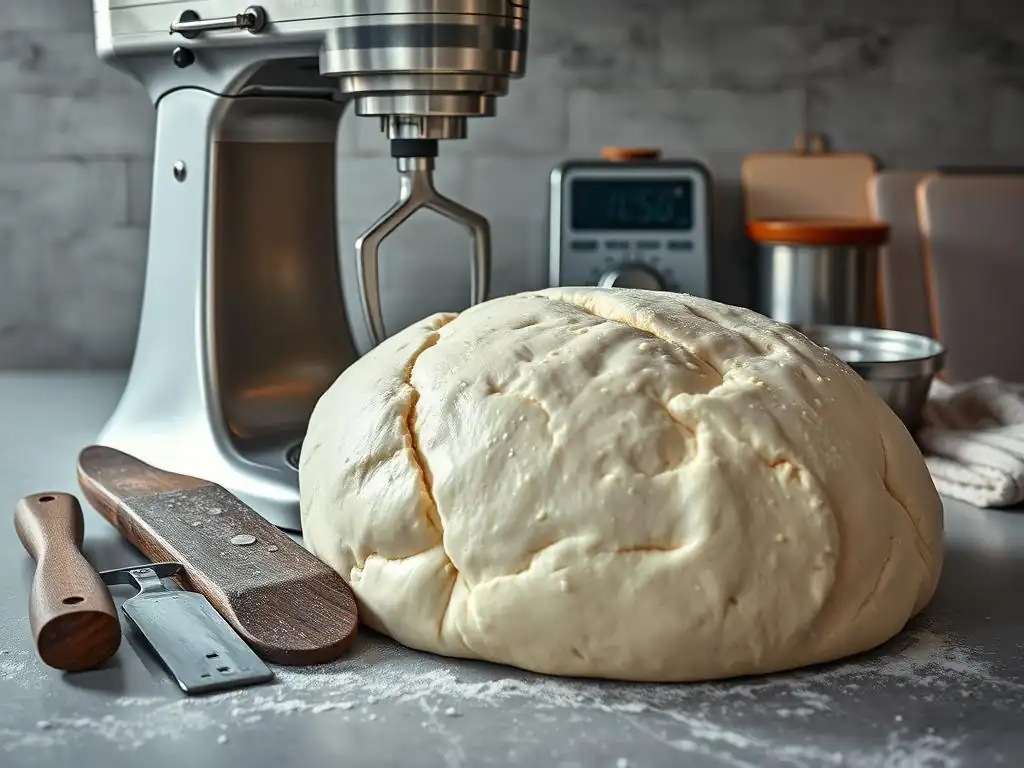
Dough Scrapers: Your Best Friend for Handling Sticky Doughs
Dough scrapers are arguably the most cost-effective yet high-impact tool in your artisan kit. A firm-edged scraper glides under dough, lifting it cleanly from work surfaces. During bulk fermentation, frequent handling helps redistribute gases and strengthen gluten networks.
Professional bakeries often stock multiple scrapers—some dedicated to scrape counters, others for dividing dough—ensuring cross-contamination never occurs. A well-maintained scraper (€10–15) can last years, resisting warping and blade damage when made of tempered stainless steel.
Bench Scrapers: For Easy Transfer and Dividing
- 8-inch stainless blade with rounded corners
- Comfortable wooden or polymer handle
- Ideal for cutting dough into uniform portions (~70–80 g for rolls)
The bench scraper shines when you need to divide high-hydration dough into precise boules or batards. Its rigid blade pushes through sticky dough cleanly, minimizing dough clinging to the tool.
Bowl Scrapers: For Clean Bowls and Efficient Dough Handling
- Flexible silicone edge conforms to bowl curves
- Heat-resistant up to 450 °F—useful for hot mix-ins
- Often sold in sets of two for different bowl sizes
Bowl scrapers ensure no dough is wasted during hand-mixing or stretch-and-fold sessions. They also speed up clean-up, scraping every last bit of dough residue in seconds.
Mixing Bowls: Choosing the Right Vessel for Wet Doughs
Selecting the proper bowl influences dough temperature and hydration throughout bulk fermentation. Aim for a 4–6 qt capacity, allowing room for dough to double in volume. The bowl’s material—stainless steel or plastic—affects heat transfer and ease of use.
While glass bowls look appealing, they’re heavy and brittle when handling slippery, heavy dough. Instead, opt for stainless steel or food-grade plastic designed to withstand frequent scrubbing and dishwasher cycles.
Stainless Steel Bowls: Durable and Easy to Clean
Professional kitchens often rely on Vollrath 6-qt stainless bowls (€25 each). The metal’s thermal conductivity helps dissipate any hot spots, preventing over-warm zones in dough. Plus, they stack neatly, saving shelf real estate.
Plastic Bowls: Lightweight and Food-Safe
High-quality polypropylene bowls (e.g., Cambro 5-qt, ~$15) are shatterproof and far lighter. Their non-porous surface resists staining or odor absorption, crucial when handling whole-grain or rye doughs known for strong aromas.
Dutch Ovens: Achieving Oven Spring and Crust Perfection
A Dutch oven mimics the steam-injected environment of professional deck ovens. Trapping moisture in a closed chamber for the first 20 minutes of bake time yields a lofty rise and crackling crust—especially critical for 80–90% hydration doughs.
Cast iron and ceramic cloches remain the two go-to categories. Both hold heat exceptionally well, but each delivers subtle differences in crumb texture and crust blistering.
Cast Iron Dutch Oven: Classic Choice for Sourdough and High-Hydration Breads
Le Creuset’s 4.5 qt enameled cast iron cocotte (~$350) is a household favorite. The thick walls absorb radiant heat, releasing it evenly around the loaf. After 20 minutes with the lid on at 465 °F, removing the lid ushers in direct heat to develop a deep golden crust.
Ceramic Bread Cloche: Ceramic Option for Even Baking and Steam Retention
Emile Henry’s 3.4 qt bread cloche (~$120) uses high-fired Burgundy clay that retains and circulates moisture. Its dome vents produce controlled steam release, reducing risk of dough scorching and keeping crust color uniform.
Advanced Equipment for High-Hydration Doughs: Taking Your Baking to the Next Level
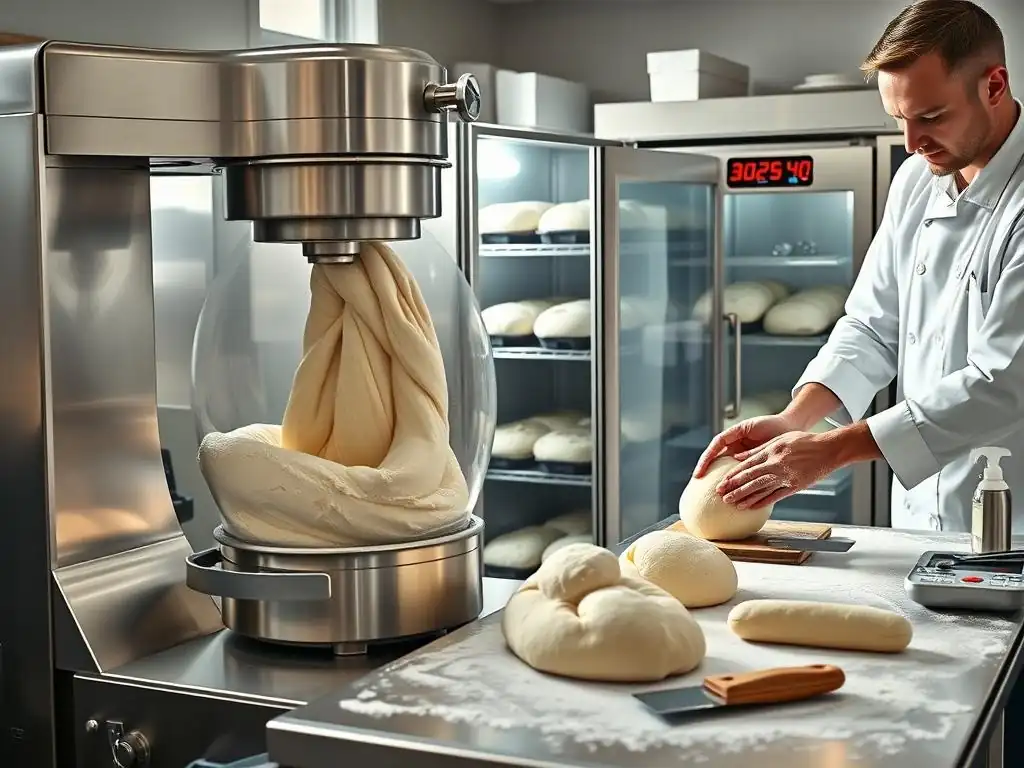
Stand Mixers: Power and Precision for Demanding Doughs
For bakers scaling up to multiple loaves, a stand mixer with dough hook can reduce strain and inconsistency. Look for motors rated at least 325 W for 4–6 qt bowls; this handles 1–2 kg of 80% hydration dough without overheating.
Hands-off mixing also improves gluten development. A slow-speed, 4-minute knead on KitchenAid’s “Dough” setting replicates 10+ minutes of hand kneading, preserving dough temperature and texture.
Stand Mixer: A Versatile Workhorse for High-Hydration Doughs
The KitchenAid Artisan 5-qt (~$399) features a planetary mixing action and tilt-head design. Equipped with a flat beater, dough hook, and whisk, it adapts to everything from ciabatta to enriched brioche.
High Capacity Mixer: High Capacity for Larger Batches
Hobart’s N50 (20 qt, industrial) is standard in artisan micro-bakeries. With a ¾ hp motor, it effortlessly kneads up to 5 kg of 85% hydration dough in under 7 minutes, making it perfect for weekend markets or community bake sales.
Banneton Proofing Baskets: Shaping and Developing Flavor
Proofing in banneton baskets gives dough structure and wicks away moisture, creating a slight skin that enhances oven spring. Natural cane baskets with linen liners cost around €12 each and are reusable for hundreds of bakes when maintained properly.
Bannetons also leave distinctive spiral flour patterns on the crust—an artisanal flourish that speaks volumes in a small bakery or family kitchen.
Round Banneton Basket: Classic Shape for Boules
A 9-inch round cane banneton holds roughly 750 g of dough, perfect for a 1-lb boule. The deeper walls support high-hydration dough during final proof without spreading excessively.
Oval Banneton Basket: Perfect for Batards
A 10×5 inch oval banneton is tailor-made for batards and bâtards. Its narrower profile helps dough elongate upward, yielding a tighter crumb and more dramatic slash patterns.
Baking Stones and Steaming Solutions: Creating a Crispy Crust
A baking stone (14×16 in cordierite) absorbs and radiates heat, simulating a professional hearth. Pre-heating for at least 45 minutes at 500 °F ensures the stone’s surface reaches above 450 °F, crucial for rapid oven spring.
Professional bakers swear by combining stones with steam—either via a water bath or lava rocks— to maximize crust blistering and ear formation.
Baking Stone: For Oven Spring and Crust
A thick cordierite slab ($35) doesn’t crack under thermal shock and accommodates multiple loaves side-by-side. Its uniform heat release stops bottom crust from burning while the interior cooks through.
Steaming Methods: Water Bath vs. Lava Rocks for Professional-Level Steam
- Water Bath: Pour 1 cup of hot water into a preheated tray at the oven bottom; produces gentle steam bursts.
- Lava Rocks: Place preheated rocks in a cast-iron pan; pour ½ cup water onto rocks for rapid, intense steam.
Optimizing Your High-Hydration Dough Baking: Tips and Techniques
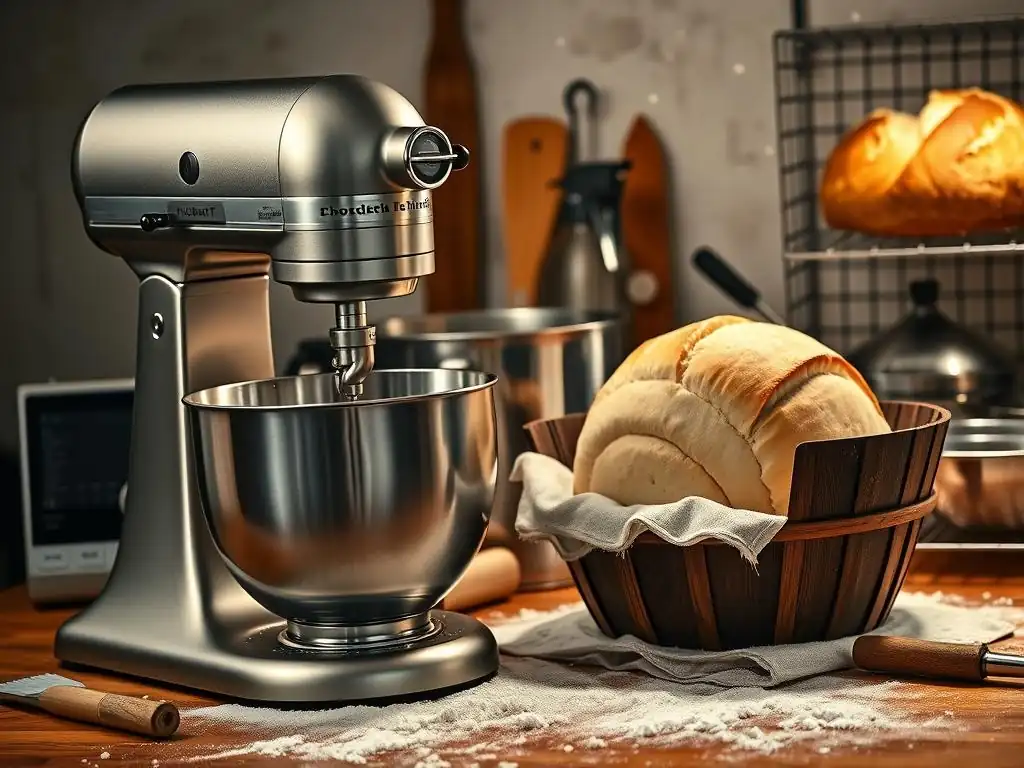
Using a Scale for Precise Measurements
Precise weighing—using a digital scale accurate to ±0.5 g—ensures your hydration stays consistent. For instance, a 1 kg dough at 78% hydration requires exactly 780 g water. Using baker’s percentages allows scaling recipes up or down without guesswork.
“Switching to a scale eradicated dough inconsistencies overnight—no more sticky surprises or dry loaves.”
Temperature Control: Importance of Dough Thermometers and Fridge Space
Maintaining dough temperature between 24–26 °C during bulk rise helps yeast activity without risking overproofing. A dough thermometer probes can alert you if dough hits 28 °C, signaling it’s time to bench rest in a 4 °C fridge for retardation.
Having two shelves free in your refrigerator allows cold retard for up to 24 hours, enhancing flavor complexity for sourdoughs and high-hydration batards.
Mastering the "Stretch and Fold" Technique: The Key to Strength and Structure
Instead of aggressive kneading, stretch and fold builds gluten bands gradually. Perform four sets of folds at 30-minute intervals:
- Reach under the dough, stretch gently until resistance is felt
- Fold the stretched section back over itself
- Rotate the bowl 90° and repeat
Over four cycles, you’ll see dough transform from a slack blob to a springy, windowpane-capable ball, despite hydration levels of 80–90%.
High-Hydration Dough Equipment: Comparing Options and Finding the Best Fit
Budget-Friendly Essentials for Beginners
For bakers on a budget (under $100 total), a basic kit might include:
- 1× 8″ stainless bench scraper ($12)
- 2× plastic mixing bowls, 4 qt and 6 qt ($20)
- 1× cast-iron pan with lid ($35)
- 1× digital scale ($15)
This minimal set tackles most high-hydration dough challenges without a large investment in high hydration dough equipment.
Investing in Quality: Professional-Grade Equipment for Serious Bakers
As you scale up, consider:
- KitchenAid Pro 600 6-qt stand mixer ($899)
- Le Creuset 5.25 qt Dutch oven ($360)
- Full set of willow bannetons ($60 for four sizes)
Higher-end gear pays dividends in durability, performance, and time savings.
High-Hydration Dough Equipment Sets
All-in-one artisan bakeware kits bundle core tools: bench scraper, bowl scraper, linen couche, baker’s lame, and cloth proofing baskets. Sets range from $80 to $150, providing a cohesive suite of high hydration dough equipment designed to work in harmony from mixing to bake.
Frequently Asked Questions
What exactly is high-hydration dough, and why does it require special equipment?
High-hydration dough simply means dough with a high ratio of water to flour. This makes it sticky and difficult to handle, necessitating specialized equipment for easier manipulation and superior results.
What are the most essential pieces of equipment for working with high-hydration dough?
The most essential items include a dough scraper (bench scraper) for handling the sticky dough, a Dutch oven for baking with steam, and a proofing basket (banneton) for shaping and supporting the dough during its final rise.
Why is a bench scraper so important when working with high-hydration dough?
A bench scraper allows you to easily lift, fold, and transfer the sticky dough without tearing or sticking to your hands or the work surface. It also aids in cleaning up the mess.
Can I bake high-hydration dough without a Dutch oven? What are the alternatives?
While a Dutch oven is ideal for creating steam, you can mimic the effect by placing a baking stone or tray with hot water in the oven during baking. This will help create a crisp crust.
Where can I find reliable recipes and tutorials for using high-hydration dough equipment?
Websites like BakeWithEase.com are excellent resources. Look for step-by-step guides and videos that demonstrate the proper use of each piece of equipment and provide reliable recipes.
Final Reflection: Mastering the Art of High Hydration Dough
The pursuit of the perfect high-hydration dough is not merely a culinary quest; it's a testament to precision, patience, and the understanding of fundamental baking principles. The equipment discussed in this article—from robust stand mixers to specialized dough scrapers—isn't just about convenience; it's about unlocking the potential of this challenging yet rewarding baking technique. The right tools empower you to achieve a level of control and consistency previously unimaginable.
The journey into the world of high-hydration doughs has profoundly impacted my own baking practice. It's a constant learning process, pushing the boundaries of what I thought possible. The most beautiful thing we can experience is the mysterious. It is the source of all true art and science.
- Albert Einstein. This quote resonates deeply because the seemingly simple act of mixing flour and water at high hydration ratios reveals a complex interplay of science and artistry. Understanding the role of each piece of equipment, from the scale's accuracy to the strength of your mixer, is key to unlocking the magic within.
Now, it's your turn. Consider the tools you currently possess and how they might be limiting your baking aspirations. Don't be afraid to experiment, to push your boundaries, and to invest in the equipment that will elevate your baking game. Embrace the challenge of high-hydration doughs; the reward—a beautifully textured, flavorful loaf—is well worth the effort. The journey to mastering this technique is ongoing, and each loaf baked is a step closer to perfection.
Unleash Your Inner Dough Whisperer!
Thanks for diving deep into the world of high-hydration doughs with us! We hope you now feel equipped to tackle those wonderfully chewy loaves. Ready to put your new knowledge to the test?
- Master the perfect hydration: Experiment with different flour types and water ratios to find your ideal dough consistency. Don't be afraid to get messy!
- Share your baking journey: Show off your perfectly hydrated creations on social media using #BakeWithEaseHighHydration. Let's inspire each other!
- Dive deeper into dough: Explore other articles on our site to discover more baking secrets and techniques.
What unique ingredient are you most excited to try in your next high-hydration bake?