
Level Up Your Baking: Advanced Equipment for Artisan Enthusiasts

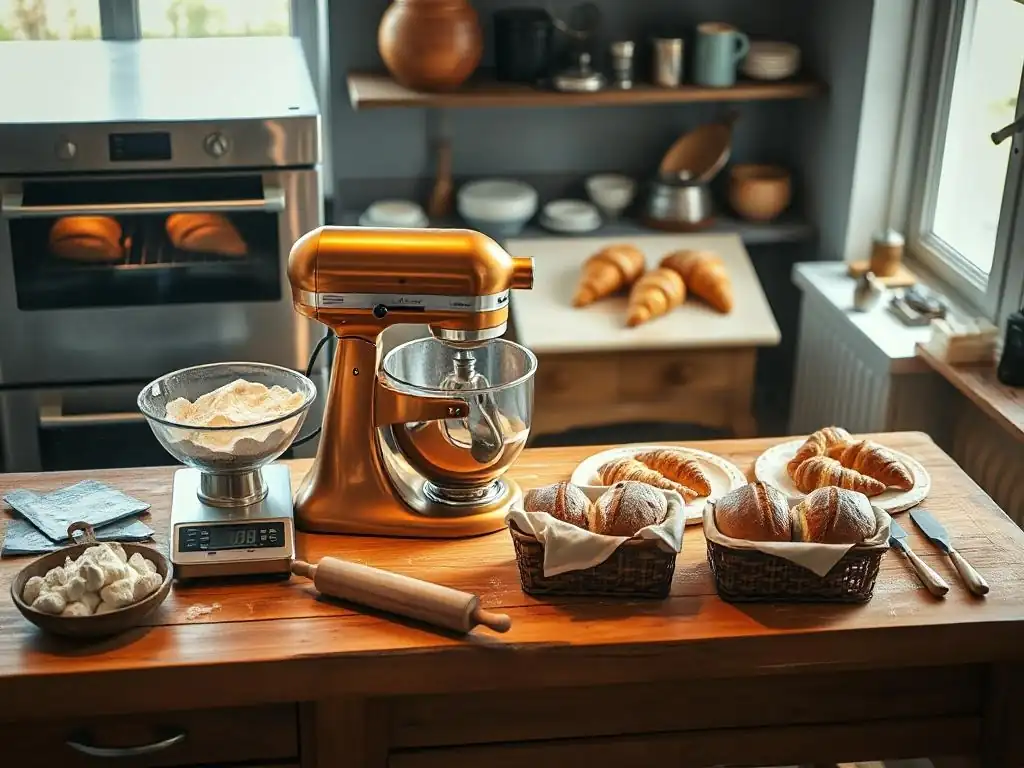
Welcome to BakeWithEase, your haven for all things baking! Ever wondered what separates a good bake from a spectacular one? Often, it's more than just the recipe. This week, we delve into the world of artisan baking equipment. Prepare to level up your baking game as we explore essential tools that can transform your creations from everyday treats to true masterpieces. Intrigued? Discover the secrets inside!
- Artisan Baking Equipment Guide: Taking Your Bread to the Next Level
- Must-Have Bread Making Equipment for Artisan Bakers: An Overview
- The Core Artisan Baking Equipment: Beyond the Basics
- Mastering Artisan Techniques with Specialized Tools
-
Frequently Asked Questions
- What is considered "artisan baking equipment" and how does it differ from standard baking tools?
- Why should I invest in advanced baking equipment if I'm already comfortable with basic tools?
- What are some essential pieces of equipment featured in an artisan baking equipment guide?
- Where can I find reliable reviews and recommendations for artisan baking equipment?
- How can I maintain and care for my artisan baking equipment to ensure its longevity?
- Final Reflection: The Artisan's Journey: From Tool to Transformation
- Unleash Your Inner Baker: Elevate Your Baking Game!
Artisan Baking Equipment Guide: Taking Your Bread to the Next Level
Elevating your bread-making journey from simple loaves to true artisan creations often requires venturing beyond the basic tools. While passion and technique are paramount, the right artisan baking equipment guide can illuminate the path to achieving those coveted crusts, open crumbs, and consistent results that define high-quality artisan bread. Think of your equipment as an extension of your skill; the better the tools, the more precise and repeatable your outcomes can be. This guide will explore the specialized gear that can truly transform your home baking into a craft.
Moving into the realm of artisan baking means focusing on factors like controlled fermentation, precise temperature management during baking, and delicate dough handling. Standard kitchen tools might suffice for everyday baking, but achieving the characteristics of a professional artisan loaf – such as a deeply caramelized crust or a perfectly proofed dough with intricate scoring – often necessitates investing in more specialized items. This artisan baking equipment guide aims to help you understand which tools provide the most significant impact on your bread's quality and consistency.
Must-Have Bread Making Equipment for Artisan Bakers: An Overview
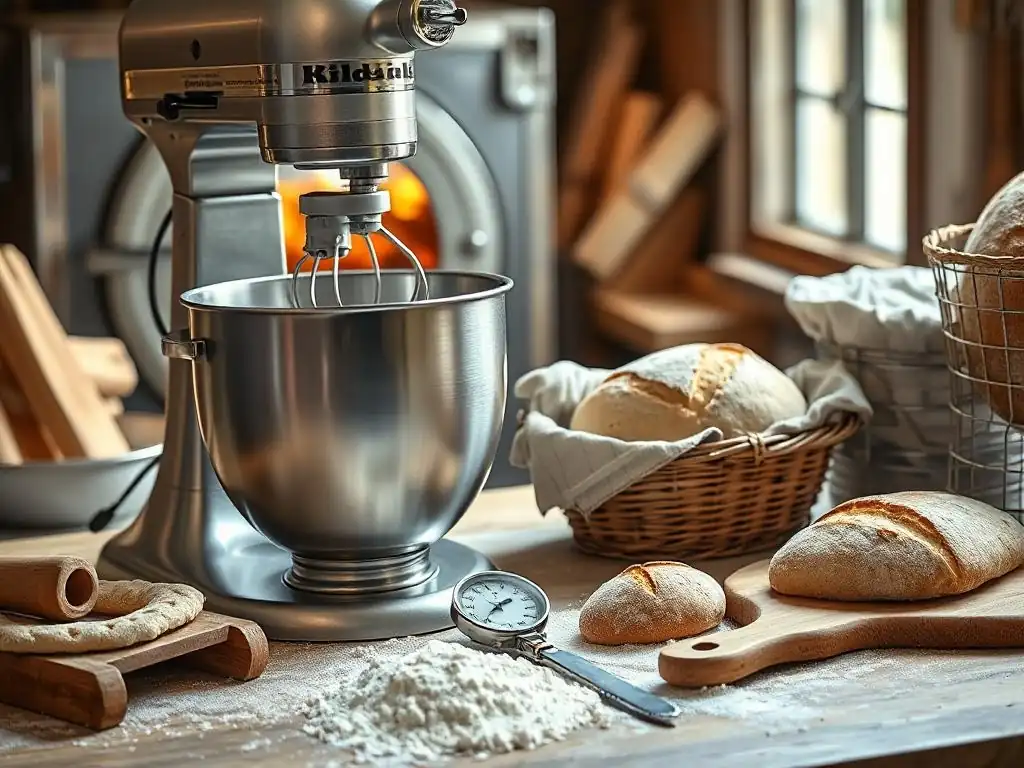
Embarking on the artisan bread journey involves more than just flour and water; it requires a thoughtful selection of tools designed to handle high-hydration doughs, manage temperatures precisely, and facilitate traditional techniques. An effective artisan baking equipment guide should differentiate between the absolute essentials for getting started and the more advanced tools that unlock higher levels of control and consistency. Understanding this distinction helps bakers invest wisely as they grow their skills.
The core set of equipment for an aspiring artisan baker typically includes items like good quality mixing bowls, measuring cups and spoons (though weighing is preferred), and perhaps a baking sheet. However, to truly achieve artisan results, you'll need to consider tools specifically designed for tasks like bulk fermentation, shaping delicate doughs, and creating the ideal baking environment. This section provides an overview, with later sections diving deeper into specific pieces of kit crucial for any serious artisan baking equipment guide.
Essential vs. Advanced: Understanding Your Needs
When building your collection of artisan baking equipment, it's helpful to categorize tools based on their necessity for fundamental artisan techniques versus their role in refining results and increasing efficiency. Essential tools are those you simply cannot make quality artisan bread without, while advanced equipment provides significant advantages in control, consistency, and volume. For instance, a simple kitchen scale is arguably essential for accurate hydration levels in artisan recipes, which often rely on baker's percentages. Without precise measurements, achieving the desired dough consistency for a high-hydration sourdough is incredibly challenging.
Advanced tools, on the other hand, might include items like a dedicated dough proofer or a high-capacity stand mixer. While you can proof dough in a warm oven or mix it by hand, a proofer offers consistent temperature and humidity, crucial for predictable fermentation regardless of ambient conditions.
A powerful stand mixer, especially for larger batches or stiff doughs, saves significant time and effort compared to manual kneading, ensuring proper gluten development without tiring the baker. Understanding this distinction allows bakers to prioritize their purchases based on their current skill level, baking frequency, and budget, making any artisan baking equipment guide more practical.
The Core Artisan Baking Equipment: Beyond the Basics
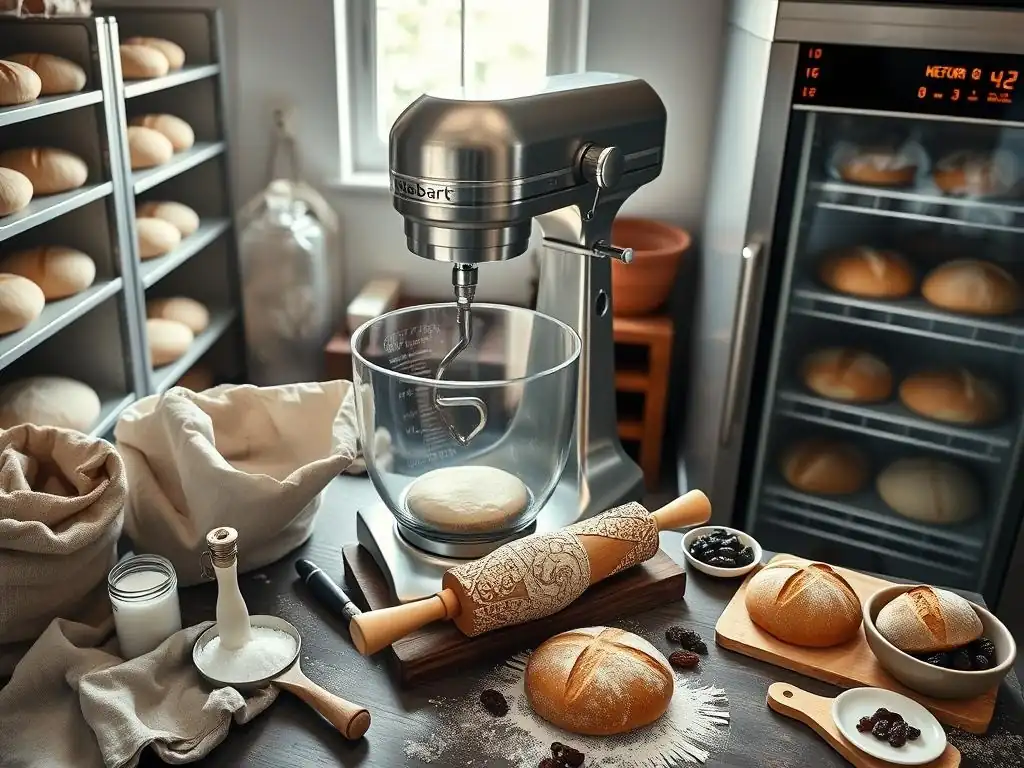
Moving beyond basic mixing bowls and spatulas, several pieces of equipment form the backbone of an artisan baker's toolkit. These items are designed to tackle the specific challenges of working with often wet, sticky doughs and creating the high-temperature, steamy environment necessary for a perfect crust. This part of our artisan baking equipment guide focuses on these foundational pieces that offer significant advantages over standard kitchen gear, enabling bakers to achieve results previously only seen in professional bakeries.
Investing in these core items represents a commitment to the craft. They are often durable, long-lasting pieces that, when cared for properly, will serve a baker for many years. From automating the laborious task of kneading to providing the ideal surface and environment for baking, these tools are instrumental in developing the structure, texture, and appearance characteristic of artisan loaves. Any comprehensive artisan baking equipment guide would highlight these tools as key investments for serious enthusiasts.
Stand Mixers: Power and Precision for Perfect Dough
For bakers tackling larger batches or recipes requiring extensive kneading, a powerful stand mixer is a game-changer in their artisan baking equipment. While hand kneading is a fundamental skill and perfectly viable for smaller amounts of dough, it can be physically demanding and time-consuming to achieve the necessary gluten development for certain artisan breads, especially those with high hydration levels or enriched doughs like brioche.
A good stand mixer, typically with a wattage of 300W or more (professional models often exceed 500W), can handle stiff doughs without straining the motor and provide consistent, even kneading, ensuring the gluten network is developed optimally.
The planetary mixing action of most stand mixers, combined with a dough hook attachment, mimics the stretching and folding motions of hand kneading more efficiently. This consistency is vital for reproducible results, a key aspect of mastering artisan baking.
For example, developing the strong gluten structure needed for a chewy ciabatta or an airy focaccia is significantly easier and faster with a stand mixer than by hand. While a quality mixer represents a notable investment, its ability to handle large volumes and demanding doughs makes it an invaluable piece of artisan baking equipment for dedicated home bakers looking to increase production or tackle more complex recipes.
Dough Proofer: Achieving Consistent Fermentation
Consistent fermentation is arguably the most critical factor in developing the flavor, texture, and structure of artisan bread, and a dedicated dough proofer provides unparalleled control over this process. While home bakers often rely on warm spots in their kitchen or a slightly warmed oven, ambient temperatures can fluctuate significantly, leading to unpredictable proofing times and results.
A proofer, like a foldable Brod & Taylor model or even a DIY setup with a thermostat, maintains a precise temperature, typically between 75°F and 85°F (around 24°C to 30°C), and often controls humidity, creating the ideal environment for yeast and bacteria activity.
This controlled environment ensures that your dough rises predictably, regardless of the weather outside or drafts in your kitchen. For instance, proofing sourdough starters or bulk fermenting dough at a steady 78°F allows for consistent development of complex flavors and proper gas production. This consistency is essential when following recipes with specific timing guidelines. For any baker serious about mastering the nuances of fermentation, a dough proofer is a valuable piece of artisan baking equipment, eliminating one of the major variables in the bread-making process and leading to more reliable and delicious loaves.
Baking Stones & Steels: Achieving Crusty Perfection
Achieving a professional-quality crust and oven spring is a hallmark of artisan bread, and baking stones or steels are indispensable tools for this. These dense surfaces, typically made of ceramic, cordierite, or steel, are preheated in the oven at high temperatures (often 450°F to 550°F, or 230°C to 290°C) for an hour or more. When the dough is placed directly onto the hot surface, it receives an intense burst of heat from below. This rapid heat transfer causes the dough to spring upwards quickly before the crust sets, resulting in better oven spring and a more open crumb structure.
Beyond oven spring, the hot surface helps create a beautifully caramelized, crispy bottom crust that is difficult to achieve on a standard baking sheet. Steel baking surfaces are particularly effective as they conduct heat more efficiently than stone, transferring energy to the dough even faster.
For instance, baking a boule directly on a preheated steel at 500°F can result in significantly better lift and a crispier base compared to baking on a cold sheet pan. Including a quality baking stone or steel in your artisan baking equipment setup is crucial for replicating the intense heat found in professional deck ovens and achieving that signature artisan crust.
Dutch Ovens: A Versatile Baking Essential
For many home bakers, a Dutch oven is the single most impactful piece of artisan baking equipment for achieving professional-quality results, particularly with sourdough and other freeform loaves. A heavy, lidded pot, usually made of cast iron (enameled or bare), creates a miniature oven environment around the dough. When the dough is placed inside the preheated Dutch oven and the lid is on, the moisture evaporating from the dough is trapped inside the pot, creating steam. This steam environment is critical during the first phase of baking.
The steam keeps the surface of the dough moist, allowing it to expand fully before the crust hardens. This leads to maximum oven spring and facilitates better scoring bloom. After about 20-30 minutes, the lid is removed, allowing the trapped moisture to escape and the crust to dry out and caramelize beautifully under the direct heat. Baking a no-knead sourdough in a preheated 500°F Dutch oven is a classic example where this technique shines, consistently producing loaves with impressive height and a crackling crust, making it a highly recommended item in any artisan baking equipment guide.
Mastering Artisan Techniques with Specialized Tools
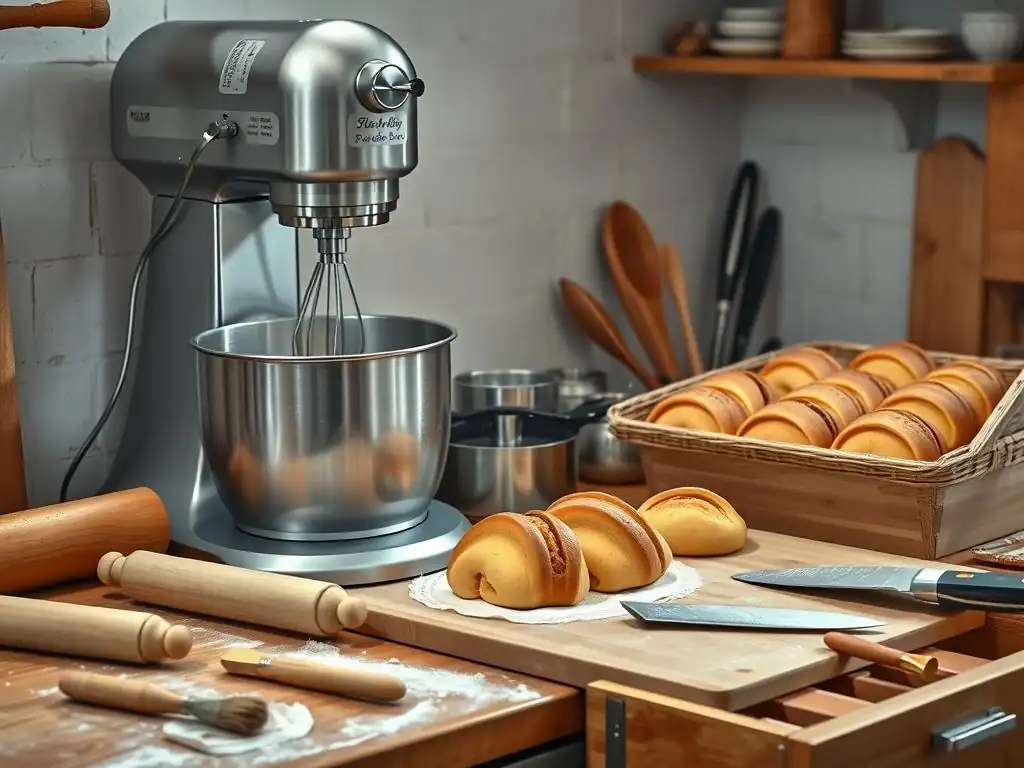
Once you have the core equipment in place, specialized tools allow you to refine your techniques and achieve the aesthetic and structural details that distinguish truly exceptional artisan bread. These tools might seem minor individually, but they play a significant role in shaping, scoring, and precisely measuring ingredients – all fundamental aspects of the artisan craft. This section explores these finer tools that complement your main artisan baking equipment and elevate your bread from good to outstanding.
These specialized items are often relatively inexpensive but offer significant benefits in terms of control and consistency. They enable bakers to execute specific steps with greater precision, leading to better results in terms of loaf appearance, crumb texture, and overall quality. For anyone committed to exploring the full potential of home artisan baking, incorporating these tools into their kit is highly recommended by any comprehensive artisan baking equipment guide.
Scoring Knives (Lames): Creating Beautiful Designs
Scoring, or "lame-ing" (from the French word for blade), is a crucial step in baking artisan bread, and a dedicated scoring knife or lame is the ideal tool for the job. Scoring serves two primary purposes: it acts as a controlled release point for the expanding gases inside the dough during oven spring, preventing the loaf from bursting unpredictably, and it allows the baker to create beautiful patterns and designs on the crust. A razor-sharp blade is essential for making clean, swift cuts on the surface of proofed dough without deflating it.
Unlike a regular kitchen knife, a lame holds a thin, sharp razor blade, often at an angle or curved, specifically designed for gliding through the dough surface. This allows for precise, shallow cuts that open up beautifully during baking.
Different styles of lames, such as straight or curved blades, facilitate different types of cuts – curved blades are excellent for the ear (a flap of crust that peels back) on a boule, while straight blades are better for intricate patterns on a batard. Mastering the use of a scoring knife is a key skill highlighted in any artisan baking equipment guide focused on the aesthetics and structure of artisan loaves.
Banneton Baskets: Shaping and Proofing Your Dough
Banneton baskets, also known as proofing baskets, are essential for giving shape and structure to freeform loaves like boules and batards during their final rise (proofing). Typically made from cane or wood pulp, these baskets are dusted with flour (often rice flour to prevent sticking) before the shaped dough is placed inside, seam-side up. As the dough proofs, it expands and takes on the shape of the basket, while the texture of the basket material imparts a distinct pattern on the crust.
Beyond shaping, bannetons also help manage moisture on the surface of the dough. Cane baskets, in particular, wick away a small amount of surface moisture, which can contribute to a better crust formation during baking. Proofing dough in a banneton provides support to wet, high-hydration doughs that might otherwise spread out flat.
For example, a 80% hydration sourdough boule proofs beautifully in a floured cane banneton, holding its spherical shape and developing surface tension. Including banneton baskets of various shapes and sizes is a practical suggestion in any artisan baking equipment guide for bakers aiming for consistently well-shaped freeform loaves.
Digital Scales: Precise Measurements for Consistent Results
Precision in ingredient measurement is fundamental to achieving consistent and reproducible results in artisan baking, and a quality digital scale is the most accurate tool for this task. Baking recipes, especially artisan ones, often use baker's percentages, which require weighing ingredients rather than measuring by volume. Small variations in flour density or how tightly sugar is packed can significantly alter the hydration and balance of a recipe, leading to inconsistent doughs and finished products.
Weighing ingredients ensures that you use the exact amounts specified in the recipe every time. For instance, 500 grams of flour will always be 500 grams, regardless of how it's scooped, whereas a cup of flour can vary in weight by 10-20% depending on packing.
This precision is particularly critical for sensitive elements like salt or yeast, where even small errors can drastically affect fermentation or flavor. A digital scale with a precision of at least 1 gram is a non-negotiable piece of artisan baking equipment for any baker striving for reliable and high-quality loaves, making it a top recommendation in this artisan baking equipment guide.
Frequently Asked Questions
What is considered "artisan baking equipment" and how does it differ from standard baking tools?
Artisan baking equipment often refers to higher-quality, specialized tools designed for specific techniques. Unlike standard tools, they prioritize precision and durability for consistent results in complex recipes.
Why should I invest in advanced baking equipment if I'm already comfortable with basic tools?
Advanced equipment can improve the quality and consistency of your baked goods. They allow you to explore more complex techniques and achieve professional-level results, ultimately enhancing your baking experience.
What are some essential pieces of equipment featured in an artisan baking equipment guide?
Key items often include a stand mixer with multiple attachments, a proofing box for controlled fermentation, and a high-quality baking stone for optimal bread crust.
Where can I find reliable reviews and recommendations for artisan baking equipment?
Websites and blogs dedicated to baking, such as BakeWithEase.com, frequently offer in-depth reviews and comparisons of different brands and models. Look for expert opinions and user feedback before making a purchase.
How can I maintain and care for my artisan baking equipment to ensure its longevity?
Proper maintenance involves regular cleaning according to manufacturer instructions. Consider specialized cleaning products designed for specific materials. Store equipment properly to prevent damage.
Final Reflection: The Artisan's Journey: From Tool to Transformation
The pursuit of artisan baking is not merely about creating delicious bread; it's about mastering a craft, a process of constant learning and refinement. The right equipment, as explored throughout this guide, is instrumental in this journey, elevating the experience from hobby to passionate pursuit. The tools we use directly impact the quality of our creations, allowing us to achieve levels of precision and artistry previously unimaginable.
The impact of advanced baking equipment extends beyond the kitchen; it fosters a deeper connection to the ingredients, the process, and ultimately, to ourselves. The act of carefully measuring flour with a precision scale, kneading dough with a powerful stand mixer, or achieving perfectly even oven temperatures with a reliable thermometer, all contribute to a sense of mindful creation. This resonates with a growing cultural appreciation for handcrafted goods and the slow-food movement. The best things in life are worth waiting for,
and this certainly applies to the rewarding process of artisan baking.
Now, consider your own baking journey. What tools have you found indispensable? What aspirations do you have for your baking skills? This guide is not an endpoint but a starting point. Embrace the challenge, experiment with new techniques, and allow the tools to empower you to create truly exceptional baked goods. The journey of the artisan baker is a lifelong pursuit of excellence, and with the right equipment and a passionate spirit, the possibilities are limitless.
Unleash Your Inner Baker: Elevate Your Baking Game!
Thanks for taking the time to explore the world of advanced baking equipment with us! We hope you've discovered some tools that will help you create truly amazing baked goods. Now it's time to put that knowledge into action!
- Invest in your dream tool: Consider which piece of equipment from the article most excites you and take the first step towards owning it. Imagine the delicious possibilities!
- Share your baking journey: Tell us (and your friends!) about your favorite new equipment or baking project inspired by this article. We’d love to hear from you!
- Explore creative recipes: Challenge yourself to bake something new using your existing skills and equipment – you might be surprised at what you can achieve!
Ready to transform your kitchen into a professional baking haven? What exciting baking project will you tackle first?