
What to Look For: Essential Features in Your Next Baking Oven

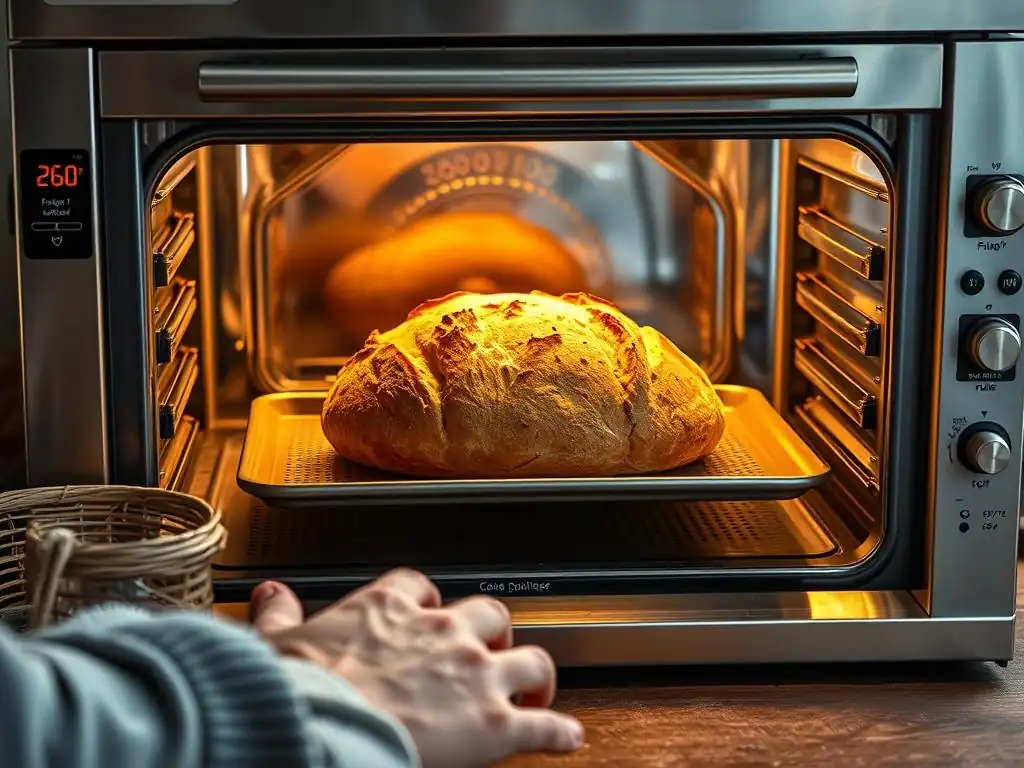
Welcome to BakeWithEase, where the joy of baking meets effortless execution! Are you ready to unlock the secrets to perfectly crusty loaves and airy crumbs? This month, we're diving deep into a question every serious baker asks: finding the best oven for sourdough baking. But what truly separates a good oven from a great one for achieving that artisan-quality sourdough at home? Join us as we explore essential features and considerations that will transform your baking experience, and discover what to look for in your next baking oven. Prepare to elevate your sourdough game!
- Finding the Best Oven for Sourdough Baking
-
Key Features for the Ideal Sourdough Oven
- Temperature Control: Achieve Baking Perfection with Precise Heat
- Steam Injection: Recreate Professional Bakery Conditions at Home
- Oven Size and Capacity: Bake Multiple Loaves with Ease
- Heat Distribution: Ensuring Even Baking Throughout Your Loaf
- Insulation and Heat Retention: Minimize Temperature Fluctuations for Consistent Results
- Beyond the Basics: Additional Features for the Serious Sourdough Baker
- Choosing the Right Oven for Your Sourdough
- Final Thoughts: Elevate Your Sourdough Baking with the Right Oven.
-
Frequently Asked Questions
- What is the most important feature to consider when choosing an oven for sourdough baking?
- What oven type (gas or electric) is generally recommended for sourdough baking, and why?
- How important is oven size when selecting an oven for sourdough?
- Should I prioritize an oven with a steam injection feature for sourdough baking?
- What role does temperature range play in selecting an oven for sourdough?
- Final Reflection: The Heart of the Home Baker: Choosing the Right Oven
- Unleash Your Inner Baker: Upgrade Your Baking Experience!
Finding the Best Oven for Sourdough Baking
Choosing the best oven for sourdough baking is a pivotal step in elevating your craft. While many home bakers start with the oven they have, understanding the specific needs of sourdough can guide you towards an appliance that truly supports exceptional results. Sourdough is a living dough, and its behavior in the oven is highly sensitive to environmental factors like temperature stability and moisture. A conventional oven might get the job done, but an oven with features tailored for high-hydration doughs and long fermentation times can dramatically improve your crust, crumb, and overall loaf appearance.
Selecting the ideal oven for sourdough isn't just about finding the hottest appliance; it's about finding one that offers control and consistency. Think of your oven as the final, critical stage in the sourdough journey, where all your careful fermentation and shaping come to fruition. The right oven environment ensures that your dough achieves maximum oven spring, develops a beautiful, golden crust, and maintains a moist, open crumb structure. Investing in an oven with features specifically beneficial for sourdough can transform inconsistent bakes into reliably stunning loaves, making the process more rewarding and your results more predictable.
Understanding the Sourdough Baking Challenge: Why Oven Choice Matters
Sourdough presents unique challenges that differ from baking standard yeasted breads or cakes. The high hydration levels often used in sourdough recipes require specific conditions during baking, particularly in the initial phase. Without the right environment, the crust can set too quickly, restricting the dough's ability to expand fully, leading to a dense crumb and less impressive oven spring – that magical rise that happens in the first 10-15 minutes of baking.
Moreover, sourdough relies on wild yeasts and bacteria, which can be more sensitive to temperature fluctuations than commercial yeast. Maintaining a consistent, high temperature is crucial for achieving a strong crust and ensuring the internal temperature reaches the point needed for a perfectly cooked loaf. An oven that struggles with temperature accuracy or loses heat rapidly can undermine even the most expertly prepared dough, resulting in frustrating inconsistencies bake after bake. This is why finding the best oven for sourdough baking involves looking beyond basic heating capabilities.
Key Features for the Ideal Sourdough Oven
Temperature Control: Achieve Baking Perfection with Precise Heat
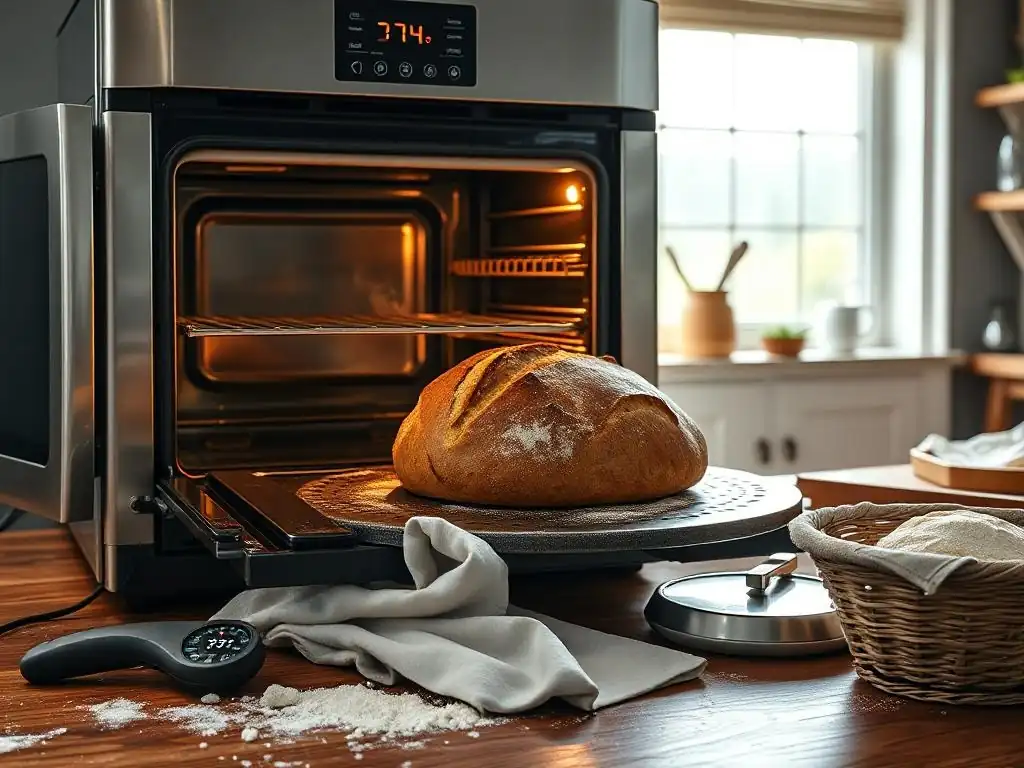
Precise and stable temperature control is arguably the most critical feature when seeking the best oven for sourdough baking. Sourdough often requires baking at high temperatures, typically between 450°F and 500°F (230°C and 260°C), especially during the initial phase to maximize oven spring. An oven that can accurately reach and maintain these temperatures without significant fluctuations is essential. Look for ovens that boast digital temperature displays and reliable thermostats.
Consider ovens that are known for their temperature accuracy. Some ovens might have a variance of ± 25°F (± 15°C) from the set temperature, which can negatively impact your bake. Ideally, you want an oven that stays within a much tighter range, perhaps ± 5-10°F (± 3-6°C), ensuring that when your recipe calls for 475°F, the oven is actually operating very close to that mark throughout the baking cycle. Consistent heat ensures uniform cooking and prevents issues like burnt bottoms or undercooked centers, contributing significantly to consistently great sourdough.
Steam Injection: Recreate Professional Bakery Conditions at Home
Steam is a sourdough baker's best friend during the initial baking phase. A moist environment in the oven prevents the crust from hardening prematurely, allowing the loaf to expand fully and achieve maximum oven spring. It also contributes to a thinner, crispier crust later in the bake. While many home bakers use methods like baking in a Dutch oven or placing a tray of hot water in the oven, a dedicated steam injection feature offers a more consistent and often more effective solution, making it a highly desirable feature in the best oven for sourdough baking.
Ovens with true steam injection capabilities introduce a controlled amount of steam directly into the oven cavity at the push of a button. This eliminates the guesswork and potential hazards associated with manual steam methods. Some high-end models even allow you to program the duration and intensity of the steam release. While not strictly necessary (many incredible loaves are baked without it), this feature brings you closer to the conditions found in professional deck ovens, leading to superior crust development and oven spring.
Oven Size and Capacity: Bake Multiple Loaves with Ease
The size and capacity of your oven matter, especially if you plan to bake multiple loaves simultaneously or work with larger batards and boules. A standard home oven typically has a capacity ranging from 4.5 to 6 cubic feet. Consider how many loaves you realistically want to bake at once. A 5 cubic foot oven can often comfortably accommodate two standard-sized boules baked in Dutch ovens or several smaller loaves directly on a baking steel or stone.
Beyond the overall volume, look at the usable rack space and the distance between rack positions. Can you fit a large loaf on a baking stone and still have room for steam setup (if not using injection)? If you plan on baking multiple loaves side-by-side, ensure the oven width is sufficient. Baking more than one loaf at a time requires adequate space for heat and steam to circulate evenly around each loaf, which is crucial for consistent results when aiming for the best oven for sourdough baking.
Heat Distribution: Ensuring Even Baking Throughout Your Loaf
Uneven heat distribution can lead to frustrating baking outcomes – loaves that are dark brown on one side and pale on the other, or crusts that are perfect on top but burnt on the bottom. For sourdough, where a uniform crust and even crumb are prized, consistent heat throughout the cavity is vital. This is influenced by the placement of heating elements, the design of the oven cavity, and whether the oven has a convection fan.
While traditional radiant heat works well, a convection fan can significantly improve heat distribution by circulating hot air. However, for sourdough, it's often recommended to turn the convection fan off during the initial steam phase to prevent the steam from being blown away too quickly. Look for ovens with robust heating elements and potentially multiple elements (top, bottom, and rear) that provide balanced heat.
Testing your oven with a simple bake like cookies placed across the entire rack can give you an idea of potential hot spots. An oven that minimizes hot and cold zones is a strong contender for the best oven for sourdough baking.
Insulation and Heat Retention: Minimize Temperature Fluctuations for Consistent Results
Good oven insulation is crucial for maintaining a stable temperature, especially when opening the door to add or remove steam or score your loaf. A well-insulated oven loses less heat when the door is briefly opened and recovers its temperature more quickly. This stability is vital for sourdough's development, particularly during the critical initial phase when the dough is expanding.
Ovens with thick insulation and well-sealed doors retain heat efficiently. This not only leads to more consistent baking results but can also be more energy-efficient. Pay attention to reviews that comment on how well an oven holds its temperature during the baking cycle. An oven that struggles to maintain its set temperature, cycling significantly up and down, can negatively impact crust development and oven spring. Excellent insulation is a quiet but powerful feature contributing to the performance of the best oven for sourdough baking.
Beyond the Basics: Additional Features for the Serious Sourdough Baker
Programmable Settings: Streamline Your Baking Process
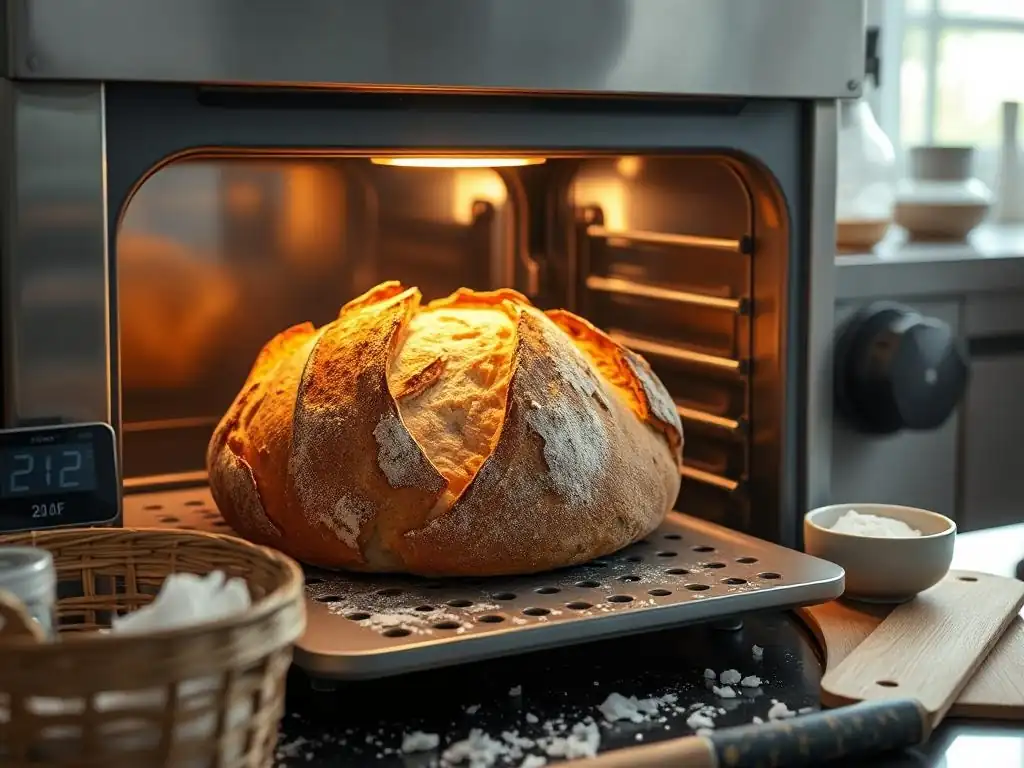
For bakers who follow specific baking profiles or want to automate certain steps, programmable settings can be a game-changer. Some advanced ovens allow you to set multiple stages within a single bake cycle. For instance, you could program the oven to preheat to 500°F, hold that temperature for a specific time with steam, then drop to 450°F for the remainder of the bake (perhaps with the convection fan turning on), and even turn off automatically.
This level of control removes the need for manual adjustments during the bake, allowing you to step away or prepare the next batch. While not strictly necessary for baking great sourdough, these features add convenience and precision, especially if you have a specific baking method that involves temperature changes or timed steam. For those seeking ultimate control and repeatability, programmable settings contribute to finding the best oven for sourdough baking for their needs.
Oven Light and Viewing Window: Monitor Your Bake Without Opening the Door
It might seem like a minor point, but a bright oven light and a large, clear viewing window are incredibly useful features for sourdough bakers. Opening the oven door, even for a moment, causes a significant drop in temperature and loss of precious steam. Being able to visually monitor the progress of your loaf – watching the oven spring, checking the crust color, and assessing the overall development – without disturbing the oven environment is invaluable.
A good viewing window allows you to see exactly what's happening inside, helping you decide when to remove the steam source, when to potentially tent the loaf to prevent over-browning, or when the loaf is perfectly done. This minimizes the temptation to open the door prematurely, preserving the stable heat and steam conditions vital for a successful sourdough bake. Don't underestimate the utility of a well-lit interior and a clear view when choosing your next baking appliance, especially if you're aiming for the best oven for sourdough baking.
Self-Cleaning Function: Simplify Oven Maintenance
While the self-cleaning function doesn't directly impact the quality of your sourdough bake, it significantly contributes to the overall user experience and maintenance of your oven. Baking sourdough, particularly at high temperatures or when using methods like placing water trays, can lead to spills and residue buildup inside the oven cavity. A clean oven isn't just aesthetically pleasing; it also helps prevent smoke and off-flavors from burnt residue transferring to your baked goods.
A self-cleaning cycle uses very high temperatures to turn baked-on food particles into ash, which can then be easily wiped away. This saves considerable time and effort compared to manual scrubbing. While you'll still need to wipe down racks and the door, the self-cleaning feature handles the toughest grime in the oven cavity, making cleanup much less of a chore. For bakers who use their oven frequently for high-temperature sourdough baking, this feature adds convenience and helps maintain the oven's performance over time.
Choosing the Right Oven for Your Sourdough
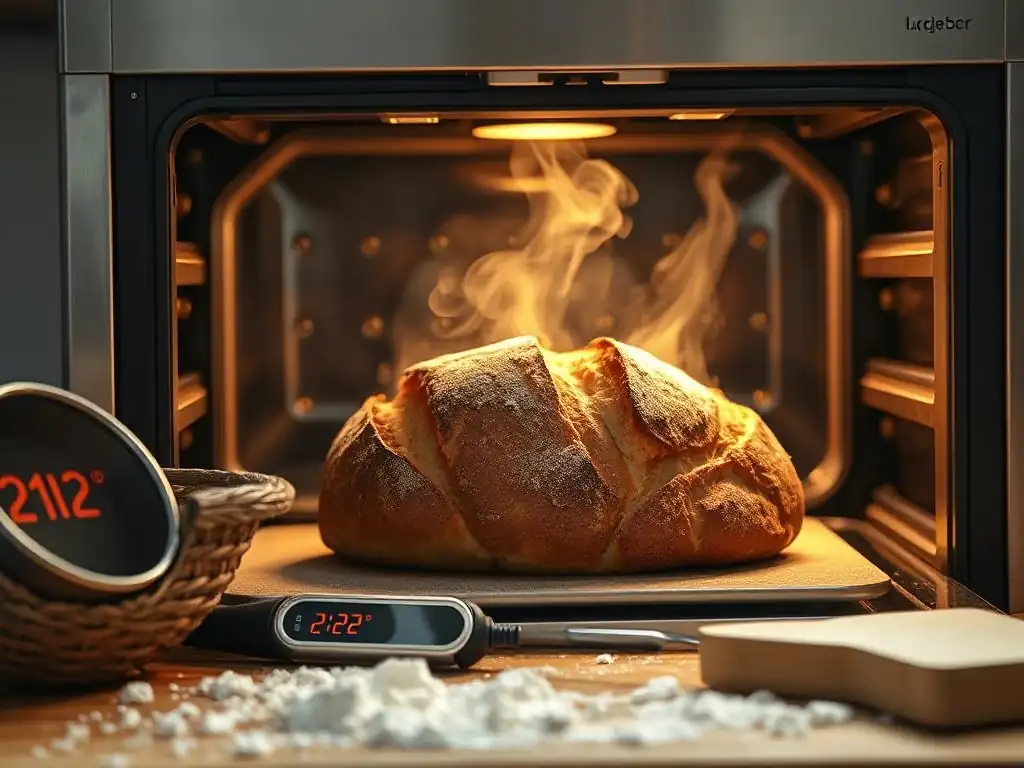
Selecting the best oven for sourdough baking ultimately depends on your budget, baking volume, and desired feature set. Not everyone needs a top-of-the-line model with every bell and whistle to bake fantastic sourdough.
Budget-Friendly Options for Beginners
For beginners or those on a tighter budget, focus on the core essentials: reliable temperature control and sufficient size. Many standard electric or gas ovens can produce excellent sourdough, especially when paired with effective steam methods like a Dutch oven or baking stone with a water tray.
- Prioritize ovens with decent insulation and a reputation for holding temperature relatively well.
- Look for models with simple, accurate temperature controls, even if they aren't digital.
- A standard capacity (around 5 cubic feet) is usually sufficient for one or two loaves.
- Consider consumer reviews focusing on temperature stability and overall durability.
Mid-Range Ovens for Experienced Bakers
Experienced bakers looking to upgrade without breaking the bank can find ovens that offer enhanced features beneficial for sourdough. This range often includes better temperature accuracy, improved insulation, and sometimes basic convection or steam assist functions.
- Seek out ovens with digital temperature controls and tighter temperature variance specifications.
- Some models in this range might offer 'steam clean' functions, which provide some moisture, though not true steam injection for baking.
- Better heat distribution and more robust heating elements are often found here.
- Consider ovens with slightly larger capacities or better rack configurations for multiple loaves.
High-End Ovens for Professional-Quality Results
For serious enthusiasts or those aiming for results comparable to a professional bakery, high-end ovens offer the most advanced features. These appliances often include precise steam injection, multi-stage programmable baking, superior insulation, and exceptional temperature accuracy and recovery.
- True steam injection with adjustable settings is a key differentiator in this category.
- Exceptional temperature stability, often within ± 2-5°F (± 1-3°C), is standard.
- Advanced convection systems with multiple modes for different baking needs.
- Often feature intuitive interfaces, self-cleaning cycles, and premium build quality.
- These ovens represent a significant investment but provide the tools for unparalleled control over the sourdough baking process.
Final Thoughts: Elevate Your Sourdough Baking with the Right Oven.
Finding the best oven for sourdough baking is a journey that involves understanding the specific demands of this rewarding craft and matching them to the capabilities of modern appliances. While skill and technique are paramount, the right tools can undoubtedly make the process smoother and the results more consistent. Whether you prioritize precise temperature control, the magic of steam, or the convenience of programmable settings, there's an oven out there that can help you achieve your sourdough goals.
Evaluate your current baking setup, consider the features that would most improve your process, and set a budget. Read reviews, compare specifications, and remember that the ideal oven is one that empowers you to bake the beautiful, delicious sourdough loaves you've always dreamed of. With the right oven features supporting your efforts, you're well on your way to mastering the art of sourdough baking.
Frequently Asked Questions
What is the most important feature to consider when choosing an oven for sourdough baking?
The most important feature is consistent and even heat distribution. This ensures your sourdough develops a proper crust and a uniform crumb.
What oven type (gas or electric) is generally recommended for sourdough baking, and why?
While both can work, electric ovens are often preferred for sourdough due to their more precise temperature control and ability to maintain consistent heat. This is crucial for sourdough's rise and crust development.
How important is oven size when selecting an oven for sourdough?
Oven size is important based on your needs. Consider how many loaves you typically bake at once. Ensure your oven is large enough to accommodate your baking style without overcrowding, which can affect air circulation.
Should I prioritize an oven with a steam injection feature for sourdough baking?
Yes, a steam injection feature is highly beneficial. Steam helps create a crispier crust and allows the sourdough to expand fully during the initial baking phase.
What role does temperature range play in selecting an oven for sourdough?
A wide temperature range is crucial. You need to be able to reach the high temperatures (450-500°F) often required for initial sourdough baking, as well as lower temperatures for longer baking times and thorough cooking of the interior.
Final Reflection: The Heart of the Home Baker: Choosing the Right Oven
The perfect sourdough loaf isn't just about the starter; it's about the oven that brings it to life. Finding the right appliance can elevate your baking experience from frustrating to fulfilling, transforming a simple hobby into a source of pride and delicious, crusty bread. The features we've explored—precise temperature control, even heat distribution, and sufficient capacity—aren't just technical specifications; they're the keys to unlocking the potential of your sourdough journey.
The quest for the ideal baking oven is a deeply personal one, reflecting our individual passions and the importance we place on creating something beautiful and nourishing from scratch. It's more than just acquiring an appliance; it's about investing in a process, a tradition, and a connection to something larger than ourselves. Bread is the staff of life,
a simple phrase that speaks volumes about its significance in our cultures and our lives. This pursuit of the perfect loaf, guided by the right tools, connects us to a rich culinary heritage and the satisfaction of creating something truly special.
Now, consider your own baking aspirations. What kind of baker are you? What are your priorities? Don't just settle for an oven; choose one that empowers you to reach your full potential. Embrace the journey of discovery, experiment with different techniques, and most importantly, savor the aroma and taste of your perfectly baked sourdough, knowing you’ve invested in the tools to make it happen. The perfect oven awaits – go find it, and let the baking begin!
Unleash Your Inner Baker: Upgrade Your Baking Experience!
Thanks for taking the time to explore the essential features of a great baking oven! We hope you now feel empowered to make an informed decision for your next kitchen upgrade. Ready to take the next step?
- Find Your Perfect Oven: Now that you know what to look for, start researching models that match your needs and budget. Consider the features we discussed—precision temperature control, even heating, and sufficient capacity—to find your ideal baking companion.
- Share Your Insights: Have a favorite oven model or a baking tip you'd love to share? Join the conversation in the comments below! Let's build a community of baking enthusiasts together.
- Challenge Yourself: This week, try a recipe you've always wanted to attempt. Your new baking knowledge will help you conquer even the most challenging creations.
What exciting baking projects will you tackle with your newfound oven expertise?