
Secret Weapons of Artisan Bakers: Equipment for Superior Crust & Crumb

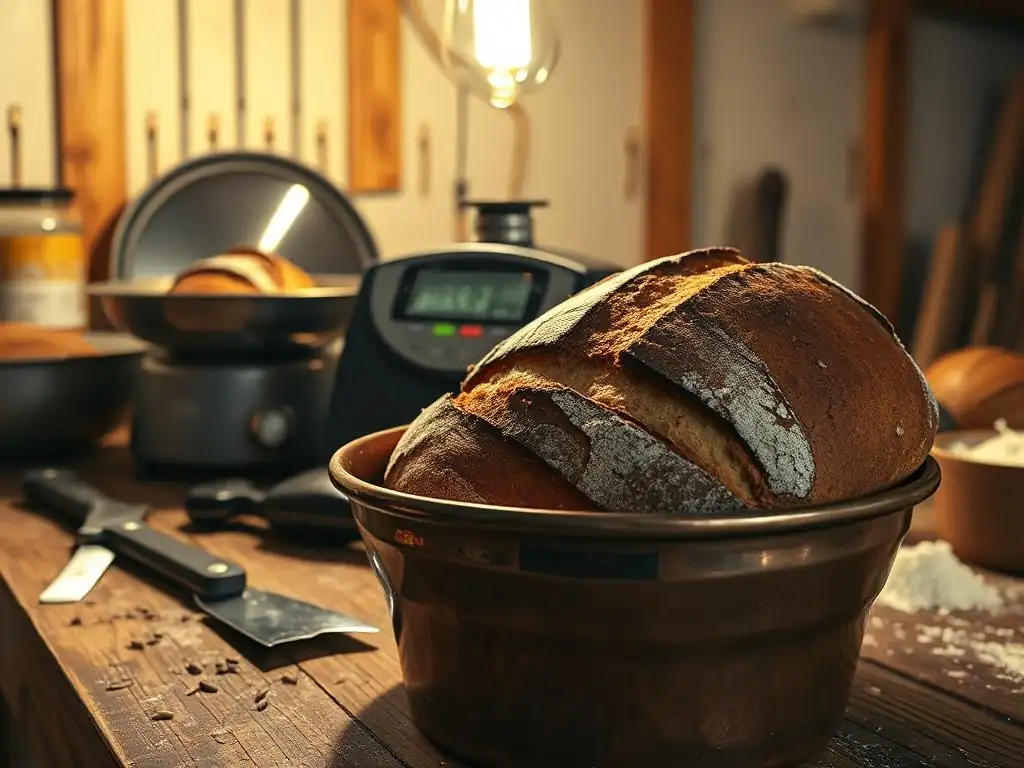
Welcome to BakeWithEase, your trusted guide to the delightful world of baking! Ever wondered what the real secret is behind that perfect crust and airy crumb in artisan bread? This isn't just about flour and water – it's about the right tools. Dive in and discover our essential artisan baking equipment tips that will transform your home baking into a masterpiece. What if the key to your baking dreams has been sitting in the wrong drawer? Let's find out!
- The Cornerstone of Crust: Ovens and Baking Surfaces
-
Frequently Asked Questions
- What is considered artisan baking equipment?
- Why is specialized equipment important for artisan baking?
- What's a banneton basket, and how does it help in artisan baking?
- Are there any affordable alternatives to expensive artisan baking equipment?
- What are some essential tips for using artisan baking equipment effectively?
- Final Reflection: The Alchemy of Artisan Bread: From Equipment to Experience
- Unleash Your Inner Baker: Craft the Perfect Loaf!
The Cornerstone of Crust: Ovens and Baking Surfaces
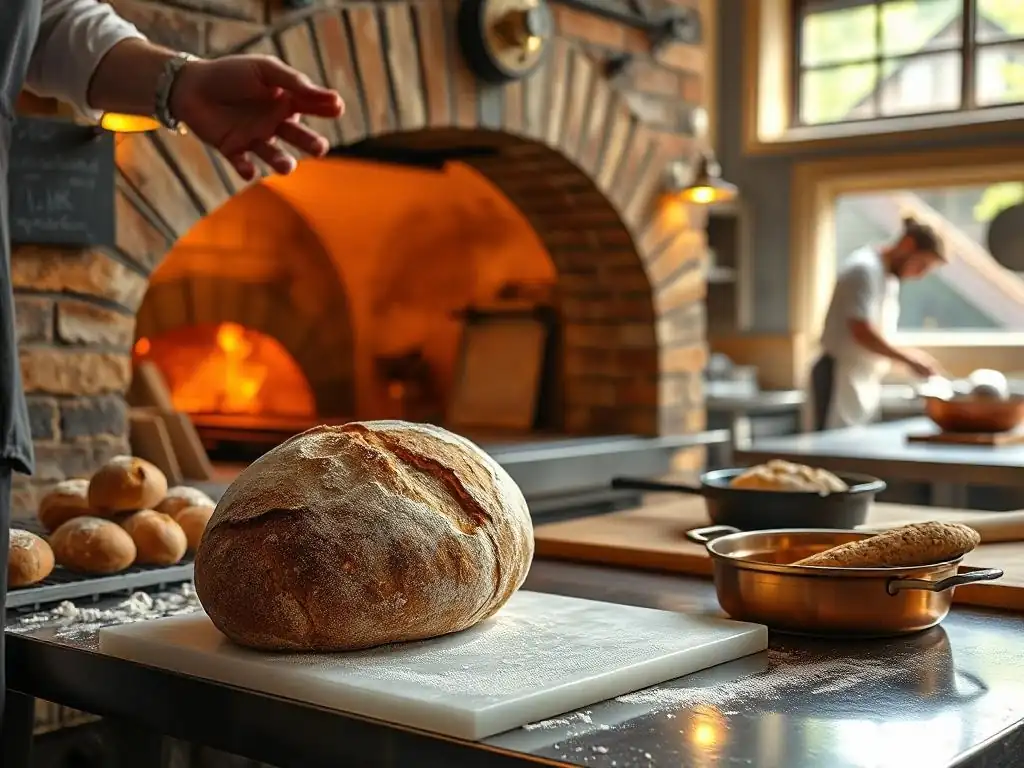
Achieving Oven Spring: The Vital Role of a Dutch Oven for Crusty Bread
One of the most transformative artisan baking equipment tips you'll ever receive is the use of a Dutch oven for baking sourdough. A Dutch oven, particularly a heavy cast-iron one, creates a sealed environment around your dough as it bakes. This trapped moisture, released by the dough itself, creates steam.
This initial blast of steam is absolutely crucial for achieving maximum "oven spring" – the rapid expansion of the dough during the first 10-15 minutes of baking. Without sufficient steam, the crust forms too quickly and becomes rigid, preventing the loaf from expanding fully and resulting in a denser crumb and a less impressive crust.
Beyond just capturing steam, a Dutch oven also acts as a radiant heat source. The heavy cast iron absorbs and retains heat incredibly well, transferring it evenly to the bottom of the loaf. This intense, consistent heat from all sides helps set the crust beautifully and ensures the loaf bakes through evenly.
Typically, a Dutch oven is preheated in an oven to temperatures around 450-500°F (230-260°C) for at least 30-60 minutes before the dough is placed inside. This high initial temperature combined with the steam environment is the secret weapon for developing that signature crackling, deeply colored crust that defines artisan sourdough bread. Mastering the use of this piece of artisan baking equipment is a game-changer.
Le Creuset Dutch Oven Review: A Baker's Investment?
Le Creuset Dutch ovens are often seen as the gold standard in cookware, and their performance in sourdough baking is certainly impressive. Made from enameled cast iron, they offer exceptional heat retention and distribution, perfect for achieving consistent results. The enamel coating prevents sticking and makes cleanup significantly easier compared to raw cast iron, which can be a major plus when dealing with sticky dough residues. Their tight-fitting lids effectively trap steam, creating that essential humid environment for oven spring.
However, a significant consideration for many home bakers is the price point. Le Creuset Dutch ovens represent a substantial investment, often costing several hundred dollars. While their durability and performance are top-tier, lasting for generations if cared for properly, bakers seeking effective artisan baking equipment tips might wonder if the performance justifies the cost compared to more budget-friendly options. For serious bakers who value aesthetics, ease of cleaning, and lifetime durability, a Le Creuset can be a worthwhile splurge, but excellent crust and crumb are achievable with less expensive alternatives.
Lodge Combo Cooker vs. Challenger Bread Pan: Alternative Dutch Oven Options
For bakers looking for effective, yet perhaps more budget-friendly or specialized, artisan baking equipment, the Lodge Combo Cooker and the Challenger Bread Pan offer compelling alternatives to traditional Dutch ovens. The Lodge Combo Cooker is a two-piece cast iron set where the lid doubles as a skillet.
This design is particularly well-suited for sourdough because the shallower skillet section (which acts as the base) makes it easier to load the dough compared to lowering it into a deep pot. It provides excellent heat retention and steam capture at a fraction of the cost of premium enameled options, often available for under $50-$60.
The Challenger Bread Pan, on the other hand, is a purpose-built cast iron pan designed specifically for bread baking. Its unique shallow base and deep lid (or vice versa, depending on how you use it) are engineered for easy dough loading and optimal steam circulation. The shape is often elongated to accommodate batards as well as boules.
While more expensive than the Lodge Combo Cooker, it's generally less costly than high-end enameled Dutch ovens and is praised by many artisan bakers for its ergonomic design and consistent results. Both options demonstrate that effective artisan baking equipment tips can lead you to tools tailored to specific needs and budgets.
Baking Stones and Steel: Enhancing Crust Development
Beyond the Dutch oven method, using a baking stone or baking steel is another cornerstone technique for developing a fantastic crust, particularly when baking loaves directly on a hot surface. These thermal masses are preheated in the oven, typically for an hour or more at temperatures ranging from 450°F to 550°F (230°C to 290°C). When the dough is placed directly onto this searing-hot surface, the intense heat transfer to the base of the loaf is instantaneous. This immediate heat helps the bottom crust set rapidly and promotes excellent oven spring from below, preventing a pale, soft bottom crust.
The mass of the stone or steel also helps stabilize the oven temperature. Every time you open the oven door, heat escapes, causing the temperature to drop. A preheated stone or steel acts as a heat reservoir, quickly radiating heat back into the oven cavity and minimizing temperature fluctuations.
While they don't trap steam like a Dutch oven, they are often used in conjunction with other steaming methods (like placing a tray of hot water or lava rocks in the oven) when baking freeform loaves. Incorporating a stone or steel is a key element in many artisan baking equipment tips aimed at achieving that desirable crispy crust.
Baking Steel vs. Baking Stone: Which is Right for Your Sourdough Bread?
The choice between a baking steel and a baking stone often comes down to heat transfer properties and durability. Baking steels, typically made from thick carbon steel, conduct heat much more efficiently and retain it longer than ceramic or cordierite baking stones. This means they can impart more intense heat to the base of the loaf, often resulting in a more vigorous oven spring and a crispier bottom crust. Steels also heat up faster and are virtually indestructible – you don't have to worry about them cracking from thermal shock or accidental drops.
Baking stones, while not as conductive as steel, still provide excellent results and are often more affordable. Ceramic or cordierite stones absorb heat and radiate it more gently than steel, which some bakers prefer for a slightly less aggressive bottom crust. They are also lighter than steels of comparable size.
However, stones are susceptible to cracking if subjected to sudden temperature changes (like placing a frozen pizza on a hot stone) or physical impact. For those prioritizing maximum heat transfer and durability, steel is often the preferred choice, while stones offer a balance of performance and cost-effectiveness, both valuable pieces of artisan baking equipment.
Fibrament-D Baking Stone: A Durable and Reliable Option
The Fibrament-D baking stone is a popular choice among serious home bakers looking for a durable and high-performing stone. Unlike some ceramic stones that can be fragile, Fibrament-D stones are made from a proprietary heat-resistant material designed to withstand high temperatures and minimize the risk of cracking from thermal shock. They are known for their excellent heat retention and even heat distribution, providing a consistent baking surface for your sourdough loaves.
These stones are typically thicker than standard pizza stones, often ranging from 3/4 inch to 1 inch in thickness, which contributes significantly to their heat storage capacity. This extra thermal mass ensures that the stone doesn't cool down too much when the dough is loaded, maintaining a high temperature for optimal crust development. While they require a longer preheating time compared to thinner stones or steels (often 60-90 minutes), their reliability and performance make them a worthwhile piece of artisan baking equipment for achieving consistently great results.
Frequently Asked Questions
What is considered artisan baking equipment?
Artisan baking equipment typically includes tools that enhance crust development, crumb structure, and overall baking precision. This can range from specialized ovens to simple tools like banneton baskets.
Why is specialized equipment important for artisan baking?
Specialized equipment helps control crucial factors like temperature and humidity, leading to superior results compared to standard baking methods. These tools allow for greater consistency and quality.
What's a banneton basket, and how does it help in artisan baking?
A banneton basket is a proofing basket that helps dough maintain its shape and develop a crisp crust. It also wicks away moisture, creating a better environment for fermentation.
Are there any affordable alternatives to expensive artisan baking equipment?
Yes! While a professional oven is ideal, you can achieve great results using a Dutch oven or baking stone in your home oven. These options offer excellent heat retention.
What are some essential tips for using artisan baking equipment effectively?
Always follow the manufacturer's instructions and thoroughly research the best techniques for each piece of equipment. Proper preheating and consistent temperature monitoring are crucial for success.
Final Reflection: The Alchemy of Artisan Bread: From Equipment to Experience
The pursuit of the perfect loaf transcends mere technique; it's a journey fueled by passion, precision, and the right tools. The quest for superior crust and crumb, as explored in this article, is a testament to the power of understanding your equipment and harnessing its potential. This isn't just about baking bread; it's about crafting an experience, a sensory delight that connects us to tradition and artistry.
The impact of artisan baking extends far beyond the kitchen table. It represents a return to mindful creation, a counterpoint to the mass-produced and often impersonal nature of modern food production. Bread is the staff of life,
a simple phrase, yet it encapsulates the profound connection between sustenance and culture. The tools we use, from the humble banneton to the precise oven, are not just instruments; they are extensions of our creativity, allowing us to shape and nurture something truly special. This mindful approach to baking, fueled by an understanding of our equipment, is a powerful antidote to the fast-paced, often disconnected world we inhabit.
Now, consider your own baking journey. What tools have you found indispensable? What techniques have you mastered? More importantly, what new horizons await you? I encourage you to explore the world of artisan baking further, to experiment with different techniques and equipment, and to discover the unique alchemy that transforms simple ingredients into something extraordinary. Embrace the process, savor the results, and share the joy of handcrafted bread with those you love. The journey of the artisan baker is a lifelong pursuit, and the rewards are immeasurable.
Unleash Your Inner Baker: Craft the Perfect Loaf!
Thanks for diving into the world of artisan baking! We hope you now feel equipped to conquer even the most challenging doughs. Ready to put your new knowledge into practice?
- Bake your dream loaf today! Experiment with a new technique or recipe, focusing on those crucial details we discussed.
- Share your baking journey! Post a picture of your masterpiece on social media and tag us – we'd love to see your results! Use #BakeWithEaseMasterpiece.
- Join our online community! Connect with fellow bakers, share tips, and get inspired by others' creations.
What unique ingredient or technique will you try to elevate your next bread?