
Baking Large Quantities of Scones or Biscuits Effortlessly


Welcome to BakeWithEase, your trusted guide to baking bliss! Ever dreamed of effortlessly whipping up large batches of scones for your next gathering? Discover the secrets to baking perfection, even when scaling up your recipes. Read on to unlock our tips and tricks for creating delicious, crowd-pleasing scones with ease, perfect for any occasion!
- Baking Large Quantities of Scones or Biscuits Effortlessly: BakeWithEase Guide
- Introduction: Mastering Easy Large Batch Scones for Crowds
- Planning for a Large Batch: Key Considerations for Scone & Biscuit Success
- Essential Equipment for Effortless Large Batch Scone & Biscuit Production
- Step-by-Step Guide: Baking Easy Large Batch Scones
- Streamlining the Process: Time-Saving Tips for Baking Scones and Biscuits in Bulk
- Troubleshooting Common Issues When Baking Large Scone & Biscuit Batches
- Flavor Variations for Large Batch Scones and Biscuits: Appealing to Diverse Tastes
- Serving Suggestions: Presenting Your Large Batch Scones and Biscuits Attractively
- Conclusion: Confidently Bake Delicious Scones and Biscuits for Any Occasion with Ease
-
Frequently Asked Questions
- How do I scale a scone recipe to make a large batch without altering the texture?
- What's the best way to prevent scones from drying out when baking a large batch?
- Can I freeze scone dough before baking, and if so, what's the best method?
- What are some tips for ensuring even baking across a large batch of scones?
- What are some easy variations I can add to a large batch of scones?
- Final Reflection: The Joy of Sharing, One Scone at a Time
- Unleash Your Inner Baker: Scale Up Your Scone Game!
Baking Large Quantities of Scones or Biscuits Effortlessly: BakeWithEase Guide
Introduction: Mastering Easy Large Batch Scones for Crowds
Baking for a crowd can feel daunting, but with the right approach, creating delicious, easy large batch scones or biscuits becomes a smooth and rewarding process. Whether you're hosting a large family brunch, catering a community event, or stocking up for a busy week, scaling your favorite recipes requires planning and efficient techniques.
This guide is designed to help you navigate the challenges of baking large quantities, ensuring every scone and biscuit is as perfect as if you baked a small batch. We'll cover everything from ingredient selection and equipment needs to baking strategies and storage tips, empowering you to confidently produce impressive volumes of baked goods with ease.
Planning for a Large Batch: Key Considerations for Scone & Biscuit Success
Determining the Right Quantity of Scones or Biscuits for Your Event
Calculating how many scones or biscuits you need is the first crucial step in planning your easy large batch scones project. Consider the nature of the event and your guests' appetites. For a brunch where scones are just one item among many, guests might have one or two. At a tea party where they are a main feature, they might enjoy two or three. A general rule of thumb is to estimate 1.5 to 2 scones or biscuits per person for a mixed menu, or 2 to 3 per person if they are a primary offering.
For example, if you're hosting a party of 40 people and serving a full brunch buffet, aiming for 60-80 scones (1.5-2 per person) would be a reasonable target. If it's a dedicated scone and tea event for 25 guests, planning for 50-75 scones (2-3 per person) would be more appropriate. It's often better to slightly overestimate than run out, as leftover scones can usually be enjoyed later or frozen. Always consider the size of your planned scones – smaller ones mean guests might take more, while larger ones satisfy with just one.
Scaling Your Favorite Scone and Biscuit Recipes for Big Batches
Scaling a recipe isn't always as simple as multiplying every ingredient by the same factor, though for scones and biscuits, it's often quite straightforward. A typical recipe might yield 8-12 standard-sized scones. To bake 60-80 scones, you'll likely need to multiply your recipe by a factor of 5 to 10. While dry ingredients like flour, sugar, baking powder, and salt can usually be multiplied directly, liquids and fats need careful consideration.
For large quantities, precision is key. Using a kitchen scale to weigh ingredients, especially flour (e.g., needing 5-10 lbs of flour for a large batch) and butter (e.g., 2-4 lbs), provides far more accuracy than volume measurements.
Be mindful of how the mixing time might change when dealing with a much larger volume of dough; overworking the dough is easier with a large batch and can lead to tough scones or biscuits. It's wise to do a small test batch with the scaled recipe first if time allows, especially if it's a recipe you haven't scaled before, to ensure proportions are correct before committing to the full large batch scones.
Choosing the Best Ingredients for Large-Scale Scone and Biscuit Baking
The quality of your ingredients becomes even more critical when baking easy large batch scones because any slight deficiency is magnified across dozens of finished products. Start with fresh, high-quality flour, ideally unbleached all-purpose or a dedicated pastry flour for a tender crumb. Ensure your leavening agents – baking powder and baking soda – are fresh and active; check the expiration dates, as inactive leavening will result in flat, dense scones, a major disappointment when you've baked a large quantity.
Cold butter is paramount for flaky scones and biscuits. When working with large amounts (e.g., several pounds), keep the butter well-chilled and work quickly. Some bakers even cube the butter and return it to the freezer for 10-15 minutes before cutting it into the dry ingredients. Use fresh, cold liquid – buttermilk, milk, or cream – as specified by your recipe. Using fresh, cold ingredients ensures the proper chemical reactions occur during baking, leading to light, airy results every time, essential for successful large batch scones.
Essential Equipment for Effortless Large Batch Scone & Biscuit Production

The Importance of a Large Capacity Mixer for Scone and Biscuit Dough
Attempting to hand-mix the dough for easy large batch scones (e.g., using 5+ pounds of flour) is incredibly labor-intensive and makes it difficult to evenly distribute the fat without overworking the dough. This is where a large capacity stand mixer becomes indispensable. A standard 5-quart mixer can handle dough made with maybe up to 3-4 pounds of flour, but for truly large batches, a 6-quart, 7-quart, or even 8-quart mixer is highly recommended.
Using a stand mixer with the paddle attachment allows you to efficiently cut in the cold butter into the dry ingredients, creating that crucial sandy or pea-sized texture necessary for flakiness, without warming the butter with your hands. Once the liquid is added, the mixer can quickly bring the dough together.
However, it's crucial to mix only until the dough just comes together – usually within 30-60 seconds after adding liquid – to avoid developing the gluten too much, which would result in tough biscuits or scones. A powerful mixer makes this rapid, precise mixing possible even with a significant volume of dough.
Selecting the Right Baking Sheets for Evenly Baked Scones and Biscuits
For easy large batch scones, you'll need multiple baking sheets to bake your large quantity efficiently. Standard half-sheet pans (approximately 13x18 inches) are ideal. Avoid using dark-coated pans, as they can cause the bottoms of your scones or biscuits to brown too quickly before the centers are cooked through. Light-colored aluminum pans are preferred for more even heat distribution.
You'll likely need several sheets, perhaps 4-6 or more, depending on the size of your oven and the total number of scones. A typical half-sheet pan can comfortably hold 9-12 standard-sized scones or biscuits, spaced about 1-2 inches apart to allow for expansion. Using parchment paper or silicone baking mats on your sheets is highly recommended. This prevents sticking, makes cleanup significantly easier when dealing with many batches, and promotes even browning on the bottom. Ensure your baking sheets are flat and not warped, as warped pans can lead to uneven baking.
Measuring Tools for Accurate Large Batch Baking
Accuracy in measurement is paramount when scaling recipes for large batch scones. While volume cups are acceptable for small batches, they can be inconsistent, especially when dealing with large quantities of flour, which can be packed differently each time. A reliable digital kitchen scale is essential for weighing dry ingredients accurately in pounds and ounces (or grams). For example, a recipe might call for 4 cups of flour, which could vary in weight by several ounces depending on how it's scooped; weighing 1 lb 2 oz of flour ensures precision every time.
You'll also need large liquid measuring cups, perhaps 4-cup (1-liter) capacity or larger, to measure out significant volumes of milk or buttermilk accurately. Sturdy measuring spoons are necessary for leavening agents and salt, ensuring you add the correct, scaled amount. Having a set of reliable, large-capacity measuring tools streamlines the process and minimizes the risk of errors that can compromise the texture and rise of your easy large batch scones.
Step-by-Step Guide: Baking Easy Large Batch Scones
Preparing the Dough: Efficient Techniques for Large Quantities
When preparing dough for easy large batch scones, efficiency is key. Begin by accurately weighing all your dry ingredients into your large mixer bowl. Add your cold, cubed butter. Use the paddle attachment on low speed to cut the butter into the dry ingredients until the mixture resembles coarse crumbs with some pea-sized pieces of butter throughout. This process might take a few minutes in a large mixer.
Once the butter is cut in, add your cold liquid all at once. Mix on low speed just until the dough barely comes together. It should look shaggy and slightly sticky. Avoid the temptation to overmix; stop as soon as there are no dry streaks of flour visible. For a very large batch, you might need to scrape down the sides of the bowl once or twice to ensure all the dry bits are incorporated. The goal is to handle the dough as little as possible to keep the butter cold and prevent gluten development.
Cutting and Shaping: Ensuring Uniform Scones and Biscuits
Uniformity in cutting and shaping is vital for ensuring your large batch scones bake evenly. Turn the shaggy dough out onto a lightly floured surface. Gently pat the dough into a rectangle or square about 3/4 to 1 inch thick. Avoid kneading or overworking it. For biscuits, you can use a biscuit cutter to cut straight down without twisting (twisting can seal the edges and prevent a good rise). For scones, you can cut the rectangle into squares or triangles, or use a round cutter.
Using a cutter helps maintain consistent size and shape across your large batch scones, which is crucial when baking many pieces at once. Gather the scraps gently, press them together, pat them out again, and cut more shapes until all the dough is used. Place the cut scones or biscuits onto your prepared baking sheets, spacing them about 1-2 inches apart. For a softer edge, place them closer together so they touch. For crispier edges, space them further apart.
Baking for a Crowd: Achieving Consistent Results in the Oven
Baking easy large batch scones means potentially filling your oven with multiple baking sheets, which can affect oven temperature and airflow. Preheat your oven to the specified temperature (typically 400-425°F or 200-220°C) well in advance, allowing it to preheat for at least 20-30 minutes to ensure it's fully up to temperature. If baking multiple sheets at once, position oven racks evenly in the upper and lower thirds of the oven.
Place the baking sheets in the oven, leaving space between them and the oven walls for air circulation. Baking time for a single sheet might be 12-15 minutes, but when baking multiple sheets, it could take slightly longer, perhaps 15-20 minutes or more. Midway through the baking time (around 8-10 minutes), rotate the baking sheets – move the top sheet to the bottom rack and the bottom sheet to the top rack, and turn each sheet 180 degrees.
This helps promote even browning and ensures all your large batch scones bake properly. Scones and biscuits are done when they are golden brown on top and bottom and have risen nicely. Check for doneness by breaking one open; the inside should be cooked through and fluffy.
Cooling and Storing: Preserving Freshness and Flavor
Once your easy large batch scones or biscuits are baked to golden perfection, immediately transfer them from the hot baking sheets to wire cooling racks. Cooling on racks is essential to allow air to circulate around the bottom, preventing them from becoming soggy from residual heat. Leave them on the racks until they are completely cooled, which might take 20-30 minutes depending on their size and your kitchen temperature.
For storing your large batch scones, ensure they are fully cooled before placing them in airtight containers or wrapping them tightly in plastic wrap or foil. Store them at room temperature for up to 1-2 days. For longer storage, especially when you have baked a significant quantity, refrigerate them for up to a week or freeze them. Properly stored, your large batch scones will retain their quality and flavor, ready to be enjoyed whenever needed.
Streamlining the Process: Time-Saving Tips for Baking Scones and Biscuits in Bulk
Batch Baking Strategies: Optimizing Oven Space and Time
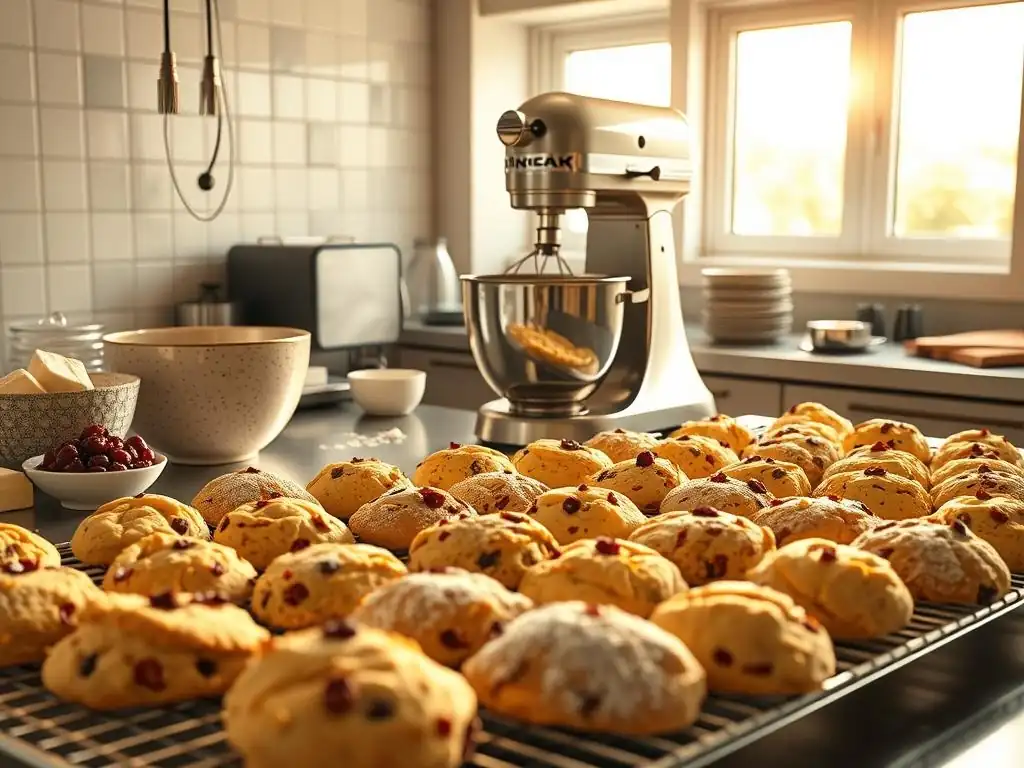
When tackling easy large batch scones, your oven capacity is often the bottleneck. To optimize time, plan your baking in batches that fit comfortably in your oven while allowing for proper air circulation. If your oven can handle two sheets at a time, prepare enough dough for two sheets, bake them, cool them, and then immediately load the next two sheets. While one batch bakes, you can be cutting the next batch of dough.
Consider the total baking time required. If each batch takes 15 minutes and your oven fits two sheets (holding perhaps 20-24 scones), and you need 80 scones, you'll need about 4 batches, totaling roughly 60 minutes of oven time, plus preheating. Having multiple sets of baking sheets is a major advantage here, allowing you to continuously load sheets into the oven as soon as a batch is finished without waiting for pans to cool and be re-lined.
Pre-Mixing Dry Ingredients for Faster Preparation
One simple yet effective way to streamline the process of baking large batch scones is to pre-measure and mix your dry ingredients. Combine the flour, sugar, baking powder, salt, and any dry spices (like cinnamon or nutmeg) for your entire large batch ahead of time. Store this mixture in a large airtight container or zip-top bag at room temperature.
When you're ready to bake, the first step of combining dry ingredients is already done. This saves several minutes per batch and reduces the chance of measurement errors when working under pressure. Simply scoop or weigh the required amount of the pre-mixed blend for each portion of dough you are making (e.g., if you split your large batch into three mixing portions, measure out one-third of the pre-mix for each). This allows you to move directly to cutting in the cold butter, significantly speeding up the initial dough preparation phase for your easy large batch scones.
Freezing Scones and Biscuits for Future Events
Baking easy large batch scones doesn't mean they all have to be consumed immediately. Freezing is an excellent way to preserve your efforts and have fresh-baked goods ready for future occasions. You can freeze scones or biscuits either baked or unbaked. For unbaked freezing, cut out the shapes and place them individually on a baking sheet lined with parchment paper. Freeze until solid, which usually takes 1-2 hours.
Once frozen solid, transfer the unbaked scones or biscuits to a freezer-safe bag or airtight container, layering with parchment paper if necessary to prevent sticking. Label with the date and baking instructions. They can be stored in the freezer for up to 1-2 months. To bake from frozen, place them on a baking sheet and bake directly from frozen, adding a few extra minutes (typically 3-5 minutes) to the normal baking time.
This allows you to bake large batch scones ahead of time and enjoy them fresh from the oven whenever a need arises. Baked scones can also be frozen after cooling completely; wrap individually or store in airtight containers. Reheat in a low oven (300°F/150°C) until warmed through.
Troubleshooting Common Issues When Baking Large Scone & Biscuit Batches
Dealing with Dry or Crumbly Scone and Biscuit Dough
A common issue when scaling up recipes for large batch scones is ending up with dough that is too dry or crumbly. This often happens if the ratio of dry ingredients to liquid is off, or if the dry ingredients weren't fully incorporated. Ensure you are measuring your flour accurately, ideally by weight, as volume measurements can be inconsistent. If the dough feels too dry after adding the specified amount of liquid and mixing just until combined, you can add a tiny amount more liquid, a tablespoon at a time, mixing minimally until it just comes together.
Another reason for crumbliness can be insufficient fat (butter). Ensure your butter is properly cut into the dry ingredients and is evenly distributed. If your dough is excessively dry and crumbly, it might indicate that the liquid wasn't cold enough or the butter wasn't cold enough, causing it to melt into the flour prematurely rather than creating distinct pockets that contribute to tenderness. For easy large batch scones, pay close attention to the dough's texture as you mix, stopping as soon as it forms a cohesive mass.
Preventing Over-Browning or Under-Baking
Achieving consistent baking results across large batch scones can be tricky, especially when filling the oven. Over-browning on the outside with an under-baked interior is usually a sign that the oven temperature is too high or the baking time is too long for the temperature. Ensure your oven thermostat is accurate (an oven thermometer is a good investment). If the tops are browning too quickly, you can loosely tent the baking sheet with aluminum foil partway through baking.
Under-baking, resulting in doughy centers, can occur if the oven temperature is too low, if the baking time is too short, or if the scones are too large or too close together on the pan, hindering proper heat circulation. As mentioned earlier, rotating pans during baking is crucial for even heat exposure. If you're baking multiple sheets, the baking time will likely be longer than for a single sheet.
Check for doneness by looking for a golden-brown color, a good rise, and testing one scone from the center of a pan – it should be cooked through. Adjust baking time as needed based on your specific oven and batch size.
Maintaining Consistent Scone and Biscuit Size and Shape
Inconsistent size and shape among your large batch scones can lead to uneven baking, with smaller pieces finishing much faster than larger ones. Using a scone or biscuit cutter is the best way to achieve uniformity. When rolling or patting out the dough, aim for a consistent thickness (typically 3/4 to 1 inch) across the entire surface before cutting.
If you are cutting squares or triangles, use a ruler or measure by eye to keep the dimensions relatively consistent. When using a cutter, resist the urge to twist the cutter as you press down, as this can seal the edges and impede the rise. Simply press straight down firmly. When gathering scraps, handle them minimally and gently press them back together without kneading before cutting additional shapes. While a very slight variation is natural, striving for consistency in thickness and shape will greatly improve the outcome of your easy large batch scones.
Flavor Variations for Large Batch Scones and Biscuits: Appealing to Diverse Tastes
Savory Scone and Biscuit Options for Brunch or Appetizers
While often associated with sweet treats, large batch scones and biscuits offer fantastic savory possibilities perfect for brunch or as appetizers. Classic savory additions include shredded cheddar cheese and chives, or crumbled bacon and sharp cheddar. You can incorporate herbs like rosemary, thyme, or dill into the dry ingredients. For a touch of spice, add a pinch of cayenne pepper or some finely diced jalapeños along with cheese.
When adding savory mix-ins to a large batch scones recipe, ensure they are distributed evenly throughout the dough before adding the liquid. For example, if adding 2 cups of shredded cheese and 1/2 cup of chopped chives to a batch yielding 60 scones, make sure these are well-mixed into the dry ingredients and butter mixture. Savory scones or biscuits pair wonderfully with gravies, soups, or served alongside eggs and breakfast meats.
Sweet Scone and Biscuit Recipes for Dessert or Tea Time
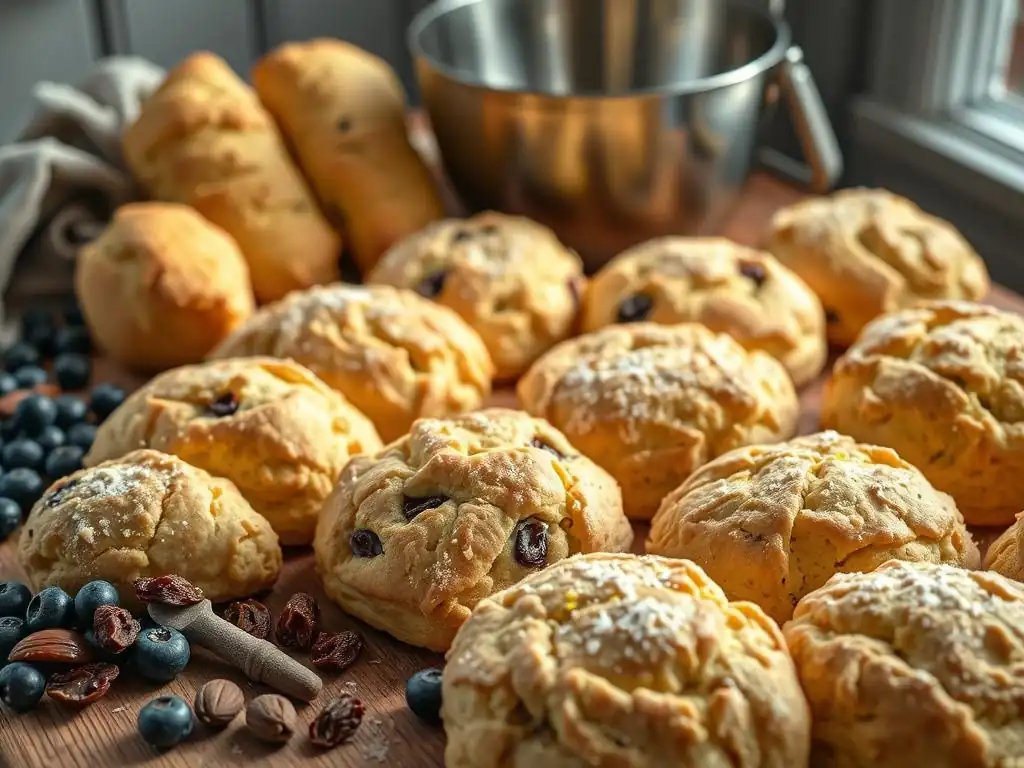
Sweet easy large batch scones are a staple for tea time, breakfast, or dessert. The possibilities for flavor variations are nearly endless. Popular choices include dried cranberries and orange zest, blueberries, chocolate chips (mini chips work well in dough), or lemon zest and poppy seeds. You can also add spices like cinnamon, cardamom, or nutmeg to the dry ingredients.
When adding fruit, especially fresh fruit like blueberries, be mindful that excess moisture can slightly change the dough consistency. If using fresh berries, you might need to reduce the liquid slightly or toss the berries in a tablespoon of flour before adding them to the dough to prevent them from sinking and to absorb some moisture. For a batch yielding 80 scones, you might add 4-6 cups of mix-ins like chocolate chips or dried fruit. Consider drizzling a simple glaze (powdered sugar and milk/lemon juice) over the cooled large batch scones for extra sweetness and visual appeal.
Adapting Recipes to Accommodate Dietary Restrictions
Baking large batch scones for a diverse group often means considering dietary needs. Many scone and biscuit recipes can be adapted to be gluten-free or dairy-free, though this requires specific ingredient substitutions. For gluten-free large batch scones, use a reliable gluten-free all-purpose flour blend designed for baking; you'll likely need to follow a recipe specifically developed for gluten-free ingredients, as substituting cup-for-cup isn't always successful in large quantities.
For dairy-free options, substitute dairy milk or buttermilk with plant-based alternatives like almond milk, soy milk, or oat milk, often with a tablespoon of vinegar or lemon juice added to mimic buttermilk's acidity. Use a solid plant-based butter substitute instead of dairy butter. When baking for a large group with dietary restrictions, it's best to bake these alternative versions in separate, smaller batches to avoid cross-contamination and ensure ingredient accuracy for each specific need, rather than trying to adapt the entire large batch scones recipe at once. Clearly label these batches after baking.
Serving Suggestions: Presenting Your Large Batch Scones and Biscuits Attractively
Creative Plating Ideas for Scones and Biscuits
Presenting your easy large batch scones attractively enhances the enjoyment for your guests. Instead of simply piling them onto a plate, consider using tiered stands for a tea-party feel, or arranging them in woven baskets lined with cloth napkins for a rustic look. For a brunch buffet, arrange different flavors of large batch scones on separate platters, perhaps garnishing sweet ones with a sprinkle of powdered sugar or a drizzle of glaze, and savory ones with a sprinkle of fresh herbs.
Consider the color and texture of your scones and biscuits. A mix of golden-brown biscuits and slightly sweeter, perhaps glazed, scones adds visual interest. For individual servings, place a scone or biscuit on a small plate alongside small ramekins of spreads. If serving warm, keep them covered with a clean towel in a basket to retain heat while on display. Thoughtful presentation shows care and makes your large batch scones even more appealing.
Complementary Spreads and Toppings for Enhanced Flavor
The right accompaniments can elevate your large batch scones or biscuits from simple baked goods to a truly special treat. For sweet scones, classic pairings include clotted cream (if available), butter, and various jams or preserves (strawberry, raspberry, apricot are favorites). Lemon curd is another delightful option. A simple pat of cold butter melting into a warm scone is hard to beat.
For savory biscuits or scones, butter is always a good choice. They are also excellent served with gravy (sausage gravy for breakfast biscuits is a classic), or alongside savory spreads like pimento cheese or herb butter. Consider a variety of options to cater to different tastes among your guests. For a large event, portioning out smaller servings of spreads into individual cups or small bowls makes serving easier and more hygienic. Offering 2-3 types of jam and butter is usually sufficient for sweet large batch scones.
Pairing Scones and Biscuits with Beverages
The beverage pairing can complete the experience of enjoying your easy large batch scones. For sweet scones, hot tea is the quintessential partner, with options ranging from classic black teas like Earl Grey or English Breakfast to herbal or green teas. Coffee is another popular choice, whether black, with milk, or as a latte or cappuccino. A glass of cold milk is also a simple, comforting pairing.
Savory biscuits or scones pair well with coffee, but also consider beverages that complement the savory flavors. Iced tea, juice (orange juice or cranberry juice for brunch), or even sparkling water can be refreshing. For a more indulgent pairing, especially with rich, savory biscuits and gravy, a strong coffee or even a mimosa could be suitable for a brunch setting. Consider offering a selection of beverages to allow guests to choose their preferred match for your delicious large batch scones and biscuits.
Conclusion: Confidently Bake Delicious Scones and Biscuits for Any Occasion with Ease
Baking easy large batch scones or biscuits for a crowd is a rewarding endeavor made simple with proper planning, the right tools, and efficient techniques. By scaling your recipes accurately, utilizing large-capacity equipment, and implementing smart strategies for mixing, cutting, and baking, you can consistently produce delicious results, batch after batch. Don't let the quantity intimidate you; focus on maintaining ingredient quality, dough temperature, and even baking.
Whether you're preparing classic buttermilk biscuits or experimenting with sweet and savory large batch scones, you now have the knowledge to tackle any quantity with confidence. Remember the importance of cooling and storing properly to maintain freshness, and consider freezing portions for future enjoyment. With this guide from BakeWithEase, you're well-equipped to master the art of baking scones and biscuits in bulk, ensuring every gathering is made a little sweeter (or savory!) with your homemade treats. Go forth and bake large batch scones effortlessly!
Frequently Asked Questions
How do I scale a scone recipe to make a large batch without altering the texture?
To maintain the original texture, ensure you accurately multiply all ingredients proportionally. Avoid overmixing the dough, which can lead to tough scones.
What's the best way to prevent scones from drying out when baking a large batch?
Proper storage is crucial. Cool scones completely and store them in an airtight container or freezer bag. You can also add a touch of extra butter to the dough.
Can I freeze scone dough before baking, and if so, what's the best method?
Yes, you can! Shape the scones, freeze them individually on a baking sheet, then transfer them to a freezer bag. Bake directly from frozen, adding a few extra minutes to the baking time.
What are some tips for ensuring even baking across a large batch of scones?
Use an oven thermometer to ensure your oven is at the correct temperature. Space the scones evenly on the baking sheet, and rotate the sheet halfway through baking for even browning.
What are some easy variations I can add to a large batch of scones?
Consider adding dried fruits, such as cranberries or raisins, or incorporating chocolate chips. You can also experiment with different extracts, like vanilla or almond, for flavor variations.
Final Reflection: The Joy of Sharing, One Scone at a Time
The ability to effortlessly bake large batches of scones is not merely a culinary skill; it's a gateway to connection and generosity. Imagine the warm smiles and satisfied sighs as friends and family gather around a table laden with freshly baked scones, their buttery aroma filling the air. This isn't just about baking; it's about creating shared experiences and fostering a sense of community.
The impact of simple acts like baking a large batch of scones extends far beyond the immediate satisfaction of a delicious treat. It speaks to the enduring power of hospitality and the joy of sharing something homemade. Baking is at once childlike and adult; it’s a form of both play and work, and it’s a way of expressing love.
This quote perfectly captures the essence of what baking, especially on a larger scale, represents: a blend of effort and affection, resulting in something truly special to share. The act of creating something delicious for others fosters a sense of belonging and strengthens bonds.
Now, consider your own kitchen. Think about the possibilities that open up when you master the art of large-batch scone baking. Will you use this newfound skill to brighten a friend's day? To celebrate a special occasion with loved ones? Or perhaps simply to savor the simple pleasure of having a plentiful supply of warm, comforting scones on hand? The choice is yours, and the potential for joy is limitless. Embrace the ease, embrace the sharing, and embrace the deliciousness that awaits.
Unleash Your Inner Baker: Scale Up Your Scone Game!
Thanks for taking the time to explore the art of baking larger batches of scones and biscuits! We hope you've gained valuable tips and tricks to make the process smoother and more efficient. Ready to put your new skills to the test?
- Bake a batch today! Try doubling (or even tripling!) your favorite recipe using the techniques we outlined. Challenge yourself to perfect your scaling method.
- Share your baking triumph! Post a picture of your magnificent scones or biscuits on social media and tag #BakeWithEase – let's inspire others!
- Explore different flavors and fillings: Now that you're a pro at large-batch baking, experiment with exciting new variations. Cranberry orange? Savory cheddar and chive? The possibilities are endless!
So, what delicious creation will you bake first?