
Baking Temperature Explained for Beginner Classic Cookies

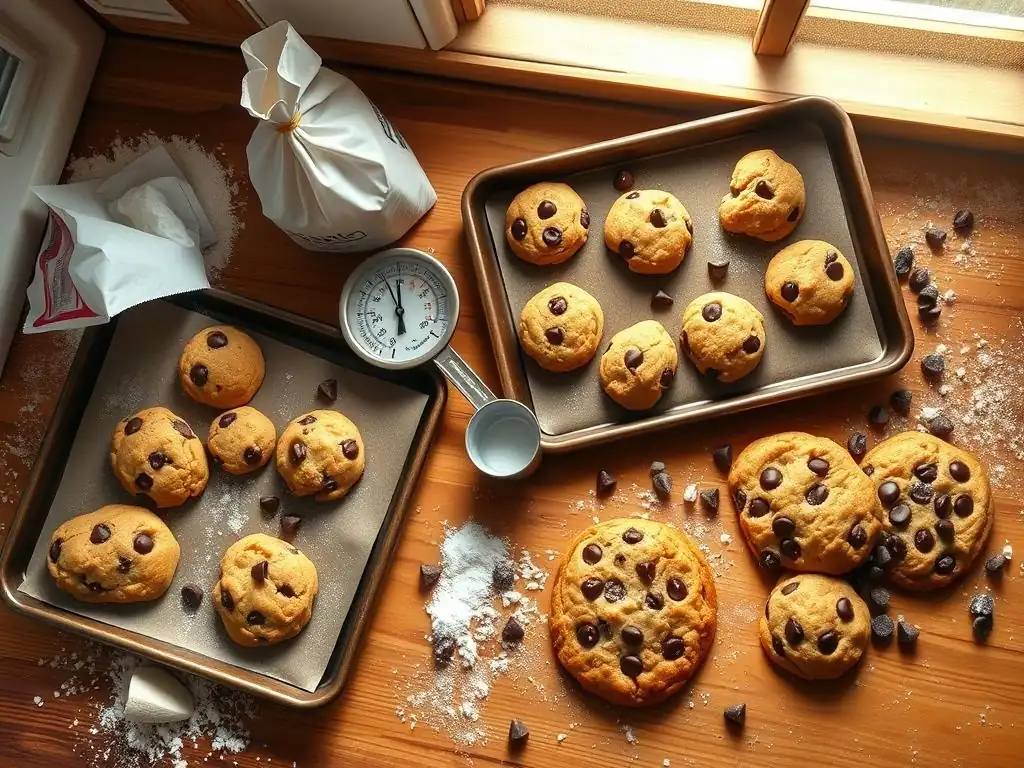
Welcome to BakeWithEase, your kitchen companion on a delicious baking journey! Ever wondered if you're using the correct baking temperatures when making classic cookies? This is a common pitfall for new bakers, but fear not! We're demystifying the science behind cookie baking. Discover the secrets to perfectly baked cookies, starting with the crucial role of temperature. Read on to unlock the secrets and never bake a flat or burnt cookie again!
- Baking Temperatures Explained for Classic Cookies - BakeWithEase.com
- Understanding Baking Temperatures for Perfect Cookies
- Why Baking Temperature Matters for Classic Cookies
-
Recommended Baking Temperatures for Common Cookie Recipes
- Baking Temperature for Chocolate Chip Cookies: Achieving Chewy vs. Crispy
- Sugar Cookie Baking Temperature: Preventing Over-Browning
- Peanut Butter Cookie Baking Temperature: Ensuring Even Baking
- Oatmeal Cookie Baking Temperature: Maintaining Moisture
- Snickerdoodle Baking Temperature: Achieving the Perfect Crinkle
- Oven Temperature Conversion and Adjustments
- Troubleshooting Common Baking Temperature Problems
- Tools for Measuring Baking Temperature Accurately
- Tips for Maintaining Consistent Baking Temperatures
-
Frequently Asked Questions
- What is the ideal baking temperature for most classic beginner cookies?
- Why is temperature so important when baking cookies?
- Can I adjust the baking temperature based on my oven?
- What happens if I bake cookies at a lower temperature than recommended?
- Where can I find more beginner-friendly cookie recipes with specific temperature instructions?
- Final Reflection: The Sweet Science of Perfect Cookies
- Unlock Your Perfect Cookie: Take the Next Step!
Mastering baking temperatures is a fundamental step for any beginner baker, especially when it comes to classic cookies. The temperature at which you bake plays a critical role in the final texture, appearance, and flavor of your cookies. It's not just about getting them cooked through; it's about achieving that perfect balance – whether you desire a chewy center, crispy edges, or uniform browning. Understanding the nuances of baking temperatures for beginner cookies can significantly elevate your results and help you avoid common pitfalls like burnt bottoms or undercooked centers.
Getting the temperature right ensures that the chemical reactions happening within your cookie dough proceed as intended. From the melting of fats to the leavening agents doing their work and the Maillard reaction creating those delicious brown crusts, temperature dictates the speed and extent of these transformations. For beginners, this might seem like a small detail, but it's a key factor in turning a good cookie recipe into a truly great one. Paying attention to the recommended baking temperatures for classic cookies is just as important as measuring your ingredients accurately.
The oven's temperature acts as the conductor for the symphony of ingredients in your cookie dough. Too hot, and the outside might burn before the inside is cooked; too cool, and your cookies might spread excessively and turn out flat and greasy. The ideal baking temperature for beginner cookies is a sweet spot that allows for even cooking, proper spread, and the development of desirable textures and flavors. It's a critical element that differentiates a mediocre cookie from a delightful one.
Consider classic chocolate chip cookies: baking them at one temperature might yield a thin, crispy cookie, while another temperature could result in a thicker, chewier treat. This variation isn't solely due to ingredients but is heavily influenced by the heat they are exposed to and for how long. For those learning the ropes, grasping the importance of cookie baking temperatures provides a solid foundation for consistent baking success with all sorts of classic recipes.
When cookie dough enters a hot oven, several scientific processes occur almost simultaneously. First, the fat (butter, shortening, etc.) begins to melt, causing the cookie to spread. Then, the leavening agents, like baking soda or baking powder, react with moisture and heat to produce gases (carbon dioxide), which cause the cookie to rise slightly. As the temperature increases, proteins in the flour and eggs start to coagulate, giving the cookie structure. Finally, sugars caramelize and undergo the Maillard reaction, contributing to browning and complex flavors.
The specific temperature dictates the speed and order of these events. Baking at a higher temperature, say 375°F (around 190°C), accelerates the outer edges setting while the center is still relatively soft, often resulting in a cookie with crispy edges and a chewy middle. Conversely, baking at a lower temperature, like 325°F (around 160°C), allows the cookie to spread more before the edges set, potentially leading to a thinner, more uniformly crispy cookie, or if underbaked, a very soft one. This interplay of temperature and time is fundamental to achieving the desired outcome with baking temperatures for beginner cookies.
The temperature of your oven directly impacts how much your cookies spread and the resulting texture. Higher temperatures tend to set the edges of the cookie faster, limiting spread and often resulting in a thicker cookie. Lower temperatures allow the fat to melt and the dough to relax over a longer period before the structure sets, typically leading to more spread and a thinner cookie. Think about the difference between a thick, chewy chocolate chip cookie and a thin, crisp one – temperature is a major factor in this distinction.
Beyond spread, temperature affects texture. Baking at a moderate temperature, commonly around 350°F (175°C), is a good starting point for many classic cookies as it promotes relatively even baking, allowing the inside to cook through without the outside burning too quickly. For a chewier texture, slightly lower temperatures or shorter baking times are often preferred. For crispier cookies, higher temperatures or longer baking times can be used, encouraging more moisture evaporation and greater caramelization. Understanding this relationship is key when optimizing baking temperatures for classic cookies.
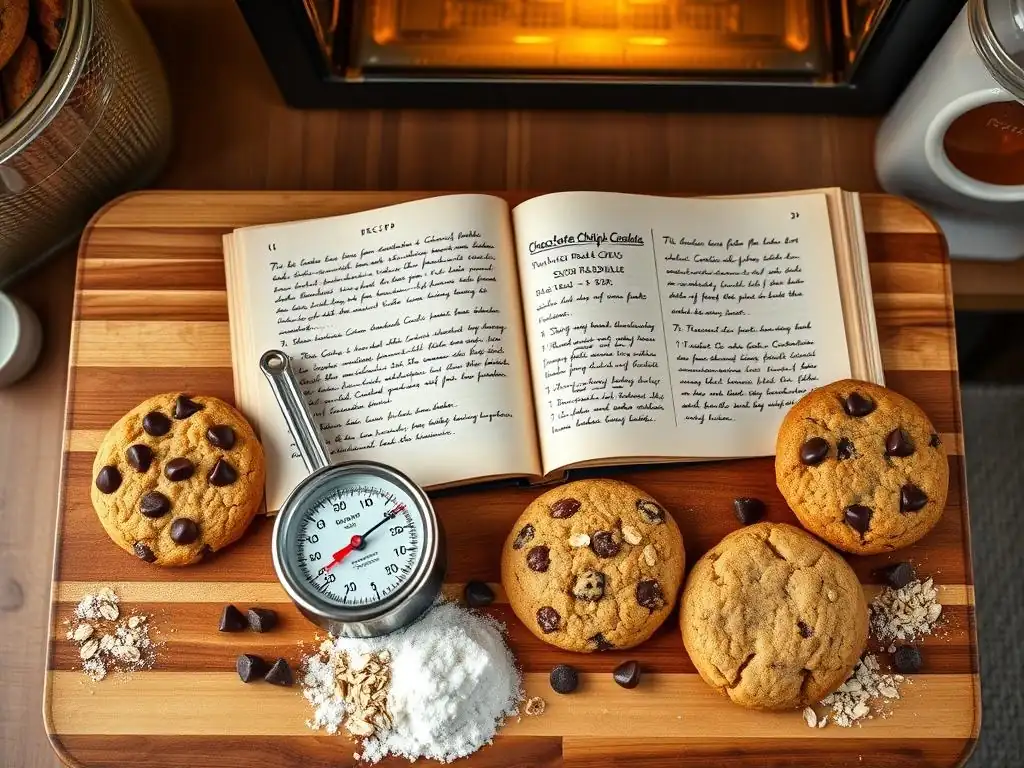
Different types of classic cookies often benefit from slightly different baking temperatures to achieve their ideal characteristics. While 350°F (175°C) is a common baseline for many recipes, fine-tuning the temperature can make a significant difference. For beginners, starting with the recipe's recommended temperature is crucial, but knowing how small adjustments can alter the outcome is empowering. Let's look at some popular examples and their typical baking temperatures for beginner cookies.
It's important to remember that these are general guidelines, and specific recipes may vary based on ingredient ratios. Always refer to your recipe first. However, understanding these common temperature ranges helps you anticipate the result and troubleshoot if things don't go as planned. These are the typical cookie baking temperatures you'll encounter for these classics.
For many classic chocolate chip cookie recipes, a temperature of 375°F (190°C) is often recommended. This higher heat helps the edges set quickly, limiting spread and contributing to that sought-after combination of crispy edges and a soft, chewy center. Baking at this temperature for approximately 8-10 minutes (depending on size and desired doneness) typically yields this result.
If you prefer a thinner, crispier chocolate chip cookie, you might consider baking at a slightly lower temperature, such as 350°F (175°C), but potentially for a longer time, perhaps 10-12 minutes. This allows the cookie to spread more before setting and promotes more uniform drying and browning. Experimenting with baking temperatures for beginner cookies like chocolate chip is a great way to see the direct impact of heat on texture.
Sugar cookies, especially those rolled and cut into shapes, are often baked at 350°F (175°C). The goal here is usually a cookie that is evenly baked through with minimal spread and light browning, preserving their shape and providing a neutral base for decorating. Baking time typically ranges from 8-11 minutes, depending on thickness and size.
Baking sugar cookies at too high a temperature can cause the edges to brown too quickly while the center remains underbaked, or worse, lead to burnt edges. A moderate temperature like 350°F allows for even heat penetration and gentle browning. For those learning baking temperatures for beginner cookies, sugar cookies highlight the need for consistent, moderate heat to maintain appearance.
Peanut butter cookies, often identified by their classic fork-tine crosshatch pattern, are commonly baked at 350°F (175°C). This temperature is ideal for ensuring these denser cookies bake evenly throughout without burning the exterior. The typical baking time is around 10-12 minutes.
The moderate heat of 350°F allows the interior of the peanut butter cookie to cook and set properly. Baking at a significantly higher temperature might result in a hard, dry cookie or one that is burnt on the outside and raw inside. For those starting with baking temperatures for classic cookies, peanut butter cookies demonstrate the effectiveness of a standard moderate temperature for a denser dough.
Oatmeal cookies, whether plain or with additions like raisins or chocolate chips, are frequently baked at 350°F (175°C). This temperature helps ensure the oats cook and soften while the cookie bakes through, resulting in a chewy texture. Baking time is usually between 10-13 minutes.
Maintaining moisture is key for a good oatmeal cookie, and the 350°F temperature helps achieve this by allowing the cookie to bake through without excessive drying. Baking at a higher temperature might dry out the oats and lead to a less pleasant texture. When considering baking temperatures for beginner cookies, oatmeal cookies show how temperature helps manage moisture content.
Snickerdoodle Baking Temperature: Achieving the Perfect Crinkle
Snickerdoodles, known for their soft, chewy texture and cinnamon-sugar coating, are often baked at a slightly higher temperature, around 375°F (190°C). This initial blast of heat helps the edges set quickly and contributes to the characteristic "crinkle" top. Baking time is typically shorter, about 8-10 minutes.
The higher temperature encourages the cookie to puff up and then settle, creating those desirable cracks on the surface as it cools. Baking at a lower temperature might result in a flatter cookie with less pronounced crinkling. For beginners exploring baking temperatures for classic cookies, snickerdoodles offer a great example of how a slightly higher heat can influence appearance and texture.
Oven Temperature Conversion and Adjustments
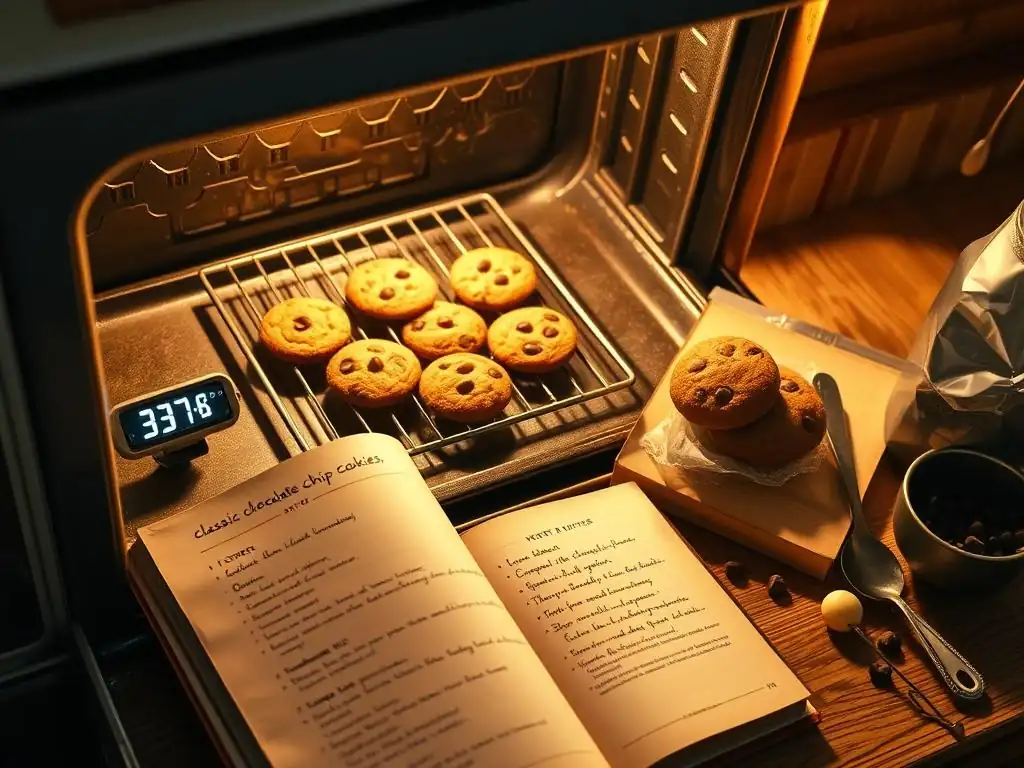
While most recipes for classic cookies specify temperatures in either Fahrenheit (°F) or Celsius (°C), you might encounter recipes using the other scale. Knowing how to convert between the two is a useful skill for any baker. Furthermore, understanding that home ovens aren't always perfectly calibrated and knowing how to make adjustments based on your specific oven is crucial for consistent results with baking temperatures for beginner cookies.
Adjusting baking time is also often necessary, even if your temperature is correct. Factors like the size and thickness of your cookies, the type of baking sheet used, and how crowded the oven is can all influence how quickly they bake. Learning to read the visual cues of a done cookie is just as important as setting the correct temperature.
Converting Fahrenheit to Celsius
Converting between Fahrenheit and Celsius is straightforward. To convert from Fahrenheit to Celsius, subtract 32, then multiply by 5, and finally divide by 9. For example, 350°F is (350 - 32) * 5 / 9 = 174.4°C, usually rounded to 175°C.
To convert from Celsius to Fahrenheit, multiply by 9, divide by 5, and then add 32. For example, 175°C is (175 * 9 / 5) + 32 = 315 + 32 = 347°F, often rounded to 350°F. Keeping a conversion chart handy or using an online calculator can be helpful when dealing with baking temperatures for classic cookies from different sources.
Adjusting Baking Time Based on Oven Temperature
If you find your oven consistently runs hotter or cooler than the set temperature, you'll need to adjust baking time accordingly. If your oven runs hot, your cookies will bake faster, so you'll likely need to reduce the baking time listed in the recipe. Start checking for doneness a couple of minutes earlier than the minimum time specified.
Conversely, if your oven runs cool, your cookies will take longer to bake. You'll need to extend the baking time. Don't be afraid to add a few extra minutes to the maximum time given in the recipe, checking frequently. Learning to adjust baking time is a practical skill when dealing with the reality of home oven variations and optimizing baking temperatures for beginner cookies.
Most home ovens have hot spots – areas that are significantly hotter than others. This can lead to one side of your cookie sheet browning faster than the other, or cookies on one rack baking more quickly than those on another. A simple solution is to rotate your cookie sheets halfway through the baking time.
If you are baking multiple sheets simultaneously, rotate them front-to-back and swap racks (top to bottom). For example, if baking for 10 minutes, swap and rotate the sheets after 5 minutes. This helps ensure all your cookies are exposed to relatively similar heat conditions, resulting in more uniform baking and appearance across the batch, a useful tip when managing baking temperatures for classic cookies.
Troubleshooting Common Baking Temperature Problems
Even with careful measuring and preheating, sometimes things don't go exactly as planned. Cookies can spread too much, burn on the bottom, or bake unevenly. Many of these issues are directly related to baking temperature, either the setting itself or how consistently your oven maintains that temperature. Identifying the problem is the first step to fixing it for future batches of baking temperatures for beginner cookies.
Don't get discouraged if your first few batches aren't perfect. Baking is a skill that improves with practice and understanding. By troubleshooting these common temperature-related issues, you'll gain valuable insight into how your oven behaves and how to adapt recipes for better results.
If your cookies are spreading excessively and ending up very thin, the oven temperature might be too low. A lower temperature allows the fat to melt and the dough to spread over a longer period before the structure sets. Try increasing your oven temperature by 10-15°F (5-8°C) for your next batch and see if that helps limit the spread.
Alternatively, excessive spread can sometimes be caused by dough that is too warm (soft butter, not chilled dough) or too much fat/not enough flour in the recipe. However, assuming your ingredients and dough preparation are correct, a low oven temperature is a common culprit for excessive spread when dealing with baking temperatures for beginner cookies.
Burning on the bottom is a common problem, often caused by the baking sheet being too close to the heating element at the bottom of the oven. Try moving your oven rack to the middle position if it's currently on the lowest rack. The middle rack typically provides the most even heat distribution for baking.
Another cause could be an oven temperature that is too high, particularly if the bottom element is running hotter than the top. Using a lighter colored, insulated baking sheet can also help prevent bottoms from burning compared to dark, thin sheets which absorb and transfer heat more quickly. Adjusting both rack placement and potentially slightly lowering the oven temperature can solve this issue with baking temperatures for classic cookies.
If your cookies are consistently baking unevenly, even after rotating the pans, your oven's thermostat might be inaccurate. Many home ovens are off by 25-50°F (15-30°C) or sometimes even more. This discrepancy directly impacts baking temperatures for beginner cookies.
The best way to determine if your oven is calibrated correctly is to use an oven thermometer (more on that below). If it consistently reads higher or lower than the set temperature, you'll need to adjust your dial accordingly each time you bake. For example, if you set it to 350°F but the thermometer reads 325°F, you'll need to set your oven to 375°F to achieve an actual 350°F. Some ovens can be professionally calibrated or adjusted via internal settings, but simply knowing the difference and adjusting manually is often sufficient.
Tools for Measuring Baking Temperature Accurately
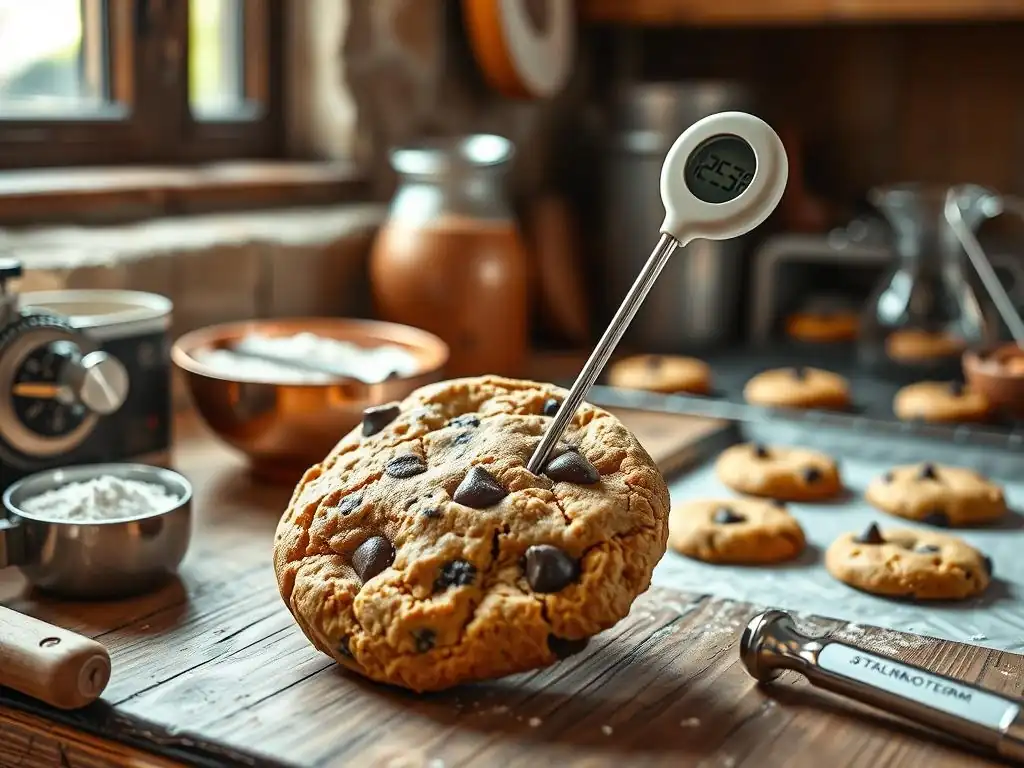
Relying solely on your oven's built-in thermostat can be misleading, as these are often inaccurate. To truly understand the baking temperatures for beginner cookies inside your oven, you need an external tool. This is a small investment that can make a big difference in the consistency and success of your baking endeavors.
An accurate temperature reading is the foundation for consistent results. Without knowing the true temperature your cookies are exposed to, troubleshooting problems like burning or uneven baking becomes much harder. Using the right tool takes the guesswork out of managing cookie baking temperatures.
Importance of an Oven Thermometer
An oven thermometer is a simple, inexpensive device that hangs or sits on your oven rack and displays the actual temperature inside the oven. It provides a real-time reading that is often significantly different from the temperature displayed on your oven's control panel. Relying on an oven thermometer is arguably the single most effective step a beginner baker can take to improve their results.
Knowing the true temperature allows you to make informed decisions. If your recipe calls for 350°F and your oven thermometer reads 320°F, you know you need to increase the oven's setting to compensate. This eliminates a major variable and helps you achieve the desired outcome with baking temperatures for classic cookies.
Choosing the Right Oven Thermometer
Oven thermometers come in various styles, but most are simple dial thermometers made of metal, designed to withstand high heat. Look for one that is easy to read and specifically designed for use inside an oven. Some digital versions are also available, offering potentially greater precision, but a basic analog dial thermometer is perfectly adequate for most home baking needs.
Ensure the thermometer you choose is rated for the maximum temperature your oven can reach. Place it in a visible spot, ideally near the center of the oven, away from the walls or heating elements, to get the most accurate reading of the ambient baking temperature for beginner cookies.
Tips for Maintaining Consistent Baking Temperatures
Once you know the correct temperature for your cookies and how to measure it, the next step is ensuring that temperature remains consistent throughout the baking process. Fluctuations in temperature can lead to uneven baking and unpredictable results. Implementing a few simple practices can help you maintain stable baking temperatures for classic cookies.
Consistency is key in baking. While some temperature fluctuation is normal in home ovens, minimizing large swings will significantly improve your results. These tips help ensure that the environment inside your oven is as stable as possible while your cookies are baking.
Preheating Your Oven Properly
Always preheat your oven for the recommended time, and then some. Most ovens take at least 15-20 minutes to reach the set temperature, and often longer to fully stabilize, especially at higher temperatures like 375°F (190°C). Don't rely on the oven's indicator light or beep alone; check your oven thermometer to ensure it has reached and maintained the target baking temperature for beginner cookies for at least 5-10 minutes before putting your cookies in.
Putting cookies into an oven that hasn't fully preheated means they will start baking at a lower temperature than intended, affecting their spread and texture. Proper preheating ensures your cookies hit the correct temperature from the moment they enter the oven.
Avoiding Opening the Oven Door Too Frequently
Every time you open the oven door, a significant amount of heat escapes, causing the internal temperature to drop. Opening the door frequently to check on your cookies can lead to inconsistent cookie baking temperatures and affect their baking time and texture.
Use the oven light and window to check on progress whenever possible. Only open the door when absolutely necessary, such as to rotate the pans halfway through baking. This helps maintain a stable temperature environment for your classic cookies.
Batch Baking: Maintaining Temperature Throughout Multiple Batches
If you are baking multiple batches of cookies, be mindful of the oven temperature between batches. The oven temperature may drop slightly when you remove one batch and insert the next, especially if you take some time to load the new sheet.
Allow the oven a few minutes to recover and return to the correct baking temperature for beginner cookies between batches. Check your oven thermometer before putting in the next sheet. Using multiple baking sheets allows you to prepare the next batch while the first one is baking, minimizing the time the oven door is open and helping maintain temperature consistency.
Frequently Asked Questions
The ideal baking temperature for most classic beginner cookies is typically around 350°F (175°C). This allows for even cooking and prevents burning.
Temperature is crucial because it directly affects the texture and browning of your cookies. Too high, and they'll burn; too low, and they'll be flat and undercooked.
Can I adjust the baking temperature based on my oven?
Yes, oven temperatures can vary, so adjusting the temperature is sometimes necessary. Use an oven thermometer to ensure accuracy and adjust accordingly.
Baking at a lower temperature will result in cookies that spread out too much and become thin and crispy. They may also be underbaked in the center.
Visit BakeWithEase.com for step-by-step guides and simple cookie recipes, including precise temperature recommendations for perfect results.
Understanding baking temperatures is not just about following a recipe; it's about unlocking the potential for perfectly baked cookies every time. The seemingly small variations in oven temperature can drastically impact the final product, transforming a crisp, chewy delight into a burnt offering or a gummy, underbaked disappointment. This article aimed to demystify this crucial aspect of baking for beginners, providing a foundational understanding that will serve them well in their culinary journeys.
The impact of precise temperature control extends far beyond the individual cookie. It speaks to a broader appreciation for the scientific method within the seemingly simple act of baking. It's about understanding cause and effect, about the delicate balance between heat, time, and ingredients. This understanding fosters a deeper connection to the process, transforming it from a mere task into a creative endeavor. As Julia Child wisely said, Find something you're passionate about and keep tremendously interested in it.
For many, that passion lies in the art of baking, and mastering temperature control is a key ingredient in that passion.
Now, it's your turn. Take what you've learned here, experiment with different temperatures and recipes, and don't be afraid to embrace the occasional imperfection. Each slightly burnt edge, each perfectly chewy center, is a lesson learned, a step closer to baking mastery. Remember the power of precise temperature control, and you'll be well on your way to creating cookies that are not only delicious but also a testament to your growing baking skills. So, preheat your oven, gather your ingredients, and let the baking begin!
Thanks for spending time with us and learning about baking temperatures! You've now got the knowledge to bake consistently delicious cookies. Ready to put your new skills to the test?
- Bake a batch of your favorite cookies today, using the temperature guide we just shared. Pay close attention to your oven's quirks, and make notes of your findings!
- Share your baking triumphs (or even your learning moments!) with fellow cookie enthusiasts on social media using #BakeWithEasePerfectCookies.
- Explore more of our beginner baking guides on BakeWithEase.com for even more tips and tricks.
What unique temperature adjustment will you try in your next batch of cookies to perfect your recipe?