
Build Your Baking Confidence: Essential Tools for Beginners

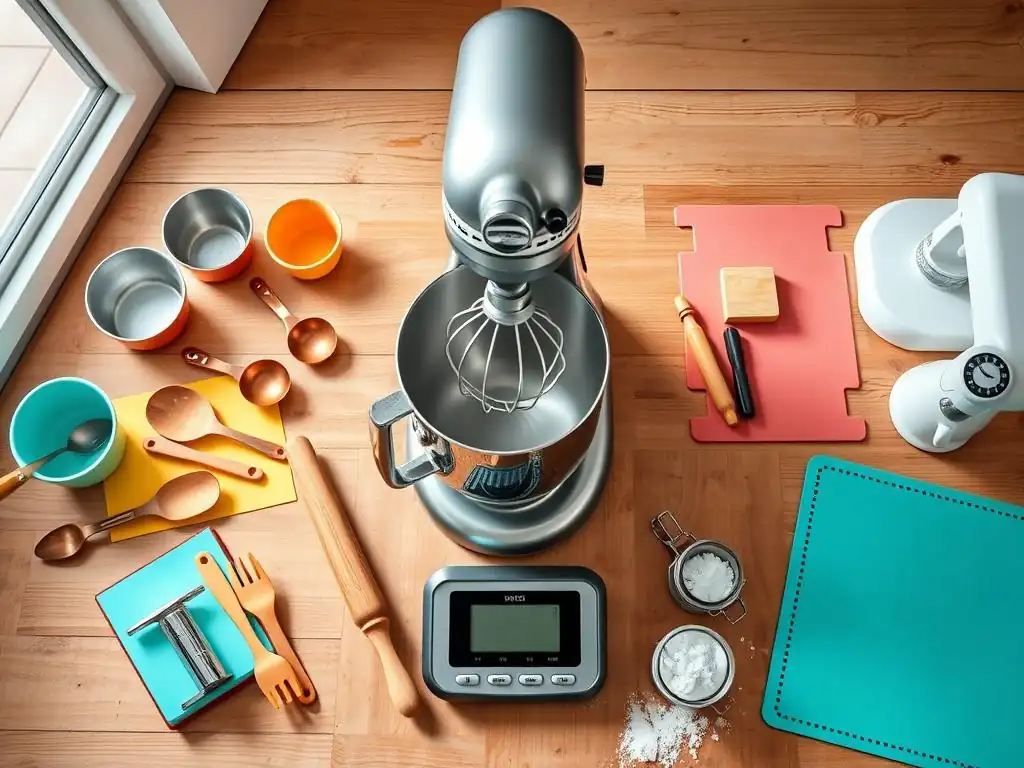
Welcome to BakeWithEase, your guide to creating delicious treats with confidence! Are you ready to embark on your baking journey? This article dives into the essential baking tools beginners need to get started. Discover the must-have equipment that will empower you to create mouthwatering masterpieces, and learn why each tool is crucial for success. What if the secret to perfect pastries is simpler than you think? Let's find out!
- Bake With Ease: Getting Started with Baking - Essential Tools for Beginners
- Why Invest in Essential Baking Tools as a Beginner?
-
Must-Have Baking Tools for Beginner Bakers
- Measuring Cups and Spoons: Precision is Key
- Mixing Bowls: Choosing the Right Size and Material
- Spatulas: Essential for Mixing and Scraping
- Baking Sheets & Pans: The Foundation of Many Recipes
- Whisks: Incorporating Air for Light and Fluffy Results
- Rolling Pin: Achieving Uniform Thickness
- Kitchen Scale: The Ultimate Tool for Accuracy
- Nice-to-Have Baking Tools That Will Enhance Your Baking
- Caring for Your Essential Baking Tools
- Where to Buy Essential Baking Tools for Beginners
- Next Steps: Using Your New Baking Tools
-
Frequently Asked Questions
- What are the absolute essential baking tools for someone just starting out?
- I'm on a budget. Can I skip some of the tools and still bake successfully?
- What type of mixing bowl is best for a beginner baker?
- How important is it to have measuring cups and spoons, can't I just estimate?
- Besides the basics, what's one tool that will significantly improve my baking results?
- Final Reflection: Unlocking the Joy of Baking, One Tool at a Time
- Unleash Your Inner Baker: Start Baking Today!
Bake With Ease: Getting Started with Baking - Essential Tools for Beginners
Embarking on your baking journey is an exciting step, and having the right gear makes all the difference. Think of it like any craft; while skill develops over time, starting with reliable equipment sets you up for success and minimizes frustration. For beginners, navigating the vast world of kitchen gadgets can be overwhelming, but focusing on a core set of essential baking tools is the smartest approach.
This guide will walk you through the truly indispensable items that will help you confidently tackle your first recipes, from simple cookies to basic cakes. We'll explore why these specific tools are crucial and how they contribute to consistent, delicious results. Getting these fundamental tools right is a key part of mastering beginner baking recipes and building solid skills.
Why Invest in Essential Baking Tools as a Beginner?
Investing in the right equipment from the start might seem like a big step, but it's a foundational element for anyone serious about learning to bake. Using tools designed specifically for baking tasks ensures you can follow recipes accurately and execute techniques correctly. This prevents common pitfalls like unevenly baked goods or incorrect measurements, which can be incredibly discouraging for a novice baker.
Furthermore, having quality essential baking tools means they will last longer and perform better than makeshift alternatives. A sturdy baking sheet that heats evenly or a flexible spatula that scrapes every bit of batter from the bowl directly impacts the outcome of your baked goods. It's an investment in your future baking success and enjoyment.
The Importance of Having the Right Baking Equipment
Using the correct tools directly impacts the consistency and quality of your baked goods. For instance, accurately measuring flour with a dry measuring cup and leveling it off, compared to scooping directly with a liquid cup, can mean the difference between a dense cake and a light, airy one. Precision is paramount in baking chemistry, and the right tools facilitate this.
Beyond accuracy, the right equipment makes the process smoother and more enjoyable. Trying to cream butter and sugar with a fork instead of a whisk or electric mixer is inefficient and won't achieve the necessary aeration. Having the appropriate essential baking tools allows you to perform tasks efficiently, making baking less of a chore and more of a rewarding activity.
Building a Foundation for Baking Success
Starting with a set of reliable essential baking tools helps beginners develop good habits from the outset. Learning to measure correctly, mix properly, and bake at the right temperature on appropriate pans are fundamental skills. These habits, built using the right equipment, contribute significantly to consistent results, recipe after recipe.
Moreover, mastering basic techniques becomes much easier when you're not fighting with inadequate tools. A non-stick muffin tin, for example, ensures your cupcakes release cleanly, boosting your confidence. As you gain experience, this solid foundation built on using the right essential baking tools for beginners will enable you to tackle more complex recipes with greater ease and a higher probability of success.
Must-Have Baking Tools for Beginner Bakers
Measuring Cups and Spoons: Precision is Key
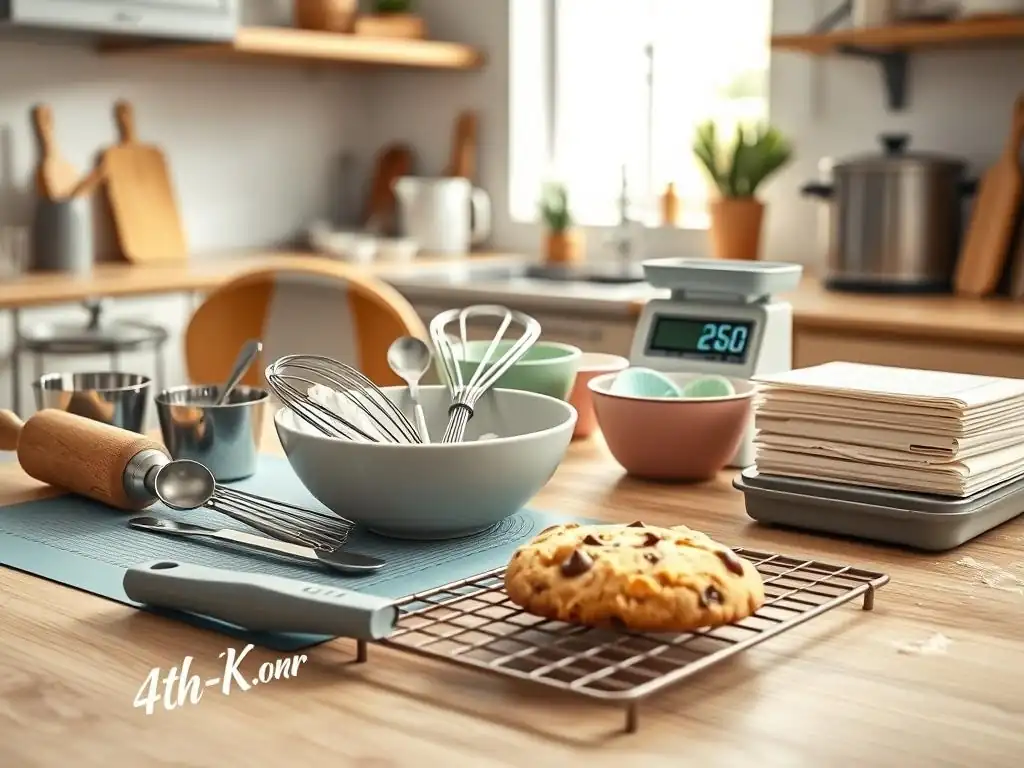
Baking is often described as a science because precise measurements are critical. Unlike cooking, where you can often adjust ingredients as you go, baking relies on specific ratios and chemical reactions. Having accurate measuring cups and spoons is arguably the most important starting point for any beginner baker.
Using the correct tools for measuring dry versus liquid ingredients prevents common errors. For example, scooping flour directly with a liquid measuring cup can add up to 20-30 grams more flour than intended for a single cup measurement, drastically altering the texture of your final product. Precision tools are non-negotiable for consistent results.
Dry Measuring Cups: Getting Accurate Measurements
Dry measuring cups are designed to be filled to the brim and leveled off with a straight edge, ensuring you get the exact volume specified in a recipe. They typically come in sets of 1/4, 1/3, 1/2, and 1 cup. Materials can vary, but stainless steel or sturdy plastic are common and durable choices for essential baking tools beginners.
When measuring flour, spoon it lightly into the dry measuring cup until it overflows, then sweep off the excess with a straight edge like a knife or the back of a spatula. Never pack down dry ingredients like flour or cocoa powder unless the recipe specifically instructs you to do so, as this can lead to incorrect measurements by a significant margin, sometimes adding an extra tablespoon or more per cup.
Liquid Measuring Cups: Avoiding Spills and Ensuring Correct Volume
Liquid measuring cups, typically made of glass or clear plastic, have a spout for easy pouring and measurement markings below the rim to prevent spills. They usually come in sizes like 1 cup, 2 cup, or 4 cup capacity. The key to accurate liquid measurement is placing the cup on a flat surface and reading the liquid level at eye level.
The design with headspace above the highest marking allows you to fill the cup without spilling when moving it. Common liquids measured this way include water, milk, oil, and melted butter. Using a liquid measuring cup for these ingredients ensures you capture the precise volume needed for the recipe's hydration balance.
Measuring Spoons: For Smaller Quantities of Baking Ingredients
Measuring spoons are essential for accurately measuring small amounts of powerful ingredients like leavening agents (baking soda, baking powder), spices, extracts, and salt. They typically come in sets including 1/4 teaspoon, 1/2 teaspoon, 1 teaspoon, and 1 tablespoon sizes. Like dry measuring cups, they should be filled and leveled off for dry ingredients.
Accuracy with measuring spoons is crucial because even small errors in ingredients like baking powder can affect the rise and texture of your baked goods. For example, adding too much baking soda might give your cookies a metallic taste or cause them to spread too much. Using measuring spoons correctly ensures these critical ingredients are added in the right proportions.
Mixing Bowls: Choosing the Right Size and Material
You'll need bowls of various sizes for combining ingredients, whipping cream, or preparing dough. Having a few different sizes, from a small bowl for whisking eggs to a large one for mixing batter, is practical. The material affects durability, weight, and heat conductivity.
Beginners will find a set of three nesting bowls particularly useful. This allows you to handle different recipe steps simultaneously and saves space when stored. Consider the types of recipes you plan to make most often when choosing sizes; larger bowls are necessary for bread dough or cake batters, while smaller ones are perfect for whisking eggs or mixing frostings.
Stainless Steel Bowls: Durable and Versatile
Stainless steel bowls are a popular choice for essential baking tools beginners because they are lightweight, durable, non-reactive (meaning they won't interact with acidic ingredients like lemon juice), and easy to clean. They are also excellent for chilling ingredients quickly, such as butter or cream, by placing the bowl over an ice bath.
These bowls often come in sets ranging from small 1.5-quart sizes up to large 8-quart or even 10-quart sizes. Their versatility makes them suitable for everything from whisking a couple of eggs to mixing a large batch of cookie dough. Their robustness means they can withstand vigorous mixing without denting or breaking.
Glass Bowls: See-Through Convenience
Glass mixing bowls are heavier and more stable than stainless steel, which can be helpful when mixing by hand. Their transparency allows you to see the ingredients mixing from the sides and bottom, ensuring everything is thoroughly combined. Many glass bowls are also microwave-safe and can be used over a double boiler for melting chocolate or tempering eggs.
Common sizes for glass bowls range from about 2 quarts to 4 quarts. While they offer visibility and stability, they are also breakable and can be quite heavy, especially when full. They are less ideal for chilling ingredients quickly compared to metal bowls.
Plastic Bowls: Lightweight and Affordable Options
Plastic mixing bowls are the most lightweight and often the most affordable option, making them attractive essential baking tools for beginners on a budget. They are durable and less likely to break if dropped compared to glass. They also come in a wide variety of colors and sizes.
However, plastic bowls can sometimes retain odors or stains from strong ingredients like tomato sauce (though less common in baking). Some may also scratch over time, creating surfaces where bacteria could potentially harbor. Despite these minor drawbacks, a set of basic plastic bowls is a perfectly functional starting point.
Spatulas: Essential for Mixing and Scraping
Spatulas are indispensable for scraping down the sides of bowls, folding ingredients gently, and spreading batters or frostings. You'll likely need at least two types: a flexible rubber or silicone spatula and an offset spatula. Their flexibility allows you to get every last bit of batter out of the bowl, minimizing waste.
A good set of spatulas in varying sizes will serve you well across many different baking tasks. Silicone spatulas are particularly popular as they are heat-resistant, making them suitable for stirring hot custards or sauces as well as cold batters.
Rubber Spatulas: For Gentle Folding and Scraping Bowls
Flexible rubber or silicone spatulas are workhorses in the baking kitchen. Their pliable heads conform to the shape of the bowl, allowing you to efficiently scrape down the sides and bottom, ensuring all ingredients are incorporated. They are also perfect for gently folding delicate ingredients like whipped egg whites or cream into batter without deflating them.
Silicone spatulas are generally preferred over traditional rubber as they are more heat-resistant and don't absorb odors or colors. Look for spatulas with a sturdy handle and a head that is either one piece or has a tightly sealed connection to prevent food from getting trapped. Having a couple of different sizes, like a small one for jars and a larger one for mixing, is helpful.
Offset Spatulas: For Frosting and Leveling
An offset spatula has a thin, flexible blade that is angled away from the handle. This design is specifically useful for spreading frosting evenly over cakes and cupcakes, allowing your knuckles to clear the surface. They are also handy for leveling batter in cake pans or transferring delicate items like cookies from a baking sheet to a cooling rack.
Offset spatulas come in various sizes, from small ones with a 4-inch blade perfect for cupcakes to larger ones with a 10-inch blade for frosting larger cakes. A medium-sized one, perhaps with a 6-inch or 8-inch blade, is a versatile essential baking tool for beginners to start with.
Baking Sheets & Pans: The Foundation of Many Recipes
Most baked goods, from cookies and biscuits to cakes and muffins, require baking sheets or pans. Having the right size and type ensures proper heat distribution and prevents sticking. A good quality baking sheet that heats evenly is crucial for uniform baking.
Investing in sturdy, light-colored metal baking sheets is generally recommended as they promote even browning. Darker pans can cause bottoms to brown too quickly. Non-stick coatings can be helpful, but parchment paper or silicone baking mats are also great for preventing sticking and easy cleanup, regardless of the pan type.
Cookie Sheets: For Even Baking of Cookies and Biscuits
"Cookie sheet" often refers to rimless or one-rimmed sheets, but standard rimmed baking sheets (often called "half sheets") are more versatile and widely used for cookies, roasted vegetables, and more. A standard half-sheet measures approximately 18x13 inches. Aluminum is a common material for its excellent heat conductivity.
Having at least two half-sheet pans allows you to bake multiple batches efficiently. While one batch is in the oven, you can prepare the next on the other pan. This is a key piece of essential baking tools beginners will use constantly.
Cake Pans: Round, Square, and Loaf Pans Explained
Cake pans come in various shapes and sizes for different types of cakes. Common sizes for beginners include 8-inch or 9-inch round pans for layer cakes, a 9x13 inch rectangular pan for sheet cakes or brownies, and a 9x5 inch loaf pan for quick breads or pound cakes. Material can be aluminum or non-stick.
Having one of each of these basic shapes will allow you to make a wide variety of cakes and quick breads. Look for pans with straight sides to ensure your cakes have a good structure. Preparing these pans properly (greasing and flouring or using parchment) is just as important as having the right pan itself.
Muffin Tins: For Perfect Muffins and Cupcakes
A standard muffin tin has 12 cups, each designed to hold a single muffin or cupcake. Mini muffin tins (24 cups) and jumbo muffin tins (6 cups) are also available, but the standard 12-cup size is the most versatile for beginners. Non-stick muffin tins are widely available and highly recommended for easy release.
Using paper liners is common for cupcakes and some muffins, which also aids in easy removal and cleanup, even with a non-stick pan. Ensure the tin is sturdy so it doesn't warp in the oven, which can lead to unevenly baked goods.
Whisks: Incorporating Air for Light and Fluffy Results
A whisk is essential for incorporating air into ingredients like eggs or cream, creating volume and lightness. It's also used for blending dry ingredients evenly or smoothing out lumps in batters and sauces. The wire loops help to break up clumps and introduce air as you whisk.
While electric mixers exist, a good hand whisk is a fundamental tool for many tasks and requires no power outlet. Learning to whisk effectively is a basic skill that every beginner baker should develop.
Balloon Whisks: For General Mixing and Aeration
The balloon whisk, with its many wires forming a round, bulbous shape, is the most common type used in baking. Its design is optimized for whipping air into liquids like egg whites or heavy cream to create meringue or whipped cream. It's also effective for combining dry ingredients or mixing thin batters and sauces.
A medium-sized balloon whisk, roughly 8-10 inches long, is a versatile essential baking tool for beginners. Look for one with a comfortable handle and wires that are flexible but sturdy enough to handle thicker batters.
Flat Whisks: For Deglazing Pans and Making Sauces
A flat whisk, also known as a roux whisk, has wires arranged in a flatter, fan shape. While less common for general baking tasks like whipping egg whites compared to a balloon whisk, it is excellent for reaching the bottom corners of pans or pots.
In a baking context, a flat whisk can be useful for smoothing out lumps in cooked pastry cream or custard bases while they are still in the saucepan, ensuring a silky texture. It's a specialized tool, but one that demonstrates the variety available in whisk designs.
Rolling Pin: Achieving Uniform Thickness
A rolling pin is necessary for flattening dough to a consistent thickness, whether for cookies, pie crusts, biscuits, or pastry. Achieving uniform thickness is important for even baking; thin spots will burn while thick spots remain undercooked.
Rolling pins come in various styles and materials, including wood, metal, and non-stick surfaces. Choosing one that feels comfortable in your hands is key to having good control over the dough.
Standard Rolling Pins: A Baking Staple
The standard rolling pin features a central cylinder (barrel) with handles at each end that allow the barrel to rotate. These are often made of wood, though non-stick versions exist. A typical barrel length is around 10-12 inches. The handles provide leverage and keep your hands off the dough.
This classic design is familiar and effective for general rolling tasks. A good quality wooden rolling pin, properly cared for, can last a lifetime and is a fundamental piece among essential baking tools beginners should consider.
French Rolling Pins: For Precise Control
A French rolling pin is a simple, handle-less cylinder, often tapered at the ends. These are typically made of wood. The design allows you to use the palms of your hands directly on the pin, offering more feel and control over the pressure applied to the dough. The tapered ends can also be useful for shaping dough into circles.
Many bakers prefer French rolling pins for delicate tasks like rolling out pie crusts or pastry dough because of the direct contact and control they offer. While a standard rolling pin works perfectly well, a French pin is a great alternative for those seeking a different feel.
Kitchen Scale: The Ultimate Tool for Accuracy
While measuring cups are standard in many recipes, professional bakers and serious amateurs swear by using a kitchen scale to measure ingredients by weight (grams or ounces) rather than volume (cups or tablespoons). This is because weight measurements are far more accurate and consistent.
For example, a cup of all-purpose flour can weigh anywhere from 120 grams to 150 grams depending on how densely it's packed. Using a scale eliminates this variability, leading to reliably better results, especially in recipes sensitive to ingredient ratios like bread or pastries. A kitchen scale is one of the most impactful essential baking tools beginners can add to their collection for improving consistency.
Why Use a Kitchen Scale for Baking?
Using a kitchen scale for baking provides unparalleled accuracy. When a recipe calls for 120 grams of flour, you can be certain you have exactly that amount, regardless of how you scoop it. This consistency is particularly important for recipes developed using weight measurements, common in many professional baking resources and blogs.
Beyond accuracy, using a scale can also simplify cleanup. Often, you can place your mixing bowl directly on the scale and add ingredients by zeroing out the scale (tare function) between additions, reducing the number of measuring cups used. This makes the process faster and less messy.
Digital vs. Analog Kitchen Scales
Digital kitchen scales are the most popular choice today due to their ease of use and precision. They typically display weight clearly on a digital screen, can easily switch between grams and ounces, and have a tare function to zero out the weight of the container or previous ingredients. Most affordable digital scales are accurate within 1 gram or 0.1 ounce.
Analog scales use a dial and needle to show weight. They are simpler, don't require batteries, and can be very durable. However, they are generally less precise than digital scales, often only measuring to the nearest 5 or 10 grams, which might not be sufficient for highly sensitive baking recipes. For essential baking tools beginners, a digital scale offers the best balance of accuracy and convenience.
Nice-to-Have Baking Tools That Will Enhance Your Baking
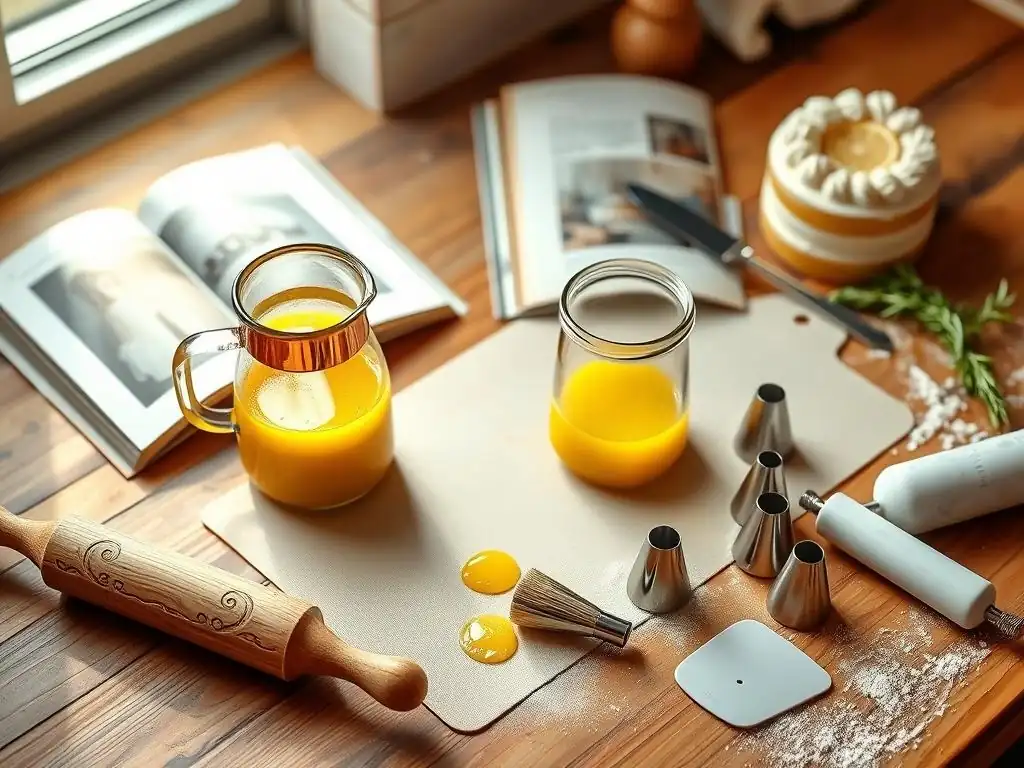
Once you have the absolute essentials, a few other tools can make your baking life easier and expand the types of recipes you can successfully tackle. These aren't strictly necessary for your very first baking attempts but are excellent additions as you grow your skills.
These items often improve the finish of your baked goods or simplify specific tasks. While you can often improvise, having the right specialized tool often yields better results and saves time and effort in the long run.
Pastry Brush: Adding Shine and Flavor
A pastry brush is a small brush used for applying washes to baked goods. Common uses include brushing melted butter onto bread or rolls, applying an egg wash to pie crusts or pastries for a golden, shiny finish, or glazing fruit tarts. Brushes come with natural bristles or silicone bristles.
Silicone brushes are often preferred as they are easier to clean, don't shed bristles, and are heat-resistant. A pastry brush is a simple tool but makes a noticeable difference in the appearance and sometimes the flavor of your finished baked goods.
Sifter: For Lighter, Fluffier Baked Goods
A sifter, or a fine-mesh sieve, is used to aerate dry ingredients like flour, cocoa powder, or powdered sugar and to remove any lumps. Sifting helps distribute leavening agents and other dry ingredients evenly, resulting in a lighter texture and more consistent rise in cakes, muffins, and pancakes.
While you can often whisk dry ingredients together as an alternative, sifting provides superior aeration and lump removal. Various types exist, including crank sifters, squeeze-handle sifters, and simple mesh sieves which are also useful for dusting surfaces with flour.
Cooling Rack: Preventing Soggy Bottoms
A cooling rack is a wire rack that allows air to circulate around baked goods as they cool. Placing hot cookies, cakes, or breads directly on a solid surface traps steam, which can make the bottoms soggy. A cooling rack elevates the items, allowing steam to escape and promoting even cooling.
Having at least one sturdy cooling rack is important for achieving the desired texture in your baked goods. They come in various sizes and materials like chrome-plated steel. Choose one with a grid pattern that prevents smaller items like cookies from falling through.
Caring for Your Essential Baking Tools
Proper care of your essential baking tools ensures they remain in good condition, function correctly, and last for many years. Cleaning tools promptly after use is crucial, especially for items that come into contact with sticky batters or acidic ingredients.
Understanding the best cleaning methods for different materials (e.g., wood vs. metal vs. plastic) is key. Storage also plays a role in longevity, preventing damage, rust, or warping. Taking a little extra time for care extends the life and performance of your equipment.
Cleaning and Storage Tips for Longevity
Most baking tools should be washed with warm, soapy water. Metal pans and bowls can often go in the dishwasher, but check manufacturer instructions, as some non-stick coatings are better hand-washed. Wooden tools like rolling pins and wooden spoon handles should always be hand-washed and dried immediately to prevent cracking or warping.
Ensure all tools, especially metal items, are thoroughly dried before storing to prevent rust. Store items neatly to avoid scratches or dents; nesting bowls and stacking pans carefully can save space and prevent damage. Keeping essential baking tools beginners organized also makes them easier to find when you need them.
Choosing Quality Over Quantity When Buying Baking Tools
When starting your collection of essential baking tools beginners, it's often better to invest in a few high-quality items rather than many cheap ones. Durable tools made from good materials perform better, are more reliable, and will likely save you money in the long run as they won't need frequent replacement.
For instance, a sturdy, even-heating baking sheet will produce better cookies than a flimsy one that warps in the oven. While it might cost a bit more upfront, the improved results and longevity are worth the investment for anyone serious about developing their baking skills.
Where to Buy Essential Baking Tools for Beginners
Finding the right essential baking tools beginners need is easier than ever with numerous options available both online and in physical stores. Each offers different advantages depending on your preferences and needs.
Whether you prioritize convenience, the ability to see and touch items, or getting expert advice, there are plenty of places to build your foundational baking toolkit. Comparing prices and quality across different retailers can help you make the best choices for your budget.
Online Retailers for Baking Supplies
Online retailers offer unparalleled convenience and a vast selection of essential baking tools. You can easily compare prices, read reviews from other buyers, and find specialized items that might not be available locally. Many large online marketplaces carry everything from basic measuring cups to specific cake pans.
Shopping online allows you to browse from home and have items delivered directly to your door. While you can't physically inspect the tools before buying, detailed product descriptions and customer reviews can provide a good sense of quality and suitability for beginner baking recipes.
Local Kitchen Supply Stores
Visiting a local kitchen supply store or even the kitchenware section of a department store allows you to see and feel the essential baking tools before purchasing. This can be helpful for assessing the weight, sturdiness, and ergonomics of items like mixing bowls, rolling pins, or spatulas.
Staff at specialized kitchen stores can often offer expert advice and recommendations tailored to your needs as a beginner baker. Supporting local businesses is another benefit. While the selection might be smaller than online, the ability to physically interact with the tools can be invaluable.
Next Steps: Using Your New Baking Tools
Once you've gathered your collection of essential baking tools beginners need, the most important next step is to put them to use! The best way to get comfortable with your new equipment is by actually baking. Start with simple, straightforward recipes to build your confidence and technique.
Practice is key to mastering any skill, and baking is no exception. Don't be discouraged by imperfections in your first attempts; every baker has had their share of flat cookies or lopsided cakes. Use your tools, follow recipes carefully, and learn from each experience.
Simple Beginner Baking Recipes to Try
With your essential baking tools ready, you can confidently tackle many classic beginner baking recipes. Think about starting with something like chocolate chip cookies, simple sugar cookies, basic muffins (like blueberry or banana nut), or a straightforward loaf cake (like a pound cake or quick bread). These recipes typically use all the core tools discussed.
Look for recipes specifically labeled as "beginner-friendly" or "easy." These often have fewer steps and less complex techniques, allowing you to focus on using your new measuring tools, mixing bowls, spatulas, and baking pans effectively.
Building Your Baking Skills with Practice
Consistent practice using your essential baking tools is the most effective way to improve your skills. The more you bake, the more intuitive the process will become. You'll learn how different batters should feel, how dough should look, and how your oven behaves.
Don't be afraid to try new recipes as you gain confidence. As you become more comfortable with your essential baking tools beginners kit, you'll find that techniques that seemed challenging initially become much easier. Embrace the learning process, enjoy the delicious results, and keep baking!
Frequently Asked Questions
What are the absolute essential baking tools for someone just starting out?
The most essential tools include a good set of measuring cups and spoons for accurate recipes, a mixing bowl for combining ingredients, and a baking sheet for cookies and other treats. Don't forget a reliable oven thermometer!
I'm on a budget. Can I skip some of the tools and still bake successfully?
Yes! You can certainly start with the bare minimum: measuring tools, a mixing bowl, and a baking sheet. You can upgrade later as you become more comfortable and discover what you enjoy baking the most.
What type of mixing bowl is best for a beginner baker?
A stainless steel mixing bowl is generally recommended for beginners. They are durable, easy to clean, and don't retain odors. Glass bowls are also a great option, allowing you to see the ingredients as you mix.
How important is it to have measuring cups and spoons, can't I just estimate?
Accurate measuring is crucial for baking success. Unlike cooking, baking relies on precise ratios of ingredients. Using measuring cups and spoons ensures consistent results every time.
Besides the basics, what's one tool that will significantly improve my baking results?
A digital kitchen scale is a game-changer. It allows you to measure ingredients by weight, which is more accurate than measuring by volume. This leads to more consistent and predictable results.
Final Reflection: Unlocking the Joy of Baking, One Tool at a Time
The pursuit of baking mastery doesn't require a professional kitchen; it begins with confidence and the right tools. Mastering even the simplest recipes can feel daunting for beginners, but understanding the fundamental equipment opens up a world of delicious possibilities. This article highlighted the essential tools, demystifying the process and empowering aspiring bakers to take the leap.
The impact of accessible baking knowledge is profound. It's not just about creating delicious treats; it's about fostering creativity, building self-esteem, and connecting with a rich culinary heritage. Baking is at once child's play and adult joy. And love, of course.
This quote perfectly encapsulates the emotional connection many find with baking, a connection that's strengthened by having the right tools to support the process. The accessibility of information, coupled with the right equipment, lowers the barrier to entry, allowing more people to experience this joy.
Now, it's your turn. Don't let fear hold you back. Take a moment to reflect on your own baking journey. What tools are you missing? What recipe have you always wanted to try? Gather your essentials, choose a recipe that excites you, and embrace the process. The journey of becoming a confident baker is filled with delicious rewards, and the first step is always the sweetest.
Unleash Your Inner Baker: Start Baking Today!
Thanks for taking the time to explore the world of baking with us! We hope you now feel more confident about tackling those delicious recipes you’ve always dreamed of. Ready to roll up your sleeves?
- Dive into your first recipe: Choose a simple project from the article (like those delicious sugar cookies!) and get baking. This is your chance to put your newfound knowledge into practice.
- Share your baking journey: Post a picture of your creation on social media and tag us @BakeWithEase – we’d love to see your results!
- Explore our beginner's recipe collection: Discover even more easy-to-follow recipes on our website, specifically designed to build your skills and confidence.
What delicious treat will you bake first? Let us know in the comments!