
Essential Tools: The Foundation of Baking for Beginners

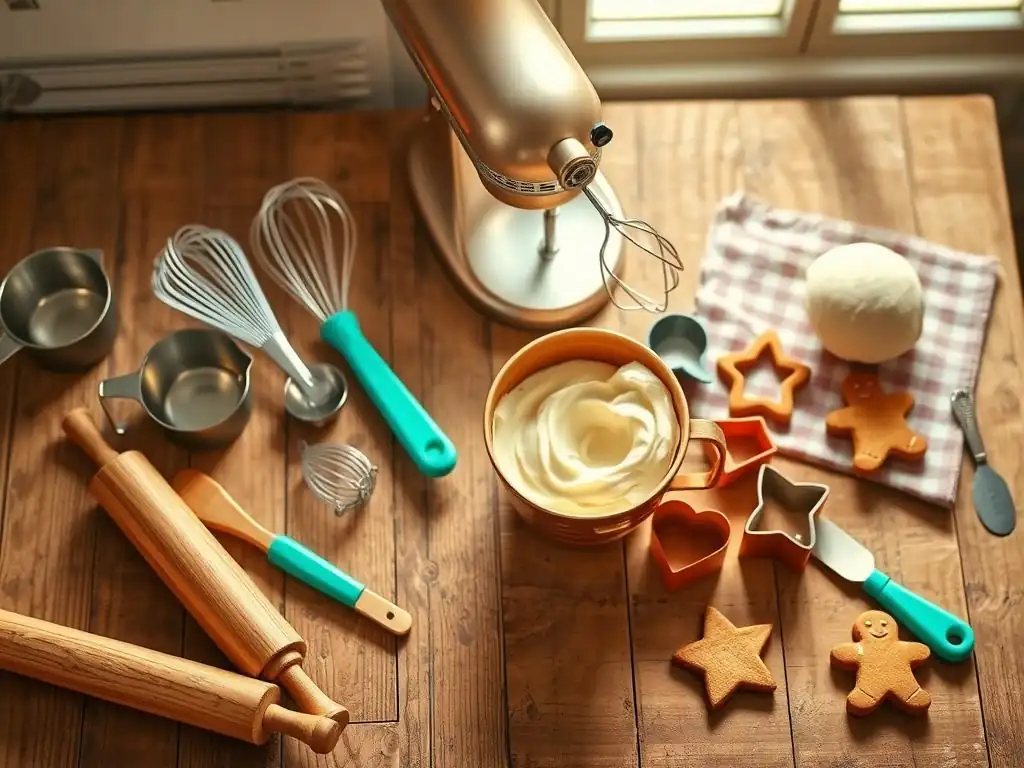
Welcome to BakeWithEase, your trusted guide to the delightful world of baking!
Ready to embark on your baking journey? Discover how having the right baking tools for beginners can transform your kitchen experience from daunting to delicious. Curious about what makes the cut? Dive in to uncover our essential picks and unlock the secrets to creating mouthwatering treats with confidence.
- A Baker's Guide to Essential Baking Tools for New Bakers
- Why Having the Right Baking Tools Matters
-
Must-Have Baking Tools: Your Starter Kit
- Measuring Cups and Spoons: Achieving Precision in Baking
- Mixing Bowls: Selecting the Right Sizes and Materials
- Spatulas: Essential for Mixing, Folding, and Scraping
- Baking Pans: Choosing the Right Pans for Different Recipes
- Whisks: Aerating and Combining Ingredients Effectively
- Rolling Pin: Achieving Uniform Dough Thickness
- Other Helpful Baking Tools
- Choosing Your First Baking Tools: Factors to Consider
- Caring for Your Baking Tools: Ensuring Longevity
- Where to Buy Baking Tools
- Mastering the Basics: Using Your New Baking Tools
- From Beginner to Baker: Building Your Baking Tool Collection
-
Frequently Asked Questions
- What are the absolute essential baking tools a beginner should invest in first?
- Are expensive baking tools really necessary when starting out, or can I use cheaper alternatives?
- How important is an oven thermometer, and when should I use one?
- What type of mixing bowl is best for a beginner: glass, stainless steel, or plastic?
- Besides the basics, what's one "nice-to-have" baking tool that can significantly improve my baking results?
- Final Reflection: Mastering the Fundamentals, Baking a Brighter Future
- Unleash Your Inner Baker: Start Baking Today!
A Baker's Guide to Essential Baking Tools for New Bakers
Welcome to the wonderful world of baking! It's a journey filled with delicious aromas, satisfying textures, and the joy of creating something truly special with your own hands. For those just starting out, the kitchen can seem a little overwhelming with all the gadgets and gizmos available. But fear not! You don't need a professional-grade kitchen to bake amazing treats. What you do need is a solid foundation of basic baking tools for beginners – the essential items that will help you measure, mix, and bake your way to success.
Think of these essential baking tools as your co-pilots in the kitchen. They are designed to make the process smoother, more predictable, and ultimately, more enjoyable. From accurately measuring ingredients to ensuring your baked goods cook evenly, having the right equipment is the first step towards mastering basic techniques. This guide will walk you through the fundamental baking tools for beginners, explaining why each one is important and how to choose wisely, setting you up for countless happy hours of baking.
Why Having the Right Baking Tools Matters
Baking is often described as a science, and like any science, precision is key. Unlike cooking, where you can often adjust ingredients on the fly, baking relies on specific ratios and reactions between ingredients. Having the correct baking tools for beginners allows you to follow recipes accurately, which is crucial for consistent and delicious results. Imagine trying to measure flour for a delicate cake without proper measuring cups – you could end up with a dense brick instead of a light sponge!
Beyond just accuracy, the right tools also contribute to efficiency and ease in the kitchen. A good quality mixing bowl is stable and easy to handle, a sharp bench scraper makes dividing dough simple, and a reliable oven thermometer ensures your oven is at the correct temperature (many home ovens can be off by 25-50°F!). Investing in these basic baking tools for beginners means spending less time struggling with inadequate equipment and more time enjoying the process of creating and sharing your baked goods.
The Importance of Quality Baking Equipment for Consistent Results
Using quality baking tools directly impacts the consistency and outcome of your baked goods. For instance, a sturdy, well-calibrated set of measuring cups and spoons ensures that you add the exact amount of flour, sugar, or leavening called for in a recipe. A slight mismeasurement, say adding 1/4 cup extra flour to a standard cookie recipe (which might be about 30-40 grams over the intended amount), can significantly alter the texture, making cookies tough or crumbly instead of chewy or crisp.
Furthermore, the material and construction of tools like baking pans play a vital role in heat distribution. A cheap, thin metal pan might heat unevenly, leading to edges that are burnt while the center remains underbaked. A good quality, heavier gauge aluminum or steel pan distributes heat more evenly, ensuring your cakes, brownies, or cookies bake uniformly from edge to center, resulting in a product that looks and tastes professional. Investing a little more upfront in durable, reliable baking tools for beginners pays off in consistently better results and longer-lasting equipment.
Setting Yourself Up for Baking Success: Choosing the Right Tools
Selecting the right baking tools for beginners is about building a foundation that supports your learning and growth. It's not necessary to buy every gadget on the market immediately. Start with the essentials that are versatile and necessary for a wide range of basic recipes. Prioritize items like accurate measuring tools, sturdy mixing bowls, and reliable baking pans that fit your oven and intended uses.
Consider the types of baking you're most likely to start with. If you plan to make a lot of cookies and sheet pan recipes, focus on good quality baking sheets. If cakes are your goal, invest in a few standard cake pans. Choosing tools made from durable materials like stainless steel, glass, or heavy-duty aluminum will ensure they withstand regular use and cleaning. This initial selection of core baking tools for beginners will empower you to confidently tackle many foundational recipes and build your skills step-by-step.
Must-Have Baking Tools: Your Starter Kit
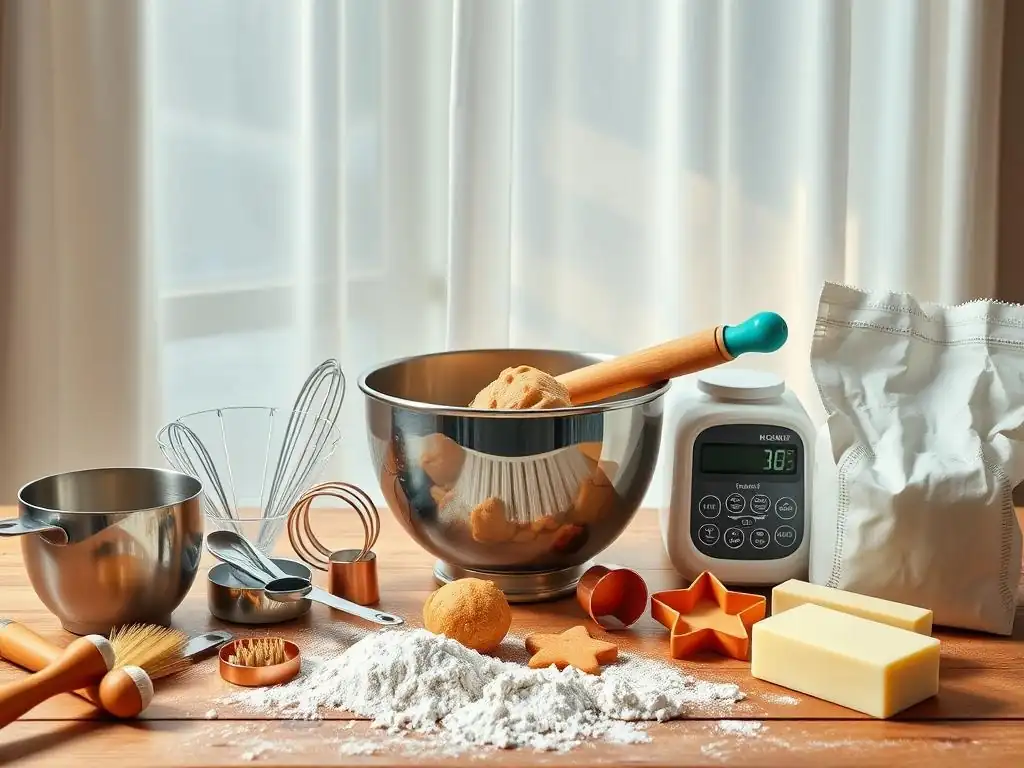
Getting started in baking doesn't require filling your kitchen with expensive gadgets. A beginner baker can create wonderful things with a relatively small collection of essential items. This starter kit focuses on the fundamental baking tools that are versatile, frequently used, and crucial for accurate results in a variety of recipes.
These basic baking tools for beginners are the workhorses of the kitchen. They cover the core tasks: measuring ingredients precisely, mixing them thoroughly, and baking them correctly. Starting with these reliable items ensures you can confidently approach most beginner-level recipes, from simple drop cookies to basic loaf cakes, and build your skills upon a solid foundation.
Measuring Cups and Spoons: Achieving Precision in Baking
Accurate measurement is arguably the most critical step in baking, and reliable measuring cups and spoons are the essential baking tools for beginners to ensure this. You'll need two types of measuring cups: dry measuring cups, which are designed to be leveled off for accuracy (typically come in sets of 1/4, 1/3, 1/2, and 1 cup), and liquid measuring cups, which have a spout and markings for reading at eye level (usually come in 1-cup, 2-cup, or 4-cup sizes).
Using a dry measuring cup for liquid ingredients, or vice versa, can lead to significant errors; for example, a 1-cup dry measure holds about 236ml when filled to the brim, while a 1-cup liquid measure is calibrated specifically for 237ml, but the shape difference means it's much easier to get an accurate liquid volume with the latter.
Measuring spoons are equally important for smaller quantities, especially for potent ingredients like baking soda, baking powder, spices, and extracts. A standard set usually includes 1/4 teaspoon, 1/2 teaspoon, 1 teaspoon, and 1 tablespoon. Precision here is paramount; using just a little too much baking powder (say, 1.5 teaspoons instead of 1 teaspoon in a recipe calling for 2 cups of flour) can cause baked goods to rise too quickly and then collapse, resulting in a dense or crumbly texture. Having a good quality set of both measuring cups and spoons is foundational among baking tools for beginners.
Mixing Bowls: Selecting the Right Sizes and Materials
Mixing bowls are where the magic happens – where wet and dry ingredients come together to form batters and doughs. For a beginner, having a set of at least three mixing bowls in varying sizes is incredibly useful. Common sizes might be a small bowl (around 1.5-2 quarts) for whisking eggs or mixing small amounts, a medium bowl (around 3-4 quarts) for combining dry ingredients or mixing smaller batters, and a large bowl (around 5-6 quarts) for larger batches of cookie dough or yeast bread dough.
The material of the mixing bowl matters too. Stainless steel is lightweight, durable, and non-reactive, making it suitable for most tasks, including whisking egg whites to stiff peaks. Glass bowls are heavy and stable, and you can see the mixing process through them, which can be helpful.
Ceramic or melamine bowls are also good options. Avoid reactive metals like aluminum or copper unless the recipe specifically calls for them (copper is sometimes used for egg whites, but not essential for beginners). Having a variety of sizes allows you to manage different recipe volumes and keeps your workspace organized, making these essential baking tools for beginners.
Spatulas: Essential for Mixing, Folding, and Scraping
Spatulas are incredibly versatile and indispensable baking tools for beginners. You'll primarily need two types: rubber or silicone spatulas and offset spatulas. Rubber or silicone spatulas are flexible and heat-resistant, making them perfect for scraping down the sides of mixing bowls (ensuring all ingredients are incorporated, preventing unmixed pockets), folding delicate ingredients like whipped cream or egg whites into batter without deflating them, and scraping every last bit of batter or dough out of a bowl or pan.
Offset spatulas, on the other hand, have a thin, flexible metal blade angled from the handle. They are ideal for spreading batters smoothly into pans (like brownie batter or cake batter), frosting cakes and cupcakes, and lifting delicate cookies or pastries off a baking sheet. A small offset spatula (around 4-6 inches) and a larger one (around 8-10 inches) cover most needs. Using the right spatula ensures smooth textures and minimal waste, cementing their place among crucial baking tools for beginners.
Baking Pans: Choosing the Right Pans for Different Recipes
Baking pans come in countless shapes and sizes, each designed for specific purposes. As a beginner, you don't need every type, but a few key pans will allow you to bake a wide variety of foundational recipes. The material (often aluminum or non-stick coated steel) and color (light pans promote even browning, dark pans absorb more heat and can lead to darker crusts) can affect baking time and outcome, so paying attention to recipe instructions is helpful.
Having a selection of basic baking pans is fundamental. A standard 9x13 inch rectangular pan is perfect for brownies, sheet cakes, and bar cookies. Round cake pans (usually 8 or 9 inches in diameter) are essential for layer cakes. Muffin tins allow you to make cupcakes and muffins. And baking sheets are necessary for cookies, scones, and pastries. Choosing quality pans that distribute heat evenly is key to preventing burnt edges or underbaked centers, making them vital baking tools for beginners.
Cake Pans: Round, Square, and Bundt Pans Explained
Round cake pans are typically 8 or 9 inches in diameter and 1.5 to 2 inches deep. They are the standard for most layer cakes. Recipes usually specify the size needed, and using the wrong size can affect baking time and the cake's structure. For example, baking a batter designed for two 8-inch pans in two 9-inch pans might result in thinner, potentially drier cake layers that bake faster.
Square pans, commonly 8x8 inch or 9x9 inch, are great for brownies, cornbread, and some snack cakes. A 9x13 inch rectangular pan is incredibly versatile for larger sheet cakes, bar cookies, and even savory dishes. Bundt pans are decorative ring-shaped pans that create visually stunning cakes with minimal effort. While not strictly essential for beginners, a standard 10 or 12-cup Bundt pan is a fun addition once you've mastered basic cakes.
Cookie Sheets: Flat vs. Rimmed Baking Sheets
Baking sheets, also called sheet pans, are flat or rimmed rectangular pans used for baking cookies, pastries, scones, and roasting. For baking, rimmed baking sheets (often half-sheet size, approximately 13x18 inches) are highly recommended among baking tools for beginners. The rim prevents cookies from sliding off and contains any potential spills from pastries or roasting vegetables (though for baking, spills are less common).
While flat cookie sheets exist, the rimmed version offers more versatility and safety. Look for sturdy, heavy-gauge aluminum pans for even heat distribution. Using parchment paper or silicone baking mats on your baking sheet ensures easy release and simplifies cleanup, which is a huge plus for beginner bakers. A set of two half-sheet pans is ideal, allowing you to bake in batches efficiently.
Muffin Tins: Standard and Mini Muffin Tins
Muffin tins are essential for baking muffins and cupcakes. Standard muffin tins typically have 12 cups, each holding about 1/2 cup of batter. This is the most common size and a must-have among baking tools for beginners. Using paper liners simplifies cleanup and makes serving easier.
Mini muffin tins have smaller cups, usually 24, and are great for bite-sized treats. While fun, a standard 12-cup muffin tin is sufficient for most beginner recipes. Ensure the tin is made from a material that promotes even baking, like non-stick coated steel or aluminum. Proper care, like avoiding metal utensils that can scratch the non-stick surface, will ensure your muffin tin lasts for many baking adventures.
Whisks: Aerating and Combining Ingredients Effectively
A whisk is a simple yet essential tool for incorporating air into ingredients and ensuring smooth, lump-free mixtures. For beginners, a balloon whisk is the most versatile type. Its many wires are ideal for whisking eggs, whipping cream, making gravies or sauces, and combining dry ingredients. The air incorporated through whisking is crucial for the lift and texture of many baked goods, from fluffy pancakes to light cakes.
Having one or two good quality whisks in different sizes (perhaps a medium 10-inch and a smaller 8-inch) is beneficial. A medium whisk is good for larger bowls and volumes, while a smaller one is perfect for whisking a couple of eggs or small amounts of liquid. Look for whisks with sturdy handles and wires that are well-attached. A well-made whisk will be one of your most frequently used baking tools for beginners.
Rolling Pin: Achieving Uniform Dough Thickness
A rolling pin is necessary for any recipe that requires rolling out dough, such as cookies, pie crusts, biscuits, or pastries. Achieving uniform thickness is key to ensuring even baking; if parts of the dough are thicker than others, the thin parts will burn before the thick parts are cooked through. A simple, classic rolling pin made of wood or marble is perfect for beginners.
Wooden rolling pins are popular and effective. Marble rolling pins are heavier and stay cooler, which is helpful for rolling out temperature-sensitive doughs like pastry or pie crust. A rolling pin with handles is often easier for beginners to control pressure. Aim for a pin that is comfortable for you to use and provides enough weight to help with rolling without requiring excessive force. This tool is indispensable for a specific set of baking tasks, making it an important addition to your collection of baking tools for beginners.
Other Helpful Baking Tools
While the items listed above form the core starter kit, there are several other baking tools that, while not strictly essential for your very first attempts, quickly become invaluable as you expand your repertoire. These tools offer increased precision, efficiency, or help with specific tasks that elevate your baking results.
Adding these helpful baking tools to your collection as you gain confidence will make more complex recipes accessible and improve the quality of your basic bakes. They represent the next step in building a comprehensive set of baking tools for beginners moving towards intermediate skills.
Kitchen Scale: Precise Measurements for Consistent Baking
While measuring cups and spoons are foundational, a digital kitchen scale offers the highest level of precision in baking. Many professional bakers and serious hobbyists swear by weighing ingredients, especially flour, rather than measuring by volume. The reason? A cup of flour can vary significantly in weight depending on how it's scooped and packed – it could be anywhere from 120 to 150 grams. Using a scale ensures you add the exact amount specified in the recipe every time, leading to much more consistent results.
For recipes where precision is critical, like macarons or yeast breads, a few grams off can make a big difference. A basic digital kitchen scale is relatively inexpensive and can measure in grams, ounces, pounds, and milliliters. It's a game-changer for consistency and highly recommended as one of the next baking tools for beginners to acquire after the absolute essentials. Weighing ingredients can eliminate common baking errors caused by inaccurate volume measurements.
Pastry Brush: Applying Egg Washes and Glazes
A pastry brush, usually with natural or silicone bristles, is used for applying liquids onto the surface of baked goods. This includes egg washes (beaten egg mixed with water or milk) to give bread, pastries, or pies a golden, shiny crust, melted butter or glazes onto warm cakes or scones, or even oiling pans. A good quality pastry brush applies the liquid evenly without leaving streaks or shedding bristles onto your food.
Silicone brushes are often preferred for their ease of cleaning and durability, as they don't absorb grease or moisture like natural bristles can. A medium-sized brush (around 1-1.5 inches wide) is versatile enough for most tasks. While you could technically use a paper towel in a pinch, a pastry brush provides a much more even and professional finish, making it a useful addition to your baking tools for beginners.
Bench Scraper: Dividing Dough and Cleaning Surfaces
A bench scraper, also known as a dough scraper, is a simple tool with a flat metal blade and a handle. It's incredibly useful, especially when working with dough. Its primary uses include dividing portions of dough evenly (e.g., for rolls or biscuits), scooping up chopped ingredients from a cutting board, and, crucially, scraping sticky dough or dried flour off your work surface quickly and effectively.
For bakers making bread, pastries, or even just rolling out cookie dough, a bench scraper is invaluable for keeping your workspace clean and managing sticky messes. Some bench scrapers even have measurement markings along the blade, which can be helpful for dividing dough into equal portions or measuring dimensions while rolling. It's a humble tool, but one that many experienced bakers find indispensable, making it a great next step among baking tools for beginners.
Cooling Rack: Preventing Soggy Bottoms
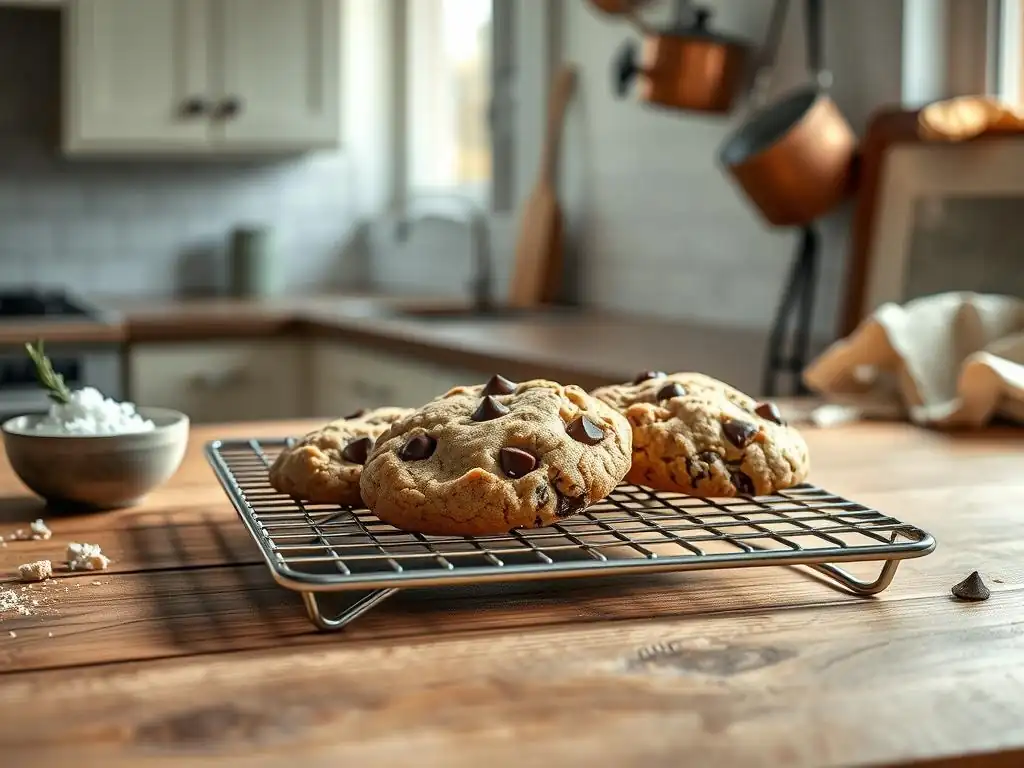
A cooling rack, typically a wire grid raised on feet, is essential for allowing air circulation around baked goods as they cool. Placing cakes, cookies, muffins, or bread directly on a solid surface like a countertop traps steam, which can lead to soggy bottoms. A cooling rack ensures even cooling and allows steam to escape, preventing condensation from ruining the texture of your bakes.
Having one or two sturdy cooling racks that fit your typical baking sheet size is ideal. Look for racks with a grid pattern that isn't too wide, so smaller cookies or pastries don't fall through. Some racks are stackable, which is great for cooling large batches in a small space. Proper cooling is a critical final step in many baking processes, and a cooling rack is the essential baking tool for beginners to get this right.
Parchment Paper and Silicone Baking Mats: Easy Release and Cleanup
While not strictly tools in the traditional sense, parchment paper and silicone baking mats are baking essentials that significantly improve the baking process, especially for beginners. Both provide a non-stick surface, ensuring cookies, pastries, and bread loaves release cleanly from the pan without sticking. This saves frustration and prevents your creations from falling apart.
Parchment paper is disposable and can be cut to fit any pan shape. Silicone baking mats (like Silpat) are reusable, typically fit standard half-sheet pans, and provide an excellent non-stick surface. They also offer a slight cushioning effect, which can promote even baking for delicate items like meringues. Using either of these means less greasing of pans and much easier cleanup – simply peel off the paper or mat! They are highly recommended aids among baking tools for beginners for their ability to simplify two common pain points: sticking and cleanup.
Choosing Your First Baking Tools: Factors to Consider
When you're ready to invest in your first set of baking tools for beginners, it's wise to consider a few factors beyond just the tool's function. Thinking about your budget, the materials the tools are made from, and the space you have available will help you make smart choices that serve you well as you embark on your baking journey.
Choosing the right tools from the start can prevent frustration and save you money in the long run. It's better to buy a few good quality essential items than many cheap ones that might break or perform poorly. Let's look at some key considerations when selecting your initial baking tools for beginners.
Budget-Friendly Baking Tool Options
Starting baking doesn't have to break the bank. Many essential baking tools for beginners are available at very reasonable prices. For instance, a basic set of dry measuring cups and spoons might cost between $10-$20, while a simple glass liquid measuring cup is often less than $10. A set of three stainless steel mixing bowls can be found for $20-$30.
You can often find good quality, entry-level versions of essential tools at major retailers or kitchen supply stores. For example, a sturdy 9x13 inch baking pan might cost $15-$25, and a basic set of two rimmed baking sheets could be around $20-$30. Focusing on these core items first allows you to build a functional starter kit for perhaps $100-$150 total, covering most basic baking needs without overspending on specialized or high-end equipment you might not need yet.
Material Matters: Selecting Durable and Safe Baking Tools
The materials used in your baking tools affect their performance, durability, and safety. Stainless steel is an excellent choice for mixing bowls, whisks, and measuring tools because it's durable, non-reactive, and easy to clean. Glass measuring cups are stable and allow you to see measurements clearly, though they can break.
For baking pans, consider aluminum or steel. Aluminum provides excellent, even heat conduction, while steel (often with a non-stick coating) is also durable. Ensure any non-stick coatings are PFOA-free for safety. Silicone is great for spatulas and baking mats due to its heat resistance and flexibility. Choosing sturdy materials means your baking tools for beginners will last longer and perform reliably through countless baking sessions. Avoid flimsy or poorly constructed tools that might warp or break easily.
Storage Space: Choosing Tools That Fit Your Kitchen
Kitchen space is often limited, so consider where you will store your new baking tools. Opting for items that nest neatly, like mixing bowls and measuring cups, can save significant cabinet space. Look for baking sheets and cutting boards with holes in the handles if you prefer to hang them.
Before buying a bulky item like a stand mixer (which is not essential for beginners! ), think about where it would live. Even with smaller items, having a plan for storage helps keep your kitchen organized and makes your baking tools for beginners easily accessible when you need them. Prioritize versatile tools that earn their spot in your kitchen by being used frequently.
Caring for Your Baking Tools: Ensuring Longevity
Proper care and cleaning are essential to keep your baking tools for beginners in good condition and ensure they last for years. Different materials require different cleaning methods, and storing them correctly prevents damage like warping or scratching. Taking a few extra minutes for care after each baking session is a small effort that pays off in the longevity and performance of your equipment.
Knowing how to clean and store your baking tools correctly will protect your investment and keep them looking and performing their best. This is an important part of mastering your tools as a beginner baker.
Proper Cleaning Techniques for Different Baking Tools
Cleaning techniques vary depending on the material. Stainless steel tools like whisks, bowls, and measuring cups are generally dishwasher safe, though hand washing can extend their lifespan. For sticky dough residue on a bench scraper or rolling pin, warm water and a stiff brush are usually effective.
Non-stick baking pans and silicone mats should generally be hand-washed with warm, soapy water and a soft sponge or cloth. Avoid abrasive scrubbers or metal utensils, which can scratch and damage the non-stick surface, reducing its effectiveness. For stubborn baked-on messes in pans, soaking them in hot, soapy water for 30 minutes to an hour can make cleaning much easier. Drying metal tools thoroughly prevents rust.
Storage Tips to Prevent Damage
Storing your baking tools properly helps prevent damage and keeps them ready for use. Nesting mixing bowls and measuring cups saves space and protects them from dings. Store baking sheets vertically in a rack or on their side to prevent warping, especially if they are thin.
Keep sharp tools like knives or bench scrapers safely stored to protect both the tools and your hands. Silicone baking mats can often be rolled up or laid flat. Ensuring tools are completely dry before storing them prevents rust on metal items and mildew on wooden items like rolling pins. Organized storage also means you can quickly find the specific baking tools for beginners you need when a baking inspiration strikes!
Where to Buy Baking Tools
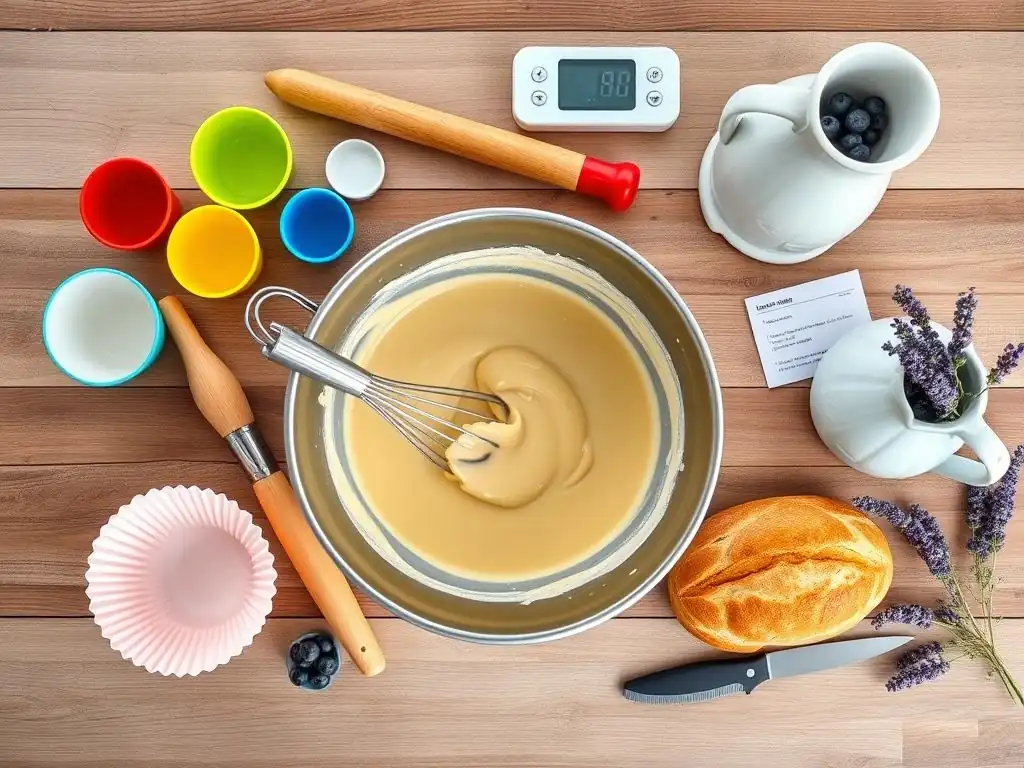
Once you have a list of the essential baking tools for beginners you want to acquire, the next step is finding where to purchase them. You have several options, ranging from large online marketplaces to smaller local shops. Each venue offers different advantages in terms of selection, price, and the ability to see tools in person.
Knowing where to look for your first set of baking tools can help you find quality items at good prices. Whether you prefer the convenience of online shopping or the hands-on experience of a physical store, there are plenty of places to find the perfect baking tools for beginners.
Online Retailers for Baking Supplies
Large online retailers offer a vast selection of baking tools, from basic sets to specialized equipment. They often have competitive pricing and customer reviews that can help you gauge the quality of a product before purchasing. You can find almost any type of baking tool imaginable, often with multiple brands and price points to choose from.
Shopping online is convenient, allowing you to browse and order from home. However, you can't physically inspect the tools before buying. Look for detailed product descriptions, material information, and customer ratings. Many online stores also specialize specifically in kitchenware or baking supplies, offering curated selections and helpful guides. These platforms are a popular source for finding a wide array of baking tools for beginners.
Local Kitchen Supply Stores
Visiting a local kitchen supply store allows you to see and feel the baking tools before you buy them. You can check the weight of a baking pan, the sturdiness of a whisk handle, or how comfortable a rolling pin is to hold. Store staff are often knowledgeable and can offer advice on choosing the best baking tools for beginners based on your needs and budget.
While local stores might not have the sheer volume of options found online, they often carry reputable brands and offer a more personalized shopping experience. Supporting local businesses is also a plus. If you have a culinary supply store nearby, it's a great place to get hands-on with potential new additions to your collection of baking tools for beginners.
Recommended Baking Tool Brands
Many reputable brands produce quality baking tools that are suitable for beginners and experienced bakers alike. While we won't list specific retailers or brands here, research companies known for durable kitchenware. Look for brands that specialize in baking equipment, as they often focus on quality materials and functional design.
Reading reviews from other bakers can also guide you towards reliable brands that consistently produce good performance. Sometimes, investing slightly more in a tool from a trusted brand means it will last longer and perform better than a cheaper, unbranded alternative. As you start building your collection of baking tools for beginners, getting familiar with well-regarded names in the industry is a good strategy.
Mastering the Basics: Using Your New Baking Tools
Acquiring your essential baking tools for beginners is just the first step. The real fun begins when you put them to use! Starting with simple recipes designed for novice bakers is the best way to get comfortable with your new equipment and understand basic baking techniques. Don't be afraid to make mistakes – they are part of the learning process!
Using your tools repeatedly helps you develop muscle memory and intuition in the kitchen. As you practice, you'll learn how different batters and doughs should feel, how to measure accurately every time, and how your oven behaves. This hands-on experience is crucial for building confidence as you master your baking tools for beginners.
Simple Recipes to Practice with Your Essential Tools
Focus on recipes that utilize the core baking tools for beginners you've acquired. Classic chocolate chip cookies are perfect for practicing measuring dry and wet ingredients, mixing in bowls, and using baking sheets and cooling racks. Basic muffins or cupcakes require measuring, mixing, and using a muffin tin.
Simple quick breads, like banana bread or cornbread, are great for practicing measuring, mixing in a loaf pan, and using a spatula to scrape batter. These types of recipes typically require only measuring cups/spoons, mixing bowls, spatulas, a whisk (optional but helpful), and the appropriate pan (baking sheet, muffin tin, or loaf pan). Starting with these low-stakes recipes allows you to get comfortable with your new baking tools before tackling more complex bakes.
Troubleshooting Common Baking Issues
Even with the right tools, beginners might encounter common issues like cookies spreading too much, cakes sinking, or bread not rising. Your baking tools can sometimes be part of the solution or the problem. For example, if cookies spread too much, it might be due to inaccurate measurement of flour (too little), or the baking sheet being too warm between batches.
Using a kitchen scale can help eliminate measurement errors, while using two baking sheets alternately allows one to cool while the other is in the oven. If a cake sinks, it could be underbaking (an oven thermometer helps verify temperature) or inaccurate leavening measurement (check your measuring spoons). Learning to identify potential causes and how your tools relate helps you troubleshoot effectively and improve with each attempt, solidifying your understanding of baking tools for beginners.
From Beginner to Baker: Building Your Baking Tool Collection
As you gain confidence and explore more complex recipes, you'll naturally find yourself needing or wanting additional baking tools. This is the exciting phase where you start expanding your collection beyond the absolute essentials. Your growing skills will dictate which tools are most useful to add next.
Building your collection is a gradual process. You don't need to rush out and buy everything at once. Consider which types of baking you enjoy most and invest in tools that support those interests. Your baking tools for beginners will always be the core, but adding specialized items opens up new possibilities.
Expanding Your Toolkit as Your Skills Grow
Once you're comfortable with the basics, consider adding tools that enhance specific techniques or allow you to try new types of recipes. If you love making bread, a digital scale becomes almost essential, and a Dutch oven can greatly improve your loaf crusts. If pastries are your passion, a pastry blender or cutters might be useful additions.
Perhaps you want to try decorating cakes? Piping bags and tips would be next on your list. As you encounter recipes that call for specific tools you don't have, evaluate how often you're likely to use that tool. If it's for a recipe you plan to make frequently, it might be a worthwhile investment to add to your growing set of baking tools from beginner to enthusiastic hobbyist.
Advanced Baking Tools to Consider
As you move beyond the beginner stage, more specialized tools might pique your interest. A stand mixer, while a significant investment and not essential for beginners, can make tasks like kneading dough or whipping large batches of cream much easier and faster. Immersion blenders can be useful for making smooth purees for fillings or sauces.
Other advanced baking tools include candy thermometers for confectionery, tart pans with removable bottoms, specialized bread proofing baskets (bannetons), or even a kitchen torch for finishing meringues or caramelizing sugar. These tools are not necessary when starting out but can be exciting additions as your skills and ambitions grow, allowing you to explore the full breadth of baking possibilities with a comprehensive set of baking tools.
Frequently Asked Questions
What are the absolute essential baking tools a beginner should invest in first?
A beginner should prioritize a mixing bowl, measuring cups and spoons, and a basic baking sheet. These are versatile and form the foundation for most recipes.
Are expensive baking tools really necessary when starting out, or can I use cheaper alternatives?
While high-end tools can be nice, they aren't essential for beginners. Opt for affordable, functional tools initially. You can always upgrade later as your skills improve.
How important is an oven thermometer, and when should I use one?
An oven thermometer is crucial for baking success. Use it every time you bake to ensure your oven's temperature is accurate, preventing under- or over-baked goods.
What type of mixing bowl is best for a beginner: glass, stainless steel, or plastic?
Stainless steel bowls are generally recommended for beginners because they are durable, lightweight, and non-reactive. Glass is also good, but can be heavier.
Besides the basics, what's one "nice-to-have" baking tool that can significantly improve my baking results?
A digital kitchen scale is a fantastic investment. It allows for precise measurements of ingredients, leading to more consistent and accurate baking results.
Final Reflection: Mastering the Fundamentals, Baking a Brighter Future
The humble whisk, the trusty measuring cup, the ever-reliable oven mitt—these aren't just tools; they're the keys to unlocking a world of culinary creativity. Baking, often perceived as intimidating, becomes remarkably accessible when we understand the foundational role of these essential implements. This article has highlighted the importance of selecting quality tools that fit your needs and budget, setting you up for success from your very first attempt.
The impact of readily available, high-quality baking tools extends far beyond the kitchen. It fosters a sense of empowerment, allowing individuals to confidently explore their culinary passions and connect with a rich tradition of food creation. This connection transcends mere sustenance; it's about creating memories, sharing joy, and expressing oneself through the art of baking. Baking is at once child's play and adult joy. And love, of course.
– Alma Flor Ada. This quote perfectly encapsulates the emotional resonance that baking, and the tools that enable it, can hold.
Now, I invite you to consider your own baking journey. What tools are you currently using? Are they serving you well? Perhaps this article has inspired you to invest in a new whisk, or finally replace that worn-out measuring spoon. More importantly, I hope it has ignited a spark of confidence within you, encouraging you to embrace the joy of baking, one perfectly measured ingredient at a time. Don't be afraid to experiment, to learn, and to share your creations with the world. Your baking adventure awaits!
Unleash Your Inner Baker: Start Baking Today!
Thanks for taking the time to explore the essential tools for baking success! You've now got a solid foundation to build upon. Ready to transform your kitchen into a baking haven?
- Begin your baking journey today: Choose one recipe from your favorite cookbook (or find a simple one online) and gather the essential tools we discussed. Don't be afraid to experiment!
- Share your baking aspirations! Tell us in the comments what you're most excited to bake first. Let's inspire each other!
- Dive deeper: Explore our website for more baking tips and tricks to elevate your skills!
What's the first delicious treat you'll be whipping up?