
Simplify Baking: A Beginner's Guide to Essential Kitchen Tools

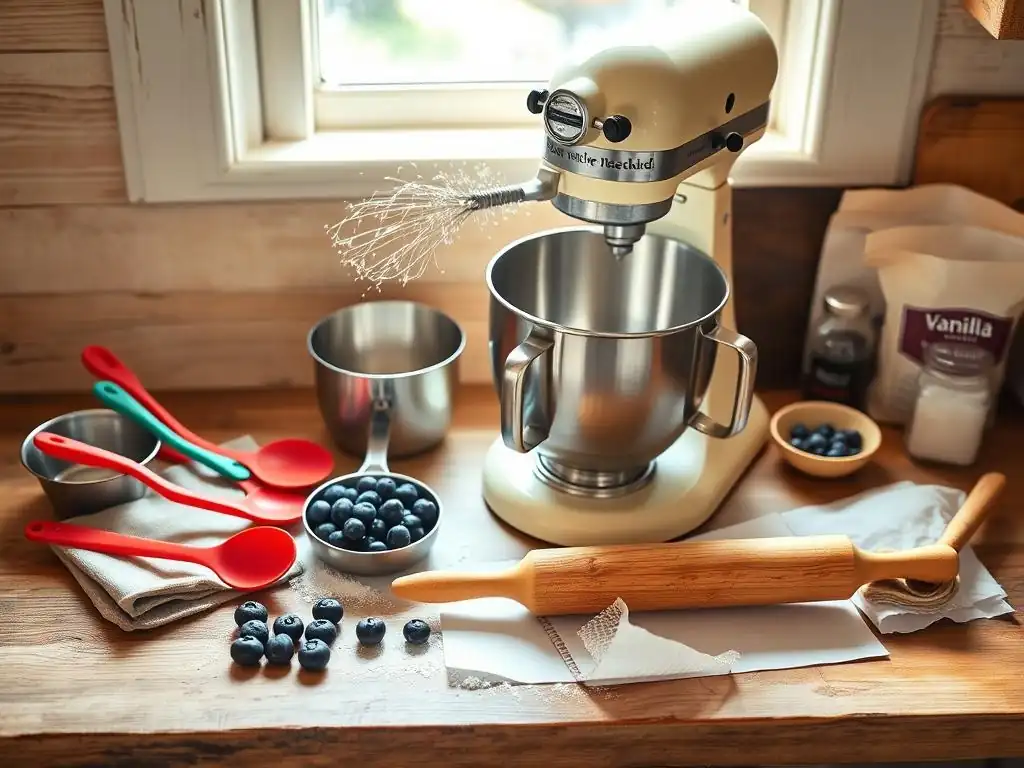
Welcome to BakeWithEase, where delicious baking becomes effortlessly achievable! Are you ready to embark on a delightful culinary journey? This guide, "Simplify Baking: A Beginner's Guide to Essential Kitchen Tools," unveils the secrets to setting yourself up for success. Discovering the right tools can truly transform your baking experience. But what are the must-haves, and how do you choose the best ones? Let's unlock the mysteries and get you baking with confidence!
- BakeWithEase: Your Journey to Baking Success Starts Here
- Essential Baking Tools for Beginners: Setting Up Your Kitchen
- Must-Have Measuring Tools for Precise Baking
- Mixing Bowls: A Baker's Best Friend
- Essential Mixing Tools: Stirring and Combining Ingredients
- Baking Pans and Sheets: The Foundation of Baked Goods
- Other Indispensable Baking Tools for Beginners
- Cleaning and Maintaining Your Essential Baking Tools
- Where to Buy Essential Baking Tools: Budget-Friendly Options
- Level Up Your Baking: Advanced Tools to Consider Later
- Mastering the Basics: Essential Baking Tools Checklist
- BakeWithEase: Encouraging Your Baking Confidence
-
Frequently Asked Questions
- What are the most essential baking tools a beginner should invest in?
- Can I bake without specialized equipment like a stand mixer?
- What type of measuring tools are best for baking accuracy?
- How do I choose a good quality baking sheet?
- Besides tools, what's the most important tip for beginner bakers?
- Final Reflection: The Sweet Simplicity of Baking
- Unlock Your Inner Baker: Start Baking with Confidence!
BakeWithEase: Your Journey to Baking Success Starts Here
Welcome to BakeWithEase! Our goal is to make baking accessible and enjoyable for everyone, especially if you're just starting out. We believe that with the right guidance and the proper tools, anyone can create delicious baked goods, from simple cookies to impressive cakes. This guide is designed to walk you through the fundamental equipment you'll need to get started on your baking adventure without feeling overwhelmed.
Embarking on your baking journey is an exciting step, and having a solid foundation of knowledge about essential baking tools for beginners is key. You don't need a professional kitchen setup to bake successfully. In fact, a few key pieces of equipment can make all the difference in achieving consistent, delicious results. We'll cover everything from measuring tools to mixing bowls and pans, helping you build your essential baking toolkit efficiently and affordably.
Essential Baking Tools for Beginners: Setting Up Your Kitchen
Setting up your kitchen for baking doesn't have to be complicated or expensive. The focus should be on acquiring versatile, reliable tools that will serve you well across a variety of recipes. Think of these initial purchases as an investment in your baking future. By starting with the right essential baking tools for beginners, you'll be better equipped to follow recipes accurately and build confidence with each successful bake.
Having a well-equipped space, even a small one, organized with your basic baking equipment readily available will make the process much smoother. This section will help you understand which tools are truly necessary when you're just starting out and why they are considered essential for any beginner baker. We'll break down the categories and highlight the key items in each.
Why Having the Right Baking Tools Matters for Beginners
Using the correct essential baking tools for beginners is paramount for achieving consistent and predictable results. Baking is often described as a science because it relies heavily on precise measurements and specific techniques. Unlike cooking, where you can often adjust ingredients on the fly, small deviations in baking can significantly impact the final texture, rise, and flavor of your baked goods. For instance, using a standard dinner spoon instead of a proper measuring spoon for leavening agents like baking powder can lead to a cake that doesn't rise properly or cookies that spread too much.
Furthermore, the right tools make the process easier and more enjoyable. Trying to mix a stiff dough in a bowl that's too small, or attempting to evenly frost a cake without an offset spatula (though an advanced tool, it illustrates the point), can be frustrating. Having the appropriate basic baking equipment prevents these common pitfalls, allowing beginners to focus on learning the techniques and understanding the recipe rather than struggling with inadequate tools. It builds confidence and encourages continued practice.
Understanding Essential Baking Equipment: A Foundation for Success
Building a solid foundation in baking starts with understanding the purpose of each piece of essential baking equipment. It's not just about having the tools, but knowing why you need them and how to use them correctly. For example, a cooling rack might seem optional, but placing hot cookies directly on a solid surface after baking traps steam, resulting in soggy bottoms. A cooling rack allows air circulation, ensuring they cool properly and maintain their crisp texture.
This foundational understanding extends to things like oven thermometers. While your oven dial might say 350°F (175°C), its internal temperature can vary by as much as 50°F (10°C) or more. Using an inexpensive oven thermometer, one of the truly essential baking tools for beginners, helps you verify the actual temperature, preventing issues like burnt edges or underbaked centers, especially critical for delicate items like meringues or soufflés. Knowing these nuances helps you troubleshoot and improve your baking skills.
Must-Have Measuring Tools for Precise Baking
In baking, precision is key. Unlike cooking, where a pinch of this or a dash of that might work, baking recipes are formulated with specific ratios of ingredients to achieve desired chemical reactions and textures. Having accurate measuring tools is perhaps the most critical part of your essential baking tools for beginners toolkit. They are the foundation upon which all successful baking is built.
Investing in a good set of measuring cups and spoons, along with a reliable scale, will drastically improve your baking consistency. These tools ensure that you add the exact amount of flour, sugar, liquid, and leavening called for in a recipe, minimizing the risk of common beginner mistakes that can lead to disappointing results. Let's look at the different types and why you need them.
The Importance of Accurate Measurements in Baking
Accurate measurements are non-negotiable in baking. The chemical interactions between ingredients like flour, sugar, leavening agents (baking soda and baking powder), and liquids are sensitive to ratio changes. For example, adding too much flour can make cookies dry and crumbly or bread dense and heavy. Conversely, too little flour can result in a weak structure, leading to cakes that sink in the middle or cookies that spread into flat puddles. A difference of just a few grams of flour or sugar can noticeably alter the outcome.
Consider a standard chocolate chip cookie recipe calling for 2 ¼ cups of all-purpose flour. If you scoop the flour directly from the bag with your dry measuring cup and level it off, you could easily pack in 20-30% more flour than if you lightly spooned the flour into the cup and then leveled it. This seemingly small difference could mean using closer to 300-320 grams of flour instead of the intended 270 grams (based on the common standard of 120g per cup when measured correctly).
This excess flour absorbs more liquid, resulting in a significantly drier, tougher cookie. This highlights why accurate measurement is one of the most important skills when using essential baking tools for beginners.
Liquid Measuring Cups vs. Dry Measuring Cups: What's the Difference?
Understanding the difference between liquid and dry measuring cups is fundamental for accurate baking. Dry measuring cups are designed to be filled to the brim and leveled off with a straight edge (like a knife or spatula) to ensure the exact volume of dry ingredients like flour, sugar, cocoa powder, and oats. They typically come in sets (e.g., ¼ cup, ⅓ cup, ½ cup, 1 cup) and should be filled by spooning ingredients in lightly, not scooping and packing.
Liquid measuring cups, on the other hand, are usually made of clear glass or plastic and have a spout for easy pouring. They also feature measurement markings along the side, often with space above the highest marking. To measure liquids accurately, place the cup on a flat surface and bend down to eye level to read the measurement at the bottom of the meniscus (the slight curve of the liquid surface).
Using a dry measuring cup for liquids can lead to spills and inaccurate readings, just as using a liquid measuring cup for dry ingredients makes it difficult to level properly and achieve the correct volume. Both types are essential baking tools for beginners.
Digital Kitchen Scale: Achieving Consistent Results in Baking
While measuring cups are useful, a digital kitchen scale offers the highest level of accuracy and consistency, especially for recipes that list ingredients by weight (grams or ounces). Many professional bakers and serious home bakers prefer weighing ingredients because it eliminates the variability inherent in volume measurements, particularly with compressible ingredients like flour or confectioners' sugar. Weighing 100 grams of flour will always be 100 grams, regardless of how compacted it is.
Using a digital scale is simple: place your mixing bowl or container on the scale, tare (zero) the weight, and add the ingredient until the desired weight is reached. This method is significantly more reliable than using volume measurements, especially for sensitive recipes like macarons or sourdough bread. For beginners, starting with a scale can prevent many common errors related to inaccurate flour or sugar measurements, making it one of the most valuable essential baking tools for beginners to acquire early on. Many online recipes now include weight measurements alongside volume for this very reason.
Measuring Spoons: For Small Amounts of Ingredients
Measuring spoons are indispensable for accurately measuring small quantities of ingredients, particularly leavening agents, spices, extracts, and salt. These are often ingredients added in fractions of a teaspoon or tablespoon, and their precise amounts are crucial for flavor and chemical reactions. A recipe might call for ½ teaspoon of baking soda or ¼ teaspoon of salt, and even a slight variation can significantly impact the taste and texture of the final product.
Like dry measuring cups, measuring spoons should be filled to the top and leveled off with a straight edge for dry ingredients. For liquids like vanilla extract or almond extract, fill the spoon carefully to the rim. Using household spoons (like cutlery) instead of proper measuring spoons is a common beginner mistake; a standard teaspoon or tablespoon used for eating is not the same volume as a measuring teaspoon or tablespoon. A good set of measuring spoons is an inexpensive yet vital part of your essential baking tools for beginners collection.
Mixing Bowls: A Baker's Best Friend
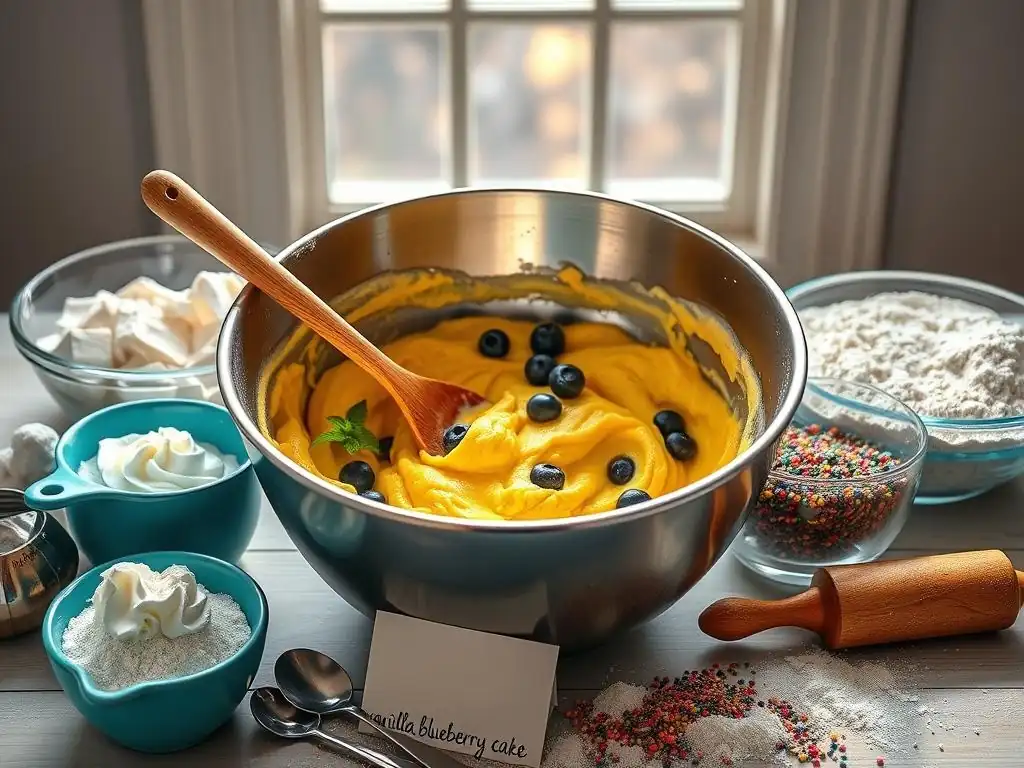
Mixing bowls are fundamental to almost every baking process. They are where you combine dry ingredients, cream butter and sugar, whisk eggs, and mix batters and doughs. Having a variety of sizes allows you to work comfortably, whether you're whisking a couple of egg whites or combining ingredients for a large batch of cookie dough. The right size prevents spills and makes mixing more efficient.
Choosing the right material and having a few different sizes will make your baking life much easier. They are truly essential baking tools for beginners. Let's look at the options and why having variety is beneficial.
Choosing the Right Mixing Bowl Material: Glass, Stainless Steel, or Stainless Steel with Silicone Base?
Mixing bowls come in various materials, each with its pros and cons. Glass bowls are great because they are non-reactive (important when working with acidic ingredients like lemon juice or vinegar) and you can see the mixing process from the sides. They are also microwave-safe, which can be handy for melting butter or chocolate. However, glass bowls can be heavy and are breakable. A standard set might include sizes like 1.5 quart, 2.5 quart, and 4 quart.
Stainless steel bowls are lightweight, durable, and won't break. They are also non-reactive and easy to clean. Some stainless steel bowls come with a silicone base, which provides stability and prevents the bowl from sliding around on your counter while you're vigorously mixing or whisking – a very helpful feature for beginners.
A typical set might range from 1.5 quarts up to 8 quarts, offering good versatility. Plastic bowls are also an option; they are lightweight and inexpensive but can scratch easily and may retain odors or stains over time. Having a mix, perhaps a few stainless steel bowls and a glass one, covers most needs for essential baking tools for beginners.
Different Sizes of Mixing Bowls: Why You Need Variety
Having a range of mixing bowl sizes is crucial because different tasks require different capacities. A small bowl (around 1-2 quarts) is perfect for whisking a few eggs, melting a small amount of chocolate, or holding pre-measured dry ingredients like salt or baking powder. A medium bowl (around 3-4 quarts) is ideal for mixing batters for cakes, muffins, or quick breads, and for combining dry ingredients for larger recipes.
A large bowl (5 quarts or more) is necessary for making and kneading bread dough, mixing large batches of cookie dough, or whipping cream. Trying to mix a large quantity of ingredients in a bowl that's too small results in spills and makes it difficult to properly combine everything. Conversely, using an unnecessarily large bowl for a small amount of ingredients can make whisking or mixing less efficient. A set of three nested bowls (small, medium, large) is a practical and space-saving collection of essential baking tools for beginners.
Essential Mixing Tools: Stirring and Combining Ingredients
Beyond the bowls themselves, you need tools to actually combine the ingredients within them. Spatulas, whisks, and wooden spoons are the workhorses of the baking kitchen, each serving a distinct purpose in mixing, folding, and incorporating ingredients. These are fundamental components of any collection of essential baking tools for beginners.
Mastering the use of these simple tools will allow you to handle various textures, from light batters to thick doughs, and ensure your ingredients are properly combined for optimal results. Let's explore why each one is important.
Spatulas: The Versatile Baking Tool for Beginners
Spatulas, particularly silicone or rubber spatulas, are incredibly versatile and arguably one of the most essential baking tools for beginners. Their flexible heads are perfect for scraping down the sides of a mixing bowl, ensuring all ingredients are incorporated evenly. This is crucial for preventing pockets of unmixed flour or sugar at the bottom of the bowl, which can lead to inconsistent textures in your baked goods.
Beyond scraping, spatulas are also used for folding delicate ingredients, such as folding whipped egg whites into a cake batter without deflating them, or gently incorporating chocolate chips into cookie dough. Their heat-resistant nature makes them useful for stirring custards or sauces on the stovetop as well. Having at least one or two spatulas of different sizes – a smaller one for tight corners and a larger one for bigger bowls – is highly recommended.
Whisks: Incorporating Air and Blending Ingredients
A whisk is essential for aerating ingredients, smoothing out lumps, and emulsifying liquids. A balloon whisk, with its many wires, is designed to incorporate air into mixtures quickly. This is vital for tasks like whipping egg whites into stiff peaks for meringues or soufflés, or whipping cream for toppings or fillings. The air incorporated provides lift and lightness to baked goods.
Whisks are also excellent for blending dry ingredients together evenly (like flour, baking powder, and salt) before adding them to wet ingredients, or for smoothing out batters and sauces, preventing lumps. A medium-sized balloon whisk is a good starting point for essential baking tools for beginners. A smaller whisk can be useful for whisking fewer eggs or making salad dressings.
Wooden Spoons: A Classic Baking Tool for Mixing
Wooden spoons are a classic and reliable tool in the baking world. They are sturdy, heat-resistant, and gentle on mixing bowls, unlike metal spoons which can scratch surfaces, especially non-stick or ceramic. Wooden spoons are particularly good for mixing thick batters and doughs that require a bit of muscle, such as cookie dough or bread dough before kneading.
While a stand mixer can handle heavy tasks, a wooden spoon is perfect for smaller batches or recipes where you want to avoid overmixing. They provide good leverage and control when stirring dense mixtures. A set of durable wooden spoons in different sizes is a valuable addition to your essential baking tools for beginners. Remember to wash and dry them thoroughly after use to prevent splitting or warping.
Baking Pans and Sheets: The Foundation of Baked Goods
Once your batter or dough is mixed, it needs a vessel to bake in. Baking pans and sheets are specifically designed for this purpose, providing the structure and heat distribution necessary to transform raw ingredients into delicious baked goods. The type of pan you use will depend entirely on what you are baking – cookies need flat sheets, cakes need structured pans, and bread often requires loaf pans.
Having a few basic pans will allow you to tackle a wide range of recipes. Choosing good quality pans, often made from materials like aluminum or non-stick steel, ensures even baking and easy release. These are undeniably essential baking tools for beginners.
Baking sheets, also known as cookie sheets, are flat or have a low rim on one or more sides. They are primarily used for baking cookies, biscuits, scones, sheet pan dinners, and roasting vegetables. The large, flat surface promotes even heat distribution, allowing items like cookies to spread and bake uniformly. A standard half-sheet pan (approximately 13x18 inches) is incredibly versatile and can fit a large batch of cookies or several biscuits at once.
For beginners, having at least one or two sturdy baking sheets is crucial. Look for heavy-gauge aluminum or steel sheets, as thinner ones can warp at high temperatures, leading to uneven baking. Using parchment paper or a silicone baking mat (more on that later) on your baking sheets helps prevent sticking and makes cleanup much easier, extending the life of your essential baking tools for beginners.
Cake Pans: Round, Square, and Bundt Pans
If you plan to bake cakes, you'll need cake pans. The most common types are round pans, typically 8 or 9 inches in diameter, which are used for layer cakes. Square pans (8x8 or 9x13 inches) are ideal for brownies, bar cookies, and sheet cakes. Bundt pans, with their distinctive fluted shape and central tube, are used for specific types of cakes that are often served without frosting.
Having at least one round cake pan (like an 8-inch) and one square pan (like an 8x8 inch) allows you to make a wide variety of cakes and bar recipes. Look for pans made from aluminum or non-stick coated steel for even heating and easy release. Properly greasing and flouring pans (or using parchment paper lining for round pans) is a technique essential for preventing cakes from sticking, ensuring your essential baking tools for beginners perform optimally.
Muffin Tins: Creating Perfect Individual Treats
Muffin tins, also called cupcake pans, are used for baking individual portions like muffins, cupcakes, and sometimes mini quiches or savory egg cups. A standard muffin tin usually has 12 cups, each holding about ½ cup of batter. These pans ensure that each portion bakes evenly and maintains its shape.
A standard 12-cup muffin tin is a must-have for any beginner baker interested in making cupcakes or muffins. Look for a sturdy metal tin, preferably with a non-stick coating for easier cleanup. Using paper liners is also a popular way to prevent sticking and makes serving easier. Muffin tins are straightforward essential baking tools for beginners that yield satisfying results.
Loaf Pans: Baking Bread and Sweet Loaves
Loaf pans are rectangular pans, typically 9x5 inches, used for baking various types of loaves, including yeast breads, quick breads (like banana bread or zucchini bread), meatloaf, and pound cake. Their deep, narrow shape helps the batter or dough rise upwards, creating the classic loaf shape.
If you plan to bake bread or quick loaves, a 9x5 inch loaf pan is essential. Like other pans, metal loaf pans (aluminum or non-stick steel) are common choices. Proper greasing and flouring, or using parchment paper slings, helps ensure your baked goods release cleanly. A good quality loaf pan is a simple yet effective addition to your essential baking tools for beginners collection.
Other Indispensable Baking Tools for Beginners
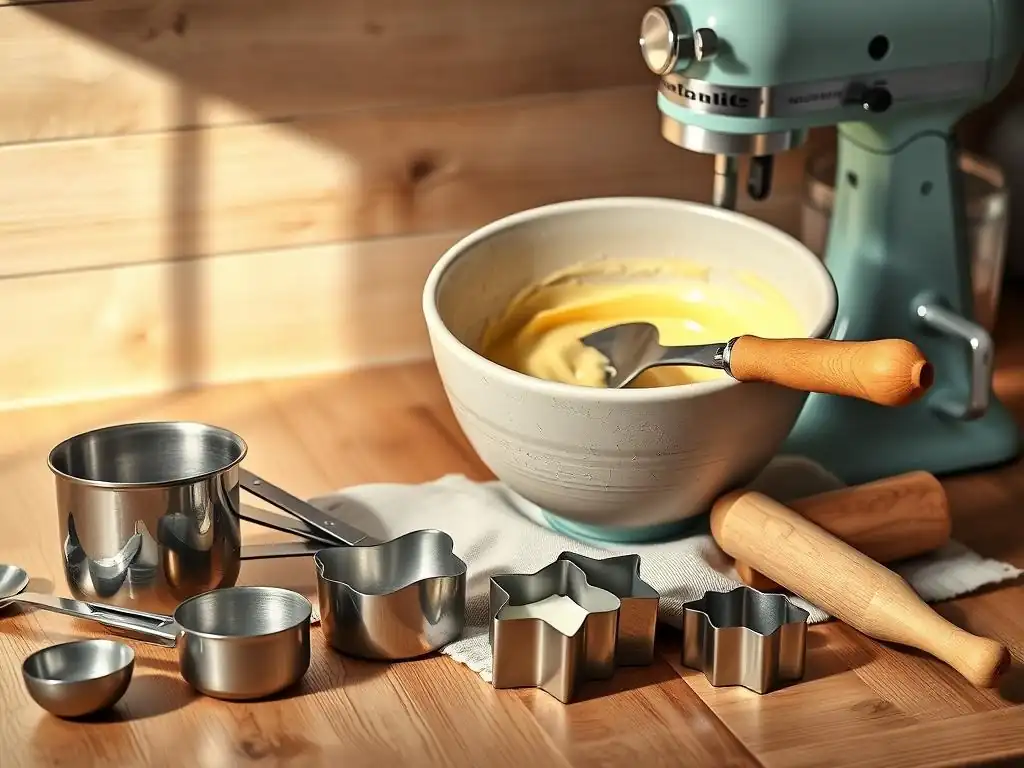
While measuring tools, mixing bowls, and pans form the core of your basic baking equipment, a few other items are highly beneficial and will make your baking experience smoother and more successful. These tools might seem minor, but they play important roles in preparing ingredients and finishing your baked goods. They round out the list of essential baking tools for beginners.
These additional items address specific steps in the baking process, from preparing dough to adding finishing touches or ensuring proper cooling. Let's explore why they are valuable additions to your kitchen.
Rolling Pin: Achieving Uniform Dough Thickness
A rolling pin is necessary for rolling out dough to an even thickness, essential for recipes like pie crusts, cookies, scones, or pastries. Achieving uniform thickness ensures that the dough bakes evenly; thin spots will burn while thick spots remain undercooked. Rolling pins come in various styles, including the traditional American style with handles and a central cylinder, or the French style, which is a simple tapered cylinder.
For beginners, a basic wooden rolling pin is a great start. Look for one that feels comfortable in your hands and is heavy enough to help you roll out dough without excessive effort. A length of around 10-12 inches for the rolling surface is versatile for most home baking tasks. A rolling pin is a key tool when working with dough-based recipes, making it one of the essential baking tools for beginners who want to expand beyond simple batters.
Pastry Brush: Adding Glazes and Egg Washes
A pastry brush is a small but mighty tool used for applying liquids to the surface of baked goods. This includes brushing melted butter onto rolls, applying an egg wash to bread dough for a golden crust, or glazing fruit tarts. Using a brush ensures an even, thin layer of liquid, which is often crucial for achieving the desired color, shine, or texture.
Pastry brushes are typically made with natural bristles or silicone. Silicone brushes are easier to clean and more durable, while natural bristles can sometimes hold liquids slightly better. A medium-sized brush (around 1-1.5 inches wide) is versatile enough for most tasks. A pastry brush is a simple, inexpensive tool that adds a professional touch to your baked goods, earning its place among essential baking tools for beginners.
Cooling Rack: Preventing Soggy Bottoms
A cooling rack, typically a wire rack with legs, is used to lift baked goods off a solid surface immediately after they come out of the oven. This allows air to circulate all around the item, preventing steam from getting trapped underneath. Trapped steam can make the bottoms of cookies, cakes, or breads soggy, ruining their texture.
Cooling racks are particularly important for items like cookies and cakes that need to cool completely before frosting or storing. Allowing proper airflow on a cooling rack ensures that the cooling process happens evenly and that textures remain as intended by the recipe. Having at least one or two cooling racks is highly recommended and they are considered essential baking tools for beginners for good reason.
Fine-Mesh Sieve: Aerating Flour and Sifting Dry Ingredients
A fine-mesh sieve, or sifter, is used to remove lumps from dry ingredients like flour, cocoa powder, and confectioners' sugar, and to aerate them. Sifting flour can make cakes lighter and more tender by incorporating air and ensuring the flour is evenly distributed without clumps. It's also useful for dusting surfaces with flour or sprinkling confectioners' sugar over finished baked goods.
While some modern flours are pre-sifted, many recipes still call for sifting, especially older or more traditional ones. Even if a recipe doesn't explicitly say to sift, sifting cocoa powder or confectioners' sugar is often necessary to remove stubborn lumps. A medium-sized fine-mesh sieve (around 6-8 inches in diameter) is a useful addition to your collection of essential baking tools for beginners.
Cleaning and Maintaining Your Essential Baking Tools
Properly cleaning and maintaining your essential baking tools is crucial for their longevity and for hygienic baking. Lingering food residue can affect the taste of future bakes and attract pests. Taking a few minutes to clean your tools correctly after each use will keep them in good condition and ready for your next baking project.
Different materials require different cleaning methods. Understanding how to care for your specific tools will ensure they last for years to come, making your initial investment in essential baking tools for beginners a wise one.
Proper Cleaning Techniques for Different Baking Tools
For most metal baking sheets and pans (unless non-stick), washing with hot, soapy water and a non-abrasive sponge is sufficient. For stubborn baked-on residue, soaking the pan for a while can help loosen it. Avoid using harsh scouring pads on non-stick surfaces, as this can damage the coating. For non-stick pans, gentler cleaning is key to preserving the finish.
Glass mixing bowls can be washed in the dishwasher or by hand with hot, soapy water. Stainless steel bowls are also dishwasher safe and generally easy to clean. Wooden spoons and rolling pins should be washed by hand with mild soap and water, rinsed, and dried immediately to prevent them from soaking up water, which can lead to cracking or warping. Avoid putting wooden tools in the dishwasher. Silicone spatulas and brushes are typically dishwasher safe or can be easily washed by hand. Cleaning your essential baking tools for beginners correctly ensures they remain effective and hygienic.
Storage Solutions for Your Baking Equipment
Organizing your essential baking tools for beginners will save you time and frustration in the kitchen. Pans and baking sheets can often be stored vertically in a cabinet or on a rack to save space. Mixing bowls, especially nesting sets, can be stacked inside each other.
Smaller tools like measuring cups and spoons, spatulas, whisks, and pastry brushes can be stored in drawers, utensil crocks on the counter, or hung on hooks. Keeping them easily accessible and organized means you won't be rummaging through drawers every time you need a specific item. Proper storage also helps protect your tools from damage and keeps them clean.
Where to Buy Essential Baking Tools: Budget-Friendly Options
You don't need to spend a fortune to acquire essential baking tools for beginners. Many affordable options are available that are perfectly functional and durable enough for starting out. Knowing where to look can help you build your collection without breaking the bank.
From large online marketplaces to local shops, there are several places where you can find good quality basic baking equipment. Comparing prices and reading reviews can help you make informed decisions about your purchases.
Online Retailers for Baking Supplies
Large online retailers are often a convenient source for buying essential baking tools for beginners. Websites like Amazon, Target, or Walmart online offer a wide selection of basic baking equipment from various brands at competitive prices. You can easily compare different sets of measuring cups, mixing bowls, or baking pans and have them delivered directly to your door.
Specialty online baking supply stores also exist, offering a broader range of tools and ingredients, though they might be slightly more expensive than general retailers. Shopping online allows you to easily read product descriptions and customer reviews, which can be helpful when choosing your first essential baking tools for beginners.
Local Kitchen Supply Stores
Visiting local kitchen supply stores or even the kitchenware section of department stores or home goods stores can be a great way to find essential baking tools for beginners. Shopping in person allows you to physically see and feel the quality of the tools before purchasing them. You can assess the sturdiness of a baking sheet or the weight of a mixing bowl.
Sometimes, local stores might offer unique items or have sales. While they might not always have the lowest prices compared to online giants, supporting local businesses is a plus, and you get the benefit of immediate gratification and the ability to inspect the items firsthand. Looking for sales or clearance sections can also yield great deals on basic baking equipment.
Level Up Your Baking: Advanced Tools to Consider Later
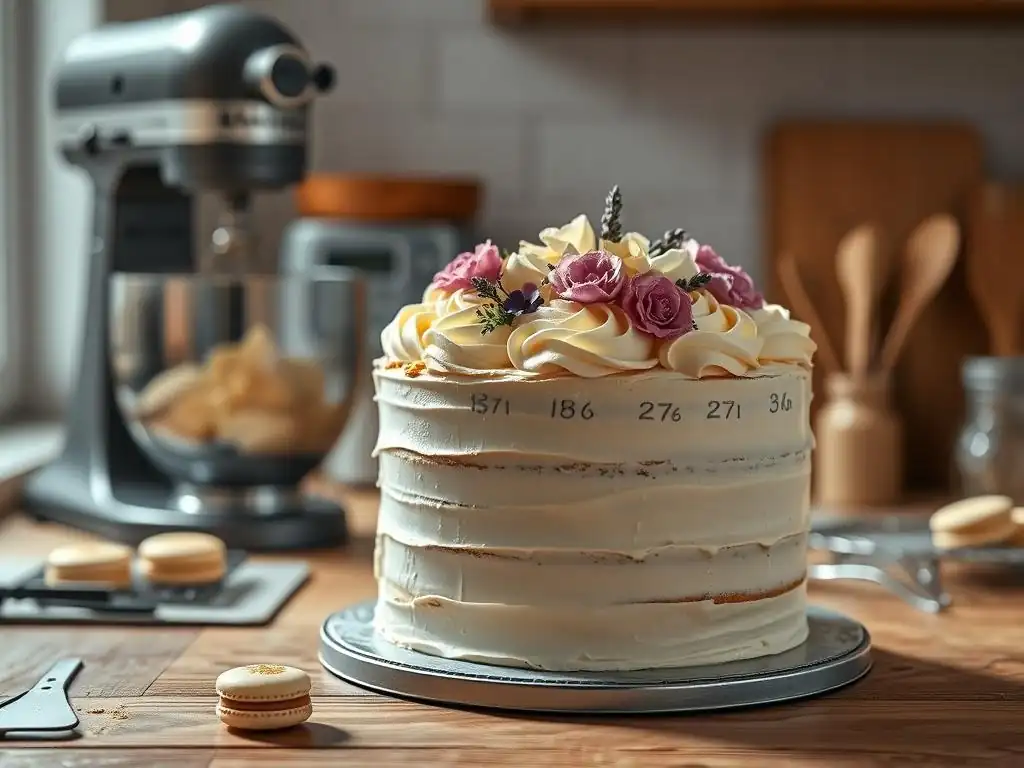
Once you've mastered the basics with your essential baking tools for beginners and find yourself baking more frequently or tackling more complex recipes, you might consider investing in some more advanced equipment. These tools are not strictly necessary when starting out but can significantly enhance your baking efficiency and expand the range of what you can create.
Think of these as the next steps in building your baking arsenal. They can automate tasks, improve precision in certain techniques, and generally make baking larger quantities or more intricate items easier.
Stand Mixer: A Powerful Tool for Serious Bakers
A stand mixer is a significant investment but can be a game-changer if you bake frequently, especially if you make large batches or recipes that require extensive mixing or kneading, like bread doughs, stiff cookie doughs, or large quantities of whipped cream or meringue. Its powerful motor and various attachments (like a paddle attachment for creaming, a whisk attachment for whipping, and a dough hook for kneading) can handle tasks that would be very labor-intensive by hand.
While you can certainly bake successfully with just hand mixers and whisks (which are essential baking tools for beginners), a stand mixer automates many repetitive and tiring tasks, freeing you up to focus on other aspects of the recipe. It offers consistent speed and power that hand mixing often cannot match, leading to more uniform results in certain applications.
Offset Spatula: For Frosting Cakes and Spreading Fillings
An offset spatula is a flat metal spatula with a bent handle, designed specifically for spreading and smoothing frostings, glazes, and fillings. The "offset" in the handle keeps your knuckles from dragging through the frosting as you work, allowing you to create smooth, even layers on cakes and other baked goods.
While you can use a butter knife or regular spatula in a pinch, an offset spatula makes tasks like frosting a cake much easier and results in a much cleaner finish. They come in various sizes; a small offset spatula is great for cupcakes or spreading fillings, while a larger one is ideal for frosting the tops and sides of larger cakes. It's a tool that significantly improves the presentation of your baked goods once you move beyond the absolute essential baking tools for beginners.
Silicone Baking Mats: For Non-Stick Baking
Silicone baking mats (like Silpat) are reusable, non-stick surfaces placed on baking sheets. They are excellent for baking cookies, pastries, and sticky items like caramels or brittle. They provide a superior non-stick surface compared to parchment paper and help distribute heat evenly, sometimes resulting in more uniformly browned bottoms on cookies.
Using a silicone mat also saves money over time compared to constantly buying parchment paper and makes cleanup incredibly easy – usually just a quick wash with soap and water. While not strictly essential baking tools for beginners (parchment paper works fine), they are a very useful upgrade for frequent bakers and contribute to consistent results and easier cleanup.
Mastering the Basics: Essential Baking Tools Checklist
To help you get started, here is a quick checklist of the essential baking tools for beginners that we've discussed. Focusing on acquiring these items first will set you up for success with most beginner-level baking recipes. Remember, you don't need everything at once; start with the items needed for the recipes you want to try first and build your collection over time.
Having this list handy when you go shopping or browse online will ensure you cover the fundamental categories of basic baking equipment needed to confidently begin your baking journey.
A Quick Reference Guide to Essential Baking Equipment
This guide has highlighted the core essential baking tools for beginners. From the absolute necessity of accurate measuring tools to the utility of different mixing bowls and pans, each item plays a role in the baking process. Start with the basics, practice using them, and you'll quickly become more comfortable in the kitchen.
Remember, the most important ingredients for baking success are enthusiasm and practice. With your new essential baking tools for beginners and a willingness to learn, you're well on your way to creating delicious treats.
Essential Baking Tools Checklist
Here is a list of the key essential baking tools for beginners:
- [ ] Dry Measuring Cups (set of common sizes: 1/4, 1/3, 1/2, 1 cup)
- [ ] Liquid Measuring Cup (at least one, 2-cup capacity recommended)
- [ ] Measuring Spoons (set of common sizes: 1/4 tsp, 1/2 tsp, 1 tsp, 1 tbsp)
- [ ] Digital Kitchen Scale (optional but highly recommended for accuracy)
- [ ] Mixing Bowls (set of at least 3 different sizes, e.g., small, medium, large)
- [ ] Silicone/Rubber Spatulas (at least one or two)
- [ ] Whisk (medium size)
- [ ] Wooden Spoon (at least one)
- [ ] Baking Sheet (at least one, half-sheet size is versatile)
- [ ] Cake Pan (at least one 8-inch round or 8x8 inch square)
- [ ] Muffin Tin (standard 12-cup)
- [ ] Loaf Pan (standard 9x5 inch, if baking bread/loaves)
- [ ] Rolling Pin (if making pie crusts, cookies, etc.)
- [ ] Pastry Brush
- [ ] Cooling Rack (at least one)
- [ ] Fine-Mesh Sieve (optional but useful)
BakeWithEase: Encouraging Your Baking Confidence
At BakeWithEase, we believe that baking should be a source of joy, not frustration. By starting with the right essential baking tools for beginners and understanding their purpose, you're already setting yourself up for a positive experience. Don't be discouraged by initial mistakes; every baker has them!
Keep practicing, explore new recipes, and use your essential baking tools for beginners with confidence. We're here to support you every step of the way on your journey to becoming a skilled and confident baker. Happy baking!
Frequently Asked Questions
What are the most essential baking tools a beginner should invest in?
A beginner should focus on measuring cups and spoons for accuracy, a mixing bowl set for versatility, and a good quality baking sheet for even cooking. These are foundational tools for most recipes.
Can I bake without specialized equipment like a stand mixer?
Absolutely! Many delicious baked goods can be made with just hand tools like whisks and spatulas. A stand mixer is helpful but not strictly necessary when starting out.
What type of measuring tools are best for baking accuracy?
Dry measuring cups (nested) and liquid measuring cups are crucial, along with measuring spoons. Using the correct type ensures precise measurements, which is vital for baking success.
How do I choose a good quality baking sheet?
Look for a heavy-gauge baking sheet that is light in color for even heat distribution. Avoid thin, dark sheets, as they can lead to burning.
Besides tools, what's the most important tip for beginner bakers?
The most important tip is to read the entire recipe before you begin. This will help you understand the process and avoid mistakes.
Final Reflection: The Sweet Simplicity of Baking
The accessibility of baking is often underestimated, yet mastering the fundamentals unlocks a world of creative culinary expression. This guide highlighted the essential tools for beginner bakers, demystifying the process and empowering you to confidently create delicious treats from scratch. By focusing on quality over quantity, we've shown that even with a limited arsenal, the possibilities are endless.
The joy of baking isn't just about the finished product; it's about the journey, the process of transforming simple ingredients into something beautiful and delicious. This journey, however, is often hampered by the overwhelming array of gadgets and gizmos marketed to aspiring bakers. The best things in life are simple,
a sentiment that rings especially true in the world of baking. By focusing on the core tools, we can appreciate the fundamental techniques and the inherent satisfaction of creating something with our own hands. This simplicity allows us to connect more deeply with the craft, fostering a greater appreciation for the art of baking.
Now, it’s your turn. Consider the tools you already own and identify any gaps based on the recommendations in this guide. Don't be afraid to start small, focusing on acquiring just one or two essential items at a time. Embrace the process, experiment with different recipes, and most importantly, have fun! The world of baking awaits—and with the right tools, your culinary adventures are only just beginning.
Unlock Your Inner Baker: Start Baking with Confidence!
Thanks for taking the time to explore the world of baking with us! We hope this guide equipped you with the essential knowledge and confidence to tackle any recipe. Now it's time to put your new skills to the test!
- Begin with your favorite recipe: Choose one simple recipe you've always wanted to try, and gather your essential tools. This is your chance to experience the joy of baking firsthand!
- Share your baking journey: Tell us about your baking experience – what’s your favorite tool so far, and what are you planning to bake next? Share your thoughts in the comments below!
- Explore our other guides: Discover more tips and tricks to elevate your baking skills by checking out our other beginner-friendly guides on BakeWithEase.
Ready to transform your kitchen into a baking haven? What's the first delicious treat you're planning to bake?