
Understanding Your Oven for Perfect Drop Cookies

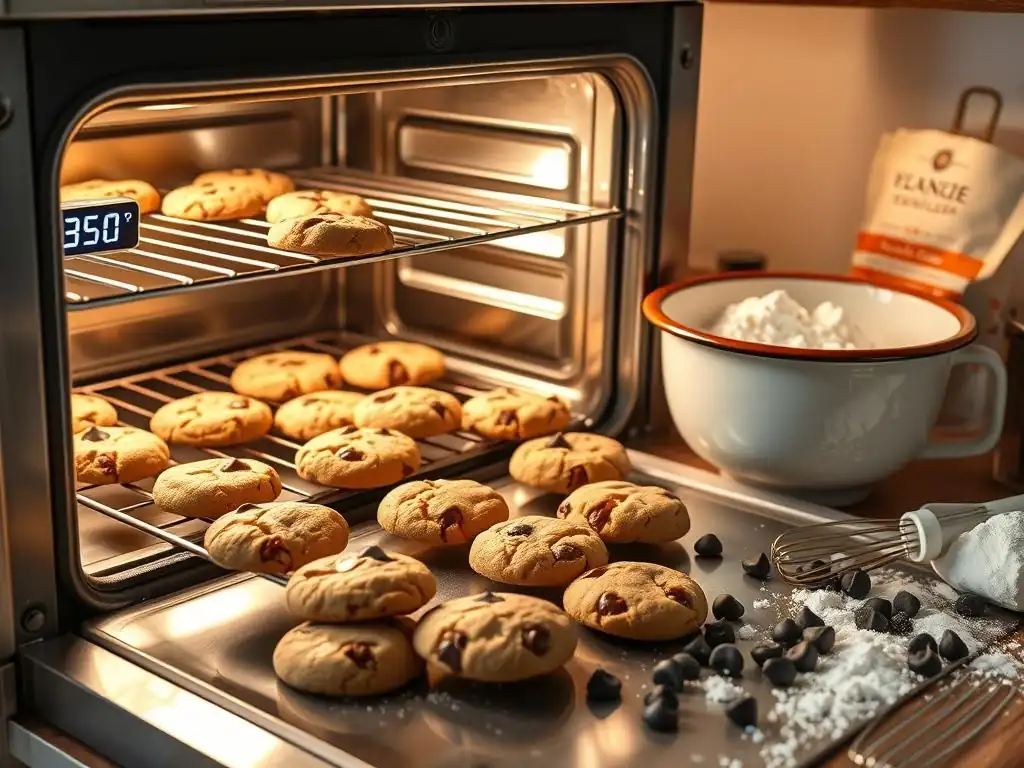
Welcome to BakeWithEase, your trusted companion on your baking journey! Ever wondered why your drop cookies spread too thin or stay stubbornly doughy? This week, we're diving deep into the crucial role of your oven in achieving cookie perfection. Get ready to unlock the secrets to controlling your oven temperature and mastering those delectable drop cookies. Intrigued? Let's bake!
- Understanding Your Oven for Perfect Cookies
- Introduction to Baking Cookies: The Importance of Oven Accuracy
- Why Oven Temperature Matters for Cookies
- Calibrating Your Oven for Consistent Cookie Results
- Common Oven Issues and Their Effect on Cookies
- Best Practices for Baking Cookies in Different Oven Types
- Recipes and Oven Settings for Specific Cookies
- Advanced Techniques for Perfect Cookies
- Maintaining Your Oven for Long-Term Baking Success
- Conclusion: Achieving Cookie Perfection with Oven Mastery
-
Frequently Asked Questions
- What is the ideal oven temperature for baking drop cookies, as recommended by BakeWithEase?
- Why does my oven temperature fluctuate, and how does that affect my drop cookies?
- How does the type of baking sheet I use affect the final result of my drop cookies, especially regarding oven temperature?
- What should I do if my drop cookies are spreading too thin in the oven, even though I'm using the recommended temperature?
- Can altitude affect the oven temperature needed for baking drop cookies, and if so, how do I adjust?
- Final Reflection: The Humble Oven's Role in Cookie Perfection
- Unlock Your Baking Potential: Master the Art of the Drop Cookie!
Baking cookies might seem simple – mix ingredients, drop on a sheet, and bake. But achieving that perfect balance of crispy edges and a chewy center, or a consistently soft texture, relies heavily on one crucial element: your oven. Even the best recipe can yield disappointing results if your oven isn't performing correctly. Understanding your oven's nuances, especially its temperature accuracy, is the key to elevating your cookie game from good to spectacular. This is particularly true for drop cookies, where the dough's structure and spread are highly sensitive to heat.
Getting familiar with how your specific oven heats is a fundamental step for any baker. Ovens, even brand new ones, can have significant variations in temperature from what the dial or digital display indicates. A difference of just 15-25°F (about 8-14°C) can dramatically alter baking time and the final texture of your drop cookies. Mastering your oven's true temperature allows you to adjust recipes accordingly, ensuring consistent, delicious results every time you slide a tray of dough into the heat.
When your cookie dough enters the oven, a complex series of chemical and physical reactions begins, all driven by heat. First, butter or fat melts, causing the cookie to spread. Then, leavening agents like baking soda or baking powder activate, creating gases that cause the cookie to rise slightly. Sugars caramelize, contributing to browning and flavor. Finally, proteins in flour and eggs coagulate, setting the cookie's structure. The rate and extent of these reactions are entirely dependent on the oven's internal temperature.
A precise oven temperature ensures these processes occur at the correct speed. If the oven is too hot, the outside of the cookie sets too quickly before the inside is cooked, leading to a hard or burnt exterior and a raw interior. If it's too cool, the cookie spreads too much before the structure sets, resulting in thin, flat cookies, or they may not brown properly. The ideal oven temperature for drop cookies, often around 350°F (175°C) to 375°F (190°C), is critical for achieving the desired balance of spread, rise, browning, and internal doneness.
Uneven Baking: Recognizing Oven Hot Spots and Cold Spots
One of the most common challenges bakers face is uneven baking, often caused by hot spots and cold spots within the oven cavity. These temperature variations mean that cookies on one side of the baking sheet might be perfectly golden, while those on the other side are still pale or even burnt. This inconsistency is frustrating and wastes delicious dough. Hot spots are areas where the temperature is significantly higher than the average, typically near heating elements or vents. Cold spots are areas where the temperature is lower, often in corners or near the door seal if it's faulty.
Identifying these spots is crucial for adapting your baking strategy. A simple test involves covering a baking sheet with slices of plain white bread and baking them at a moderate temperature (like 350°F or 175°C) until they begin to brown. The areas that brown faster indicate hot spots, while those that brown slower are cold spots. Knowing your oven's specific hot and cold zones allows you to strategically place your cookie dough or plan for rotating the baking sheet during the baking process to ensure more uniform results across all your drop cookies.
The temperature of your oven has a direct and significant impact on how much your drop cookies spread and how they brown. Higher temperatures generally cause cookies to spread less because the edges set faster before the butter has fully melted and spread out. Conversely, lower temperatures allow the butter to melt and spread more before the structure sets, resulting in thinner, wider cookies. For many popular drop cookie recipes, like classic chocolate chip, a certain amount of spread is desired for the right texture profile.
Browning, which contributes significantly to flavor through caramelization and the Maillard reaction, is also heavily influenced by temperature. Baking at a temperature that is too low might result in cookies that are cooked through but lack sufficient browning and flavor development on the surface. Baking at a temperature that is too high can cause the edges to brown or burn too quickly before the center is cooked, leading to an undesirable texture and taste. Achieving the perfect golden-brown edge and bottom requires knowing the true oven temperature drop cookies need and adjusting accordingly.
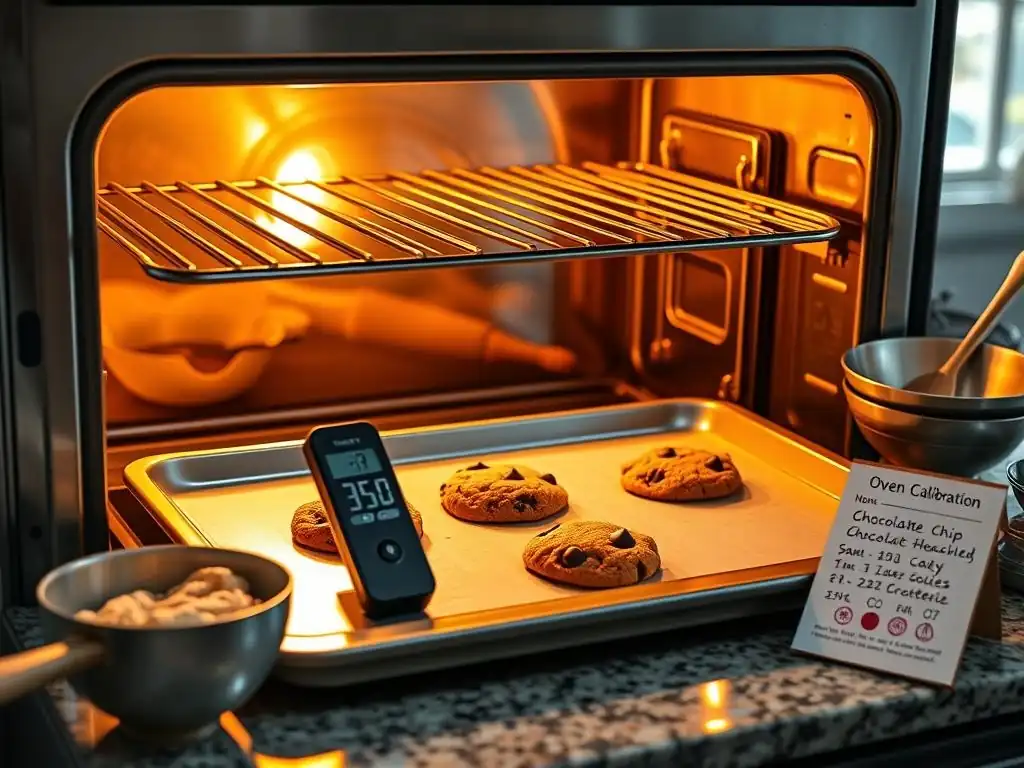
How to Test Your Oven Temperature with an Oven Thermometer
The most reliable way to know the true temperature inside your oven is by using an independent oven thermometer. These inexpensive gadgets hang or sit on an oven rack and provide an accurate reading of the ambient temperature, unlike the oven's built-in sensor which might be inaccurate. To test your oven's calibration, preheat it to a specific temperature, say 350°F (175°C), and let it stabilize for at least 20-30 minutes. Then, check the reading on the oven thermometer. Do this at a few different temperature settings relevant to cookie baking, such as 325°F (160°C), 350°F (175°C), and 375°F (190°C).
Compare the thermometer's reading to the oven's display. A difference of more than 15-20°F (about 8-11°C) indicates your oven is likely out of calibration. For example, if your oven is set to 350°F but the thermometer reads 320°F, your oven runs cool. If it reads 380°F, it runs hot. Record these differences for each temperature setting you test. This information is invaluable because it tells you exactly how much to adjust your oven dial or setting when baking drop cookies or any other recipe to hit the actual target temperature.
Adjusting Oven Temperature Settings for Accurate Baking
Once you know how your oven's displayed temperature compares to the real temperature, you can make informed adjustments when baking. If your oven consistently runs 25°F (about 14°C) cool, and a cookie recipe calls for baking at 350°F (175°C), you should set your oven to 375°F (190°C) to achieve the desired internal temperature of 350°F. Similarly, if your oven runs 15°F (about 8°C) hot, you would set it to 335°F (approx. 168°C) for a recipe calling for 350°F.
Some modern ovens allow for a permanent temperature calibration adjustment through their settings menu. Consult your oven's manual to see if this feature is available. If it is, you can input the temperature offset (e.g., -25°F or +15°F) to automatically adjust the oven's heating element based on your calibration test. Even without this feature, simply remembering or writing down the necessary offset for common baking temperatures will significantly improve the consistency of your oven temperature drop cookies.
Even calibrated ovens can experience temperature fluctuations during the baking cycle, especially when the heating element cycles on and off. Opening the oven door also causes a significant temperature drop. These fluctuations can impact the evenness and timing of your cookie baking. Using a reliable oven thermometer placed near your baking sheet can help you monitor these swings and understand your oven's behavior.
To minimize the impact of fluctuations, avoid opening the oven door unnecessarily. Preheat your oven for longer than you think you need – 20-30 minutes after it signals it's preheated is often best to allow the temperature to stabilize and the oven walls to absorb heat. If your oven has significant, rapid temperature swings (more than 30-40°F or 17-22°C), it might indicate an issue with the thermostat or heating element, which may require professional service for truly consistent oven temperature drop cookies.
The position of your oven rack plays a significant role in how your drop cookies bake. Heat distribution isn't uniform throughout the oven cavity. In most ovens, the middle rack is considered the sweet spot because it's furthest from the heating elements (typically at the bottom and/or top), providing the most even heat exposure. Baking cookies on the lowest rack can lead to burnt bottoms because they are too close to the bottom heating element, while baking on the highest rack can result in over-browning on top or uneven heat distribution.
For a single sheet of drop cookies, the middle rack is almost always the best choice. If you're baking two sheets at once, it's often recommended to place them on the upper and lower-middle racks and swap their positions halfway through the baking time to ensure both sheets receive similar heat exposure. Experimenting with rack placement based on your oven's specific hot spots (identified with the bread test) can also help you find the optimal position for your oven temperature drop cookies.
Many modern ovens offer both conventional (standard) and convection (fan-assisted) baking modes. Conventional baking uses heating elements to heat the air, which then circulates naturally. Convection baking uses a fan to actively circulate the hot air. This forced air circulation in a convection oven generally leads to faster, more even baking and promotes better browning because the air is constantly moving heat around the food.
When baking drop cookies in a convection oven, you typically need to adjust the temperature and/or baking time compared to a conventional oven. A common guideline is to reduce the oven temperature by 25°F (about 14°C) or reduce the baking time by 20-25%. For example, if a recipe calls for 350°F (175°C) in a conventional oven, you might bake your cookies at 325°F (160°C) in a convection oven.
The fan setting is excellent for baking multiple sheets of cookies at once, as it helps overcome potential hot and cold spots. However, the increased air circulation can sometimes cause cookies to spread slightly more or bake unevenly if the fan is too strong or the cookies are placed too close together.
Encountering burnt edges or underbaked centers is a common frustration when baking drop cookies, often stemming from incorrect oven temperature or timing. If your cookies are consistently burning on the bottom but the tops are pale, your oven might be running too hot, or you might be baking on too low a rack. Try reducing the oven temperature by 10-20°F (about 5-11°C), moving the rack up, or using parchment paper.
If your cookies are spreading too much and are thin and pale even after the recommended baking time, your oven might be running too cool, or the baking time might be insufficient for your desired texture. Increase the oven temperature by 10-20°F (about 5-11°C) or add a few minutes to the baking time, checking frequently. Remember that every oven is different, and even small adjustments to the oven temperature drop cookies are exposed to can make a big difference. Always start checking for doneness at the minimum recommended baking time.
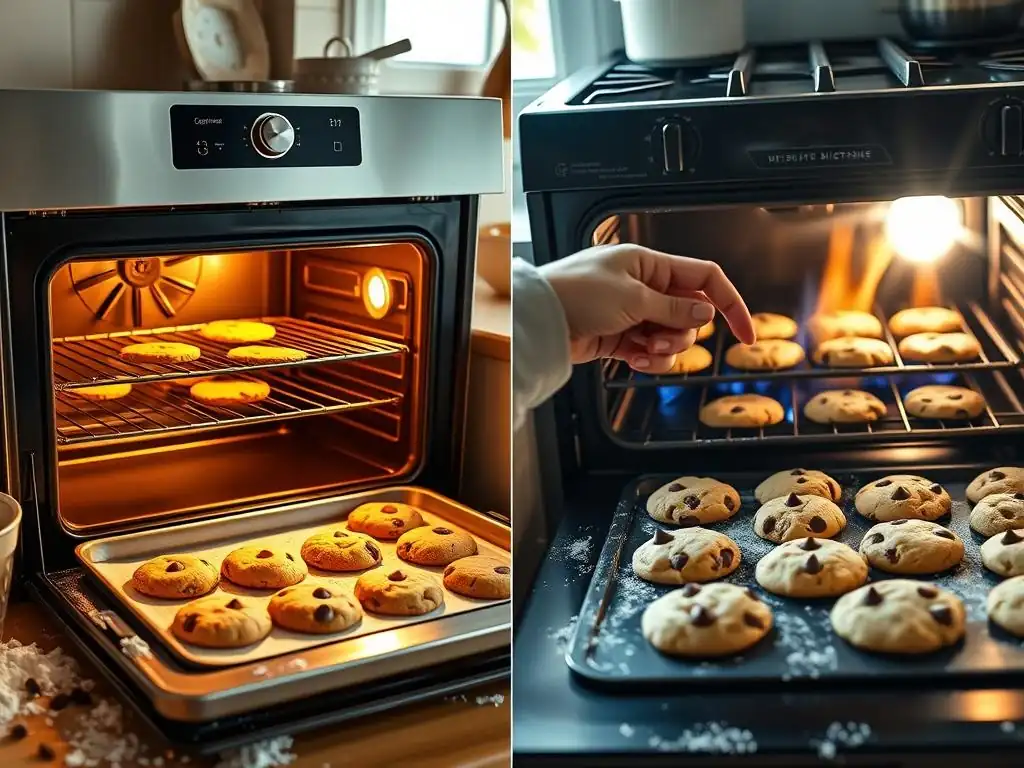
Gas ovens often produce a 'moister' heat compared to electric ovens due to the water vapor produced during combustion. They also tend to have a stronger hot spot at the bottom near the burner. When baking drop cookies in a gas oven, it's particularly important to use the middle rack to avoid burnt bottoms. You might also find that cookies brown more quickly on the bottom than the top.
Preheating is especially crucial in gas ovens to allow the heat to distribute evenly throughout the cavity. Giving it an extra 10-15 minutes after it indicates readiness can help. Because of the potential for bottom burning, using a baking stone or steel on a lower rack (below your cookie sheet) can sometimes help absorb and radiate heat more evenly, preventing the direct intense heat from reaching the bottom of your cookie sheet. Monitor your first batch closely, as the ideal oven temperature drop cookies need might be slightly different than in an electric oven.
Electric ovens typically provide drier heat and often have heating elements at both the top and bottom. While they can still have hot spots, they often offer more consistent heat distribution than gas ovens, especially in newer models. The radiant heat from the elements is the primary source of cooking power.
For electric ovens, the middle rack is generally the most reliable position for even baking of drop cookies. If you notice consistent unevenness, use the bread test to pinpoint hot spots and adjust your baking sheet placement or consider rotating the sheet halfway through baking. Electric ovens are usually quite responsive to temperature adjustments, making it easier to fine-tune the oven temperature drop cookies require once you've calibrated your unit.
Baking drop cookies in a convection oven is popular for its speed and ability to handle multiple sheets. The fan circulates hot air, ensuring more even heat distribution and faster baking times. However, this means you almost always need to adjust the temperature and/or time from a conventional recipe. As mentioned before, reducing the temperature by 25°F (14°C) is a common starting point (e.g., baking at 325°F instead of 350°F).
Alternatively, you can keep the temperature the same but significantly reduce the baking time. If a recipe calls for 10-12 minutes at 350°F in a conventional oven, try 7-9 minutes at 350°F in a convection oven, checking frequently. The best approach depends on your specific oven and cookie recipe. The key is to start checking for doneness earlier than the conventional recipe suggests, as cookies can go from perfectly baked to burnt very quickly in a convection oven.
Classic cut-out or drop sugar cookies often require a moderate oven temperature to bake evenly without spreading excessively or browning too much, especially if you want to decorate them. A common oven temperature for sugar cookies is 350°F (175°C). At this temperature, they typically bake for 8-12 minutes, depending on their size and thickness. The goal is usually a pale cookie with set edges, not significant browning.
If your sugar cookies are spreading too much and losing their shape, your oven might be too cool, or the dough might be too warm. Ensure your oven temperature drop cookies are exposed to is accurately 350°F using a thermometer. If they are browning too quickly on the edges while the center is still raw, your oven might be too hot; try reducing the temperature to 325°F (160°C) and baking for a minute or two longer.
The desired texture of gingerbread cookies varies greatly – some prefer them soft and chewy, while others like them crisp and snappy. The oven temperature and baking time play a significant role in achieving either result. For soft gingerbread drop cookies, a slightly lower temperature, around 325°F (160°C) to 340°F (170°C), baked for a shorter time until just set, is usually preferred. This allows the interior to cook without drying out completely.
For crisp gingerbread cookies, a slightly higher temperature, perhaps 350°F (175°C) to 360°F (180°C), and a longer baking time are needed to remove more moisture. They are baked until they are firm to the touch and the edges are nicely browned. Regardless of desired texture, ensuring your oven temperature drop cookies are baked at is accurate is key. A thermometer helps you hit that specific temperature range needed for your preferred gingerbread outcome.
Shortbread cookies, known for their tender, crumbly texture, are particularly susceptible to overbaking, which can make them hard and dry. They are typically baked at a lower oven temperature, often around 300°F (150°C) to 325°F (160°C), for a longer period. This gentle heat allows them to cook through and become firm without developing significant color. The goal is usually a pale or very lightly golden cookie.
Preventing overbaking in shortbread drop cookies relies heavily on accurate oven temperature and vigilant monitoring. Using an oven thermometer is essential to ensure the low temperature is maintained correctly. Shortbread doesn't change color dramatically when done; look for edges that appear set and potentially a very faint golden hue. If your shortbread is coming out hard, your oven is likely too hot, or you are baking it for too long. Reduce the oven temperature drop cookies are exposed to and check for doneness earlier.
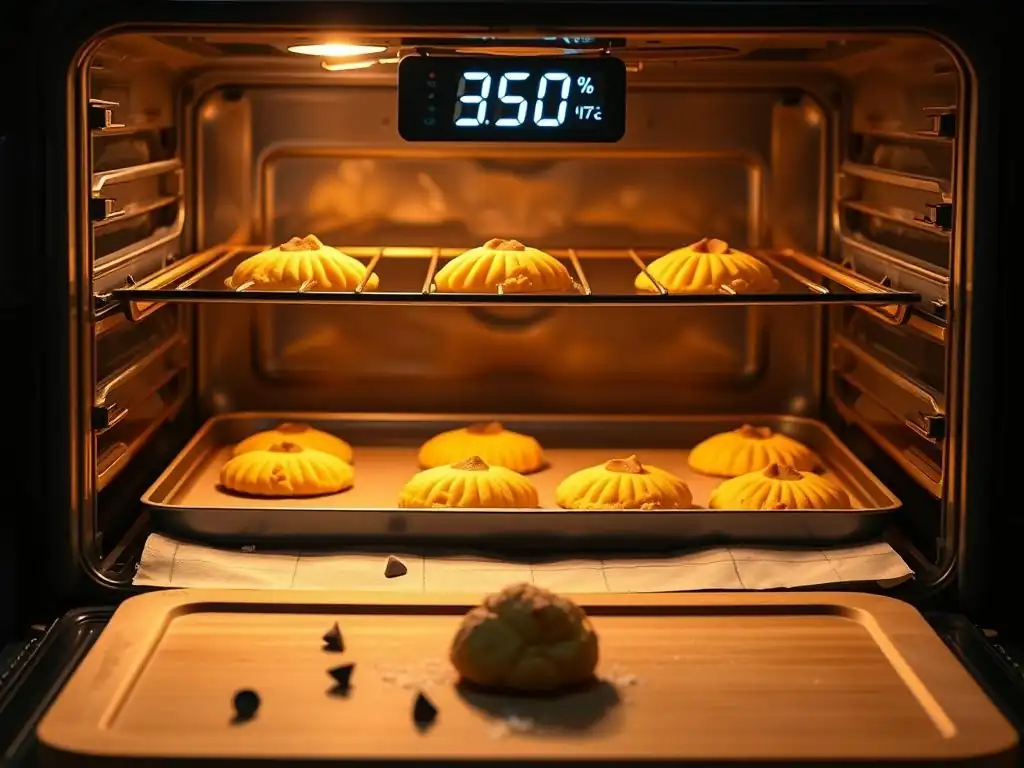
Using Parchment Paper or Silicone Mats for Consistent Results
Using parchment paper or silicone baking mats (like Silpats) on your baking sheets is an excellent technique for promoting even baking and preventing sticking. Parchment paper provides a non-stick surface and also acts as a slight insulator, which can help prevent the bottoms of your drop cookies from browning too quickly, especially if your oven has a strong bottom heating element.
Silicone mats offer similar non-stick benefits and provide a more durable, reusable surface. They tend to conduct heat slightly differently than parchment paper or a bare metal sheet, sometimes resulting in less spread and a slightly different bottom texture. Both options contribute to more consistent results from cookie to cookie and from batch to batch, making it easier to achieve perfectly baked oven temperature drop cookies.
Rotating Baking Sheets for Even Browning
Even with a calibrated oven and proper rack placement, most ovens have some degree of unevenness. Rotating your baking sheet halfway through the baking time is a simple yet effective way to combat hot spots and ensure all your drop cookies brown evenly. For example, if your oven tends to be hotter in the back, turning the tray 180 degrees allows the cookies that were previously in the back to finish baking in the front, and vice versa.
If you are baking multiple sheets of cookies at once on different racks, you should not only rotate each sheet but also swap their positions (move the top sheet to the bottom rack and the bottom sheet to the top rack) halfway through the baking time. This ensures both batches receive similar heat exposure overall, leading to more uniform oven temperature drop cookies across all trays.
Consistency in cookie size is crucial for even baking. Cookies of different sizes on the same baking sheet will bake at different rates – smaller ones will finish faster than larger ones. Using an ice cream scoop or cookie scoop is a fantastic way to portion your dough consistently. This ensures that every drop cookie on the tray is roughly the same size and thickness.
When all cookies on the sheet are uniform, they will all reach the desired doneness at approximately the same time. This eliminates the need to pull some cookies early while others continue to bake, which is often necessary when sizes vary significantly. Uniform size, combined with accurate oven temperature drop cookies are baked at and proper baking techniques, leads to consistently perfect results.
Maintaining Your Oven for Long-Term Baking Success
Regular Oven Cleaning for Optimal Performance
A clean oven performs better and more efficiently than a dirty one. Spills and burnt-on residue on the oven floor or walls can create smoke, affect the flavor of your baked goods, and, more importantly, impact heat distribution. Burnt debris can become hot spots, causing uneven baking and potentially burning the bottoms of your drop cookies.
Regular cleaning, whether through the self-cleaning cycle (following manufacturer instructions) or manual scrubbing, removes these residues and allows the heating elements to work more effectively and the heat to circulate more freely. A clean oven cavity reflects heat more efficiently, contributing to more stable and accurate oven temperature drop cookies require.
Identifying and Addressing Oven Malfunctions
Beyond simple temperature calibration issues, ovens can develop malfunctions that affect baking performance. Common problems include:
- Heating elements that don't heat evenly or at all.
- A faulty thermostat that doesn't regulate temperature accurately.
- A malfunctioning convection fan.
- Issues with the oven door seal.
If you notice significant, sudden changes in your oven's baking performance – for example, cookies that previously baked perfectly are now consistently burning or underbaking, or the oven thermometer shows wild temperature swings – it might indicate a malfunction. While some issues like replacing a door seal can be DIY, problems with heating elements or thermostats usually require a qualified appliance repair technician to diagnose and fix, ensuring your oven maintains the correct oven temperature drop cookies need.
Checking Oven Door Seal for Heat Loss
The oven door seal, or gasket, is a critical component for maintaining a stable oven temperature. If the seal is damaged, cracked, or worn, hot air can escape from the oven cavity, and cooler air can enter. This heat loss leads to inaccurate and fluctuating temperatures, making it nearly impossible to bake drop cookies evenly. A poor seal is often evident if you feel significant heat leaking from around the oven door edges when it's hot.
You can check the seal by closing the oven door on a piece of paper or a dollar bill. If you can easily pull the paper out, the seal is not tight enough. Repeat this test at several points around the door. A worn seal should be replaced. This relatively simple repair can dramatically improve your oven's temperature accuracy and consistency, leading to much better results when baking oven temperature drop cookies.
Frequently Asked Questions
BakeWithEase generally recommends a temperature between 350°F (175°C) and 375°F (190°C) for most drop cookies. This range ensures even baking and a good balance between a soft center and a slightly crisp edge. Adjust based on your specific recipe.
Oven temperature fluctuations are common and can impact your baking. Inconsistent heat leads to unevenly baked cookies – some might be burnt while others remain doughy. Use an oven thermometer to monitor and adjust baking time accordingly.
Dark baking sheets absorb more heat, potentially causing cookies to burn on the bottom. Lighter, shiny sheets reflect heat and promote even baking. Reduce the oven temperature slightly if using dark sheets.
Excessive spreading can be caused by overly softened butter, too much sugar, or insufficient flour. Try chilling the dough before baking to prevent rapid spreading and ensure the correct ingredient ratios.
Yes, altitude can impact baking. At higher altitudes, liquids evaporate faster, which can lead to dry cookies. You may need to lower the oven temperature by 25°F (15°C) and slightly increase the liquid in your recipe.
Understanding your oven's nuances is not merely a technical detail; it's the key to unlocking consistently perfect drop cookies. The seemingly simple act of baking transforms into a precise science when you consider the subtle variations in heat distribution and temperature accuracy that impact the final product. Mastering this allows you to move beyond simply following a recipe and truly understand the why behind each step.
The quest for the ideal drop cookie has, for many, become a deeply personal journey. It's more than just a delicious treat; it's a connection to tradition, a source of comfort, and a symbol of shared experiences. The frustration of unevenly baked cookies, or those that spread too thin or remain stubbornly doughy, is a familiar one. The best things in life are homemade,
a sentiment often echoed, highlights the intrinsic value we place on these seemingly simple creations. This understanding of our ovens allows us to elevate that homemade experience, transforming potential frustration into consistent success.
Now, consider your own oven. What are its quirks? Where does it tend to heat most intensely? Take the time to observe, experiment, and learn its unique personality. Don't just bake; understand the process. By applying the knowledge gained from this article, you'll not only improve your drop cookies, but also gain a deeper appreciation for the artistry and science behind baking. The journey to the perfect cookie is a rewarding one – embrace the challenge, and enjoy the delicious results.
Thanks for diving into the world of perfect drop cookies! We hope you've gained valuable insights into how your oven impacts those delicious treats. Now it's time to put your new knowledge to the test!
- Bake a batch of your favorite drop cookies, paying close attention to oven temperature and baking time. Experiment with slight adjustments based on what you've learned!
- Share your baking triumphs (or even your learning curves!) on social media using #BakeWithEaseDropCookies – let's inspire each other!
- Challenge yourself to try a new drop cookie recipe this week. Explore different flavors and techniques, armed with your newfound oven expertise!
Ready to transform your baking game? What unique twist will you add to your next batch of drop cookies?