
Simple Tips for Uniform Drop Cookie Size

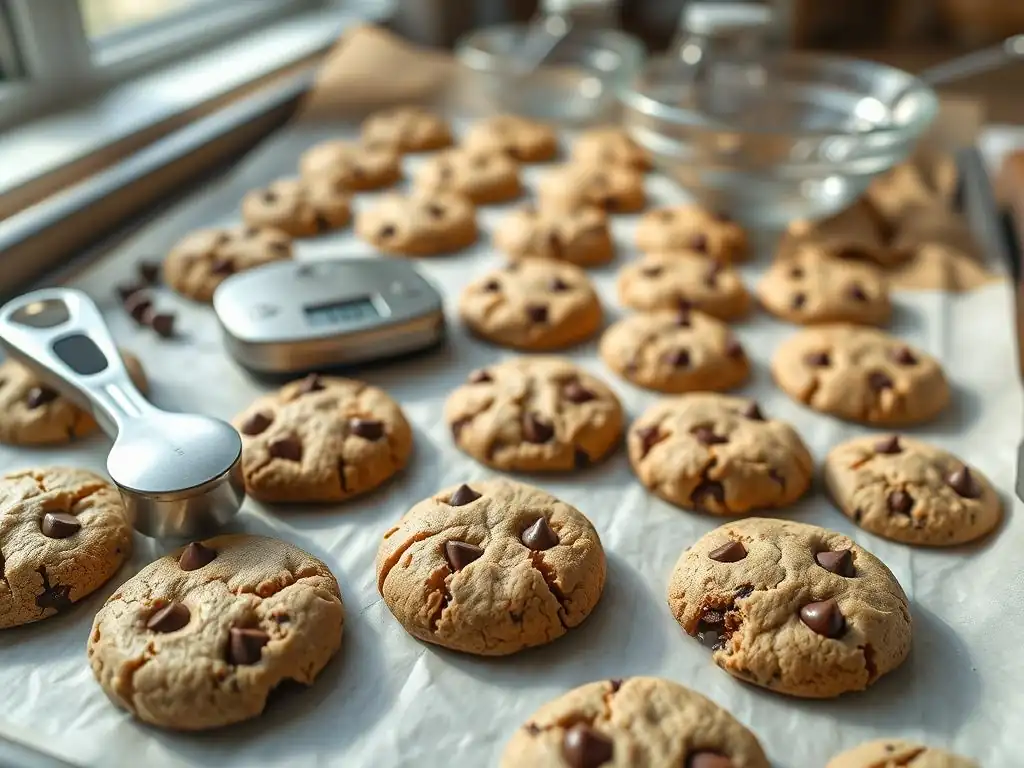
Welcome to BakeWithEase, where baking success is just a recipe away! Are you tired of uneven batches? Discover our simple tips for achieving a consistent drop cookie size, and say goodbye to baking frustration. Keep reading to unlock the secrets to perfectly uniform cookies, every single time!
- Simple Tips for Uniform Drop Cookie Size: Achieve Baking Perfection
- Why Consistent Drop Cookie Size Matters
- Mastering the Art of Consistent Drop Cookies: Essential Techniques
- Simple Methods for Achieving Consistent Drop Cookie Size
- Key Factors Affecting Drop Cookie Size
- Tips for Preventing Uneven Cookie Spread
- Troubleshooting Common Drop Cookie Size Problems
- The Perfect Drop Cookie: Key Recipe Considerations
- Achieving Consistent Drop Cookie Size: A Recap
-
Frequently Asked Questions
- How important is ingredient temperature for consistent drop cookie size?
- What's the best tool for portioning cookie dough to ensure uniformity?
- Why do my cookies sometimes spread too thin despite following the recipe?
- How does the type of baking sheet affect cookie size and shape?
- What role does oven temperature play in achieving consistent cookie sizes?
- Final Reflection: The Pursuit of Perfect Drop Cookies
- Unlock Perfectly Uniform Drop Cookies: Your Baking Awaits!
Baking drop cookies is a joy, but achieving a consistent drop cookie size recipe can sometimes feel like a challenge. You want every cookie to look and bake the same, ensuring a perfect batch every time. Thankfully, with a few simple techniques and careful attention to detail, you can master the art of creating beautifully uniform drop cookies. This guide will walk you through the essential steps to achieve that desired consistency, from preparing your dough to baking the final product.
Understanding why uniformity is important is the first step. It's not just about aesthetics; it significantly impacts the baking process and the final quality of your cookies. Let's explore why aiming for a consistent drop cookie size is key to baking success.
Achieving a uniform drop cookie size is more than just about making your cookies look pretty; it's fundamental to successful baking. When cookies are of different sizes on the same baking sheet, they bake at different rates. A smaller cookie will finish baking faster than a larger one, leading to a batch where some cookies are perfectly done, while others are either underbaked or burnt.
The primary reason for aiming for a consistent drop cookie size is to ensure even baking across the entire batch. Imagine baking a tray of classic chocolate chip cookies where some dough balls are roughly the size of a walnut (around 1.5 inches in diameter) and others are significantly larger, closer to a golf ball (around 2 inches).
If the recipe calls for 10-12 minutes of baking time for the standard size, the smaller cookies might be fully baked and potentially overdone in just 8 minutes, while the larger ones could still be soft and underbaked at the 12-minute mark. This unevenness means you can't simply set a timer and walk away; you'd need to constantly monitor, potentially removing smaller cookies earlier, which is inefficient and prone to error.
For example, in a typical sugar cookie recipe designed to bake flat, a cookie scooped with a standard 1.5-tablespoon scoop (yielding about a 2.5-inch baked cookie) might be perfectly golden brown on the edges and soft in the center after 11 minutes at 350°F (175°C). If you also included a cookie made with a 3-tablespoon scoop on the same sheet, that larger cookie would likely need 14-16 minutes to reach the same level of doneness, resulting in the smaller cookie becoming excessively crisp or even burnt while the larger one bakes.
This variability makes achieving a consistent texture and color across the batch nearly impossible without constant intervention and pan rotation.
Beyond the practical benefits of even baking, consistent drop cookie size significantly enhances the visual appeal of your baked goods. Whether you're baking for a family treat, a bake sale, a gift, or a special event, a tray of uniformly sized cookies simply looks more professional and inviting. It suggests care and precision in the baking process.
Think about presenting a plate of oatmeal raisin cookies. A batch where every cookie is roughly the same diameter and thickness creates a sense of order and perfection. If you're packaging cookies for gifts, uniform sizes fit neatly into boxes or bags, making presentation much easier and more attractive.
For commercial bakers or those selling at markets, consistency is crucial for customer satisfaction and brand image; customers expect a predictable product in size, appearance, and quality. A study on consumer perception in baked goods often highlights uniformity as a key indicator of quality and consistency, influencing purchase decisions. While specific percentage data varies, surveys consistently show that visual appeal, heavily influenced by size and shape consistency, ranks among the top factors consumers consider after taste and texture.
Achieving a consistent drop cookie size recipe starts long before the dough hits the baking sheet. It begins with precision in your ingredient measurements and choosing the right tools for portioning. These fundamental steps lay the groundwork for uniformity throughout your baking process.
Accurate measuring is perhaps the most critical step in any baking endeavor, especially when aiming for consistent drop cookie size. The ratio of ingredients, particularly flour, fat, and sugar, dictates the dough's consistency and how much it will spread during baking. Small variations in measurement can lead to significant differences in dough texture, affecting everything from scoopability to bake time and final cookie size and shape.
For example, adding just 1/4 cup (about 30 grams) more flour than a recipe intended for a standard batch of chocolate chip cookies can make the dough stiffer. This stiffer dough might resist spreading as much in the oven, resulting in thicker, smaller-diameter cookies. Conversely, if you accidentally use 1/4 cup less flour, the dough will be softer and spread more, leading to thinner, larger cookies.
Similarly, using butter that is too soft or even slightly melted instead of softened can drastically increase spread, making consistent portioning and baking difficult. A precise recipe for consistent drop cookie size relies on these measurements being spot-on.
Using a digital scale for dry ingredients like flour and sugar is often recommended for maximum accuracy, as volume measurements (cups) can vary depending on how the ingredient is scooped and packed. For instance, a cup of all-purpose flour can weigh anywhere from 120 grams (spooned into the cup and leveled) to 150 grams (scooped directly from the bag), a difference of 25% that will profoundly impact your dough.
Tools for Precise Measuring: Spoons, Cups, and Scales
Having the right tools and knowing how to use them correctly is essential for accurate measuring and achieving a consistent drop cookie size recipe. For dry ingredients like flour, sugar, and leavening agents, dry measuring cups and spoons are standard. Dry ingredients should typically be spooned into the cup and leveled off with a straight edge, like the back of a knife, to avoid compacting the ingredient and getting too much. For liquids like milk or vanilla extract, use liquid measuring cups, which have a spout and measurement lines, and read them at eye level on a flat surface.
While measuring cups and spoons are common, a digital kitchen scale offers the highest level of precision for dry ingredients, which is paramount for dough consistency. Many professional bakers and serious hobbyists rely on scales because weight measurements are consistent regardless of how the ingredient is handled. For example, 100 grams of granulated sugar is always 100 grams, whereas a cup of sugar can vary slightly.
Using a scale ensures you're adding the exact amount specified in the recipe, leading to more predictable dough behavior and a better chance of achieving a consistent drop cookie size. For ingredients like butter, recipes often specify volume (cups) or weight (grams or ounces). Cutting cold butter using the markings on the wrapper or weighing it ensures accuracy compared to trying to press softened butter into a cup.
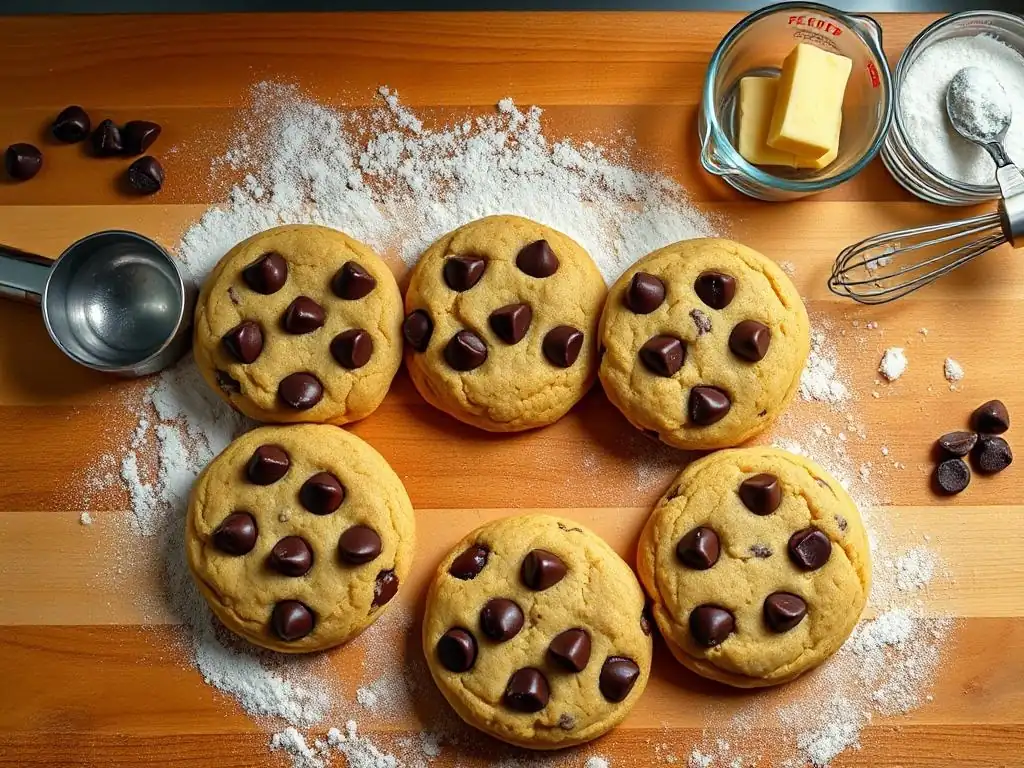
Once your dough is perfectly measured and mixed, the next step in creating a consistent drop cookie size recipe is portioning the dough accurately before baking. Several simple methods can help you achieve this, each with its own advantages.
Using a cookie scoop (also known as a disher or portion scoop) is one of the most effective and widely recommended methods for achieving uniform drop cookie size. These scoops come in various sizes, typically measured by the number of scoops per quart (e.g., a #40 scoop means 40 scoops equal a quart volume) or by volume (e.g., 1.5 tablespoons). A standard medium cookie scoop is often around a #40 or 1.5-tablespoon size, while a larger scoop might be #20 or 3 tablespoons.
To use a scoop, simply press it into the dough to fill it, then use the sweep mechanism to release the dough ball onto the baking sheet. This method ensures that each portion of dough has roughly the same volume, leading to cookies that are consistent in size and thickness before they even hit the oven. For slightly sticky doughs, a quick dip of the scoop in warm water between scoops can help prevent sticking.
Using the same scoop size for every cookie on the tray is the key to reliability with this method, making it a fantastic tool for any consistent drop cookie size recipe. Many bakers find that using a scoop speeds up the portioning process significantly compared to using spoons, especially for large batches.
Spooning and Shaping: A Beginner-Friendly Approach
If you don't have a cookie scoop, using two spoons is a perfectly viable and beginner-friendly method for portioning dough and achieving a reasonably consistent drop cookie size. This technique works well for doughs that are soft enough to be spooned but might not be firm enough to roll into perfect balls.
To use this method, take one spoon (like a tablespoon or teaspoon, depending on your desired cookie size) to scoop up a portion of dough. Then, use a second spoon or your finger to gently push the dough off the first spoon onto the baking sheet.
While this method might not be as precisely uniform as using a dedicated scoop, you can improve consistency by trying to scoop roughly the same amount each time and by gently shaping the dough mound on the sheet if needed. For instance, for a classic peanut butter cookie, you might scoop a tablespoon of dough, push it off, and then gently flatten it slightly with the back of the spoon or a fork, ensuring each cookie starts with a similar volume and shape.
With a little practice, you can become quite adept at portioning consistently using just spoons, making it accessible even without specialized tools for a consistent drop cookie size recipe.
The Ice Cream Scoop Method: A Quick and Easy Solution
For larger cookies, an ice cream scoop can function much like a cookie scoop and is a quick and easy solution for achieving a consistent drop cookie size. Standard ice cream scoops are often larger than typical cookie scoops, making them ideal for recipes designed for bigger, chewier cookies.
Similar to using a cookie scoop, you simply press the ice cream scoop into the dough to fill it, then use the lever to release the dough ball onto the baking sheet. The principle is identical: using a tool with a fixed volume ensures that each portion of dough starts at the same size.
This method is particularly good for doughs that are slightly firmer or for recipes where a more substantial cookie is desired. For instance, if you're making large bakery-style chocolate chip cookies, a 3 or 4-tablespoon ice cream scoop works perfectly.
Just ensure you use the same scoop size consistently for the entire batch on a single baking sheet to maintain uniformity and guarantee a consistent drop cookie size recipe result. Remember that larger cookies will require a longer baking time than smaller ones, so adjust your baking time accordingly and avoid mixing different sizes on the same tray.
Beyond portioning, several other factors significantly influence how much your drop cookies spread and, consequently, their final size and shape. Understanding these elements is crucial for predicting and controlling the outcome of your consistent drop cookie size recipe.
The consistency of your cookie dough is perhaps the most significant factor determining how much your cookies spread during baking. Dough that is too soft will spread excessively, leading to thin, wide cookies that might merge together if placed too closely on the baking sheet. Conversely, dough that is too stiff or dry will spread very little, resulting in thicker, taller cookies that retain more of their initial shape.
This consistency is largely influenced by the ratio of wet to dry ingredients, the temperature of the fat (butter), and the amount of mixing. For example, if your recipe calls for softened butter and you use butter that is too warm or partially melted, the fat will already be in a more liquid state before baking, causing the cookies to spread much more rapidly and thinly in the oven. A dough made with properly softened butter (cool to the touch but pliable) will typically result in cookies that spread moderately and evenly.
A common issue is overworking the dough after adding the flour; this develops gluten, which can make the cookies tougher and less likely to spread properly. Aim for a dough that is soft but not sticky, pliable enough to scoop or roll easily, which is ideal for a consistent drop cookie size recipe.
The temperature of your oven plays a critical role in how quickly and how much your cookie dough spreads. An oven that is too hot can cause the edges of the cookie to set too quickly before the center has a chance to spread properly, resulting in thicker cookies with less spread. Conversely, an oven that is too cool will allow the butter in the dough to melt and spread for a longer time before the structure sets, leading to thinner, wider cookies.
Furthermore, ovens often have hot spots, areas where the temperature is significantly higher or lower than the set temperature. Even if your oven is calibrated correctly, these inconsistencies can lead to uneven baking within a single batch, where cookies in hotter spots bake faster and potentially spread differently than those in cooler spots. Using an oven thermometer is highly recommended to verify your oven's actual temperature and identify any major discrepancies or hot spots.
If your oven runs consistently hot or cool, you may need to adjust the set temperature to achieve the desired spread and a consistent drop cookie size recipe result. For instance, if your oven thermometer reads 375°F when set to 350°F, your cookies might be baking hotter than intended, affecting their spread.
The material and color of your baking sheet can also influence how your cookies bake and spread, affecting their final size and shape. Dark-colored baking sheets absorb more heat than light-colored or shiny ones. This increased heat absorption means the bottoms of your cookies will heat up faster, causing the butter to melt and the cookies to spread more quickly and potentially more thinly.
Light-colored or shiny aluminum baking sheets reflect heat, resulting in slower, more even heating of the cookie dough from the bottom. This slower heating allows the cookie's structure to set more gradually as it spreads, often leading to cookies that are slightly thicker and spread less than those baked on dark sheets. Insulated baking sheets, which consist of two layers of metal with an air pocket in between, provide even gentler heating from the bottom, further reducing spread and promoting thicker cookies.
For the most consistent drop cookie size recipe outcomes, it's best to use the same type and color of baking sheet for an entire batch and ideally across multiple batches if you're aiming for long-term consistency. If you switch between dark and light sheets, expect differences in spread and baking time.
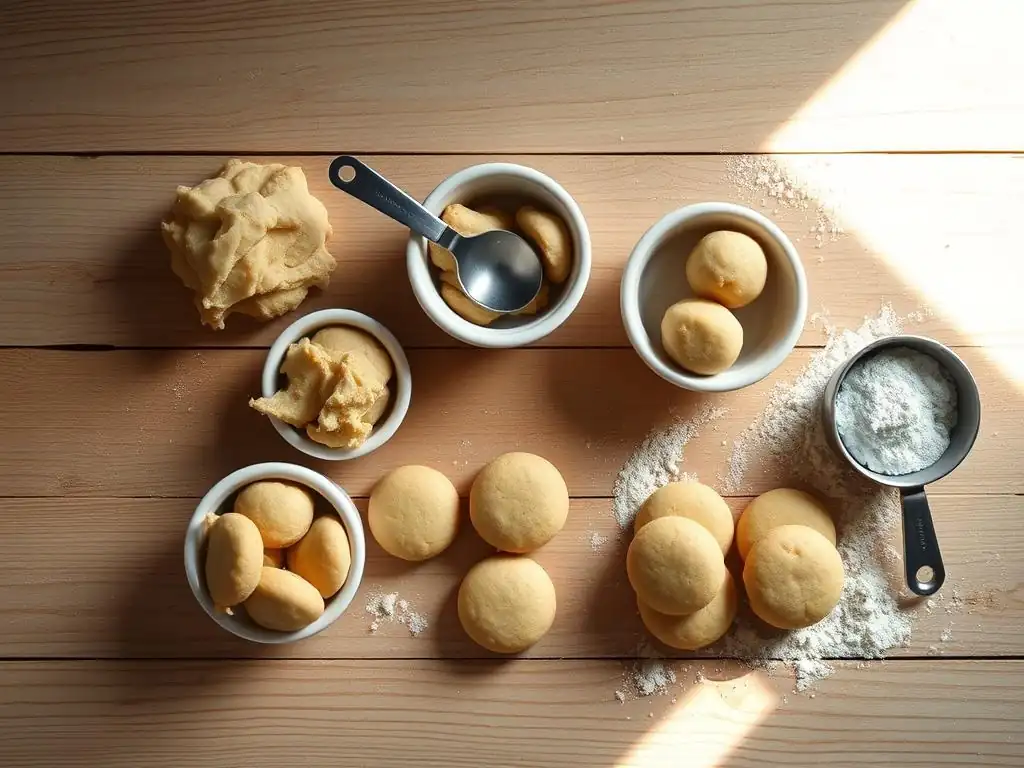
Even with a perfectly mixed dough and precise portioning, certain techniques can further help control cookie spread and ensure a consistent drop cookie size. These tips are simple yet highly effective in achieving uniform results.
Chilling cookie dough before baking is a widely recommended technique for controlling spread and enhancing flavor. Placing the portioned dough balls (or the entire bowl of dough) in the refrigerator for at least 30 minutes, and often up to several days, solidifies the fat (butter) in the dough.
When the cold dough is placed in a hot oven, the edges and bottom begin to set while the center remains cool. The butter takes longer to melt and spread compared to room-temperature dough. This slower melting process results in cookies that spread less, are slightly thicker, and often have a chewier texture.
Chilling also allows the dry ingredients to absorb moisture from the wet ingredients, leading to more hydrated and flavorful cookies. For optimal results and a consistent drop cookie size recipe, chilling portioned dough balls for at least 1-2 hours is often beneficial, especially for doughs prone to excessive spreading. Some recipes specifically call for chilling dough overnight for maximum control over spread and intensified flavor.
Using Parchment Paper or Silicone Baking Mats
Baking cookies directly on an ungreased metal baking sheet can sometimes lead to inconsistent spread and sticking. Using parchment paper or silicone baking mats provides a non-stick surface that promotes even heat distribution and helps control spread.
Parchment paper prevents cookies from sticking to the pan and allows them to spread more evenly than they might on a greased or ungreased pan surface where friction could inhibit smooth spreading. Silicone baking mats (like Silpat) offer an even more consistent, non-stick surface. They provide a slight barrier between the hot metal and the dough, which can help regulate the bottom temperature and contribute to more even baking and controlled spread.
Using the same type of surface (either parchment paper or a silicone mat) for every batch is essential for achieving a consistent drop cookie size recipe repeatedly. Avoid greasing the baking sheet if using parchment or silicone mats, as the excess grease can cause cookies to spread too much.
Avoid Overcrowding the Baking Sheet
A common mistake that leads to uneven baking and distorted cookie shapes is overcrowding the baking sheet. Cookies need space to spread during baking. If they are placed too close together, they will run into each other as they expand, resulting in misshapen cookies that bake unevenly.
As a general rule for most drop cookies, leave at least 2 inches (about 5 cm) of space between each dough ball. This gives the cookies ample room to spread without touching their neighbors. Overcrowding also inhibits proper air circulation around the cookies, which is necessary for even browning and baking. If your baking sheet is too full, some cookies might be exposed to more direct heat while others are shielded, leading to variations in doneness within the same batch.
Baking cookies in multiple batches, allowing the baking sheet to cool slightly between batches, is preferable to trying to fit too many on one sheet for a consistent drop cookie size recipe. A standard half-sheet pan (approx. 13x18 inches) can typically accommodate 12-15 medium-sized drop cookies spaced appropriately.
Even when following a recipe closely, you might encounter issues with cookie spread. Understanding common problems and their causes can help you troubleshoot and adjust your approach to achieve a more consistent drop cookie size recipe in the future.
If your cookies are spreading too much and becoming too thin, several factors could be contributing to the issue. Common causes include using butter that is too soft or melted, using too little flour relative to fat and sugar, using too much sugar (especially granulated sugar which promotes spread), or the oven temperature being too high initially, causing rapid melting before structure sets.
Solutions involve addressing these potential causes. Ensure your butter is properly softened (cool but pliable, not greasy). If the issue persists, try reducing the amount of butter slightly or increasing the flour by a tablespoon or two in your consistent drop cookie size recipe.
Chilling the dough extensively before baking is a highly effective remedy for excessive spread; try chilling portioned dough balls for several hours or overnight. Verify your oven temperature with an oven thermometer; if it's running hot, lower the temperature slightly (e.g., from 375°F to 350°F). Also, check your leavening agents; too much baking soda can increase spread, especially if there's ample acid in the dough.
Conversely, if your cookies are not spreading enough and remain thick or dome-shaped, the problem might be different. Causes for insufficient spread often include using butter that is too cold or hard, using too much flour, not enough sugar or fat, dough being overmixed (developing too much gluten), or the oven temperature being too low, not allowing the butter to melt sufficiently for spread before the cookie sets.
To encourage more spread in your consistent drop cookie size recipe, ensure your butter is properly softened before creaming it with sugar. If you suspect too much flour, try reducing the flour measurement slightly in future batches. Ensure you are using the correct type and amount of sugar and fat as specified in the recipe.
Avoid overmixing the dough once the dry ingredients are added; mix just until combined. Check your oven temperature with a thermometer; if it's running cool, increase the temperature slightly (e.g., from 325°F to 350°F). Some recipes benefit from slightly flattening the dough balls before baking, especially if they are prone to staying in a ball shape.
Uneven Baking: Rotating the Baking Sheet
Even when cookies are portioned uniformly, uneven baking can still occur, often due to inconsistencies within the oven itself, such as hot spots. This can lead to cookies on one side of the baking sheet being darker or more done than those on the other side.
To combat uneven baking and help achieve a consistent drop cookie size that is evenly browned, rotate your baking sheet halfway through the baking time. For example, if a recipe calls for 10-12 minutes of baking, rotate the pan 180 degrees after 5-6 minutes. This simple step exposes all cookies to different areas of the oven, helping to compensate for hot spots and ensuring that every cookie on the sheet bakes at a similar rate.
This practice is especially important if you notice a pattern of one side of your pan always browning faster than the other. Rotating the pan is a quick and easy way to improve the overall uniformity of your consistent drop cookie size recipe results.
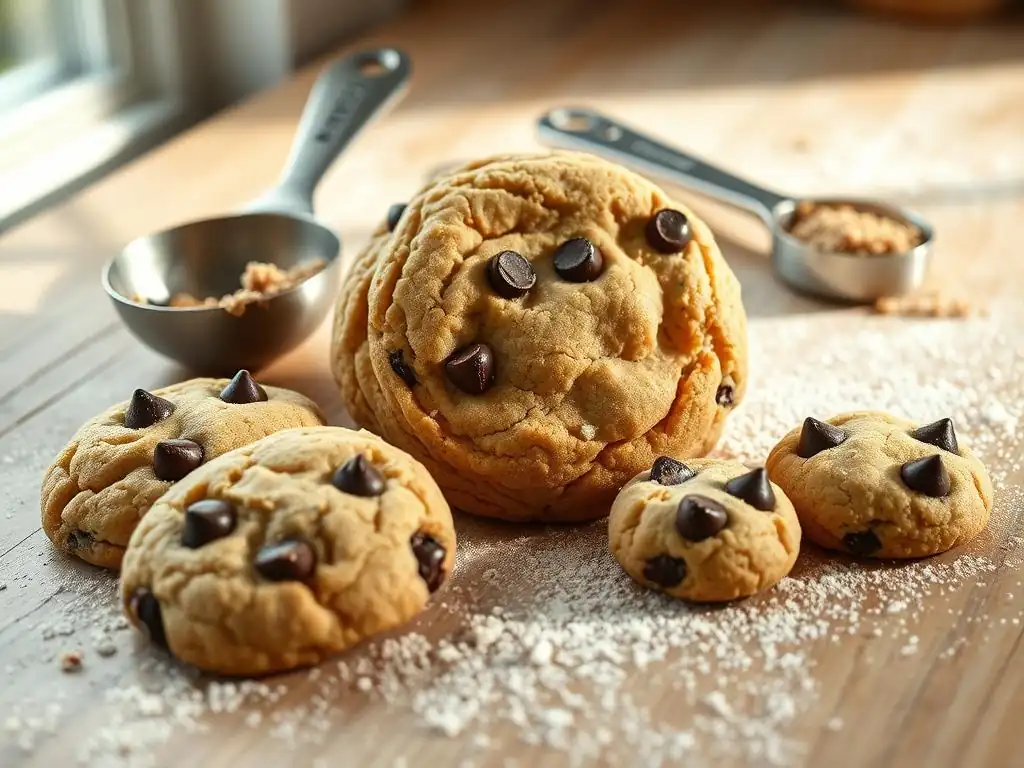
While technique is vital, the recipe itself plays a significant role in determining the final characteristics of your drop cookies, including their size, spread, and texture. Understanding how different ingredients function can help you choose or adapt recipes for your desired consistent drop cookie size.
Fat to Flour Ratio: Balancing Spread and Structure
The ratio of fat (typically butter or shortening) to flour is a fundamental aspect of any cookie recipe that dictates its spread and structure. A higher ratio of fat to flour generally results in cookies that spread more, are thinner, and have a more tender or crumbly texture, like shortbread. This is because fat inhibits gluten development and melts during baking, causing the dough to spread.
Conversely, a lower ratio of fat to flour, or a higher ratio of flour to fat, leads to a dough that is stiffer and spreads less. These cookies tend to be thicker, puffier, and can have a more cake-like or structured texture. For a consistent drop cookie size that is moderately spread and chewy, like a classic chocolate chip cookie, the recipe typically features a balanced ratio where flour and sugar are roughly equal by weight, and fat is slightly less.
For example, a common ratio might be around 1 part fat, 1.2 parts sugar, and 1.5 parts flour by weight. Understanding this balance is key to predicting cookie behavior and achieving a consistent drop cookie size recipe outcome.
Sugar Type: Affecting Caramelization and Texture
The type of sugar used in a consistent drop cookie size recipe also significantly impacts spread, texture, and color. Granulated sugar promotes more spread and contributes to a crispier texture due to its ability to melt and caramelize during baking.
Brown sugar, on the other hand, contains molasses, which adds moisture and acidity to the dough. This results in cookies that are typically chewier, softer, and spread slightly less than those made solely with granulated sugar. The molasses also contributes to a richer color.
Powdered sugar (confectioners' sugar) contains a small amount of cornstarch, which inhibits spread and creates a softer, more tender cookie, often used in recipes like Mexican wedding cookies. Many recipes use a combination of granulated and brown sugar to achieve a balance of spread, crispness, and chewiness. For instance, a recipe with a higher proportion of brown sugar will yield a chewier, less-spreading cookie compared to one with mostly granulated sugar, affecting the final consistent drop cookie size and texture.
Leavening agents, primarily baking soda and baking powder, are crucial for providing lift and controlling the height and spread of your drop cookies. Baking soda is an alkaline ingredient that reacts with an acid (like brown sugar, molasses, or buttermilk) in the dough. This reaction produces carbon dioxide gas, which helps the cookies spread and rise. Baking soda tends to promote more horizontal spread and contributes to browning.
Baking powder is a complete leavening agent containing both an acid and an alkali. Most baking powders are double-acting, meaning they produce gas when mixed with liquid and again when heated in the oven. Baking powder typically provides more upward lift than baking soda, resulting in thicker, puffier cookies with less overall spread.
Using the correct type and amount of leavening agent specified in the recipe is vital for achieving the intended texture, height, and a consistent drop cookie size recipe. Using too much baking soda can lead to excessive spread and a soapy taste, while too much baking powder can create a cake-like texture and an off-flavor. Conversely, too little leavening can result in dense, flat cookies.
Mastering the art of the consistent drop cookie size recipe is a journey that combines accurate techniques, understanding ingredient functions, and a little bit of practice. By focusing on precise measuring, using appropriate portioning tools, controlling dough consistency, and managing baking conditions, you can significantly improve the uniformity of your drop cookies.
Let's quickly review the key takeaways for achieving baking perfection:
- Measure Accurately: Use scales for dry ingredients when possible, or spoon and level carefully with cups.
- Use a Portioning Tool: Cookie scoops, ice cream scoops, or even careful spooning ensure consistent dough volume.
- Control Dough Consistency: Ensure butter is properly softened, and avoid overmixing, especially after adding flour.
- Chill Your Dough: Refrigerating dough solidifies fat and reduces spread, leading to thicker, more uniform cookies.
- Use Baking Mats/Parchment: Provides a non-stick surface for even spread and baking.
- Don't Overcrowd: Give cookies space to spread (at least 2 inches apart) for even baking.
- Know Your Oven: Use an oven thermometer and rotate pans halfway through baking to compensate for hot spots.
- Understand Your Recipe: Recognize how fat-to-flour ratio, sugar type, and leavening agents influence spread and shape.
The Importance of Practice and Patience
Achieving a consistently perfect drop cookie size recipe doesn't always happen on the first try. Baking, like any skill, improves with practice. Don't get discouraged if your first few batches aren't perfectly uniform. Pay attention to what happened: Did they spread too much? Not enough? Were they unevenly browned? Each batch provides valuable feedback you can use to adjust your technique or ingredient measurements slightly for the next attempt.
Patience is also key. Rushing steps like chilling the dough or preheating the oven thoroughly can negatively impact your results. Take your time with measuring and portioning. Observe how different doughs behave in your specific oven. Note down what worked well and what didn't. Over time, you'll develop an intuition for your recipes and equipment, making consistent results more and more achievable. Remember that even minor adjustments, like chilling dough for an extra hour or rotating the pan a few minutes earlier, can make a significant difference in achieving that desired consistent drop cookie size.
Ultimately, the goal of achieving a consistent drop cookie size recipe is to produce delicious, evenly baked cookies that you can be proud of. There's immense satisfaction in pulling a tray of perfectly uniform cookies from the oven – they look beautiful, stack neatly, and offer a consistent texture and flavor experience with every bite.
Whether you're making classic chocolate chip, hearty oatmeal, or simple sugar cookies, applying these simple tips will help you elevate your baking game. Share your uniform creations with friends and family, package them up as gifts, or simply enjoy them yourself. The effort put into consistency pays off not just in appearance, but in the reliable quality and enjoyment of each and every cookie. Happy baking, and enjoy your perfectly uniform, delicious drop cookies!
Frequently Asked Questions
Ingredient temperature is crucial! Using ingredients at the correct temperature ensures proper mixing and batter consistency, which directly impacts how the cookies spread while baking.
A cookie scoop is highly recommended. It allows for precise and consistent portioning, leading to uniform cookie sizes. Using a scale is another great option.
This could be due to several factors, including over-creaming the butter and sugar, using too much liquid, or baking on a warm baking sheet. Chilling the dough can also help prevent excessive spreading.
A light-colored, non-stick baking sheet is ideal. Dark-colored sheets can cause the cookies to bake too quickly on the bottom, leading to uneven spreading and potentially burnt edges.
An accurate oven temperature is essential for even baking. If your oven runs hot or cold, it can affect the cookie's spread and texture. Use an oven thermometer to ensure accuracy.
The quest for uniformly sized drop cookies isn't just about aesthetics; it's about achieving consistent baking results. Perfectly sized cookies ensure even baking, preventing some from burning while others remain undercooked. This seemingly small detail significantly impacts the overall quality and enjoyment of your baked goods.
The pursuit of consistent baking, much like the pursuit of any craft, is a journey of refinement and understanding. It's about mastering the subtle nuances of ingredients and technique, learning to anticipate and adjust for variations in temperature and humidity. This process mirrors life itself, where attention to detail and consistent effort yield the most rewarding results. Perfection is not attainable, but if we chase perfection we can catch excellence.
– Vince Lombardi. This quote resonates deeply with the baking process; while perfectly uniform cookies might be an ideal, striving for consistency brings us closer to baking excellence.
Consider the simple act of scooping your cookie dough. It's a seemingly mundane task, yet it holds the key to unlocking perfectly baked cookies. Take a moment to reflect on your own baking process. What adjustments can you make to improve your consistency? Experiment with different scooping methods, pay close attention to your dough's temperature, and embrace the iterative nature of baking. The journey towards perfectly sized, perfectly baked cookies is a rewarding one, filled with delicious discoveries along the way.
Thanks for joining us on this baking journey! We hope you learned some valuable tips to achieve those picture-perfect, uniformly sized cookies. Ready to put your new skills to the test?
- Master the Scoop: Use a cookie scoop (or even a spoon!) to ensure consistent dough portions for even baking and delightful uniformity. This is the key to cookie consistency!
- Share your Success: Post a picture of your perfectly sized cookies on social media and tag us – we’d love to see your baking masterpiece!
- Explore variations: Try experimenting with different cookie doughs and see how these tips translate to your favorite recipes.
Ready to bake a batch of consistently perfect cookies? What's your go-to cookie recipe that you’re excited to perfect now?