
Understanding Quick Bread Leaveners: Baking Powder & Soda

Welcome to BakeWithEase, your kitchen companion on the journey to baking brilliance! Ever wondered about the magic behind perfectly risen quick breads? Unlock the secrets to quick bread baking powder soda, and discover how these essential leaveners can transform your baking. Let's explore the science and techniques that guarantee delicious, effortlessly-baked goods, starting now!
- Understanding Quick Bread Leaveners: Baking Powder & Soda for Baking Success
- Quick Breads: Mastering Leavening for Baking
- What are Quick Breads and Why Leaveners Matter?
- Baking Powder: The Complete Leavening Agent
- Baking Soda: The Acid-Activated Leavener
- Baking Powder vs. Baking Soda: Key Differences Explained
- Troubleshooting Leavening Issues
- Recipes Using Baking Powder and Baking Soda
- Tips for Successful Baking
- Conclusion: Mastering Quick Bread Leavening
-
Frequently Asked Questions
- What is the main difference between baking powder and baking soda when used in quick breads?
- How do I know whether to use baking powder or baking soda (or both) in a quick bread recipe?
- What happens if I use too much baking powder or baking soda in my quick bread?
- Can I substitute baking powder for baking soda (or vice versa) in a quick bread recipe?
- How do I ensure my baking powder and baking soda are still effective for baking quick breads?
- Final Reflection: The Unexpected Chemistry of Quick Breads
- Unlock Your Baking Potential: Master Quick Breads Today!
Understanding Quick Bread Leaveners: Baking Powder & Soda for Baking Success
Quick Breads: Mastering Leavening for Baking
Understanding how your baked goods rise is fundamental to success in the kitchen, especially when tackling quick breads. Unlike yeast-leavened doughs that rely on biological fermentation over time, quick breads achieve their lift through chemical reactions that happen much faster, often while the batter is being mixed or immediately upon hitting a hot oven.
Mastering these chemical leaveners – baking powder and baking soda – is key to achieving that perfect light and airy texture characteristic of muffins, scones, biscuits, and loaves. This knowledge empowers you to troubleshoot common baking issues and even adapt recipes with confidence, making your quick bread baking journey smoother and more rewarding.
The ability to control the rise in your quick breads directly impacts their final structure, tenderness, and even flavor. A properly leavened muffin will have a beautiful dome and an open crumb, while an under-leavened one might be dense and heavy. Similarly, biscuits rely on rapid expansion from leaveners to create flaky layers. By delving into the science behind baking powder and baking soda, you gain valuable insight into how ingredients interact and how small adjustments can yield significant improvements in your quick bread creations. This foundational understanding is truly the secret ingredient for consistently delightful results.
What are Quick Breads and Why Leaveners Matter?
Quick Breads Defined: Chemical Leavening vs. Yeast
Quick breads are a category of baked goods that use chemical leaveners rather than yeast to create lift. This means they can be mixed and baked relatively quickly, often within an hour, without the need for lengthy proofing or rising times associated with yeast doughs. Common examples include muffins, scones, biscuits, cornbread, banana bread, and many types of loaves. The defining characteristic is the rapid generation of gas (carbon dioxide) through a chemical reaction, which gets trapped in the batter or dough, causing it to expand.
In contrast, yeast leavening relies on living microorganisms that consume sugars in the dough and produce carbon dioxide and alcohol as byproducts. This process takes time, typically hours, and is sensitive to temperature. Quick bread baking powder soda techniques circumvent this biological process, making them incredibly convenient for bakers looking for faster results. The leaveners react upon contact with moisture and/or heat, providing that swift rise needed for tender, airy quick breads.
The Role of Leaveners: Rise, Texture, and Flavor
Leaveners are absolutely critical in quick bread baking; they are responsible for the rise, which in turn dictates the texture and can even influence the flavor. As chemical leaveners react, they produce carbon dioxide gas. This gas expands when heated, pushing the batter or dough upwards and outwards. Without sufficient leavening, quick breads would be flat, dense, and heavy, more akin to a cracker or hardtack than a soft loaf or muffin.
Beyond just lift, leaveners contribute significantly to the final texture. The bubbles created by the leavening process form the structure of the crumb. A well-leavened quick bread will have an open, tender crumb, while insufficient leavening leads to a tight, heavy texture.
Furthermore, baking soda, being alkaline, can react with acidic ingredients to neutralize them, which affects the overall flavor profile. Too much baking soda without enough acid can leave a distinctly soapy or bitter aftertaste. Understanding the interplay of quick bread baking powder soda with other ingredients is vital for achieving the desired outcome in your quick bread recipes.
Baking Powder: The Complete Leavening Agent
What is Baking Powder? Composition and Function
Baking powder is a dry chemical leavening agent, a complete package containing everything needed for a reaction that produces carbon dioxide gas. It is typically composed of a base (usually sodium bicarbonate, which is baking soda), one or more acid salts, and a starch (like cornstarch or potato starch) which acts as a buffer to prevent premature reaction and absorbs moisture. The acid salts react with the base in the presence of liquid and/or heat to release carbon dioxide, causing the quick bread batter or dough to rise.
The primary function of baking powder in quick breads is to provide reliable and controlled lift. Because it contains both the acid and the base, it doesn't strictly require acidic ingredients in the recipe to activate. This makes it ideal for recipes that don't naturally include acidic components, such as those relying primarily on milk or water. Using baking powder for quick bread ensures a consistent rise, contributing to a light and tender crumb structure without relying on specific acidic ingredients for activation.
How Baking Powder Works: A Two-Stage Reaction
Most common baking powders today are "double-acting," meaning they produce gas in two stages. The first stage of the reaction occurs when the baking powder comes into contact with liquid in the batter or dough. One type of acid salt dissolves and reacts with the baking soda, producing some carbon dioxide immediately. This initial burst of gas helps to expand the batter slightly during mixing and resting.
The second, more significant stage of the reaction happens when the quick bread is exposed to heat in the oven. A second type of acid salt in the baking powder requires heat to react with the remaining baking soda. This heat-activated reaction produces a larger volume of carbon dioxide, providing the primary lift that causes the quick bread to rise dramatically while baking. This double action provides a sustained leavening effect, offering a safety net if the dough sits for a short time before baking and ensuring good volume in the final product.
Types of Baking Powder: Single-Acting vs. Double-Acting
There are two main types of baking powder: single-acting and double-acting. Single-acting baking powder contains only one acid salt that reacts with baking soda as soon as it gets wet. This means the gas production happens all at once during mixing. If you use single-acting baking powder, you must mix your batter or dough and get it into the oven very quickly to capture all the leavening power before the gas dissipates.
Double-acting baking powder, as discussed, contains two different acid salts: one that reacts with moisture and one that reacts with heat. This allows for gas production in two phases, making it much more forgiving for quick bread recipes. The initial reaction provides some lift during preparation, while the heat-activated reaction in the oven ensures a strong final rise. Double-acting baking powder is the most common type found in supermarkets today and is generally what is assumed unless a recipe specifically calls for single-acting. For most quick bread baking powder soda recipes, double-acting is the standard.
Baking Powder Measurement: Accuracy for Optimal Results
Accurate measurement of baking powder is crucial for achieving the desired rise and texture in your quick breads. Too little baking powder will result in a flat, dense product, while too much can cause rapid, uneven rising that collapses, or leave a bitter, chemical taste. A standard guideline is typically about 1 to 1 ½ teaspoons of double-acting baking powder per cup of all-purpose flour, though this varies significantly depending on the recipe's other ingredients, especially fats and sugars.
When measuring baking powder, use a dry measuring spoon and level it off with a straight edge (like the back of a knife) to ensure you have the precise amount. Do not scoop directly from the container with the measuring spoon, as this can compact the powder and result in using too much. Gently spoon the baking powder into the measuring spoon and level it. This precision helps guarantee the correct quick bread baking powder soda ratio relative to other ingredients, leading to consistent and successful baking outcomes.
Baking Powder Substitutes: When You Run Out
If you find yourself without baking powder, you can sometimes create a substitute using baking soda and an acid. A common substitute ratio is 1/4 teaspoon of baking soda plus 1/2 teaspoon of cream of tartar (an acid salt) per 1 teaspoon of baking powder called for in the recipe. Cream of tartar provides the acid needed to react with the baking soda. This mixture acts similarly to single-acting baking powder, so you must mix and bake quickly.
Another option, though less ideal, is using 1/4 teaspoon of baking soda plus 1/2 cup of an acidic liquid like buttermilk, yogurt, or molasses in place of 1/2 cup of the non-acidic liquid (like milk or water) originally called for in the recipe, along with the 1/4 teaspoon of baking soda substituting for 1 teaspoon of baking powder. This requires adjusting the liquid component of your recipe. Remember that substituting quick bread baking powder soda might slightly alter the texture or flavor compared to the original recipe, but it can save your baking project in a pinch.
Baking Soda: The Acid-Activated Leavener
What is Baking Soda? An Alkaline Compound
Baking soda, chemically known as sodium bicarbonate (NaHCO₃), is a pure alkaline compound. Unlike baking powder, it is not a complete leavening agent on its own because it lacks the acidic component needed to trigger a significant reaction. When baking soda comes into contact with moisture, it releases a small amount of carbon dioxide, but the major leavening power is unlocked only when it reacts with an acid.
In baking, baking soda serves two primary purposes in quick breads. First, when combined with an acid and liquid, it produces carbon dioxide gas, contributing to the rise. Second, being alkaline, it helps to neutralize acidic ingredients in the recipe, which can improve flavor and color (for example, preventing cocoa powder from turning reddish). Understanding that baking soda requires an acid is fundamental to using it effectively in quick bread baking powder soda applications.
How Baking Soda Works: The Acid Connection
The leavening magic of baking soda happens when it reacts with an acid in the presence of moisture. The chemical reaction between sodium bicarbonate (baking soda) and an acid (like lactic acid in buttermilk, citric acid in lemon juice, or acetic acid in vinegar) produces sodium salt, water, and carbon dioxide gas. The formula is generally simplified as: Acid + NaHCO₃ → Salt + H₂O + CO₂.
This reaction is rapid and produces a strong burst of gas as soon as the wet and dry ingredients are combined. Therefore, when a recipe relies solely or heavily on baking soda for leavening, it's crucial to work quickly after mixing to get the batter or dough into the oven before the gas escapes. The effectiveness of quick bread baking powder soda, particularly the soda component, is entirely dependent on the presence and proportion of acidic ingredients.
The Importance of Acidic Ingredients: Activating Baking Soda
Since baking soda is alkaline, it needs an acid to react and produce significant carbon dioxide gas. Many quick bread recipes specifically include acidic ingredients for this purpose. Common acidic ingredients used in baking include:
- Buttermilk
- Yogurt
- Sour cream
- Molasses
- Honey
- Brown sugar (slightly acidic)
- Vinegar
- Citrus juice (lemon, orange)
- Cocoa powder (natural, not Dutch-processed)
- Fruit purees (like applesauce, mashed banana)
The amount of baking soda used in a recipe is often balanced with the amount of acidic ingredients. If there isn't enough acid to react with all the baking soda, the excess unreacted baking soda will remain in the finished product, leading to a bitter or soapy taste and potentially yellowish-brown spots. A good quick bread baking powder soda recipe ensures this balance is struck correctly.
Baking Soda Measurement: Precision is Crucial
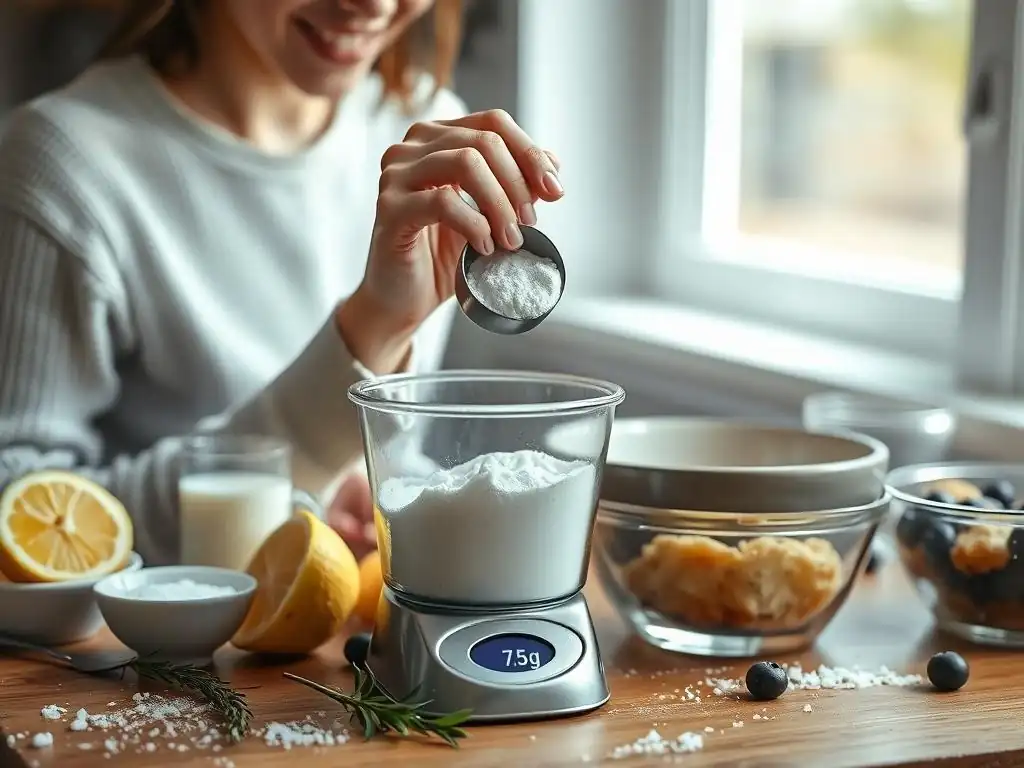
Just like baking powder, accurate measurement of baking soda is vital. Because its reaction is so potent and requires an acid balance, even a small error can significantly impact the outcome. Too little baking soda will result in poor rise, especially if it's the primary leavener, leading to a dense product. Too much, without enough acid, will cause the issues mentioned earlier: a strong, unpleasant bitter or soapy flavor and potentially an unappealing color.
A typical ratio when using baking soda with an acidic liquid like buttermilk is about 1/4 teaspoon of baking soda per 1/2 cup of buttermilk. However, this is a general guideline, and specific recipes will provide the exact amount needed based on the overall acid content and other ingredients. Always use a dry measuring spoon and level it carefully when measuring baking soda for your quick bread recipes. Precision ensures the correct quick bread baking powder soda balance for optimal leavening and flavor.
Baking Soda Substitutes: Adjusting for Flavor and Texture
Substituting baking soda is less straightforward than substituting baking powder because you must account for the acidic component it reacts with. You cannot simply replace baking soda with baking powder teaspoon for teaspoon. If a recipe calls for baking soda and an acid, you might be able to substitute baking powder, but you'd need to use a larger amount (typically 3-4 times the amount of baking soda) and you would lose the neutralizing effect of the baking soda on the acid, which could alter the flavor and texture.
For example, if a recipe calls for 1/4 teaspoon of baking soda and uses buttermilk, substituting 1 teaspoon of baking powder might provide the lift, but the buttermilk's acidity won't be neutralized, possibly resulting in a tangier flavor. It's generally best to stick to the leavener specified in the recipe, especially for quick bread baking powder soda recipes where the interaction of ingredients is carefully balanced. If you must substitute, be prepared for potential differences in the final product.
Baking Powder vs. Baking Soda: Key Differences Explained
Chemical Composition and Activation Requirements
The fundamental difference between baking powder and baking soda lies in their chemical composition and how they are activated. Baking soda (sodium bicarbonate) is a single compound, a base, that requires an external acid to produce carbon dioxide gas in significant quantities. Its reaction is immediate upon contact with acid and moisture.
Baking powder, on the other hand, is a mixture containing baking soda, one or two acid salts, and a starch. It is a self-contained leavening system. Double-acting baking powder provides leavening in two stages: some upon contact with moisture (from one acid salt) and more when heated (from a second acid salt). This makes baking powder more reliable and forgiving than baking soda alone, especially in recipes without strong acidic components. Understanding this difference is key to choosing the right quick bread baking powder soda for a recipe.
Impact on Flavor and Texture
Both leaveners produce carbon dioxide for rise, but they can affect flavor and texture differently. Baking powder, when used in the correct amount, is designed to be relatively flavor-neutral. The acidic components and the resulting salts are balanced to not leave a strong aftertaste.
Baking soda, however, being alkaline, has a distinct flavor if not fully neutralized by an acid. Excess unreacted baking soda can impart a bitter or soapy taste. When correctly balanced with acid, it helps tenderize baked goods by interfering with gluten development and can contribute to a finer crumb structure in certain recipes.
The choice of quick bread baking powder soda, or using both, is often made to achieve a specific flavor profile and texture. For instance, chocolate baked goods often use baking soda to react with the natural acids in cocoa, enhancing the chocolate flavor and resulting in a darker color and softer crumb.
When to Use Baking Powder, Baking Soda, or Both
Recipes call for baking powder, baking soda, or a combination of both depending on the other ingredients and the desired outcome.
- Use Baking Powder when: The recipe does not contain significant acidic ingredients (e.g., recipes using milk, water, or melted butter as the primary liquid). Baking powder provides all the necessary leavening without needing an external acid. Many standard muffin, cake, and biscuit recipes rely solely on baking powder for a consistent, even rise.
- Use Baking Soda when: The recipe contains a significant amount of acidic ingredients (e.g., buttermilk, yogurt, molasses, vinegar, natural cocoa powder). The baking soda reacts with the acid to provide leavening and also helps neutralize the acid, which can improve flavor and texture. Recipes like those for gingerbread (molasses), chocolate cakes (cocoa), or buttermilk biscuits often use baking soda.
- Use Both Baking Powder and Baking Soda when: The recipe contains some acidic ingredients, but not enough to fully react with all the baking soda needed for sufficient lift. In this case, baking soda is used to react with the acid (improving flavor/color and providing some initial lift), while baking powder provides the additional leavening needed for a good rise, especially the sustained lift in the oven. Many muffin and quick bread loaf recipes, like banana bread or certain coffee cakes, use this combination. Using quick bread baking powder soda together leverages the benefits of both: neutralizing acids and ensuring robust lift.
Troubleshooting Leavening Issues
Flat Quick Breads: Common Causes and Solutions
Flat quick breads are a common frustration for beginner bakers, often indicating a leavening problem. Several factors can contribute to a lack of rise:
- Expired Leaveners: Baking powder and baking soda lose potency over time. If your leaveners are old, they won't produce enough gas. Solution: Test your leaveners (see below) and replace them if necessary.
- Incorrect Measurement: Too little baking powder or baking soda will naturally result in less rise. Solution: Measure accurately using dry measuring spoons and level them off.
- Insufficient Acid (when using baking soda): If a recipe relies on baking soda and doesn't have enough acidic ingredients, the soda won't fully activate. Solution: Double-check the recipe for acidic ingredients and ensure you haven't substituted them incorrectly.
- Overmixing: Overmixing develops gluten, which makes the batter or dough tough and prevents the leavening gases from expanding freely. Solution: Mix just until the wet and dry ingredients are combined; a few lumps are okay, especially in muffins.
- Oven Temperature: An oven that isn't hot enough won't provide the heat needed for the second stage of double-acting baking powder or sufficient expansion of gases. Solution: Use an oven thermometer to verify your oven temperature is accurate.
Identifying the specific cause requires reviewing your process and ingredients. Often, it's a combination of factors related to the quick bread baking powder soda balance or handling.
Dense Quick Breads: Identifying the Problem
Dense quick breads are closely related to flat ones, also stemming from insufficient leavening or poor technique that inhibits the rise. If your muffins or loaves are heavy and tight-crumbed instead of light and airy, consider these potential culprits:
- Weak Leaveners: As with flat quick breads, expired baking powder or soda is a prime suspect for density.
- Under-measurement of Leaveners: Ensure you used the correct amount specified in the recipe.
- Excess Fat or Liquid: Too much fat or liquid can weigh down the batter, making it difficult for the leaveners to lift. This can happen if ingredients aren't measured accurately (e.g., scooping flour instead of spooning and leveling) or if substitutions are made without adjusting other ingredients.
- Overmixing: Overdeveloped gluten creates a strong, elastic network that resists expansion from the leavening gases, resulting in a tough, dense crumb.
- Undermixing (sometimes): While overmixing is more common, in some cases, particularly with recipes using both quick bread baking powder soda, if the ingredients aren't just combined enough for the initial reactions to start evenly, it can lead to uneven or insufficient lift.
Focus on accurate measuring, gentle mixing, and ensuring your leaveners are fresh. These are the most common reasons for a dense quick bread texture.
Bitter Taste: Baking Soda Imbalance
A metallic, soapy, or distinctly bitter taste in your quick bread is almost always a sign of too much unreacted baking soda. This occurs when the amount of baking soda in the recipe exceeds the amount of acidic ingredients available to neutralize it.
- Too Much Baking Soda: The most direct cause is simply measuring too much baking soda.
- Insufficient Acidic Ingredients: If the recipe is designed to use baking soda with an acid (like buttermilk or yogurt), and you used a non-acidic substitute (like milk or water) without adjusting the baking soda, you'll have excess unreacted soda.
- Uneven Distribution: Occasionally, if baking soda isn't properly mixed into the dry ingredients, pockets of concentrated soda can lead to bitter spots.
To avoid a bitter taste, measure baking soda precisely and ensure that if the recipe calls for acidic ingredients to activate it, you use them as specified. The balance of quick bread baking powder soda and acid is crucial for flavor as well as lift.
Recipes Using Baking Powder and Baking Soda
Here are examples of quick bread types that commonly use baking powder, baking soda, or both, illustrating the principles discussed:
Buttermilk Biscuits with Baking Powder
Many traditional buttermilk biscuit recipes rely heavily on baking powder for their sky-high rise and flaky layers. While buttermilk is acidic, the amount of baking powder used is often significant (e.g., 1 tablespoon or more per 2 cups of flour) because the goal is maximum lift and tenderness without relying solely on the acid-soda reaction.
These recipes often combine cold butter cut into the dry ingredients with cold buttermilk. The baking powder reacts with the moisture from the buttermilk immediately, and the heat from the oven provides the final dramatic lift, creating those characteristic layers as the butter melts and creates steam pockets. The acidity of the buttermilk also adds a pleasant tang that complements the richness of the butter.
Chocolate Chip Muffins with Baking Soda
Muffins, especially those containing natural cocoa powder (which is acidic), often use baking soda as the primary or sole leavener. A typical recipe might use 1/2 teaspoon of baking soda per cup of flour, relying on the acidity of the cocoa powder, and sometimes brown sugar or yogurt, to activate it.
The baking soda reacts with the acids as soon as the wet and dry ingredients are combined, providing a quick initial rise. This reaction also helps neutralize the acidity of the cocoa, resulting in a richer, darker chocolate flavor and a softer crumb compared to using baking powder alone. This is a classic example of using quick bread baking powder soda principles where the ingredient list dictates the leavener choice.
Scones with Baking Powder and Baking Soda
Scones are a perfect example of quick breads that often benefit from using both baking powder and baking soda. A recipe might call for, say, 2 teaspoons of baking powder and 1/2 teaspoon of baking soda per 2 cups of flour, along with buttermilk or yogurt.
In this scenario, the baking soda reacts with the acid in the buttermilk/yogurt, providing some initial lift and tenderizing effect. The larger amount of baking powder then provides the main, sustained lift in the oven, ensuring the scones rise tall and have a light, crumbly texture. Using quick bread baking powder soda together in scones leverages the acid-neutralizing power of soda and the reliable, double-action lift of powder for optimal results.
Tips for Successful Baking
Storing Leaveners: Maintaining Potency
Proper storage is essential for keeping your baking powder and baking soda fresh and potent. Both should be stored in airtight containers in a cool, dry place, away from humidity and heat. The pantry is usually ideal, not the refrigerator, as moisture can cause premature activation, especially with baking powder.
Check the expiration date on the packaging. While not a strict cutoff, leaveners do lose effectiveness over time, typically within 6-12 months once opened. Using fresh leaveners is one of the simplest ways to ensure successful quick bread baking powder soda results. Consider writing the date you opened the container on the lid.
Testing Leaveners: Ensuring Effectiveness
If you're unsure if your baking powder or baking soda is still active, you can perform simple tests:
- Test Baking Powder: Put 1 teaspoon of baking powder into a small bowl. Pour about 1/4 cup of hot tap water over it. If it's fresh, it should bubble vigorously and immediately.
- Test Baking Soda: Put 1/2 teaspoon of baking soda into a small bowl. Add about 1/4 cup of vinegar or lemon juice (an acid). If it's fresh, it should fizz strongly and immediately.
If the reaction is weak or nonexistent, it's time to replace your leaveners. Don't waste your ingredients on a quick bread recipe that's destined to be flat due to inactive quick bread baking powder soda.
Choosing the Right Leavener: Recipe Considerations
Always follow the specific leavener called for in a recipe. The recipe developer has balanced the leavener type and amount with the other ingredients, including acidic components, fats, sugars, and flour type, to achieve a specific texture and flavor.
Attempting to substitute baking powder for baking soda (or vice versa) without understanding the implications for acid balance and overall leavening power will likely lead to disappointing results. Pay close attention to whether the recipe calls for baking powder, baking soda, or both, and measure each accurately. Understanding the role of quick bread baking powder soda in the context of the entire recipe is the key to consistently great quick breads.
Conclusion: Mastering Quick Bread Leavening
Mastering quick bread baking involves understanding the crucial roles of baking powder and baking soda. These chemical leaveners provide the essential lift that distinguishes quick breads from dense, unleavened baked goods. Baking powder, a complete leavening system, is reliable for recipes without significant acid, providing a sustained rise. Baking soda, an alkaline compound, requires an acid for activation and is often used in recipes containing ingredients like buttermilk or cocoa, contributing to both lift and flavor balance.
Paying attention to the type of leavener required, measuring accurately, using fresh ingredients, and understanding how quick bread baking powder soda interacts with acidic components are fundamental steps toward baking success. By applying these principles, you can confidently tackle a wide range of quick bread recipes, from fluffy muffins to flaky biscuits, achieving consistently light, tender, and delicious results every time you bake.
Frequently Asked Questions
What is the main difference between baking powder and baking soda when used in quick breads?
Baking soda requires an acidic ingredient like buttermilk to activate, while baking powder contains both an acid and a base, making it self-activating with moisture. This impacts the final texture and flavor of the quick bread.
How do I know whether to use baking powder or baking soda (or both) in a quick bread recipe?
The recipe dictates the leavening agent. If the recipe includes acidic ingredients, baking soda is likely needed to neutralize the acid and produce carbon dioxide for leavening. If not, baking powder is the better choice.
What happens if I use too much baking powder or baking soda in my quick bread?
Too much baking powder can cause a bitter taste and a coarse, open crumb. Too much baking soda can result in a metallic taste and a dense, soapy texture in your bake.
Can I substitute baking powder for baking soda (or vice versa) in a quick bread recipe?
Generally, no. They have different chemical properties and require different reactions. Substituting will likely result in a poorly risen and unpalatable quick bread. It is not recommended unless you fully understand the chemical reactions.
How do I ensure my baking powder and baking soda are still effective for baking quick breads?
Test them! Put a teaspoon of baking powder in hot water; it should bubble vigorously. For baking soda, mix a teaspoon with vinegar; it should also bubble. If they don't, they've lost their potency and won't properly leaven your quick bread.
Final Reflection: The Unexpected Chemistry of Quick Breads
Understanding the interplay between baking powder and baking soda is not just a recipe requirement; it's the key to unlocking consistently delicious quick breads. Mastering this fundamental aspect of baking transforms the seemingly simple act of mixing ingredients into a precise science, resulting in light, fluffy textures and perfectly balanced flavors. This knowledge empowers home bakers to confidently experiment and create their own unique quick bread masterpieces.
The impact of readily available leavening agents on baking culture is profound. From the humble soda bread of Ireland to the diverse array of muffins and scones enjoyed globally, quick breads represent a cornerstone of culinary traditions. Baking is at once child's play and adult joy. And love, of course.
– Joanne Chang. This quote perfectly encapsulates the simple pleasure and profound satisfaction derived from understanding and mastering the art of quick bread baking. The subtle nuances in texture and taste achieved through careful leavening agent selection speak volumes about the power of basic chemistry in the kitchen.
Now, it's your turn. Consider the next time you bake a quick bread – will you simply follow a recipe, or will you approach it with a newfound appreciation for the scientific principles at play? Experiment with different ratios of baking powder and baking soda, observe the results, and discover the unique characteristics each combination brings to your baking. Embrace the process, learn from your experiences, and unlock the full potential of your baking skills. The journey of culinary exploration awaits!
Unlock Your Baking Potential: Master Quick Breads Today!
Thanks for taking the time to explore the fascinating world of quick bread leaveners! You've now got the knowledge to create light and fluffy loaves every time. Ready to put your newfound expertise to the test?
- Bake your best quick bread yet! Choose your favorite recipe (or try a new one!) and see how easily you can control the rise using the tips and tricks from this article.
- Share your baking triumphs (and challenges!) with fellow baking enthusiasts in the comments below. Let's learn from each other!
- Explore our other baking guides on BakeWithEase.com to discover even more baking secrets.
What delicious quick bread will you create first?