
From Zero to Baker: Building Your Essential Tool Collection

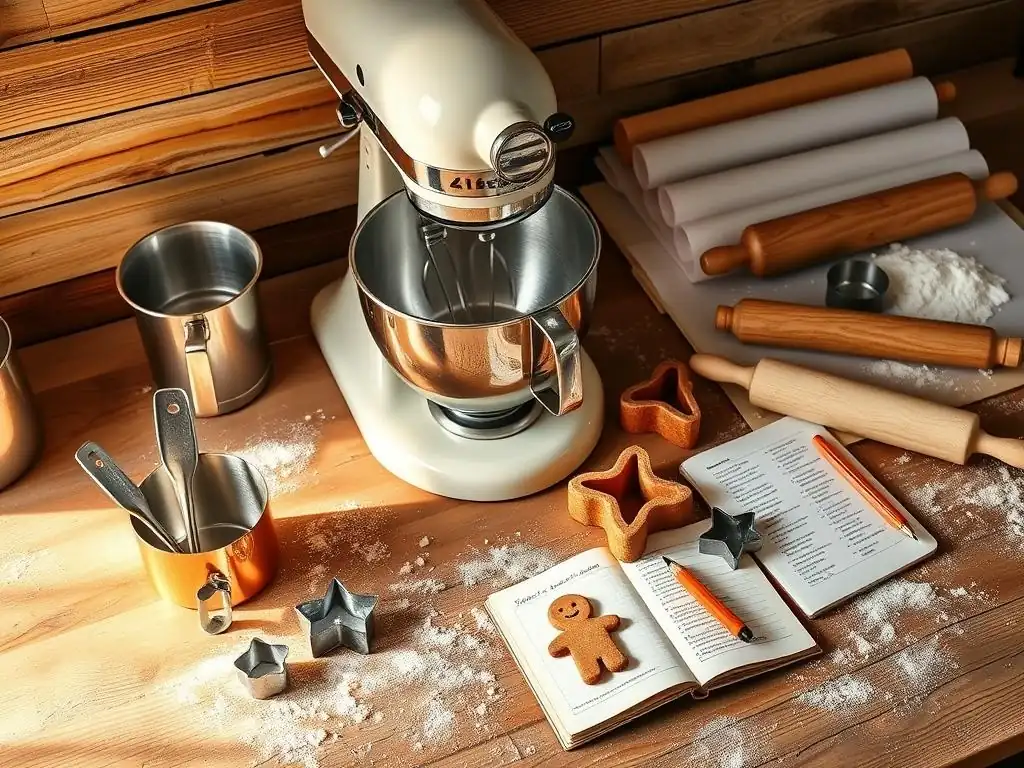
Welcome to BakeWithEase, your kitchen companion on the journey to baking brilliance! Ever wondered what the essential baking tools for beginners truly are? We'll demystify the seemingly endless array of options and guide you through building a starter kit that's both practical and affordable. Get ready to transform your kitchen and unlock your inner baker – the secrets to success are just a scroll away...
- Essential Baking Tools for Beginners: Your Starting Point
- Must-Have Mixing and Prep Tools for Successful Baking
- Essential Heating and Measuring Tools for Baking
- Baking Preparation and Serving Essentials
- Handling Doughs and Batters
- Other Important Baking Essentials for New Bakers
- Building Your Essential Baking Tool Collection on a Budget
- Maintaining Your Essential Baking Tools for Longevity
- Essential Baking Tools Checklist for Beginners: A Summary
- Beyond the Basics: Expanding Your Baking Tool Collection
-
Frequently Asked Questions
- What are the absolute must-have baking tools for someone just starting out?
- Is an expensive stand mixer really necessary for a beginner baker?
- What's the most versatile baking pan a beginner should invest in?
- How important is a kitchen scale compared to using measuring cups?
- Where can I find affordable, yet reliable, baking tools if I'm on a budget?
- Final Reflection: The Sweetness of Skill, the Joy of Creation
- Unleash Your Inner Baker: Start Baking Today!
Essential Baking Tools for Beginners: Your Starting Point
Why Invest in the Right Baking Tools?
Embarking on your baking journey is exciting, and having the right gear makes all the difference. Think of it like building a house; you wouldn't start without a hammer and nails. Similarly, successful baking relies on precision and technique, which are greatly aided by appropriate tools. Using the correct measuring cups, spatulas, or baking sheets ensures your ingredients are combined properly and your baked goods cook evenly, leading to consistent and delicious results every time. Investing in essential baking tools for beginners sets you up for success and makes the process more enjoyable and less frustrating.
Beyond just getting the job done, quality tools can significantly improve the outcome of your recipes. For example, a sturdy whisk creates better volume in whipped cream or egg whites than a flimsy one, and a reliable oven thermometer prevents the common issue of recipes failing due to inaccurate oven temperatures. While you don't need every gadget on the market initially, focusing on essential baking tools for beginners allows you to master fundamental techniques before expanding your collection. This thoughtful approach saves money and builds confidence as you learn the craft.
Understanding the Core Baking Equipment for Beginners
At the heart of baking lies a need for accuracy and proper mixing. The core equipment for any beginner involves tools that help you measure ingredients precisely and combine them effectively. This includes a set of dry measuring cups, liquid measuring cups, and measuring spoons. Baking is often described as a science because the ratios of ingredients matter significantly. A recipe calling for exactly 1 cup of flour means just that – packing too much or too little can drastically alter the texture of your final product, whether it's a cake, cookies, or bread.
Alongside accurate measuring tools, you'll need basic mixing vessels and implements. A few sturdy mixing bowls in different sizes are indispensable. You'll use them for everything from whisking eggs to combining dry ingredients or mixing batters. Couple these with a good quality whisk for aerating and blending, and a set of spatulas – both rubber/silicone for scraping bowls clean and metal for lifting and leveling. These foundational essential baking tools for beginners are relatively inexpensive but form the backbone of countless recipes, enabling you to handle the initial stages of almost any baking project.
Must-Have Mixing and Prep Tools for Successful Baking
Mixing Bowls: Your Primary Workspace
Mixing bowls are arguably the most fundamental of essential baking tools for beginners. You'll need a variety of sizes, typically ranging from small (1-2 quarts) for whisking eggs or melting butter to medium (3-5 quarts) for mixing cookie dough or cake batter, and large (6-8 quarts) for bread dough or large batches. Materials commonly include glass, stainless steel, or plastic. Glass bowls are great for stability and visibility but can be heavy and breakable. Stainless steel is lightweight, durable, and non-reactive, making it a popular choice. Plastic is affordable but can retain odors and stains over time.
Having multiple bowls allows you to work efficiently, especially when a recipe requires separating wet and dry ingredients before combining them. For instance, a standard cookie recipe might require whisking together flour, baking soda, and salt in one bowl while creaming butter and sugar in another before gradually adding the dry to the wet. Using appropriately sized bowls prevents spills and makes the mixing process much cleaner and easier. Investing in a nested set of three to four bowls is a practical starting point for essential baking tools for beginners.
Measuring Cups and Spoons: Precision is Key
Accurate measurement is non-negotiable in baking, and this is where measuring cups and spoons shine as essential baking tools for beginners. You need two types of measuring cups: dry and liquid. Dry measuring cups typically come in sets (e.g., 1/4, 1/3, 1/2, 1 cup) and should be leveled off with a straight edge for accuracy, especially with flour.
Liquid measuring cups are usually glass or plastic with a spout for pouring and markings on the side; you read the measurement at eye level. Using a dry cup for liquids or vice versa is a common beginner mistake that can lead to inaccurate results.
Measuring spoons, also typically sold in sets (e.g., 1/8, 1/4, 1/2, 1 teaspoon, 1 tablespoon), are used for smaller quantities of ingredients like salt, baking powder, spices, or extracts. Just like dry cups, they should be filled and leveled. Precision with these small amounts is crucial because they often contain potent leaveners or flavorings that significantly impact the final product. Having a complete set of both dry and liquid measuring cups and spoons is fundamental for any list of essential baking tools for beginners.
Whisks and Spatulas: Essential Mixing and Folding Tools
Whisks are vital for incorporating air into ingredients, breaking up clumps, and combining mixtures smoothly. A balloon whisk, with its many wires, is excellent for whipping cream or egg whites to create volume. A French whisk, which is narrower, is good for stirring sauces or batters. For essential baking tools for beginners, a standard balloon whisk is a versatile choice. It helps create light and airy textures in cakes, meringues, and more by effectively blending ingredients while adding air.
Spatulas come in various forms and materials, but the most useful for beginners are rubber or silicone scrapers and metal spatulas. Silicone spatulas are heat-resistant and flexible, perfect for scraping down the sides of bowls to ensure all ingredients are incorporated and for folding delicate mixtures like whipped cream or egg whites into batter without deflating them.
Metal spatulas, like offset spatulas, are invaluable for leveling batter in pans or spreading frosting smoothly. Having at least one good quality silicone spatula and one small offset metal spatula significantly enhances your ability to handle batters and finishes, making them key essential baking tools for beginners.
Essential Heating and Measuring Tools for Baking
Oven Thermometer: Ensuring Accurate Baking Temperatures
One of the most common culprits behind baking failures is an inaccurate oven. Ovens can run hotter or cooler than the temperature they are set to, sometimes by as much as 50 degrees Fahrenheit (about 28 degrees Celsius). An oven thermometer is a simple, inexpensive tool that hangs or stands inside your oven and provides a real-time, accurate reading of the internal temperature. This allows you to adjust your oven setting to match the recipe's required temperature precisely.
Relying solely on your oven's dial can lead to under-baked centers or over-browned edges, even if you follow a recipe perfectly. By using an oven thermometer as one of your essential baking tools for beginners, you eliminate a major variable and gain confidence that your baked goods are cooking at the correct temperature. This is particularly important for delicate items like soufflés or custards, which require precise heat, but it also improves results for everyday cookies and cakes.
Digital Kitchen Scale: The Baker's Best Friend for Accuracy
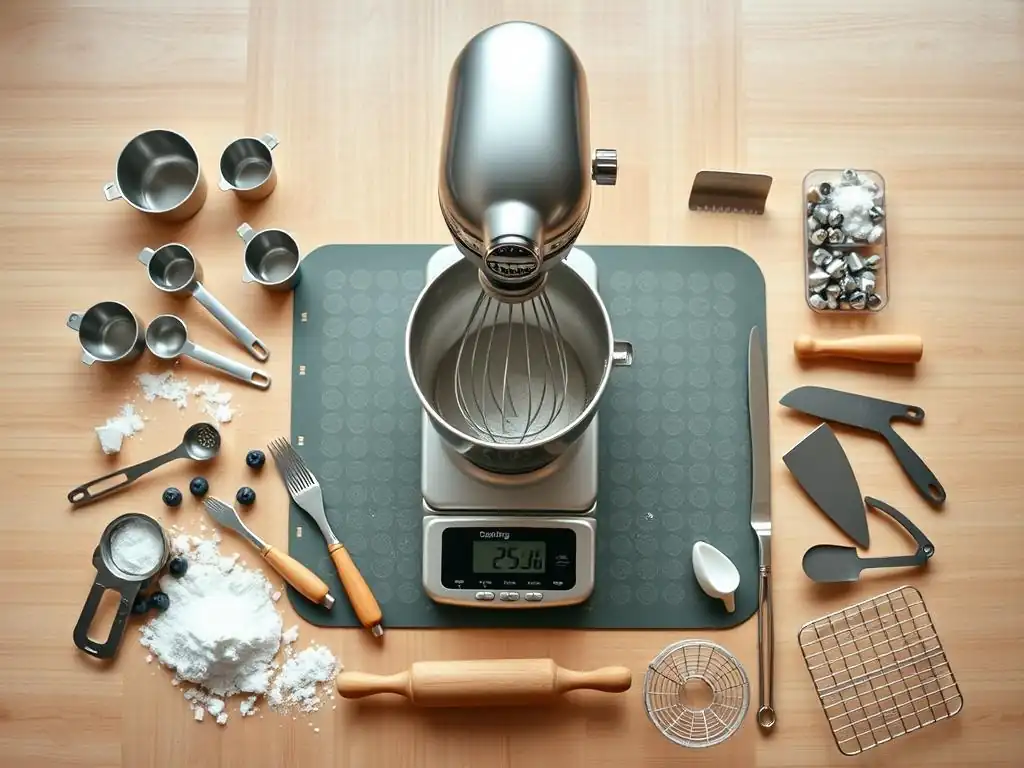
While measuring cups are essential, a digital kitchen scale takes accuracy to the next level, especially for weighing dry ingredients like flour, sugar, and oats. Many professional bakers and serious home bakers prefer weighing ingredients because it's far more consistent than using volume measurements. A cup of flour, for example, can vary in weight by as much as 20% depending on how it's scooped and leveled. Weighing ensures you use the exact amount specified by the recipe every time.
Recipes from reputable sources or professional bakers often provide ingredient weights in grams or ounces. Using a digital scale, which should have a "tare" function to zero out the weight of the container, allows you to follow these recipes with unparalleled precision. This leads to more consistent results and is particularly helpful for recipes where ratios are critical, such as bread making or pastry. While perhaps not the absolute first item on a list of essential baking tools for beginners, a digital scale is a highly recommended early addition for anyone serious about improving their baking consistency.
Instant-Read Thermometer: For Perfect Candies, Breads, and More
An instant-read thermometer is a versatile tool that goes beyond just checking the temperature of roasted meats; it's incredibly useful in baking for specific applications. For candy making, achieving the correct temperature is paramount for reaching different stages like thread, soft ball, firm ball, or hard crack – missing the temperature by even a few degrees can ruin the batch. A thermometer ensures you hit the precise target.
For bread baking, an instant-read thermometer is invaluable for checking the internal temperature of a loaf to determine if it's fully baked. Most standard loaves are done when the internal temperature reaches around 190-210°F (88-99°C). Guessing can lead to gummy, undercooked centers. Similarly, for custards, cheesecakes, or tempering chocolate, knowing the exact temperature ensures proper setting and texture. An instant-read thermometer is an essential baking tool for beginners tackling these specific types of recipes.
Baking Preparation and Serving Essentials
Parchment Paper and Silicone Mats: Non-Stick Baking Solutions
Parchment paper and silicone baking mats (like Silpat) are game-changers for preventing sticking and ensuring easy cleanup. Parchment paper is disposable, non-stick, and can be used to line baking sheets, cake pans, or loaf pans. It prevents cookies from sticking, allows cakes to release cleanly, and makes it easy to lift baked goods off the pan. It also helps with even browning.
Silicone baking mats are reusable alternatives to parchment paper. They provide an excellent non-stick surface for cookies, meringues, or sticky caramels. They distribute heat evenly and are durable, lasting for hundreds of uses if cared for properly. While a bit more of an initial investment than parchment paper, they pay for themselves over time and are considered essential baking tools for beginners who bake frequently, offering reliable non-stick performance and environmental benefits.
Baking Pans and Sheets: The Foundation of Baked Goods
You can't bake without something to bake in or on. Baking sheets (also called cookie sheets) are flat or have low sides and are used for cookies, scones, biscuits, and roasting. Heavy-gauge aluminum is a popular material as it conducts heat evenly, promoting consistent browning. Avoid dark or non-stick sheets initially, as they can cause baked goods to brown too quickly.
Cake pans come in various shapes and sizes (round, square, loaf, muffin). An 8 or 9-inch round cake pan and a standard loaf pan are excellent starting points. Muffin tins are essential for cupcakes and muffins. Choose pans made from materials like aluminum or aluminized steel for good heat distribution. Having a couple of good quality baking sheets and a set of basic cake/muffin pans is fundamental to building your collection of essential baking tools for beginners.
Cooling Racks: Essential for Proper Cooling
Once your baked goods come out of the hot oven, they need to cool properly to prevent them from becoming soggy or continuing to cook from residual heat. Cooling racks, typically wire racks with feet, allow air to circulate around the entire item. Placing hot cookies, cakes, or bread directly on a solid surface traps steam, leading to a less desirable texture.
Moving your baked goods to a cooling rack shortly after removing them from the oven is a simple yet crucial step. For cakes, letting them cool in the pan for 10-15 minutes before inverting onto a rack is usually recommended. Cookies can often be transferred directly. Cooling racks are inexpensive but vital essential baking tools for beginners to ensure crisp bottoms on cookies and prevent cakes from becoming dense or collapsing.
Handling Doughs and Batters
Dough Scraper: For Handling and Dividing Dough
A dough scraper, also known as a bench scraper, is a simple flat piece of metal or plastic with a handle. It's incredibly useful, especially when working with sticky doughs like bread or pizza dough. You can use the straight edge to scrape dough from your work surface cleanly, preventing waste and making cleanup easier.
Beyond cleaning, a bench scraper is excellent for dividing dough into equal portions for rolls or loaves. Its straight edge allows for clean cuts through the dough. It can also be used to scoop up chopped vegetables or other ingredients on a cutting board. For beginners venturing into bread making or pastries, a dough scraper is a surprisingly versatile and essential baking tool.
If your baking plans include cookies, pies, tarts, or biscuits, a rolling pin is a necessary tool for flattening dough to an even thickness. Rolling pins come in various styles, including American (with handles and a central cylinder that rotates) and French (tapered dowels without handles).
A basic American-style rolling pin made of wood is a classic and effective choice for essential baking tools for beginners. Ensure it's heavy enough to help flatten the dough without excessive effort but not so heavy it's difficult to control. Rolling dough to a consistent thickness is key for even baking, especially for cookies and pie crusts.
Other Important Baking Essentials for New Bakers
Airtight Containers: Storing Ingredients and Baked Goods
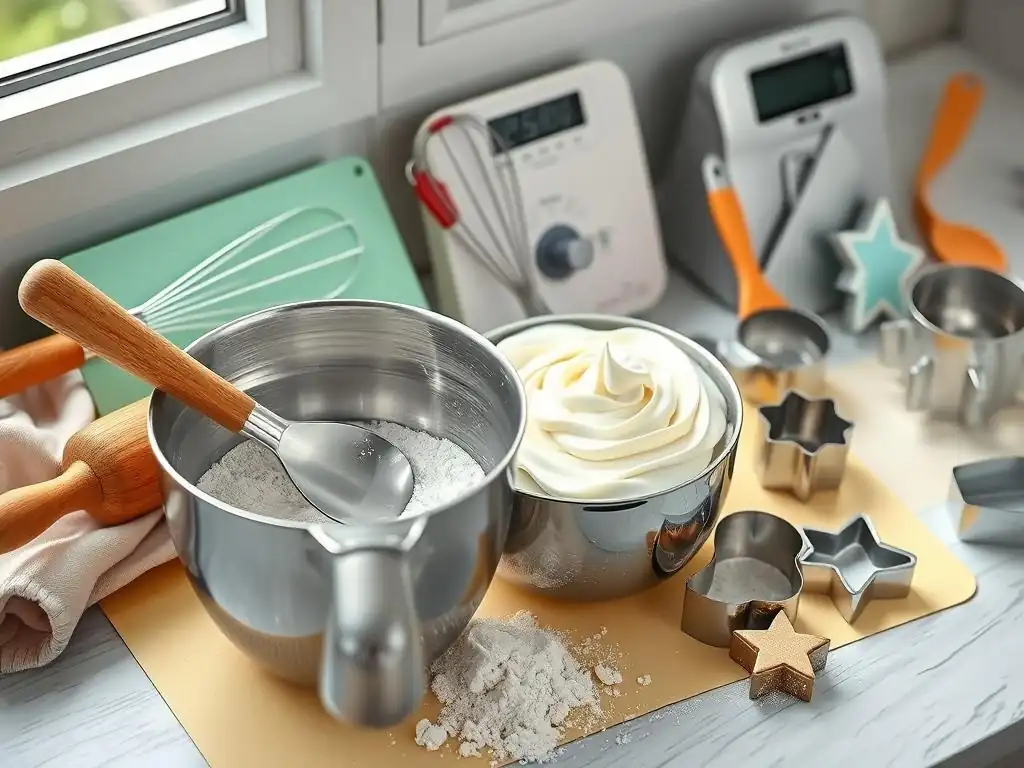
Proper storage is crucial for maintaining the freshness of your baking ingredients and keeping your finished baked goods delicious. Airtight containers protect ingredients like flour, sugar, nuts, and chocolate chips from moisture, pests, and odors, extending their shelf life. Clear containers are particularly helpful for easily seeing what you have on hand.
Once your cookies, brownies, or cakes are baked and cooled, storing them in airtight containers keeps them fresh and prevents them from drying out or becoming stale quickly. Using the right container helps maintain the texture and flavor you worked hard to achieve. Having a few different sizes of reliable airtight containers is a practical addition to your essential baking tools for beginners.
Kitchen Timer: Essential for Monitoring Baking Time
Baking is all about timing. Over-baking by even a few minutes can turn a moist cake into a dry one or perfectly chewy cookies into hard pucks. A simple kitchen timer, whether a dedicated device, an app on your phone, or the timer on your oven, is an absolute necessity.
Always set a timer for the minimum time specified in a recipe and check for doneness. This prevents burning and allows you to adjust baking time as needed, as ovens can vary. Relying on guesswork or memory is risky. A reliable timer is one of the most basic yet essential baking tools for beginners to ensure consistent results and prevent costly mistakes.
Cleaning Supplies: Keeping Your Tools Ready
While not strictly a "baking tool" in the sense of preparation, having the right cleaning supplies readily available is essential for maintaining your equipment and ensuring hygiene. Warm soapy water, sponges, and dish brushes are standard. For stubborn baked-on messes on pans, steel wool or a good quality scour pad might be necessary, depending on the pan material.
Properly cleaning your essential baking tools for beginners after each use prevents buildup that can affect future bakes or damage your equipment. For instance, residual grease on a baking sheet can cause smoking in the oven, and leftover bits in a mixing bowl can affect new batters. Drying tools thoroughly, especially metal ones, prevents rust. Keeping your workspace and tools clean is a fundamental part of the baking process.
Building Your Essential Baking Tool Collection on a Budget
Affordable Alternatives to Expensive Baking Tools
Starting out doesn't require breaking the bank. Many essential baking tools for beginners have affordable counterparts that perform perfectly well. Instead of investing in a high-end stand mixer immediately, a good set of whisks and perhaps an electric hand mixer (often available for $20-40) can handle most tasks. Simple glass or plastic mixing bowls are much cheaper than stainless steel sets and work just fine.
Look for basic, sturdy versions of tools like spatulas, measuring cups, and spoons from reputable budget brands. A standard wooden rolling pin is less expensive than marble or non-stick versions but is highly effective. Parchment paper is a very affordable non-stick solution compared to silicone mats initially. Prioritize functionality and durability over fancy features or brand names when building your collection of essential baking tools for beginners on a budget.
Where to Find Quality Baking Tools Without Breaking the Bank
Quality essential baking tools for beginners don't always come with a high price tag. Discount stores, large retailers, and even some supermarkets often carry reliable basic baking equipment. Look for sales and clearance sections. Online marketplaces can also offer competitive prices, but be sure to read reviews to gauge quality.
Thrift stores or second-hand shops can sometimes yield hidden gems like sturdy vintage mixing bowls or durable old baking pans for very little money. While you might need to clean them thoroughly, they can be excellent additions. Focus on the materials – look for sturdy metal pans (aluminum or steel), durable glass, and heat-resistant silicone or rubber spatulas. Building your essential baking tools for beginners can be a gradual process, adding pieces as needed and as your budget allows.
Maintaining Your Essential Baking Tools for Longevity
Cleaning and Storing Your Baking Equipment Properly
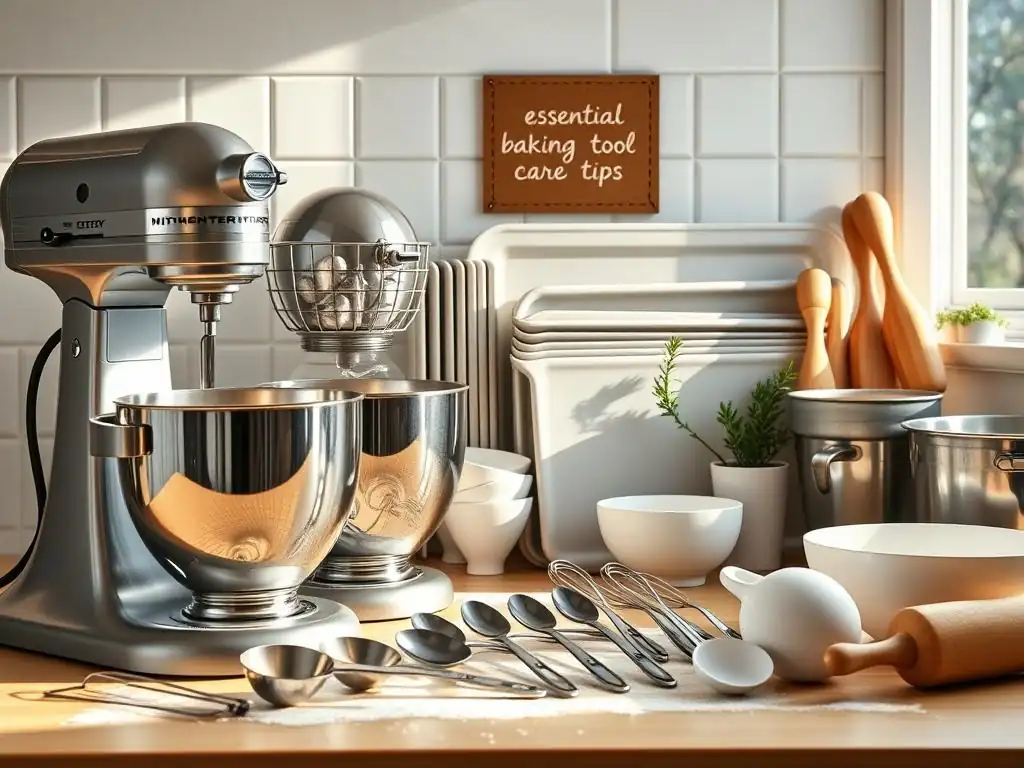
Proper care extends the life of your essential baking tools for beginners. Always clean tools shortly after use; dried-on batter or dough is much harder to remove. Most tools like measuring cups, spoons, spatulas, and whisks can be washed by hand with warm, soapy water or placed in the dishwasher if they are dishwasher- safe (check manufacturer instructions).
Baking sheets and pans often require more attention. For non-stick surfaces, avoid abrasive scrubbers that can damage the coating. For standard metal pans, you might need to soak them or use a nylon brush. Always dry metal tools completely to prevent rust. Store tools neatly to prevent damage – nesting bowls together, hanging measuring spoons, and keeping spatulas in a utensil crock helps keep them organized and protected.
Caring for Your Baking Pans and Tools
Specific care depends on the material. Cast iron pans, if you venture into those, require specific seasoning and cleaning to maintain their non-stick properties. Non-stick baking sheets and pans should not be used with metal utensils that can scratch the surface. Wooden rolling pins should be wiped clean and dried, occasionally seasoned with food-grade mineral oil to prevent drying and cracking.
Silicone mats can usually be washed with soap and water and air-dried or wiped dry. Oven thermometers and digital scales should be handled carefully to avoid damage and cleaned according to their specific instructions (often just wiping with a damp cloth). Taking a few moments to clean and store your essential baking tools for beginners correctly after each use ensures they remain in good condition and ready for your next baking adventure.
Essential Baking Tools Checklist for Beginners: A Summary
Here is a quick checklist of the essential baking tools for beginners discussed:
- [ ] Dry Measuring Cups (Set)
- [ ] Liquid Measuring Cup (1-2 cup size)
- [ ] Measuring Spoons (Set)
- [ ] Mixing Bowls (Set of 3-4 sizes)
- [ ] Whisk (Balloon style)
- [ ] Silicone Spatula (1-2)
- [ ] Metal Spatula (Small offset)
- [ ] Oven Thermometer
- [ ] Digital Kitchen Scale (Optional but highly recommended)
- [ ] Instant-Read Thermometer (Optional, for specific recipes)
- [ ] Parchment Paper OR Silicone Baking Mat
- [ ] Baking Sheets (2)
- [ ] Cake Pan (8 or 9-inch round)
- [ ] Loaf Pan (Standard size)
- [ ] Muffin Tin (Standard 12-cup)
- [ ] Cooling Rack (1-2)
- [ ] Dough Scraper (Optional, good for bread/pastry)
- [ ] Rolling Pin (Optional, for rolled doughs)
- [ ] Airtight Storage Containers
- [ ] Kitchen Timer
- [ ] Basic Cleaning Supplies
[Your First Baking Tool Checklist]
Use the checklist above as your guide when gathering your initial essential baking tools for beginners. You can mark items as you acquire them. Remember, you don't need everything on day one, but starting with the core items will allow you to tackle a wide range of beginner-friendly recipes successfully.
Beyond the Basics: Expanding Your Baking Tool Collection
[Next Steps in Baking Tool Acquisition]
Once you've mastered the basics with your initial set of essential baking tools for beginners and find yourself baking regularly, you might consider adding more specialized equipment. A stand mixer, while a significant investment, can be invaluable for kneading bread dough, creaming large batches of butter and sugar, and whipping meringues effortlessly. Pastry blenders are helpful for cutting butter into flour for pie crusts and biscuits.
Other potential additions include specialized pans (like springform pans for cheesecakes, tart pans, or different sized cake pans), piping bags and tips for decorating, cookie cutters, and a sifter or fine-mesh sieve for aerating dry ingredients or dusting surfaces. Expanding your essential baking tools for beginners collection should be driven by the types of recipes you enjoy making and the techniques you want to explore next. Happy baking!
Frequently Asked Questions
What are the absolute must-have baking tools for someone just starting out?
The essential baking tools for beginners include a set of measuring cups and spoons, a mixing bowl, and a good-quality spatula. These foundational items will allow you to complete most basic recipes.
Is an expensive stand mixer really necessary for a beginner baker?
No, a stand mixer is not essential to begin with. A hand mixer or even just a sturdy whisk and some elbow grease can handle many recipes. You can always upgrade later.
What's the most versatile baking pan a beginner should invest in?
A 9x13 inch baking pan is incredibly versatile. It's perfect for cakes, brownies, casseroles, and many other baked goods, offering great value for its size.
How important is a kitchen scale compared to using measuring cups?
While measuring cups are convenient, a kitchen scale offers greater accuracy in measuring ingredients, especially flour. This can significantly improve your baking results.
Where can I find affordable, yet reliable, baking tools if I'm on a budget?
Look for budget-friendly options at discount stores, online retailers, and even thrift stores. Focus on durability and functionality over brand names when starting out.
Final Reflection: The Sweetness of Skill, the Joy of Creation
The pursuit of baking mastery isn't just about acquiring the perfect cake; it's about cultivating a skill, a passion, and a connection to the process of creation. From the humble whisk to the sturdy mixing bowl, each tool plays a vital role in transforming simple ingredients into culinary masterpieces. This journey, from zero to baker, highlights the importance of building a foundational tool kit, one that empowers you to explore your creativity and enjoy the rewarding experience of baking.
The impact of accessible baking knowledge is profound. It fosters a sense of accomplishment, encourages experimentation, and strengthens bonds through shared culinary experiences. Baking is at once child's play and adult joy. And love, of course.
This quote perfectly encapsulates the magic of baking, a magic amplified by having the right tools at your disposal. The more accessible we make this process, the more people can discover this joy, fostering a richer and more flavorful cultural landscape.
Now, it's your turn. Consider the tools you already possess and the ones you aspire to own. Don't be intimidated by the seemingly endless array of gadgets; start small, build gradually, and focus on acquiring the essentials that will best serve your baking style. Embrace the journey, celebrate each success, and remember that the most important ingredient in any recipe is your passion. So, gather your tools, preheat your oven, and let the baking begin!
Unleash Your Inner Baker: Start Baking Today!
Thanks for taking the time to explore the world of baking with us! We hope you've gained valuable insights into building your essential baking tool collection. Now it's time to put that knowledge into action.
Here’s how you can get started:
- Begin with your must-have tools: Identify the three core tools highlighted in the article and purchase them today. This is your first step towards baking success!
- Explore our beginner recipes: Check out our recipe section for easy-to-follow recipes designed for new bakers. You'll be amazed at what you can create!
- Share your baking journey: Post a picture of your first creation on social media and tag us - we'd love to see your progress!
What's the first delicious treat you're planning to bake? Let us know in the comments below!