
Understanding Yeast: Key to Perfect Rolls

Welcome to BakeWithEase, your partner in baking adventures! Ever wondered why your rolls sometimes fall flat? The secret often lies in the proper activation of your yeast. This article dives deep into yeast activation for perfect rolls, unlocking the secrets to consistently light and fluffy results. Intrigued? Let's get baking!
- Yeast Activation for Perfect Rolls: A Step-by-Step Guide
-
Frequently Asked Questions
- What exactly is yeast activation, and why is it important for making rolls?
- What's the ideal temperature for activating yeast to make perfect rolls?
- Can I use any type of yeast for making rolls, and does it affect the activation process?
- How can I tell if my yeast is properly activated before I start making my roll dough?
- What happens if my yeast doesn't activate properly, and can I still make rolls?
- Final Reflection: The Humble Yeast, the Perfect Roll, and the Joy of Baking
- Unleash Your Inner Baker: Perfect Rolls Await!
Yeast Activation for Perfect Rolls: A Step-by-Step Guide
Understanding Yeast Activation: Preparing for Success
Yeast activation is a crucial preliminary step, particularly when working with active dry yeast, ensuring your microscopic friends are alive and ready to leaven your dough. Think of it as waking them up from their dormant state. For perfect dinner rolls that are light and airy, starting with active yeast is non-negotiable.
This process involves rehydrating the yeast cells in a warm liquid, typically water or milk, often with a pinch of sugar to give them a quick energy boost. This brief period allows you to confirm that the yeast is viable before you commit all your ingredients to the dough.
Skipping proper yeast activation for perfect rolls, especially with active dry yeast, can lead to dense, heavy results. If the yeast is dead or inactive, it won't produce the carbon dioxide gas needed to make the dough rise. While instant yeast doesn't strictly require this step and can be mixed directly with dry ingredients, many bakers still prefer to bloom it to be absolutely certain of its vitality. This simple initial step, taking just a few minutes, acts as an insurance policy against baking disappointment and sets the foundation for those wonderfully fluffy rolls you're aiming for.
How to Activate Active Dry Yeast for Rolls: The Proper Technique
Activating active dry yeast for your rolls is a straightforward process that requires attention to temperature. You'll need a small amount of warm liquid, usually about 1/4 cup per standard packet (approximately 2 1/4 teaspoons or 7 grams) of yeast. The ideal temperature range for this liquid is between 105°F and 115°F (40°C and 46°C). Temperatures below this range may not be warm enough to wake the yeast up efficiently, while temperatures above 120°F (49°C) can actually kill the yeast cells, rendering them inactive.
Once you have your warm liquid, sprinkle the active dry yeast over the surface. Do not stir immediately. Let the yeast sit on the liquid for about 30-60 seconds; this allows the outer layer of the yeast granules to begin dissolving and absorbing moisture.
After this brief period, gently stir the mixture until the yeast is mostly dissolved. You can add a pinch of sugar at this point if your recipe calls for it or if you want to give the yeast an extra boost and make the bloom more visible. Set the mixture aside in a warm spot, away from drafts, and let it sit for 5 to 10 minutes.
Testing Yeast Viability: Ensuring Your Yeast is Alive and Ready to Bake
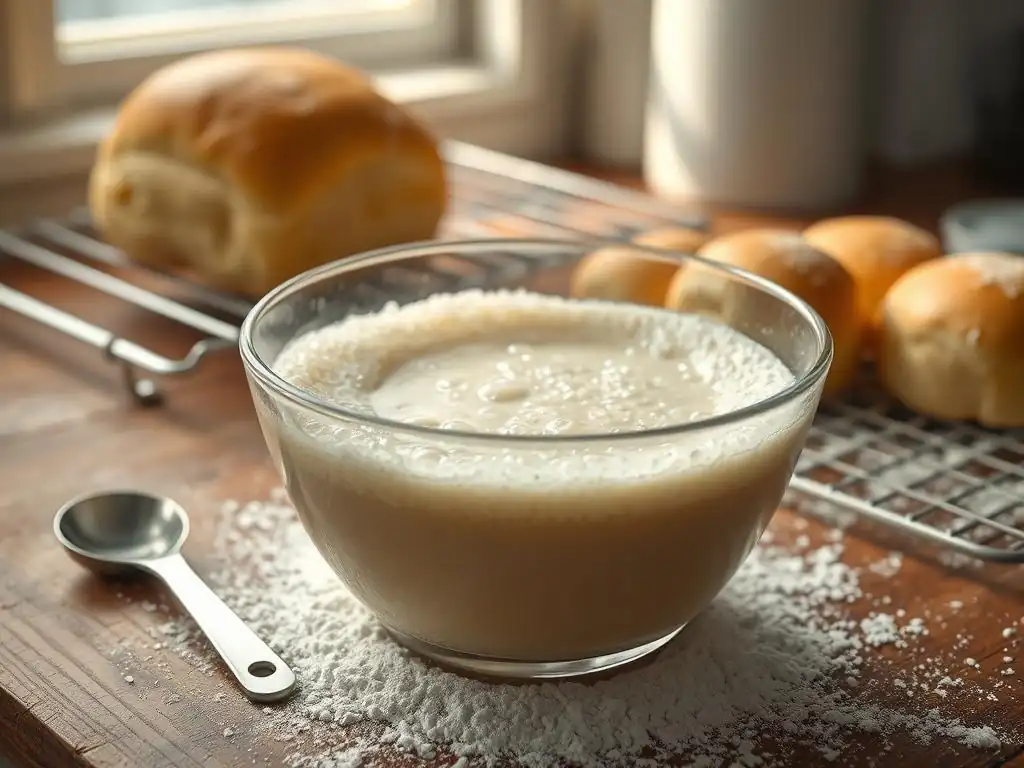
The definitive test for successful yeast activation for perfect rolls is observing the "bloom." After the 5 to 10 minutes of sitting in the warm liquid, the yeast mixture should become foamy, frothy, or bubbly on the surface. This bubbly layer indicates that the yeast is active and producing carbon dioxide gas – a sure sign that it's alive and ready to make your dough rise. You might also notice a distinct, pleasant, slightly yeasty aroma. This visual confirmation is your green light to proceed with adding the yeast mixture to the rest of your dough ingredients.
If, after the waiting period, your yeast mixture shows little to no activity – no foam, no bubbles, and perhaps just looks like cloudy water – it means the yeast is likely dead or inactive. There could be several reasons for this, which we'll cover next. However, the important takeaway is that you should not use this mixture.
Using inactive yeast will result in a dough that won't rise, leading to flat, dense rolls. It's far better to discard the inactive mixture and start over with fresh yeast and properly heated liquid than to waste all your ingredients on a non-rising dough.
Troubleshooting Yeast Activation: What to Do if Your Yeast Doesn't Bloom
If your yeast fails to bloom after following the activation steps, don't panic! This is a common issue and usually has a fixable cause. The most frequent culprit is incorrect liquid temperature. As mentioned, water that is too hot (above 120°F/49°C) will kill the yeast, while water that is too cold (below 100°F/38°C) will not activate it effectively. Using a thermometer to check the water temperature before adding the yeast is the simplest way to avoid this pitfall.
Another common reason is expired yeast. Yeast is a living organism, and like all living things, it has a shelf life. Check the expiration date on the packet or jar. If it's past its prime, it may no longer be viable.
Other potential issues include adding salt or too much sugar to the activation mixture too early. Salt can inhibit yeast activity, especially in high concentrations or when in direct contact for too long. While a small pinch of sugar can help, too much sugar can actually dehydrate and stress the yeast.
If you've checked the temperature and expiration date and are still having trouble, try again with new yeast from a different source or package, ensuring the water is within the correct temperature range and adding just a small pinch of sugar or none at all during the activation phase itself. Successfully troubleshooting this step is key to achieving reliable yeast activation for perfect rolls every time.
Frequently Asked Questions
What exactly is yeast activation, and why is it important for making rolls?
Yeast activation is the process of preparing yeast for baking by dissolving it in a warm liquid, usually water, with a bit of sugar. This step helps you ensure the yeast is alive and ready to leaven your dough, crucial for achieving light and airy rolls.
What's the ideal temperature for activating yeast to make perfect rolls?
The ideal temperature range is typically between 105°F and 115°F (40°C and 46°C). Using water that's too cold won't activate the yeast, while water that's too hot can kill the yeast, resulting in flat, dense rolls.
Can I use any type of yeast for making rolls, and does it affect the activation process?
While different types of yeast can be used, active dry yeast and instant yeast are most common. Active dry yeast requires activation, while instant yeast can be added directly to the dry ingredients, although activating it can still be beneficial.
How can I tell if my yeast is properly activated before I start making my roll dough?
You'll know your yeast is activated when it becomes foamy or bubbly on the surface of the water. This indicates the yeast is alive and actively producing carbon dioxide, which is essential for the rising process in roll making.
What happens if my yeast doesn't activate properly, and can I still make rolls?
If your yeast doesn't activate, it likely means it's expired or damaged. Attempting to make rolls with dead yeast will result in a flat, dense, and inedible product. It's best to start with fresh yeast to ensure success.
Final Reflection: The Humble Yeast, the Perfect Roll, and the Joy of Baking
Understanding yeast activation is not merely a technical detail in baking; it's the cornerstone of achieving perfectly risen, fluffy rolls, a testament to the power of understanding the natural world. The seemingly simple process of activating yeast unlocks a complex biological process, impacting texture, flavor, and the overall success of your baking endeavor. Mastering this fundamental step elevates baking from a chore to a rewarding craft.
The influence of yeast extends far beyond the kitchen; it's a microorganism that has shaped human civilization for millennia, playing a crucial role in food production and even scientific advancements. Its power to transform simple ingredients into something delicious and satisfying is a constant source of wonder. Bread is the staff of life,
a proverb often repeated, but rarely considered in the context of the microscopic miracle-worker that makes it possible. This simple phrase takes on a new meaning when we understand the intricate process of yeast fermentation.
Now, consider your own baking journey. What have you learned about patience, precision, and the interconnectedness of seemingly disparate elements through the process of yeast activation? I invite you to experiment, to embrace the occasional failure as a learning opportunity, and to savor the delicious rewards of perfectly risen rolls. The next time you bake, remember the power held within those tiny yeast cells – a power that transforms flour and water into something truly special.
Unleash Your Inner Baker: Perfect Rolls Await!
Thanks for diving into the world of yeast with us! You've now got the knowledge to bake truly amazing rolls. Ready to put your newfound expertise to the test?
- Bake a batch of your favorite rolls today! Use what you've learned to perfect your technique and enjoy the delicious results. Don't be afraid to experiment!
- Share your baking triumph (or even your funny fails!) on social media using #BakeWithEase. Let's inspire each other!
- Try a new roll recipe this week – challenge yourself! Explore different flavors and techniques to expand your baking horizons.
What exciting roll creations will you be whipping up next?