
Using a Couche: Proofing Baguettes for Perfect Shape

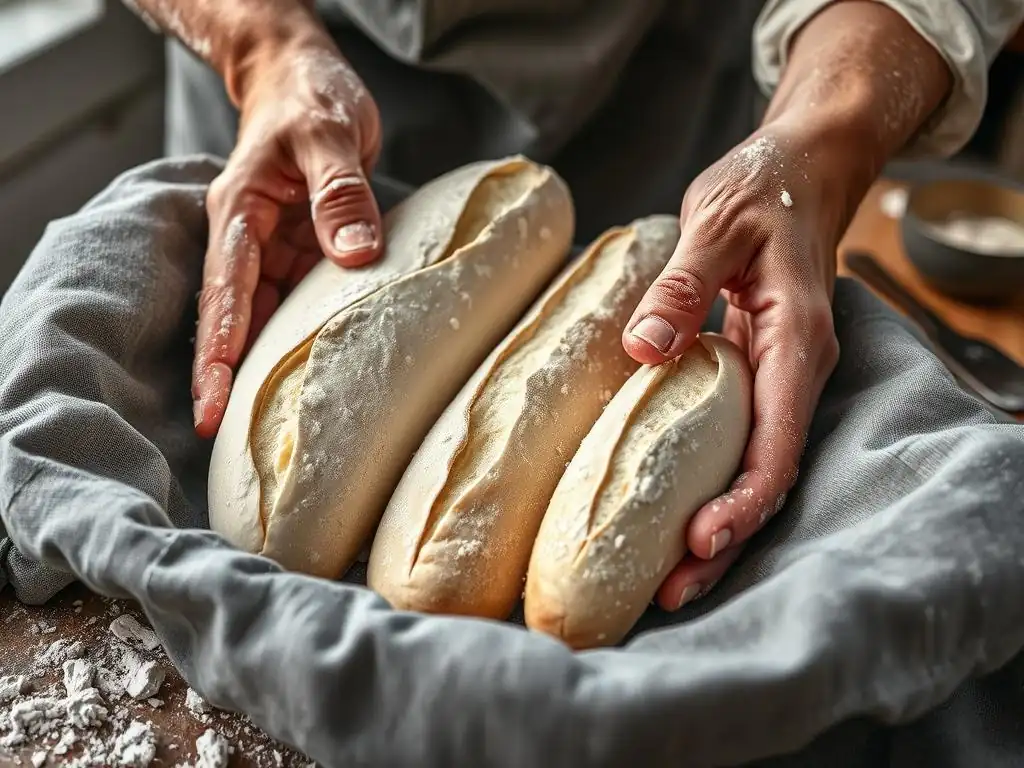
Welcome to BakeWithEase, where baking dreams become delicious realities! Ever wondered how professional bakers achieve those perfectly formed baguettes? This week, we're diving deep into the secret weapon: the couche. Learn the art of baguette shaping with a couche and unlock the secret to achieving that coveted, crisp crust and airy interior. Ready to elevate your bread baking game? Let's get started and explore the techniques that will transform your baguettes from good to unforgettable!
- Mastering Baguette Proofing: Using a Couche for Perfect Shape
- Introduction: Achieving the Ideal Baguette with a Couche
- What is a Couche and Why Use One?
- Choosing the Right Couche for Your Baguettes
- Preparing Your Couche for Baguette Proofing
- Step-by-Step Guide to Proofing Baguettes in a Couche
- Transferring Proofed Baguettes from Couche to Baking Surface
- Couche Maintenance and Cleaning
- Troubleshooting Common Issues with Couche Proofing
- Advanced Tips for Baguette Shaping and Proofing with a Couche
- Conclusion: Elevating Your Baguette Baking with a Couche
- Frequently Asked Questions
- Final Reflection: The Couche's Gentle Hand: Shaping More Than Just Bread
- Unleash Your Inner Boulanger: Perfect Baguettes Await!
Mastering Baguette Proofing: Using a Couche for Perfect Shape
Introduction: Achieving the Ideal Baguette with a Couche
Why a Couche is Crucial for Authentic Baguettes
Achieving that signature long, slender shape and crispy crust is a hallmark of a truly authentic baguette. While kneading and shaping are vital steps, the proofing stage is equally critical, and this is where a baker's couche becomes indispensable. A couche provides the necessary support to prevent the shaped dough from spreading outwards during its final rise, ensuring it maintains its elongated form. Without this support, the baguettes would flatten out, resulting in a loaf that is wider and less tall, lacking the characteristic profile needed for even baking and optimal crust development.
Using a couche is a technique steeped in tradition, employed by artisan bakers for centuries. It mimics the conditions found in professional bakeries, allowing the dough to develop its structure upwards rather than sideways. This controlled proofing environment contributes significantly to the final texture and appearance of the baguette, helping to create a light, airy interior crumb and a beautifully crisp exterior crust. Mastering baguette shaping with couche techniques is a key step for anyone serious about elevating their home bread baking to a professional level.
A Guide to Baguette Shaping and Proofing with a Couche
This guide will walk you through the essential steps of using a couche to proof your baguettes, ensuring they hold their shape beautifully before hitting the oven. From understanding what a couche is and why it's beneficial, to preparing it for use and carefully transferring your proofed loaves, we'll cover everything you need. Proper baguette shaping with couche involves not just the cloth itself, but also the technique of arranging the dough and allowing it the right amount of time to rise.
We'll also touch upon common challenges and how to troubleshoot them, such as dough sticking or baguettes losing shape. By the end of this guide, you'll have a solid understanding of how to integrate a couche into your bread baking routine, leading to consistently well-shaped baguettes. This method is a fundamental part of achieving artisan-quality results right in your own kitchen.
What is a Couche and Why Use One?
Understanding the Purpose of a Baker's Couche
A baker's couche (pronounced "koosh") is simply a piece of heavy linen or canvas cloth used to support shaped bread dough, particularly long, thin loaves like baguettes, during their final proofing stage. It's typically made from untreated, natural fibers, most commonly flax linen, which is highly absorbent. The purpose of the couche is twofold: it wicks away excess moisture from the surface of the dough, which helps in developing a crisp crust, and more importantly, it provides structural support. By folding the couche to create troughs between the loaves, bakers ensure the dough rises vertically rather than spreading horizontally.
Think of the couche as individual slings for each baguette. After shaping, the baguettes are placed in these troughs, separated by folds of the cloth. This physical barrier keeps the dough from flattening out as it proofs. The absorbent nature of the linen also helps to create a slight skin on the dough's surface, making it easier to score later and contributing to a better oven spring. It's a simple tool, yet incredibly effective for achieving the desired form in long loaves.
Benefits of Using a Couche for Baguette Proofing
Using a couche offers several distinct advantages that contribute to the success of your baguettes. The primary benefit is its ability to maintain the shape of the dough during proofing, which is crucial for baguettes that are meant to be long and slender. This controlled environment leads to a more uniform loaf, both in shape and structure.
Benefits of Couche Proofing:
*   Prevents spreading of shaped dough
*   Promotes vertical rise
*   Helps develop a slight skin on the dough surface
*   Contributes to a crispier crust
*   Supports uniform shape and size across multiple loaves
These benefits collectively work towards producing baguettes that not only look professionally made but also have the desired texture and crust development. It's a technique that significantly improves the outcome compared to proofing on a flat surface or in baskets not designed for long loaves.
Preventing Baguette Spreading During Proofing
One of the biggest challenges with proofing long, wet doughs like baguettes is preventing them from spreading out into flat discs. Baguette dough typically has a relatively high hydration (often 70-80% or more), which makes it slack and prone to losing shape during the final rise. A couche directly addresses this by creating physical barriers between the loaves.
For example, if you're proofing three baguettes, you'd place the first one, create a fold in the couche, place the second one, create another fold, and place the third. These folds act like walls, supporting the sides of the dough and forcing it to rise upwards.
This support is particularly important during the final proof, which might last anywhere from 60 to 90 minutes at room temperature, or much longer under refrigeration. Over this time, the dough relaxes and expands significantly. The structured environment provided by the couche ensures that this expansion happens vertically, preserving the elegant, elongated shape you worked hard to achieve during shaping. This controlled proofing is fundamental to mastering baguette shaping with couche techniques.
Achieving Uniform Shape and Crust Development
Using a couche helps ensure that all your baguettes proof consistently. By providing the same level of support to each loaf placed within its folds, the couche promotes uniformity in shape and size across your batch. This consistency is not just for aesthetics; it's also important for even baking. Loaves of similar dimensions will bake at a similar rate, making it easier to achieve the perfect golden-brown crust and fully baked interior for every baguette.
Furthermore, the ability of the couche to wick away a small amount of surface moisture helps in developing that desired thin, crisp crust. As the dough proofs, some moisture evaporates and is absorbed by the linen. This slight drying of the surface makes it easier to score the dough cleanly just before baking and encourages the crust to set quickly in the hot oven, leading to better oven spring and a more delicate, shatteringly crisp exterior compared to dough proofed in a humid environment without support.
Supporting Long, Thin Baguette Forms
Baguettes are defined by their length and relatively thin profile – typically ranging from 18 to 24 inches long and just a few inches wide. This specific shape is difficult to maintain during proofing without external support. Proofing them on a flat baking sheet, even with parchment paper, would inevitably lead to significant spreading, transforming the intended baguette into a much flatter, wider loaf.
The couche is specifically designed to cradle these long, narrow forms. By creating deep troughs, it supports the dough along its entire length, preventing the middle from sagging or spreading more than the ends. This dedicated support system is what allows the baker to achieve and maintain the iconic baguette shape throughout the crucial final proofing stage, setting the stage for successful baguette shaping with couche results in the oven.
Choosing the Right Couche for Your Baguettes
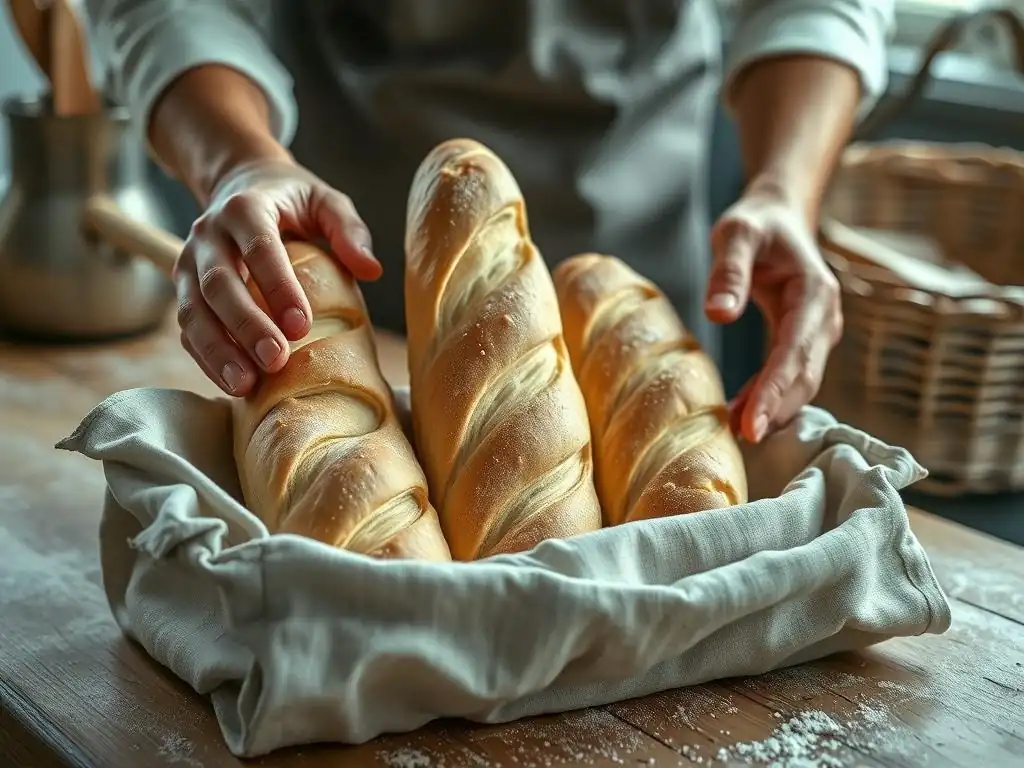
Types of Couches: Linen vs. Canvas
When selecting a baker's couche, you'll primarily encounter two materials: linen and canvas. Traditional couches are made from 100% flax linen. Linen is highly prized for its absorbency and durability. It effectively wicks moisture away from the dough's surface, contributing to a crisp crust. High-quality linen is tightly woven yet breathable, providing excellent support. A typical professional linen couche might weigh around 12-15 ounces per square yard, indicating a substantial, durable fabric.
Canvas couches, usually made from cotton canvas, are also available and often more affordable. While canvas is also absorbent, it may not wick moisture quite as efficiently as linen. Cotton canvas can sometimes be slightly less smooth than linen, potentially increasing the risk of sticking if not properly floured. However, a good quality, tightly woven cotton canvas can still perform well for home baking. For serious baguette enthusiasts, linen is often considered the superior choice for its moisture-wicking properties and durability over time.
Couche Size and Material Considerations for Baguette Baking
The size of your couche should be determined by the number and length of the baguettes you typically bake. A common size for home bakers is around 24 inches by 36 inches (approx. 60 cm x 90 cm). This size is versatile enough to comfortably proof 3-5 standard-sized baguettes, each about 18-20 inches long. If you plan to bake longer baguettes or more loaves at once, you'll need a larger couche. It's always better to have a slightly larger couche than you think you need, as you can fold it to accommodate fewer loaves or shorter lengths.
Beyond size, consider the weight and weave of the material. A heavier weight fabric (like 12-15oz linen) provides better support and durability than a lighter one (e.g., 8oz). The weave should be tight to prevent dough from seeping through, but loose enough to allow for proper moisture wicking. Untreated, unbleached natural fibers are essential; chemicals or dyes could transfer to your dough. Choosing the right size and material is a key step in preparing for effective baguette shaping with couche techniques.
Considerations for Purchasing a Baker's Couche
When purchasing a couche, look for one labeled as "baker's couche" or "proofing cloth," ideally made from 100% untreated linen. Check the dimensions to ensure it fits your baking needs and available counter space for proofing. Read reviews if possible to gauge the quality and performance. While professional-grade linen couches can be an investment, they are incredibly durable and, with proper care, can last for many years.
Consider buying one that is slightly larger than your maximum typical batch size. This gives you flexibility and ensures there's enough fabric to create deep, supportive folds between the loaves. You can find couches at specialty kitchen stores, online retailers, or bakery supply shops. Investing in a good quality couche is a worthwhile step for anyone dedicated to mastering baguette shaping with couche and consistently producing beautiful, well-shaped baguettes.
Preparing Your Couche for Baguette Proofing
Seasoning Your Couche for Optimal Performance
A new couche, especially one made of linen, needs to be "seasoned" before its first use and sometimes lightly between uses. Seasoning doesn't involve heat or oil like a cast iron pan. Instead, it primarily involves getting a good layer of flour worked into the fibers. Some bakers recommend a preliminary step of washing a new couche in hot water (without detergent) and air drying it to soften the fibers and remove any manufacturing residue. However, many professional bakers advise against washing couches frequently, as the build-up of flour over time actually helps create a non-stick surface.
The main part of seasoning is simply using it repeatedly with generous flouring. Over time, the flour particles fill the tiny spaces in the fabric weave. This creates a barrier that prevents the wet dough from directly contacting and sticking to the fibers. With each use and proper flouring, the couche becomes more seasoned and less likely to cause sticking issues. It develops a characteristic stiffness and a fine layer of flour dust, which is exactly what you want for perfect baguette shaping with couche.
Flouring the Couche: Preventing Sticking
Proper flouring is perhaps the most critical step in preparing your couche for use and preventing your precious baguettes from sticking. You need to use a generous amount of flour, but distribute it evenly. All-purpose flour works well, but many bakers prefer rice flour because its particles are rounder and don't absorb moisture as readily as wheat flour, making it an excellent non-stick agent. A blend of rice flour and wheat flour (e.g., 50/50) is also a popular choice.
To flour, lay the couche flat and sprinkle a substantial amount of flour over the entire surface where the dough will rest. Use your hands to gently rub the flour into the fibers. Ensure there are no bare spots. You want a visible, even layer of flour.
Don't be shy with the flour, especially when the couche is new or if your dough is particularly wet. A good rule of thumb might be using about 1/4 to 1/2 cup of flour for a standard 24x36 inch couche, adjusted based on how much you need to rub in. This generous flouring is key to successful baguette shaping with couche.
Folding the Couche for Effective Baguette Support
Once your couche is generously floured, you need to fold it to create the individual resting places, or troughs, for each baguette. Lay the floured couche flat on your work surface. Imagine where your first baguette will go, usually along one edge. Place the shaped baguette there. Then, lift the adjacent section of the couche and fold it over towards the center, creating a raised ridge or fold. This fold should be tall enough to support the side of the baguette you just placed.
Next, place your second baguette next to this fold, nestled against it. Create another fold by lifting the couche section next to the second baguette and folding it over. Continue this process for each baguette, creating a supportive fold between each loaf. Ensure the folds are relatively tight and tall to provide adequate support. The goal is to create distinct channels that cradle each baguette, preventing them from expanding sideways and maintaining their long, slender form during the final proofing stage.
Step-by-Step Guide to Proofing Baguettes in a Couche
Shaping Your Baguettes Before Proofing
Before your baguettes touch the couche, they need to be properly shaped. After the bulk fermentation, divide your dough into individual portions (typically 250-350g for a standard baguette). Gently pre-shape each portion into a rough cylinder or oval and let them rest for 15-20 minutes, covered, to relax the gluten. This makes the final shaping much easier.
For the final shaping, gently degas each piece of dough slightly. Fold the top edge down to the center, press to seal. Fold the bottom edge up to the center, press to seal. Then, fold the dough in half lengthwise, pressing the seam firmly with the heel of your hand.
Roll the dough back and forth on your work surface, using light pressure and moving your hands from the center outwards, to elongate it into a baguette shape of your desired length (typically 18-24 inches). Aim for even thickness along the loaf, with slightly tapered ends. Place the shaped baguettes directly onto the floured couche.
Placing the Baguettes in the Couche: Proper Technique
Once your baguettes are shaped, transfer them immediately to the prepared and floured couche. Place the first baguette near one edge of the couche. Gently lift the fabric next to it and create a fold, bringing it up and over to form a supportive ridge. The height and tightness of this fold are crucial for proper baguette shaping with couche.
Place the next baguette snugly against the fold you just created. Repeat the folding process: lift the fabric, create a fold, and place the next baguette against it. Continue until all your shaped baguettes are resting in their individual troughs, separated by supportive folds of the floured cloth. This arrangement ensures that as the dough expands during proofing, it is directed upwards rather than outwards.
Creating Folds Between Baguettes for Support
The key to successful baguette shaping with couche is creating firm, supportive folds between each loaf. After placing a baguette, pull the adjacent section of the couche up and over, creating a ridge. The higher and tighter this ridge, the more support it will provide. You can tuck the excess fabric underneath the couche on the side to keep the folds taut.
Imagine you are creating little hammocks or cradles for each baguette. These fabric walls prevent the loaves from merging into one another as they expand. Ensure the folds are deep enough to support the full height of the rising dough. As you add more baguettes and folds, the couche will naturally become more structured, with each fold supporting the loaves on either side.
Preventing Baguettes from Touching
It is absolutely essential that the shaped baguettes do not touch each other while proofing in the couche. If they touch, they will stick together as they rise, and separating them before baking will likely cause them to deflate and lose their shape. The folds you create in the couche serve as the physical barrier to prevent this contact.
Leave enough space between the baguettes to allow for expansion, relying on the height and tension of the fabric folds to keep them separated. The exact spacing will depend on the size of your baguettes and couche, but generally, a few inches of couche material folded into a substantial ridge between loaves is sufficient. This careful separation is fundamental to achieving distinct, perfectly shaped baguettes.
Proofing Time and Temperature: Finding the Sweet Spot
The proofing time for baguettes in a couche varies significantly based on the dough's temperature, the ambient room temperature, and the recipe's yeast or starter activity. Typically, at a comfortable room temperature of around 72-75°F (22-24°C), baguettes might proof for 60 to 90 minutes. However, this is just a guideline. The dough is ready when it is noticeably increased in volume, looks puffy, and passes the "finger poke test."
For a slower, potentially more flavorful proof, you can place the couche filled with baguettes in a cooler environment, like a refrigerator (around 38-40°F or 3-4°C). Cold proofing can last anywhere from 8 to 24 hours. This extended proofing develops more complex flavors and is often preferred by artisan bakers. Regardless of the temperature, monitoring the dough's progress is key.
Checking for Readiness: The Finger Poke Test
The most reliable way to tell if your baguettes proofing in the couche are ready for baking is the finger poke test. Gently and lightly flour your index finger. Press it about half an inch (about 1-1.5 cm) into the side of one of the baguettes.
- If the indentation springs back immediately, the dough is underproofed and needs more time.
- If the indentation stays completely and doesn't spring back at all, the dough is likely overproofed.
- If the indentation slowly springs back only part of the way, leaving a slight depression, the dough is perfectly proofed and ready to bake.
This test gives you a direct indication of the dough's elasticity and gas development, ensuring you bake at the optimal moment for maximum oven spring and ideal crumb structure. Mastering this test is as important as mastering the baguette shaping with couche technique itself.
Transferring Proofed Baguettes from Couche to Baking Surface
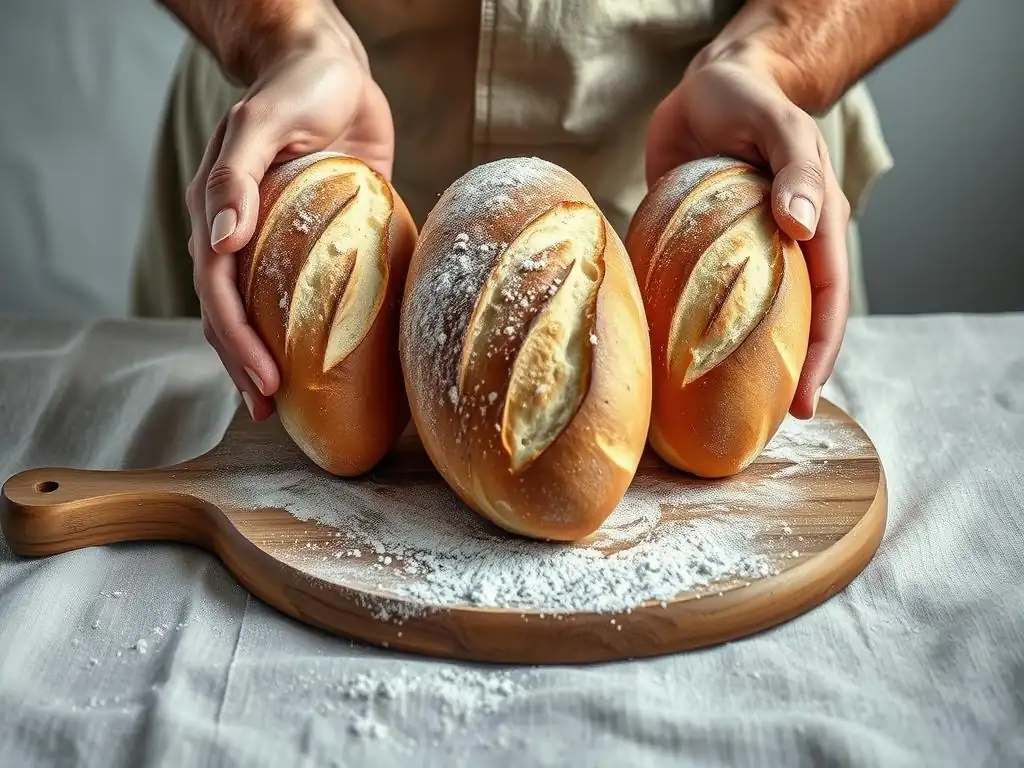
Gentle Handling Techniques to Avoid Deflating Baguettes
Transferring delicate, fully proofed baguettes from the couche to your baking surface (like a baking stone, steel, or tray) is a critical step. The dough is fragile at this stage, filled with precious air pockets. Rough handling can cause it to deflate, resulting in dense, flat loaves. The key is to be extremely gentle and minimize manipulation.
Avoid squeezing, pressing, or sharply jarring the dough. Work smoothly and deliberately. If using a peel, ensure it's well-floured (often with semolina or cornmeal which act like tiny ball bearings) to prevent sticking. Carefully lift the baguette from the couche using a combination of sliding a peel underneath and gently supporting it with your other hand if needed, or by using the couche itself as a transfer aid.
Using a Peel or Board for Transfer
A baker's peel is the traditional tool for transferring proofed loaves to a hot oven surface. To use a peel with baguettes from a couche, first prepare your baking surface in the oven (preheat stone/steel). Then, prepare your peel by sprinkling it generously with semolina, cornmeal, or rice flour. This creates a low-friction surface.
Carefully lift the edge of the couche next to the first baguette and gently roll the baguette onto the prepared peel. Alternatively, you can slide the peel underneath the baguette while it's still on the couche. Once on the peel, you can transfer it to your baking surface in the oven. For baguettes proofed side-by-side in a couche, some bakers lift one edge of the couche and gently roll the baguettes, one by one, onto a waiting peel or board. This technique leverages the couche itself to assist the transfer.
Scoring Baguettes After Proofing
Scoring (making cuts on the surface of the dough) is typically done just before the baguettes are transferred to the oven, often while they are on the peel or transfer board. Scoring serves a crucial purpose: it allows the dough to expand in a controlled manner during the intense heat of the oven, facilitating oven spring and preventing the crust from bursting unpredictably.
Use a very sharp lame (a baker's razor blade on a handle) or a sharp knife. Make quick, confident, overlapping slashes along the top of the baguette. For a classic baguette, you typically make several diagonal slashes, each overlapping the previous one by about a third. The cuts should be deep enough to penetrate the surface skin – usually about 1/4 to 1/2 inch (0.5-1 cm) deep. Proper scoring is the final touch before baking and works hand-in-hand with successful baguette shaping with couche and proofing.
Couche Maintenance and Cleaning
Cleaning Your Couche: Best Practices
The general rule for cleaning a baker's couche is: the less, the better. Frequent washing can remove the beneficial layer of seasoned flour that helps prevent sticking. After each use, once the baguettes have been transferred, simply shake or brush off any excess flour from the couche. You can do this outside to avoid making a mess indoors.
If the couche becomes visibly dirty, stained, or develops a smell, it may need a wash. Wash it by hand in hot water without using soap or detergent, as soap residue can affect future doughs. Simply rinse it thoroughly until the water runs clear. If absolutely necessary for stubborn stains, a small amount of white vinegar can be added to the rinse water. Avoid fabric softeners. After washing, hang the couche to air dry completely before storing it.
Storing Your Couche Properly
Proper storage is essential to keep your couche clean, dry, and ready for its next use. Ensure the couche is completely dry before storing it to prevent mildew or mold growth. Hang it up or lay it flat in a clean, dry place.
Many bakers roll or fold their dry couche neatly. Store it away from strong odors (like spices or cleaning chemicals) that the fabric could absorb. A dedicated shelf or drawer in your pantry or kitchen cabinet is ideal. Keeping it clean and dry between uses ensures it performs optimally and extends its lifespan, supporting countless future sessions of baguette shaping with couche.
Extending the Life of Your Baker's Couche
With proper care, a quality baker's couche can last for many years, becoming a trusted tool in your bread-baking arsenal. Here are a few tips to extend its life:
- Always ensure it's completely dry before storing.
- Avoid using soap unless absolutely necessary, and rinse thoroughly if you do.
- Shake or brush off excess flour after every use.
- Store it flat or loosely rolled, not tightly packed in a damp area.
- Avoid cutting on the couche, as this will damage the fibers.
- Use generous flouring each time to build up the non-stick seasoning layer.
Treating your couche well ensures it maintains its structure and moisture-wicking properties, continuing to provide excellent support for your baguette shaping with couche endeavors.
Troubleshooting Common Issues with Couche Proofing
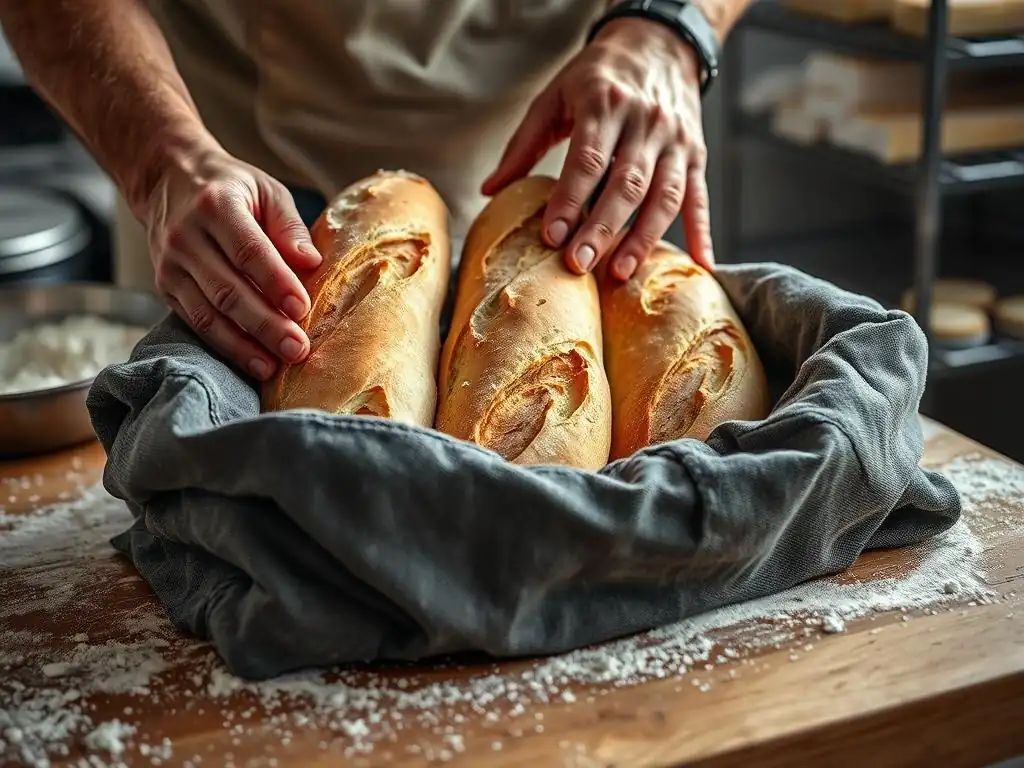
Baguettes Sticking to the Couche
Sticking is the most common issue when using a couche, and it's almost always due to insufficient flouring or an unseasoned couche.
- Insufficient Flour: Did you use enough flour? Remember, you need a visible, even layer rubbed into the fabric. Don't be afraid to use more, especially with wet doughs or a new couche. Rice flour or a rice/wheat blend often works better than plain wheat flour.
- Unseasoned Couche: A brand new couche hasn't had time to build up that non-stick layer of embedded flour. It might require more generous flouring for the first few uses.
- Dough Too Wet: While baguettes are high hydration, extremely sticky dough might benefit from a slight reduction in water in the recipe or more careful handling during shaping to build surface tension.
- Proofing Too Long: Overproofed dough can become extremely fragile and sticky. Ensure you are using the finger poke test to proof correctly.
If a baguette is stuck, try gently lifting the fabric around it rather than pulling the dough. You might need to carefully use a thin spatula or bench scraper to help release it, working slowly and gently to avoid deflation.
Baguettes Spreading Despite Using a Couche
If your baguettes are still spreading sideways even when using a couche, consider these factors:
- Insufficiently Tight Folds: The folds in your couche need to be tall and relatively taut to provide adequate lateral support. Ensure you are creating distinct, supportive channels for each loaf.
- Over-Proofing: Overproofed dough loses its structure and can collapse or spread. Check your proofing time and use the finger poke test.
- Weak Gluten Development: If the dough wasn't kneaded or folded enough during bulk fermentation, it might lack the structural strength to hold its shape, even with external support. Ensure your dough passes the windowpane test before shaping.
- Shaping Issues: The final shaping must create good surface tension. If the loaf is loosely shaped, it will be more prone to spreading. Focus on creating a taut skin during the final rolling.
Reviewing your shaping technique and ensuring your couche folds are firm are key steps if you encounter spreading issues during baguette shaping with couche.
Uneven Proofing in the Couche
Sometimes you might notice that baguettes in the same couche are proofing at different rates. This can happen due to several reasons:
- Temperature Variations: If the couche is placed near a drafty window, a heat source, or on a surface that is warmer/cooler on one side, the dough temperature (and thus proofing speed) can vary. Ensure your proofing area has a consistent temperature.
- Inconsistent Shaping: If some baguettes were shaped more tightly or loosely than others, they might proof differently. Strive for uniformity in tension and size during shaping.
- Uneven Dough Temperature: If your dough pieces were not all at the same temperature when shaped (e.g., some sat out longer), they will proof at different rates.
- Couche Material Variations: While less common with a single couche, variations in fabric density could theoretically affect moisture wicking slightly.
Try to ensure consistent conditions for all loaves in the couche – uniform shaping, even temperature, and consistent placement within the folds – for more even proofing results.
Advanced Tips for Baguette Shaping and Proofing with a Couche
Experimenting with Different Couche Materials
While linen is the standard, some bakers experiment with other materials. Heavyweight cotton canvas is a common alternative. Some might even use very heavy, tightly woven cotton twill. Each material will have slightly different properties regarding moisture wicking and flexibility. Linen generally offers the best balance for baguettes.
You could also experiment with different weaves or weights of linen. A denser, heavier linen might offer more rigid support, while a slightly lighter weave might wick moisture more aggressively. Understanding how the material interacts with your specific dough hydration and proofing environment can help you fine-tune your baguette shaping with couche results.
Using a Couche for Other Long Loaves
The utility of a couche isn't limited strictly to classic French baguettes. It's an excellent tool for proofing any long, slender loaf that requires lateral support to maintain its shape. This includes:
- Ficelles: Thinner, shorter baguettes.
- Demi-baguettes: Shorter, wider baguettes.
- Batards: Oval-shaped loaves, though they might not need the same level of support as thin baguettes.
- Other regional long breads: Many European bread traditions feature elongated loaves that benefit from couche proofing.
If you're baking multiple long rolls or breadsticks, a couche can also be adapted to support them, ensuring they don't spread into flat shapes during proofing. It's a versatile tool for many types of artisan bread baking.
Optimizing Your Proofing Environment
Beyond the couche itself, the environment where you proof your baguettes plays a significant role. Aim for a consistent temperature, ideally between 72-78°F (22-26°C) for typical room-temperature proofing. Avoid drafts, which can dry out the dough surface too quickly (even with the couche) and cause uneven proofing.
Some bakers place their couche on a baking sheet or board and then slide the whole assembly into a large plastic bag or cover it loosely with plastic wrap or a damp towel. While the couche wicks moisture from the dough surface, this covering can help maintain a slightly more humid environment around the couche itself, preventing the dough from forming too thick a skin before it's ready. Experiment to find the environment that works best with your specific dough and proofing schedule for optimal baguette shaping with couche.
Conclusion: Elevating Your Baguette Baking with a Couche
Mastering the Art of Baguette Shaping
Mastering the art of baguette shaping is a journey that involves understanding dough hydration, gluten development, and precise technique. From the initial pre-shape to the final elongation, each step contributes to the potential of the final loaf. The goal is to create sufficient surface tension to give the dough structure while maintaining an airy interior. Achieving that perfect cylinder with slightly tapered ends sets the stage for successful proofing.
However, even the most perfectly shaped baguette dough needs the right support during its final rise. This is where the couche becomes an indispensable tool. By providing a structured environment that encourages vertical expansion, the couche preserves the shape you've worked hard to create, preventing the dreaded "baguette sprawl" and ensuring your loaves have the ideal form for optimal baking results.
Further Resources for Artisan Bread Baking
Using a couche for baguette shaping with couche is just one piece of the puzzle in creating artisan bread. To continue elevating your skills, explore resources that delve deeper into topics like:
- Understanding flour types and their impact on bread
- Developing strong gluten through kneading or stretch-and-folds
- Working with sourdough starters or preferments (like a poolish or biga)
- Techniques for achieving amazing oven spring and crust development (steam is key!)
- Baking on a stone or steel vs. other surfaces
- Scoring patterns and techniques
Many excellent books, websites (like BakeWithEase.com! ), and online courses offer detailed guidance on these subjects. Practice is key – the more you bake, the better you'll become at reading your dough and refining your techniques. With dedication and the right tools, like a baker's couche, you can consistently bake beautiful, delicious artisan baguettes at home.
Frequently Asked Questions
What is a couche and why is it important for baguette shaping?
A couche is a linen cloth used to support and maintain the shape of baguettes during their final proof. It helps prevent the dough from spreading out and ensures a crisp crust.
How do you properly prepare a couche before using it?
Before using, the couche should be heavily floured to prevent the dough from sticking. Creating deep folds or channels in the couche helps support the baguette shape during proofing.
Can I use something else if I don't have a couche?
While a couche is ideal, alternatives include using a heavily floured linen towel or even parchment paper. However, these may not provide the same level of support or moisture absorption as a dedicated couche.
How long should I proof my baguettes in the couche?
Proofing time varies depending on the recipe and room temperature. Look for the baguettes to nearly double in size and feel light and airy. Avoid over-proofing, which can lead to deflated baguettes.
How do I transfer the proofed baguettes from the couche to the baking sheet?
Gently and quickly roll each baguette from the couche onto a piece of parchment paper or directly onto a preheated baking sheet. Score the top of the baguettes immediately before baking to control expansion and create a beautiful crust.
Final Reflection: The Couche's Gentle Hand: Shaping More Than Just Bread
The art of baguette shaping, once a closely guarded secret, is now accessible to home bakers thanks to the humble couche. This seemingly simple linen cloth plays a crucial role in achieving the perfect baguette – a testament to the power of mindful technique and the beauty of traditional methods in a modern world. The impact extends beyond just aesthetics; mastering the couche elevates the entire baking experience.
The couche's influence transcends the simple act of shaping bread; it represents a connection to generations of bakers who perfected this craft. It's a quiet reminder of the importance of patience and attention to detail, qualities often overlooked in our fast-paced lives. Baking is a labor of love, and the couche is a silent partner in that labor.
This simple statement encapsulates the profound connection between baker and bread, a connection deepened by the careful use of this essential tool. The subtle nuances of texture and the gentle shaping process are a meditative experience, offering a welcome respite from the demands of daily life.
Now, consider your own baking journey. Will you embrace the couche and unlock the secrets to perfectly shaped baguettes? Will you allow this simple tool to guide you towards a deeper appreciation for the process, for the ingredients, and for the satisfaction of creating something beautiful and delicious with your own hands? The choice, and the reward, are yours. Embrace the gentle hand of the couche and discover the transformative power of mindful baking.
Unleash Your Inner Boulanger: Perfect Baguettes Await!
Thanks for taking the time to learn about the art of proofing baguettes with a couche! You've now gained the knowledge to elevate your baking game and achieve those perfectly shaped, rustic loaves. Ready to put your new skills to the test?
- Bake a batch of baguettes using the couche technique: This is the key step! See how much better your loaves rise and shape.
- Share your results: Post a picture of your beautiful baguettes on social media and tag us! We'd love to see your creations. #BakeWithEase #CoucheBaguettes
- Experiment with different flours and hydration levels: Observe how the couche affects each variation.
What unique flour blend will you try first to perfect your baguette?