
Crack the Code: Pricing Your Baked Goods for Success

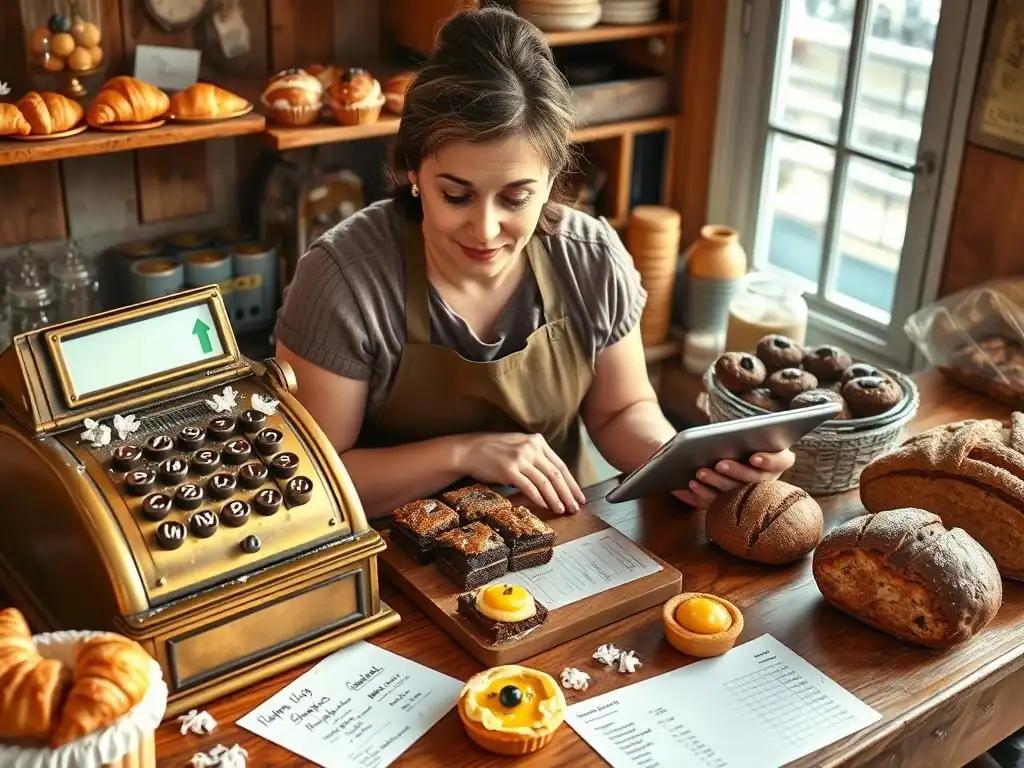
Welcome to BakeWithEase, your ultimate guide to the delightful world of baking! Ever wondered if you're truly capturing the value of your delicious creations? This week, we delve into the crucial art of pricing baked goods for profitability. Discover the secrets to accurately assessing your costs, setting competitive prices, and ultimately, turning your passion for baking into a sustainable and thriving venture. Intrigued? Read on to crack the code and unlock your baking business potential!
- Introduction: Baking Your Way to Profitability
- Understanding the True Cost of Your Baked Creations
- Pricing Strategies for Baked Goods: Maximizing Your Earnings
- Mastering the Art of Pricing Baked Goods for Profit
- Pricing Psychology: Appealing to Your Target Audience
- Tools and Resources for Pricing Baked Goods
- Avoiding Common Pricing Mistakes in Your Baking Business
- Case Studies: Successful Baked Goods Pricing Strategies
- Conclusion: Bake With Confidence and Price for a Flourishing Business
-
Frequently Asked Questions
- How do I determine the cost of ingredients for a single batch of baked goods?
- What other costs besides ingredients should I consider when pricing baked goods?
- How can I calculate my desired profit margin when selling baked goods?
- What are some common pricing strategies for baked goods?
- How often should I review and adjust my pricing for baked goods?
- Final Reflection: The Sweet Science of Pricing Baked Goods
- Unlock Your Baking Business's Potential!
Introduction: Baking Your Way to Profitability
Welcome to the sweet side of business! You love to bake, and maybe friends and family have told you, "You should sell these!" Turning your passion into a profitable venture is an exciting step. However, the journey from a beloved home baker to a thriving business owner involves more than just perfecting your chocolate chip cookie recipe. A crucial ingredient for success is mastering how to price your baked goods effectively. Without a solid understanding of your costs and market value, even the most delicious treats might not lead to financial stability.
This guide will walk you through the essential steps for pricing baked goods profitability, ensuring that every cupcake, loaf of bread, or custom cake you sell contributes positively to your bottom line. We'll explore everything from calculating the true cost of your ingredients and labor to understanding pricing strategies and common pitfalls. By the end, you'll have the knowledge to confidently set prices that reflect the quality of your work and build a sustainable baking business. Let's get started on baking your way to financial success!
Understanding the True Cost of Your Baked Creations
Before you can even think about setting a price, you need to know exactly how much it costs you to produce each item. This goes beyond just the price tag on a bag of flour. Understanding the true cost is the foundation for achieving baked goods profitability. It involves breaking down every expense associated with creating your delicious products, ensuring no hidden costs sneak up on you later.
Many home bakers underestimate their costs, which leads to underpricing and ultimately, a lack of profitability. A detailed cost analysis helps you see where your money is going and provides a clear minimum price you need to charge just to break even. Getting this right is non-negotiable for anyone serious about turning their baking hobby into a viable business focused on baked goods profitability.
Identifying Direct Costs: Ingredients and Packaging
Direct costs are the expenses directly tied to producing a specific baked good. The most obvious are your ingredients – flour, sugar, butter, eggs, chocolate, fruit, spices, and any special flavorings or decorations. To accurately calculate this, you need to track the cost of each ingredient per unit (e.g., cost per gram or ounce) and then measure how much of each ingredient goes into a single item or batch.
For example, if a recipe for a dozen cookies calls for 200g of butter that cost you $4.00 per 500g, the butter cost for that batch is $1.60. Summing up the cost of all ingredients gives you the total ingredient cost per batch or item.
Beyond ingredients, packaging is a significant direct cost. This includes boxes, bags, cupcake liners, labels, ribbons, and any protective materials used for transport. Just like ingredients, you need to know the cost per unit of packaging. If a custom cake box costs $3.50 and it's used for one cake, that's $3.50 added directly to the cost of that specific cake. Accurately tracking these direct costs is the first critical step in understanding your expenses and moving towards baked goods profitability. Ignoring or estimating these can lead to significant underpricing.
Calculating Indirect Costs: Overhead and Utilities
Indirect costs, often called overhead, are expenses necessary to run your business but not directly tied to a specific product. These include things like utilities (electricity, gas, water used for baking and cleaning), rent (if you have a commercial kitchen), insurance, business licenses, website hosting fees, marketing materials, and even cleaning supplies. While you can't attribute the exact cost of the electricity used to bake one loaf of bread, these costs are real and must be covered by your sales.
To allocate overhead costs to your products, you typically calculate your total monthly overhead and divide it by the number of items you produce or the total sales volume in that month. For instance, if your total monthly overhead is $300 and you bake 500 items, each item needs to contribute at least $0.60 to cover overhead. This might seem small per item, but across all your sales, it's a significant amount that impacts your overall baked goods profitability. Accurately accounting for overhead ensures your pricing strategy covers all necessary business expenses.
Don't Forget Your Time: Valuing Your Labor
Your time is one of your most valuable resources, and it must be factored into your pricing. Many home bakers make the mistake of not paying themselves or severely undervaluing their labor. Think about all the time you spend: sourcing ingredients, baking, decorating, packaging, marketing, responding to inquiries, and delivering orders. This time has value. You should decide on an hourly rate for your labor, perhaps based on what you would earn in a similar job or a fair wage for skilled work.
Once you have an hourly rate (e.g., $20/hour), estimate the time it takes to produce a specific item or batch. If a batch of 24 cookies takes you 1.5 hours from start to finish (including prep, baking, and packaging), the labor cost for that batch is 1.5 hours * $20/hour = $30. This means each cookie has a labor cost of $30 / 24 cookies = $1.25. Including your labor cost is essential for sustainable baked goods profitability, ensuring you're not just covering expenses but also paying yourself for your hard work and skill.
Pricing Strategies for Baked Goods: Maximizing Your Earnings
Once you know your costs, you can start exploring different pricing strategies. The goal is to set a price that not only covers your expenses and labor but also allows for a profit margin and is attractive to your target customers. No single strategy works for everyone; often, a combination is best. Understanding these strategies is crucial for achieving your desired baked goods profitability.
Choosing the right strategy depends on your business goals, your target market, and the type of baked goods you offer. Are you competing on price, quality, or uniqueness? Your approach to pricing will significantly impact your sales volume and overall financial health. Let's look at some common methods used when pricing baked goods.
Cost-Plus Pricing: A Simple Approach
Cost-plus pricing is one of the most straightforward methods. You calculate the total cost of producing an item (ingredients + packaging + allocated overhead + labor) and then add a desired profit margin percentage. The formula is typically: Price = Total Cost + (Total Cost * Desired Profit Margin %). For example, if the total cost to bake and package a small cake is $15, and you want a 50% profit margin, the price would be $15 + ($15 * 0.50) = $15 + $7.50 = $22.50.
This method ensures all your costs are covered and a profit is made, making it a reliable way to approach baked goods profitability, especially for beginners. However, it doesn't consider what customers are willing to pay or what competitors are charging. If your costs are high, this method might price you out of the market, or if your costs are low due to efficiency, you might leave money on the table by not charging what the market would bear for your quality. It's a good starting point but should ideally be cross-referenced with other strategies.
Competitive Pricing: Understanding Market Rates
Competitive pricing involves researching what your competitors are charging for similar baked goods. This strategy helps you position your products within the existing market landscape. You might price slightly below competitors to attract price-sensitive customers, match their prices, or price higher if you offer superior quality, unique designs, or specialized ingredients (like organic or gluten-free options).
To use this effectively for pricing baked goods profitability, you need to do thorough market research. Look at local bakeries, online shops, and even farmers market vendors selling similar items. What are they charging for a standard size cupcake, a loaf of sourdough, or a dozen decorated cookies?
While you shouldn't base your price solely on competitors (you still need to cover your costs), understanding market rates gives you a realistic range and helps you determine if your cost structure allows you to be competitive. For instance, if your cost-plus price for a cupcake is $4.00, but competitors sell similar ones for $2.50-$3.00, you need to re-evaluate your costs or find a way to differentiate your product to justify the higher price.
Value-Based Pricing: Reflecting Quality
Value-based pricing focuses on what the customer perceives the product is worth, rather than just its cost. This strategy works well for premium, custom, or highly specialized baked goods where quality, unique design, taste, or the overall experience justifies a higher price. If you create stunning, bespoke wedding cakes, customers aren't just paying for flour and sugar; they're paying for your artistry, skill, attention to detail, and the importance of the occasion.
For example, a standard dozen cookies might cost $10 to make and sell for $25 using cost-plus. But a dozen intricately decorated, personalized cookies for a special event might cost $12 to make but could realistically sell for $60 or more based on the skill, time (labor cost often higher here), and perceived value to the customer. Implementing value-based pricing requires a deep understanding of your target audience and what they value most. It's a powerful strategy for maximizing baked goods profitability when your products stand out.
Mastering the Art of Pricing Baked Goods for Profit
Pricing isn't a one-time task; it's an ongoing process that requires analysis and adjustment. To truly master pricing baked goods for profitability, you need to go beyond basic calculations and consider the financial health of your business as a whole. This involves understanding your sales targets and ensuring your prices support those goals.
Thinking strategically about pricing helps you make informed decisions that impact everything from your purchasing power to your ability to invest back into your business. It's about creating a sustainable model where your passion for baking translates into financial success. Let's look at some key elements in this mastery.
Calculate Your Break-Even Point: Knowing Your Minimum Sales
Your break-even point is the point at which your total revenue equals your total costs. In simpler terms, it's the minimum number of items you need to sell (or the minimum revenue you need to generate) at a specific price just to cover all your expenses – both fixed (like monthly rent or insurance) and variable (like ingredients per item). Knowing your break-even point is absolutely critical; selling below this level means you are losing money.
To calculate it, you need to determine your total fixed costs for a period (e.g., a month) and the variable cost per unit. Then, figure out the selling price per unit. The break-even point in units is Total Fixed Costs / (Selling Price Per Unit - Variable Cost Per Unit). For example, if monthly fixed costs are $500, a cupcake sells for $4.00, and the variable cost per cupcake (ingredients, packaging, direct labor) is $1.50, your break-even point is $500 / ($4.00 - $1.50) = $500 / $2.50 = 200 cupcakes. You must sell at least 200 cupcakes a month just to cover costs before making any profit towards baked goods profitability.
Setting Realistic Profit Margins: Achieving Your Financial Goals
Profit is the money left over after all your costs (direct, indirect, and labor) have been paid. Your profit margin is this profit expressed as a percentage of your selling price. Setting realistic profit margins is essential for the long-term health and growth of your business. What is considered "realistic" varies by industry and business model, but typical profit margins for food businesses can range from 10% to 50% or even higher for specialty items.
When setting your margin, consider your financial goals. Are you aiming for a full-time income, supplementary income, or saving for expansion? If your costs for a cake are $20, and you want a 40% profit margin on the selling price, the calculation is slightly different: Cost / (1 - Desired Profit Margin %). So, $20 / (1 - 0.40) = $20 / 0.60 = $33.33. Selling the cake at $33.33 would give you approximately $13.33 in profit ($33.33 - $20), which is 40% of the selling price. Setting clear, achievable profit margins is key to ensuring your pricing baked goods strategy actually leads to financial success.
Factor in Special Offers and Promotions: Attracting More Customers
While your standard pricing is crucial, incorporating special offers and promotions can be a great way to attract new customers, encourage repeat business, and boost sales volume, contributing to overall baked goods profitability. Examples include offering a discount on a dozen items compared to buying individually (e.g., "Buy 5, Get 1 Free" or a slight price break per unit when buying a dozen), seasonal promotions, or loyalty discounts.
However, it's vital to plan promotions carefully so they don't erode your profit margins too severely. Understand the cost implications of any discount. If your cost for a cookie is $1.50 and you sell it for $3.50 (a $2.00 profit), offering "Buy 5, Get 1 Free" means you're selling 6 cookies for the price of 5 ($17.50). Your total cost for 6 cookies is $9.00 ($1.50 * 6).
Your profit on the deal is $17.50 - $9.00 = $8.50. This is less profit per cookie ($8.50 / 6 = $1.42) than your standard $2.00 profit, but the promotion might drive higher volume, leading to greater total profit. Use promotions strategically to enhance, not hurt, your baked goods profitability.
Pricing Psychology: Appealing to Your Target Audience
Pricing isn't purely mathematical; it's also psychological. How you present your prices and products can influence how customers perceive value and whether they make a purchase. Understanding basic pricing psychology can help you set prices that are not only profitable but also appealing to your target audience, enhancing your baked goods profitability indirectly by increasing sales.
Small details in how you package, describe, and price your items can significantly impact customer perception. Are you aiming for a luxury feel or a friendly, accessible vibe? Your pricing strategy should align with your brand identity and resonate with the customers you want to attract.
Presentation Matters: Packaging and Perceived Value
The way you package your baked goods significantly influences their perceived value, which in turn can support a higher price point. High-quality, attractive packaging suggests a high-quality product inside. Think about the difference between a cookie tossed in a plastic bag versus one presented in a custom box with a ribbon and a label. The latter immediately feels more special and worth more.
Investing in good packaging, even if it adds to your direct costs (e.g., $0.50 for a nice box versus $0.10 for a basic bag), can allow you to charge a premium that more than covers the extra expense. A beautifully decorated cake in a sturdy, elegant box commands a higher perceived value than the same cake handed over in a flimsy container. This perceived value is key to justifying prices that ensure baked goods profitability, especially in a competitive market.
The Power of Bundling: Creating Irresistible Deals
Bundling involves selling multiple items together as a package, often at a slightly reduced price compared to buying each item individually. This can be an effective way to increase the average transaction value and move more product. Examples include selling a "Baker's Dozen" (13 items for the price of 12), offering a "Tea Time Bundle" with a few scones and some jam, or creating a "Party Pack" of assorted cupcakes.
Bundling works because customers perceive it as getting a deal, even if the per-item discount is small. For you, it can simplify sales and potentially reduce packaging costs per item if the bundle uses less overall packaging than selling items separately. When creating bundles, ensure the combined price still maintains a healthy profit margin across the package. A bundle selling for $20 might have a combined individual price of $22, offering the customer a $2 saving while still ensuring your baked goods profitability on the total sale.
Location: Adjusting Prices Based on Market
Where you sell your baked goods can significantly impact appropriate pricing. Prices in a bustling city center, a high-end neighborhood, or an online shop with nationwide shipping potential are likely to be different from prices in a small town or a local community event. The cost of doing business (rent, labor wages) and what customers in that specific market are accustomed to paying both play a role.
If you sell at a farmers market in an affluent area known for supporting local, artisanal products, you can likely charge more than at a market in a more price-sensitive area. Similarly, custom orders for corporate events in a business district will have different pricing expectations than orders for a child's birthday party in a residential neighborhood. Be aware of the specific market conditions and customer expectations in your selling location(s) and adjust your pricing baked goods strategy accordingly to remain competitive and profitable.
Tools and Resources for Pricing Baked Goods
Calculating costs and setting prices can feel daunting, but you don't have to do it all manually. Several tools and resources are available to help streamline the process, making it easier to manage your finances and ensure baked goods profitability. Leveraging these resources can save you time and reduce the risk of errors in your calculations.
From simple spreadsheets to dedicated software, these tools can help you track ingredient costs, calculate labor, factor in overhead, and experiment with different profit margins. They provide a structured way to approach pricing, giving you confidence in the numbers behind your delicious creations.
Spreadsheet Templates for Costing and Pricing
One of the most accessible and flexible tools is a spreadsheet (like Excel, Google Sheets, or similar). You can create a template to track the cost of each ingredient per unit (e.g., cost per cup, gram, or piece). Then, for each recipe, you input the quantity of each ingredient used, and the spreadsheet automatically calculates the total ingredient cost for that batch or item.
You can expand the template to include sections for packaging costs, allocate overhead based on production volume, input labor time and rate, and calculate the total cost per item. Adding fields for desired profit margin allows the spreadsheet to suggest a selling price based on the cost-plus method. While requiring manual data entry initially, a well-designed spreadsheet template becomes a powerful tool for consistent and accurate pricing baked goods calculations. Many free templates specifically for food businesses are available online.
Online Calculators for Baking Businesses
Several websites and platforms offer free or paid online calculators designed specifically for food businesses, including bakers. These tools often provide a user-friendly interface where you can input your ingredient costs, batch sizes, labor rates, and overhead expenses. The calculator then processes this information to give you cost-per-serving or cost-per-item data.
Some advanced calculators might even allow you to experiment with different selling prices and show you the resulting profit margin. While they might lack the customization of a personal spreadsheet, they can be a quick way to get started or double-check your calculations. Using an online calculator can provide a helpful benchmark when you're determining your pricing baked goods strategy.
Recommended Resources on Pricing for Food Businesses
Beyond calculators, numerous articles, blogs, books, and online courses are dedicated to pricing strategies for small businesses, particularly those in the food industry. Websites focused on starting a food business, culinary schools, and small business administration resources often provide valuable insights into costing, pricing, and financial management specific to selling consumables.
Look for resources that offer practical advice, case studies, and downloadable guides. Understanding general business principles of pricing and applying them to the unique aspects of baking can significantly improve your ability to set prices that ensure baked goods profitability. Networking with other food business owners can also provide real-world perspectives and advice on navigating pricing challenges.
Avoiding Common Pricing Mistakes in Your Baking Business
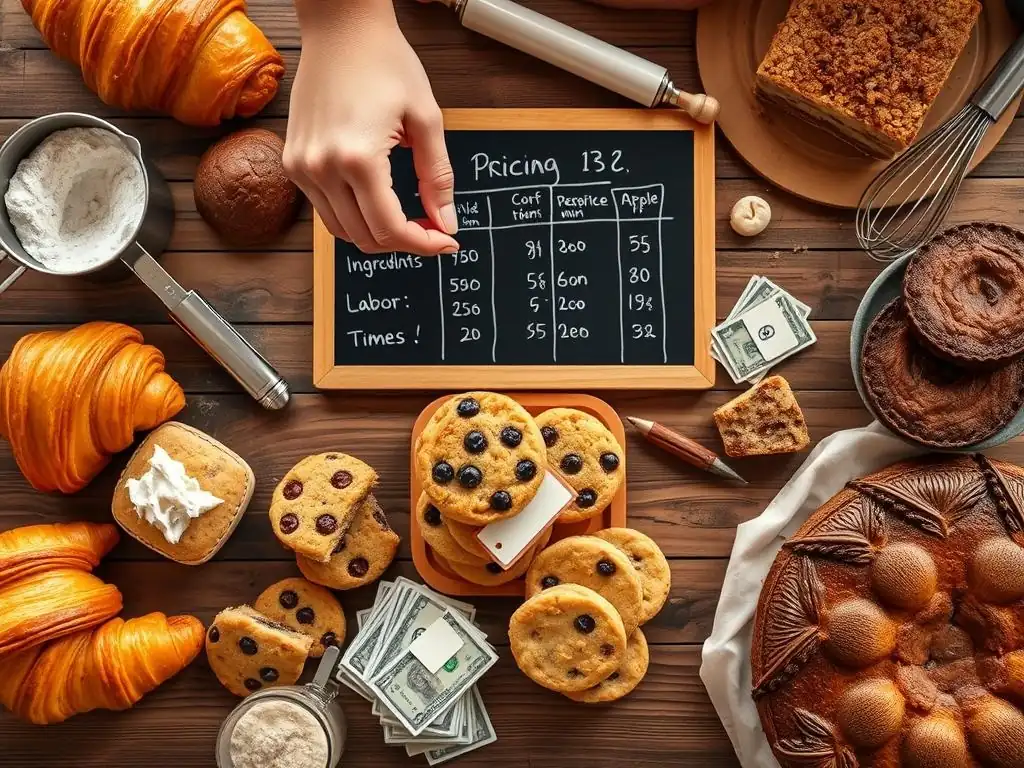
Even with careful planning, it's easy to fall into common pricing traps that can hinder your baked goods profitability. Being aware of these pitfalls is the first step to avoiding them. Many stem from underestimating costs or undervaluing the product and the baker's skill.
Avoiding these mistakes requires discipline, regular review of your financials, and a commitment to valuing your business and your work appropriately. Don't let these common errors derail your path to a successful baking business.
Undervaluing Your Time and Expertise
Perhaps the most common mistake home bakers make is not adequately valuing their own labor and expertise. Your time spent planning, shopping, baking, decorating, packaging, marketing, and managing your business is valuable. It's easy to think "I love doing this, so my time is free," but this mindset prevents you from building a sustainable, profitable business.
Your skills – the ability to create delicious flavors, execute complex decorating techniques, or consistently produce high-quality baked goods – are also valuable and command a premium. Don't price your items based purely on ingredients and a minimal hourly wage. Factor in your skill level and the market value of your expertise. Undervaluing yourself leads to burnout and prevents you from achieving true baked goods profitability.
Focusing only on ingredient costs is a recipe for financial trouble. Hidden costs, or indirect costs, can quickly eat away at your potential profit if not accounted for. These include utilities (the extra electricity for your oven, the water for washing endless dishes), small tools and equipment that need replacing, cleaning supplies, business fees, software subscriptions, and even the cost of samples you give away.
These costs might seem small individually, but they add up. As discussed earlier, allocating a portion of these overhead costs to each item you sell is crucial. Regularly review all your business expenses, not just ingredients, to ensure your pricing strategy covers everything needed for operational baked goods profitability.
Failing to Adapt to Market Changes
The market for baked goods is dynamic. Ingredient prices fluctuate, competitors enter or leave the market, customer preferences change, and economic conditions shift. Setting your prices once and never revisiting them is a mistake. Successful businesses regularly review their pricing strategy and make adjustments as needed.
If the cost of butter or eggs significantly increases, you may need to slightly raise your prices to maintain your profit margin. If a new competitor enters the market with much lower prices, you need to decide if you can compete on price (perhaps by finding more efficient methods) or if you should focus on differentiating your product on quality or uniqueness. Staying aware of market trends and being willing to adapt your pricing baked goods strategy is vital for long-term success and profitability.
Case Studies: Successful Baked Goods Pricing Strategies
Looking at how others have approached pricing can provide valuable insights. While specific numbers vary greatly based on location and business model, these hypothetical examples illustrate how different businesses apply pricing principles to achieve baked goods profitability.
These case studies show that there isn't one single "right" way to price. The best strategy is one that is based on your specific costs, market, and business goals, all aimed at ensuring sustainable baked goods profitability.
Local Bakery: Pricing Strategy for Sourdough Bread
"The Daily Crumb," a small local bakery, specializes in artisanal sourdough bread. Their costs for one loaf (including high-quality flour, starter maintenance, labor, allocated rent, utilities, and packaging) are approximately $3.50. They looked at other local bakeries selling similar quality sourdough, finding prices typically range from $5.50 to $7.00.
Applying a cost-plus approach with a target profit margin of 50% on cost would suggest a price of $3.50 + ($3.50 * 0.50) = $5.25. However, seeing the market supports a higher price, they opted for competitive and value-based pricing. They priced their standard loaf at $6.50, positioning themselves in the upper middle of the market range. This price allows for a profit of $3.00 per loaf ($6.50 - $3.50), representing a healthy 46% profit margin on the selling price, ensuring strong baked goods profitability for their core product.
Custom Cake Business: Pricing for Events
"Sweet Occasions" creates custom cakes for birthdays, weddings, and special events. Their pricing is heavily value-based and detailed, reflecting the significant time and skill involved. They calculate ingredient and basic baking costs (say, $20 for a standard size base cake). Then, they add labor costs based on the complexity of the decoration (e.g., simple buttercream might add 1 hour at $25/hour = $25, while complex fondant work and sugar flowers might add 8 hours at $30/hour = $240). Packaging and consultation time are also factored in, plus a percentage for overhead.
A simple decorated cake might have a total cost of $20 (ingredients) + $25 (labor) + $10 (packaging/overhead) = $55. They aim for a 50-60% profit margin on their custom work due to the specialized nature. Using a 55% margin, the price would be $55 / (1 - 0.55) = $55 / 0.45 = $122.22.
For highly intricate cakes, costs might reach $20 (ingredients) + $240 (labor) + $30 (packaging/overhead) = $290. With the same 55% margin, the price would be $290 / 0.45 = $644.44. Their pricing strategy allows them to cover high labor costs and achieve significant baked goods profitability on unique, high-value creations.
"Cookie Craze," an online shop, sells gourmet cookies nationwide. Their costs per cookie include ingredients ($0.50), individual packaging ($0.20), labor ($0.30), allocated overhead ($0.15), and importantly, allocated shipping material and platform fees ($0.40). Total cost per cookie is $0.50 + $0.20 + $0.30 + $0.15 + $0.40 = $1.55. They sell cookies in packs of 6 or 12.
They price a single cookie at $3.50 (allowing a $1.95 profit before shipping costs are added separately). However, they encourage bulk purchases with a "Baker's Dozen" (13 cookies) priced at $38.00. The cost for 13 cookies is $1.55 * 13 = $20.15.
Selling for $38.00 yields a profit of $17.85 for the pack. While the per-cookie profit in the pack ($17.85 / 13 = $1.37) is lower than buying individually, the bundle increases the total sale value and is attractive to customers, contributing positively to overall baked goods profitability through volume. Their competitive pricing is benchmarked against other online gourmet cookie shops, balancing cost coverage with market appeal.
Conclusion: Bake With Confidence and Price for a Flourishing Business
Pricing your baked goods effectively is a fundamental skill for building a successful and sustainable baking business. It requires understanding your costs inside and out, valuing your time and skill, researching your market, and choosing strategies that align with your business goals. It's not just about covering expenses; it's about ensuring baked goods profitability so you can grow, invest in your passion, and earn a living doing what you love.
By diligently tracking costs, implementing smart pricing strategies, and avoiding common mistakes, you can set prices that are fair to your customers, reflect the quality of your work, and provide a healthy profit margin. Use the tools and resources available to simplify the process and regularly review your pricing as your business and the market evolve. With a solid understanding of pricing baked goods profitability, you can bake with confidence, knowing that your delicious creations are building a flourishing business.
Frequently Asked Questions
How do I determine the cost of ingredients for a single batch of baked goods?
To accurately price your baked goods, track the cost of each ingredient used in a recipe. Then, divide the total cost by the number of servings or items the recipe yields to find the ingredient cost per item.
What other costs besides ingredients should I consider when pricing baked goods?
Beyond ingredients, factor in labor costs, including your time for baking and packaging. Don't forget overhead expenses like utilities, rent (if applicable), and marketing.
How can I calculate my desired profit margin when selling baked goods?
Determine your desired profit margin as a percentage of your total costs. This will ensure you cover expenses and generate a reasonable profit for your efforts and business.
What are some common pricing strategies for baked goods?
Common strategies include cost-plus pricing, where you add a markup to your costs, and competitive pricing, where you match or undercut competitors. Researching local market prices is crucial.
How often should I review and adjust my pricing for baked goods?
Regularly review your pricing, especially when ingredient costs fluctuate. Also, consider adjusting based on seasonal demand and competitor pricing changes to maintain profitability.
Final Reflection: The Sweet Science of Pricing Baked Goods
The art of pricing baked goods isn't just about covering costs; it's about building a sustainable and thriving business. Profitability in the baking industry hinges on a delicate balance between enticing customers with appealing prices and ensuring a healthy return on investment. This article explored the various methods for calculating costs, understanding market value, and ultimately, setting prices that reflect both your skill and the value you provide.
The impact of accurate pricing extends far beyond the immediate transaction. It influences everything from brand perception to long-term growth. Pricing correctly allows bakers to invest in better ingredients, expand their offerings, and ultimately, share their passion with a wider audience. As the old adage goes, A fair price is one that both buyer and seller can accept with satisfaction.
This sentiment resonates deeply with me, highlighting the importance of ethical and sustainable pricing practices within the baking community. It's not just about profit; it's about building trust and fostering a mutually beneficial relationship with your customers.
Now, I challenge you to take what you've learned and apply it to your own baking endeavors. Don't be afraid to experiment, analyze your results, and adjust your pricing strategy as needed. Remember, the journey to pricing perfection is an ongoing process of learning and refinement. Embrace the challenge, trust your instincts, and watch your baking business flourish. The sweet taste of success awaits!
Unlock Your Baking Business's Potential!
Thanks for taking the time to learn how to price your baked goods effectively! You've now got the knowledge to create a profitable and sustainable baking business. Ready to put your newfound skills into action?
- Calculate your ideal pricing: Use the formulas we discussed to determine profitable prices for your most popular items. This is your first step towards baking success!
- Experiment with different pricing strategies: Try offering tiered pricing or bundles to see what resonates best with your customers. Don’t be afraid to try something new!
- Share your pricing journey with the BakeWithEase community: Let us know what pricing strategies you're trying, and what results you’re seeing. We’re always happy to help!
What's the first item you're going to re-price, and what strategy will you use?