
Stop Underselling Your Bakes! Common Pricing Mistakes & How to Fix Them

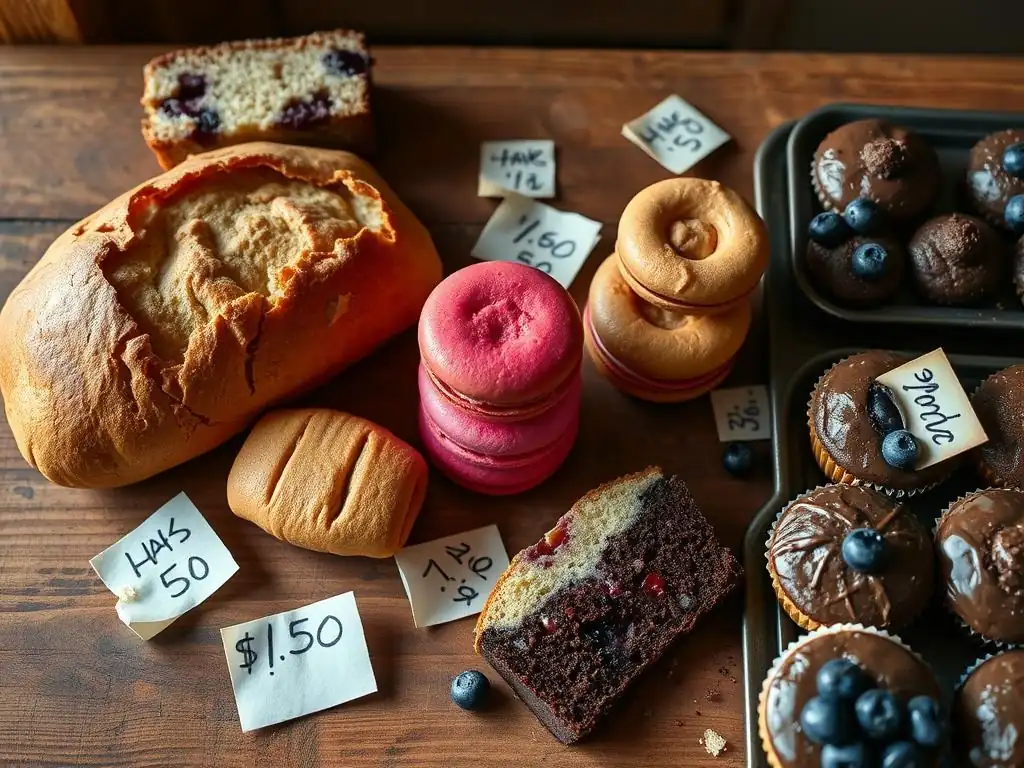
Welcome to BakeWithEase, your partner in crafting delectable delights! Ready to turn your passion for baking into profit? This week, we're tackling a crucial aspect of a home baking business: pricing. Are you making these common baking pricing mistakes? Dive in to discover how to accurately value your creations and ensure your hard work translates into a thriving enterprise. Let's get started!
- Mastering Cake Pricing: Avoiding Common Mistakes & Maximizing Profit
- Introduction: Are You Underpricing Your Cakes?
-
Common Cake Pricing Mistakes Home Bakers Make
- Mistake #1: Neglecting Ingredient Cost Fluctuations
- Mistake #2: Underestimating Intricate Decoration Time
- Mistake #3: Overlooking Equipment Depreciation and Maintenance
- Mistake #4: Ignoring Cake Board and Box Quality
- Mistake #5: Failing to Account for Delivery and Mileage
- Mistake #6: Blindly Matching Competitor Prices Without Factoring in Skill Level
- Mistake #7: Neglecting Price Increases for Inflation and Rising Costs
- How to Fix These Cake Pricing Mistakes: A Practical Guide
- Advanced Cake Pricing Strategies
- Tools & Resources for Precise Cake Pricing
- Conclusion: Price Your Cakes Confidently for Sustained Success
-
Frequently Asked Questions
- What are some common baking pricing mistakes that beginners make?
- How can I accurately calculate the cost of ingredients for my baked goods?
- What's the best way to factor in my time and labor when setting baking prices?
- Besides ingredients and labor, what other costs should I consider when pricing my bakes?
- How can I research competitor pricing without underselling myself?
- Final Reflection: The Sweet Taste of Fair Pricing
- Unlock Your Baking Business's True Potential!
Mastering Cake Pricing: Avoiding Common Mistakes & Maximizing Profit
Introduction: Are You Underpricing Your Cakes?
The Importance of Accurate Cake Pricing
Pricing your baked goods correctly is perhaps the most critical step in turning your home baking hobby into a sustainable business. It's not just about covering costs; it's about valuing your time, skill, and creativity. Undercutting your prices, a common baking pricing mistake beginners make, not only harms your own potential for profit but also devalues the work of other bakers in the community. Setting accurate prices ensures you can reinvest in your business, purchase better ingredients, upgrade equipment, and ultimately, grow your baking venture.
Fair and accurate pricing builds a foundation of sustainability. When you price correctly, you can comfortably afford to replace a worn-out piping tip, invest in a new oven when your old one fails, or even take a business course to refine your skills. It shifts your operation from a costly hobby to a legitimate business that generates income. This allows you to continue doing what you love without constantly worrying about whether you're breaking even or, worse, losing money on each delicious creation you sell.
Why Home Bakers Often Undervalue Their Cake Creations
Many home bakers start by baking for friends and family, often charging minimal amounts or just covering ingredient costs. This informal approach can carry over when they decide to turn it into a business. They might feel awkward charging for their time or believe their skills aren't "professional" enough to warrant higher prices. This leads to significant baking pricing mistakes beginners frequently make, such as not accounting for the hours spent decorating or the cost of utilities used.
Another reason for undervaluing is fear of losing potential customers. New bakers might look at competitors' prices and feel they need to be significantly cheaper to attract business. However, this overlooks the unique value they offer, whether it's a signature flavor, exceptional customer service, or intricate designs. Overcoming this fear and recognizing the true worth of their handcrafted products is essential for moving past common baking pricing mistakes beginners encounter.
Common Cake Pricing Mistakes Home Bakers Make
Mistake #1: Neglecting Ingredient Cost Fluctuations
Ingredient prices are not static. The cost of flour, sugar, butter, eggs, and specialty items like vanilla beans or specific fruits can change significantly due to seasonality, weather conditions, global supply issues, or inflation. A home baker who sets a price based on last year's ingredient costs is likely making a major baking pricing mistake beginners often fall into, potentially eroding their profit margin without even realizing it.
For example, vanilla bean prices have seen dramatic spikes in recent years, sometimes quadrupling in price due to harvests and market demand. Similarly, butter prices can fluctuate based on dairy production cycles. Failing to track these changes means a cake that cost $15 in ingredients to make six months ago might now cost $18 or more, but if the selling price hasn't changed, the profit per cake decreases substantially.
Impact of Seasonal Produce and Specialty Ingredients
Using fresh, seasonal fruit for fillings or decorations can elevate a cake's quality, but the cost of strawberries in winter compared to summer can differ by 50% or more. Specialty items, like imported chocolates, specific nut flours, or high-quality extracts, also have unique pricing structures and volatility. Bakers must account for these variations. If a recipe calls for fresh raspberries, the cost in July will be vastly different from the cost in December.
Incorporating these variable costs requires diligence. A baker might need to slightly adjust prices for seasonal specials or factor in a higher buffer for cakes requiring expensive, non-seasonal ingredients. For instance, a cake design popular year-round but featuring fresh berries might need a price adjustment depending on the season it's ordered, a nuance often missed in baking pricing mistakes beginners make.
Utilizing Online Tools for Real-Time Ingredient Cost Tracking
While complex inventory systems might be overkill for a beginner, simple spreadsheets or even dedicated baking cost calculators available online can help track current ingredient costs. Inputting prices from your latest grocery haul helps maintain a more accurate picture of your true material expenses. Some apps or websites even offer average current market prices for common baking staples, providing a benchmark.
Keeping a running list of what you pay per unit (e.g., cost per pound of flour, cost per dozen eggs) and updating it regularly, perhaps monthly or quarterly, is vital. This practice helps you identify trends and react to rising costs before they significantly impact your profitability. It's a simple yet effective way to avoid a classic baking pricing mistake beginners make: assuming ingredient costs remain constant.
Mistake #2: Underestimating Intricate Decoration Time
Decorating a cake, especially custom designs, is incredibly time-consuming. From sculpting fondant figures to piping elaborate buttercream patterns or creating delicate sugar flowers, the hours can add up quickly. Many home bakers charge primarily based on cake size and basic flavor, failing to adequately price for the labor involved in complex decoration. This is a prime example of the baking pricing mistakes beginners make by not valuing their skilled labor appropriately.
Consider a simple 8-inch round cake versus the same size cake requiring a multi-character fondant scene. The ingredients for both might be similar, but the decoration time could differ by 5-10 hours or more. If you charge the same base price, you are essentially working for free during those extra decoration hours. This not only reduces your hourly wage significantly but can lead to burnout.
Valuing Time Spent on Sculpting and Detailed Work
It's crucial to track the actual time spent on different decoration elements. Use a timer when working on intricate details like hand-painting, detailed piping, or complex sculpting. A sculpted character might take 2-3 hours, while a full covering of smooth fondant and sharp edges could take another 1-2 hours, plus time for any additional embellishments. These are labor costs that must be recouped.
Think of your time as an hourly wage. Even if you're just starting, assign a reasonable value to your time, perhaps minimum wage or slightly higher to reflect your developing skill. If a cake takes 5 hours of decoration time and you value your time at $15/hour, that's $75 in labor costs just for decoration that needs to be added to the base price calculated from ingredients and baking time. Overlooking this is a classic baking pricing mistake beginners must learn to avoid.
Implementing a Decoration Tier System for Pricing
A practical way to address decoration costs is to create a tiered pricing system. Offer a base price for simply frosted cakes, a mid-tier price for cakes with moderate decoration (e.g., basic piping, a simple message), and a premium tier for complex designs involving sculpting, intricate sugar work, or extensive detail. This allows clients to understand that complexity adds cost and helps you price more accurately.
For example, you might have a "Classic" tier (simple frosting), a "Signature" tier (basic design elements), and a "Couture" tier (highly detailed, custom work). Provide examples for each tier. This transparency also helps manage client expectations regarding cost based on their desired design complexity, preventing surprises and ensuring you are compensated for your artistic effort.
Mistake #3: Overlooking Equipment Depreciation and Maintenance
Baking requires significant investment in equipment: ovens, stand mixers, countless pans, tools, and smallwares. These items wear out over time, require maintenance, and eventually need replacement. A common baking pricing mistake beginners make is failing to factor these costs into their pricing, assuming the initial purchase cost is the only consideration.
Think about your stand mixer. A quality mixer can cost $300-$600 or more. While it lasts for years, heavy use puts strain on the motor and parts. Over five years of consistent use, you might need repairs or even a full replacement. That's an average cost of $60-$120 per year, or $5-$10 per month, that needs to be spread across the cakes you sell.
Accounting for Oven, Mixer, and Tool Wear and Tear
Every time you use your oven, mixer, or even your spatulas and whisks, you contribute to their wear and tear. Ovens need cleaning and eventually elements or thermostats replaced. Mixers need lubrication or gear repairs. Pans warp, and tools break or get lost. These aren't one-time costs; they are ongoing operational expenses.
A simple way to account for this is to estimate the lifespan and cost of your major equipment and allocate a small percentage to each cake. If your total major equipment is worth $2000 and you estimate a 5-year lifespan with regular use, that's $400 per year, or roughly $33 per month, that needs to be earned back through sales. For smaller tools, a general overhead percentage can cover their eventual replacement.
Allocating a Percentage for Equipment Replacement Fund
Consider setting aside a small percentage of each cake's price specifically for equipment maintenance and eventual replacement. This could be a fixed amount, say $2-$5 per cake, or a percentage of the total cost. This "sinking fund" prevents a crisis when a major piece of equipment fails unexpectedly.
For example, if you sell 10 cakes a month and allocate $3 per cake for equipment, you're setting aside $30 monthly. Over a year, that's $360, which can cover minor repairs or contribute significantly towards a new oven or mixer when needed. This proactive approach helps avoid the financial shock that comes from unexpected equipment failure and is a crucial step in overcoming baking pricing mistakes beginners often make by not planning for the long term.
Mistake #4: Ignoring Cake Board and Box Quality
The presentation of a cake is almost as important as the taste. A beautiful cake on a flimsy board or in a cheap, ill-fitting box can detract from the overall perceived value. High-quality cake boards, sturdy boxes, and appropriate internal supports (like dowels or central supports for tiered cakes) cost money, and this cost is often overlooked in baking pricing mistakes beginners make.
A sturdy cake box for a 10-inch cake can cost $3-$5 or more, depending on the supplier and material. A thick, grease-resistant cake board might be another $1-$3. While these seem like small amounts individually, they add up quickly, especially for multiple orders per week. Failing to include these specific packaging costs means you're absorbing them yourself.
The Role of Presentation in Client Satisfaction
Clients expect their custom cake to not only look amazing when they pick it up but also travel safely and be easy to display. A wobbly cake on a thin board or a box that threatens to tear communicates a lack of professionalism, regardless of how delicious the cake is. Investing in quality packaging protects your product and reinforces the high quality of your work, justifying your pricing.
Consider the client's experience from receiving the cake to serving it. Is the box easy to carry? Is the cake secure inside? Does the board provide stable support? Positive answers to these questions contribute to client satisfaction and repeat business. Skimping on packaging is a baking pricing mistake beginners make that can negatively impact their reputation.
Sourcing Cost-Effective and Sturdy Packaging Options
While you shouldn't compromise on quality, you can source packaging materials smartly. Buying in bulk from restaurant supply stores or online wholesale suppliers often reduces the per-unit cost compared to purchasing from local craft stores. Look for sales or discounts on commonly used sizes of boxes and boards.
Keep a list of reliable suppliers and compare prices periodically. While a single box might cost $4, buying a pack of 20 might bring the per-box cost down to $2.50. Factoring this bulk cost into your pricing is more accurate than pricing based on single purchases. Always include the specific cost of the board and box required for each cake size in your pricing calculation.
Mistake #5: Failing to Account for Delivery and Mileage

Offering delivery is a convenience many clients appreciate, but it comes with real costs: fuel, vehicle wear and tear, and, critically, your time. Many home bakers offering delivery make a baking pricing mistake beginners often commit by charging a flat, minimal fee or only covering gas, completely neglecting the value of their time stuck in traffic or the depreciation on their vehicle.
A 30-minute drive to deliver a cake means an hour round trip. If you value your time at $15/hour, that's $15 in labor cost before you even factor in gas or wear and tear. A $5 delivery fee doesn't come close to covering this, especially if the distance is significant.
Calculating Fuel Costs and Travel Time
Track your mileage for deliveries. You can use a mileage tracking app or simply record the start and end odometer readings. Multiply the miles driven by the standard mileage rate recommended by your country's tax authority (e.g., the IRS rate in the US, which accounts for gas, maintenance, and depreciation) to get a more accurate cost per mile. Add this to your estimated travel time cost based on your hourly rate.
For example, if a delivery is 20 miles round trip, and the standard mileage rate is $0.65/mile, the vehicle cost is $13. If the drive takes 45 minutes (including loading/unloading), and your time is worth $20/hour, the time cost is $15. The total delivery cost is $28, not just the $5 worth of gas used. This detailed calculation prevents a common baking pricing mistake beginners make by underestimating delivery expenses.
Offering Tiered Delivery Options Based on Distance
To price delivery fairly for both you and the client, offer tiered delivery fees based on distance or travel time from your location. For instance:
- Zone 1 (within 5 miles): Flat fee, e.g., $10
- Zone 2 (5-15 miles): Higher flat fee, e.g., $20
- Zone 3 (15-30 miles): Calculated fee or premium flat rate, e.g., $30-$40
Clearly communicate these zones and fees to clients. This prevents you from losing money on deliveries and allows clients to choose if the convenience is worth the cost. It's a much more sustainable approach than guessing or charging a nominal fee, which is a classic baking pricing mistake beginners should actively avoid.
Mistake #6: Blindly Matching Competitor Prices Without Factoring in Skill Level
It's important to research what other bakers in your area charge, but simply setting your prices to match the lowest competitor is a significant baking pricing mistake beginners make. Your skill level, unique recipes, quality of ingredients, level of customer service, and design capabilities are all factors that influence the value you provide, and therefore, your pricing.
If a competitor charges $150 for a basic 8-inch cake, but you use premium organic ingredients, offer five unique filling options, and spend extra time ensuring flawless finish work, your cake is not equivalent to theirs, and your price shouldn't be either. Undercutting based solely on price ignores the superior product or service you might be offering.
Differentiating Your Cakes Through Unique Designs and Flavors
Identify what makes your cakes special. Do you specialize in complex sugar flowers? Are your flavors unique and gourmet? Do you offer vegan or gluten-free options that are hard to find? These differentiators justify a higher price point. Clients seeking these specific qualities are often willing to pay a premium.
Highlight your unique selling propositions. Use high-quality photos of your unique designs. Share testimonials about your delicious flavors. Position yourself not as the cheapest option, but as the best value for specific needs or desires. This marketing approach supports charging prices that reflect your skill and unique offerings, helping avoid the baking pricing mistakes beginners make by solely focusing on being the cheapest.
Highlighting Expertise and Specialized Techniques in Marketing
Don't be shy about showcasing your skills. If you've mastered techniques like mirror glaze, intricate piping, or realistic fondant sculpting, mention it. Explain why these techniques require significant skill and time. This educates clients on the complexity involved and justifies the cost.
For example, you might explain that a specific floral design involves hours of hand-shaping and dusting individual petals. Or that achieving a flawless sharp edge on buttercream requires specific techniques and practice. This transparency adds value and reinforces that your prices reflect specialized skills, a key strategy to counteract the baking pricing mistakes beginners make when they lack confidence in their value.
Mistake #7: Neglecting Price Increases for Inflation and Rising Costs
The cost of doing business increases over time. Ingredients become more expensive, utility rates rise, packaging costs fluctuate, and even the value of your time increases as you gain experience. Failing to periodically review and adjust your prices to keep pace with these rising costs is a critical baking pricing mistake beginners (and even experienced bakers) can make, leading to shrinking profit margins over time.
If your ingredient costs have gone up by 10% over a year, and you haven't increased your prices, that 10% comes directly out of your profit. Similarly, if you haven't increased your prices in several years, your effective hourly wage is likely decreasing due to inflation.
Regularly Evaluating and Adjusting Prices to Maintain Profitability
Plan to review your pricing at least once a year, perhaps at the beginning of your business year. Analyze your costs again: ingredients (using current prices), labor (consider if your hourly rate should increase with experience), overhead (utilities, insurance, etc. ), and packaging. Compare your current prices to your updated costs and desired profit margin.
It might be necessary to implement small, incremental price increases rather than large, infrequent jumps. A 5-10% increase annually or biennially is often easier for clients to accept than a sudden 25% hike after several years. Regular review is key to ensuring your prices remain profitable and sustainable.
Communicating Price Changes to Clients Transparently
When you do need to increase prices, communicate this clearly and professionally to your clients, especially repeat customers. You don't need to apologize, but a simple notice can be helpful. For example, you could update your pricing guide on your website or social media and mention that prices will be adjusted effective a certain date to reflect rising ingredient costs and the continued quality of your work.
For ongoing orders or quotes already provided, honor the original price for a reasonable period (e.g., 30-60 days). Transparency builds trust. Explain that these adjustments allow you to continue using high-quality ingredients and provide the level of service they expect. This open approach helps retain customers while ensuring you aren't making the baking pricing mistake beginners often do by letting rising costs eat away at their earnings.
How to Fix These Cake Pricing Mistakes: A Practical Guide
Step 1: Comprehensive Cost Analysis (Ingredients, Labor, Overhead, Packaging, Delivery)
The first and most crucial step to fixing any baking pricing mistakes beginners make is to understand ALL your costs. This goes beyond just flour and sugar. You need to track every expense associated with baking and selling a cake.
Break down costs for a typical cake size you sell frequently. Calculate the exact cost of every ingredient that goes into that cake. Then, estimate the time spent on baking, cooling, filling, frosting, and decorating, assigning a value to your time. Factor in a portion of your monthly overhead (utilities, insurance, internet, etc.) allocated per cake. Add the specific costs for the board and box, and if applicable, the calculated delivery cost.
Creating a Detailed Spreadsheet for Accurate Cost Management
Using a spreadsheet (like Excel or Google Sheets) is highly recommended for this step. Create columns for:
- Ingredient Name
- Unit of Measure (lb, cup, egg, etc.)
- Cost per Unit
- Quantity Used in Recipe
- Cost per Recipe Item (Cost per Unit * Quantity Used)
- Total Ingredient Cost
- Estimated Baking/Cooling Time (hours)
- Estimated Decorating Time (hours)
- Your Hourly Rate
- Total Labor Cost (Total Time * Hourly Rate)
- Packaging Cost (Board + Box)
- Delivery Cost (if applicable)
- Overhead Allocation per Cake
Summing these up gives you your total cost for that specific cake. This detailed approach illuminates where your money is going and is fundamental to correcting baking pricing mistakes beginners often make by only guessing at costs.
Step 2: Establishing a Clear Profit Margin Goal
Once you know your costs, you need to decide how much profit you want to make on top of those costs. This isn't just extra money; it's your income, funds for reinvesting in the business, and compensation for the risk you take as a business owner. Not setting a profit goal is a major baking pricing mistake beginners make, often leading them to charge just enough to cover costs, effectively working for free.
Profit margins in the custom cake industry can vary widely depending on location, market, and complexity, but aiming for a margin of 30-50% on top of your total costs is a common benchmark. This means if a cake costs you $50 to make (ingredients, labor, overhead, etc. ), you would aim to sell it for $65-$75.
Researching Industry Standard Profit Margins for Custom Cakes
Look for information online or connect with other home bakers (perhaps in local or online forums) to understand typical profit margins in your specific market area. Pricing in a high-cost-of-living urban area will differ significantly from a rural setting. While 30-50% is a general guide, your specific goal might be slightly higher or lower based on your local market conditions and business model.
Remember that profit margin isn't just income; it covers unexpected costs, allows for business growth, and provides a buffer during slower periods. Setting a realistic but ambitious profit goal is essential for a sustainable business.
Determining a Profit Margin that Reflects Your Skill and Effort
Your profit margin should also reflect your unique value proposition. If your cakes are known for exceptional quality, intricate detail, or rare flavors, you can likely command a higher profit margin than someone offering simpler designs with standard ingredients. Don't be afraid to price for the skill and effort you put in – this is where you move beyond being just a hobbyist.
Consider what you want to earn for your time and expertise. If a 30% profit margin on a complex cake results in an effective hourly wage below minimum wage, your profit margin (or your base pricing) might be too low. Adjust until your desired profit margin combined with your labor cost results in a fair compensation for your time.
Step 3: Calculating Your Base Cake Price
With your total costs and desired profit margin determined, you can now calculate your selling price. This is where all the previous steps come together to overcome the common baking pricing mistakes beginners face.
The basic formula is straightforward:
Total Costs + Desired Profit = Selling Price
Or, if you prefer to calculate profit as a percentage of costs:
Selling Price = Total Costs * (1 + Desired Profit Margin Percentage)
For example, if a cake's total cost (ingredients, labor, overhead, packaging, delivery) is $60, and you want a 40% profit margin:
Selling Price = $60 * (1 + 0.40)
Selling Price = $60 * 1.40
Selling Price = $84
This $84 would be your minimum price for that specific cake size and complexity level.
The Formula: Total Costs + Desired Profit = Base Cake Price
Let's break down the formula components:
- Total Costs: This is the sum calculated in Step 1 (Ingredients + Labor + Overhead Allocation + Packaging + Delivery).
- Desired Profit: This can be a fixed dollar amount you want to make per cake, or more commonly, a percentage of your total costs.
- Base Cake Price: This is the minimum price you need to charge to cover all your expenses and achieve your desired profit on a specific cake.
Using this formula consistently for every cake ensures you are covering all your costs and making a profit, systematically addressing the baking pricing mistakes beginners make by undercharging.
Step 4: Assessing Client Preferences and Perceived Value

While your cost analysis gives you a solid base price, it's also important to consider what your target clients are willing to pay and what they perceive as valuable. Market research plays a role here. Are you targeting budget-conscious clients or those looking for high-end, custom creations?
Your pricing should align with the market segment you serve. If your calculated price for a basic cake is significantly higher than what most clients in your area expect for that type of cake, you might need to re-evaluate your costs (are you using excessively expensive ingredients?) or consider if you are targeting the right clientele for your quality level.
Tailoring Cake Designs to Client Budgets and Expectations
Offer options that cater to different budgets. Not every client needs or can afford a multi-tiered cake with intricate sugar work. Have simpler design options available at lower price points. This allows you to serve a broader range of customers while still pricing each option profitably based on its specific costs and labor.
Be upfront during consultations about how design complexity impacts price. Show examples from your decoration tiers (as discussed in Mistake #2) to illustrate the cost differences. This helps manage client expectations and guides them towards designs that fit their budget, preventing sticker shock and potential lost sales.
Offering Various Cake Sizes and Complexity Levels
Provide a clear menu of cake sizes and starting prices for different complexity levels. For example:
- 6-inch (serves 8-12): Basic frosting starting at $XX, Signature design starting at $YY, Couture design starting at $ZZ.
- 8-inch (serves 15-20): Basic frosting starting at $AA, Signature design starting at $BB, Couture design starting at $CC.
This makes it easy for clients to get an initial idea of cost and helps you streamline your quoting process. Each size and complexity level should have its own cost calculation based on the formula in Step 3, ensuring consistent profitability across your offerings.
Step 5: Regularly Evaluating and Refining Your Pricing Strategy
Pricing isn't a one-time task. It's an ongoing process. As your business grows, your skills improve, your costs change, and the market evolves, your pricing strategy needs to adapt. Failing to revisit your pricing is another baking pricing mistake beginners can make that limits their long-term growth.
Set a schedule to review your pricing, perhaps every 6-12 months. Look back at your sales records, track your expenses diligently, and gather feedback from clients. Are certain types of cakes significantly more profitable than others? Are your costs for specific ingredients rising faster than anticipated?
Tracking Expenses and Revenue to Identify Areas for Improvement
Maintain good financial records. Use accounting software, a spreadsheet, or even a simple notebook to track every dollar spent and earned. Categorize your expenses (ingredients, packaging, utilities, marketing, etc.). This data is invaluable for understanding your business's financial health.
Analyzing your records can reveal insights. You might discover that your delivery costs are higher than expected, prompting you to adjust your delivery fees or optimize routes. Or you might find that your most complex cakes, while visually impressive, aren't as profitable as simpler designs due to underestimated labor time. This data-driven approach helps you make informed pricing decisions.
Adapting to Market Trends and Client Feedback
Stay aware of what's happening in the baking market, both locally and online. Are new trends emerging that require investment in new tools or ingredients? Are your competitors adjusting their prices? Also, listen to your clients. Are they consistently commenting on your prices (either positively or negatively)?
Client feedback, while not the sole determinant of price, can provide valuable insights into perceived value. If multiple clients mention your prices are surprisingly low for the quality, it's a strong indicator that you should consider an increase. Conversely, if you consistently lose potential clients after quoting, your prices might be too high for your current market position, or you may need to better communicate the value you offer.
Advanced Cake Pricing Strategies
Once you've mastered the basics and built a reputation for exceptional quality and intricate work, you can explore premium pricing. This strategy involves positioning yourself as a high-end provider and charging significantly more than average, focusing on exclusivity, bespoke designs, and unparalleled quality.
This works best when you specialize in highly complex techniques (like hyper-realistic sculpting or elaborate sugar artistry) or cater to specific luxury niches (e.g., high-profile events, celebrity clients). Your marketing should emphasize artistry, customization, and the exclusive experience of ordering a cake from you. Clients paying premium prices expect flawless execution, personalized service, and a truly unique centerpiece.
Tiered Pricing: Offering Different Cake Styles at Varying Price Points
As discussed earlier, tiered pricing (e.g., Classic, Signature, Couture) is a practical strategy even for beginners, but it can be refined as you grow. Develop clear criteria for each tier based on complexity, materials used (e.g., fondant vs. buttercream finish), and time involved.
This allows you to serve clients with different budgets while ensuring profitability at every level. It also helps manage expectations; clients choosing a "Classic" tier understand it will be simpler than a "Couture" design. Clearly defined tiers simplify the quoting process and help potential clients quickly identify options within their budget.
Bundle Pricing: Combining Cakes with Cupcakes or Other Treats
Consider offering package deals that bundle a main cake with complementary treats like cupcakes, cookies, or cake pops. This can increase the total order value and appeal to clients looking for a dessert table centerpiece plus individual servings.
When creating bundles, calculate the cost of each item individually and then offer a slight discount for purchasing them together. Ensure the bundled price is still profitable and simplifies the ordering process for the client. For example, a small cutting cake plus two dozen matching cupcakes might be offered at a bundled price that is slightly less than ordering them separately, providing perceived value to the client.
Tools & Resources for Precise Cake Pricing
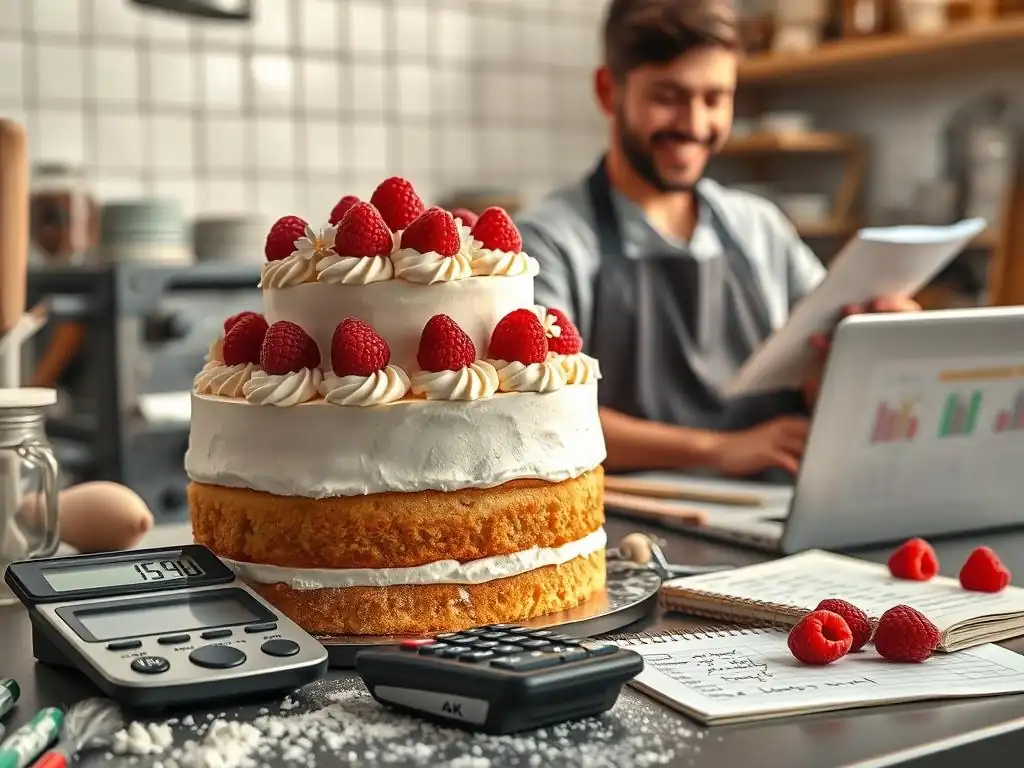
Keeping track of costs and calculating prices can feel daunting, but several tools can help simplify the process and avoid baking pricing mistakes beginners often make.
Cake Pricing Calculators: [Link to Online Cake Pricing Tool]
Numerous online cake pricing calculators are available. These tools typically allow you to input ingredient costs, your hourly rate, desired profit margin, and estimated time for baking and decorating. They then provide a suggested selling price. While they are a great starting point, remember to customize the inputs based on your actual costs and local market conditions.
Spreadsheet Templates for Cost Management: [Link to Downloadable Cake Costing Template]
Using a dedicated spreadsheet template can help you systematically track costs for each cake. These templates often include sections for ingredients, labor, overhead, and packaging. Many free or low-cost templates are available online, specifically designed for home bakers. Using such a template ensures you don't overlook hidden costs and provides a clear breakdown of where your money is going.
Conclusion: Price Your Cakes Confidently for Sustained Success
Embracing Fair Pricing: A Foundation for a Thriving Cake Business
Moving past the common baking pricing mistakes beginners make is fundamental to building a successful and sustainable home baking business. Accurate and fair pricing isn't about being greedy; it's about valuing your skill, time, and the quality ingredients you use. When you price correctly, you ensure your business is profitable, allowing you to continue doing what you love without financial strain.
Embracing fair pricing also respects the work of fellow bakers and contributes to a healthy market. It allows you to attract clients who value quality and are willing to pay for the expertise and effort that goes into a custom cake.
Building Long-Term Client Relationships Through Value and Transparency
Pricing your cakes confidently based on their true value helps you build strong, long-term relationships with clients. When clients understand how your prices reflect the quality of ingredients, the artistry of your designs, and your dedicated service, they are more likely to trust you and become repeat customers.
Be transparent about what influences your pricing – the custom design work, the premium ingredients, the labor involved. Educate your clients on the difference between a mass-produced cake and a handcrafted custom creation. By delivering exceptional value that aligns with your price, you build a reputation for quality and reliability, setting the stage for sustained success in your home baking business.
Frequently Asked Questions
What are some common baking pricing mistakes that beginners make?
Beginners often underestimate the cost of ingredients and fail to factor in their time and labor. They may also forget to include overhead costs like utilities.
How can I accurately calculate the cost of ingredients for my baked goods?
Keep a detailed record of ingredient purchases and the amount used in each recipe. Divide the total cost by the yield to determine the cost per unit.
What's the best way to factor in my time and labor when setting baking prices?
Determine a reasonable hourly rate for your work. Track the time spent on each baking project and multiply by your hourly rate to calculate labor costs.
Besides ingredients and labor, what other costs should I consider when pricing my bakes?
Don't forget overhead costs such as electricity, gas, water, and packaging. Include the cost of marketing and advertising if applicable.
How can I research competitor pricing without underselling myself?
Browse local bakeries and online shops to see what others are charging for similar items. Use this information to establish a competitive, but profitable price for your own bakes.
Final Reflection: The Sweet Taste of Fair Pricing
The art of baking isn't just about creating delicious treats; it's also a business, and understanding pricing is crucial for success. Ignoring the financial side of your passion can lead to burnout and ultimately, prevent you from sharing your talent with the world. Many aspiring bakers undervalue their skills and hard work, leaving money on the table and hindering their growth.
This journey of learning to price your bakes correctly isn't just about the numbers; it's about recognizing the value of your time, creativity, and the quality ingredients you use. It's about respecting your craft and ensuring you're compensated fairly for your efforts. As the saying goes, If you don't value your time, neither will others.
This resonates deeply, as I've seen firsthand how underpricing can lead to frustration and a feeling of being undervalued. The shift in perspective, from hobby baker to small business owner, is a powerful one that requires a clear understanding of pricing strategies.
Now, it's your turn. Take a moment to reflect on your own pricing practices. Are you accurately accounting for all your costs? Are you confident in the value you're offering? Don't be afraid to adjust your prices to reflect your skills and the quality of your work. Embrace the power of fair pricing – it's not just about making money; it's about sustaining your passion and ensuring your baking journey is both fulfilling and financially viable. Let's bake a brighter future, together.
Unlock Your Baking Business's True Potential!
Thanks for taking the time to learn how to price your delicious creations! We hope you now feel confident in setting prices that reflect your skills and ingredients. Ready to take the next step?
- Calculate your ideal pricing: Use the formulas and tips from the article to recalculate the prices of your most popular items. This is the single most impactful action you can take today!
- Share your updated price list: Let your loyal customers know about your new pricing strategy—they'll appreciate your transparency! Consider a fun social media post.
- Explore new premium offerings: Think about adding a few higher-priced, luxury items to your menu based on the insights you gained.
What’s one small change you’ll make to your pricing strategy based on what you learned today?