
The Sweet Spot: Finding the Perfect Price for Maximum Profit

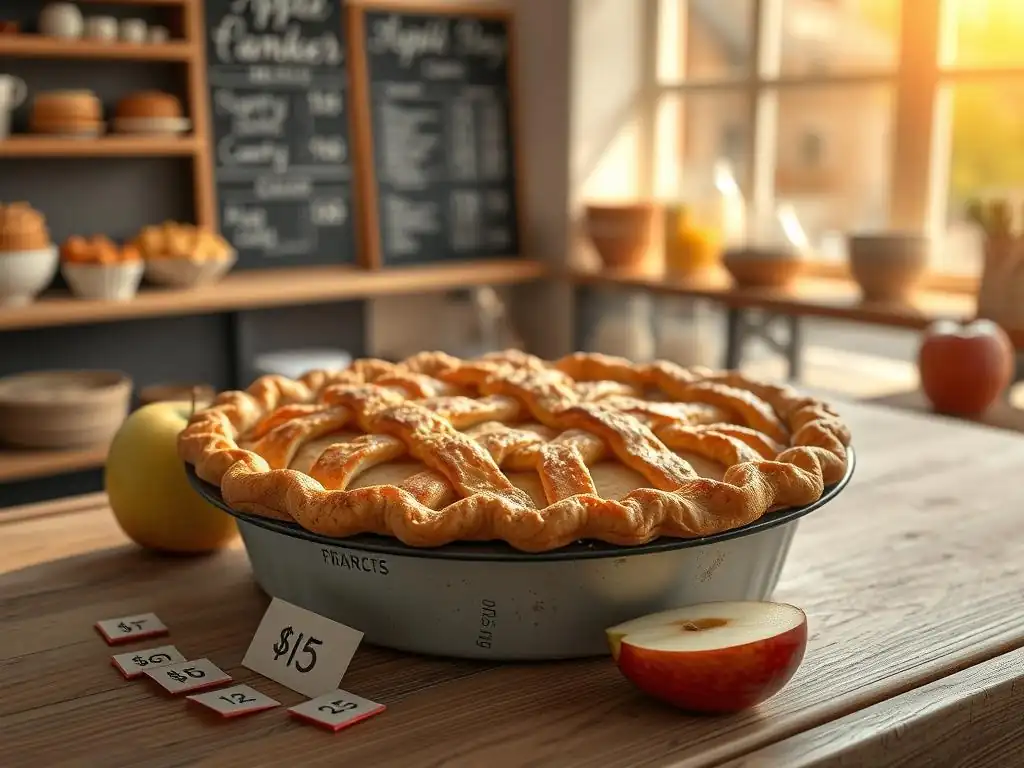
Welcome to BakeWithEase, your recipe for baking success! Are you dreaming of turning your passion into profit? The secret isn't just delicious treats, but understanding your baking business profit margins. Dive in to uncover strategies for pricing your creations perfectly, maximizing your earnings, and building a thriving home baking empire. Let's unlock the sweet spot together!
- Introduction: Maximizing Baking Business Profit Margins at BakeWithEase
- Understanding Your Costs: A Baker's Foundation for Profitable Pricing
- Determining Your Desired Baking Business Profit Margin
- Pricing Strategies for Baked Goods: Finding the Sweet Spot
- Pricing Examples: From Cakes to Cookies
- The Importance of Market Research in Baking Business Pricing
- Adjusting Your Prices Over Time: Staying Competitive and Profitable
- Tools and Resources for Pricing Your Baked Goods
- Conclusion: Achieving Sustainable Baking Business Profitability
-
Frequently Asked Questions
- How do I calculate the true cost of my baked goods for my baking business?
- What are some common pricing strategies for maximizing baking business profit margins?
- How can I determine the "sweet spot" – the ideal price point that maximizes profit – for my baked goods?
- What role does perceived value play in pricing baked goods, and how can I increase it?
- What are some strategies for managing and improving baking business profit margins without raising prices?
- Final Reflection: The Enduring Power of Price in Baking Success
- Unlock Your Baking Business's Profit Potential!
Introduction: Maximizing Baking Business Profit Margins at BakeWithEase
Starting a home baking business is a delicious adventure, but turning your passion into a profitable venture requires more than just great recipes. One of the most critical factors for long-term success is mastering your pricing strategy. Setting the right price for your cakes, cookies, breads, and pastries isn't just about covering costs; it's about finding that sweet spot that attracts customers while ensuring healthy baking business profit margins.
At BakeWithEase, we understand the unique challenges home bakers face. You pour your heart, time, and quality ingredients into every creation. This article will guide you through the essential steps to accurately calculate your costs, determine your desired profit, and explore various pricing strategies to optimize your baking business profit margins, helping you bake smarter, not just harder.
Understanding Your Costs: A Baker's Foundation for Profitable Pricing
Before you can even think about setting a price, you need a crystal-clear understanding of how much it truly costs you to produce each item. This involves meticulously tracking all expenses associated with your baking. Ignoring even small costs can significantly erode your potential baking business profit margins over time.
Breaking down your costs into categories like ingredients, overhead, and labor provides a solid foundation for making informed pricing decisions. This detailed approach ensures that every sale contributes positively to your overall baking business profit margins, rather than just covering expenses or, worse, costing you money.
Calculating Ingredient Costs for Baked Goods
Calculating ingredient costs accurately is fundamental. You need to know the cost per unit (e.g., per gram, per ounce, per egg) for every ingredient you use. This means tracking the price of bulk purchases and dividing by the usable quantity. For example, if a 5lb bag of flour costs $3.00 and contains approximately 2268 grams, the cost per gram is roughly $0.0013. Then, if a cookie recipe uses 100 grams of flour, that's about $0.13 in flour cost for that recipe.
Once you have the cost per unit for all ingredients, calculate the total ingredient cost for a single batch of a specific baked good. Divide this batch cost by the number of finished items the batch yields to get the ingredient cost per item. For instance, if a cake recipe costs $8.00 in ingredients and yields one cake, the ingredient cost is $8.00 per cake. If a cookie recipe costs $5.00 and yields 24 cookies, the ingredient cost is about $0.21 per cookie. Keep a spreadsheet or log to track these costs, as they fluctuate.
Factoring in Overhead: Rent, Utilities, and Other Baking Expenses
Overhead costs are the indirect expenses necessary to run your baking business, even if they aren't directly tied to a single batch. These include things like electricity and gas for your oven, water, insurance for your business, packaging materials (boxes, bags, labels), marketing expenses, website fees, software subscriptions, and potentially a portion of your home's rent or mortgage if you use dedicated space.
To factor these into your pricing, you need to estimate your total monthly overhead. Then, you can allocate this cost across the items you sell. A common method is to divide the total monthly overhead by the number of items you expect to sell in a month, or by the total number of production hours.
For example, if your monthly overhead is $300 and you bake for 120 hours a month, your overhead cost per hour is $2.50. If a cake takes 2 hours to bake and decorate, you'd add $5.00 in overhead cost to that cake's price calculation. This ensures your baking business profit margins account for these necessary operating expenses.
Don't Forget Your Time: Valuing Your Labor in the Baking Business
Your time is valuable, and it absolutely must be included in your cost calculations if you want realistic baking business profit margins. Many home bakers undervalue their own labor, which is a critical mistake that leads to underpricing and unsustainable businesses. Think about the time spent on planning, shopping for ingredients, mixing, baking, decorating, packaging, and even cleaning up.
Decide on a reasonable hourly wage for yourself. Research typical wages for bakers or skilled artisans in your area. Even starting at a modest rate, say $15-$20 per hour, makes a significant difference. Track the time it takes to produce a specific item or batch.
If a batch of cookies takes you 45 minutes from start to finish (including prep and cleanup) and you value your time at $20/hour ($0.33/minute), the labor cost for that batch is $15.00. If the batch yields 24 cookies, that's $0.63 per cookie in labor cost. Adding this labor cost is crucial for achieving healthy baking business profit margins.
Determining Your Desired Baking Business Profit Margin

Once you understand your total costs (ingredients + overhead allocation + labor), you can determine the price needed to achieve your desired baking business profit margin. Profit margin is the percentage of revenue that remains after all costs are accounted for. It's the money you take home or reinvest in your business.
Setting a target profit margin helps guide your pricing and ensures your business is financially viable. It's not just about making enough to cover costs; it's about building a sustainable income and allowing your business to grow.
What is a Good Profit Margin for a Home Baking Business?
"Good" profit margins vary widely depending on the type of product, location, target market, and efficiency of the business. However, for many small food businesses, including home bakeries, aiming for a gross profit margin (before taxes and some operating expenses) of 40-60% is often cited as a healthy range. Net profit margins (after all expenses, including taxes and owner's draw) are typically lower, perhaps 10-20% or more for a well-run business.
For a home baking business, a common target for your baking business profit margins on individual items might be around 30-50% on top of your total cost per item (ingredients + labor + overhead). For example, if a cake costs you $20 to make (all-in), a 40% profit margin would mean adding $8 in profit, selling it for $28. However, this is just a starting point. Highly specialized or custom items might command higher margins, while high-volume, simple items might have slightly lower percentage margins but contribute significantly to overall profit.
Setting Realistic Profit Goals for Your Baked Goods
Setting realistic profit goals involves considering your market and your business goals. Are you aiming for a full-time income, or is this a side hustle? What are customers in your area willing to pay for similar quality goods? While you might desire a 70% profit margin, the market might not support the resulting price.
Start by calculating your total cost per item as detailed above. Then, research prices of comparable baked goods from other local bakeries or home-based competitors. Use this information, along with your cost, to set a preliminary price. Calculate the profit margin this price yields: [(Price - Total Cost) / Price] * 100%. Compare this to your desired margin. If it's too low, can you reduce costs (e.g., bulk buying ingredients, improving efficiency)? If costs are optimized, you might need to adjust your desired margin or find ways to increase the perceived value of your product to justify a higher price and better baking business profit margins.
Pricing Strategies for Baked Goods: Finding the Sweet Spot
Finding the perfect price involves more than just calculating costs and adding a desired profit percentage. Various pricing strategies can help you position your products in the market, appeal to different customer segments, and ultimately influence your baking business profit margins. Choosing the right strategy, or a combination, is key.
Consider your brand, your target audience, and your competitive landscape when selecting a strategy. A high-end custom cake business might use a different approach than a baker selling cookies at local farmers' markets. The goal is to align your pricing with your overall business model and maximize your baking business profit margins sustainably.
Cost-Plus Pricing: A Simple Method for Bakers
Cost-plus pricing is perhaps the most straightforward strategy, especially for beginners. It involves calculating your total cost per item (ingredients + labor + overhead allocation) and adding a fixed percentage or dollar amount for profit.
The formula is simple: Price = Total Cost per Item + Desired Profit Amount or Price = Total Cost per Item * (1 + Desired Profit Margin Percentage). For example, if your total cost for a loaf of artisanal bread is $4.00 and you want a 50% profit margin, the price would be $4.00 * (1 + 0.50) = $4.00 * 1.50 = $6.00. This method ensures all your costs are covered and provides a predictable profit, making it easier to forecast baking business profit margins. However, it doesn't consider market demand or competitor pricing.
Value-Based Pricing: Pricing Based on Perceived Value
Value-based pricing sets prices primarily based on the customer's perceived value of the product, rather than solely on the cost of production. If your baked goods use premium ingredients, offer unique flavors, provide exceptional customisation, or come with superior service (like delivery or beautiful packaging), customers might be willing to pay more than your cost-plus price.
This strategy requires understanding your target market deeply. What benefits are they seeking? Why are they choosing your baked goods over others? If your intricate wedding cakes save a couple stress and provide a stunning centerpiece, the value extends far beyond ingredient cost. A customer might perceive a beautifully decorated, custom-flavored cake to be worth $150, even if your total cost is only $50. Pricing closer to the $150 mark (or what the market will bear) allows for much higher baking business profit margins than simple cost-plus would.
Competitive Pricing: Analyzing Competitor Pricing Strategies
Competitive pricing involves setting your prices based on what your competitors are charging for similar products. This is crucial for understanding market expectations and ensuring your prices aren't drastically out of line, either too high (scaring customers away) or too low (leaving money on the table and hurting baking business profit margins).
Research local bakeries, farmers' market vendors, and even online sellers offering similar items. Note their prices for standard goods like a dozen chocolate chip cookies, a basic birthday cake, or a loaf of sourdough. Use this as a benchmark. You might price slightly below competitors to attract price-sensitive customers, match competitor prices if you offer similar value, or price above competitors if you provide superior quality, service, or a unique selling proposition that justifies a premium.
Psychological Pricing: Appealing to Customer Perceptions
Psychological pricing uses pricing techniques to appeal to customers' emotional and psychological tendencies. While not a standalone strategy, it can be layered on top of other methods to subtly influence purchasing decisions and potentially boost sales volume, thereby improving overall baking business profit margins.
Common tactics include using prices ending in .99 (e.g., $9.99 instead of $10.00), which can make a price seem lower. Offering tiered pricing (e.g., different sizes or decoration levels at different price points) can encourage upsells. Bundling items together (e.g., a "dessert party pack") can increase the average transaction value. Using anchor pricing (displaying a higher-priced "premium" option next to your standard offering to make the standard one seem more affordable) is another technique. While subtle, these methods can impact sales and contribute positively to baking business profit margins.

Let's walk through some simplified examples to see how these concepts apply to different types of baked goods. Remember, these are illustrative, and your actual costs and market prices will vary. Applying these principles to your own specific recipes and business context is essential for determining accurate baking business profit margins.
Understanding the cost structure for different product types helps you see where potential for higher or lower baking business profit margins might lie. Custom cakes often have higher labor and perceived value, while cookies benefit from volume sales.
Pricing Cakes for Profit: A Detailed Example
Imagine a standard 8-inch round vanilla cake with buttercream frosting.
- Ingredient Costs: Flour, sugar, butter, eggs, milk, vanilla, leavening, frosting ingredients, maybe a few sprinkles. Let's estimate this totals $10.00.
- Labor: Mixing, baking, cooling, frosting, simple decoration. Let's say this takes 1.5 hours. At $20/hour, labor cost is $30.00.
- Overhead Allocation: Portion of utilities, packaging box, board. Let's estimate $5.00.
- Total Cost: $10.00 (Ingredients) + $30.00 (Labor) + $5.00 (Overhead) = $45.00.
Using a cost-plus strategy with a desired 40% profit margin on the selling price:
Let P be the price. P - Total Cost = Profit. Profit / P = 0.40. So, P - $45.00 = 0.40 * P.
$45.00 = P - 0.40 * P = 0.60 * P.
P = $45.00 / 0.60 = $75.00.
Selling the cake for $75.00 yields a $30 profit, which is 40% of the price. Checking competitive prices for similar cakes in your area is crucial here. If competitors charge $60, a $75 price might be too high unless your cake offers significantly more value, potentially impacting your baking business profit margins negatively if sales are low.
Cookies are often sold in larger quantities (dozens, half-dozens) or individually. Pricing per cookie versus per dozen requires calculation. Let's price a dozen standard chocolate chip cookies.
- Ingredient Costs: Flour, sugar, butter, eggs, vanilla, chocolate chips, salt, baking soda. Let's estimate this costs $4.00 for a batch yielding 24 cookies. Cost per cookie is $0.17. Cost per dozen is $2.00.
- Labor: Mixing, scooping, baking multiple trays, cooling, packaging. Let's say a batch takes 1 hour total. At $20/hour, labor cost is $20.00 for 24 cookies. Labor per cookie is $0.83. Labor per dozen is $10.00.
- Overhead Allocation: Portion of utilities, packaging bag/box. Let's estimate $1.00 per dozen.
- Total Cost per Dozen: $2.00 (Ingredients) + $10.00 (Labor) + $1.00 (Overhead) = $13.00.
If you want a 50% profit margin on the selling price per dozen:
P = $13.00 / (1 - 0.50) = $13.00 / 0.50 = $26.00. Selling a dozen for $26.00 gives a $13 profit. However, competitive pricing is key for cookies.
If local bakeries sell similar dozens for $18-$22, pricing at $26 might be too high unless your cookies are significantly larger, use premium ingredients (like gourmet chocolate), or are beautifully packaged. You might choose a lower margin per dozen to increase volume, which can still result in excellent overall baking business profit margins. For example, selling at $20 per dozen gives a $7 profit per dozen, a 35% margin, but you might sell many more dozens.
Bread Pricing: Balancing Cost and Customer Appeal
Artisanal bread often has a lower ingredient cost percentage but can involve significant labor (long fermentation, shaping) and potentially higher utility costs (long bake times). Let's price a large loaf of sourdough bread.
- Ingredient Costs: Flour, water, salt, starter. Very low cost, perhaps $1.50.
- Labor: Feeding starter, mixing, folding/shaping over hours, proofing, baking. This can be spread over 1-2 days but active time might be 1 hour. At $20/hour, labor is $20.00.
- Overhead Allocation: Significant utility cost for oven time, parchment paper, bag. Let's estimate $4.00.
- Total Cost per Loaf: $1.50 (Ingredients) + $20.00 (Labor) + $4.00 (Overhead) = $25.50.
Using cost-plus with a desired 30% profit margin on selling price:
P = $25.50 / (1 - 0.30) = $25.50 / 0.70 = $36.43. A price around $36.00-$37.00 might seem high based purely on ingredient cost, but it reflects the skilled labor and time involved. Value-based pricing is critical here; customers buying artisanal sourdough value the quality, texture, and flavor that comes from the long process.
Competitive pricing for high-quality sourdough in urban areas might range from $10-$20, but truly exceptional loaves from renowned bakers can command $25 or more. You need to balance your costs with what the market for your specific quality of bread will bear to achieve optimal baking business profit margins.
The Importance of Market Research in Baking Business Pricing
Effective pricing isn't done in a vacuum. Understanding your market is just as important as understanding your costs. Market research helps you gauge customer expectations, identify pricing trends, and position your business effectively to maximize baking business profit margins.
Ignoring market data can lead to pricing mistakes – either underpricing and leaving profit on the table, or overpricing and losing sales to competitors. Informed pricing decisions are strategic decisions that directly impact the health of your baking business profit margins.
Understanding Your Target Audience's Willingness to Pay
Who are your ideal customers? Are they looking for budget-friendly treats, or are they willing to pay a premium for organic ingredients, unique designs, or dietary accommodations (like gluten-free or vegan)? Your target audience's demographics, income levels, and values significantly influence their willingness to pay.
Conduct informal surveys, ask for feedback from early customers, or look at the types of businesses your target audience patronizes. If your target market values convenience and simplicity, they might prefer slightly lower prices. If they seek bespoke creations for special occasions, they are likely willing to pay more for the added value, allowing for higher baking business profit margins. Tailor your pricing strategy to match your customers' expectations and perceived value.
Analyzing Market Trends for Baked Goods
The baking industry, like any other, is subject to trends. Analyzing these can inform your pricing. Are certain flavors or types of baked goods (e.g., macarons, elaborate cupcakes, specific regional breads) currently popular and commanding higher prices? Are ingredient costs for trending items stable or volatile?
Look at what's selling well at local markets, what's featured in food blogs or magazines, and what competitors are highlighting. If you specialize in a trending item, you might be able to price it competitively at the higher end of the market range, benefiting your baking business profit margins. Conversely, if offering a very common item, you'll need to be more mindful of competitor pricing and perhaps focus on volume or slight differentiators (like a unique twist on a classic) to maintain healthy margins.
Adjusting Your Prices Over Time: Staying Competitive and Profitable
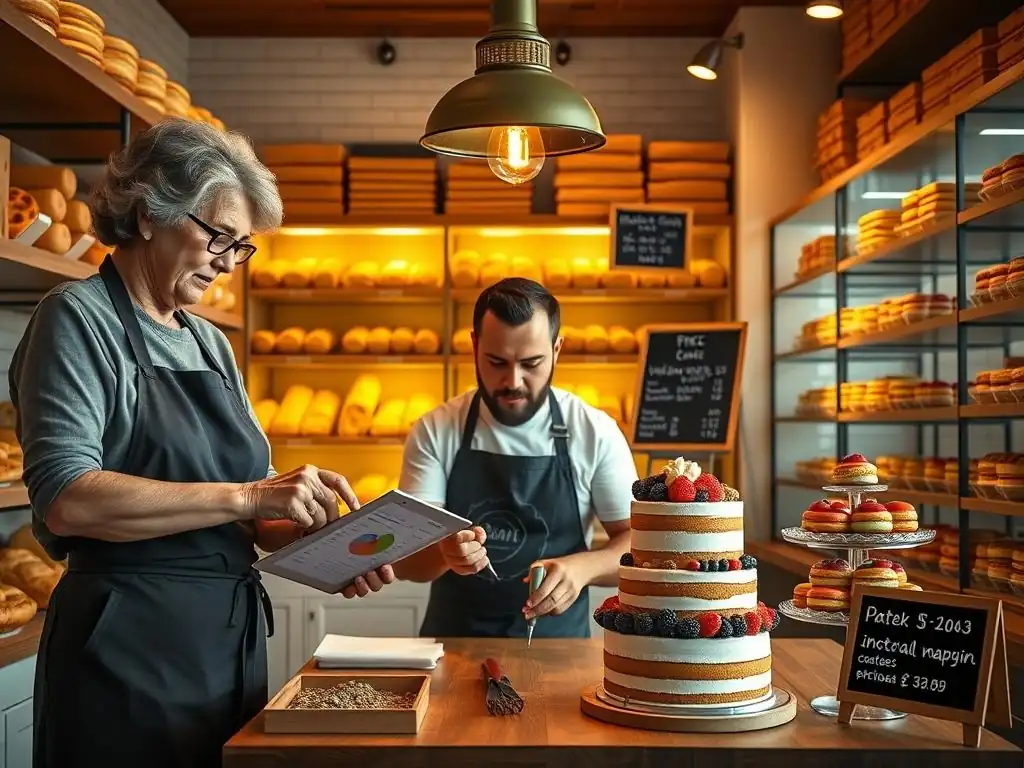
Pricing isn't a one-time task. It's an ongoing process. Your costs change, the market evolves, and your business grows. Regularly reviewing and adjusting your prices is essential to ensure you remain competitive and continue to achieve healthy baking business profit margins.
Being proactive about price adjustments helps you stay ahead of financial pressures and capitalize on opportunities. Don't be afraid to raise prices when necessary, but do so strategically and transparently.
Monitoring Your Baking Business Profit Margins Regularly
Make it a habit to calculate your actual baking business profit margins periodically – perhaps monthly or quarterly. Compare your actual margins against your target goals.
- Are ingredient costs higher than anticipated?
- Is production taking longer, increasing labor costs?
- Are overhead expenses creeping up?
- Are you selling enough volume at your current prices?
If your actual baking business profit margins are consistently below your target, it's a clear signal that a price adjustment or cost reduction is needed. Use your detailed cost tracking to pinpoint where the profit is being eroded.
Responding to Changes in Ingredient Costs
Ingredient costs are subject to fluctuations based on seasonality, supply chain issues, and market demand. When the cost of key ingredients like butter, flour, chocolate, or eggs rises significantly, your existing prices might no longer cover your costs and desired profit, negatively impacting your baking business profit margins.
You have a few options:
- Absorb the cost: If the increase is small and temporary, you might absorb it to avoid raising prices.
- Slightly reduce portion size or complexity: Be cautious with this, as it can impact perceived value.
- Adjust your price: This is often necessary for significant or sustained cost increases. Communicate transparently with your customers, explaining that rising ingredient costs necessitate a price adjustment to maintain the quality they expect.
Adjusting Prices Based on Customer Feedback
Listen to your customers. Are they consistently commenting on your prices? Do they perceive your goods as a great value, or are they hesitant due to cost? Customer feedback can provide valuable insights into whether your pricing aligns with perceived value and market expectations.
If customers rave about your quality and seem happy with prices, you might have room for a small increase if costs rise or you introduce premium features. If customers consistently express that your prices are too high compared to alternatives, you might need to re-evaluate your costs, explore more competitive pricing, or find ways to better communicate the unique value you offer to justify your current price and protect your baking business profit margins.
Tools and Resources for Pricing Your Baked Goods
Managing costs and setting prices can seem daunting, but several tools and resources can simplify the process. Leveraging these resources can save you time, improve accuracy, and help you make more informed decisions about your baking business profit margins.
Finding the right tools for your specific needs can streamline your operations and provide clarity on your financial performance.
Spreadsheet Templates for Cost Calculation
Simple spreadsheet software like Microsoft Excel, Google Sheets, or even free alternatives are invaluable for tracking ingredient costs, calculating batch costs, and determining total costs per item. You can create templates to plug in ingredient prices and quantities per recipe, automatically calculating the total ingredient cost.
You can also use spreadsheets to track labor time per product and allocate monthly overhead across your estimated production or sales volume. Setting up formulas allows you to quickly see how changes in ingredient prices or labor time impact your total cost, making it easier to adjust pricing and monitor baking business profit margins. Many free templates designed specifically for food businesses or bakers are available online.
Online Pricing Calculators for Bakers
Beyond spreadsheets, various websites and software platforms offer online pricing calculators specifically tailored for bakers. These tools often have built-in features to help you input ingredient costs, labor rates, overhead expenses, and desired profit margins, then calculate a suggested selling price.
While these calculators are helpful starting points, always review their methodology and ensure they account for all your specific costs. They can be great for getting a quick estimate or double-checking your manual calculations, providing another layer of confidence in your pricing strategy and projected baking business profit margins.
Conclusion: Achieving Sustainable Baking Business Profitability
Finding the sweet spot for pricing your baked goods is a foundational element of building a successful and sustainable home baking business with healthy baking business profit margins. It requires diligent cost tracking, a clear understanding of your desired profit, strategic pricing based on market factors and value, and a commitment to regular review and adjustment.
By accurately calculating ingredient, labor, and overhead costs, you ensure every sale contributes positively. By researching your market and understanding perceived value, you can price competitively and capture the value you provide. By consistently monitoring your baking business profit margins, you can adapt to changing circumstances and ensure long-term profitability. Armed with this knowledge, you can confidently price your delicious creations, delight your customers, and achieve the financial success you deserve.
Frequently Asked Questions
How do I calculate the true cost of my baked goods for my baking business?
You need to account for all expenses. This includes the cost of ingredients, packaging, labor (even your own time!), and overhead costs like utilities. Accurate cost calculation is essential for pricing.
What are some common pricing strategies for maximizing baking business profit margins?
Common strategies include cost-plus pricing, where you add a markup to your total costs, and value-based pricing, where you price based on perceived value. Consider competitor pricing as well.
How can I determine the "sweet spot" – the ideal price point that maximizes profit – for my baked goods?
It's about finding the balance. Experiment with different price points, track your sales volume, and monitor your profit margins at each price. Market research is critical here.
What role does perceived value play in pricing baked goods, and how can I increase it?
Perceived value is crucial. Enhancing presentation, using high-quality ingredients, offering unique flavors, and building a strong brand can all justify higher prices and boost profitability.
What are some strategies for managing and improving baking business profit margins without raising prices?
Focus on reducing waste, optimizing your baking processes for efficiency, negotiating better deals with suppliers, and upselling or cross-selling complementary items. Cost control is key.
Final Reflection: The Enduring Power of Price in Baking Success
Finding the perfect price isn't just about maximizing profit; it's about building a sustainable and thriving baking business. The delicate balance between cost, value, and customer perception, explored throughout this article, remains crucial in today's competitive market. Ignoring this balance can lead to financial instability, while mastering it unlocks the potential for long-term growth and prosperity.
The journey of discovering the "sweet spot" price is a continuous learning process, deeply intertwined with understanding your target audience and the unique value proposition of your baked goods. It's not simply about numbers on a spreadsheet; it's about crafting a narrative around your products, communicating their quality and worth, and fostering a loyal customer base. Price is what you pay. Value is what you get.
– Warren Buffett. This quote perfectly encapsulates the core message: profitability hinges not just on the price tag, but on the perceived value your customers receive.
Now, consider your own baking venture, or even your favorite local bakery. What strategies have they employed to find their "sweet spot"? How do they communicate the value of their products? Take the insights from this article and apply them to your own situation. Experiment, analyze your results, and refine your pricing strategy over time. Remember, the pursuit of the perfect price is an ongoing journey, and the rewards of finding that sweet spot are well worth the effort. Embrace the challenge, and watch your baking business flourish.
Unlock Your Baking Business's Profit Potential!
Thanks for taking the time to learn how to find that sweet spot for pricing your baked goods! We hope you gained valuable insights into maximizing your profits while keeping your customers happy. Now it's time to put that knowledge into action.
- Calculate your ideal price: Use the formulas and strategies discussed to determine the perfect price for your most popular items. This is the key step to increasing your profit margin!
- Test your pricing: Try out your new prices on a small scale and carefully monitor customer reactions and sales. Don't be afraid to adjust!
- Share your pricing journey: Tell us about your experience! What adjustments did you make, and what were the results? Share your success story in the comments below.
Ready to bake your way to greater profits? What's the first item you'll be re-pricing?