
Tracking Your Taste: Simple Analytics for Marketing Success


Welcome to BakeWithEase, where we believe every baker, from the novice to the seasoned pro, deserves to see their passion flourish! Ever wondered if you could precisely measure the success of your baking venture? Our latest article, " Tracking Your Taste: Simple Analytics for Marketing Success," delves into the surprisingly sweet world of baking marketing analytics tracking. Discover how to understand your audience, optimize your recipes, and ultimately, turn your delicious creations into a thriving business. Intrigued? Let's get started!
- Tracking Your Success: Analytics for Bakery Marketing
- Introduction: Why Marketing Analytics Matters for Your Bakery
- Setting Up Your Marketing Analytics System
- Implementing Marketing Analytics Strategies
- Interpreting Your Marketing Analytics Data
- Case Study: Analytics Tracking Success
- Advanced Marketing Analytics Techniques
- Conclusion: Continuous Improvement Through Marketing Analytics
-
Frequently Asked Questions
- How can Baking Marketing Analytics Tracking help my bakery?
- What key metrics should I track for my bakery's marketing?
- What are some easy-to-use analytics tools for tracking my bakery's marketing performance?
- How often should I review my bakery's marketing analytics?
- What can I do with Baking Marketing Analytics Tracking insights?
- Final Reflection: The Sweet Taste of Data-Driven Baking
- Unlock Your Baking Empire: Actionable Steps to Sweet Success!
Tracking Your Success: Analytics for Bakery Marketing
Introduction: Why Marketing Analytics Matters for Your Bakery
Understanding Data-Driven Decisions
In the bustling world of home baking, turning your passion into a profitable business requires more than just delicious treats; it demands smart marketing. Relying on guesswork or intuition alone can lead to wasted time and money. This is where data-driven decisions come in.
By understanding simple marketing analytics, you can gain clear insights into what's working and what isn't, allowing you to allocate your resources effectively. Imagine knowing precisely which social media post brought in the most orders last month, or which part of your website visitors are most interested in. This kind of information is gold for a small bakery.
Making informed choices based on real data helps you refine your marketing efforts, target the right customers, and ultimately grow your business sustainably. Instead of wondering why sales were slow last week, you can look at your baking marketing analytics tracking to see if website traffic dropped, if a specific email campaign didn't resonate, or if your social media engagement dipped. This allows you to react quickly, adjust your strategy, and keep your business moving forward. It's about moving from hoping your marketing works to knowing why it works, or why it doesn't, and making continuous improvements.
An Analytics Approach: Tracking for Bakery Businesses
Adopting an analytics approach means systematically collecting, analyzing, and interpreting data related to your marketing activities. For a home bakery, this might seem intimidating, but it starts with simple steps. It’s about setting up ways to track how people find you online, how they interact with your website or social media, and ultimately, whether they become paying customers. Effective baking marketing analytics tracking provides a roadmap, showing you which paths customers take before placing an order.
Implementing tracking doesn't require complex software or advanced degrees. It begins with identifying the key areas you want to measure, such as website visits, social media likes, or inquiries from a specific online ad. By consistently monitoring these metrics, you build a picture of your marketing performance. This baking marketing analytics tracking helps you understand your audience better, discover which marketing channels are most effective for reaching them, and measure the return on investment for your marketing spend, even if that spend is just your time.
Setting Up Your Marketing Analytics System
Choosing the Right Analytics Tools
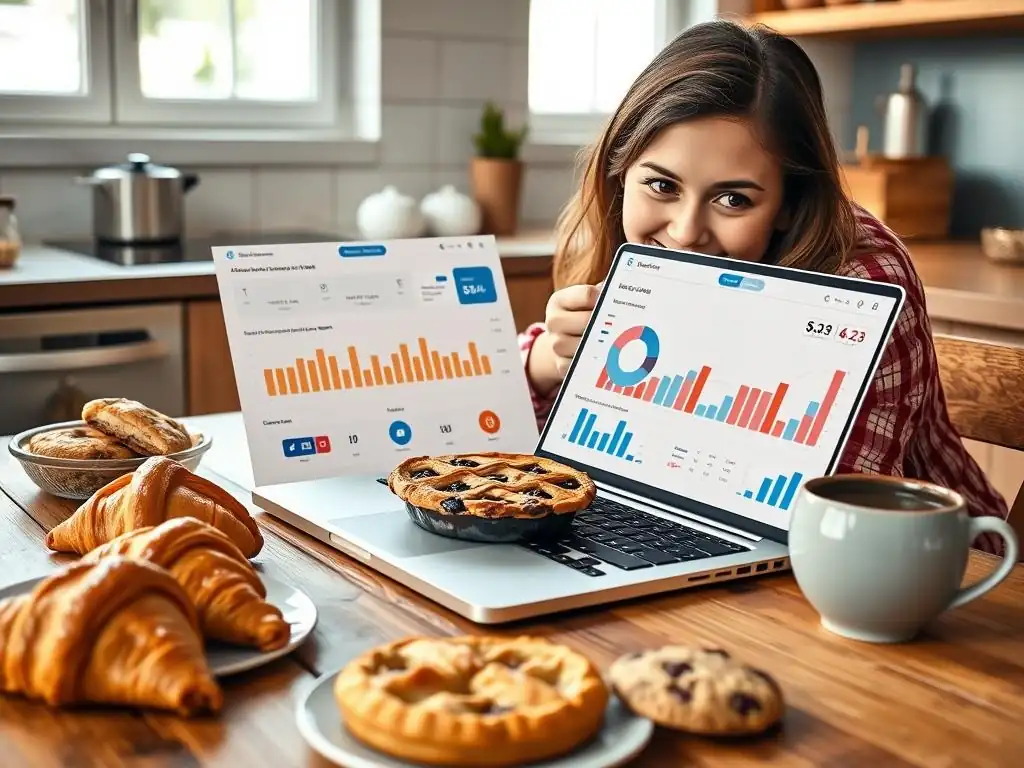
Selecting the appropriate tools is the first step in establishing your baking marketing analytics tracking system. The right tools depend on your business size, budget, and technical comfort level. For most home bakeries, starting simple and scaling up as needed is the best approach. There's a wide range of options available, from free services that provide foundational data to paid platforms offering more in-depth analysis and automation.
Consider what you need to track most: website visits, social media engagement, email performance? Many platforms specialize in one area, while others offer a more comprehensive view. It's important to choose tools that are easy to understand and use, so you can actually benefit from the data they provide. Don't feel pressured to invest in expensive software right away; often, free tools offer more than enough capability to get started with baking marketing analytics tracking.
Free vs. Paid Analytics Options
When starting your baking marketing analytics tracking journey, you'll encounter both free and paid tools. Free options, like Google Analytics (for websites) and built-in analytics on social media platforms (like Facebook Insights or Instagram Insights), offer powerful capabilities without any cost. They provide essential data on who is visiting your site or profile, where they come from, and what they do while they are there. These are excellent starting points for understanding basic customer behavior and marketing channel performance.
Paid analytics tools typically offer more advanced features, such as deeper demographic insights, more sophisticated reporting, integration with other marketing tools, and predictive analysis. Examples include platforms like HubSpot (marketing automation with analytics), SEMrush (SEO and marketing data), or specialized social media analytics tools. While these can provide richer data, they come with a recurring cost. For a home bakery, it's often wise to exhaust the capabilities of free tools before considering a paid subscription, ensuring the investment aligns with the potential return for your specific baking marketing analytics tracking needs.
Google Analytics: A Beginner's Guide
Google Analytics is arguably the most popular free web analytics service and an essential tool for any bakery with a website looking to implement baking marketing analytics tracking. It provides detailed statistics about your website traffic, including how many people visit, where they came from (e.g., social media, direct search, another website), which pages they view, and how long they stay. Setting it up involves adding a small piece of code to your website, which is usually straightforward, especially if you're using website builders like Shopify, Squarespace, or WordPress.
Once set up, Google Analytics starts collecting data immediately. Beginners should focus on key reports like Audience (who visits? ), Acquisition (where do they come from? ), and Behavior (what do they do on your site?). Understanding these basic reports is fundamental to effective baking marketing analytics tracking. You can see, for example, if a recent Instagram post led to a surge in traffic, or if visitors from your local community are finding your site through Google Search. This data helps you understand your online audience and the effectiveness of different marketing efforts.
Defining Key Performance Indicators (KPIs)
Defining Key Performance Indicators (KPIs) is crucial for effective baking marketing analytics tracking. KPIs are specific, measurable values that demonstrate how effectively you are achieving key business objectives. For a bakery, these objectives might include increasing online orders, growing your email list, or expanding your local customer base. Without clearly defined KPIs, you're just looking at numbers without understanding what they mean for your business's success.
Start by identifying what success looks like for each of your marketing activities. If your goal is to get more online orders, a relevant KPI might be the number of completed checkouts originating from your website. If you're trying to build brand awareness, social media reach or website traffic might be key KPIs. Choosing the right KPIs provides focus for your baking marketing analytics tracking and helps you measure progress towards your goals.
Website Traffic: Measuring Interest
Website traffic is a fundamental KPI for any bakery with an online presence. It measures the number of visitors your website receives over a specific period. An increase in traffic generally indicates growing interest in your bakery and its offerings. Tracking metrics like total sessions, unique visitors, and pageviews within your baking marketing analytics tracking helps you gauge the overall visibility of your online presence.
Beyond just the total number, analyze the quality of traffic. Look at metrics like bounce rate (the percentage of visitors who leave after viewing only one page) and average session duration. A high bounce rate or short session duration might suggest that visitors aren't finding what they're looking for, even if traffic is high. Understanding where your traffic comes from (referral sources) is also vital, indicating which marketing channels (like social media, email, or online ads) are driving people to your site for their baking needs.
Conversion Rates: Turning Visitors into Customers
Conversion rate is perhaps one of the most important KPIs for a bakery focused on online sales or inquiries. It measures the percentage of website visitors (or people interacting with a specific marketing campaign) who complete a desired action, known as a "conversion." For a bakery, conversions could include placing an online order, filling out a contact form for a custom cake, subscribing to your email list, or even clicking a button to call your shop.
Calculating your conversion rate gives you a clear picture of how effective your website or marketing efforts are at turning interest into tangible results. If you had 100 website visitors last week and 5 of them placed an order, your conversion rate for online orders is 5%. By tracking conversion rates as part of your baking marketing analytics tracking, you can identify which pages or campaigns are most successful and which need improvement to better guide visitors towards becoming customers.
Customer Acquisition Cost (CAC): Acquisition Expenses
Customer Acquisition Cost (CAC) is a crucial KPI for understanding the efficiency of your marketing spend. It measures how much it costs your bakery, on average, to acquire one new customer. This includes all marketing and sales expenses incurred during a specific period, divided by the number of new customers acquired during that same period. For example, if you spent $200 on a local Facebook ad campaign last month and gained 10 new customers who mentioned the ad, your CAC for that campaign was $20.
Understanding your CAC is vital for budgeting and evaluating the profitability of different marketing channels. If it costs you $50 to acquire a customer through one method, but the average customer only spends $30 on their first order, that method isn't sustainable in the long run without repeat business. Tracking CAC through your baking marketing analytics tracking helps you identify the most cost-effective ways to reach new customers and optimize your marketing budget for better returns.
Customer Lifetime Value (CLTV): Long-Term Value
Customer Lifetime Value (CLTV), sometimes referred to as LTV, is a powerful KPI that estimates the total revenue a single customer is expected to generate for your bakery over the entire time they are a customer. Calculating CLTV involves estimating how often a customer purchases, their average order value, and how long they remain a customer. For instance, if an average customer buys a cake for $40 twice a year for 5 years, their CLTV is $400.
Comparing your CLTV to your CAC is essential for assessing the long-term viability of your business and marketing strategies. If your CLTV is significantly higher than your CAC, it indicates a healthy business model where retaining customers is highly profitable. Baking marketing analytics tracking that includes CLTV helps you understand the true value of acquiring a new customer and justifies investing more in customer retention efforts, as repeat customers often have a higher CLTV and a lower CAC (since you don't have to "acquire" them again).
Implementing Marketing Analytics Strategies
Tracking Website Traffic
Effectively tracking website traffic is foundational to understanding your online audience and the performance of your digital marketing efforts. Simply knowing how many people visit isn't enough; you need to understand how they got there and what they do once they arrive. Tools like Google Analytics provide the backbone for this, showing traffic sources (organic search, direct, referral, social, paid), the pages visitors view, and the paths they take through your site.
Monitoring trends in traffic over time is key. Did traffic spike after you were featured in a local blog? Did it dip after you stopped posting on a specific social media platform? This type of analysis, part of comprehensive baking marketing analytics tracking, helps you correlate your marketing activities with website visitor behavior. It allows you to see which channels are delivering the most visitors and which content on your site is most engaging.
Using UTM Parameters to Track Campaign Performance
UTM parameters are tags you add to a URL to track the performance of specific marketing campaigns. They are simple text codes that Google Analytics (and other analytics platforms) can read to tell you where visitors came from and what campaign they were associated with. For example, if you share a link to your website on Facebook for a holiday cookie promotion, you can add UTM parameters to that link to specifically track all traffic and conversions that originated from that exact post.
A typical URL with UTM parameters might look something like: yourbakery.com/holiday-cookies/?utm_source=facebook&utm_medium=social&utm_campaign=holiday_cookies_2024. When someone clicks this link, your baking marketing analytics tracking system records that the visit came from Facebook (source), via a social media post (medium), as part of the 'holiday_cookies_2024' campaign (campaign). This granular tracking allows you to see which specific posts, emails, or ads are most effective at driving traffic and achieving conversions.
Monitoring Referral Traffic: Customer Sources
Referral traffic refers to visitors who come to your website by clicking a link on another website, excluding major search engines. Monitoring referral traffic is a valuable part of baking marketing analytics tracking because it shows you which external websites are sending you visitors. This could be a local food blog that mentioned your bakery, an online directory listing, a partner's website, or even another baker's site if you collaborated.
Analyzing referral sources helps you understand where your online mentions are happening and which ones are actually driving interested people to your site. If a local community website consistently sends you high-quality traffic that converts into customers, you know that relationship or listing is valuable. Conversely, if a site sends a lot of traffic but it has a high bounce rate, those visitors might not be the right audience, or the link destination needs optimization. This data informs your outreach and partnership strategies.
Social media is a powerful tool for bakeries, allowing you to showcase your delicious creations, interact with customers, and build a community. Analyzing social media engagement is key to understanding how well your content resonates with your audience and contributes to your overall marketing goals. Most social media platforms have built-in analytics dashboards (like Facebook Insights, Instagram Insights, Pinterest Analytics) that provide valuable data.
Key metrics to track include likes, shares, comments, saves, and clicks. These indicate how actively people are interacting with your content. High engagement suggests your posts are interesting and relevant to your followers. Monitoring these metrics as part of your baking marketing analytics tracking helps you identify which types of posts (e.g., photos of new pastries, behind-the-scenes videos, customer testimonials) perform best, allowing you to create more content that your audience loves and is likely to share.
Tracking Likes, Shares, and Comments
Likes, shares, and comments are fundamental engagement metrics on social media. Likes (or reactions) are the simplest form of engagement, indicating that someone saw and appreciated your post. Shares are more powerful, as they extend your reach to new audiences. Comments provide valuable feedback and open up direct conversations with your followers.
Tracking these metrics helps you gauge the immediate impact and popularity of individual posts. A post with many shares indicates it struck a chord and was deemed worthy of passing along, expanding your potential reach organically. High numbers of comments suggest your content is sparking discussion and interest. Monitoring these as part of your baking marketing analytics tracking allows you to understand what types of content drive the most interaction and virality for your bakery.
Measuring Social Media Reach and Impressions
Beyond direct engagement, understanding your social media reach and impressions is vital for assessing brand awareness. Reach is the total number of unique users who saw your content. Impressions are the total number of times your content was displayed, including multiple views by the same user. If your post appears on 100 unique users' screens, your reach is 100. If those 100 users saw it a total of 150 times, your impressions are 150.
High reach indicates your content is being seen by a large audience, while high impressions relative to reach suggest your content is being viewed multiple times, perhaps because it's highly engaging or being shared widely. Tracking these metrics as part of your baking marketing analytics tracking helps you understand the potential audience size you're reaching on each platform and how effectively your content is being distributed. This is crucial for building brand visibility for your bakery.
Email Marketing Analytics
Email marketing remains one of the most effective ways for bakeries to connect with customers, promote specials, and drive repeat business. Analyzing the performance of your email campaigns is essential for optimizing this channel. Most email marketing platforms (like Mailchimp, Constant Contact, or even simpler newsletter services) provide detailed analytics on every email sent.
Key metrics include open rates, click-through rates, unsubscribe rates, and conversions attributed to email campaigns. Monitoring these as part of your baking marketing analytics tracking helps you understand how well your emails are being received, whether your calls to action are effective, and if your list is healthy. This data informs your email content strategy, subject line choices, sending frequency, and list segmentation.
Open Rates and Click-Through Rates: Measuring Engagement
Open rate is the percentage of recipients who opened your email. It's a primary indicator of how compelling your subject line and sender name are. A low open rate might suggest your subject lines aren't grabbing attention or your emails are going to spam. Click-through rate (CTR) is the percentage of recipients who clicked on a link within your email. It measures how effective your email content and calls to action are at driving action.
High open rates mean people are interested enough to see what you have to say, while high CTRs mean they are compelled to take the next step, whether that's visiting your website, viewing a new menu item, or placing an order. Tracking these metrics within your baking marketing analytics tracking helps you refine your email strategy, experiment with different subject lines, email designs, and calls to action to improve engagement and drive more traffic or sales.
Conversion Tracking from Email Campaigns
While open rates and CTRs measure engagement within the email, conversion tracking from email campaigns measures the ultimate goal: whether the email led to a desired action on your website or elsewhere. This requires integrating your email marketing platform with your website analytics (like Google Analytics) or using tracking links within your emails that are tied to specific goals.
For a bakery, conversions from email could be online orders placed after clicking an email link, inquiries submitted via a contact form linked in an email, or even coupon codes redeemed in-store that were delivered via email. Tracking these conversions as part of your baking marketing analytics tracking provides a direct measure of the ROI of your email marketing efforts, showing you which campaigns are most effective at driving sales or other valuable customer actions.
Interpreting Your Marketing Analytics Data
Collecting data is only the first step; the real value lies in interpreting it to gain actionable insights for your bakery business. Analytics dashboards can present a wealth of numbers, but understanding what they mean in the context of your goals is crucial. Interpretation involves looking beyond individual metrics to identify patterns, understand customer behavior, and use that knowledge to refine your marketing strategies.
Effective interpretation requires asking questions: Why did traffic spike on a certain day? What are visitors doing on the page with the highest bounce rate? Which marketing channel consistently brings in the most valuable customers? Answering these questions using your baking marketing analytics tracking data allows you to move from raw numbers to strategic decisions that can directly impact your bakery's success.
Identifying Trends and Patterns
Identifying trends and patterns in your baking marketing analytics tracking data involves looking at metrics over time to spot consistent movements or significant changes. Are website visits steadily increasing month over month? Is social media engagement higher on weekends? Do email open rates drop significantly during holiday periods? These patterns can reveal seasonal influences, the impact of ongoing marketing efforts, or areas where performance is consistently strong or weak.
Spotting trends helps you anticipate future performance and plan accordingly. If you see a consistent dip in traffic during a certain month, you might plan a special promotion to counteract it. If you notice that posts featuring behind-the-scenes content consistently get more shares, you know to create more of that type of content. Identifying these patterns is a fundamental aspect of using data to guide your bakery's marketing strategy.
Understanding Customer Behavior: Interests
Beyond just how many people visited or clicked, baking marketing analytics tracking helps you understand what they are interested in and how they interact with your online presence. Website analytics can show you which pages are most popular, which products are viewed most often, and the typical path visitors take before leaving or converting. Social media analytics can show you which topics or types of posts generate the most engagement.
This behavioral data provides insights into your customers' preferences and interests. If your analytics show that your "Custom Cakes" page receives the most views, you know there's high demand for custom orders. If posts about vegan options get significantly more likes and shares, you know that's a segment of your audience with specific interests. Using this understanding of customer behavior allows you to tailor your offerings, content, and marketing messages more effectively.
Using Data to Optimize Campaigns
The ultimate goal of baking marketing analytics tracking is to use the insights gained to optimize your marketing campaigns for better results. Data provides the feedback loop you need to refine your approach, discard ineffective tactics, and scale up what's working. This iterative process of analyzing, adjusting, and re-analyzing is key to continuous improvement.
Optimization can take many forms: tweaking website copy on a high-bounce page, adjusting the targeting for social media ads based on demographic data, changing the call to action in an email based on low click rates, or allocating more budget to the marketing channel that delivers the lowest CAC. Using data to guide these decisions ensures your marketing efforts are as efficient and effective as possible.
A/B Testing
A/B testing, also known as split testing, is a powerful method for optimizing specific elements of your marketing using data. It involves creating two versions of a marketing asset (like a website page, an email subject line, or a social media ad) that are identical except for one element you want to test. Half of your audience sees version A, and the other half sees version B.
By tracking metrics like click-through rates, conversion rates, or engagement for each version using your baking marketing analytics tracking, you can determine which version performed better. For example, you might A/B test two different subject lines for your newsletter to see which one gets a higher open rate, or two different calls to action on a product page to see which leads to more sales. This data-driven approach takes the guesswork out of optimization.
Optimizing Website Content Based on Data
Website content optimization based on baking marketing analytics tracking involves using data about how visitors interact with your pages to improve their effectiveness. If analytics show that a particular blog post has a low average time on page, it might indicate that the content isn't engaging enough, or the formatting makes it hard to read. If a product page has a high exit rate at a specific point, there might be an issue with the information provided or the user experience.
Data can guide improvements such as:
- Revising headlines or introductory paragraphs to be more captivating.
- Adding more visuals or breaking up text on pages with high bounce rates.
- Improving product descriptions for items with high views but low conversion rates.
- Ensuring clear calls to action are present on pages that receive significant traffic.
By making data-informed changes, you can create a website that is more engaging, user-friendly, and effective at converting visitors into customers.
Case Study: Analytics Tracking Success
[Example of a Bakery Using Analytics to Improve Marketing]
Let's look at "Sweet Spot Bakery," a fictional home-based bakery specializing in custom cupcakes and cookies, which started using simple baking marketing analytics tracking. Initially, Sweet Spot relied heavily on posting photos on Instagram and hoping for direct messages (DMs) or calls. They had a basic website but weren't tracking its performance. They decided to implement Google Analytics on their website and started using UTM parameters on their social media posts linking to their online order form.
After three months of tracking, their analytics revealed surprising insights. While Instagram was their primary focus, their baking marketing analytics tracking showed that traffic from their local online directory listing had a significantly higher conversion rate (5% vs 1.5% from Instagram) for custom cake inquiries, even though Instagram drove more overall traffic. They also noticed that blog posts on their website about "How to Order a Custom Cake" had a very low bounce rate and visitors spent a long time on the page, but few completed the inquiry form on that page.
Lessons Learned: Key Takeaways
Sweet Spot Bakery's baking marketing analytics tracking provided clear direction.
- Lesson 1: High traffic doesn't always mean high value.: The local directory brought fewer visitors than Instagram but they were more likely to become paying customers.
- Lesson 2: Different channels serve different purposes.: Instagram was great for building awareness and showcasing products, but the directory was better for driving high-value leads.
- Lesson 3: Identify friction points.: The custom cake inquiry page had interested visitors, but something prevented them from completing the form.
Based on these lessons, Sweet Spot Bakery took action:
- They doubled down on optimizing their local directory listing and encouraged customer reviews there.
- They revised the custom cake inquiry page on their website, simplifying the form and adding clearer instructions, immediately seeing a 2% increase in form submissions from that page.
- They continued using Instagram for brand building but focused on driving engagement and using it as a source of traffic to their website, where conversions were better tracked and optimized.
This simple baking marketing analytics tracking shifted their focus and led to a measurable increase in custom orders within the following quarter.
Advanced Marketing Analytics Techniques

Once you've mastered the basics of baking marketing analytics tracking, you might consider more advanced techniques to gain deeper insights. These methods offer more sophisticated ways to understand user behavior and optimize complex customer journeys. While they may require more technical setup or specialized tools, they can provide a competitive edge.
These techniques move beyond simple traffic and conversion numbers to visualize user interaction, map out the steps customers take before converting, and even predict future trends. Implementing them can elevate your baking marketing analytics tracking from reporting to predictive strategy.
Using Heatmaps to Understand User Behavior
Heatmaps are visual tools that represent user interaction on a webpage using colors, similar to a weather map. They show where users click most often (click maps), how far they scroll down a page (scroll maps), and where their mouse pointer hovers (movement maps). This provides a visual understanding of which elements on your page capture attention and which are ignored.
For a bakery website, a heatmap might show that visitors aren't seeing your "Order Now" button because it's below the fold, or that they're clicking on a non-clickable image because they expect it to lead somewhere. Using heatmaps as part of your baking marketing analytics tracking helps identify usability issues and opportunities to place important content or calls to action where users are most likely to see and interact with them.
Implementing Conversion Funnel Tracking
Conversion funnel tracking visualizes the steps a user takes from their first interaction with your website or marketing campaign all the way to completing a desired conversion (like placing an online order). It breaks down the process into stages, showing you the percentage of users who move from one stage to the next and, more importantly, where users are dropping off.
For a bakery with online ordering, the funnel might look like: Homepage -> Product Page -> Add to Cart -> Checkout -> Order Confirmation. Baking marketing analytics tracking set up to track this funnel will show you how many people start the process and at which stage the largest number abandon it. Identifying these drop-off points allows you to focus your optimization efforts on those specific stages to improve the overall conversion rate.
Predictive Analytics
Predictive analytics uses historical data, statistical algorithms, and machine learning techniques to forecast future outcomes based on patterns found in the data. For a bakery, this could involve predicting which customers are most likely to make a repeat purchase, forecasting demand for certain products based on past sales and external factors (like holidays or weather), or estimating the potential value of new customer segments.
While this is a more advanced area of baking marketing analytics tracking, even simple forms can be beneficial. For example, analyzing past sales data to predict which pastries will be most popular during a specific season can help with inventory and staffing. As your business grows and you accumulate more data, predictive analytics can become a powerful tool for strategic planning and personalized marketing.
Conclusion: Continuous Improvement Through Marketing Analytics
Embracing baking marketing analytics tracking is not a one-time task but an ongoing process of learning and adaptation. The digital landscape is constantly changing, and customer behavior evolves. By consistently monitoring your performance data, interpreting the insights, and using them to inform your marketing decisions, you create a cycle of continuous improvement.
Analytics provides the objective feedback needed to move beyond guesswork and build a truly effective marketing strategy for your bakery. It empowers you to understand your audience, measure your impact, and allocate your valuable time and resources where they will make the biggest difference.
The Future of Marketing: Data-Driven Strategies
The future of marketing, even for local home bakeries, is increasingly data-driven. As more customer interactions happen online – from browsing menus to placing orders and leaving reviews – the amount of available data grows. Leveraging this data through effective baking marketing analytics tracking will be essential for staying competitive.
Data-driven strategies allow for greater personalization, more efficient spending, and a deeper understanding of customer needs and preferences. Instead of broad-stroke marketing, you can target specific customer segments with tailored messages and offers, increasing the likelihood of conversion and building stronger customer relationships. This level of precision is the promise of incorporating analytics into your marketing efforts.
Embrace Analytics and Grow Your Bakery Business
Getting started with baking marketing analytics tracking might seem daunting, but the potential rewards – clearer insights, improved efficiency, and measurable growth – are well worth the effort. Start small with basic tools and key metrics, and gradually expand your tracking as you become more comfortable and your business needs evolve.
By making data a regular part of your marketing routine, you gain the power to understand what truly drives your bakery's success. It's about using numbers not just to report the past, but to strategically shape the future, helping your delicious creations reach more people and your business thrive. Embrace analytics, and watch your bakery business grow with confidence.
Frequently Asked Questions
How can Baking Marketing Analytics Tracking help my bakery?
Baking Marketing Analytics Tracking helps you understand which marketing efforts are driving the most customer engagement and sales, allowing you to optimize your strategies and improve ROI.
What key metrics should I track for my bakery's marketing?
Focus on metrics like website traffic, conversion rates (e.g., online orders), and social media engagement to gauge the effectiveness of your marketing campaigns.
What are some easy-to-use analytics tools for tracking my bakery's marketing performance?
Consider using tools like Google Analytics for website tracking, social media platform analytics (Facebook Insights, etc.), and email marketing analytics (Mailchimp, etc.).
How often should I review my bakery's marketing analytics?
Regularly reviewing your analytics – at least monthly or quarterly – allows you to identify trends, make adjustments, and ensure your marketing is effective.
What can I do with Baking Marketing Analytics Tracking insights?
Use the insights to refine your target audience, improve your marketing messaging, and allocate your marketing budget more effectively to maximize your returns.
Final Reflection: The Sweet Taste of Data-Driven Baking
Understanding your customer's palate is no longer a matter of guesswork; it's a necessity for baking marketing success. In today's competitive landscape, ignoring the power of data-driven insights is akin to baking a cake without a recipe – the results might be palatable, but they'll likely lack the precision and impact needed to truly thrive. This article explored simple yet effective analytics tracking methods, empowering bakers and food businesses to understand their audience and optimize their marketing strategies.
The impact of data-driven decision-making in the food industry is profound, extending far beyond simple sales figures. It's about understanding the why behind consumer choices – what ingredients resonate, what marketing channels are most effective, and how to tailor your offerings to meet evolving demands. This understanding allows for more targeted campaigns, reduced waste, and ultimately, a more sustainable and profitable business. The only thing worse than starting with bad data is starting with no data at all.
This quote highlights the crucial role of analytics in informed decision-making, a lesson applicable to any business, but particularly resonant in the dynamic world of food and baking.
Now, it's your turn. Consider the data points you currently track, and honestly assess whether they provide a complete picture of your customer base. Are you leveraging the power of analytics to refine your marketing efforts, or are you relying on intuition alone? Take this opportunity to implement even one of the simple tracking methods discussed in this article. Embrace the power of data, and watch your baking business rise to new heights of success, one delicious, data-informed decision at a time.
Unlock Your Baking Empire: Actionable Steps to Sweet Success!
Thanks for diving into the world of baking analytics! We hope you've gained valuable insights into how to better understand your customers and boost your baking business. Now it's time to put that knowledge into practice.
- Implement a simple tracking system: Start by carefully monitoring your sales data, noting popular items and customer preferences. This is the key to unlocking your baking empire.
- Engage your audience: Share your findings on social media – a behind-the-scenes look at what your customers love can create a deeper connection!
- Experiment with a new flavor based on your data: Try creating a recipe inspired by your top-selling items – perhaps with a surprising twist!
What exciting new flavor combinations will your data inspire you to create next?