
Unlock Sales: Pricing Your Baked Goods for Profit and Customer Appeal

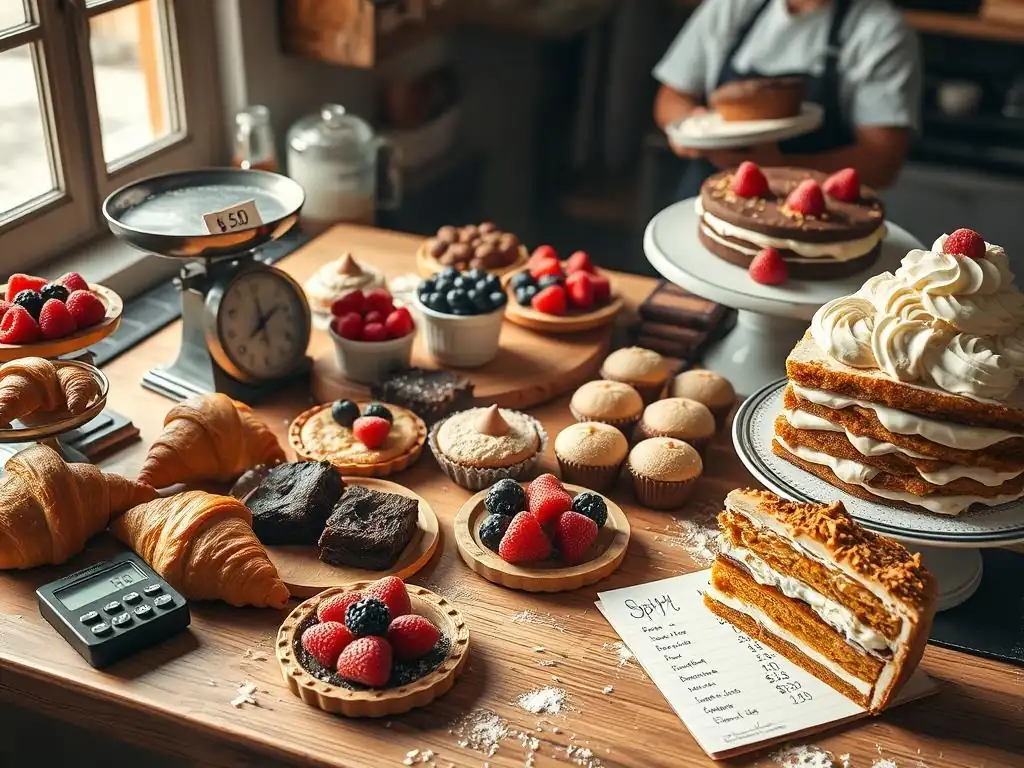
Welcome to BakeWithEase, your trusted guide to the delightful world of baking! Ever wondered how to perfectly balance pricing your delicious creations for profitability while keeping customers coming back for more? Dive into our latest article, "Unlock Sales: Pricing Your Baked Goods for Profit and Customer Appeal," and discover the secrets to pricing baked goods profitably, ensuring your passion becomes a thriving success. Let's explore how to make your baking dreams a delicious reality!
- BakeWithEase: Pricing Baked Goods Profitably for Your Home Bakery
- Calculating Your Baked Goods Costs: A Step-by-Step Guide
- Pricing Strategies for Home Bakers: Finding the Sweet Spot
- Factors Affecting Your Baked Goods Pricing
- Market Research for Optimal Pricing
- Pricing for Different Types of Baked Goods
- Creating a Pricing Menu That Attracts Customers
- Monitoring and Adjusting Your Baked Goods Pricing
- Legal Considerations for Pricing Baked Goods
- Example Pricing Scenarios for Baked Goods
- Tools and Resources for Pricing Baked Goods
- Conclusion: Mastering the Art of Pricing Baked Goods for Success
-
Frequently Asked Questions
- How do I calculate the cost of goods sold (COGS) for my baked goods?
- What are some common pricing strategies for baked goods?
- How can I determine a reasonable profit margin for my baked goods?
- How do I balance pricing for profit with customer appeal?
- What role does presentation and branding play in pricing baked goods?
- Final Reflection: The Sweet Science of Pricing Baked Goods
- Unlock Your Baking Empire: Price for Profit & Delight!
BakeWithEase: Pricing Baked Goods Profitably for Your Home Bakery
Why Accurate Pricing Matters for Your Home Baking Business
Setting the right price for your delicious creations is more than just picking a number; it's the cornerstone of a sustainable home baking business. Accurate pricing ensures that every sale contributes positively to your bottom line, allowing you to cover all your expenses – from ingredients and packaging to your time and overheads – and still have funds left over to reinvest in your business or simply enjoy the fruits of your labor.
Without a clear understanding of your costs, you risk selling your goods below their true value, which can lead to financial strain even if sales volume is high.
Moreover, consistent and fair pricing builds trust with your customers. When they see that your prices reflect the quality of your ingredients and the care you put into your baking, they are more likely to become repeat buyers. Pricing baked goods profitably allows you to maintain high standards, perhaps even upgrading to premium ingredients or investing in better equipment, which further enhances the quality of your products and strengthens your brand reputation in the competitive market.
The Cost of Underpricing: Long-Term Consequences
Underpricing your baked goods might seem like a good way to attract customers quickly, but it's a strategy fraught with long-term risks. Initially, you might get a rush of orders, but if your prices aren't covering your full costs, you'll quickly find yourself working harder for less profit, or potentially even at a loss.
This unsustainable model can lead to burnout, as the financial rewards don't match the effort and time invested. For instance, if a batch of cookies costs you $5 in ingredients and supplies, plus $10 in labor, and you only sell them for $12, you're losing $3 per batch before even considering overheads like electricity or insurance.
Beyond the immediate financial drain, consistent underpricing devalues your products in the eyes of the customer and the market. It can signal lower quality, making it difficult to raise prices later without alienating your existing customer base. Businesses that underprice often struggle to scale, as they lack the necessary capital to invest in growth, marketing, or even cover unexpected expenses. Ultimately, failing to price baked goods profitably can lead to the premature closure of your home bakery, extinguishing your passion project before it has a chance to truly flourish.
Calculating Your Baked Goods Costs: A Step-by-Step Guide
Step 1: Identifying Direct Costs (Ingredients)
The most straightforward costs are your ingredients. This involves tracking every single item that goes into your baked goods, from flour and sugar to eggs, butter, chocolate chips, and sprinkles. It's crucial to calculate the cost per unit of ingredient used in a specific recipe.
For example, if a 5 lb bag of flour costs $4.00, the cost per pound is $0.80. If a recipe uses 1.5 lbs of flour, the flour cost for that recipe is $0.80 * 1.5 = $1.20. Do this for every ingredient, including even tiny amounts like baking powder or vanilla extract, using the cost per unit (e.g., per teaspoon, per gram) multiplied by the amount used.
Keep a detailed log or spreadsheet of your ingredient purchases and their costs. Prices can fluctuate, so it's a good practice to update these costs periodically, perhaps monthly or quarterly. Don't forget to factor in specialty ingredients, organic options, or seasonal items, as these often come with higher price tags that directly impact the cost of goods sold for those specific items. Accurate ingredient costing is the fundamental first step in pricing baked goods profitably.
Step 2: Calculating Labor Costs for Baking
Your time is valuable, and it's a significant cost in a home bakery business, especially when you're doing most of the work yourself. To calculate labor costs, first determine an hourly rate for your work. A common approach is to use a realistic wage you would pay an employee to do the same job, perhaps starting around $15-$20 per hour, depending on your skill level and local wage standards. Track the actual time it takes you to complete each recipe, from preparation and mixing to baking, cooling, and initial decoration or finishing touches.
Multiply the total time spent on a batch or specific item by your hourly rate. For instance, if baking a batch of 12 cupcakes takes 30 minutes (0.5 hours) and your labor rate is $20/hour, the labor cost for that batch is $20 * 0.5 = $10. If you're calculating cost per item, divide the batch labor cost by the number of items (e.g., $10 / 12 cupcakes = ~$0.83 per cupcake). Be honest and thorough in tracking your time; underestimating labor is a common mistake that prevents bakers from pricing baked goods profitably.
Step 3: Factoring in Overhead Costs (Rent, Utilities, Packaging)
Overhead costs are the indirect expenses necessary to run your business that aren't directly tied to producing a single item. These include things like a portion of your home's rent or mortgage (if you use dedicated space), utilities (electricity for the oven, water), internet and phone bills, insurance, equipment maintenance, cleaning supplies, and marketing expenses. Packaging is also a significant overhead cost – think boxes, bags, tissue paper, labels, ribbons, etc.
To allocate these costs to individual baked goods, you typically calculate your total monthly overhead and divide it by the total number of items you produce or the total sales revenue generated in that month. For example, if your total monthly overhead is $500 and you produce 500 items, the overhead cost per item is $1.00. If you produce items with vastly different values (e.g., single cookies vs. large cakes), you might allocate overhead based on a percentage of the direct cost or selling price instead. Accurately accounting for these "hidden" costs is vital for pricing baked goods profitably.
Step 4: Determining Total Cost Per Baked Item
Once you have calculated your direct costs (ingredients), labor costs, and allocated overhead costs for a specific baked item or batch, you can determine the total cost of production. The formula is simple:
Total Cost Per Item = Direct Ingredient Cost Per Item + Labor Cost Per Item + Allocated Overhead Cost Per Item
Let's use a hypothetical example. Suppose a single gourmet cupcake has:
- Ingredient Cost: $1.20
- Labor Cost: $0.83
- Allocated Overhead Cost: $0.50
The Total Cost Per Cupcake would be $1.20 + $0.83 + $0.50 = $2.53. This $2.53 represents the minimum amount you need to charge just to break even on that single cupcake. Anything less, and you are losing money. Knowing this total cost is the absolute foundation for pricing baked goods profitably and ensuring your business is sustainable.
Pricing Strategies for Home Bakers: Finding the Sweet Spot
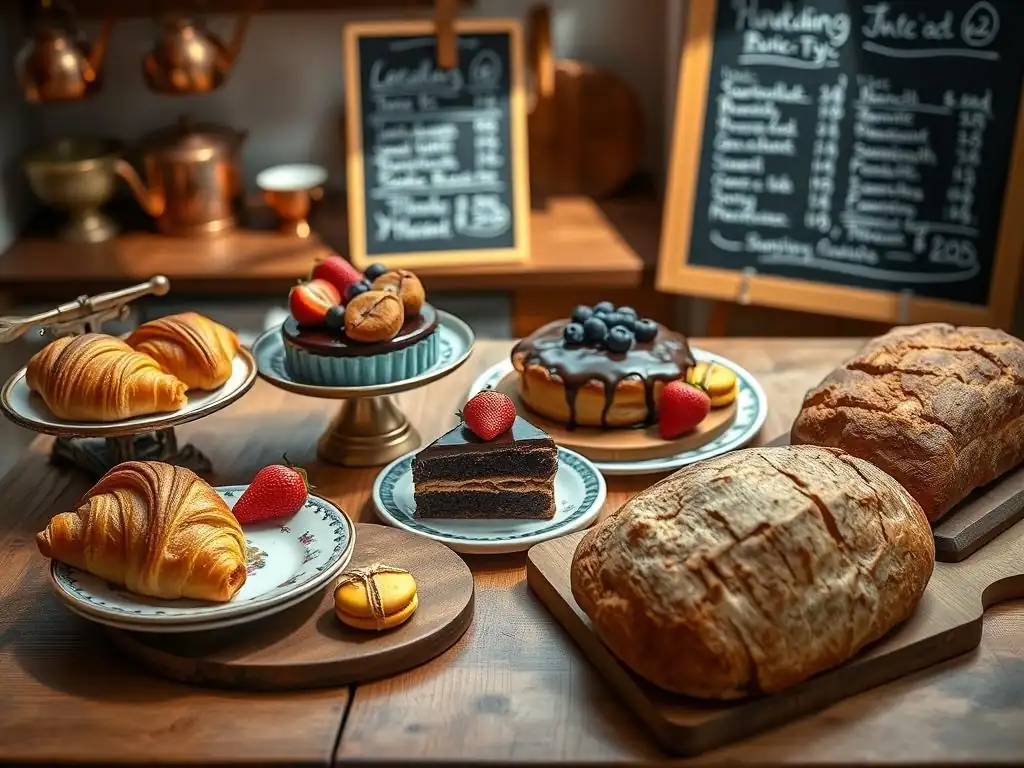
Cost-Plus Pricing: A Simple and Effective Method
Cost-plus pricing is one of the most straightforward methods and is particularly popular for beginners learning how to price baked goods profitably. It involves calculating the total cost of producing an item (as determined in Step 4 above) and then adding a desired profit margin percentage. The formula is:
Price = Total Cost Per Item * (1 + Desired Profit Margin %)
For example, if your total cost for a cupcake is $2.53 and you want a 40% profit margin, the price would be $2.53 * (1 + 0.40) = $2.53 * 1.40 = $3.54. You would likely round this up to a customer-friendly price like $3.75 or $4.00. This method ensures that every item sold contributes a predictable amount towards your profit, making it easier to project earnings.
This strategy is transparent and easy to explain to yourself and potentially to customers (if you choose to discuss your process). It guarantees that your costs are covered and you're making a profit on each sale. However, it doesn't necessarily take into account what the market is willing to pay or the value customers place on your unique products, which might lead you to underprice or overprice compared to competitors if used in isolation. It's a solid starting point for pricing baked goods profitably, but often best combined with other strategies.
Competitive Pricing: Analyzing Market Rates for Similar Baked Goods
Competitive pricing involves researching what your direct competitors are charging for similar baked goods in your local area or online market. This strategy helps you position your prices within the existing market landscape, ensuring you're not significantly higher or lower than comparable offerings. Visit local bakeries, check out home bakery websites or social media pages, and note the prices for items like cookies, cupcakes, custom cakes, or loaves of bread that are similar in size, quality, and complexity to yours.
While simply matching competitor prices isn't always the best approach (especially if your costs are different), understanding the market range is crucial. If your calculated cost-plus price is significantly higher than competitors, you might need to re-evaluate your costs or target a different customer segment. If your price is much lower, you might be missing an opportunity to capture more profit or might be perceived as lower quality. Use competitive analysis as a reality check and adjust your strategy to find the optimal price point for pricing baked goods profitably in your specific market.
Value-Based Pricing: Pricing Based on Perceived Customer Value
Value-based pricing focuses on what the customer believes your baked goods are worth, rather than solely on your production costs. This strategy is particularly effective if your products offer unique benefits, use premium ingredients, have exceptional quality, intricate designs, or provide a superior customer experience (e.g., excellent customer service, beautiful packaging, convenient delivery). Customers may be willing to pay a premium for perceived value, regardless of your exact cost structure.
To implement value-based pricing, you need to deeply understand your target customer, their needs, their preferences, and their willingness to pay for the unique value you offer. If you specialize in allergen-free baking using expensive alternative ingredients and catering to a niche market, customers in that market may value the safety and quality assurance significantly, allowing you to charge a higher price than a conventional bakery. This strategy requires strong branding and communication of your unique selling propositions to justify the price point, but it can be key to pricing baked goods profitably at a premium level.
Psychological Pricing Strategies for Baked Goods
Psychological pricing techniques leverage consumer psychology to influence purchasing decisions. One common tactic is using prices ending in .99 or .95 (e.g., $3.99 instead of $4.00), which can make the price seem significantly lower to the customer, even if the difference is minimal. Another strategy is tiered pricing or offering different sizes/quantities at varying price points to encourage upsizing (e.g., a single cookie for $2.50, a pack of three for $7.00, and a dozen for $25.00 – the dozen offers the best per-cookie value, encouraging a larger purchase).
Bundle pricing, offering several items together at a slightly reduced total price than if purchased individually (e.g., a "dessert box" with a mix of items), can also increase perceived value and average order size. While these techniques shouldn't replace solid cost calculation, they can be effective tools to fine-tune your final prices and make them more appealing to customers, contributing to pricing baked goods profitably by influencing sales volume and perceived value.
Factors Affecting Your Baked Goods Pricing
Ingredient Quality and Sourcing
The quality and source of your ingredients have a direct and significant impact on your costs and, consequently, your pricing. Using premium ingredients, such as organic flour, couverture chocolate, fresh seasonal fruits, or local farm-fresh eggs, will inherently increase your production costs compared to using standard commercial ingredients. For example, using high-quality European butter might cost $5-$7 per pound, while a standard store brand might be $3-$4 per pound. This difference directly translates to a higher cost per item baked.
Communicating the value of these high-quality ingredients to your customers can justify a higher price point. Customers who prioritize taste, ethical sourcing, or specific dietary needs are often willing to pay more for products made with superior or specially sourced ingredients. Highlighting that you use "Belgian chocolate" or "local organic berries" on your menu can enhance the perceived value and support pricing baked goods profitably at a higher tier.
Baking Complexity and Skill Level Required
The complexity of the baking process and the skill level needed to execute a recipe also influence the time and effort involved, directly affecting labor costs. A simple drop cookie recipe might take minimal time and skill, while a multi-tiered decorated cake or intricate laminated pastry like croissants requires significantly more time, precision, and expertise. The labor cost for a complex item will naturally be much higher.
Consider the hours spent on intricate sugar flowers, custom fondant work, or the multi-day process required for sourdough bread or puff pastry. These require advanced skills that command a higher value. When pricing baked goods profitably, you must account for the expertise and time invested in creating these specialized items. Customers expect to pay more for artisanal products that showcase significant skill and effort compared to simpler, mass-produced items.
Packaging and Presentation: Impact on Perceived Value
The way you package and present your baked goods plays a crucial role in their perceived value and contributes to your overall costs. Beautiful, sturdy boxes, custom labels, ribbons, and tissue paper enhance the unboxing experience and make your products feel more luxurious and gift-worthy. For instance, a simple cookie placed in a clear plastic bag might be perceived differently than the same cookie presented in a branded box lined with tissue paper and tied with a ribbon.
While basic packaging like cellophane bags might cost pennies per item, custom boxes and ribbons can add $0.50 to $2.00 or more per item or order, depending on the complexity and materials. These costs must be factored into your pricing. High-quality packaging can justify a higher price point as it enhances the customer's overall experience and reinforces the quality of the product inside, making it easier to succeed at pricing baked goods profitably.
Delivery and Shipping Costs
If you offer delivery or shipping, these costs must be carefully calculated and factored into your pricing strategy. Local delivery involves time, fuel, and potential vehicle wear and tear. Shipping adds expenses for packaging materials designed to protect fragile items, shipping labels, postage or courier fees, and potentially thermal packaging for temperature-sensitive goods.
You can handle these costs in a few ways:
- Build a portion of delivery/shipping costs into the price of the baked goods themselves.
- Charge a separate, flat-rate delivery or shipping fee.
- Charge a variable fee based on distance or weight.
- Offer free delivery/shipping above a certain order value, building the average cost into your product pricing.
Clearly communicating your delivery or shipping costs to customers is essential. Failing to accurately account for these expenses can significantly erode your profit margins, making it challenging to achieve your goal of pricing baked goods profitably.
Market Research for Optimal Pricing
Identifying Your Target Customer and Their Willingness to Pay
Understanding who your ideal customer is is fundamental to setting prices they are willing and able to pay. Are you targeting busy professionals looking for convenient, high-quality treats? Parents planning elaborate birthday parties? Health-conscious individuals seeking allergen-free options? Students on a tight budget? Each group has different priorities and different levels of disposable income.
Conducting market research helps you understand your target demographic's purchasing power and their perceived value of your products. This can involve informal conversations, social media polls, or even small focus groups. If your target market is accustomed to buying premium goods, they may be willing to pay a higher price for your artisanal creations. Conversely, if your audience is budget-conscious, you may need to focus on optimizing costs to offer competitive pricing while still pricing baked goods profitably.
Analyzing Competitor Pricing Strategies in Your Area
As mentioned earlier, analyzing competitors is key, but dig deeper than just noting their prices. Try to understand why they are priced that way. Are they a large retail bakery with high overhead, or another home baker with lower costs? Do they offer similar quality and ingredients? What is included in their price (e.g., standard packaging vs. premium)?
Look at their pricing structure – do they offer discounts for bulk orders, loyalty programs, or special promotions? This analysis helps you identify gaps in the market and opportunities for differentiation. If all competitors offer basic options at low prices, there might be room for you to enter with premium, higher-priced items. Use this competitive intelligence to refine your own strategy for pricing baked goods profitably within your local market context.
Gathering Feedback on Pricing from Potential Customers
Don't be afraid to talk to potential customers before finalizing your pricing. You can offer samples and ask for feedback, including what they might expect to pay for such a product. You could also run polls on social media asking followers about their price expectations for certain types of baked goods.
Consider offering a limited run of products at introductory prices to gauge initial reactions, while being clear that these are introductory rates. Pay attention to comments, inquiries, and sales patterns once you launch. Are customers hesitant about prices? Are they surprised by how affordable or expensive they are? This direct feedback is invaluable for validating your pricing assumptions and making necessary adjustments to ensure you are pricing baked goods profitably while remaining attractive to your audience.
Pricing for Different Types of Baked Goods
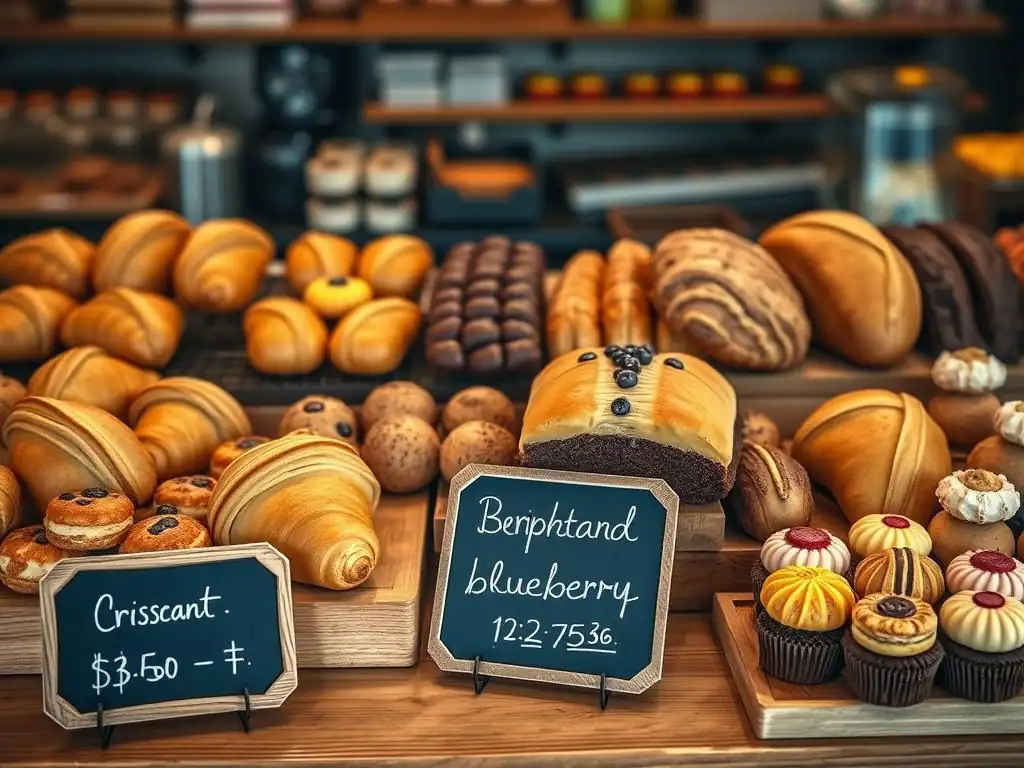
Pricing Cakes: Custom Designs and Complexity
Pricing cakes, especially custom celebration cakes, is often the most complex task for a home baker. These aren't standard items; they are unique creations based on customer requests. The price must reflect not just the size and ingredients but also the significant labor involved in design, decoration, and intricate details like sugar flowers, sculpted figures, or airbrushing. A simple round cake with basic frosting might cost $30-$50, while a multi-tiered cake with elaborate fondant work and custom toppers could easily range from $200 to $500 or even much higher, depending on size, complexity, and the baker's expertise.
Develop a base pricing structure based on cake size (number of servings) and standard flavors, calculated using your cost-plus method. Then, create a clear system for adding charges based on complexity: per hour for detailed labor, per intricate element (e.g., $X for a sugar rose, $Y for a sculpted figure), or by tier for multi-layer cakes. Providing customers with a detailed breakdown or clear examples of pricing tiers for different design complexities helps manage expectations and ensures you are pricing baked goods profitably even for highly customized orders.
Cookies and brownies are often sold individually, by the half-dozen, or by the dozen/batch. Pricing individual cookies or brownies should cover the cost of production plus profit, but the price per item typically decreases when sold in larger quantities (bulk pricing). This encourages customers to buy more, increasing your overall sales volume and potentially reducing packaging costs per item. For example, a single gourmet cookie might sell for $3.00, but a box of six might be $16.00 ($2.67 each) and a dozen for $30.00 ($2.50 each).
Calculate the cost per cookie or brownie based on batch production, then determine tiered pricing that offers a slight discount per item for larger quantities while still maintaining a healthy profit margin on the overall sale. Consider offering variety packs or bundles, which can also increase the average order value. Efficient batch production is key to pricing baked goods profitably when selling high volumes of smaller items like cookies and brownies.
Pricing Breads and Pastries: Considering Ingredient Costs and Baking Time
Breads and pastries, particularly artisanal varieties like sourdough, croissants, or danishes, often involve longer proofing times, specific techniques (like lamination), and sometimes more expensive or specialized ingredients. The extended time required for fermentation in sourdough, for instance, adds to the labor cost, even if it's passive time. Ingredients like high-quality butter for croissants or specialty flours for certain breads directly impact the cost.
Price your breads and pastries based on the ingredient cost, the time and skill involved in the specific process (e.g., the intensive labor of laminating dough), and the yield of the recipe. A rustic loaf of sourdough might take 24-48 hours from start to finish and require specific starter maintenance, justifying a higher price ($6-$10+) than a simple quick bread ($3-$5). Ensure your pricing reflects the artisanal nature and quality of these items when pricing baked goods profitably.
Clearly Displaying Prices and Descriptions
Your pricing menu should be clear, easy to read, and readily accessible to potential customers, whether it's on your website, social media page, or a physical flyer. List each item with a clear name and a brief, enticing description that highlights key features, such as premium ingredients ("Made with Belgian Chocolate"), unique flavors, or dietary considerations ("Gluten-Free").
Clearly state the price for each item or size variation. Avoid ambiguity. If prices vary based on customization (like cakes), explain how pricing is determined (e.g., "Custom cakes priced by serving size and design complexity, starting at $X"). Transparent pricing builds trust and helps customers make informed decisions, reducing inquiries about cost and streamlining the ordering process, which ultimately supports you in pricing baked goods profitably and efficiently.
Offering Package Deals and Bundles for Increased Sales
Strategically bundling items or offering package deals can increase the average value of each order and encourage customers to try a variety of your products. For example, a "Breakfast Pastry Box" could include a mix of croissants, muffins, and scones at a slightly lower price than purchasing each item individually. A "Cookie Sampler" allows customers to try different flavors.
These bundles should be designed to be attractive to customers while still maintaining a healthy profit margin for you. Calculate the cost of the bundle and set a price that offers perceived value to the customer (a slight discount) while being more profitable for you due to increased volume or efficient packaging. This is a great tactic for pricing baked goods profitably while boosting sales.
Use your menu descriptions to justify your pricing, especially if you use high-quality or specialty ingredients or techniques. Mentioning "organic butter," "fair-trade chocolate," "locally sourced berries," or "slow-fermented sourdough" communicates the value behind your price tag. If your items are labor-intensive or require specific skills, subtly hint at this through descriptions like "hand-decorated" or "artisanal."
Educating your customers about what makes your baked goods special helps them understand why they might cost more than store-bought alternatives. This transparency builds appreciation for your craft and reinforces the quality of your products, making customers more willing to pay a premium and enabling you to succeed at pricing baked goods profitably based on the true value you offer.
Monitoring and Adjusting Your Baked Goods Pricing
Tracking Sales Data and Profit Margins
Once you start selling, continuously track your sales data and monitor your profit margins. This involves reviewing which items are selling well, which are not, and verifying that the profit margin you calculated is actually being realized after accounting for all expenses. Use a simple spreadsheet or accounting software to record sales and track your costs over time.
Regularly calculate the actual profit per item and overall profitability for different periods (weekly, monthly). Are some items significantly more or less profitable than you anticipated? This data provides valuable insights into the accuracy of your initial pricing and helps you identify areas for adjustment. Consistent monitoring is key to ensuring you are consistently pricing baked goods profitably.
Adapting to Fluctuations in Ingredient Costs
Ingredient prices are not static; they can change due to seasonality, supply chain issues, or market demand. For example, the price of butter or eggs might fluctuate throughout the year. Regularly review your ingredient costs (perhaps quarterly) and update your cost calculations accordingly.
If a key ingredient sees a significant and sustained price increase, you may need to adjust the price of the baked goods that use it heavily. While slight fluctuations can often be absorbed, large increases that significantly impact your profit margin necessitate a price review. Communicate any necessary price increases transparently to your customers, explaining that they are due to rising ingredient costs. Being proactive helps you continue pricing baked goods profitably despite external economic factors.
Responding to Customer Feedback and Market Trends
Pay attention to feedback from your customers regarding your prices. Are multiple people commenting that a specific item seems too expensive? Are customers consistently choosing lower-priced items over higher-priced ones? While not every piece of feedback requires a price change, consistent comments can indicate that your pricing is out of alignment with customer expectations or perceived value.
Also, keep an eye on market trends. Are new competitors entering the market with different pricing structures? Is there a growing demand for premium or budget options? Staying informed allows you to adapt your pricing strategy to remain competitive and relevant. Flexibility and responsiveness to feedback and market dynamics are crucial components of effective and profitable pricing baked goods.
Legal Considerations for Pricing Baked Goods

Understanding Local Pricing Regulations and Labeling Requirements
Laws regarding selling food from home vary significantly by location. It is crucial to research and understand the specific regulations in your city, county, and state. These regulations may include requirements for obtaining permits or licenses, following specific food safety guidelines (like cottage food laws), and often have rules about how products must be labeled.
Labeling requirements typically include listing ingredients, allergens, your business name and address, and potentially nutritional information. While not strictly a pricing regulation, accurate labeling builds customer trust and is legally required. Some jurisdictions may also have rules about how prices are displayed or advertised, especially concerning sales or promotions. Ensure your pricing practices comply with all local regulations to avoid legal issues and build a reputable business foundation.
Ensuring Transparency and Avoiding Price Gouging
Transparency in pricing is vital for building a trustworthy relationship with your customers. Clearly display your prices and any additional fees (like delivery). Avoid hidden costs or suddenly increasing prices without explanation. If you must raise prices, consider informing your loyal customers in advance, explaining the reasons (e.g., rising ingredient costs).
Price gouging, which typically involves drastically increasing prices for essential goods during a crisis or emergency, is illegal and unethical. While baked goods are not usually classified as essential goods in this context, the principle of fair and reasonable pricing applies. Your pricing should always be justifiable based on your costs, the value you provide, and market conditions, not opportunistic exploitation. Ethical pricing practices are fundamental to long-term success and pricing baked goods profitably through customer loyalty.
Example Pricing Scenarios for Baked Goods
Let's say your costs for a batch of 24 standard-sized chocolate chip cookies are:
- Ingredients: $6.00 (flour, sugar, butter, eggs, chocolate chips, vanilla, baking soda, salt)
- Labor: $10.00 (30 minutes at $20/hour)
- Overhead Allocation: $4.00 (packaging, utilities, etc.)
- Total Cost per Batch: $6.00 + $10.00 + $4.00 = $20.00
- Total Cost per Cookie: $20.00 / 24 = ~$0.83
Using a 50% profit margin:
- Price per Cookie: $0.83 * (1 + 0.50) = $0.83 * 1.50 = $1.25. You might round this up to $1.50 per cookie for individual sale.
- Price per Dozen: $1.25 * 12 = $15.00. Offering a slight discount for bulk, you might price a dozen at $15.00 or $16.00. This ensures you are pricing baked goods profitably for both individual and bulk sales.
Scenario 2: Pricing a Birthday Cake
Consider a 9-inch round, two-layer vanilla cake with buttercream frosting, serving 12-16 people, with basic decoration.
- Ingredients: $15.00 (cake mix/ingredients, frosting ingredients, coloring)
- Labor: $40.00 (2 hours for baking, cooling, frosting, basic decorating at $20/hour)
- Overhead Allocation: $10.00 (box, board, utilities, etc.)
- Total Cost: $15.00 + $40.00 + $10.00 = $65.00
Using a 60% profit margin (cakes often have higher margins due to complexity and perceived value):
- Price: $65.00 * (1 + 0.60) = $65.00 * 1.60 = $104.00. You might price this cake at $100 or $110, depending on competitive analysis and target market. For custom elements, you would add charges based on time or specific decorations, ensuring you are pricing baked goods profitably even for intricate designs.
Scenario 3: Pricing Sourdough Bread
Let's price a large, rustic loaf of sourdough bread.
- Ingredients: $4.00 (specialty flour, water, salt - starter cost is negligible per loaf)
- Labor: $15.00 (This accounts for active time mixing, shaping, scoring, plus allocation for the long fermentation/proofing time - perhaps 45 minutes active time at $20/hour plus a time allocation)
- Overhead Allocation: $3.00 (parchment paper, electricity for oven, proofing basket liner, etc.)
- Total Cost: $4.00 + $15.00 + $3.00 = $22.00
Using a 40% profit margin (margins can vary by product type):
- Price: $22.00 * (1 + 0.40) = $22.00 * 1.40 = $30.80. You would likely price this loaf around $30 or $32, depending on your market and the perceived value of artisanal sourdough. This example highlights how labor and process time significantly impact pricing baked goods profitably, especially for time-intensive items.
Tools and Resources for Pricing Baked Goods
Spreadsheet Templates for Cost Calculation
Creating a detailed spreadsheet is an incredibly useful tool for calculating your costs accurately and consistently. You can set up tabs for ingredient inventory and costs, track batches baked, record labor time per product, and allocate overhead. Formulas within the spreadsheet can automatically calculate the cost per item or per batch based on the data you input.
Many free templates are available online specifically designed for home bakers or small food businesses. Using a spreadsheet helps you avoid guesswork and provides a clear, data-driven foundation for pricing baked goods profitably. It also makes it easier to update costs when ingredient prices change or you become more efficient in your process.
Online Pricing Calculators for Bakers
Several websites and apps offer online calculators specifically for helping bakers determine their costs and suggest pricing. These tools often prompt you to enter ingredient costs, batch yield, desired hourly wage, and estimated overhead, then provide a calculated cost per item and potential selling price based on a desired profit margin.
While these calculators can be helpful starting points or quick checks, they are most accurate when you input precise data based on your own costs and time tracking. Relying solely on a generic calculator without understanding your specific expenses may lead to inaccurate pricing. Use them as a supplementary tool alongside your own detailed cost tracking for the best results in pricing baked goods profitably.
Relevant Articles and Resources
Beyond calculators and templates, seek out articles, blog posts, webinars, and courses focused on pricing for food businesses and home bakers. Websites like BakeWithEase and others dedicated to small business and culinary arts often provide valuable insights, tips, and best practices. Reading about other bakers' experiences and strategies can offer new perspectives and help you refine your own approach.
Look for resources that discuss market research, understanding food costs, and setting profitable prices in a home-based context. Learning from experienced entrepreneurs and industry experts is a great way to deepen your understanding and improve your ability to implement effective strategies for pricing baked goods profitably.
Conclusion: Mastering the Art of Pricing Baked Goods for Success
Key Takeaways for Profitable Home Baking
Mastering the art of pricing baked goods profitably is arguably as important as perfecting your recipes. It requires diligent cost tracking, a clear understanding of your value, and awareness of your market. Remember these key takeaways:
- Know Your Costs: Accurately calculate ingredient, labor, and overhead costs for every product. This is the non-negotiable foundation.
- Value Your Time: Don't forget to pay yourself! Include your labor costs in your calculations.
- Choose a Strategy (or Combine Them): Use cost-plus, competitive, and value-based pricing strategically to find the right balance.
- Factor in the "Extras": Packaging, complexity, and delivery all add costs and can add value.
- Research Your Market: Understand your customers and competitors to price effectively.
- Be Transparent: Clearly communicate your prices and value to customers.
- Monitor and Adjust: Regularly review your sales data and costs, and be willing to adapt your pricing as needed.
- Comply with Regulations: Ensure your pricing and labeling meet local legal requirements.
By approaching pricing with diligence and strategy, you ensure that your passion for baking translates into a thriving, sustainable home business, allowing you to keep doing what you love while achieving financial success. Pricing baked goods profitably is within your reach with the right approach.
Frequently Asked Questions
How do I calculate the cost of goods sold (COGS) for my baked goods?
COGS includes the cost of ingredients, packaging, and any direct labor involved in creating the product. Accurate COGS calculation is crucial for determining profitability.
What are some common pricing strategies for baked goods?
Common strategies include cost-plus pricing, competitive pricing, and value-based pricing. Consider your target market and brand positioning when choosing a strategy.
How can I determine a reasonable profit margin for my baked goods?
Research industry standards and factor in your overhead costs. Aim for a margin that covers expenses and provides a sustainable profit.
How do I balance pricing for profit with customer appeal?
Conduct market research to understand what customers are willing to pay. Offer value-added options or promotional deals to attract customers without sacrificing profits.
What role does presentation and branding play in pricing baked goods?
Attractive packaging and a strong brand image can justify higher prices. Invest in quality ingredients and professional presentation to enhance perceived value.
Final Reflection: The Sweet Science of Pricing Baked Goods
The art of pricing baked goods profitably isn't just about numbers; it's about understanding your value and connecting with your customers on a deeper level. Successfully navigating the delicate balance between profit margins and customer perception is crucial for the long-term success of any bakery, large or small. This is more relevant than ever in today's competitive market, where consumers are increasingly discerning and price-sensitive.
The journey of discovering the "sweet spot" in pricing has been a fascinating exploration of both business acumen and creative expression. It's not simply about calculating costs and adding a markup; it's about understanding the intangible value you bring – the love, the passion, the unique flavors and experiences you offer. The price is what you ask. Value is what the customer gets.
This quote perfectly encapsulates the core message of this article: pricing isn't just about the monetary exchange, but about the overall value proposition.
Now, it's your turn. Consider the unique aspects of your baked goods, your target audience, and your overall business goals. Experiment with different pricing strategies, analyze your results, and refine your approach over time. Don't be afraid to adjust your prices as needed, always keeping in mind the balance between profitability and customer satisfaction. Remember, the journey to mastering the art of pricing is an ongoing process – one that will ultimately lead to a more sustainable and fulfilling baking business. Embrace the challenge, and watch your bakery flourish!
Unlock Your Baking Empire: Price for Profit & Delight!
Thanks for diving into the world of profitable pricing! You now have the knowledge to create a pricing strategy that both pleases your customers and boosts your bottom line. Ready to take the next step?
- Implement your new pricing strategy this week! Start by reviewing your cost calculations and adjusting your prices accordingly. Don't forget to consider your target market and competitor pricing. This is your biggest step towards success.
- Share your pricing journey with fellow bakers on social media! Use the hashtag #BakeWithEasePricing and inspire others to succeed. Let's build a supportive community together.
- Experiment with different pricing models – maybe a tiered system or value-added bundles? Track your results to see what resonates most with your customers.
What unique pricing strategy will you experiment with first, and what delicious treats will you be pricing to perfection?