
Easy Profiteroles with Vanilla Cream: A BakeWithEase Classic

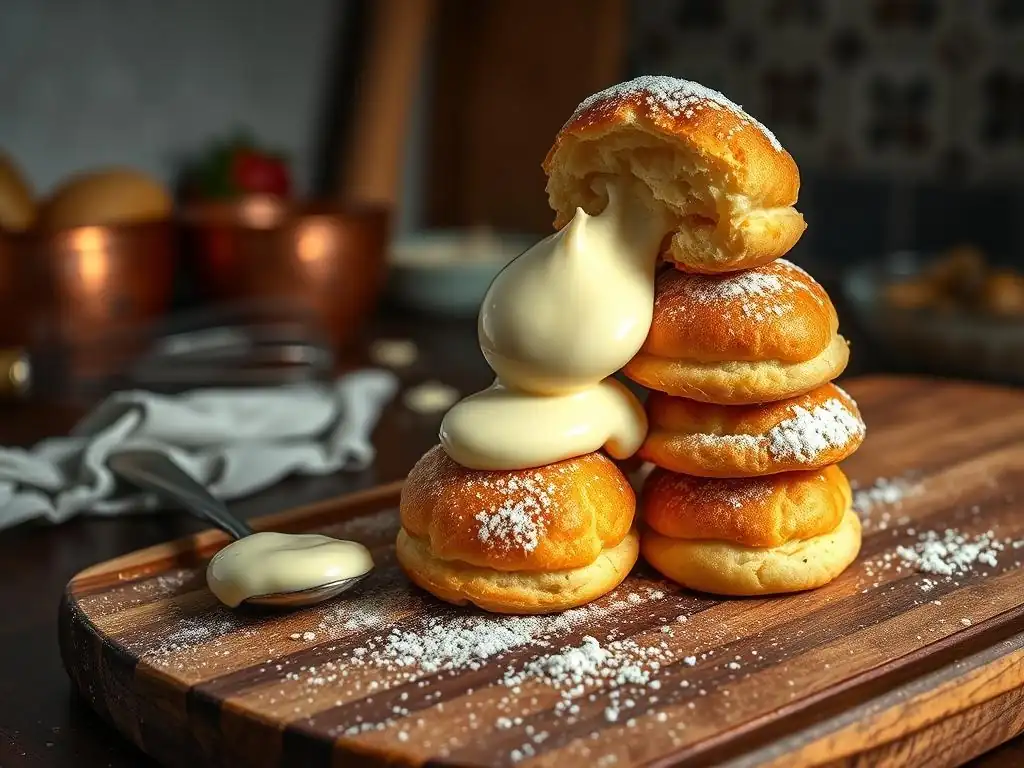
Welcome to BakeWithEase, where baking dreams become delicious realities! Ever wondered if perfect, airy profiteroles were within your reach? They absolutely are! Dive into our easy vanilla cream profiterole recipe and discover the secrets to crafting these delightful treats. Get ready to impress with a classic that’s surprisingly simple – let's get baking!
- Classic Profiteroles with Crème Pâtissière: A Step-by-Step Guide
- Introduction: Mastering Profiteroles with Homemade Crème Pâtissière
- Understanding Choux Pastry: The Foundation
- Ingredients: A Detailed List
- Step-by-Step Guide: Making the Choux Pastry
- Preparing the Homemade Crème Pâtissière Filling
- Assembling the Profiteroles
- Tips and Tricks for Perfect Profiteroles
- Troubleshooting Your Baking
- Storing Your Profiteroles
- Enjoy Your Creation!
-
Frequently Asked Questions
- How difficult is this easy vanilla cream profiterole recipe from BakeWithEase?
- What makes this profiterole recipe from BakeWithEase stand out from other recipes?
- Can I substitute ingredients in this vanilla cream profiterole recipe?
- How long does it take to make these easy vanilla cream profiteroles from start to finish?
- What are some tips for ensuring my profiteroles rise properly according to BakeWithEase?
- Final Reflection: The Enduring Allure of Simple Perfection
- Unleash Your Inner Pâtissier: Master the Art of the Profiterole!
Classic Profiteroles with Crème Pâtissière: A Step-by-Step Guide
Introduction: Mastering Profiteroles with Homemade Crème Pâtissière
Welcome: Your Guide to Perfect Profiteroles
Welcome to this BakeWithEase guide on creating delightful classic profiteroles filled with smooth, homemade crème pâtissière. If you've ever been intimidated by these elegant puffs, fear not! This easy vanilla cream profiterole recipe breaks down the process into manageable steps, making it achievable for anyone with a little baking experience. We'll walk you through creating light, airy choux pastry and a rich, flavorful vanilla cream filling that will impress everyone.
This article provides a comprehensive look at crafting perfect profiteroles from scratch. We'll cover everything from understanding the science behind choux pastry to troubleshooting common issues. By the end of this guide, you'll have the confidence to bake these classic French pastries and add your own creative twists. Get ready to fill your kitchen with the wonderful aroma of freshly baked choux and sweet vanilla cream!
Why This Recipe is Ideal for Intermediate Bakers
This easy vanilla cream profiterole recipe is a fantastic project for intermediate bakers looking to expand their skills. It introduces you to the fundamentals of choux pastry, a versatile dough used in éclairs, gougères, and more. While it requires precision in a few key steps, the techniques involved are straightforward and build upon basic baking knowledge like making a roux and a custard.
Working with this recipe helps hone several crucial baking skills: understanding dough consistency, proper mixing techniques, piping, and temperature control during baking. The homemade crème pâtissière, or pastry cream, component teaches you how to make a stable, cooked custard, a foundation for many dessert fillings. Mastering these elements through this delicious easy vanilla cream profiterole recipe will open doors to a wide array of other pastry creations.
Understanding Choux Pastry: The Foundation
What is Choux Pastry and Why It's Crucial?
Choux pastry, or pâte à choux, is a light dough used in many French pastries. Unlike most doughs which rely on chemical or yeast leaveners, choux pastry rises dramatically due to steam generated from its high moisture content. When baked at a high temperature, the water in the dough turns to steam, puffing up the pastry and creating a hollow center perfect for filling. This unique process is what gives profiteroles their signature airy texture.
The success of your easy vanilla cream profiterole recipe hinges on the quality of your choux pastry. A well-made choux dough will puff up significantly in the oven, resulting in large, hollow shells that are sturdy enough to hold a generous amount of filling without collapsing. If the choux fails to rise properly, your profiteroles will be dense and heavy, lacking that essential light quality.
Key Choux Pastry Ingredients
The core ingredients for choux pastry are surprisingly simple: water (or milk), butter, flour, and eggs. The process begins by heating the liquid and butter together, then adding flour to create a thick paste, similar to a roux. This cooks the flour and helps develop gluten structure. The paste is then cooled slightly before eggs are beaten in, one at a time, until the dough reaches a smooth, glossy consistency that is pipeable yet holds its shape.
The ratio of these ingredients is critical. A typical ratio might involve roughly equal parts liquid and butter by weight, followed by the same weight of flour, and then incorporating eggs until the dough reaches the correct consistency – often requiring 4-5 large eggs for a standard batch. The fat from the butter contributes to tenderness and flavor, while the eggs provide richness, color, and crucial proteins that help the pastry hold its structure as it steams and sets.
Common Mistakes and How to Avoid Them
One of the most common mistakes when making choux pastry for an easy vanilla cream profiterole recipe is not cooking the flour paste long enough after adding the flour to the liquid and butter. This step, often called "drying out the paste," is vital for developing the gluten structure and ensuring the dough can absorb the eggs properly. Cook the paste over medium heat, stirring vigorously, until it pulls away from the sides of the pan and a thin film forms on the bottom, usually for 1-2 minutes.
Another frequent error is adding the eggs when the paste is too hot, which can partially cook or scramble them, resulting in a greasy, inconsistent dough. Always let the paste cool for a few minutes after cooking it, or transfer it to a stand mixer bowl and mix on low speed for a minute or two, before gradually adding the eggs. Finally, resist the urge to open the oven door during the initial high-temperature baking phase (the first 15-20 minutes). Opening the door releases the steam that causes the puff and can cause the pastries to collapse.
Ingredients: A Detailed List
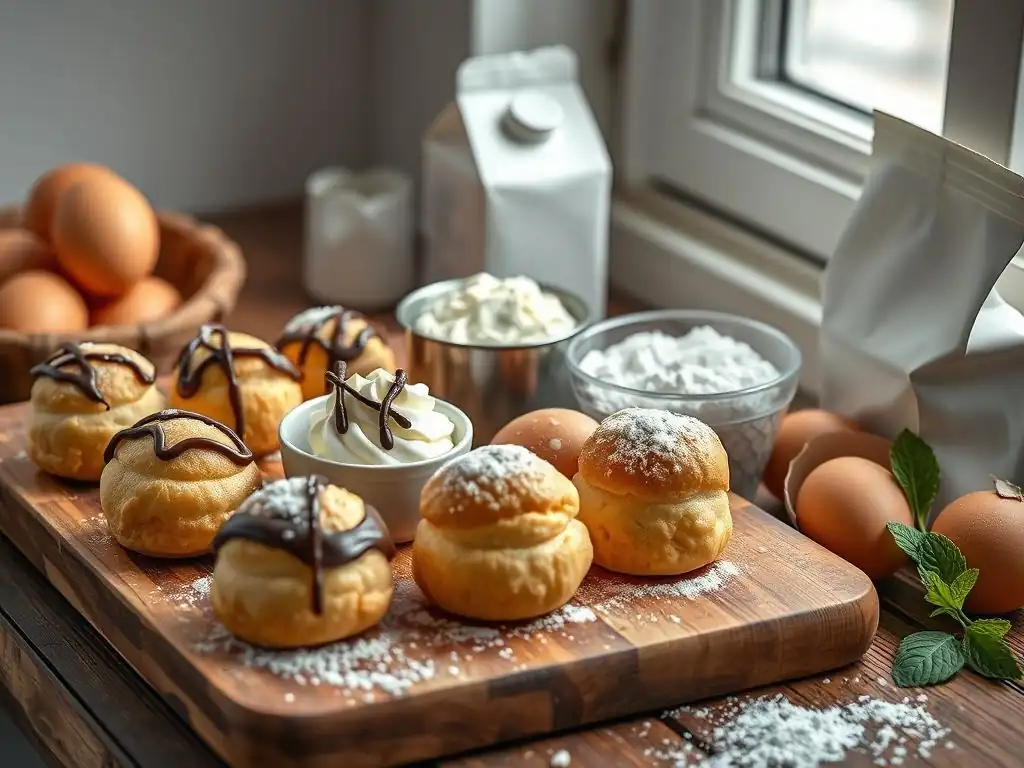
Profiterole Dough Ingredients
Here are the ingredients you'll need to make the choux pastry for your easy vanilla cream profiterole recipe:
- 1 cup (240ml) Water (or a mix of water and milk for richer dough)
- ½ cup (113g) Unsalted Butter, cut into cubes
- ¼ teaspoon Salt
- 1 cup (125g) All-Purpose Flour, sifted
- 4 large Eggs, at room temperature
These quantities typically yield about 20-25 medium-sized profiteroles. Using room temperature eggs is important as they incorporate more smoothly into the dough. Sifting the flour helps prevent lumps and makes it easier to mix into the hot liquid.
Crème Pâtissière Filling Ingredients
The star filling for this easy vanilla cream profiterole recipe is the classic crème pâtissière. Here's what you'll need for a generous batch:
- 2 cups (480ml) Whole Milk
- 1 Vanilla Bean, split and scraped, or 1 teaspoon Pure Vanilla Extract
- 4-6 large Egg Yolks (reserve whites for another use)
- ½ cup (100g) Granulated Sugar
- ¼ cup (30g) Cornstarch (or 3 tablespoons All-Purpose Flour)
- 2 tablespoons Unsalted Butter, cold and cut into small cubes (optional, for extra richness)
Using whole milk provides the richest, creamiest texture for the pastry cream. A vanilla bean offers the most intense vanilla flavor, but high-quality vanilla extract works well too. The cornstarch (or flour) acts as a thickener, ensuring the cream is stable enough to fill the profiteroles without being runny.
Essential Baking Tools
To successfully execute this easy vanilla cream profiterole recipe, having the right tools will make the process much smoother. You won't need anything overly specialized, but a few items are highly recommended.
- Medium Heavy-Bottomed Saucepan: For making both the choux paste and the crème pâtissière. A heavy bottom helps distribute heat evenly and prevents scorching, especially important for the pastry cream.
- Wooden Spoon or Sturdy Spatula: For mixing the choux paste vigorously over heat.
- Stand Mixer with Paddle Attachment (optional but helpful) or Hand Mixer: For incorporating the eggs into the choux paste smoothly. Can also be used for whisking the crème pâtissière smooth after cooling.
- Piping Bag and Large Round or Star Tip (like Ateco 808 or 1M): For piping uniform choux puffs. While you can use two spoons, a piping bag yields more consistent results.
- Baking Sheets: Standard half-sheet pans work well.
- Parchment Paper or Silicone Baking Mats: To line the baking sheets and prevent sticking. Using these ensures easy removal of the delicate choux shells.
- Whisk: Essential for making the crème pâtissière, both for whisking the yolks/sugar/cornstarch and whisking the cream as it thickens over heat.
- Fine-Mesh Sieve: For straining the finished crème pâtissière to ensure it's perfectly smooth.
Step-by-Step Guide: Making the Choux Pastry
Step 1: Preparing the Dough Ingredients
Begin by accurately measuring all your choux pastry ingredients. Cube your butter and have it ready. Sift your flour to remove any lumps and make it lighter. Crucially, ensure your eggs are at room temperature; you can achieve this quickly by placing them in a bowl of warm water for 5-10 minutes. Preheat your oven to 400°F (200°C). Line a baking sheet with parchment paper or a silicone baking mat.
Having everything measured and ready before you start cooking the paste is essential because the process once the flour is added moves quite quickly. This preparation step ensures you can focus on the technique without scrambling for ingredients. A little bit of upfront organization makes a big difference in the outcome of your easy vanilla cream profiterole recipe.
Step 2: Combining Water, Butter, Salt, and Flour
In your medium heavy-bottomed saucepan, combine the water (or water/milk mix), cubed butter, and salt. Heat this mixture over medium heat, stirring occasionally, until the butter is completely melted and the liquid comes to a rolling boil. Once boiling, remove the pan from the heat immediately and add all the sifted flour at once.
Stir vigorously with a wooden spoon or sturdy spatula until the mixture comes together into a ball of dough. Return the pan to low heat and continue to cook the dough ball, stirring constantly, for 1-2 minutes. This step, known as dessecher (to dry out), cooks the flour, removes excess moisture, and helps develop gluten structure. You'll see a thin film form on the bottom of the pan. Remove the pan from the heat and let the dough cool for about 5 minutes before adding the eggs.
Step 3: Incorporating Eggs into the Dough
Transfer the slightly cooled dough to the bowl of a stand mixer fitted with the paddle attachment, or keep it in the saucepan if using a hand mixer or mixing by hand. Add the eggs one at a time, beating thoroughly after each addition until the egg is fully incorporated and the dough is smooth before adding the next. This is a critical step in your easy vanilla cream profiterole recipe.
The dough will look curdled or separated at first after adding an egg, but keep mixing; it will come back together. After adding the fourth egg, check the consistency. The dough should be smooth, glossy, and thick enough to hold its shape but soft enough to pipe easily.
When you lift the paddle or spoon, the dough should hang in a 'V' shape and break off cleanly. If it's too stiff, you might need a fifth egg, added gradually, beating only until the correct consistency is reached. Be careful not to add too many eggs, or the dough will be too runny to pipe.
Step 4: Piping the Dough onto the Baking Sheet
Once your choux dough is ready and has the correct consistency, transfer it to a piping bag fitted with your chosen tip (a large round tip like Ateco 808 or a star tip like 1M works well). Hold the piping bag perpendicular to the lined baking sheet and pipe mounds of dough about 1.5 to 2 inches in diameter, leaving about 2 inches of space between them to allow for expansion.
If the tops of your piped mounds have peaks, gently smooth them down with a dampened fingertip or the back of a spoon. This prevents the tips from burning in the oven. For extra crispness, you can lightly mist the piped dough with water from a spray bottle just before baking. This helps create more steam in the initial baking phase, promoting a better rise.
Step 5: Baking the Profiteroles
Place the baking sheet with the piped choux dough into your preheated 400°F (200°C) oven. Bake for 15-20 minutes, or until the puffs have significantly risen and started to turn golden brown. At this point, without opening the oven door, reduce the oven temperature to 350°F (180°C) and continue baking for another 10-15 minutes, or until the profiteroles are deep golden brown, feel light when lifted, and sound hollow when tapped on the bottom.
Baking them until they are a deep golden brown is crucial for ensuring they are cooked through and will not collapse upon cooling. The lower temperature finishes drying out the inside. Once baked, turn off the oven, prop the door open slightly with a wooden spoon, and let the profiteroles sit inside for another 10-15 minutes. This slow cooling process helps prevent them from deflating. Transfer them to a wire rack to cool completely before filling.
Preparing the Homemade Crème Pâtissière Filling
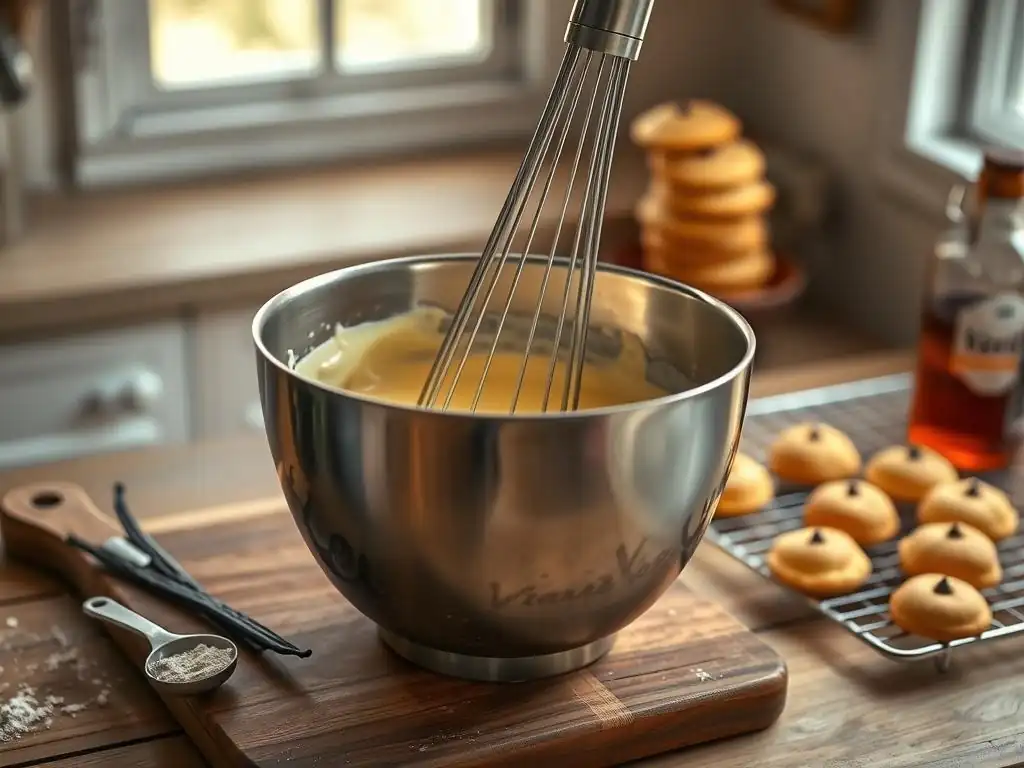
Step 1: Infusing Milk with Vanilla
Start preparing the vanilla cream filling for your easy vanilla cream profiterole recipe by gently heating the milk. If using a vanilla bean, split it lengthwise and scrape the seeds into a medium saucepan. Add the bean pod and the milk to the pan. Heat the milk over medium heat just until it reaches a simmer around the edges – do not boil. Remove from heat, cover, and let steep for 10-15 minutes to infuse the vanilla flavor. If using vanilla extract, you'll add it later.
After steeping, remove the vanilla bean pod (if used). Gently reheat the milk slightly if it has cooled too much, ensuring it's hot but not boiling when you need it in Step 3. This infusion step is key to getting a rich, natural vanilla flavor throughout your pastry cream, elevating your easy vanilla cream profiterole recipe.
Step 2: Combining Egg Yolks, Sugar, and Cornstarch
While the milk is infusing, prepare the base for your crème pâtissière in a separate medium bowl. Whisk together the egg yolks and granulated sugar until the mixture is pale yellow and slightly thickened. This process, called blanching, helps dissolve the sugar and makes the yolks more stable.
Next, whisk in the cornstarch (or flour) until no lumps remain and the mixture is smooth. This yolk mixture will be tempered with the hot milk, a technique that prevents the eggs from scrambling when combined with the hot liquid. Ensure the cornstarch is thoroughly combined to avoid lumpy pastry cream.
Step 3: Cooking the Crème Pâtissière
Slowly and gradually ladle about half of the hot, infused milk into the egg yolk mixture while whisking constantly. This process is tempering, bringing the temperature of the yolks up slowly. Once combined, pour the tempered yolk mixture back into the saucepan with the remaining hot milk.
Return the saucepan to medium heat and whisk constantly. The mixture will thicken relatively quickly as it heats. Continue whisking and cook for 1-2 minutes after it starts to bubble and thicken vigorously. This ensures the cornstarch is fully cooked and activated, resulting in a stable cream. Cooking it long enough is essential for the cream to set properly when cooled.
Step 4: Cooling and Preparing the Filling
Once the crème pâtissière is cooked and thick, remove the pan from the heat. If using vanilla extract, stir it in now. If using cold butter (optional), whisk it in one piece at a time until melted and incorporated; this adds gloss and richness. For the smoothest possible texture, strain the pastry cream through a fine-mesh sieve into a clean bowl.
Immediately cover the surface of the crème pâtissière directly with plastic wrap to prevent a skin from forming as it cools. Let it cool at room temperature for about 30 minutes, then refrigerate for at least 2-3 hours, or until completely cold and set. Before filling the profiteroles, whisk the chilled cream vigorously for a minute or two to make it smooth and pipeable again.
Assembling the Profiteroles
Step 1: Creating the Filling Hole
Once your choux pastry shells are completely cooled and your crème pâtissière is chilled and whisked smooth, it's time to assemble your easy vanilla cream profiterole recipe. There are a couple of ways to create the opening for the filling. The simplest is to poke a small hole (about ¼ inch) in the bottom of each profiterole using a small knife tip, a skewer, or the tip of a piping bag.
Alternatively, you can slice off the top third of each profiterole horizontally using a serrated knife. This method allows you to generously spoon the filling inside and then replace the "lid." Choosing the bottom-hole method usually results in a neater appearance, especially if you plan to stack them.
Step 2: Filling the Profiteroles with Crème Pâtissière
Transfer the chilled and re-whisked crème pâtissière to a piping bag fitted with a small round tip (like Ateco 802) or simply use a clean piping bag with the tip snipped off to create a small opening. Insert the tip into the hole you made in the bottom of each profiterole.
Gently squeeze the piping bag, filling the cavity of the profiterole until you feel slight resistance or see the puff begin to swell slightly. Be generous with the filling, as the light choux can hold a good amount of cream. If you opted to slice the tops off, simply use a spoon to dollop a generous amount of cream onto the bottom half before replacing the top.
Step 3: Dusting with Powdered Sugar or Glazing with Chocolate
With your easy vanilla cream profiterole recipe now filled, you can finish them off with a classic topping. The simplest and most elegant finish is a light dusting of powdered sugar. Place a few filled profiteroles on a plate and lightly sift powdered sugar over them using a small sieve.
For a richer finish, you can dip the tops of the filled profiteroles in melted chocolate. Use semi-sweet or dark chocolate for a classic pairing with vanilla. Melt the chocolate gently in a double boiler or microwave, then dip the top of each filled puff and place it on parchment paper for the chocolate to set. This adds a decadent touch to your homemade vanilla cream profiteroles.
Tips and Tricks for Perfect Profiteroles
Achieving Optimal Rise
Achieving that impressive puff in your easy vanilla cream profiterole recipe is key. Ensure your oven temperature is accurate; starting at a high temperature (400°F/200°C) creates the initial steam burst, while finishing at a lower temperature (350°F/180°C) dries out the inside. Using a thermometer to check your oven's actual temperature can be very helpful.
Don't overcrowd the baking sheet; leave enough space (about 2 inches) for the profiteroles to expand without touching. Most importantly, resist the urge to open the oven door during the first 15-20 minutes of baking. This traps the steam needed for lift. Baking until they are a deep golden brown, not just lightly colored, ensures they are sturdy enough to hold their shape.
Preventing Soggy Profiteroles: Storage and Serving
To keep your easy vanilla cream profiterole recipe from becoming soggy, especially after filling, proper storage and serving timing are crucial. Choux pastry absorbs moisture from the filling over time, leading to a soft, sometimes limp texture.
The best way to enjoy profiteroles is to fill them as close to serving time as possible, ideally within 1-2 hours. If you need to prepare ahead, bake the choux shells completely and store them unfilled in an airtight container at room temperature for up to 1-2 days, or freeze them for longer storage (up to 2-3 months). The crème pâtissière can be made a day in advance and stored, covered tightly, in the refrigerator. Assemble only when ready to serve.
Crème Pâtissière Variations: Chocolate, Coffee, or Citrus
While a classic vanilla cream filling is divine in this easy vanilla cream profiterole recipe, crème pâtissière is wonderfully versatile. You can easily adapt the filling to create different flavors. For a chocolate variation, whisk in 2-3 ounces of finely chopped dark or milk chocolate into the hot pastry cream after removing it from the heat, stirring until melted and smooth.
To make coffee crème pâtissière, dissolve 1-2 tablespoons of instant espresso powder in the hot milk before adding it to the egg mixture. For a bright, citrusy version, infuse the milk with strips of lemon or orange zest, or stir in 1-2 tablespoons of fresh lemon or orange juice and some zest after the cream has thickened. These variations offer exciting twists on your basic vanilla cream profiteroles.
Troubleshooting Your Baking
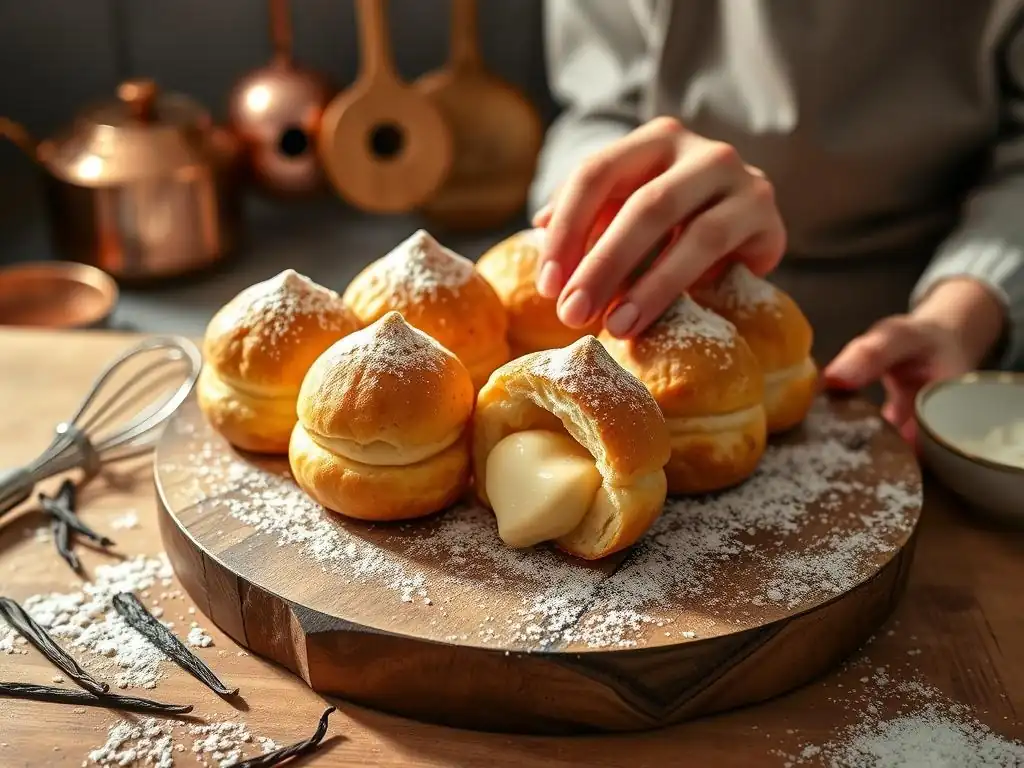
Problem: Profiteroles are Flat
If your profiteroles come out flat or collapse after baking, there are a few likely culprits. One common issue is insufficient cooking of the flour paste in Step 2; if the paste isn't dried out enough, the gluten structure won't be strong, and it won't absorb the eggs correctly. Ensure you cook it over low heat for 1-2 minutes until a film forms on the pan.
Another major cause is opening the oven door too early during baking. The steam generated in the first 15-20 minutes is essential for the rise; releasing it prematurely causes the pastries to deflate. Also, ensure your dough consistency is correct after adding eggs in Step 3 – if it's too wet, it won't hold its shape and will spread rather than puff. Baking until they are a deep golden brown and letting them cool gradually in the oven also helps prevent collapse.
Problem: Profiteroles are Too Dry
Profiteroles that are too dry or tough are usually the result of overbaking or baking at too low a temperature initially. While you need to bake them long enough to dry out the inside, excessive baking time or temperature can make the shells hard and brittle. Ensure you follow the two-stage baking process (high heat then lower heat) as outlined in Step 5.
Another potential cause of dryness is the dough being too stiff before baking, possibly from not adding enough eggs in Step 3. The dough should be smooth and pipeable, holding a soft 'V' shape when lifted. If your dough felt very stiff, the baked shells will likely be dense and dry rather than light and airy.
Problem: Crème Pâtissière is Lumpy
Lumpy crème pâtissière can happen for a few reasons. The most frequent cause is not whisking constantly while the cream is cooking over the heat in Step 3. The mixture thickens quickly, and without constant whisking, the bottom can scorch or lumps of cooked starch/egg can form.
Another reason could be not properly whisking the cornstarch into the egg yolk mixture in Step 2, leaving dry pockets of starch. Finally, if lumps do form despite your best efforts, straining the finished crème pâtissière through a fine-mesh sieve as described in Step 4 will usually remove them, resulting in a perfectly smooth filling for your easy vanilla cream profiterole recipe.
Storing Your Profiteroles
Best Practices for Storing Filled Profiteroles
As mentioned earlier, filled profiteroles are best enjoyed soon after assembly to prevent the choux from becoming soggy. If you do need to store filled vanilla cream profiteroles, place them in a single layer in an airtight container and refrigerate. Avoid stacking them if possible, as this can crush the delicate shells and cause the cream to leak.
Storing them in the refrigerator will keep them safe to eat, but be aware that the choux shells will gradually soften over time due to the moisture from the crème pâtissière. They are typically best within 1-2 days when stored this way.
Freshness Duration
Unfilled, fully baked choux pastry shells have a longer shelf life than filled ones. Once cooled completely, they can be stored in an airtight container at room temperature for 1-2 days, maintaining their crispness relatively well.
For longer storage, unfilled choux shells freeze exceptionally well. Cool them completely, then place them in a single layer on a baking sheet and freeze until solid (about 1-2 hours). Transfer the frozen shells to a freezer-safe bag or container and store for up to 2-3 months. To use, thaw them at room temperature for about 30 minutes, then crisp them up in a preheated 350°F (180°C) oven for 5-10 minutes before cooling and filling with your vanilla cream. The crème pâtissière, stored separately and tightly covered in the fridge, is best used within 2-3 days.
Enjoy Your Creation!
Serving Suggestions and Presentation
Your easy vanilla cream profiterole recipe is now complete! These classic pastries are elegant enough for a special occasion but simple enough for a weekend treat. Arrange the filled and dusted or glazed profiteroles on a platter or in a serving dish. For a beautiful presentation, you can stack them into a croquembouche cone (using caramel as glue), though this is more advanced, or simply pile them artfully on a cake stand.
Consider serving them alongside fresh berries, a drizzle of chocolate sauce, or a scoop of ice cream for an extra decadent dessert. The combination of the light choux, creamy vanilla filling, and optional chocolate topping is a timeless classic that everyone will love.
You've successfully made delicious homemade vanilla cream profiteroles! Take a moment to appreciate your accomplishment. Baking choux pastry can seem daunting, but by following this easy vanilla cream profiterole recipe, you've mastered the technique.
Don't forget to share your success! Snap a photo of your beautiful pastries and share it with friends and family. Making this easy vanilla cream profiterole recipe is a rewarding experience, and the result is a truly delightful dessert. Enjoy every bite of your homemade creation!
Frequently Asked Questions
How difficult is this easy vanilla cream profiterole recipe from BakeWithEase?
This recipe is designed to be beginner-friendly. It focuses on simple steps and uses easily sourced ingredients. You'll find it manageable even if you're new to baking.
What makes this profiterole recipe from BakeWithEase stand out from other recipes?
BakeWithEase emphasizes clarity and ease of understanding. The recipe includes step-by-step instructions and troubleshooting tips to ensure success.
Can I substitute ingredients in this vanilla cream profiterole recipe?
While substitutions are possible, it's recommended to follow the recipe closely for the best results. Changes to ingredients can affect the texture and flavor of the profiteroles and cream.
How long does it take to make these easy vanilla cream profiteroles from start to finish?
The recipe typically takes around 1.5 to 2 hours from preparation to completion, including baking and cooling time. This allows sufficient time for the choux pastry to properly rise and the cream to set.
What are some tips for ensuring my profiteroles rise properly according to BakeWithEase?
Ensure your oven is at the correct temperature and avoid opening the oven door during baking. Also, make sure your choux pastry is the right consistency before piping.
Final Reflection: The Enduring Allure of Simple Perfection
The seemingly simple act of baking a profiterole, filled with creamy vanilla, transcends mere culinary creation; it's a testament to the power of accessible joy. This recipe, designed for ease and deliciousness, highlights how even the most sophisticated desserts can be within everyone's reach. The beauty lies not in complexity, but in the perfect balance of crisp pastry and smooth, sweet filling.
The enduring appeal of the profiterole, a classic across cultures, speaks volumes about our innate desire for comfort and elegance. It's a dessert that evokes feelings of nostalgia and celebration, a small pleasure that can brighten any day. As Julia Child once wisely said, Find something you're passionate about and keep tremendously interested in it.
For me, this recipe embodies that passion – the joy of creating something beautiful and delicious from simple ingredients. It's a reminder that culinary artistry isn't confined to professional kitchens; it's a skill accessible to anyone willing to try.
Now, I invite you to embrace the simplicity and elegance of this recipe. Don't be intimidated by the seemingly delicate process; take your time, enjoy the journey, and savor the delicious results. More than just a recipe, this is an invitation to connect with the joy of baking, to create something beautiful, and to share that beauty with those you love. The next time you crave a little sweetness and a touch of elegance, remember this recipe – and remember the power of simple perfection.
Unleash Your Inner Pâtissier: Master the Art of the Profiterole!
Thanks for joining us on this delicious journey into the world of profiteroles! We hope you gained a newfound confidence in tackling this seemingly tricky classic. Now it's time to put your skills to the test!
- Bake a batch of your own profiteroles: Use our recipe as a jumping-off point – experiment with different fillings or glazes! Don't be afraid to get creative.
- Share your creations: Tag us on social media – we’d love to see your profiterole masterpieces! Use #BakeWithEaseProfiteroles to join the fun.
- Explore our other easy dessert recipes: Discover more simple yet impressive treats to wow your friends and family – you might be surprised at what you can create!
Ready to transform your kitchen into a pastry paradise? What delicious twist will you add to your profiteroles?