
Impressive Choux Pastry Without the Stress: Our Guide

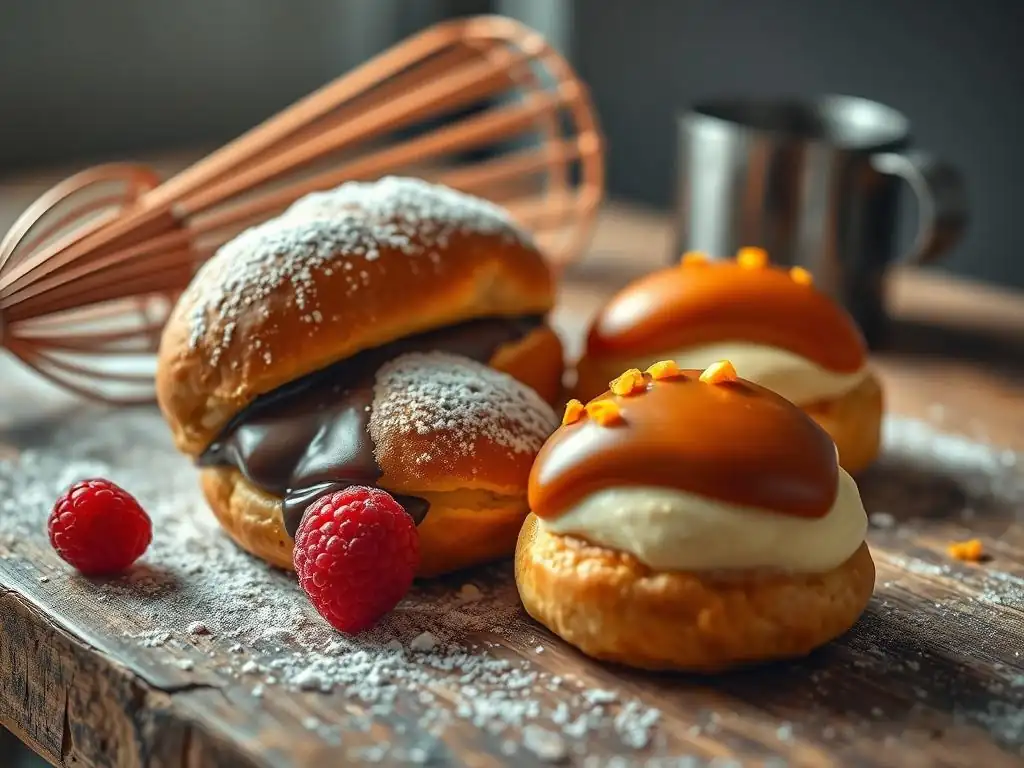
Welcome to BakeWithEase, your kitchen companion for conquering the sweet and savory world of baking! Ever dreamt of light, airy pastries that practically melt in your mouth? Our latest guide unveils the secrets to an easy choux pastry recipe, demystifying this classic technique and empowering you to create impressive treats. Ready to ditch the stress and bake like a pro? Let's get started!
- Mastering Choux Pastry: A Comprehensive Guide
- Introduction: The Art of Pâte à Choux
- Understanding Choux Pastry: Versatility and Applications
- Essential Ingredients and Equipment for Perfect Choux
- Step-by-Step Guide to Crafting Exceptional Choux Pastry
- Troubleshooting Common Choux Pastry Challenges
- Flavor Variations and Filling Ideas for Choux Pastry
- Storing and Serving Your Choux Pastry Creations
- Advanced Techniques: Elevating Your Choux Pastry Skills
- Conclusion: Your Journey to Choux Pastry Mastery
-
Frequently Asked Questions
- What exactly is choux pastry and why is it often considered difficult to make?
- Does BakeWithEase's "Easy Choux Pastry Recipe" require any special equipment?
- What are some common mistakes people make when attempting a choux pastry recipe?
- How can I tell if my choux pastry dough is the right consistency before baking?
- Can I make choux pastry ahead of time, and if so, how should I store it?
- Final Reflection: Mastering the Art of Effortless Choux
- Unleash Your Inner Pâtissier: Master Choux Pastry Today!
Mastering Choux Pastry: A Comprehensive Guide
Introduction: The Art of Pâte à Choux
Welcome to the delightful world of choux pastry, or pâte à choux as it's known in French. This versatile dough, made from just a few simple ingredients, forms the basis for many iconic desserts and savory treats. While it might seem intimidating at first glance, mastering an easy choux pastry recipe is entirely within reach for home bakers. The magic of choux lies in its ability to puff dramatically in the oven, creating a hollow interior perfect for filling.
Unlike other pastries that rely on layers of butter (like puff pastry) or chemical leaveners (like cakes), choux pastry uses steam for leavening. When the water in the dough heats rapidly in the oven, it turns to steam, forcing the dough to expand. This unique process results in a light, airy shell. Our guide aims to demystify this process, providing a clear, step-by-step approach to help you create impressive choux pastry without the stress.
Understanding Choux Pastry: Versatility and Applications
Exploring the World of Pâte à Choux
Pâte à choux is a fundamental dough in classic French patisserie, renowned for its unique texture and adaptability. Its composition is deceptively simple: water, butter, flour, and eggs. The key lies in the technique – cooking the flour with the liquid and fat to create a paste known as the panade, before incorporating eggs to achieve a smooth, pipeable dough. This cooked dough is then baked at high temperatures, causing it to inflate dramatically due to steam production.
This dough's neutral flavor profile makes it a perfect canvas for both sweet and savory applications. From delicate cream puffs (profiteroles) filled with vanilla pastry cream to cheesy gougères served as appetizers, the possibilities are vast. Understanding the basic dough is the first step to unlocking a wide array of culinary creations, proving that an easy choux pastry recipe can lead to sophisticated results. The foundational technique remains consistent, whether you're aiming for a light dessert or a savory bite.
From Gougères to Profiteroles: The Breadth of Choux Pastry
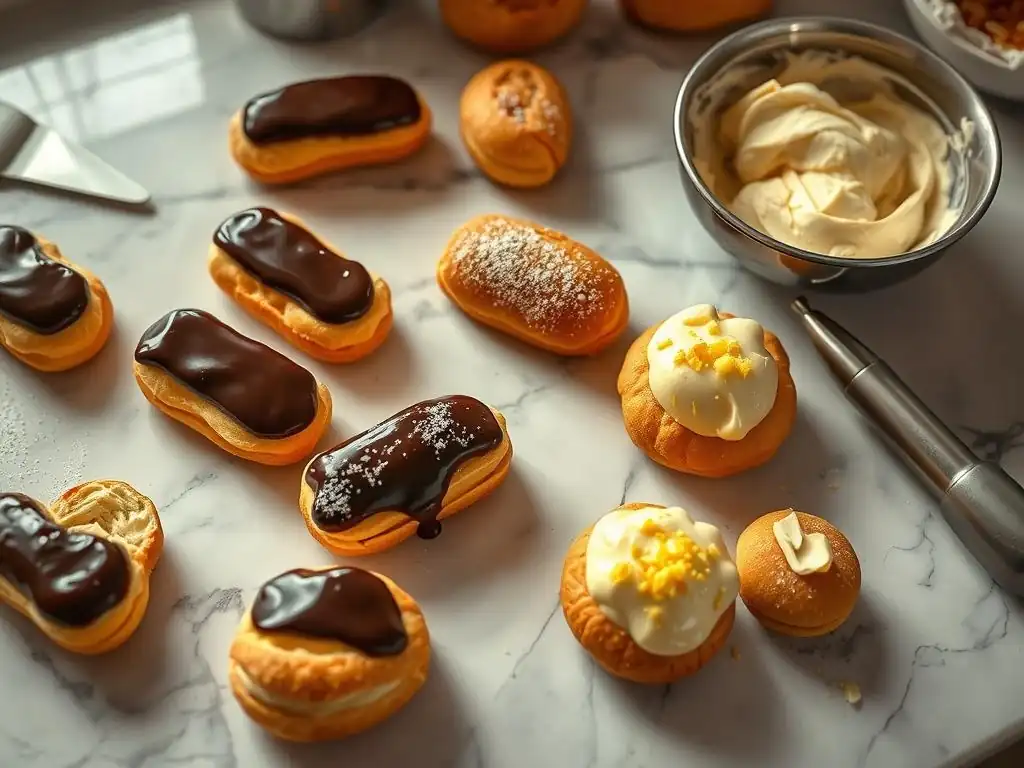
The versatility of choux pastry is truly remarkable, extending across the culinary spectrum. On the sweet side, the most classic examples include profiteroles, small puffs typically filled with ice cream or whipped cream and often drizzled with chocolate sauce. Éclairs, elongated choux pastries, are famously filled with pastry cream and topped with fondant or chocolate glaze. The impressive Croquembouche, a cone-shaped tower of profiteroles bound together with caramel, is a centerpiece for celebrations. Even the Paris-Brest, a ring-shaped choux pastry filled with praline cream, showcases the dough's ability to be molded into various forms.
Transitioning to savory uses, gougères are perhaps the most well-known application. These are choux pastries mixed with cheese (often Gruyère or Comté) and sometimes herbs or spices, baked into small, airy puffs perfect for serving warm as an aperitif. Larger choux shells can be filled with savory mousses, seafood salads, or even used as edible containers for stews. This incredible range, from delicate dessert to robust appetizer, highlights why mastering an easy choux pastry recipe is such a valuable skill for any baker looking to expand their repertoire.
Essential Ingredients and Equipment for Perfect Choux
The Foundation: Key Ingredients for Pâte à Choux
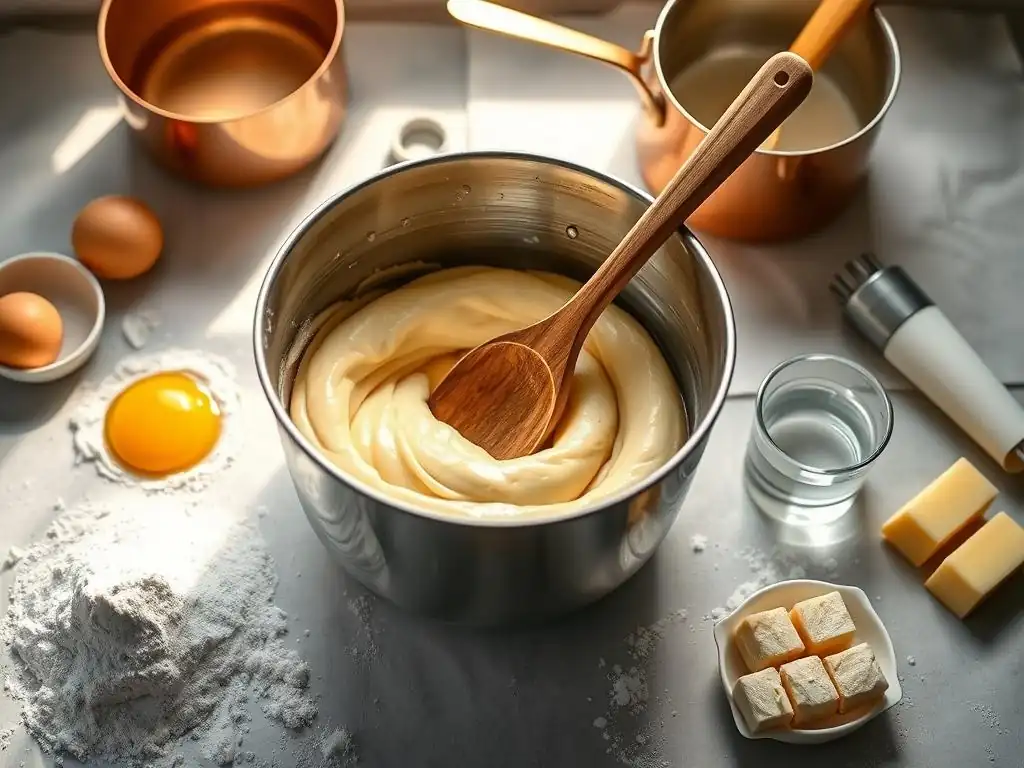
Creating perfect choux pastry starts with understanding the role of each essential ingredient. Water or milk (or a combination) provides the liquid that turns to steam during baking, creating the puff. Using milk can result in a slightly richer, softer dough and a browner crust. Butter (unsalted is typically preferred for control) adds richness and helps tenderize the dough. A common ratio is roughly equal parts liquid and butter by weight, for example, 1 cup (240ml) water to 1/2 cup (115g) butter.
All-purpose flour is the structural backbone, absorbing the liquid and fat to form the panade. It's crucial to add the flour all at once to the boiling liquid-fat mixture and stir vigorously to cook it thoroughly, removing excess moisture. Finally, eggs are critical for both leavening (they contain water that steams) and structure, providing elasticity and richness. The number of eggs isn't fixed; it's determined by the dough's consistency, which should be glossy and smooth, falling slowly from a spoon in a "V" shape. Using large eggs is standard in most easy choux pastry recipe guides.
Tools of the Trade: Essential Equipment for Choux Pastry Success
Having the right tools makes the process of creating an easy choux pastry recipe much smoother. A sturdy saucepan is essential for cooking the panade; a heavy-bottomed pan distributes heat evenly and prevents scorching. A wooden spoon or a heatproof spatula is needed for mixing the dough vigorously in the pan. Once the panade is cooked, a stand mixer fitted with a paddle attachment is ideal for incorporating the eggs gradually and achieving the correct consistency without overworking the dough, though this can also be done effectively by hand with sufficient effort.
For shaping the choux, piping bags fitted with round or star tips are invaluable. A large round tip (like an Ateco 805 or 808) is excellent for classic profiteroles or éclairs, while a star tip adds ridges for visual appeal. Baking sheets lined with parchment paper or silicone mats are necessary to prevent sticking and ensure even browning. An oven thermometer is also highly recommended to verify your oven's actual temperature, as accurate temperature control is vital for proper puffing. These tools, combined with precise technique, help transform a simple choux pastry recipe into impressive results.
Step-by-Step Guide to Crafting Exceptional Choux Pastry
Step 1: Preparing the Panade - The Foundation of the Dough
The first crucial step in any easy choux pastry recipe is creating the panade, the cooked flour paste that forms the base of the dough. Begin by combining your liquid (water, milk, or both) and butter in a saucepan with a pinch of salt and sugar (if using for a sweet application). Heat this mixture over medium heat until the butter is completely melted and the liquid comes to a rolling boil. It's important that the liquid is boiling vigorously when you add the flour.
Remove the pan from the heat and add all the flour at once. Stir vigorously with a wooden spoon or spatula until the mixture comes together into a smooth ball that pulls away cleanly from the sides of the pan. Return the pan to low heat and continue to cook the dough for 1-2 minutes, stirring constantly.
This step, sometimes called "drying out" the dough, helps cook the starch in the flour and evaporate excess moisture, which is critical for achieving a good puff later. You might see a slight film form on the bottom of the pan – this is normal.
Step 2: Incorporating Eggs - Achieving the Right Consistency
Once the panade is cooked, transfer it to a mixing bowl (or the bowl of your stand mixer) and let it cool for a few minutes until it's warm but not hot to the touch. This prevents the eggs from cooking prematurely. Add the eggs one at a time, mixing thoroughly after each addition.
If using a stand mixer, use the paddle attachment on medium speed. If mixing by hand, beat vigorously after each egg. The dough will look like it's splitting or curdling at first, but keep mixing, and it will come back together into a smooth, cohesive dough.
The key is to add just enough egg to achieve the right consistency. The dough should be smooth, glossy, and thick enough to hold its shape, but soft enough to pipe easily. To test for readiness, lift the paddle or spoon; the dough should fall slowly in a thick ribbon or a "V" shape.
If it's too stiff, add a little more beaten egg, a teaspoon at a time, mixing well after each addition, until the correct consistency is reached. Adding too many eggs will result in dough that spreads too much and doesn't puff properly, while too few will make the dough too stiff.
Step 3: Piping Techniques - Shaping Your Choux Creations
Shaping choux pastry dough is a crucial step for achieving uniform size and appearance, which also aids in even baking. The most common method is using a piping bag. Fit a piping bag with your desired tip – a plain round tip (like 1cm or 1.5cm diameter) for classic puffs or éclairs, or a star tip for a fluted edge. Fill the bag about halfway with the prepared choux dough, twisting the top to secure it.
Pipe the dough onto a baking sheet lined with parchment paper or a silicone mat. For round puffs, hold the bag vertically and pipe mounds of dough, lifting straight up at the end. For éclairs, hold the bag at a slight angle and pipe straight lines.
Leave adequate space between pieces (at least 2 inches or 5 cm) as they will expand significantly. If you have peaks on your piped shapes, gently smooth them down with a wet fingertip or the back of a wet spoon. Uniform shaping is key to ensuring all your choux puff and bake correctly, contributing to a successful easy choux pastry recipe.
Step 4: Baking for Optimal Puff and Color - Temperature and Timing
Proper baking is arguably the most critical step in achieving perfectly puffed and crisp choux pastry. Choux requires high heat to create steam quickly, followed by a lower temperature to dry out the shells and make them crisp. A typical method is to preheat your oven to a high temperature, often around 425°F (220°C), and bake the choux at this temperature for the first 10-15 minutes. This initial blast of heat generates maximum steam and puff.
After this initial period, reduce the oven temperature to a lower setting, commonly 375°F (190°C), without opening the oven door. Continue baking for another 20-30 minutes, or until the choux are deeply golden brown and feel light and hollow when lifted. The lower temperature allows the inside to cook and the exterior to dry out and crisp up.
It is absolutely essential not to open the oven door during the initial high-heat phase, and ideally not until the choux are fully baked, as a sudden drop in temperature can cause them to collapse. Once baked, turn off the oven, prop the door open slightly (with a wooden spoon), and let the choux cool inside for 10-15 minutes. This slow cooling further helps prevent collapsing and ensures a crisp shell.
Troubleshooting Common Choux Pastry Challenges
Addressing Puffing Issues: Achieving Maximum Volume
One of the most common frustrations when making an easy choux pastry recipe is dough that doesn't puff properly. Several factors can contribute to this. Insufficient cooking of the panade in Step 1 is a frequent culprit; if the dough isn't dried out enough on the stovetop, there's too much moisture remaining, which can hinder puffing. Ensure you cook it for the full 1-2 minutes until a film forms on the pan.
Another major reason for poor puff is insufficient oven temperature or opening the oven door too early. As mentioned, the initial high heat is vital for steam generation. If the oven isn't hot enough (verify with an oven thermometer!) or if you peek too soon, the steam escapes before the structure is set, leading to flat or deflated pastries.
Finally, the consistency of the dough after adding eggs is crucial. Dough that is too wet (too many eggs) will spread rather than rise, while dough that is too stiff (not enough eggs) won't have enough elasticity to expand fully. Aim for that characteristic "V" shape when the dough falls from the spoon.
Preventing Soggy Pastry: Ensuring a Crisp Texture
Achieving a crisp exterior is just as important as getting a good puff. Soggy choux pastry is often the result of insufficient baking time or improper cooling. If the choux are removed from the oven before they are fully cooked through and dried out, the internal moisture will steam and soften the shell as they cool. They should be deeply golden brown and feel very light for their size, indicating they are hollow and dry inside.
Cooling is also key. Leaving the choux in the turned-off oven with the door slightly ajar allows them to cool down gradually, preventing condensation from forming on the surface, which can make them soggy. It's also important to cool them completely on a wire rack once they are out of the oven to allow air circulation around all sides. If you plan to fill them, do so just before serving to prevent the filling's moisture from softening the shells. Proper baking and cooling are non-negotiable steps for a successful, crisp easy choux pastry recipe.
Achieving a Smooth Dough: Avoiding Lumps and Bumps
A smooth dough is essential for easy piping and uniform pastry shells. Lumps in choux dough typically occur during the initial step of adding flour to the hot liquid. If the flour isn't added all at once and stirred vigorously immediately, it can clump before it's fully incorporated and cooked.
To avoid lumps, ensure your liquid mixture (water/milk and butter) is at a rolling boil when you add the flour. Remove the pan from the heat, dump in all the measured flour at once, and stir hard and fast with a sturdy wooden spoon or heatproof spatula. Continue stirring until you have a cohesive ball of dough.
If a few small lumps persist at this stage, vigorous mixing during the egg incorporation phase, especially with a stand mixer, will often smooth them out. Starting with finely sifted flour can also help prevent lumps from forming in the first place, contributing to a smoother, more manageable dough for your easy choux pastry recipe.
Flavor Variations and Filling Ideas for Choux Pastry
Sweet Sensations: Vanilla Bean Cream, Chocolate Pastry Cream
Choux pastry is a perfect vessel for sweet fillings, and the classics are hard to beat. Vanilla bean pastry cream ( crème pâtissière) is a staple, offering a rich, smooth, and aromatic filling. Made from milk, sugar, egg yolks, cornstarch (or flour), and infused with real vanilla bean or extract, it provides a creamy contrast to the light choux shell. A batch using 4 egg yolks and 2 cups of milk yields enough cream for about 2 dozen standard profiteroles.
Chocolate pastry cream is another popular choice, easily made by whisking melted chocolate or cocoa powder into warm pastry cream. For a lighter option, whipped cream (sweetened or unsweetened) is simple and delicious, especially when paired with fresh fruit or chocolate sauce. Other delightful sweet fillings include diplomat cream (pastry cream lightened with whipped cream), fruit curds (lemon, passion fruit), caramel cream, or even ice cream for classic profiteroles. These fillings transform a basic easy choux pastry recipe into exquisite desserts.
Savory Delights: Gruyere and Black Pepper, Smoked Salmon Mousse
Beyond the sweet realm, choux pastry shines in savory applications, particularly as gougères. The basic choux dough is enhanced by incorporating grated cheese, most commonly Gruyère or Comté, into the dough after the eggs have been mixed in. About 1/2 to 1 cup of finely grated cheese per standard batch of dough adds wonderful flavor and a slightly chewy texture. A generous amount of black pepper is a classic addition, but other herbs like chives or thyme can also be used.
Larger choux shells can be split open and filled with a variety of savory preparations. Smoked salmon mousse, chicken salad, tuna salad, or even a mushroom duxelles are excellent choices. Consider fillings like goat cheese and roasted red pepper, or a savory herb-infused cream cheese. These savory choux applications make wonderful appetizers or light lunch options, demonstrating the incredible adaptability of an easy choux pastry recipe beyond traditional desserts.
Storing and Serving Your Choux Pastry Creations
Maintaining Freshness: Optimal Storage Techniques
The key to keeping choux pastry at its best is maintaining its crispness. Unfilled choux shells should be stored in an airtight container at room temperature. However, they are best eaten the day they are baked. For longer storage, unfilled shells freeze exceptionally well. Allow them to cool completely, then place them in a single layer on a baking sheet and freeze until solid. Once frozen, transfer them to a freezer-safe bag or container. They can be stored this way for up to 2-3 months.
To refresh frozen choux shells, place them directly from the freezer onto a baking sheet and warm them in a preheated oven at around 300°F (150°C) for 5-10 minutes until crisp again. Let them cool completely before filling. Filled choux pastries, especially those with cream or custard fillings, should be stored in the refrigerator due to the perishable nature of the filling. They are best consumed within 1-2 days, as the filling will gradually soften the shell. For optimal texture, fill choux pastry as close to serving time as possible.
Presentation Matters: Tips for Serving Choux Pastry
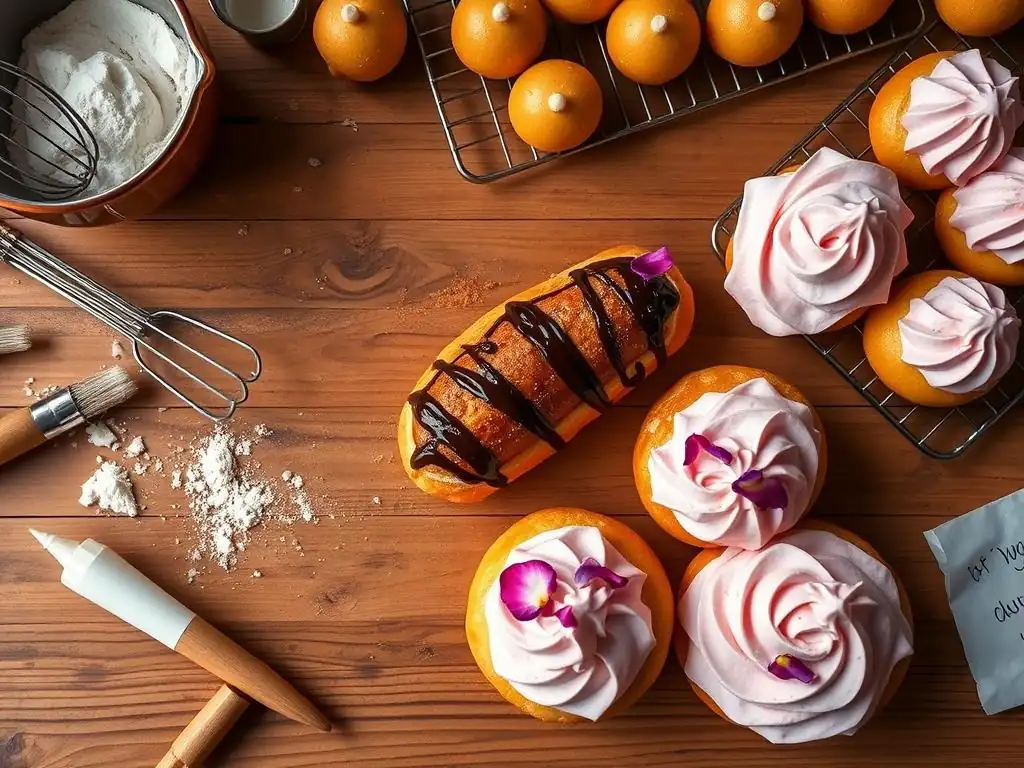
Presenting your choux pastry creations beautifully enhances the dining experience. For classic profiteroles or cream puffs, stacking them in a pyramid or arranging them neatly on a platter works well. A dusting of powdered sugar or a drizzle of chocolate sauce adds a professional touch. Serving profiteroles with a scoop of ice cream and warm chocolate sauce is a simple yet elegant dessert.
Éclairs can be glazed or topped with fondant or chocolate before serving. Arranging them on a rectangular platter highlights their shape. Savory gougères are best served warm, directly from the oven, perhaps in a basket lined with a napkin. For larger savory choux filled with things like chicken salad, presenting them sliced open with a sprinkle of fresh herbs on top is appealing. Remember that choux pastry is visually appealing on its own, so simple presentation often works best, allowing the beautiful puff and golden color to shine.
Advanced Techniques: Elevating Your Choux Pastry Skills
The Art of Craquelin: Adding Texture and Flavor
Once you've mastered an easy choux pastry recipe, you might want to explore techniques that add extra flair. Craquelin is a simple yet effective way to elevate choux pastry. It's a thin layer of sweet, crumbly dough placed on top of the choux before baking. As the choux puffs, the craquelin cracks, creating a beautiful pattern and adding a delightful crisp texture and hint of sweetness to the finished pastry.
To make craquelin, cream together equal parts by weight of butter, sugar (often brown sugar for flavor), and flour. Roll the mixture thinly between two sheets of parchment paper and chill until firm. Cut out circles or squares slightly larger than your piped choux dough shapes. Place one piece of chilled craquelin on top of each piped choux mound just before baking. The craquelin will melt and spread, forming a cap that bakes into a crispy, crackled crust. This technique is particularly popular for cream puffs and adds both visual appeal and textural contrast.
Mastering the Saint Honoré: A Classic Choux Pastry Dessert
The Saint Honoré is a magnificent and challenging classic French dessert that showcases several choux pastry techniques. It's named after the French patron saint of bakers and pastry chefs. The dessert typically consists of a puff pastry base topped with a ring of small choux puffs dipped in caramelized sugar. The center is often filled with crème chiboust (pastry cream lightened with Italian meringue) or crème Saint-Honoré (crème chiboust with whipped cream).
Creating a Saint Honoré involves making perfect choux pastry for the small puffs, mastering caramelization for dipping the puffs, and preparing a stable filling. The base is usually a round of puff pastry baked until golden. The caramel-dipped choux are then attached to the edge of the puff pastry base using more caramel. Finally, the center is filled, often using a Saint Honoré piping tip to create decorative swirls. While not part of an easy choux pastry recipe, mastering the Saint Honoré is a pinnacle achievement for any choux enthusiast, combining precision and artistry.
Conclusion: Your Journey to Choux Pastry Mastery
Embarking on the journey of mastering choux pastry might seem daunting, but with a clear understanding of the process and a reliable easy choux pastry recipe, it becomes an incredibly rewarding endeavor. We've covered the fundamental ingredients and equipment, walked through the step-by-step creation of the dough, and explored common troubleshooting tips to help you navigate potential challenges.
From the classic sweet profiterole filled with vanilla cream to savory gougères bursting with cheese, the versatility of pâte à choux offers endless creative possibilities in the kitchen. Remember the key stages: cooking the panade thoroughly, incorporating eggs to the perfect consistency, shaping uniformly, and baking with precision at the correct temperatures. With practice and patience, you'll gain confidence and skill. So gather your ingredients, preheat your oven, and get ready to impress yourself and others with your beautiful, perfectly puffed choux pastry creations!
Frequently Asked Questions
What exactly is choux pastry and why is it often considered difficult to make?
Choux pastry is a light, hollow pastry dough used to make eclairs, cream puffs, and other delicious treats. It's often considered difficult because it requires a specific process of cooking the dough and incorporating eggs to achieve the right consistency.
Does BakeWithEase's "Easy Choux Pastry Recipe" require any special equipment?
No, the recipe prioritizes simplicity. You'll need basic baking tools like a saucepan, a mixing bowl (or stand mixer), and a baking sheet. No fancy or hard-to-find equipment is needed to follow the recipe.
What are some common mistakes people make when attempting a choux pastry recipe?
Common mistakes include not cooking the dough properly, adding the eggs too quickly, or opening the oven during baking. This can result in a flat or dense pastry.
How can I tell if my choux pastry dough is the right consistency before baking?
The dough should be smooth, glossy, and form a soft peak when lifted with a spoon or spatula. It should also hold its shape on the baking sheet.
Can I make choux pastry ahead of time, and if so, how should I store it?
Yes, you can pipe the choux pastry onto a baking sheet and freeze it before baking. Store the frozen pastry in an airtight container. Bake directly from frozen, adding a few extra minutes to the baking time.
Final Reflection: Mastering the Art of Effortless Choux
The seemingly daunting world of choux pastry is, in reality, surprisingly accessible. This guide has demonstrated that with the right techniques and a dash of confidence, creating impressive, light-as-air choux is within everyone's reach. Forget the myths of complicated recipes and frustrating failures; delicious, perfectly puffed pastries are achievable for even the most novice baker.
The journey of mastering choux pastry is more than just acquiring a new skill; it's about embracing the process of creation and finding joy in the unexpected. The subtle nuances of the dough, the satisfying rise in the oven, the final golden-brown perfection – these are moments that connect us to a culinary tradition spanning centuries. Baking is at once child's play and adult joy. And love, of course.
This quote perfectly encapsulates the experience of making choux, a seemingly simple act that yields immense satisfaction.
Now, it's your turn. Don't let the fear of failure hold you back. Gather your ingredients, follow the steps outlined in this guide, and embark on your own choux pastry adventure. The reward? Not just delectable cream puffs, profiteroles, or éclairs, but the empowering feeling of accomplishment and the delicious taste of success. So, roll up your sleeves, embrace the challenge, and discover the joy of effortlessly impressive choux pastry.
Unleash Your Inner Pâtissier: Master Choux Pastry Today!
Thanks for taking the time to explore the world of choux pastry with us! We hope you’ve gained the confidence to tackle this seemingly daunting treat. Now it's time to put your newfound knowledge into action.
- Bake your masterpiece! Use our guide to whip up a batch of delicious profiteroles, éclairs, or cream puffs. This is your chance to shine!
- Share your creation! Snap a photo of your choux pastry triumph and show us your amazing results on social media using #BakeWithEaseChoux. We love to see your baking journey!
- Explore other BakeWithEase recipes: We have tons more easy-to-follow recipes waiting to be discovered! Dive in and find your next baking adventure.
Ready to experience the joy of perfectly puffed pastry? What's your first choux pastry creation going to be?