
Mini Chocolate Profiteroles Recipe: Perfect for Parties

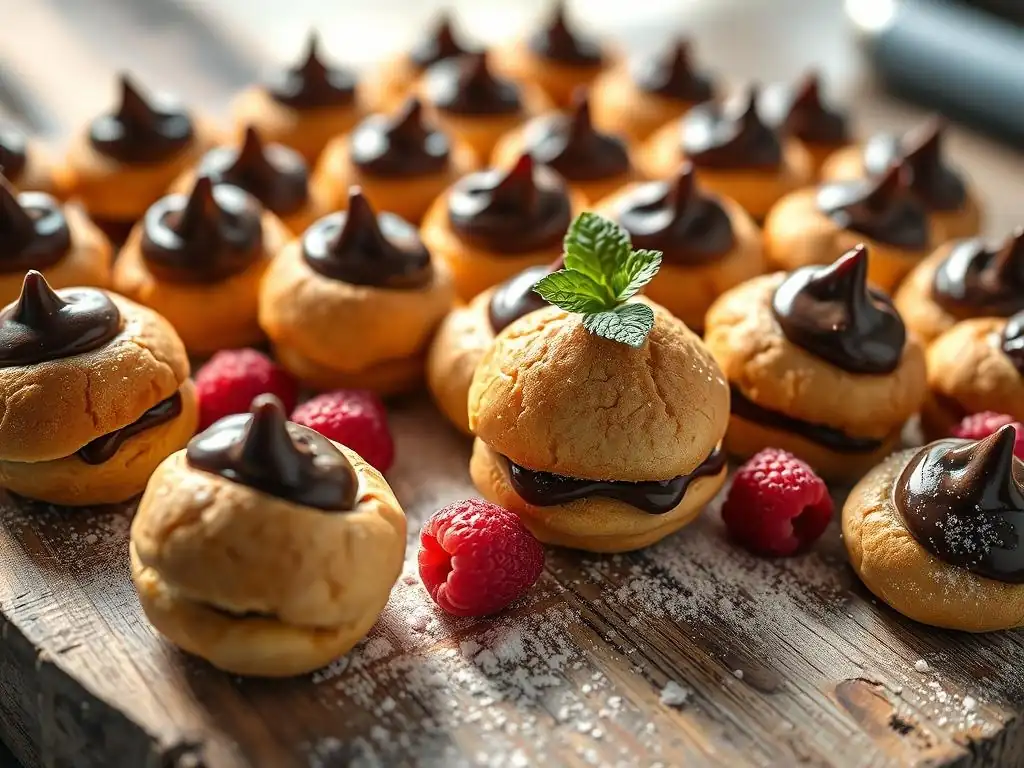
Welcome to BakeWithEase, where baking dreams become delicious realities! Are you ready to impress with melt-in-your-mouth goodness? Then dive into our easy mini chocolate profiterole recipe below. These delightful treats are perfect for parties, but what makes them so irresistibly poppable? Discover the secrets to perfect profiteroles and watch your baking confidence soar!
- Easy Mini Chocolate Profiterole Recipe: Perfect for Parties
- Introduction: Delight Your Guests with Mini Chocolate Profiteroles
- Understanding Choux Pastry: The Foundation of Profiteroles
-
Easy Mini Chocolate Profiterole Recipe: Step-by-Step
- Ingredients List for Mini Profiteroles
- Equipment Needed for Baking Mini Profiteroles
- Step 1: Preparing the Choux Pastry Dough
- Step 2: Piping and Baking the Mini Profiteroles
- Step 3: Making the Chocolate Filling
- Step 4: Assembling the Mini Chocolate Profiteroles
- Step 5: Preparing the Chocolate Glaze
- Step 6: Glazing the Mini Profiteroles
- Tips and Tricks for Perfect Mini Profiteroles
- Variations and Adaptations of the Recipe
- Troubleshooting Common Profiterole Problems
- Serving Suggestions for Mini Chocolate Profiteroles
- Conclusion: Enjoy Your Homemade Mini Chocolate Profiteroles
- Frequently Asked Questions
- Final Reflection: The Enduring Delight of the Mini Chocolate Profiterole
- Unleash Your Inner Pâtissier: Make These Profiteroles Today!
Easy Mini Chocolate Profiterole Recipe: Perfect for Parties
Introduction: Delight Your Guests with Mini Chocolate Profiteroles
Why Mini Chocolate Profiteroles are the Perfect Party Treat
Mini chocolate profiteroles are a crowd-pleasing classic that brings a touch of elegance and indulgence to any gathering. Their bite-sized nature makes them incredibly easy for guests to enjoy while mingling, eliminating the need for plates and forks.
Imagine a dessert table where guests can simply pop these delightful, cream-filled puffs into their mouths – it's convenient and adds a fun, interactive element to the party experience. Plus, the combination of light, airy choux pastry, rich chocolate filling, and a luscious chocolate glaze is universally loved, ensuring that your dessert will be a hit with everyone, from kids to adults.
Beyond their delicious taste and ease of consumption, mini profiteroles offer visual appeal. Stacked on a platter or arranged in a pyramid, they create a stunning centerpiece. Making an easy mini chocolate profiterole recipe at home allows you to control the quality of ingredients and tailor the flavors slightly, ensuring a fresher, more delicious result than store-bought options. They are also relatively quick to assemble once the components are ready, making them a manageable project even when you're preparing for a larger event.
BakeWithEase's Guide to Mastering Choux Pastry
Mastering choux pastry, or pâte à choux, might sound intimidating, but with the right guidance, it's surprisingly achievable. At BakeWithEase, we break down the process into simple, step-by-step instructions, making it accessible for bakers of all levels. The key lies in understanding the unique structure of choux pastry – it's cooked on the stovetop before baking, which creates steam inside the dough, causing it to puff up dramatically and form a hollow center. This hollow space is perfect for filling with delicious creams, like the decadent chocolate filling in this easy mini chocolate profiterole recipe.
Our guide focuses on clear techniques, highlighting crucial stages such as achieving the correct dough consistency before adding eggs and ensuring the pastry is baked through to prevent collapse. We'll walk you through the process, from gathering your basic ingredients – butter, water, flour, and eggs – to piping perfect little mounds ready for baking. By following our detailed steps and paying attention to a few key indicators, you'll be well on your way to creating light, airy, and successful choux puffs, the essential foundation for your mini chocolate profiteroles.
Understanding Choux Pastry: The Foundation of Profiteroles
What is Choux Pastry and Why is it Special?
Choux pastry, also known as pâte à choux in French, is a unique type of pastry dough that is cooked twice. First, the dough is cooked on the stovetop in a saucepan, creating a thick paste. This initial cooking step is crucial because it gelatinizes the starch in the flour, allowing the dough to absorb a large amount of moisture (from the eggs) later.
The second cooking phase happens in the oven, where the high moisture content in the dough turns into steam. This steam is trapped by the cooked outer shell of the dough, causing the pastry to puff up dramatically and create a large, hollow cavity inside.
This remarkable ability to puff up and become hollow is precisely what makes choux pastry special and ideal for pastries like profiteroles, éclairs, and cream puffs. Unlike other pastries that rely on chemical leaveners (like baking powder) or yeast, choux pastry achieves its lift purely through steam. This results in an incredibly light and airy texture, providing the perfect vessel for sweet or savory fillings. When done correctly, the exterior is crisp, while the interior is mostly empty, ready to be filled with deliciousness, making it the perfect base for our easy mini chocolate profiterole recipe.
Key Ingredients for Perfect Choux Pastry
Creating perfect choux pastry requires only a few basic ingredients, but the quality and handling of each are important. The core components are water (or milk, or a combination), butter, flour, and eggs. Water is typically used as the liquid base, though milk can add richness and help with browning.
Butter provides flavor and tenderness. All-purpose flour is standard, but it's important not to use too much or too little, as this affects the dough's consistency and ability to puff. Finally, eggs are vital; they provide the necessary moisture and structure for the steam lift and create the characteristic richness and shine.
The ratio of these ingredients is critical. A typical starting point might be around 1 cup of liquid, ½ cup of butter, 1 cup of flour, and 4 large eggs. However, the exact amount of eggs needed can vary depending on the size of the eggs, the type of flour, and how much moisture evaporated during the stovetop cooking.
The dough should reach a specific consistency – often described as looking like smooth, thick mashed potatoes or having a "ribbon" effect when lifted with a spoon – before adding the eggs one by one. Getting this consistency right is a key factor in the success of your easy mini chocolate profiterole recipe.
Easy Mini Chocolate Profiterole Recipe: Step-by-Step
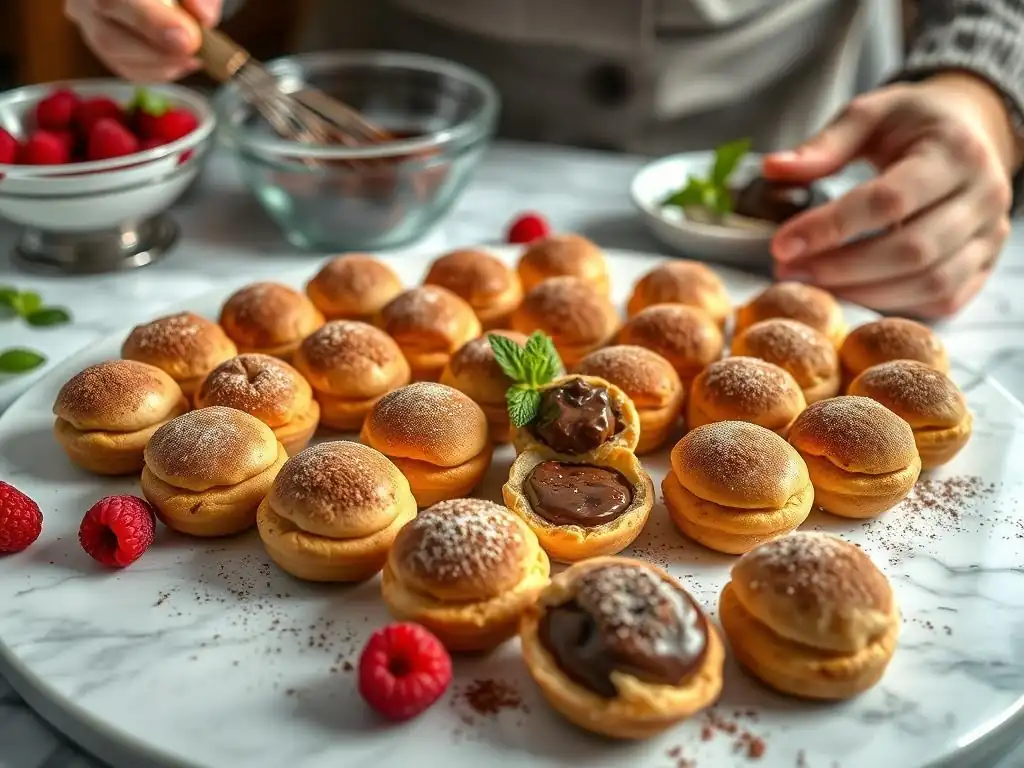
Ingredients List for Mini Profiteroles
Choux Pastry Ingredients
- 1 cup Water
- ½ cup Unsalted butter (about 1 stick or 113g), cut into pieces
- ¼ teaspoon Salt
- 1 teaspoon Granulated sugar
- 1 cup All-purpose flour (about 125g), sifted
- 4 large Eggs
Chocolate Filling Ingredients
- 1 ½ cups Heavy cream
- 8 ounces Bittersweet or semi-sweet chocolate, finely chopped
- 2 tablespoons Unsalted butter, cut into small pieces
- 1 teaspoon Vanilla extract
Chocolate Glaze Ingredients
- 1 cup Powdered sugar, sifted
- ¼ cup Unsweetened cocoa powder, sifted
- 3-4 tablespoons Milk or cream
- ½ teaspoon Vanilla extract
Equipment Needed for Baking Mini Profiteroles
- Medium saucepan
- Wooden spoon or sturdy spatula
- Stand mixer with paddle attachment (optional, but helpful) or a large bowl and hand mixer
- Pastry bag
- Round piping tip (about ½ inch or 1 cm diameter)
- Baking sheets
- Parchment paper
- Wire rack
- Double boiler or heatproof bowl set over a saucepan of simmering water
- Whisk
Step 1: Preparing the Choux Pastry Dough
Combining the Wet Ingredients
Begin by combining the water, butter, salt, and sugar in your medium saucepan. Place the saucepan over medium heat. Stir occasionally as the butter melts. The goal here is to bring the mixture to a rolling boil. This ensures the correct temperature for the next step. Once the mixture is boiling, you're ready to add the flour. This simple initial step lays the foundation for the proper hydration and structure of your choux pastry dough, essential for an easy mini chocolate profiterole recipe that puffs up beautifully.
It's important to have your measured and sifted flour ready to go as soon as the liquid reaches a boil. Delaying the addition of flour can result in too much liquid evaporating, which will affect the final dough consistency. The mixture should look homogenous and slightly frothy from the boil before you proceed.
Incorporating the Flour
Remove the saucepan from the heat immediately after it reaches a rolling boil and the butter is fully melted. Add all of the sifted flour to the hot liquid at once. Stir vigorously with a wooden spoon or sturdy spatula. The dough will quickly come together and form a thick ball. Continue stirring until there are no dry streaks of flour visible. This process is critical for developing the gluten structure and cooking the starch.
Return the saucepan to medium-low heat. This is where you "cook" the dough on the stovetop. Continue stirring and pressing the dough against the bottom and sides of the pan for 2-3 minutes. You will notice a thin film or crust forming on the bottom of the pan, and the dough will become smoother and less sticky. This step dries out the dough slightly, which is essential for the eggs to be incorporated correctly later and for the pastry to puff properly in the oven.
Cooking the Dough
As mentioned in the previous step, the stovetop cooking phase after adding the flour is crucial. Keep the heat at medium-low and stir constantly for about 2-3 minutes. The dough should pull away cleanly from the sides of the pan and form a cohesive ball. The thin film on the bottom of the pan is a good indicator that enough moisture has been cooked off. This process helps to gelatinize the starch in the flour, preparing it to absorb the eggs.
This step also helps to ensure that the final pastry is light and airy, rather than dense or soggy. A well-cooked dough will be easier to work with and will rise better in the oven. Don't rush this stage; spending the extra couple of minutes here makes a significant difference in the texture of your finished mini profiteroles.
Cooling the Dough
Once the dough has been cooked on the stovetop for 2-3 minutes, remove the saucepan from the heat. Transfer the dough to a clean bowl, preferably the bowl of a stand mixer if you are using one, or just a large mixing bowl. Spread the dough up the sides of the bowl slightly to help it cool down faster. It's important to cool the dough before adding the eggs. If the dough is too hot, it will cook the eggs, resulting in a scrambled egg texture within the dough, which will prevent it from rising.
Let the dough cool for about 5-10 minutes, or until it is warm to the touch but no longer steaming hot. If using a stand mixer, you can use the paddle attachment on low speed for a few minutes to help it cool down more quickly. This cooling step is simple but vital for the success of your easy mini chocolate profiterole recipe.
Adding the Eggs
This is perhaps the most critical step in making choux pastry. Add the eggs one at a time to the cooled dough, mixing thoroughly after each addition. If using a stand mixer, mix on medium speed with the paddle attachment. If mixing by hand, beat vigorously with a sturdy spoon or spatula. Do not add the next egg until the previous one is fully incorporated and the dough is smooth again. The dough will look curdled or separated at first, but keep mixing, and it will come back together.
The consistency of the final dough is key. After adding the fourth egg, check the consistency. The dough should be smooth, glossy, and thick enough to hold its shape when piped, but soft enough to fall slowly from a spoon in a "ribbon" shape (if you lift some dough with the spoon, it should fall back into the bowl forming a V-shape or ribbon).
You might not need all four eggs, or you might need a tiny bit more liquid (like half an egg's worth, whisked) depending on the size of your eggs and how much moisture evaporated earlier. Add the last egg gradually, checking the consistency as you go. The correct consistency is paramount for achieving light, airy puffs in your easy mini chocolate profiterole recipe.
Step 2: Piping and Baking the Mini Profiteroles
Preparing the Baking Sheet
Preheat your oven to 400°F (200°C). Prepare your baking sheets by lining them with parchment paper. Parchment paper prevents the choux pastry from sticking and makes cleanup much easier. You can lightly grease the baking sheet before placing the parchment paper to help the paper stay in place, but this is optional. Ensure the parchment paper lies flat on the sheet.
Having the oven preheated to the correct temperature is vital. Choux pastry requires a high initial temperature to create the steam that causes it to puff up. Don't open the oven door unnecessarily during the initial high-temperature phase, as this releases the steam and heat, which can cause the pastries to collapse.
Piping the Dough into Mini Shapes
Transfer the choux pastry dough to a pastry bag fitted with a round piping tip (about ½ inch or 1 cm diameter). If you don't have a piping bag, you can use two spoons to drop rounded spoonfuls of dough onto the baking sheet, though piping gives a neater, more uniform shape. Pipe small mounds of dough onto the prepared baking sheets, leaving about 1-2 inches (2.5-5 cm) of space between them to allow for expansion. Aim for mounds about ¾ to 1 inch (2-2.5 cm) in diameter for mini profiteroles.
You can lightly dampen your finger and gently smooth out any peaks on the piped mounds to ensure an even rise. For uniform mini profiteroles, try to make each piped mound roughly the same size. This helps them bake evenly. Don't overcrowd the baking sheet; bake in batches if necessary.
Baking to Golden Perfection
Place the baking sheets in the preheated oven (400°F / 200°C). Bake for 15 minutes at this temperature. After 15 minutes, reduce the oven temperature to 375°F (190°C) and continue baking for another 10-15 minutes, or until the profiteroles are puffed up, golden brown, and feel light and hollow when lifted. The exact baking time will vary depending on your oven and the size of your profiteroles.
It is crucial that the profiteroles are baked through to dry out the interior slightly. If they are removed too early, they will collapse as they cool. A good sign they are done is when they are deeply golden brown and firm. You can also poke a small hole in the side of one to release steam just before taking them out, which can help prevent collapse.
Turn off the oven and leave the profiteroles inside with the door slightly ajar for another 5-10 minutes to cool gradually and prevent shrinking. Then, transfer them to a wire rack to cool completely before filling. This careful baking process is key to a successful easy mini chocolate profiterole recipe.
Step 3: Making the Chocolate Filling
Preparing the Chocolate Cream Filling
While the profiteroles are cooling, prepare the chocolate filling. Finely chop the bittersweet or semi-sweet chocolate. In a medium saucepan, heat the heavy cream over medium heat until it just begins to simmer around the edges – do not let it boil vigorously. Remove from the heat and immediately add the chopped chocolate and the butter pieces to the hot cream. Let stand for 5 minutes to allow the heat to melt the chocolate and butter.
After 5 minutes, whisk the mixture gently starting from the center and working outwards until it is completely smooth and glossy. The addition of butter helps create a silky texture and adds richness to the ganache-like filling. Stir in the vanilla extract. This creates a luscious, rich chocolate ganache that will be perfect for filling the mini profiteroles.
Cooling the Chocolate Filling
Once the chocolate mixture is smooth, pour it into a clean bowl. Cover the surface directly with plastic wrap to prevent a skin from forming. Allow the chocolate filling to cool completely at room temperature. For a thicker filling that is easier to pipe, you can refrigerate it for 1-2 hours, stirring occasionally, until it reaches a spreadable or pipeable consistency, similar to firm pudding or soft butter. Be careful not to chill it too much, or it will become too hard to work with.
Ensure the filling is cool before attempting to fill the completely cooled profiteroles. Filling warm profiteroles with warm filling can lead to soggy results. Patience during this cooling step is rewarded with perfectly filled, delightful mini chocolate profiteroles.
Step 4: Assembling the Mini Chocolate Profiteroles
Filling the Profiteroles with Chocolate Cream
Once the profiteroles are completely cool and the chocolate filling has reached a pipeable consistency, it's time to fill them. There are two common methods for filling mini profiteroles. The first is to use a small sharp knife to make a small hole in the bottom or side of each profiterole. Then, using a pastry bag fitted with a small plain or bismarck tip, pipe the chocolate filling into the hole until the profiterole feels heavier and slightly full.
Alternatively, you can slice each profiterole horizontally through the middle using a serrated knife. Gently open the top half and spoon or pipe a generous dollop of chocolate filling onto the bottom half. Place the top half back on. This method is often easier for beginners tackling an easy mini chocolate profiterole recipe, although the first method results in a neater, whole pastry appearance. Choose the method you find easiest and most appealing.
Step 5: Preparing the Chocolate Glaze
Making the Perfect Chocolate Glaze
To make the chocolate glaze, whisk together the sifted powdered sugar and sifted cocoa powder in a medium bowl. Sifting both ingredients is important to prevent lumps. Gradually whisk in the milk or cream, starting with 3 tablespoons, until you achieve a smooth, pourable consistency. If the glaze is too thick, add a tiny bit more milk or cream, a teaspoon at a time, until it reaches the desired consistency – it should be thick enough to coat the profiteroles but thin enough to drip slightly.
Stir in the vanilla extract. The vanilla enhances the chocolate flavor. Taste and adjust sweetness if necessary, though the ratio of sugar and cocoa is typically balanced for a classic glaze. This simple glaze adds an extra layer of chocolatey goodness to your easy mini chocolate profiterole recipe.
Step 6: Glazing the Mini Profiteroles
Dipping or Drizzling the Chocolate Glaze
There are two main ways to apply the chocolate glaze to your filled mini profiteroles. For a fully coated top, gently hold a filled profiterole and dip the top half into the bowl of chocolate glaze. Lift it out, allowing any excess glaze to drip back into the bowl. Place the glazed profiterole on a wire rack set over a baking sheet or parchment paper to catch drips. This method provides a generous, even layer of glaze.
Alternatively, for a less formal look, you can use a spoon or fork to drizzle the chocolate glaze back and forth over the tops of the filled profiteroles arranged on a wire rack. This creates a decorative pattern. Allow the glaze to set slightly before serving. Both methods work well for this easy mini chocolate profiterole recipe, so choose the one you prefer!
Tips and Tricks for Perfect Mini Profiteroles
Achieving the Perfect Choux Pastry Consistency
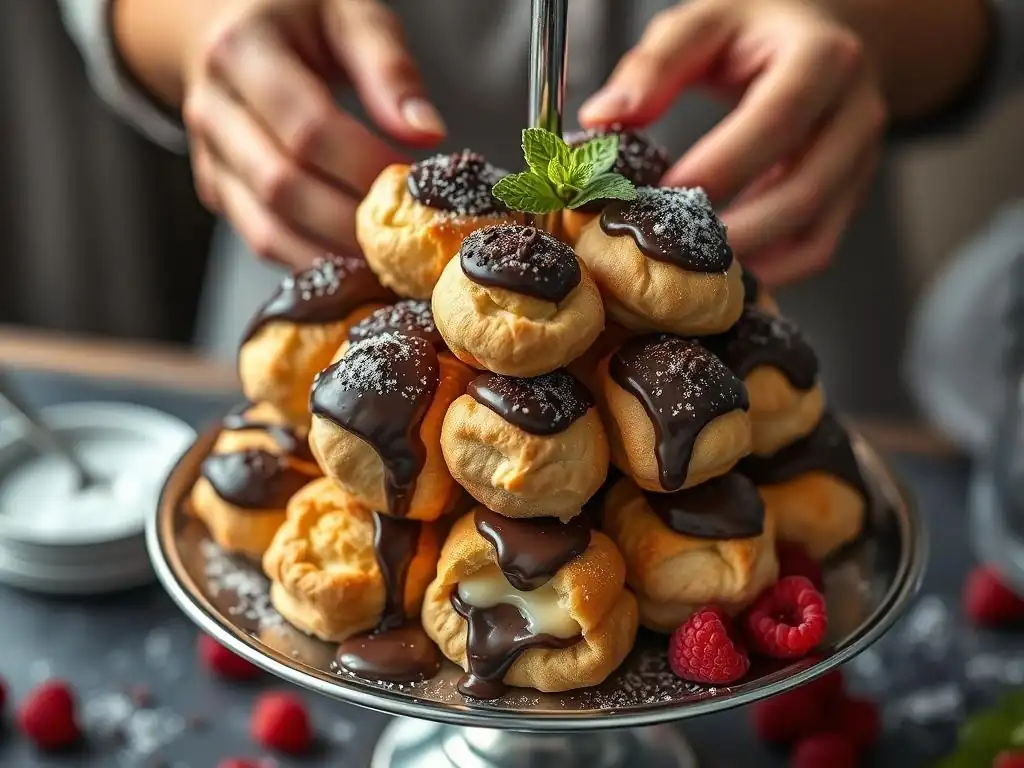
The consistency of your choux pastry dough before adding the eggs is crucial. After cooking the flour mixture on the stovetop, you should have a smooth ball of dough that leaves a slight film on the bottom of the pan. This indicates enough moisture has evaporated. When adding the eggs, incorporate them one by one, mixing thoroughly after each addition. The final dough should be smooth, glossy, and soft enough to fall from a spoon in a thick "ribbon" or "V" shape, but still firm enough to hold its shape when piped.
A common mistake is adding too many eggs, resulting in a dough that is too wet and won't hold its shape or puff properly. If your dough is too wet, unfortunately, it's difficult to correct. If it feels a touch too stiff after the last egg, you can whisk another egg and add just a teaspoon or two at a time, mixing thoroughly, until the desired consistency is reached. Achieving this balance is key to a successful easy mini chocolate profiterole recipe.
Preventing Soggy Profiteroles
Soggy profiteroles are often the result of underbaking or improper cooling. To prevent sogginess, ensure your choux pastry is baked until it is deeply golden brown and feels light and hollow. Don't remove them from the oven too early. The high initial temperature creates the puff, but the lower temperature baking period dries out the interior, which is essential for maintaining structure. After baking, leaving the profiteroles in the turned-off oven with the door ajar for 5-10 minutes allows them to cool down gradually and helps prevent them from collapsing and becoming dense or soggy.
Another factor is filling the profiteroles too far in advance, especially with a very moist filling. For best results, fill the mini profiteroles no more than a few hours before serving. If you need to prepare ahead, bake and cool the shells completely, make the filling and glaze, and store them separately. Assemble closer to serving time for the freshest, non-soggy mini chocolate profiteroles.
Storing Your Mini Chocolate Profiteroles
Unfilled choux pastry shells can be stored successfully. Once completely cooled, they can be kept at room temperature in an airtight container for 1-2 days. For longer storage, you can freeze unfilled shells for up to 1 month. To reheat frozen shells, place them on a baking sheet and bake in a preheated oven at 350°F (175°C) for about 5-10 minutes until crisp again. Let them cool completely before filling.
Filled mini chocolate profiteroles are best enjoyed within a few hours of assembly. If you must store them, place them in a single layer in an airtight container in the refrigerator for up to 1 day. The pastry may soften slightly due to the moisture from the filling.
The chocolate filling can be stored in an airtight container in the refrigerator for up to 3-4 days. The chocolate glaze can be stored at room temperature in an airtight container for 2-3 days; you may need to warm it gently or add a tiny bit more milk to make it pourable again. Planning your preparation steps helps ensure your easy mini chocolate profiterole recipe is a success from start to finish.
Variations and Adaptations of the Recipe
Different Filling Options for Profiteroles
While chocolate is a classic choice, mini profiteroles are incredibly versatile and pair well with various fillings. A traditional alternative is a rich pastry cream ( crème pâtissière), which provides a smooth, custardy contrast to the light pastry. You can also whip heavy cream with a little sugar and vanilla for a simple, elegant filling. For a fruity twist, consider a raspberry or passion fruit flavored cream.
Savory fillings are also possible, transforming profiteroles into elegant appetizers. Imagine filling them with a cheese mixture, smoked salmon and cream cheese, or a chicken salad. The hollow nature of the choux pastry makes it an ideal vessel for almost any creamy or finely diced filling, allowing you to adapt this easy mini chocolate profiterole recipe idea for different occasions and tastes.
Vanilla Cream Filling
A classic vanilla cream filling, or crème pâtissière, is a delightful alternative to chocolate. To make it, you typically whisk together egg yolks, sugar, cornstarch (or flour), and vanilla, then gradually whisk in hot milk. The mixture is then cooked over medium heat, stirring constantly, until it thickens to a pudding-like consistency. It's then cooled completely, often with a piece of plastic wrap pressed directly onto the surface to prevent a skin from forming. This results in a smooth, rich custard that offers a lovely contrast to the crisp pastry shell.
For a lighter vanilla option, simply whip heavy cream with powdered sugar and vanilla extract until stiff peaks form. This whipped cream filling is airy and quick to make, offering a simpler approach if you're looking for an even easier mini profiterole recipe variation. Both vanilla options are popular and delicious.
Coffee Cream Filling
For coffee lovers, a coffee cream filling adds a sophisticated flavor profile. This can be achieved by flavoring a pastry cream or whipped cream with strong brewed coffee, espresso powder, or coffee liqueur. For a coffee crème pâtissière, you can steep coffee beans in the milk as it heats, or whisk dissolved espresso powder into the hot milk before combining with the egg yolk mixture.
Alternatively, fold dissolved espresso powder or a small amount of very strong, cooled coffee into whipped cream. The intensity of the coffee flavor can be adjusted to your preference. This variation provides a pleasant bitterness that balances the sweetness of the pastry and glaze, offering a sophisticated twist on the standard easy mini chocolate profiterole recipe.
Chocolate Glaze Variations
The chocolate glaze used in this recipe is a simple powdered sugar and cocoa icing, but you can easily adapt it. For a richer, more intense chocolate flavor, you can make a ganache glaze. This involves melting chopped chocolate (bittersweet or semi-sweet) with hot heavy cream in a 1:1 ratio (by weight). For instance, 4 ounces of chocolate melted with 4 ounces of hot cream makes a lovely ganache. Let it cool slightly until it's thick enough to coat the profiteroles.
Another popular variation is using tempered chocolate, which provides a hard, snappy shell when set. This requires more precision with temperature but results in a professional finish. For a simpler approach within an easy mini chocolate profiterole recipe, the powdered sugar glaze is perfect, but knowing these variations allows for future exploration.
Dark Chocolate Glaze
Using dark chocolate for your glaze provides a deeper, less sweet flavor. If using the powdered sugar glaze method, you can simply use a higher quality, darker cocoa powder. For a ganache glaze, use bittersweet or even unsweetened chocolate melted with cream. A ratio of 2 parts dark chocolate to 1 part heavy cream (by weight) can create a beautiful, pourable dark chocolate ganache glaze once slightly cooled.
This darker glaze pairs wonderfully with the sweet chocolate filling and light pastry. It's a great option for those who prefer less sweetness in their desserts. Experimenting with different types of chocolate can significantly alter the final taste profile of your mini profiteroles.
White Chocolate Glaze
For a different look and taste, a white chocolate glaze is a lovely option. White chocolate is sweeter and has a creamy, vanilla-like flavor. A simple white chocolate glaze can be made by melting chopped white chocolate (use good quality white chocolate, not baking chips) with a little bit of cream or milk. A ratio of 3 parts white chocolate to 1 part cream (by weight) is a good starting point. Melt gently, stirring until smooth.
White chocolate glaze can be left plain or colored with food coloring for festive occasions. It provides a sweet, contrasting flavor to the chocolate filling inside. While slightly different from the classic easy mini chocolate profiterole recipe, it's a fun variation to try.
Troubleshooting Common Profiterole Problems
Why is My Choux Pastry Flat?
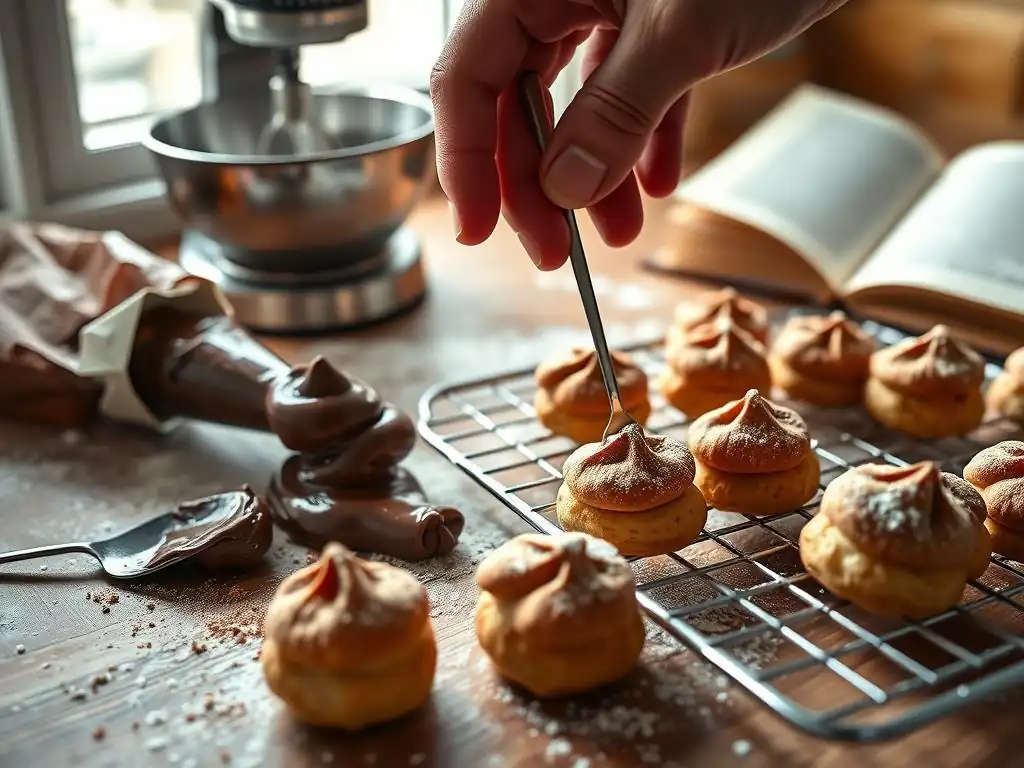
Flat choux pastry is a common issue and is usually caused by one of a few factors. The most frequent culprit is adding too many eggs or not cooking the dough enough on the stovetop. If the dough is too wet, it won't be able to hold the steam generated during baking, causing it to spread rather than puff up. Ensure the dough forms a film on the bottom of the pan during stovetop cooking and that you add eggs gradually, stopping when the dough reaches the correct ribbon consistency.
Another reason for flatness can be opening the oven door too early during baking, especially during the initial high-temperature phase. This releases the steam that is crucial for lift. Also, ensure your oven is properly preheated to the correct temperature. An oven that isn't hot enough won't generate sufficient steam. Paying close attention to the dough consistency and baking process is key to avoiding flat results in your easy mini chocolate profiterole recipe.
Why are My Profiteroles Soggy?
Soggy profiteroles, as mentioned earlier, are typically a sign of underbaking. If the inside of the pastry shell is still moist and doughy when removed from the oven, it will collapse and become dense or soggy as it cools. Make sure the profiteroles are baked until they are a deep golden brown and feel very light and hollow when picked up. Don't be afraid to bake them longer if they seem pale.
Another factor can be filling them too early, allowing moisture from the filling to seep into the pastry. For the best texture, fill the cooled shells shortly before serving. Storing filled profiteroles in an airtight container can also trap moisture and lead to sogginess; for crispness, they are best served fresh or stored loosely covered if necessary. Following the recommended baking times and cooling methods outlined in this easy mini chocolate profiterole recipe can help prevent this.
Why is My Chocolate Glaze Too Thick?
A chocolate glaze made from powdered sugar and cocoa can become too thick if there isn't enough liquid (milk or cream). This can happen if you didn't measure accurately or if the dry ingredients were packed too tightly. The simple fix is to gradually add more liquid, a teaspoon at a time, while whisking, until the desired pourable consistency is reached.
If you're making a ganache glaze and it's too thick, it likely needs to be gently warmed. Place the bowl over a pan of warm water (not boiling) or microwave it in short bursts (5-10 seconds), stirring frequently, until it becomes pourable. Be careful not to overheat chocolate, especially white chocolate, as it can seize. Adjusting the liquid content is straightforward for keeping your easy mini chocolate profiterole recipe steps smooth.
Serving Suggestions for Mini Chocolate Profiteroles
Perfect for Parties and Celebrations
Mini chocolate profiteroles are inherently suited for parties and celebrations. Their small size makes them ideal finger food, easy to eat while standing and socializing. Arrange them on a beautiful platter, cake stand, or even stacked into a croquembouche-like tower (secured with caramel or more glaze) for a stunning visual impact. For a festive touch, you can dust them with powdered sugar or add sprinkles to the wet glaze before it sets.
They are perfect for birthdays, holidays, dinner parties, or any event where you want to offer an elegant yet approachable dessert. Serving a variety of fillings, perhaps some chocolate and some vanilla, can cater to different preferences among your guests. Their ease of preparation (especially following an easy mini chocolate profiterole recipe) and crowd-pleasing appeal make them a go-to choice for entertaining.
Pairing with Coffee, Tea, or Dessert Wine
Mini chocolate profiteroles pair wonderfully with beverages. They are a classic accompaniment to coffee, especially espresso or a rich, dark roast, as the coffee's slight bitterness complements the sweetness of the chocolate. Similarly, a cup of black tea or a robust flavored tea can be a great pairing.
For a more indulgent pairing, consider serving them with a dessert wine. A late-harvest Zinfandel, a Port, or even a slightly chilled, sweet red wine can stand up to the richness of the chocolate. A Moscato d'Asti with its light fizz and sweetness can also be a delightful contrast. Offering these pairing suggestions can elevate the experience of enjoying your homemade easy mini chocolate profiterole recipe.
Conclusion: Enjoy Your Homemade Mini Chocolate Profiteroles
Making mini chocolate profiteroles might seem like a project for experienced bakers, but as this guide shows, it's an achievable and rewarding process, even for those new to choux pastry. By following these step-by-step instructions for our easy mini chocolate profiterole recipe, you've created delicate, airy pastry shells filled with rich chocolate cream and topped with a smooth chocolate glaze.
These delightful bite-sized treats are perfect for sharing and are guaranteed to impress your friends and family at any gathering. The satisfaction of creating something so elegant from simple ingredients is immense. So go ahead, gather your ingredients, follow the steps, and enjoy the process and the delicious results of your homemade mini chocolate profiteroles!
Frequently Asked Questions
What makes this profiterole recipe "easy"?
The recipe emphasizes simple ingredients and clear, step-by-step instructions, making it approachable even for beginner bakers. We also focus on techniques that are easy to master.
Can I make the profiteroles ahead of time?
Yes, you can! The profiterole shells can be baked ahead of time and stored in an airtight container. Fill them with cream and drizzle with chocolate just before serving for optimal freshness.
What kind of chocolate is best for the drizzle?
We recommend using a semi-sweet or dark chocolate for the drizzle, depending on your preference. Ensure it's a good quality chocolate for the best flavor and melting consistency.
Can I use different fillings besides cream?
Absolutely! Get creative and try fillings like pastry cream, flavored mousses, or even ice cream. The possibilities are endless to suit your taste!
Are there any tips for preventing the profiteroles from deflating after baking?
To avoid deflation, ensure the oven is preheated properly and do not open the oven door during baking. Also, prick the baked shells with a small hole to release steam.
Final Reflection: The Enduring Delight of the Mini Chocolate Profiterole
The seemingly simple act of creating a mini chocolate profiterole holds a surprising power: the ability to transform an ordinary gathering into a memorable celebration. These bite-sized delights, easily assembled with readily available ingredients, offer a level of sophistication and indulgence that belies their straightforward preparation. Their popularity is a testament to the enduring appeal of classic flavors and the joy of sharing homemade treats.
The impact of a perfectly executed mini chocolate profiterole extends far beyond the immediate satisfaction of its rich chocolate and airy choux pastry. It's a symbol of connection, a tangible expression of care and effort shared with loved ones. The best things in life are the people we love, the places we've been, and the memories we've made along the way.
This quote perfectly encapsulates the spirit of baking and sharing these little treats; they become more than just food; they become cherished moments woven into the fabric of our relationships.
Now, I invite you to consider the possibilities. Don't just limit yourself to parties; use this recipe to brighten a weeknight, to surprise a friend, or simply to indulge in a moment of self-care. The joy of creating something delicious and sharing it with others is a gift you can give yourself and those you cherish. So, gather your ingredients, embrace the process, and experience the magic of the mini chocolate profiterole—a small treat with a big impact.
Unleash Your Inner Pâtissier: Make These Profiteroles Today!
Thanks for taking the time to explore this mini chocolate profiterole recipe! We hope you found inspiration and a delicious new addition to your baking repertoire. Ready to get those ovens fired up?
- Whip up a batch of these delightful profiteroles: The recipe is simpler than you think, and the results are incredibly rewarding. Don't be intimidated – even beginner bakers can create these perfectly puffed pastries!
- Share your creation: Snap a photo of your finished profiteroles and tag us on social media – we'd love to see your delicious results! Use #BakeWithEaseProfiteroles to connect with fellow baking enthusiasts.
- Explore more easy party recipes on BakeWithEase.com: Find even more inspiration for your next gathering. We've got everything from sweet treats to savory delights waiting for you!
So, what delicious adventure will your baking journey take next?