
The Science of Sour: Controlling Acidity in Your Sourdough Loaf

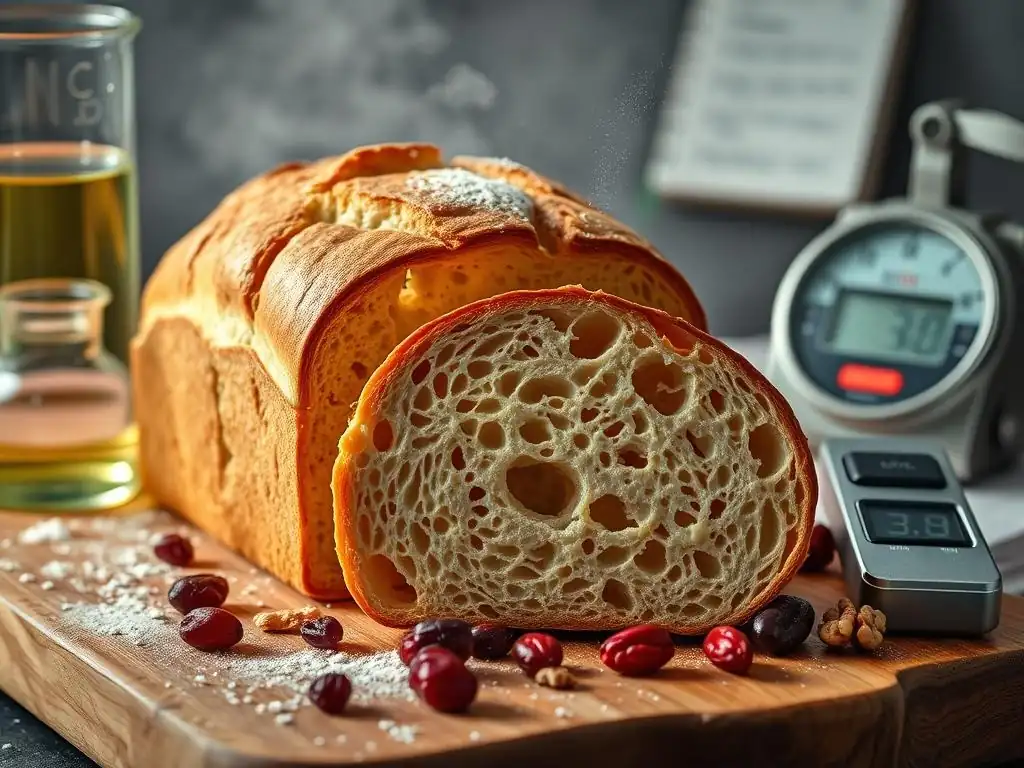
Welcome to BakeWithEase, your trusted guide to baking bliss! Ever wondered why your sourdough tastes too sour? Unlock the secrets to a perfectly balanced loaf in our latest article. We're diving deep into sourdough acidity control tips, revealing how to achieve that ideal tang you crave. Ready to master the science of sour? Let's get baking!
- Understanding Sourdough Acidity: A Baker's Guide
- Factors Influencing Sourdough Acidity Levels
- Sourdough Acidity Control Tips: Practical Techniques for Bakers
- Troubleshooting Common Sourdough Acidity Issues
- Advanced Techniques for Sourdough Acidity Management
- Conclusion: Mastering Sourdough Acidity for Perfect Loaves
- Frequently Asked Questions
- Final Reflection: The Tangible Power of Understanding Sourdough Acidity
- Unleash Your Inner Sourdough Alchemist!
Understanding Sourdough Acidity: A Baker's Guide
What Causes Sourness in Sourdough? The Role of Lactic and Acetic Acids
The characteristic tang of sourdough bread comes primarily from organic acids produced during fermentation by lactic acid bacteria (LAB) and wild yeasts. These microorganisms work in a symbiotic relationship within your starter and dough. The two main acids responsible for sourness are lactic acid and acetic acid. Lactic acid contributes a milder, yogurt-like tang, often perceived on the tongue and palate, while acetic acid provides a sharper, more vinegary bite, which is often more volatile and noticeable in the aroma. The balance between these two acids is key to achieving your desired sourdough flavor profile.
Lactic acid is predominantly produced by Lactobacillus species, which thrive in warmer, wetter conditions. It's a non-volatile acid, meaning it stays within the crumb and contributes to the overall texture and moisture retention, as well as the flavor. Acetic acid, on the other hand, is produced more readily by some Lactobacillus strains, like L. sanfranciscensis, especially in cooler temperatures and when less free water is available (stiffer doughs).
This acid is more volatile, evaporating somewhat during baking, but its presence significantly impacts the bread's aroma and the sharpness of its sourness. Understanding how to influence the production ratio of these two acids is fundamental to sourdough acidity control tips.
Measuring Sourdough Acidity: pH Levels and Titratable Acidity (TA)
While subjective taste is the ultimate judge, bakers can use objective measurements to understand and control acidity. pH measures the concentration of free hydrogen ions, indicating the intensity of the acid. A neutral pH is 7.0; lower numbers are more acidic. Sourdough starters typically start around pH 5.5-6.0 after feeding and drop to around pH 3.8-4.2 when ripe.
The final dough pH before baking often sits between 4.0 and 4.5. A very low pH (below 3.8) can inhibit yeast activity and potentially lead to a gummy crumb. Monitoring pH gives insight into the progression of fermentation and the strength of the acid present at a given moment.
Titratable Acidity (TA), also known as Total Acidity, measures the total amount of acid present, both free and bound. It's determined by titrating a sample with a base solution to a neutral pH. TA provides a better picture of the buffering capacity of the flour and the overall acid load developed during fermentation.
While pH tells you how strong the acid is right now, TA tells you how much acid has been produced in total. For instance, a dough might have a moderately low pH but a high TA, indicating a significant amount of acid production has occurred, which will impact flavor and shelf life. Professional bakers often use TA alongside pH for precise sourdough acidity control tips, aiming for specific TA values (often expressed as lactic acid percentage) depending on the desired bread style, with typical values for a well-fermented dough ranging from 0.8% to 1.2% TA.
Factors Influencing Sourdough Acidity Levels
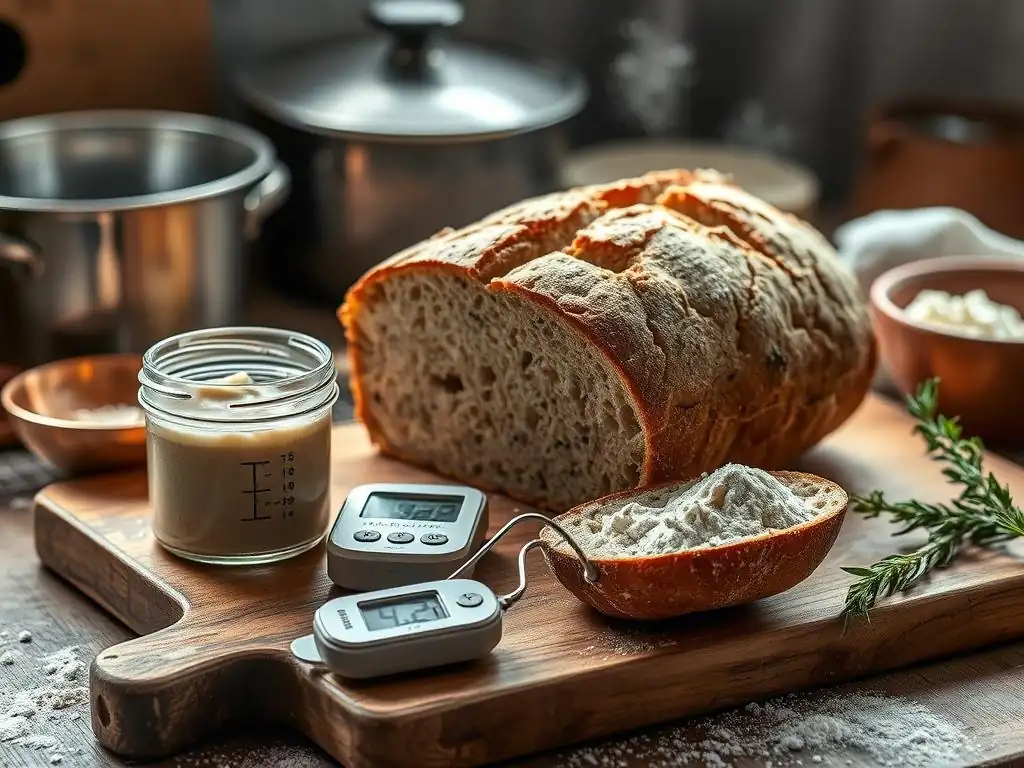
Flour Type and its Impact on Sourdough Sourness
The type of flour used significantly impacts the acidity development in sourdough. Flours with higher mineral content, like whole wheat or rye flours, have a higher buffering capacity. This means they can absorb more acid before the pH starts to drop significantly. While the pH might drop slower, the total amount of acid produced (TA) can be higher in doughs made with these flours compared to refined white flour. The diverse microbial populations naturally present on the bran of whole grains also contribute to different fermentation pathways and acid production profiles.
For example, a starter or dough made with 100% rye flour will typically develop a sharper, more acetic acid-dominant sourness compared to one made with 100% white bread flour. This is partly due to the specific types of bacteria that thrive on rye and the higher buffering capacity allowing for more extensive fermentation before pH becomes inhibitory. Blending flours allows bakers to moderate these effects; using a percentage of whole wheat or rye alongside white flour can add complexity and depth to the sourness without making it overwhelmingly sharp, offering a key sourdough acidity control tip.
Choosing the Right Flour for Your Desired Acidity Profile
To achieve a milder, lactic-acid-dominant sourness, favor higher percentages of refined white bread flour, which has lower buffering capacity. The pH will drop faster, potentially limiting acetic acid production which prefers lower pH environments later in fermentation. A starter maintained purely on white flour at moderate temperatures (around 75°F or 24°C) will likely produce a bread with a creamy, less sharp tang.
If you desire a more pronounced, potentially acetic sourness, incorporate whole grain flours like whole wheat or rye into your starter or dough. A common approach for a sharper tang is maintaining a starter or building a levain with a significant portion (e.g., 20-50%) of rye flour. The higher buffering capacity and different microbial activity in these flours encourage more acetic acid production, especially when combined with other factors like cooler fermentation temperatures. Experimenting with different flour blends is a crucial sourdough acidity control tip for tailoring flavor.
Hydration Levels and Their Effect on Fermentation Acids
Hydration, the ratio of water to flour, plays a significant role in the type of acids produced. Higher hydration doughs (e.g., 75% hydration or more) tend to favor the production of lactic acid. The increased water activity creates a more favorable environment for the Lactobacillus species that produce lactic acid, and the dough's structure is less restrictive, allowing for easier movement of nutrients and metabolites. This typically results in a milder, more rounded sourness.
Conversely, lower hydration doughs (e.g., 65% hydration or less) tend to promote the production of acetic acid. In a stiffer dough, the environment is slightly less favorable for rapid bacterial growth, and certain strains that produce acetic acid can thrive relatively better. The reduced water activity might also influence enzyme activity and nutrient availability in ways that favor acetic acid pathways. If you find your sourdough too sharp or vinegary, one effective sourdough acidity control tip is to increase the hydration of your dough slightly in future bakes.
Optimizing Hydration for Balanced Sourdough Flavor
To achieve a balanced flavor profile with a pleasant, moderate tang, many bakers aim for medium to high hydration levels, typically between 70% and 80% hydration. This range generally supports a healthy mix of yeast and bacterial activity, leading to a good balance of leavening and acid production. For instance, a common country loaf recipe around 75% hydration fermented at moderate temperatures often yields a well-balanced sourness.
If you specifically want to lean towards a milder tang, pushing hydration towards the higher end of the typical range (80%+) can help, assuming your flour can handle it and you can manage the dough. Conversely, if you prefer a slightly sharper note, reducing hydration towards the lower end (65-70%) can contribute to more acetic acid development, especially if combined with cooler fermentation. Adjusting hydration is a simple yet powerful sourdough acidity control tip.
Fermentation Temperature and its Influence on Acid Production
Temperature is one of the most critical factors influencing the balance of lactic and acetic acids. Lactic acid bacteria, in general, are more active at warmer temperatures, typically between 75°F and 90°F (24°C - 32°C). Fermenting your dough in this warmer range will favor the production of lactic acid, resulting in a milder, less sharp sourness. Yeast activity is also high in this range, leading to faster leavening.
Acetic acid production is favored at cooler temperatures, typically between 50°F and 70°F (10°C - 21°C). While bacterial activity is slower in this range, the ratio shifts, with acetic acid-producing bacteria becoming relatively more competitive or productive compared to lactic acid producers. This is why cold proofing (retarding) dough in the refrigerator is a classic sourdough acidity control tip often used to enhance the sourness and develop a more complex, sometimes sharper, flavor profile over a longer period.
Temperature Control: Achieving Consistent Sourdough Acidity
For a consistently mild sourdough flavor, aim to perform your bulk fermentation and proofing at warmer room temperatures, ideally between 75°F and 80°F (24°C - 27°C). This encourages rapid lactic acid production and yeast activity. You might use a proofing box, a warm oven with the light on, or simply find a warm spot in your kitchen. However, be mindful that warmer temperatures also speed up fermentation, so dough development will happen faster.
To increase sourness, particularly the acetic tang, utilize cooler fermentation temperatures. Bulk fermentation at lower room temperature (e.g., 68-72°F or 20-22°C) will slow things down and encourage more acetic acid. Cold retardation in the refrigerator (typically 35-40°F or 2-4°C) for 12-48 hours is a highly effective method for significant acetic acid development and is a popular sourdough acidity control tip for bakers seeking a pronounced tang and complex flavor.
Starter Health and its Relation to Sourdough's Sour Taste
A healthy, active starter is fundamental to good sourdough, and its maintenance routine directly impacts the final bread's acidity. A starter fed frequently (e.g., every 12 hours) at a high ratio (e.g., 1:5:5 starter:flour:water by weight) and kept at moderate temperatures (70-75°F or 21-24°C) tends to be milder. This routine keeps the starter from becoming overly acidic between feedings, promoting a healthy, balanced microbial population that favors lactic acid production.
Conversely, a starter that is fed less frequently or at lower ratios (e.g., 1:1:1 or 1:2:2) or kept at cooler temperatures will spend more time in a highly acidic state. This environment can favor acetic acid-producing bacteria and yeast strains that are more acid-tolerant.
An older, hungry starter (one that has peaked and started to fall significantly) will be very acidic and contribute a sharper tang to the dough. Using a starter when it's just peaked and active (often referred to as 'young' in terms of acid development, though biologically mature) is a key sourdough acidity control tip for a milder loaf.
Maintaining a Healthy Starter for Balanced Flavors
For a generally balanced or milder sourdough, aim to use your starter (or build a levain from it) when it is at or just past its peak – typically when it has doubled or tripled in volume and is very bubbly and active, often within 4-6 hours of feeding at room temperature (75°F/24°C). At this point, lactic acid production is high, but acetic acid hasn't dominated yet.
Feeding your starter regularly (at least daily if kept at room temperature) and discarding a significant portion before feeding (e.g., keeping only 10-20% of the old starter) helps maintain a vigorous and less acidic culture.
If you specifically want a more acidic starter to contribute a stronger tang to your bread, you can feed it less frequently (e.g., every 24 hours at room temp, or keep it in the fridge and feed weekly) or use it later after its peak. Using a small amount of a very mature, hungry starter can quickly drop the dough's pH and introduce more acetic acid producers. However, be cautious, as an overly acidic starter can weaken gluten and inhibit yeast activity. Balancing starter health with desired acidity is an advanced sourdough acidity control tip.
Sourdough Acidity Control Tips: Practical Techniques for Bakers
Manipulating Starter Feeding Ratios for Reduced Acidity
The ratio of starter to fresh flour and water used in a feeding significantly impacts how quickly the starter becomes acidic. A lower inoculation rate (using a smaller amount of ripe starter relative to the amount of fresh flour and water) slows down fermentation. For example, feeding a starter at a 1:5:5 ratio (1 part starter, 5 parts flour, 5 parts water) means the microbes have a large supply of fresh food. It will take them longer to consume the sugars and produce acids compared to a 1:1:1 feeding.
Using a high feeding ratio (like 1:5:5 or even 1:10:10) and using the starter when it just peaks is an effective sourdough acidity control tip for producing a less sour loaf. The starter spends less time in a highly acidic environment before being used. This method favors yeast activity and lactic acid production in the dough while minimizing the carryover of acetic acid from an overly mature starter. This technique is often used when building a "sweet" levain specifically intended for milder breads or enriched doughs.
Lowering the Starter Inoculation Rate
To lower the starter inoculation rate in your dough (not just in feeding the starter), you can use a smaller percentage of ripe starter relative to the total flour weight in your recipe. For instance, instead of using 20% starter (200g starter for 1000g flour), you might use 10% or even 5%. A lower inoculation rate means fewer microbes are present at the start of bulk fermentation, leading to slower acid production and allowing for a longer bulk fermentation time before the dough becomes excessively acidic.
Using a lower starter percentage is a powerful sourdough acidity control tip, particularly effective when combined with longer fermentation times at moderate temperatures. For example, a dough with only 10% starter might take 6-8 hours to double at 75°F (24°C), allowing for complex flavor development from both yeast and bacteria without the rapid accumulation of acid that occurs with a higher inoculation rate (e.g., 20% starter might double in 4-5 hours). This provides flexibility in your baking schedule and helps manage the final sourness.
Adjusting Fermentation Times to Modify Sourness
The longer sourdough ferments, the more time the bacteria have to produce acids. Therefore, the duration of both bulk fermentation (the first rise) and proofing (the final rise before baking) directly correlates with the level of sourness in the final loaf. Shorter fermentation times generally result in milder bread, while longer times increase acidity and complexity. This is one of the most intuitive sourdough acidity control tips.
If you prefer a less sour loaf, monitor your bulk fermentation closely and shape and bake the dough as soon as it shows sufficient development (e.g., 30-50% volume increase, bubbly surface, good gluten development). Avoid pushing fermentation too far. Similarly, shorten the final proofing time. Baking a loaf that is slightly under-proofed (but still has enough oven spring) will result in less acid development compared to a fully proofed or over-proofed loaf.
Shorter Bulk Fermentation Times for Less Sourness
To specifically target lower acidity through fermentation time, focus on performing your bulk fermentation in a warmer environment (e.g., 78-80°F or 26-27°C) and stopping it relatively early compared to a traditional long, cool bulk ferment. Aim for perhaps a 30-40% volume increase rather than the typical 50% or more. At these warmer temperatures, yeast activity is high, meaning you can achieve sufficient leavening relatively quickly before excessive acid builds up.
For example, if your standard recipe calls for 4 hours of bulk fermentation at 75°F (24°C) with a 20% starter, resulting in a noticeable tang, you might try reducing the bulk fermentation to 3 hours at 78°F (26°C) or using a lower starter percentage (e.g., 15%) and observing dough development. The key is to prioritize achieving adequate dough strength and initial leavening within a shorter timeframe to limit acid production, a practical sourdough acidity control tip for milder bread.
Using a Levain Build to Control Acidity
Instead of using your maintenance starter directly in the dough, many bakers build a "levain" or "preferment" specifically for a bake. A levain is essentially a dedicated feeding of your starter, often using different flour types, hydration levels, or temperatures, which is then used at its peak of activity. Building a levain allows for precise control over the microbial balance and activity level going into your dough, offering a powerful sourdough acidity control tip.
For a milder loaf, you would build a "sweet" or "young" levain. This involves feeding your starter at a high ratio (e.g., 1:5:5 or higher) with mostly white flour and letting it ferment at a warm temperature (75-80°F or 24-27°C) until it just peaks (often 4-6 hours). This levain will be highly active with yeast and rich in lactic acid relative to acetic acid. Using it at this stage minimizes the carryover of sharp acidity from a mature starter and promotes a faster, milder fermentation in the main dough.
Levain Management Strategies for Desired Sourness
To encourage more sourness, particularly acetic acid, you could build a levain using a higher percentage of whole grains (like rye or whole wheat) or ferment it at a cooler temperature (e.g., 68-72°F or 20-22°C). You could also let the levain mature longer, using it slightly past its peak when it has begun to become more acidic. For instance, a levain built with 20% rye flour at 70°F (21°C) and used 8-10 hours after feeding will likely contribute a sharper tang than a white flour levain built warmer and used earlier.
Another strategy is to build a levain with a lower hydration (e.g., 50-60% hydration, creating a stiff levain or pâte fermentée). Stiffer preferments tend to favor acetic acid production. Using a small percentage of a stiff, ripe levain can introduce a noticeable tang. Experimenting with levain build parameters – ratio, flour type, hydration, and temperature – is a sophisticated sourdough acidity control tip that allows fine-tuning of flavor.
Cold Retardation Techniques for Managing Sourdough Flavor
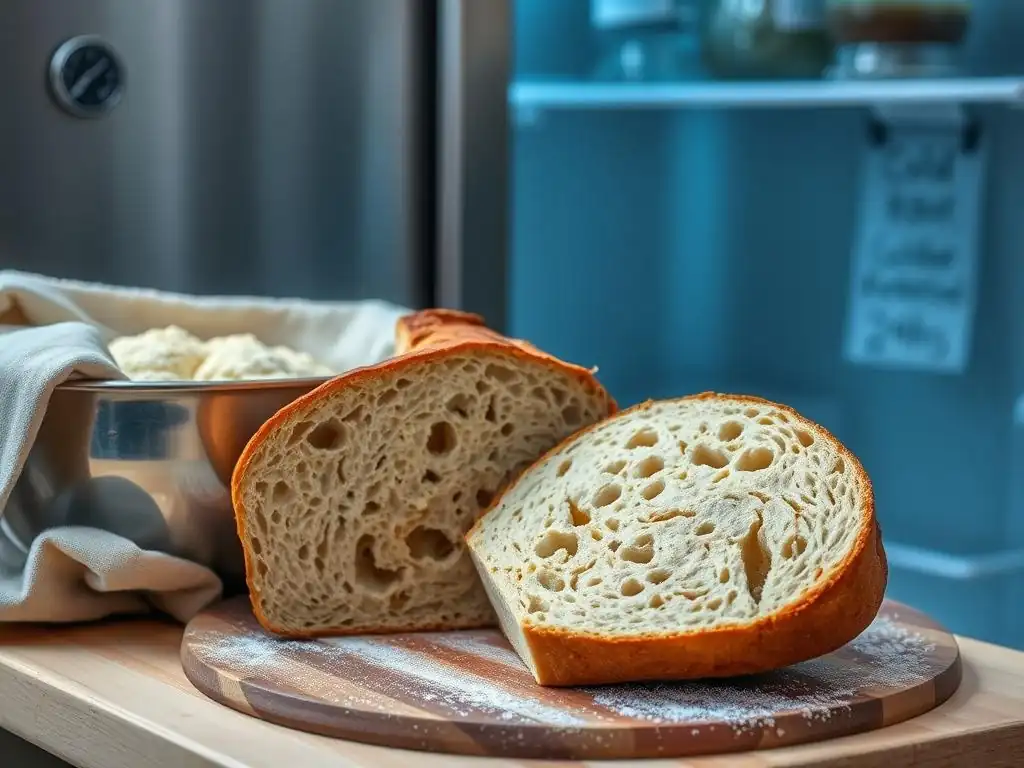
Cold retardation, or proofing the dough in the refrigerator (typically 35-40°F or 2-4°C) for an extended period (12-48 hours), is a widely used technique that significantly impacts sourdough acidity and flavor. At these low temperatures, yeast activity slows dramatically, but the lactic acid bacteria, particularly those that produce acetic acid, remain relatively more active (though still much slower than at room temperature).
Over the long cold proof, the bacteria continue to produce acids, especially acetic acid, which accumulates in the dough. This process not only increases the overall sourness but also allows complex flavor compounds to develop through enzymatic action and slow fermentation. The longer the cold proof, the more pronounced the sourness tends to be. Cold retardation is an essential sourdough acidity control tip for developing depth of flavor and achieving a tangier loaf.
Slowing Down Fermentation with Cold Temperatures
Implementing cold retardation is straightforward: after shaping your dough, place it in a proofing basket, cover it well to prevent drying, and immediately transfer it to the refrigerator. The duration of the cold proof is a primary lever for controlling sourness. A shorter cold proof (12-18 hours) will result in a milder tang compared to a longer one (24-48 hours).
Cold proofing also offers practical benefits, allowing bakers to bake on schedule rather than being dictated by the dough's readiness at room temperature. However, be mindful that while cold slows down leavening, the dough is still fermenting and accumulating acid. Overly long cold proofs (e.g., beyond 48-72 hours depending on the dough) can lead to excessive acidity, gluten degradation, and a gummy crumb. Finding the optimal cold proof duration for your desired level of sourness and dough performance is a key sourdough acidity control tip learned through experience.
The Impact of Salt on Sourdough Acidity
Salt (sodium chloride) is a crucial ingredient in bread baking, contributing to flavor, gluten structure, and controlling fermentation rate. While salt doesn't directly create acid, it influences the activity of both yeast and bacteria. Salt inhibits microbial activity; higher salt levels slow down fermentation. This slower fermentation, particularly yeast activity, can indirectly allow bacteria more time to produce acids relative to the rate of leavening.
However, salt's primary impact on acidity perception is through its effect on flavor balance. Salt enhances the perception of other flavors and can temper bitterness and excessive sourness. A dough with too little salt will taste bland and potentially more sour than it actually is because the acidity isn't balanced by the saltiness. Most bread recipes use salt at 1.8% to 2.2% of the total flour weight.
Using Salt to Moderate Fermentation
While adjusting salt levels solely for acidity control isn't the primary method (as salt has crucial structural and flavor roles), recognizing its influence is part of comprehensive sourdough acidity control tips. Increasing salt slightly (e.g., from 1.8% to 2.2%) will slow down fermentation, which could theoretically allow more time for acid production relative to volume increase if ferment times are fixed, but its main effect is on taste balance.
More importantly, ensuring you use the correct amount of salt (typically around 2%) for your recipe is vital for a balanced flavor profile. A well-salted loaf will have a more pleasant tang where the sourness complements the other flavors rather than dominating them. If your bread tastes overwhelmingly sour, double-check your salt measurement – insufficient salt could be making the acidity seem more intense than it is.
Troubleshooting Common Sourdough Acidity Issues
My Sourdough is Too Sour: Diagnosing and Correcting the Problem
If your sourdough consistently turns out too sour, it's usually a sign that either too much acid is being produced, or the wrong type of acid (excess acetic) is dominating. Common culprits include using a starter or levain that is too mature or acidic, fermenting the dough for too long, fermenting at temperatures that favor acetic acid (too cool), or using too much whole grain flour, especially rye.
To correct overly sour bread, implement several sourdough acidity control tips:
- Use a younger, more active starter/levain: Feed your starter at a higher ratio (e.g., 1:5:5) and use it right at its peak (often 4-6 hours at 75°F/24°C).
- Increase fermentation temperature: Aim for bulk fermentation temperatures between 75-80°F (24-27°C) to favor lactic acid.
- Shorten fermentation times: Reduce bulk fermentation duration (e.g., stop at 30-40% volume increase) and bake sooner after shaping, or reduce cold proofing time significantly (e.g., 8-12 hours or skip it).
- Increase hydration: Slightly increasing dough hydration (e.g., from 70% to 75%) can favor lactic acid.
- Reduce whole grain percentage: Decrease the amount of rye or whole wheat in your starter and dough.
- Ensure adequate salt: Make sure you're using around 2% salt by total flour weight.
My Sourdough is Not Sour Enough: Enhancing Flavor Development
If your sourdough lacks the characteristic tang you desire, it suggests insufficient acid production or perhaps too rapid fermentation that didn't allow acids to develop. Potential reasons include using a starter that isn't fully mature, fermenting at temperatures that are too warm (excessively favoring yeast and fast lactic acid), or using only refined white flour with very fast fermentation.
To enhance the sourness, apply these sourdough acidity control tips:
- Use a more mature starter/levain: Let your starter or levain ferment longer before using it, perhaps slightly past its peak, or use a smaller amount of starter fed at a lower ratio (e.g., 1:2:2) that ferments longer.
- Decrease fermentation temperature: Perform bulk fermentation at lower room temperatures (e.g., 68-72°F or 20-22°C).
- Increase fermentation times: Allow for longer bulk fermentation, observing dough development carefully.
- Implement cold retardation: Cold proof the shaped dough in the refrigerator for 12-48 hours. This is arguably the most effective method for increasing acetic sourness.
- Incorporate whole grains: Add some rye or whole wheat flour (e.g., 10-20%) to your starter or dough.
- Consider a stiffer levain: Build a levain at lower hydration (e.g., 60%) to encourage acetic acid.
Advanced Techniques for Sourdough Acidity Management
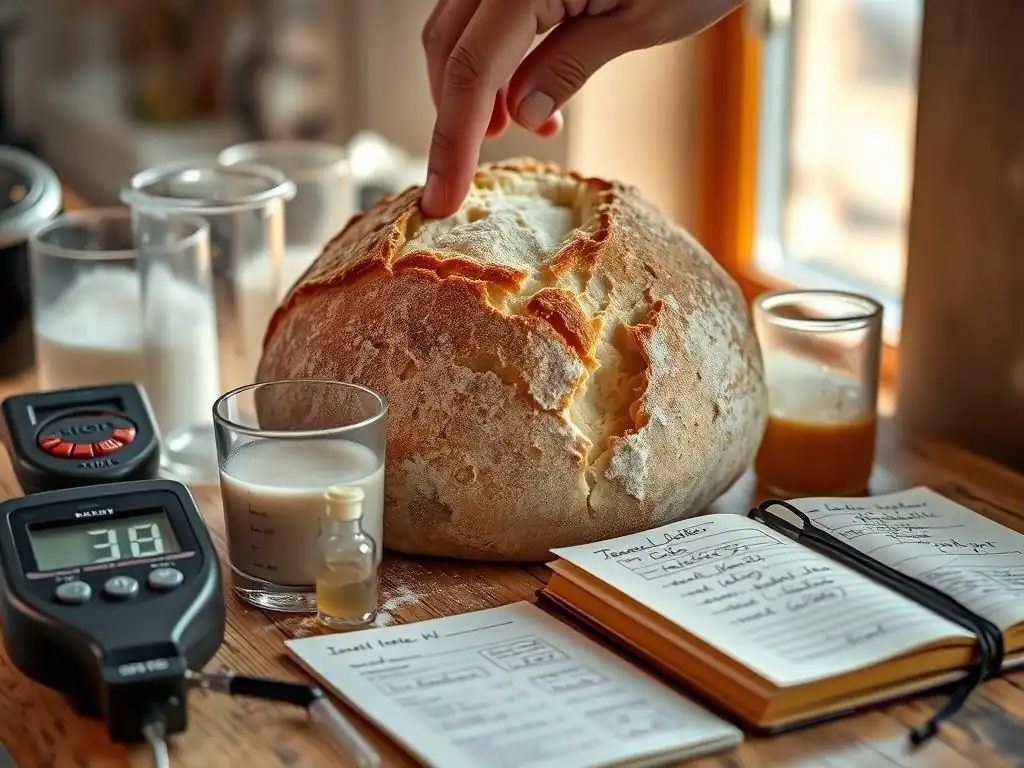
The Role of Pre-Ferments in Controlling Sourdough Flavor
Beyond the standard levain, other types of pre-ferments can be used in conjunction with or instead of a pure sourdough levain to influence flavor and acidity. Examples include poolish (equal parts flour and water, usually with commercial yeast but can be sourdough-based) and biga (a stiff pre-ferment, usually lower hydration than poolish, also typically commercial yeast but adaptable). While traditionally yeast-leavened preferments, sourdough versions exist and offer unique flavor profiles.
Using a sourdough poolish (100% hydration) or a sourdough biga (50-60% hydration) alongside your main sourdough levain, or even as the primary leavening, allows you to manipulate the acid balance. A sourdough poolish will likely favor lactic acid due to its high hydration, while a sourdough biga will lean towards acetic acid due to its stiffness.
Incorporating these pre-ferments is an advanced sourdough acidity control tip that adds complexity and layers of flavor beyond simple sourness. For example, a recipe might use 10% of the total flour as a stiff sourdough biga cold-fermented overnight for acetic tang, plus a standard sourdough levain for leavening and lactic acid.
Exploring Different Fermentation Vessels and Their Impact
While less impactful than temperature or time, the type of fermentation vessel can subtly influence dough temperature and thus acidity. Materials like plastic or glass are relatively insulating and maintain temperature more consistently. Ceramic or terra cotta can sometimes offer a slightly cooler environment due to evaporation if the vessel is unglazed and wet. Metal bowls can conduct heat or cold more readily, meaning the dough temperature will fluctuate more with the ambient temperature.
For precise sourdough acidity control tips related to temperature, using consistent vessels like thick plastic tubs or glass bowls is helpful. If you are using cold retardation, a vessel that transfers cold efficiently (like a metal bowl before transferring to a proofing basket) might cool the dough down faster initially, though the difference is minor compared to the refrigerator's ambient temperature. Ultimately, while vessel material has a minor effect, focusing on ambient temperature control (using proofing boxes, ovens with lights, or refrigerators) is far more critical for managing acidity.
Conclusion: Mastering Sourdough Acidity for Perfect Loaves
Controlling sourdough acidity is a nuanced process that involves understanding the interplay between microbial activity, ingredients, and environmental factors. By manipulating variables like flour type, hydration, temperature, fermentation time, and starter/levain management, bakers can significantly influence the balance of lactic and acetic acids, thereby tailoring the sourness level of their final loaf.
Mastering these sourdough acidity control tips takes practice and observation. Keep detailed notes of your process – starter feeding, temperatures, fermentation times, hydration, flour blends – and how they correlate with the final bread's flavor. Don't be afraid to experiment with one variable at a time, such as trying a shorter bulk fermentation or a longer cold proof. With patience and attention to detail, you can consistently bake sourdough loaves with the perfect level of tang that suits your preference. Happy baking!
Frequently Asked Questions
What causes the sour taste in sourdough bread?
The sour taste in sourdough is primarily due to the lactic and acetic acids produced by the naturally occurring wild yeast and bacteria during fermentation. The balance of these acids determines the level of sourness.
How does fermentation time affect sourdough acidity?
Longer fermentation times generally lead to increased acidity. Bacteria have more time to produce acids, resulting in a more sour flavor in the final loaf. Conversely, shorter fermentation reduces acidity.
What role does starter hydration play in controlling acidity?
A wetter starter tends to favor lactic acid production, resulting in a milder, more yogurt-like sourness. A stiffer starter favors acetic acid production, leading to a sharper, more vinegary sourness.
How does temperature affect the acidity of sourdough?
Warmer temperatures tend to accelerate bacterial activity, potentially leading to faster acid production and a more sour flavor. Cooler temperatures slow down the process, offering more control over the acidity.
Can I adjust my feeding schedule to control sourdough acidity?
Yes, you can. More frequent feedings with fresh flour dilute the acids and promote yeast activity, resulting in a less sour starter. Less frequent feedings allow for more acid development and a more sour flavor.
Final Reflection: The Tangible Power of Understanding Sourdough Acidity
Mastering sourdough acidity isn't just about achieving the perfect tang; it's about unlocking the full potential of this ancient craft. The nuances of pH levels, starter health, and flour selection directly impact the flavor profile, texture, and overall success of your sourdough loaf. Understanding these factors empowers you to consistently bake bread that is not only delicious but also reflects your individual baking style.
The journey of understanding sourdough acidity is a continuous one, mirroring the ever-evolving nature of the sourdough starter itself. It's a process of observation, experimentation, and adaptation, a testament to the interconnectedness of nature and human ingenuity. The more you know, the more you realize you don't know,
a sentiment that rings particularly true when working with the living organism at the heart of sourdough baking. This ongoing learning process, filled with both triumphs and setbacks, is what makes sourdough baking so rewarding and deeply personal. The subtle shifts in flavor, the satisfying rise, and the crust's satisfying crackle are all testaments to the mastery of this delicate balance.
Now, consider your own sourdough journey. What have you learned about controlling acidity in your baking? What adjustments have you made to your process based on your experiences? I encourage you to continue exploring the science behind your sourdough, to embrace the challenges, and to celebrate the successes. Each loaf you bake is a step further on your path to mastering this art, a testament to your dedication and a delicious reward for your efforts. The journey is the destination, and the taste of perfectly balanced sourdough is the sweetest reward.
Unleash Your Inner Sourdough Alchemist!
Thanks for diving into the fascinating world of sourdough acidity! You've now got the knowledge to bake loaves with perfectly balanced tang. Ready to put your new skills to the test?
- Bake your most perfect sourdough yet! Try adjusting your hydration or fermentation time based on what you learned, and experience the difference. Record your results for future bakes!
- Share your sourdough journey! Tell us about your experience – what worked, what didn’t, and what delicious creations you’re planning. We'd love to hear from you in the comments!
- Explore advanced sourdough techniques. Now that you understand the basics of acidity, delve into more complex methods like using different starter cultures or creating unique flavor profiles.
What unique twist will you add to your next sourdough masterpiece?