
The Secret to Airy French Chouquettes

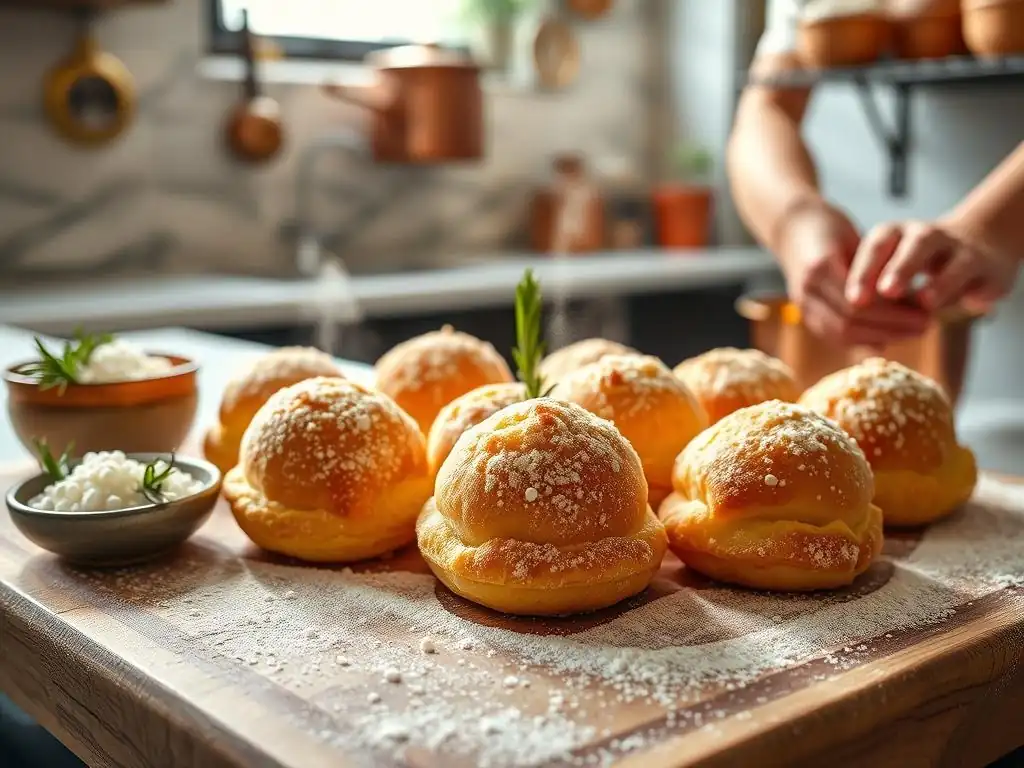
Welcome to BakeWithEase, your companion in the delightful world of baking! Ever dreamt of creating those perfectly puffed, delicately flavored French chouquettes? Discover the secrets to achieving irresistibly airy textures with our expert Airy French chouquette recipe tips. Get ready to unlock the art of this classic pastry and impress everyone with your baking prowess – let's get started!
- The Secret to Airy French Chouquettes: BakeWithEase
- Mastering French Chouquettes: Achieve Light and Airy Perfection
- The Key to Airy Chouquettes: Essential Ingredients and Techniques
- Step-by-Step Airy French Chouquette Recipe Tips for BakeWithEase Readers
- Achieving Chouquette Perfection: Tips & Tricks for BakeWithEase Bakers
- Storing and Serving Your Airy French Chouquettes
- Conclusion: Enjoy Your Homemade, Airy French Chouquettes
-
Frequently Asked Questions
- What exactly is a French chouquette?
- What makes a chouquette "airy"?
- What are some common mistakes that prevent chouquettes from rising properly?
- Where can I find pearl sugar, and can I substitute it if I can't find it?
- What are some "BakeWithEase" tips for achieving perfect airy French chouquettes?
- Final Reflection: The Enduring Allure of the Perfect Chouquette
- Unlock the Puffy Perfection: Your Chouquette Journey Starts Now!
The Secret to Airy French Chouquettes: BakeWithEase
Mastering French Chouquettes: Achieve Light and Airy Perfection
Welcome to BakeWithEase's Guide to Perfect Chouquettes
Welcome, fellow baking enthusiasts, to BakeWithEase! Today, we're diving into the delightful world of French pastries, specifically the humble yet utterly charming chouquette. These little puffs of heaven, sprinkled with pearl sugar, are a staple in French bakeries. While seemingly simple, achieving that perfect, airy interior and crisp exterior requires understanding a few key principles. Our mission here at BakeWithEase is to demystify these techniques and provide you with the best airy French chouquette recipe tips to bake them confidently in your own kitchen. Get ready to impress yourself and your loved ones with these light-as-air treats!
Mastering airy French chouquettes is a rewarding baking journey. It's about more than just mixing ingredients; it's about understanding the science behind the puff. From selecting the right flour to mastering the pâte à choux consistency and controlling the oven temperature, each step is crucial. We'll walk you through the process, sharing detailed insights and practical tips honed through countless batches. Our goal is to equip you with the knowledge and confidence needed to consistently bake airy chouquettes that rival those from a Parisian patisserie. Let's get started on creating these delightful, sweet puffs!
Understanding the Allure of French Chouquettes: A Classic Pastry
French chouquettes hold a special place in the heart of French baking. They are essentially plain choux pastry puffs, often topped with coarse pearl sugar, offering a delightful contrast of textures: a slightly crisp shell giving way to a wonderfully hollow, airy interior. Their simplicity is their charm, making them a perfect vehicle for showcasing the quality of the ingredients and the baker's technique. They are commonly enjoyed as a snack, a simple dessert, or even alongside a cup of coffee or tea. Their light nature makes them incredibly moreish, it's hard to stop at just one!
The appeal of airy French chouquettes lies in their delicate texture and subtle sweetness. Unlike more elaborate pastries, they rely on the fundamental magic of pâte à choux – how a simple mixture of water, butter, flour, and eggs transforms into a light, hollow shell through steam leavening. This transformation is fascinating to witness and even more delightful to taste.
Achieving that signature airy cavity is the mark of a successful chouquette, and it's what we'll focus on with our comprehensive airy French chouquette recipe tips. Their versatility also adds to their allure; while often served plain, they can also be filled with cream or pastry cream for a richer treat.
The Key to Airy Chouquettes: Essential Ingredients and Techniques
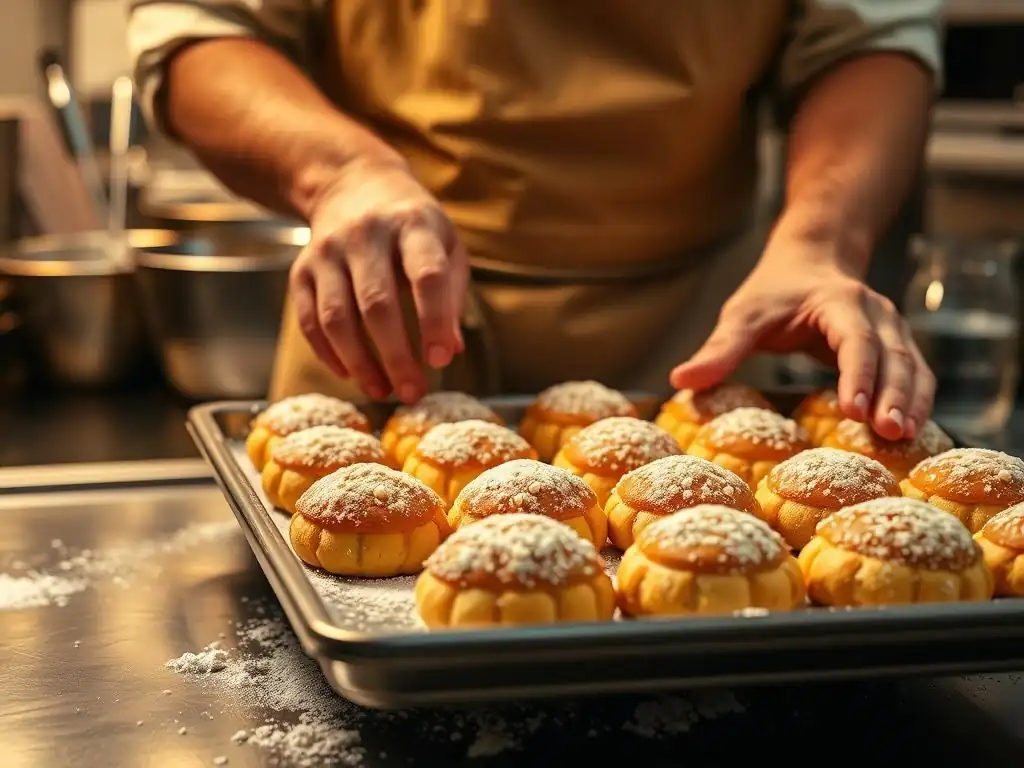
The Role of Each Ingredient in Chouquette Success
Flour Selection for Lightness: All-Purpose Flour (10-12% Gluten)
The type of flour you use plays a significant role in the texture of your chouquettes. For light and airy choux pastry, a good quality all-purpose flour is generally recommended. This type of flour typically has a protein content ranging from 10% to 12%. This moderate gluten level provides enough structure to support the puff as it expands in the oven but isn't so high that it makes the pastry tough or heavy. Using a flour with too low a protein content might result in a weaker structure that collapses, while too high can hinder expansion.
When selecting your flour, look for unbleached all-purpose varieties. The bleaching process can sometimes affect the flour's ability to absorb liquid consistently, which is crucial for pâte à choux. The goal is a flour that will hydrate properly with the hot liquid mixture, forming a smooth, cohesive dough that can hold the steam generated during baking. This foundational step in ingredient selection is one of the first vital airy French chouquette recipe tips to consider for achieving optimal lightness.
Egg Incorporation: Achieving the Right Consistency
Eggs are perhaps the most critical ingredient for achieving the airy structure of chouquettes. They provide richness, contribute to the structure through coagulation, and most importantly, supply the moisture needed to create steam during baking. The amount of egg is crucial and needs to be added gradually to the cooked flour-butter-water mixture. The dough needs to reach a specific consistency – not too stiff, not too runny. This is often described as reaching a point where the dough forms a smooth, shiny paste that falls from a spoon in a 'v' or 'ribbon' shape.
Adding eggs one by one, or even adding the last egg in increments, allows you to control the final consistency precisely. Factors like the size of your eggs or how much moisture evaporated during the initial cooking of the flour paste can affect the total amount of egg needed. It's better to err on the side of caution and add slightly less egg than too much; overly wet dough will struggle to hold its shape and puff properly. Mastering this stage is central to successful airy French chouquette recipe tips.
Water and Butter: Creating the Perfect Pâte à Choux Base
Water and butter form the initial liquid base for pâte à choux. The water provides the necessary moisture that will turn into steam during baking, creating the internal pressure that causes the pastry to puff dramatically. The butter adds richness and tenderness, and its fat content helps create a tender crumb while also contributing to the structure. The ratio of water to butter is important, as is the total amount of liquid relative to the flour.
Typically, a recipe will use equal parts water and butter by weight, or slightly more water than butter by volume. For example, 100g butter and 100ml water is a common starting point. This mixture is brought to a rolling boil before the flour is added. The rapid boiling ensures the butter is fully melted and dispersed and that the liquid is hot enough to properly cook the flour when it's added, a process known as panada. This initial cooking step is vital for developing the dough's ability to absorb the eggs and eventually puff.
Proven Techniques for a Light and Airy Chouquette Texture
Mastering the Pâte à Choux: The Foundation of Airy Chouquettes
Mastering the pâte à choux dough is the absolute foundation for creating airy chouquettes. It involves several key stages: bringing the liquid and butter to a boil, adding the flour all at once and stirring vigorously over heat to cook the flour (the panada step), cooling the dough slightly, and finally, incorporating the eggs gradually. The cooking of the flour is critical; it gelatinizes the starch, allowing the dough to absorb a large amount of liquid (from the eggs) without becoming runny. This creates a stable matrix that can trap steam.
The panada should be cooked for a few minutes over medium heat, stirring constantly, until it forms a ball and a thin film develops on the bottom of the saucepan. This indicates sufficient moisture has evaporated. After removing from the heat, the dough needs to cool slightly before adding the eggs. If the dough is too hot, the eggs will scramble. The final dough consistency, as mentioned earlier, is paramount. Getting this right is perhaps the most important of all airy French chouquette recipe tips.
Piping Techniques: Ensuring Uniform Size and Shape
Once the pâte à choux is ready, piping is the best way to create uniform chouquettes. Uniformity in size and shape is important for even baking. If some chouquettes are significantly larger or smaller than others, they will bake at different rates, leading to some being undercooked or overcooked. Using a piping bag fitted with a plain round tip allows for consistent dollops of dough on your baking sheet.
Pipe mounds of dough about 2-3 cm (roughly 1 inch) in diameter, leaving ample space (at least 3-4 cm or 1.5 inches) between them as they will expand significantly during baking. Dip a finger in water and gently press down any peaks left by the piping tip to ensure a smooth top; this prevents them from burning. Consistent piping contributes greatly to the final appearance and texture, ensuring each chouquette bakes up light and airy.
Oven Temperature: The Critical Factor for Expansion
Oven temperature is arguably the most critical factor in achieving maximum puff and an airy interior in your chouquettes. Chouquettes require a high initial temperature to create a burst of steam, followed by a lower temperature to cook and dry out the pastry shell, setting its structure. A common method is to start baking at a high temperature, such as 400°F (about 200°C), for the first 10-15 minutes.
This initial high heat rapidly converts the water in the dough into steam, causing the chouquettes to expand dramatically. After this initial puff, the temperature is typically reduced to around 350°F (about 180°C) for the remainder of the baking time (another 15-20 minutes). This lower temperature allows the pastry to cook through and the shell to crisp up without burning.
Crucially, resist the urge to open the oven door during the first 15-20 minutes, as this can cause the delicate structure to collapse. Proper temperature management is a non-negotiable item in any list of successful airy French chouquette recipe tips.
Step-by-Step Airy French Chouquette Recipe Tips for BakeWithEase Readers
Detailed Recipe: Your Guide to Baking Perfect Chouquettes
Here is a detailed guide to baking airy French chouquettes, incorporating all the essential steps and tips discussed. This recipe aims for approximately 25-30 chouquettes, depending on size. Follow these steps precisely for the best results.
Ingredients List: Precise Measurements for Optimal Results
Getting the measurements right is key to the correct dough consistency. Use a kitchen scale for best accuracy, especially for the flour and butter.
- 125 ml Water
- 125 ml Whole Milk (or use 250 ml water total)
- 100 g Unsalted Butter, cut into cubes
- 1/2 tsp Salt
- 1 tsp Sugar (optional, for a hint of sweetness)
- 150 g All-Purpose Flour (approx. 10-12% protein)
- 4-5 Large Eggs (about 200-250g total), at room temperature
- Pearl Sugar, for topping
Step-by-Step Instructions: From Dough to Oven
Follow these steps carefully to create your airy chouquettes.
- Preheat oven to 400°F (200°C). Line baking sheets with parchment paper.
- In a medium saucepan, combine the water, milk (if using), butter, salt, and sugar (if using). Bring to a rolling boil over medium-high heat, ensuring the butter is completely melted.
- Remove the saucepan from the heat and add all the flour at once. Stir vigorously with a wooden spoon until the mixture comes together as a ball.
- Return the saucepan to medium heat and continue to cook the dough, stirring constantly, for about 2-3 minutes. This dries out the dough slightly and cooks the flour. A thin film should form on the bottom of the pan.
- Transfer the dough to a large bowl or the bowl of a stand mixer fitted with a paddle attachment. Let it cool for 5-10 minutes, stirring occasionally, until it's warm but not hot to the touch (around 140°F or 60°C).
- Add the eggs one at a time, mixing thoroughly after each addition until fully incorporated before adding the next. The dough will look separated and shiny at first but will come together.
- Check the consistency: The dough should be smooth, glossy, and fall from the paddle or spoon in a slow ribbon or 'v' shape. You may not need all of the last egg.
- Transfer the dough to a piping bag fitted with a plain round tip (about 1 cm/0.5 inch opening).
- Pipe mounds of dough onto the prepared baking sheets, leaving plenty of space between them. Use a wet finger to smooth down any peaks.
- Sprinkle generously with pearl sugar, gently pressing it into the tops of the dough mounds.
- Place the baking sheets in the preheated oven (400°F/200°C). Bake for 10-15 minutes until they are puffed up and starting to turn golden.
- Reduce the oven temperature to 350°F (180°C) and continue baking for another 15-20 minutes, or until the chouquettes are deeply golden brown and feel light when lifted. They should sound hollow when tapped on the bottom.
- Turn off the oven and prop the door open slightly (e.g., with a wooden spoon). Let the chouquettes sit in the cooling oven for another 5-10 minutes to help them dry out and prevent collapsing.
- Transfer the chouquettes to a wire rack to cool completely.
Expert Tips for Avoiding Common Chouquette Mistakes
Baking airy French chouquettes can be tricky, but understanding common pitfalls helps. One frequent issue is chouquettes collapsing after baking. This usually happens if they haven't baked long enough to fully dry out and set their structure. They might look golden on the outside but still be too moist inside. Ensure they are deep golden brown and feel very light before removing them from the oven. The drying step in the cooling oven is also crucial for preventing collapse.
Another common mistake relates to the dough consistency. If the dough is too wet (too much egg), the chouquettes won't hold their shape well and may spread rather than puff upwards. If the dough is too stiff (not enough egg or overcooked panada), they won't puff sufficiently. Pay close attention when adding the eggs, checking the consistency frequently towards the end. These practical airy French chouquette recipe tips address the most common challenges bakers face.
Troubleshooting: Common Issues and How to Fix Them
Let's look at a few specific problems you might encounter when making airy French chouquettes and how to troubleshoot them.
- Issue: Chouquettes didn't puff much or collapsed.
- Possible Causes: Oven not hot enough initially; oven door opened too early; dough too wet; not cooked long enough to dry out.
- Fixes: Ensure oven is accurately preheated; never open the oven during the crucial first 15-20 minutes; check dough consistency carefully when adding eggs (it should hold a 'v' shape); bake until deep golden brown and light, and use the oven cooling step.
- Issue: Chouquettes are flat or spread out.
- Possible Causes: Dough too wet (too much egg); not enough cooking/drying on the stove during the panada stage.
- Fixes: Add eggs gradually, checking for the correct consistency; cook the flour paste for the full 2-3 minutes over heat, ensuring a film forms on the pan bottom.
- Issue: Chouquettes are hard and dense.
- Possible Causes: Dough too stiff (not enough egg); over-mixing the dough; over-baking at too low a temperature.
- Fixes: Ensure dough has the correct consistency (forms a 'v'); mix only until eggs are incorporated, don't overwork the dough; follow the high-to-low temperature baking method.
Achieving the Perfect Pearl Sugar Topping: Gently Pressing into Dough
The signature look of airy French chouquettes comes from the pearl sugar topping. Pearl sugar is coarse, opaque sugar that doesn't melt in the oven, providing a lovely crunch. To apply it effectively, sprinkle a generous amount over the piped dough mounds.
Gently pressing the pearl sugar into the tops of the chouquettes helps it adhere during baking. You don't need to press hard, just enough to slightly embed the sugar granules into the surface of the dough. Doing this ensures the sugar stays in place and provides that characteristic sparkling, crunchy finish that makes chouquettes so appealing. It's a simple step but essential for the classic presentation and texture.
Achieving Chouquette Perfection: Tips & Tricks for BakeWithEase Bakers
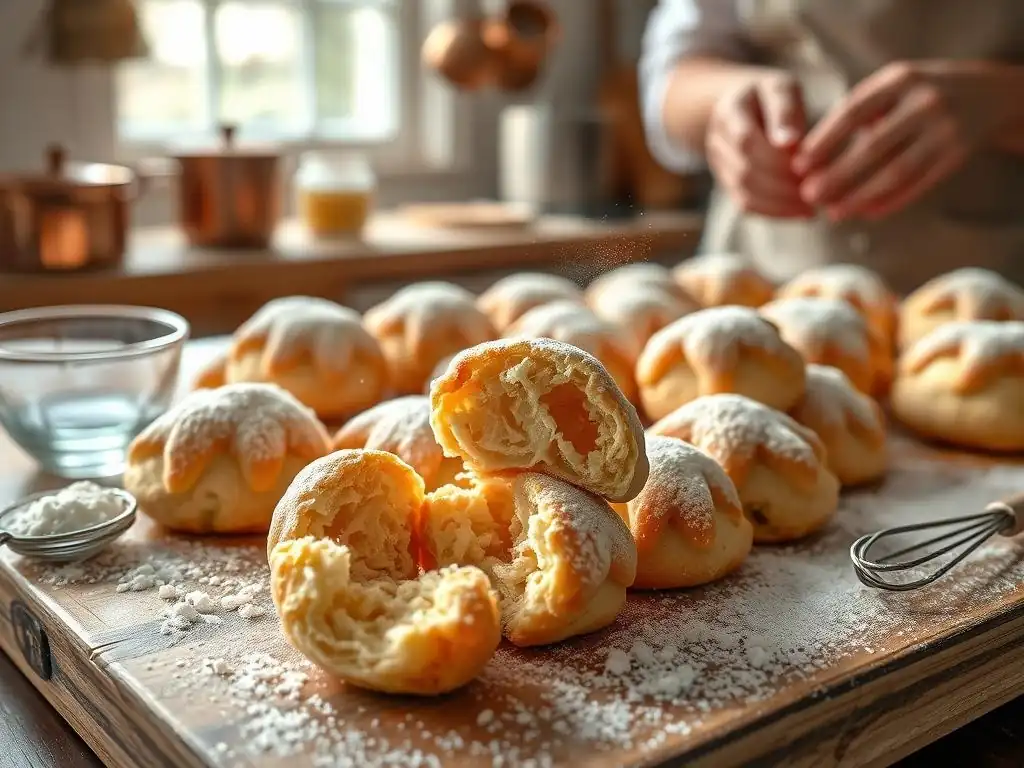
Pro Tip 1: Drying the Pâte à Choux on the Stove
One of the most impactful airy French chouquette recipe tips focuses on the initial cooking of the flour and liquid mixture on the stove. After adding the flour to the boiling water and butter, you must continue to cook the dough, stirring constantly, for 2-3 minutes over medium heat. This step is crucial for evaporating excess moisture and gelatinizing the starches in the flour.
Proper drying on the stove results in a dough that is smooth, pulls away from the sides of the pan, and leaves a thin film on the bottom. This ensures the dough can absorb the subsequent eggs properly and creates a stable base that is ready to puff dramatically in the oven. Skipping or shortening this step is a common reason for chouquettes that don't rise well or spread too much.
Pro Tip 2: Testing the Dough Consistency
Getting the egg consistency just right is vital for achieving airy chouquettes. The best way to test if you've added enough egg is the 'v' or 'ribbon' test. Lift the paddle attachment or wooden spoon out of the dough. The dough should be shiny and smooth, and when it falls back into the bowl, it should do so in a thick ribbon that forms a 'v' shape at the end before breaking off.
If the dough is too stiff and breaks off quickly, it needs more egg (add a little bit more from your reserved egg). If it's too runny and falls off in a stream without holding a shape, you've added too much egg, and unfortunately, this is hard to fix. Always add the last egg gradually, checking the consistency after each addition. This test is a cornerstone of mastering airy French chouquette recipe tips.
Pro Tip 3: The Importance of Preheating the Oven
Preheating your oven properly to the initial high temperature (like 400°F or 200°C) is non-negotiable for airy chouquettes. The sudden exposure to high heat is what causes the water in the dough to rapidly turn into steam, providing the explosive lift needed for a hollow interior. If the oven isn't fully preheated, the dough heats up too slowly, the steam is released gradually, and the chouquettes won't achieve maximum puff.
Give your oven ample time to reach the target temperature, usually 15-20 minutes after the oven indicates it's ready. An oven thermometer can help verify the actual temperature inside. Starting with intense heat is a fundamental technique for achieving that signature airy texture.
Pro Tip 4: Avoiding Opening the Oven Door During Baking
This is perhaps the most repeated, yet most ignored, tip for choux pastry: Do not open the oven door during the initial baking phase! For the first 15-20 minutes at the high temperature, the chouquettes are rapidly expanding due to steam pressure. Opening the door releases this steam and introduces cooler air, causing the delicate, unbaked structure to collapse.
Once the chouquettes are fully puffed and the structure is set (usually after the first 15-20 minutes and when you reduce the heat), it's generally safe to open the door briefly if absolutely necessary (e.g., to rotate the tray, though often not needed). But during that critical initial phase, keep the door firmly shut. Patience is key to achieving those coveted airy interiors.
Storing and Serving Your Airy French Chouquettes
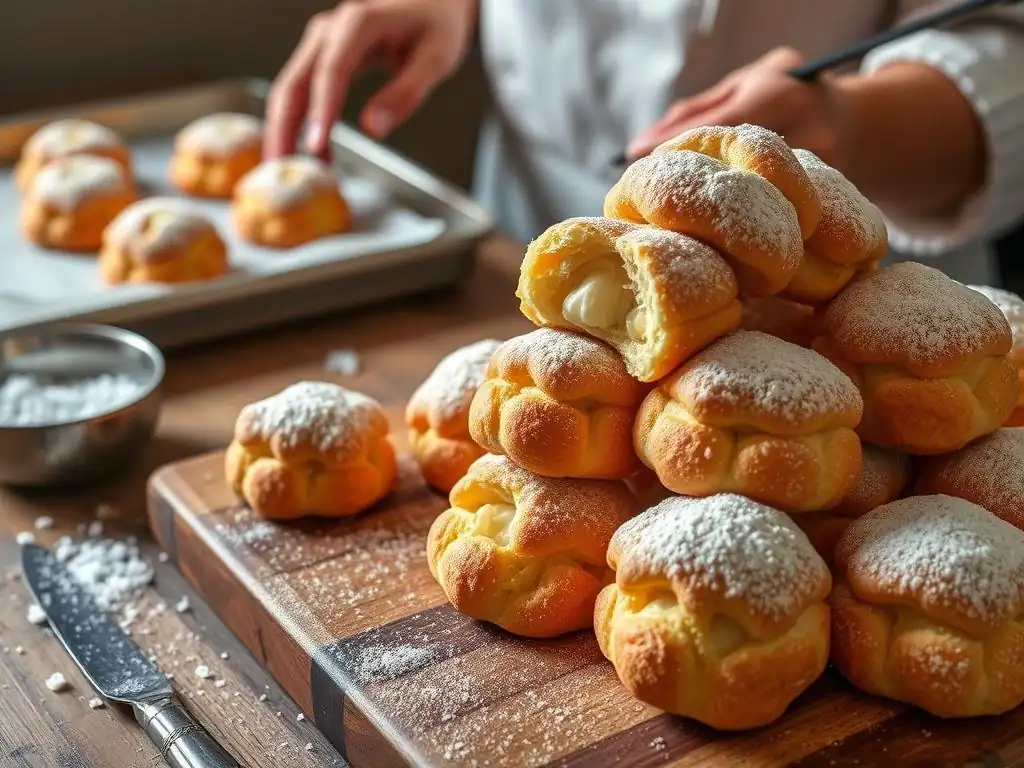
Best Practices for Storing Chouquettes: Maintaining Freshness
Airy French chouquettes are best enjoyed the day they are baked, ideally within a few hours of cooling, when their exterior is crispiest and the interior is most airy. However, if you need to store them, let them cool completely on a wire rack.
Store cooled chouquettes in an airtight container at room temperature for up to 1-2 days. Be aware that they will lose some of their crispness over time as moisture is reabsorbed. To refresh them, you can place them on a baking sheet and warm them in a preheated oven at 300°F (150°C) for about 5-10 minutes until they crisp up again. Avoid refrigerating them, as this tends to make them soggy.
Creative Serving Suggestions: Elevate Your Chouquette Experience
While delicious plain with just their pearl sugar topping, airy French chouquettes can also be elevated with simple additions. A classic serving suggestion is alongside a warm beverage like coffee, tea, or hot chocolate. Their light sweetness pairs wonderfully.
For a slightly more decadent treat, you can split cooled chouquettes horizontally and fill them with whipped cream, pastry cream (crème pâtissière), or even a simple chocolate ganache. These fillings transform the simple puff into a more substantial dessert while still maintaining the delightful contrast with the crisp shell. They can also be stacked into a small croquembouche for a special occasion!
Conclusion: Enjoy Your Homemade, Airy French Chouquettes
Baking airy French chouquettes is a rewarding process that yields delightful results. By paying close attention to ingredient quality, mastering the pâte à choux technique, controlling oven temperatures, and following these airy French chouquette recipe tips, you can consistently bake light, hollow, and perfectly puffed pastries. The journey might involve a few learning curves, but the satisfaction of biting into a homemade chouquette with its delicate crunch and airy interior is well worth the effort. We hope this guide empowers you to tackle this French classic with confidence. Happy baking from BakeWithEase!
Frequently Asked Questions
What exactly is a French chouquette?
A chouquette is a small, round, hollow pastry made from choux pastry and typically topped with pearl sugar. They are a common treat in France.
What makes a chouquette "airy"?
The airiness of a chouquette comes from the steam created during baking. This steam causes the pastry to puff up, leaving a hollow center. Proper choux pastry preparation is key!
What are some common mistakes that prevent chouquettes from rising properly?
Common mistakes include using too much liquid in the dough, not cooking the dough long enough on the stovetop, or opening the oven door too early during baking, causing the steam to escape.
Where can I find pearl sugar, and can I substitute it if I can't find it?
Pearl sugar is often found in specialty baking stores or online. While not ideal, you could try using coarse sugar as a substitute, but the results may vary.
What are some "BakeWithEase" tips for achieving perfect airy French chouquettes?
BakeWithEase recommends ensuring your ingredients are accurately measured, following the recipe steps precisely, and resisting the urge to open the oven door during baking.
Final Reflection: The Enduring Allure of the Perfect Chouquette
The pursuit of the perfect airy French chouquette is more than just a culinary quest; it's a testament to the power of precision and patience in achieving culinary excellence. The seemingly simple recipe, as detailed in this article, reveals a surprising depth of technique, demanding careful attention to each step from the initial roux to the final, golden-brown bake. This dedication to detail, however, is rewarded with a treat that transcends mere snacking, becoming a small moment of exquisite pleasure.
The influence of the chouquette extends far beyond the kitchen; it's a symbol of French pastry artistry, a miniature masterpiece that speaks volumes about the dedication and skill involved in creating something truly special. Its delicate texture and subtle sweetness offer a sensory experience that resonates deeply, reminding us of the importance of appreciating the simple pleasures in life. As Julia Child once said, Find something you're passionate about and keep tremendously interested in it.
This sentiment perfectly encapsulates the spirit of the chouquette – a passion project, both in its creation and consumption.
Now, I invite you to take what you've learned and embark on your own chouquette journey. Don't be afraid to experiment, to tweak the recipe, and to discover your own unique approach to achieving that perfect airy texture. The process itself is as rewarding as the final product, a testament to the transformative power of culinary creativity. So, gather your ingredients, embrace the challenge, and experience the joy of creating – and savoring – these delightful little puffs of pastry perfection.
Unlock the Puffy Perfection: Your Chouquette Journey Starts Now!
Thanks for joining us on this delightful journey into the world of airy French chouquettes! We hope you’ve gained valuable insights into mastering this classic pastry. Ready to put your newfound knowledge into practice?
- Bake your own batch of perfect chouquettes: Use the recipe and tips from the article to create your own batch of delightfully puffy treats. Don't forget to experiment with different flavors!
- Share your chouquette creations: Show us your baking masterpieces! Post photos on social media and tag us – we'd love to see your successes (and even your charming fails! ).
- Explore other BakeWithEase recipes: Discover more delightful baking adventures on our website. Who knows, your next culinary obsession might be just a click away!
So, what unique flavor combination will you try in your next batch of chouquettes? Let's hear your ideas in the comments below!