
Ciabatta vs. Rustic Bread: Understanding the Differences

Welcome to BakeWithEase, your trusted guide to the wonderful world of baking! Ever wondered what truly sets Ciabatta bread apart from other rustic loaves? Discover the secrets behind its airy texture and unique flavor profile, unlocking a surprisingly easy Ciabatta bread recipe and delving into the subtle nuances that differentiate it from its rustic cousins. Intrigued? Let's unravel the mystery and elevate your bread baking game!
- Ciabatta vs. Rustic Bread: Understanding the Differences - BakeWithEase
- Introduction to Ciabatta and Rustic Bread Baking
- What is Ciabatta Bread? A Deep Dive
- What is Rustic Bread? A General Overview
- Ciabatta vs. Rustic Bread: Key Differences Explained
- Ciabatta Bread Recipe Easy: A Step-by-Step Guide
- Rustic Bread Baking: Tips and Techniques for Beginners
- The Best Uses for Ciabatta and Rustic Bread
- Troubleshooting Common Baking Problems with Ciabatta and Rustic Bread
- Conclusion: Embracing the Art of Bread Baking with BakeWithEase
- Frequently Asked Questions
- Final Reflection: The Humble Loaf and the Quest for the Perfect Crust
- Unleash Your Inner Baker: Craft the Perfect Loaf!
Ciabatta vs. Rustic Bread: Understanding the Differences - BakeWithEase
Introduction to Ciabatta and Rustic Bread Baking
Exploring the World of Artisan Breads at BakeWithEase.com
Welcome to BakeWithEase.com, your friendly guide to the rewarding world of bread baking! Here, we believe that creating delicious, artisan-style bread in your own kitchen is not only achievable but incredibly satisfying. From the foundational steps of mixing dough to the final golden crust, we're here to simplify the process and share the joy of baking. Understanding the nuances between different bread types, like the airy ciabatta and hearty rustic loaf, is a fantastic step in expanding your baking repertoire and achieving consistent, delightful results.
Our mission is to demystify baking, making complex techniques accessible to everyone. Whether you're dreaming of a simple ciabatta bread recipe easy enough for a weeknight bake or eager to tackle a robust rustic sourdough, our resources are designed to help you succeed. We explore the science behind baking, the role of each ingredient, and the simple techniques that transform flour, water, yeast, and salt into edible masterpieces. Join us on this baking journey!
Why Understanding Bread Types Matters for Home Bakers
Knowing the characteristics of different bread types is crucial for several reasons, especially when you're aiming for a specific outcome like a light, open crumb or a dense, chewy texture. Each bread has unique requirements regarding ingredients, hydration levels, kneading techniques, and baking methods. For instance, attempting to bake a ciabatta using techniques meant for a typical sandwich loaf would result in a dense, disappointing brick rather than the signature airy structure.
Furthermore, understanding bread types helps you troubleshoot problems more effectively. If your ciabatta is too dense or your rustic loaf lacks crust development, knowing the typical traits and processes for each allows you to pinpoint where things might have gone wrong. It also empowers you to adapt recipes or even create your own variations, confidently knowing how ingredient ratios and techniques will influence the final product. Mastering the basics of different styles, such as a simple ciabatta bread recipe easy to follow, builds a strong foundation for exploring the vast world of bread.
What is Ciabatta Bread? A Deep Dive
Defining Characteristics of Authentic Ciabatta
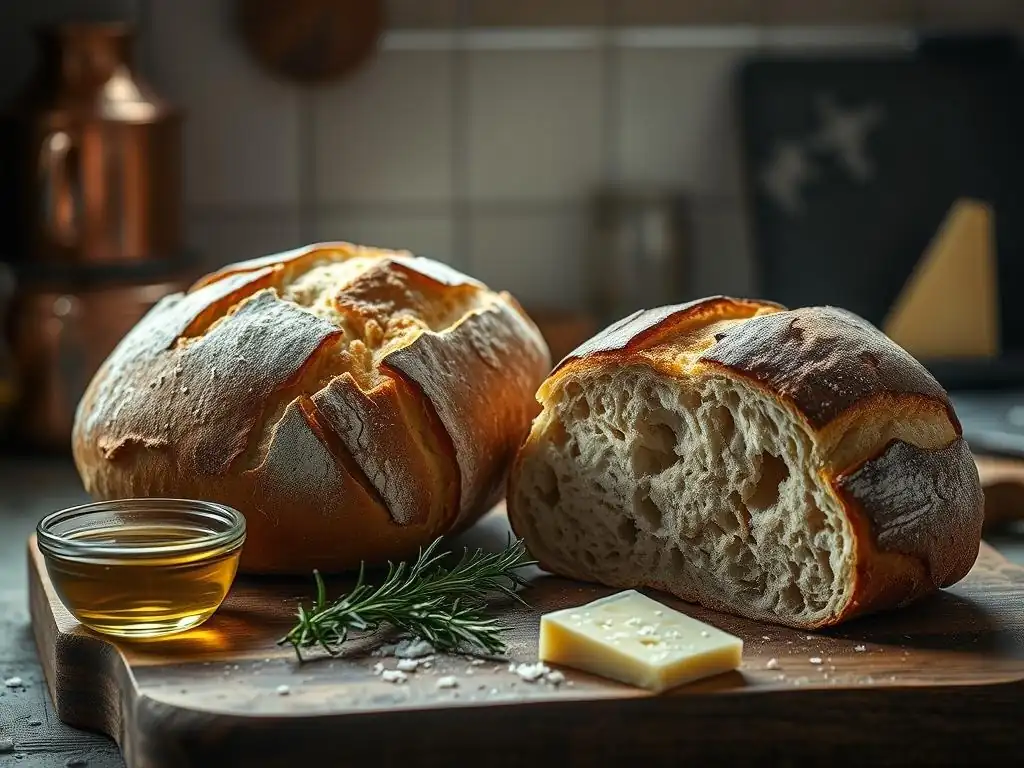
Ciabatta, which means "slipper" in Italian, is renowned for its distinctive shape and texture. Authentic ciabatta is typically long, broad, and relatively flat, resembling a slipper. Its hallmark is an incredibly open, irregular crumb structure with large, airy holes interspersed throughout. The crust is usually thin, crisp, and crackly, providing a delightful contrast to the soft, chewy interior. This bread is designed to be light and airy, not dense or heavy.
Achieving these characteristics relies heavily on a few key factors: very high dough hydration, minimal kneading (often relying on folds instead), and a long fermentation period. Unlike many traditional breads that require significant shaping and structure before baking, ciabatta dough is intentionally slack and sticky. It's handled gently to preserve the large gas bubbles that develop during fermentation, which are essential for creating that iconic open crumb.
The Importance of High Hydration in Ciabatta Dough
High hydration is perhaps the single most defining feature of ciabatta dough. While many bread doughs use a hydration level between 60% and 70% (meaning the water weight is 60-70% of the flour weight), ciabatta dough often boasts hydration levels of 75%, 80%, or even higher. This unusually high water content is what gives ciabatta its characteristic slackness and contributes directly to the incredibly open crumb structure.
Working with such wet dough can be challenging for beginners, but it's essential for the texture. The excess water allows the gluten network to expand more freely during fermentation and baking, creating larger, more irregular air pockets. It also contributes to the thin, crispy crust because the high moisture content generates a lot of steam in the oven. Learning to handle this sticky dough is a key step in mastering a simple ciabatta bread recipe easy enough for home baking.
Key Ingredients for a Perfect Ciabatta Bread Recipe Easy
A great ciabatta bread recipe easy to make at home starts with just a few fundamental ingredients, but their quality and proportion are critical. You'll need:
- Strong Bread Flour: A high-protein flour (around 12-14%) is necessary to develop a strong gluten network capable of supporting the high hydration and trapping large air bubbles.
- Water: As discussed, this is the star. Use cool to lukewarm water, depending on your fermentation schedule.
- Yeast: Instant dry yeast or active dry yeast are common. The amount will vary based on fermentation time and temperature, but typically a small amount is used for a long, slow rise, contributing to flavor development. For a simple ciabatta bread recipe easy for beginners, instant yeast is often preferred for its reliability.
- Salt: Essential for flavor and controlling yeast activity.
Sometimes a small amount of olive oil is added for flavor and tenderness, or a pre-ferment (like a poolish or biga) is used to enhance flavor and structure, but the core ingredients remain flour, water, yeast, and salt. Focusing on these basics is the best way to start with a simple ciabatta bread recipe easy to replicate.
What is Rustic Bread? A General Overview
Defining Rustic Bread: More Than Just a Name
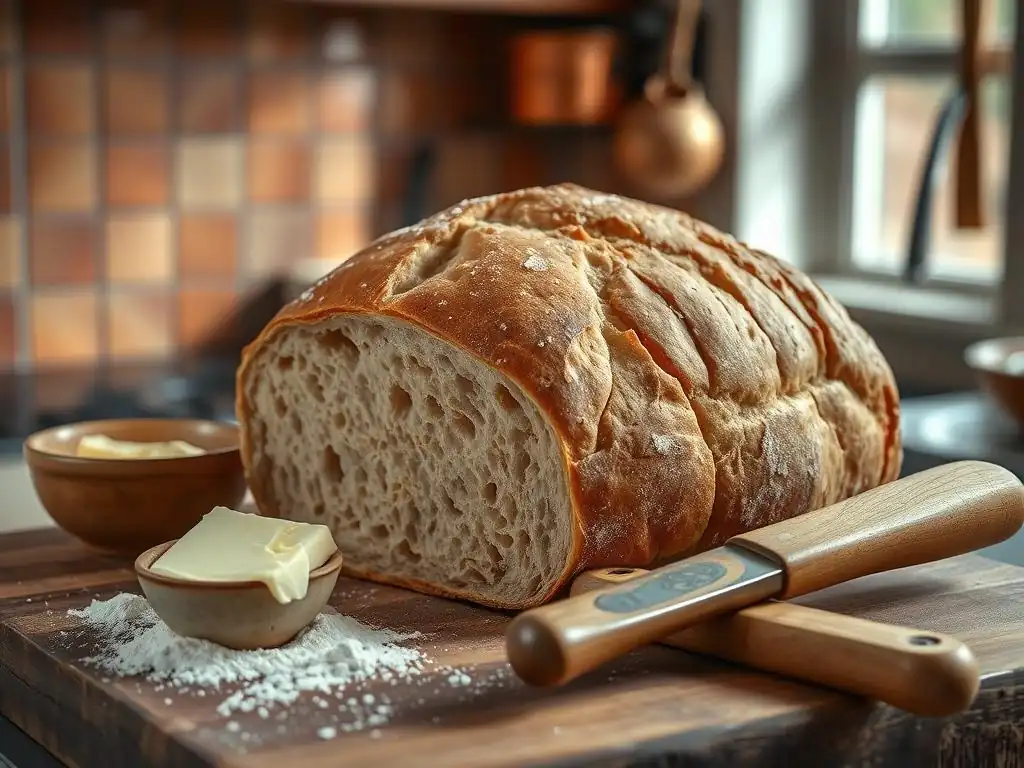
The term "rustic bread" is broader than ciabatta and generally refers to loaves that evoke a traditional, old-world style of baking. These breads are often characterized by their irregular, "artisan" appearance, sturdy crust, and a crumb that can range from moderately open to relatively dense, depending on the specific type. Unlike highly uniform commercial loaves, rustic breads celebrate imperfection and the natural outcomes of traditional baking methods.
Rustic breads can encompass a wide variety of styles, including sourdoughs, country loaves, and certain regional European breads. They often feature longer fermentation times, sometimes using natural leavens, which contribute to complex flavors. While there isn't a single definition, "rustic" generally implies a bread that is hearty, flavorful, and looks like it was hand-shaped with care, perhaps baked on a hearth or in a traditional oven.
Common Characteristics of Rustic Bread Varieties
Rustic breads share several common traits, though there is significant variation within the category. Key characteristics include:
- Crust: A thick, chewy, often deeply colored crust is typical. This is often achieved through high baking temperatures and the use of steam in the oven. Scoring patterns on the surface are common, allowing for controlled expansion and adding to the rustic aesthetic.
- Crumb: The interior crumb structure can vary greatly. It might be moderately open with irregular holes (like a pain de campagne) or relatively dense and even-textured (like a hearty rye). It's usually chewier than a soft sandwich loaf but generally less airy than ciabatta.
- Shape: Shapes are often rounded ( boule) or oblong ( batard), sometimes freeform, reflecting hand-shaping. They rarely have the specific "slipper" shape of ciabatta.
- Flavor: Often more complex than simple white loaves, due to longer fermentation, the use of sourdough starters, or the inclusion of whole grains or add-ins like seeds or herbs.
These characteristics contribute to the satisfying chew and robust flavor that people associate with rustic, artisan-style bread.
The Role of Flour in Rustic Bread Recipes
Flour selection plays a significant role in shaping the character of a rustic loaf. While strong bread flour is a common base, rustic recipes frequently incorporate a blend of flours to achieve desired textures, flavors, and colors.
- Whole Wheat Flour: Adds nutty flavor, color, and fiber. It typically results in a denser crumb compared to white flour alone.
- Rye Flour: Used in many European rustic breads. It contributes a distinctive tangy flavor and creates a denser, sometimes slightly gummy crumb because its gluten-forming proteins behave differently than wheat.
- Spelt or Einkorn Flour: Ancient grains that add unique flavors and textures. They often require slightly different handling due to their gluten structure.
Using a mix of flours allows bakers to customize the bread's profile. For example, a pain de campagne might use a blend of white bread flour and a percentage of whole wheat or rye, resulting in a hearty loaf with a complex flavor profile and a crumb that is less open than ciabatta but more varied than a pure white loaf.
Ciabatta vs. Rustic Bread: Key Differences Explained
Dough Hydration: A Crucial Difference
The most significant technical difference between ciabatta and most rustic breads lies in dough hydration. As previously mentioned, ciabatta is exceptionally wet, typically ranging from 75% to over 85% hydration relative to the flour weight. This high water content is fundamental to its open, airy structure.
Rustic breads, while often having higher hydration than standard sandwich loaves (which might be 60-65%), are generally less hydrated than ciabatta. Common hydration levels for rustic loaves might fall between 65% and 75%. This lower hydration results in a dough that is easier to handle and shape, and contributes to a denser, more structured crumb compared to the extremely open holes found in ciabatta. Handling the very slack dough is a key step in a simple ciabatta bread recipe easy for beginners to learn.
Gluten Development Techniques: Ciabatta vs. Rustic
The methods used to develop gluten also differ considerably. For ciabatta's high-hydration dough, traditional kneading is often avoided because the dough is too sticky to handle effectively. Instead, gluten development is achieved through a series of "stretch and folds" performed over the course of the bulk fermentation. This gentle method helps align the gluten strands without degassing the dough excessively, preserving the large bubbles needed for the open crumb.
Rustic breads, with their lower hydration, can often be kneaded more vigorously, either by hand or machine, especially if they don't rely heavily on a long fermentation or sourdough starter for structure. While stretch and folds are also commonly used in rustic bread making, particularly with sourdoughs or higher-hydration recipes, they are not as strictly necessary as they are for achieving the signature ciabatta structure. For a simple ciabatta bread recipe easy to manage, mastering the stretch and fold technique is key.
Crust Characteristics: Identifying the Visual Differences
Visually, the crusts of ciabatta and rustic bread offer clear distinctions. Ciabatta typically has a relatively thin, often dusty (from flouring), and very crisp crust. The irregular shape means the crust can be quite jagged and bubbly in places, especially on the bottom where it touches the baking surface.
Rustic bread crusts are generally thicker and chewier than ciabatta. They often have a deeper, caramelized color due to longer or hotter baking times and scoring patterns that bloom during baking. The crust contributes significantly to the structure and keeping quality of a rustic loaf, providing a substantial chew that is different from ciabatta's delicate crunch.
Interior Structure: Air Pockets and Texture
The crumb, or interior structure, is arguably the most striking difference. Ciabatta is famous for its extremely open crumb, characterized by large, irregular air pockets of varying sizes, interspersed with a relatively small amount of chewy bread matrix. The texture is light and airy.
Rustic bread crumbs are more varied. They can range from moderately open with smaller, more uniform holes (like many sourdoughs) to relatively dense and close-textured (especially those with significant whole grain or rye content). While still artisanal and often irregular compared to commercial bread, the holes are typically smaller and more evenly distributed than in ciabatta. The texture is generally heartier and chewier throughout the crumb.
Flavor Profiles: A Taste Comparison
The flavor profiles of ciabatta and rustic bread also tend to differ. A classic ciabatta, made with commercial yeast, often has a relatively mild flavor, primarily tasting of well-fermented wheat with a subtle sweetness. If a pre-ferment is used, it can develop more complex, slightly tangy notes. The high hydration contributes to a moist crumb that carries flavors well.
Rustic breads, especially those made with sourdough starters or incorporating whole grains or rye, often have more pronounced and complex flavors. Sourdough imparts a characteristic tanginess, while whole grains add nutty or earthy undertones. Longer fermentation times common in rustic baking also contribute to deeper, more developed flavors. The heartier texture and thicker crust also influence the overall eating experience and flavor perception.
Ciabatta Bread Recipe Easy: A Step-by-Step Guide
Essential Ingredients for Your Home-Baked Ciabatta
To make a simple ciabatta bread recipe easy for beginners, you'll need just four main ingredients:
- 500g strong bread flour
- 400g lukewarm water (80% hydration)
- 1 tsp instant dry yeast (about 3-4g)
- 10g fine sea salt
This ratio provides a classic high-hydration dough that, while sticky, is manageable with practice. Using high-quality flour will make a noticeable difference in the final texture and flavor. Ensure your yeast is active; if using active dry yeast, you may need to activate it in a small amount of the water first.
Mixing and Kneading the Ciabatta Dough
Unlike traditional kneading, ciabatta dough is mixed to combine and then developed through folding.
- In a large bowl, whisk together the flour, yeast, and salt.
- Add the water and mix with a spoon or spatula until just combined. The dough will be very wet and shaggy. Don't worry about developing gluten at this stage.
- Cover the bowl and let rest for 20-30 minutes. This is an autolyse period that helps the flour absorb the water and gluten development begin naturally.
- After the rest, perform the first "stretch and fold." With wet hands or a wet spatula, grab one edge of the dough, stretch it up, and fold it over the center. Rotate the bowl and repeat 3-4 times until all sides have been folded. The dough will start to show a little more structure.
- Repeat the stretch and fold process every 30-45 minutes for the next 2-3 hours. By the end, the dough should be much smoother, more elastic, and filled with visible air bubbles. This gentle development is key to a simple ciabatta bread recipe easy to handle later.
Mixing Steps:
1. Combine dry ingredients.
2. Add water, mix until shaggy.
3. Rest (autolyse) 20-30 mins.
4. Perform 1st stretch & fold.
5. Repeat stretch & folds every 30-45 mins (total 4-6 folds).
The Importance of the First Rise (Bulk Fermentation)
Bulk fermentation is critical for ciabatta, allowing flavor to develop and gas bubbles to form the characteristic open crumb. After the stretch and fold series, the dough should be left to rise undisturbed until it has significantly increased in volume – typically doubling or even tripling.
This process can take anywhere from 2 to 4 hours at room temperature (around 70-75°F or 21-24°C), or even longer if fermented in a cooler environment (like overnight in the refrigerator, which adds even more flavor). The dough should look airy and bubbly. Avoid rushing this stage; a long, slow fermentation is essential for both texture and flavor in any simple ciabatta bread recipe easy or complex.
Shaping the Ciabatta Loaves
Ciabatta is shaped minimally to preserve the airy structure developed during fermentation.
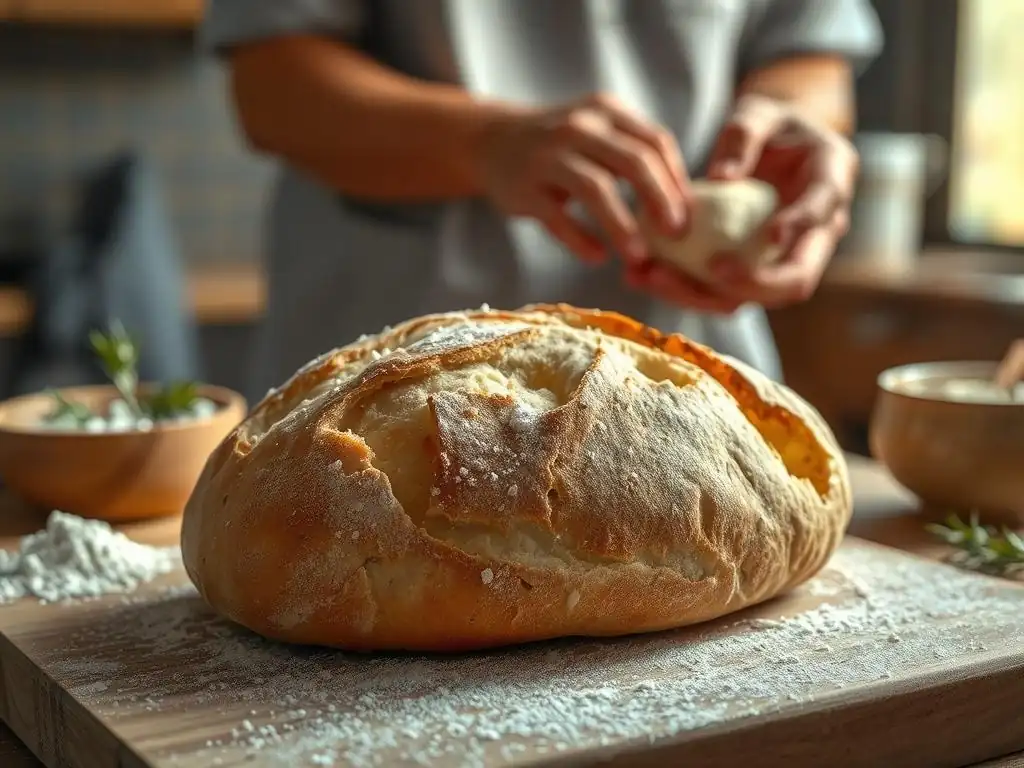
- Gently scrape the risen dough out onto a well-floured surface. Be generous with the flour, as the dough is very sticky.
- Using a bench scraper, divide the dough into 2-3 equal portions. Try not to deflate the dough.
- Stretch each portion gently into a rough rectangle or square. You can use your hands or the bench scraper. Avoid folding or tucking the edges tightly, as this would close off the crumb.
- Carefully transfer the shaped pieces onto parchment paper dusted with flour or cornmeal. Ensure there is space between them.
- Task List for Shaping:
- [ ] Flour work surface generously.
- [ ] Gently scrape dough onto surface.
- [ ] Divide dough with bench scraper.
- [ ] Gently stretch into shape.
- [ ] Transfer to floured parchment paper.
Baking Techniques for a Crispy Crust and Open Crumb
Baking ciabatta requires high heat and steam to achieve the desired crust and crumb.
- Preheat your oven with a baking stone or steel inside to 450-475°F (230-245°C) for at least 30-45 minutes. Place a baking tray or cast iron pan on the rack below the stone/steel.
- Just before loading the bread, carefully pour a cup of hot water into the preheated tray/pan to create steam. Close the oven door quickly.
- Slide the ciabatta (on the parchment paper) onto the hot baking stone/steel.
- Bake for 20-25 minutes, or until the crust is golden brown and the internal temperature reaches around 205-210°F (96-99°C). The steam helps the crust stay pliable initially, allowing the loaf to expand, and then contributes to a crisp finish.
Baking at high heat with steam is crucial for developing ciabatta's thin, crispy crust and maximizing oven spring for an open crumb.
Rustic Bread Baking: Tips and Techniques for Beginners
Choosing the Right Flour for Rustic Bread
For a basic rustic loaf, a good quality strong bread flour is an excellent starting point. Its high protein content (around 12-14%) provides the structure needed for a good rise and chewy crumb.
Once comfortable with a basic recipe, you can experiment with blends. For example:
- Substitute 10-20% of the white bread flour with whole wheat flour for a slightly nuttier flavor and denser crumb.
- Add a small percentage (5-10%) of rye flour for a distinct tangy note, common in many European rustic styles.
Remember that whole grains absorb more water, so you might need to adjust hydration slightly when adding them. Start with small percentages of non-wheat flours until you understand how they affect the dough handling and final loaf.
Achieving the Perfect Crust: Baking Temperatures and Methods
A hallmark of rustic bread is its robust crust. This is typically achieved through a combination of high baking temperatures and steam.
- High Temperature: Preheat your oven to 450-500°F (230-260°C). A hot oven provides a strong initial burst of heat, leading to good oven spring and rapid crust formation.
- Steam: Steam is vital in the first 15-20 minutes of baking. It keeps the surface of the dough moist and pliable, allowing the loaf to expand fully before the crust hardens. Methods for creating steam include:
- Baking in a Dutch oven or lidded pot. The lid traps the moisture released by the dough.
- Placing a tray of hot water or ice cubes in the bottom of the oven.
- Spraying the oven walls with water (use caution).
After the initial steaming period, reduce the oven temperature slightly (e.g., to 425-450°F or 220-230°C) and continue baking until the crust is deeply colored and sounds hollow when tapped on the bottom. A thick, dark crust contributes significantly to the flavor of a rustic loaf.
Flavor Enhancement: Adding Seeds, Herbs, and More
Rustic breads are wonderfully versatile and lend themselves well to additions that enhance flavor and texture.
- Seeds: Incorporate seeds like sesame, poppy, sunflower, or pumpkin seeds into the dough or sprinkle them on the crust. Toasting seeds lightly before adding can boost their flavor. A common ratio is adding 5-10% of the total flour weight in seeds.
- Herbs: Fresh or dried herbs like rosemary, thyme, or oregano can be mixed into the dough for an aromatic loaf. Use dried herbs sparingly (e.g., 1-2 teaspoons per loaf) or fresh herbs more generously (1-2 tablespoons, chopped).
- Olives or Sun-Dried Tomatoes: Chop and drain these additions well before incorporating them into the dough during the final stages of mixing or during a late fold. Use about 10-15% of the flour weight in additions.
Adding these elements transforms a simple rustic loaf into something truly special. Ensure additions are evenly distributed without tearing the gluten network.
The Best Uses for Ciabatta and Rustic Bread
Ciabatta: Ideal for Sandwiches and Paninis
Ciabatta's unique structure makes it perfect for applications where its airy crumb and crispy crust can shine.
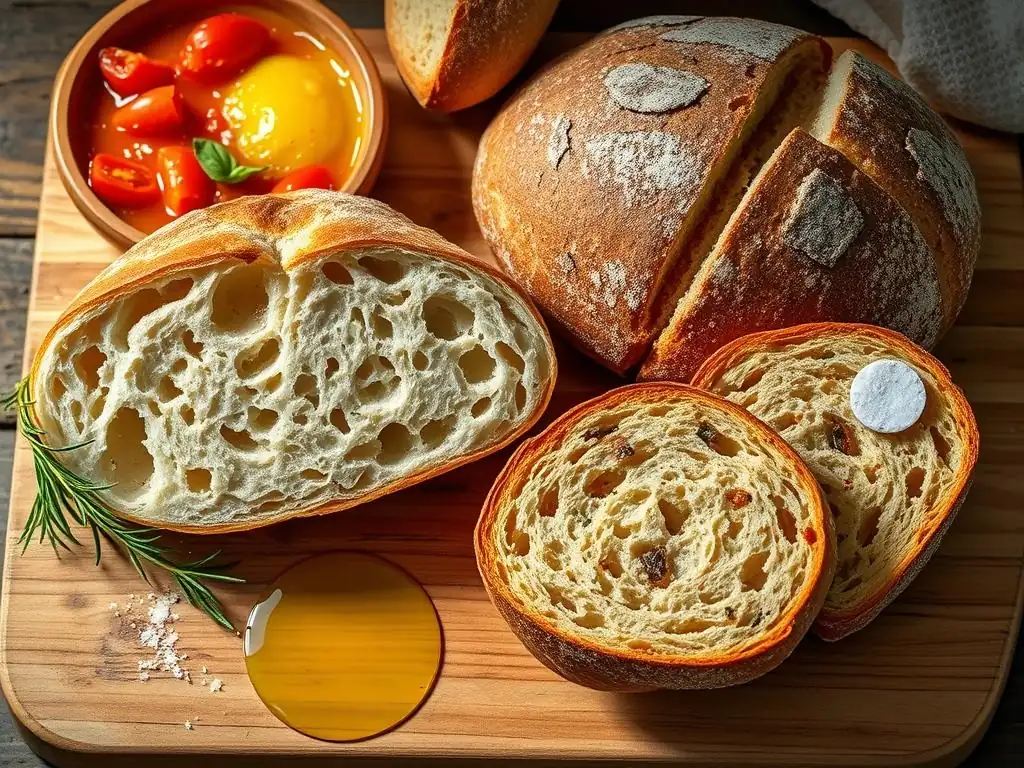
- Sandwiches: The large holes provide space for fillings, and the chewy interior holds up well without becoming soggy. Its relatively flat shape is ideal for slicing horizontally for generous sandwiches.
- Paninis: Ciabatta is a classic choice for pressed sandwiches. The crust crisps up beautifully under heat, and the open crumb compresses just enough while still providing substance.
- Dipping: Its ability to soak up liquids makes it superb for dipping in olive oil, balsamic vinegar, or soups.
The light texture means it pairs well with substantial fillings without feeling heavy, making a simple ciabatta bread recipe easy to turn into a fantastic meal base.
Rustic Bread: Perfect for Soups, Dips, and Hearty Meals
Rustic bread's sturdy crust and often denser crumb make it an excellent companion for heartier fare.
- With Soups and Stews: The thick crust and chewy interior are perfect for soaking up broths and sauces without falling apart. A thick slice toasted is heavenly alongside a hearty bowl.
- For Dips: Its robust structure stands up well to thick or chunky dips like hummus, baba ghanoush, or bean dips.
- Bruschetta and Crostini: Slices of rustic bread make an ideal base for toppings, whether toasted for bruschetta or sliced thinly and baked into crostini. The sturdy base prevents sogginess.
- Open-faced Sandwiches: The firm crumb holds up to various toppings, from simple avocado to more complex spreads.
Rustic bread provides a satisfying chew and substantial feel that complements rich, flavorful dishes.
Troubleshooting Common Baking Problems with Ciabatta and Rustic Bread
Addressing Dough Handling Issues
- Issue: Ciabatta dough is too sticky to handle.
- Solution: This is normal! High hydration doughs are sticky. Use wet hands or a bench scraper. Work on a well-floured surface, but avoid incorporating excessive flour into the dough itself, which will change the hydration. Practice makes perfect; the more you handle wet dough, the easier it becomes. Remember, a simple ciabatta bread recipe easy for beginners still requires getting used to the feel of wet dough.
- Issue: Rustic dough is tearing during kneading or folding.
- Solution: This indicates insufficient gluten development or overworking. If tearing during initial kneading, the dough might need more time. If tearing during folds, you might be stretching too aggressively, or the dough needs a rest. Let it relax for 10-15 minutes before attempting to work with it again. Ensure you are using flour with adequate protein content.
Preventing a Dense Crumb
- Issue: Ciabatta or rustic bread has a dense, tight crumb instead of being open or airy.
- Solution for Ciabatta: This is often due to insufficient hydration, under-fermentation, or degassing the dough too much during shaping. Ensure your hydration is high (75%+). Allow sufficient bulk fermentation until the dough is bubbly and has increased significantly in volume. Handle the dough very gently during shaping to preserve gas bubbles – think stretching and folding, not kneading or punching.
- Solution for Rustic Bread: Could be under-fermentation, insufficient gluten development, or improper shaping/proofing. Ensure the dough rises adequately during bulk fermentation and proofing. Develop sufficient gluten through kneading or folding. For loaves meant to have a more open crumb, handle gently during shaping. Using a strong bread flour is also important.
Achieving a Golden-Brown Crust
- Issue: Crust is pale or not developing a good color.
- Solution: Ensure your oven is preheated to the correct temperature and for long enough (at least 30-45 minutes with a stone/steel). Baking at too low a temperature is a common cause. Make sure you are using steam during the initial part of the bake; steam delays crust formation, allowing the loaf to expand fully before the crust hardens and browns. Baking on a preheated stone or steel also transfers heat efficiently to the base, helping develop a good bottom crust. Sometimes, adding a small amount of sugar or malt powder (like diastatic malt) to the dough can promote browning, though this is less traditional for pure ciabatta or rustic loaves.
Conclusion: Embracing the Art of Bread Baking with BakeWithEase
Mastering the Ciabatta Bread Recipe Easy
Exploring the differences between ciabatta and rustic bread highlights the incredible variety and nuance within the world of baking. While they differ in hydration, handling, and final texture, both represent the simple beauty of transforming basic ingredients into nourishing and delicious loaves. Mastering a simple ciabatta bread recipe easy enough for home bakers is a rewarding achievement, yielding a versatile bread perfect for sandwiches and dipping.
The key to success with ciabatta lies in embracing the wet dough, practicing gentle handling through stretch and folds, and providing adequate fermentation time. Don't be discouraged if your first attempt isn't perfect; the airy crumb takes practice to achieve consistently. Keep experimenting with the simple ciabatta bread recipe easy steps outlined here, and you'll soon be pulling beautiful, bubbly loaves from your oven.
Exploring the Versatility of Rustic Bread
Rustic bread offers its own set of joys, from the satisfying chew of a thick crust to the complex flavors developed through longer fermentation or the inclusion of whole grains. Its heartiness makes it an ideal partner for a wide range of meals, from simple toast to robust soups and stews.
The beauty of rustic bread lies in its flexibility. You can start with a basic white rustic loaf and then begin incorporating different flours, seeds, herbs, or even sourdough starter to create a bread that is uniquely yours. The techniques involved, such as achieving a strong crust with steam and high heat, are fundamental skills applicable to many other bread types.
Continuing Your Baking Journey with BakeWithEase.com
Whether you're perfecting your simple ciabatta bread recipe easy technique or diving into the world of rustic sourdoughs, BakeWithEase.com is here to support your journey. We provide detailed guides, troubleshooting tips, and inspiring recipes to help you grow as a baker.
Baking bread is a craft that rewards patience and practice. Every loaf teaches you something new about ingredients, fermentation, and the subtle art of working with dough. We encourage you to try both ciabatta and rustic bread, appreciate their unique qualities, and discover your own favorites. Happy baking!
Frequently Asked Questions
What is the key difference between Ciabatta and Rustic bread?
The primary difference lies in their crumb structure and hydration levels. Ciabatta boasts a very open and airy crumb with large holes, while rustic bread tends to have a denser, more irregular crumb.
Is a Ciabatta bread recipe easy to follow for a beginner baker?
While some Ciabatta recipes can be challenging, BakeWithEase offers a Ciabatta bread recipe easy enough for beginners, focusing on simplified techniques and readily available ingredients.
What kind of flour is best for making Ciabatta bread?
Strong bread flour with a high protein content is generally recommended for Ciabatta. This helps develop the gluten necessary for the characteristic open crumb structure.
Does Ciabatta bread require any special equipment?
No, special equipment isn't absolutely necessary. While a stand mixer can be helpful, you can achieve excellent results with hand mixing and a little patience.
How do you achieve the signature holes in Ciabatta bread?
The signature holes are achieved through a high hydration dough, gentle handling during shaping, and allowing sufficient time for fermentation and proofing.
Final Reflection: The Humble Loaf and the Quest for the Perfect Crust
The seemingly simple act of baking bread, specifically the difference between ciabatta and rustic loaves, reveals a surprising depth of culinary technique and personal expression. Understanding these nuances isn't just about achieving a perfectly airy crumb; it's about connecting with a tradition that spans centuries and finding joy in the process of creation. The search for an "easy" ciabatta recipe, as many online searches reveal, highlights a desire for accessible craftsmanship, a yearning to bring the warmth and satisfaction of homemade bread into our busy lives.
The enduring appeal of bread, particularly these artisan styles, lies in its ability to evoke memories and connect us to a simpler time. It's more than just sustenance; it's a symbol of comfort, community, and shared experience. As we navigate increasingly complex lives, the ritual of kneading dough, the anticipation of the rising loaf, and the satisfying aroma of freshly baked bread offer a powerful counterpoint to the frenetic pace of modern life. Bread is the staff of life,
a simple phrase, yet it encapsulates the profound significance of this fundamental food.
So, as you embark on your own baking journey, whether it's mastering the delicate art of ciabatta or embracing the rustic charm of a simpler loaf, remember the power inherent in the process. Don't be afraid to experiment, to embrace imperfections, and to find joy in the journey. The perfect loaf is not the ultimate goal; it's the exploration, the learning, and the sharing that truly matter. Let the aroma of freshly baked bread fill your home, and let the experience nourish not just your body, but your soul.
Unleash Your Inner Baker: Craft the Perfect Loaf!
Thanks for taking the time to explore the fascinating world of ciabatta and rustic bread! We hope you now feel confident in differentiating these delicious loaves. Ready to put your newfound knowledge to the test?
- Bake your own ciabatta: This is the ultimate test of your understanding! Try our beginner-friendly ciabatta recipe (available on our site - imagine the smell filling your kitchen! ).
- Experiment with different flours: See how the texture and taste change when you swap out the flour type in either recipe. Document your findings—you might discover your new favorite bread!
- Share your baking journey: Show us your creations! Use #BakeWithEaseCiabatta on social media and inspire others.
So, what unique twist will you add to your next bread-baking adventure?