
TiltHead vs. BowlLift Stand Mixers: Choosing the Best Style for Your Needs

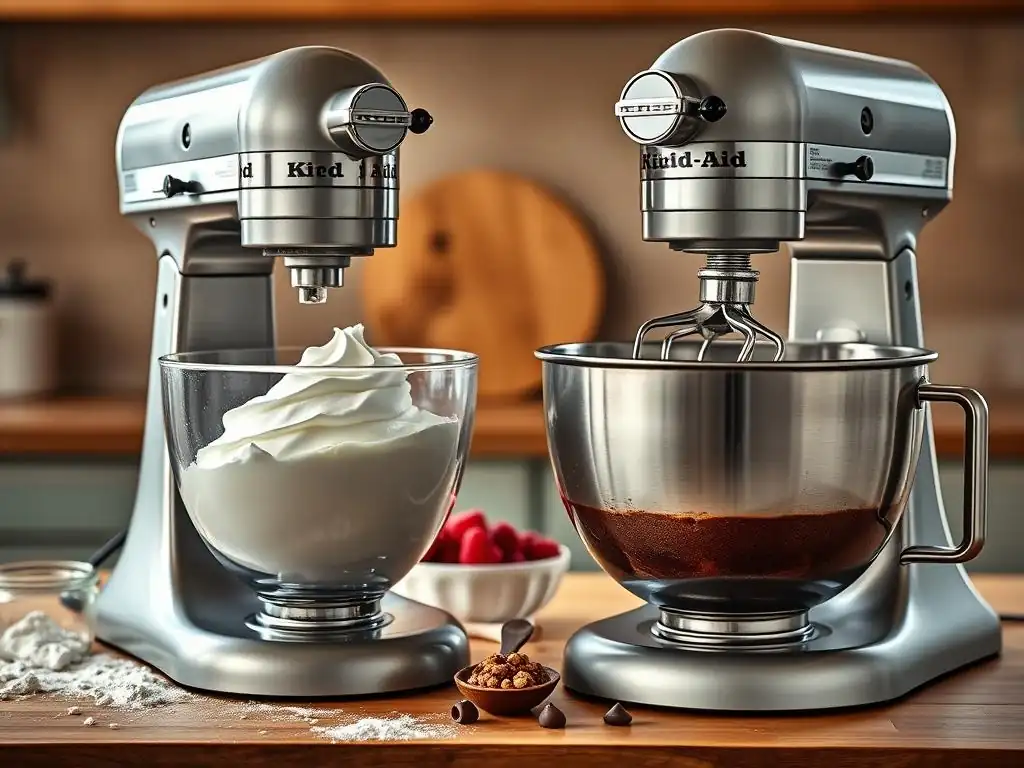
Welcome to BakeWithEase, your trusted guide to effortless baking! Ever wondered if your stand mixer is truly up to the task? In our latest article, we delve into the crucial differences between tilt-head and bowl-lift stand mixers, focusing on which style is best suited for your specific needs. Discover whether a stand mixer bowl lift mechanism is the secret to unlocking your baking potential, and learn which model will become your most indispensable kitchen companion. Let's find out!
- Understanding Stand Mixer Styles: Tilt-Head vs. Bowl-Lift - An Overview
-
Tilt-Head Stand Mixers: Features, Benefits, and Best Use Cases
- Key Features of Tilt-Head Stand Mixers: A Closer Look
- Benefits of Choosing a Tilt-Head Stand Mixer: Why They're Great for Everyday Baking
- When a Tilt-Head Stand Mixer is the Right Choice: Ideal Scenarios for Home Bakers
- Recommended Tilt-Head Stand Mixer: [Specific Tilt-Head Model] - A Top Pick for Versatility
-
Bowl-Lift Stand Mixers: Features, Benefits, and Best Use Cases
- Key Features of Bowl-Lift Stand Mixers: A Deep Dive
- Benefits of Choosing a Bowl-Lift Stand Mixer: Power and Stability for Large Quantities
- When a Bowl-Lift Stand Mixer is the Right Choice: Ideal Scenarios for Professional and Frequent Bakers
- Recommended Bowl-Lift Stand Mixer: [Specific Bowl-Lift Model] - Power and Capacity Combined
-
Tilt-Head vs. Bowl-Lift Stand Mixers: A Direct Comparison Table
- Mixing Power and Performance: Which Style Delivers Better Results?
- Capacity and Batch Size: Meeting Your Baking Needs
- Stability and Durability: Long-Term Investment Considerations
- Ease of Use and Maintenance: Which Style is More User-Friendly?
- Price and Value: Finding the Best Stand Mixer for Your Budget
- Choosing the Right Stand Mixer for Your Baking Needs: A Comprehensive Guide
- Real-World Baking Scenarios: Which Stand Mixer Style Excels?
- Maximizing Your Stand Mixer Investment: Tips and Tricks for Both Styles
- Stand Mixer Bowl Lift vs. Tilt-Head: Conclusion - Making the Best Choice for You
-
Frequently Asked Questions
- What is the main difference between a tilt-head and a bowl-lift stand mixer?
- Which type of stand mixer, tilt-head or bowl-lift, is generally better for handling large batches of dough?
- Are tilt-head or bowl-lift stand mixers easier to store?
- What are the advantages of a bowl-lift stand mixer?
- Which type of stand mixer is generally more affordable, tilt-head or bowl-lift?
- Final Reflection: The Perfect Mix: Choosing Your Stand Mixer Soulmate
- Unlock Your Baking Potential: Which Mixer is Right for You?
Understanding Stand Mixer Styles: Tilt-Head vs. Bowl-Lift - An Overview
Stand mixers are essential tools in many kitchens, transforming the effort needed for tasks like kneading dough or whipping cream. They come in two primary styles: tilt-head and bowl-lift. Understanding the fundamental difference between these two designs is the first step in deciding which one will best support your baking ambitions, whether you're making a small batch of cookies or tackling multiple loaves of bread.
While both styles perform the core function of mixing ingredients effectively, their mechanical design leads to distinct advantages and disadvantages in terms of capacity, stability, and accessibility. The choice often depends on your typical baking volume, available kitchen space, and specific types of recipes you make most often.
The Popular Tilt-Head Stand Mixer Design: Convenience and Versatility for Home Bakers
The tilt-head stand mixer is perhaps the most recognizable style, known for its head that tilts back to allow easy access to the mixing bowl and attachments. This design is incredibly user-friendly for adding ingredients, scraping down the sides of the bowl, and swapping out beaters. It's a popular choice for home bakers who appreciate this convenience for everyday tasks like mixing batters, making frostings, and whipping egg whites.
These mixers typically feature motors suitable for standard home baking needs, often ranging from 250 to 325 watts. Their bowl sizes commonly fall between 4.5 to 5 quarts, which is ample capacity for single batches of most cookie doughs (yielding perhaps 4-5 dozen cookies) or cake batters. The compact footprint when the head is down also makes them a good fit for countertops where vertical space is less restricted than horizontal.
The Powerful Bowl-Lift Stand Mixer: Stability and Capacity for Larger Batches
In contrast, the bowl-lift stand mixer features a fixed head, and the mixing bowl is raised or lowered into position using a lever. This design provides exceptional stability, especially crucial when mixing heavy or stiff doughs like those for artisan bread or dense pastries. The fixed head and robust base minimize movement and vibration during intense mixing tasks.
Bowl-lift models are generally equipped with more powerful motors, often starting around 450 watts and going much higher, designed to handle heavier loads without straining the motor. Their bowls are typically larger, ranging from 5.5 to 8 quarts or more, making them ideal for doubling recipes, preparing large quantities for events, or kneading dough for multiple loaves of bread simultaneously. A stand mixer bowl lift design signifies a focus on power and volume.
Tilt-Head Stand Mixers: Features, Benefits, and Best Use Cases
Tilt-head stand mixers are a staple in many home kitchens due to their ease of use and versatility for a wide range of baking tasks. Their design prioritizes accessibility, making the baking process smoother for everyday recipes.
Key Features of Tilt-Head Stand Mixers: A Closer Look
The defining feature of a tilt-head mixer is its hinged head that pivots upwards. This allows bakers to effortlessly attach or detach the bowl, add ingredients while the mixer is off, and change accessories like the flat beater, wire whisk, or dough hook. Most models include a locking mechanism to secure the head during operation, preventing it from lifting unexpectedly.
These mixers often come with 4.5 to 5-quart bowls, which are sufficient for typical home baking quantities. The motor power is usually in the 250-325 watt range, which is well-suited for mixing cake batters, cookie doughs, and whipping tasks. Many models also feature a power hub for attaching various accessories like pasta makers or meat grinders, expanding their functionality beyond just mixing.
Benefits of Choosing a Tilt-Head Stand Mixer: Why They're Great for Everyday Baking
The primary benefit of a tilt-head stand mixer is convenience. The easy access provided by the tilting head simplifies adding ingredients mid-mix and scraping down the bowl sides, ensuring all ingredients are incorporated evenly. This design is also generally more compact vertically than bowl-lift models when the head is down, fitting more easily under standard kitchen cabinets.
They are typically lighter than bowl-lift models, making them easier to move if you don't plan to keep it on your counter permanently. For bakers who primarily make standard single-batch recipes and value quick, easy interaction with their mixer during the process, the tilt-head style offers a comfortable and efficient experience.
When a Tilt-Head Stand Mixer is the Right Choice: Ideal Scenarios for Home Bakers
A tilt-head stand mixer is perfect for the casual or frequent home baker who prepares standard-sized batches of cakes, cookies, meringues, and frostings. If your typical recipe calls for 4-6 cups of flour or less, a tilt-head model will likely handle the job with ease. They are also excellent for whipping tasks, like creating fluffy whipped cream or stiff meringue peaks, thanks to the easy access for monitoring consistency.
If kitchen counter space, particularly vertical clearance under cabinets, is a concern, the tilt-head design usually offers a more favorable footprint. It's the go-to choice for many who appreciate the balance of performance, versatility, and user-friendly design for a wide array of everyday baking projects.
Recommended Tilt-Head Stand Mixer: [Specific Tilt-Head Model] - A Top Pick for Versatility
While specific model recommendations change frequently with new releases and market availability, a top-performing tilt-head stand mixer often features a durable die-cast metal construction, a motor around 300-325 watts, and a 5-quart stainless steel bowl. Look for models with 10 speeds for precise control, from a slow stir to a fast whip.
An ideal tilt-head model for versatility should reliably handle cookie dough (like a batch using 3 cups of flour), cake batter (up to a standard two-layer cake), and whip cream or egg whites efficiently. Its power hub should accommodate common attachments, making it a true multi-tasker in the kitchen.
Bowl-Lift Stand Mixers: Features, Benefits, and Best Use Cases
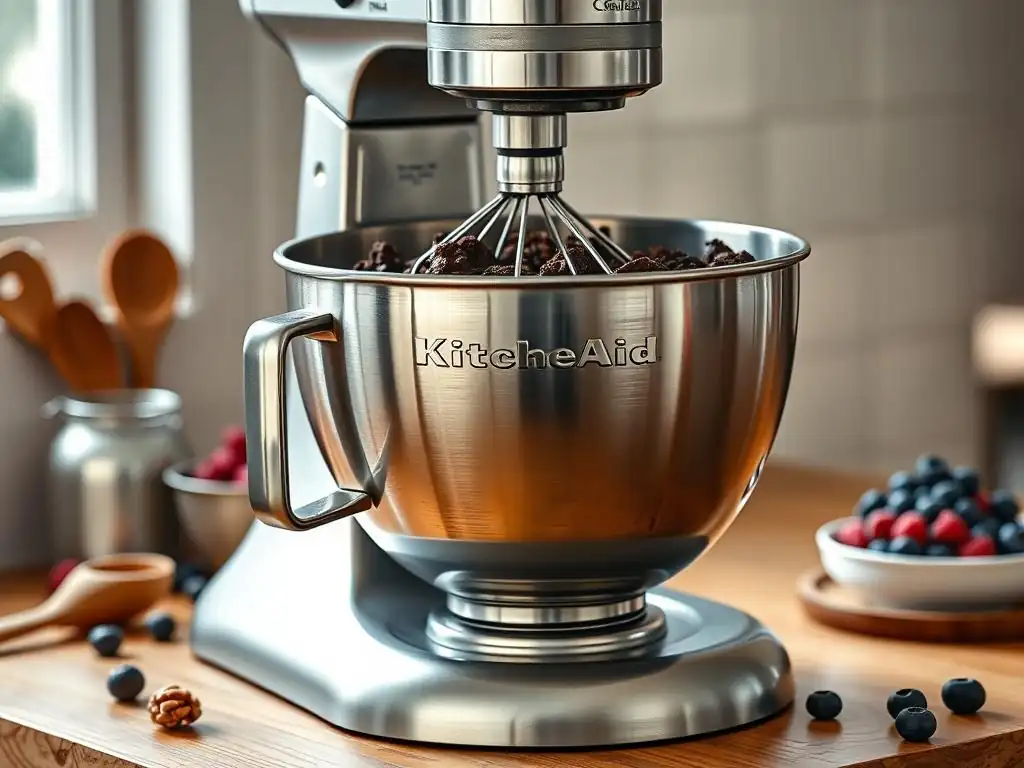
Bowl-lift stand mixers are the workhorses of the stand mixer world, built for stability, power, and handling larger volumes. Their design makes them suitable for more demanding baking tasks and bigger batches.
Key Features of Bowl-Lift Stand Mixers: A Deep Dive
The defining characteristic of a bowl-lift stand mixer is its stationary head and the mechanism that lifts the mixing bowl up to meet the beater. This lever-operated system securely locks the bowl in place during operation. This fixed structure contributes significantly to the mixer's stability, especially when dealing with heavy loads.
These models typically boast more powerful motors, often starting at 450 watts and reaching 575 watts or even higher in some professional-style versions. They are designed to handle dense mixtures that would strain smaller motors. Bowl sizes are generally larger, commonly 5.5 quarts, 6 quarts, 7 quarts, or even 8 quarts, allowing for significantly larger batches of dough or batter compared to most tilt-head models. The bowl lift stand mixer style is synonymous with power and capacity.
Benefits of Choosing a Bowl-Lift Stand Mixer: Power and Stability for Large Quantities
The main advantages of a bowl-lift stand mixer are its superior power and stability. The robust motor and fixed head design allow it to confidently tackle heavy doughs, such as those for kneading multiple loaves of sourdough or dense rye bread, without excessive shaking or motor strain. This makes them indispensable for bakers who frequently make bread or large quantities.
The larger bowl capacity means you can double or triple recipes easily, saving time and effort when baking for events, large families, or meal prepping. While accessing the bowl isn't as direct as with a tilt-head, the stability during operation provides confidence when working with challenging mixes. For tasks requiring consistent, powerful mixing over longer periods, the stand mixer bowl lift design excels.
When a Bowl-Lift Stand Mixer is the Right Choice: Ideal Scenarios for Professional and Frequent Bakers
A bowl-lift stand mixer is the preferred choice for serious home bakers, small-scale professional bakers, or anyone who frequently bakes large quantities or heavy doughs. If you regularly bake multiple loaves of bread (e.g., dough requiring 8 cups of flour or more), knead stiff bagel dough, or make large batches of stiff cookie dough, the power and stability of a bowl-lift model are invaluable.
They are also excellent for preparing large amounts of frosting, mashed potatoes, or other dense mixtures. While they take up more vertical space, if your baking involves significant volume or heavy-duty mixing, investing in a stand mixer bowl lift model will provide the necessary performance and durability.
Recommended Bowl-Lift Stand Mixer: [Specific Bowl-Lift Model] - Power and Capacity Combined
A highly-regarded bowl-lift stand mixer typically features a motor of 500 watts or more, paired with a 6-quart or larger stainless steel bowl. Look for models with a metal gear construction for enhanced durability under heavy loads and a robust bowl-lifting mechanism.
An exemplary bowl-lift stand mixer should be able to knead dough for 8-9 dozen cookies or 4 loaves of bread (using a total of about 8-10 cups of flour) reliably. Its power should allow it to mix thick batters and doughs without overheating or struggling. Like tilt-head models, a power hub for attachments adds to its utility, but its core strength lies in handling large volumes and heavy mixing tasks with stability. This is where a quality stand mixer bowl lift truly shines.
Tilt-Head vs. Bowl-Lift Stand Mixers: A Direct Comparison Table
While both styles are powerful kitchen tools, their design leads to key differences in performance, capacity, and user experience. Comparing them point-by-point helps highlight which features align best with your baking habits.
Mixing Power and Performance: Which Style Delivers Better Results?
In terms of raw power and ability to handle dense mixtures, bowl-lift stand mixers generally have the edge. They are equipped with higher wattage motors (often 450W+ vs. 250-325W) and a more stable design, making them better suited for kneading stiff bread doughs or mixing large quantities of heavy batter without straining the motor or shaking excessively.
Tilt-head mixers perform exceptionally well for lighter to medium tasks, such as whipping cream, mixing cake batter, or standard cookie dough. While some higher-end tilt-head models can handle moderate bread dough, they are typically not designed for the same volume or density as their bowl-lift counterparts. The stand mixer bowl lift is built for endurance under heavy loads.
Capacity and Batch Size: Meeting Your Baking Needs
Bowl-lift stand mixers typically offer significantly larger bowl capacities, commonly ranging from 5.5 to 8 quarts. This allows bakers to prepare double or triple batches of recipes, knead dough for multiple loaves of bread simultaneously, or whip very large quantities of ingredients like frosting for a big cake.
Tilt-head mixers usually come with 4.5 to 5-quart bowls. This size is perfect for single batches of most home baking recipes, such as a standard cake mix, a batch of cookies yielding 4-5 dozen, or dough for one loaf of bread. If you rarely need to double recipes or bake for very large groups, a 5-quart bowl might be perfectly adequate.
Stability and Durability: Long-Term Investment Considerations
The fixed-head design of bowl-lift stand mixers provides superior stability, particularly when mixing heavy, dense doughs that require significant torque. This reduces vibration and stress on the machine, potentially contributing to greater durability under heavy use. The mechanism for lifting the bowl is robust and designed for frequent use with heavy loads.
Tilt-head mixers are stable for their intended use, but the tilting mechanism introduces a potential point of flex when tackling very heavy doughs. While well-built tilt-head models are durable, a bowl-lift stand mixer is generally considered the more robust option for demanding, frequent use with heavy ingredients.
Ease of Use and Maintenance: Which Style is More User-Friendly?
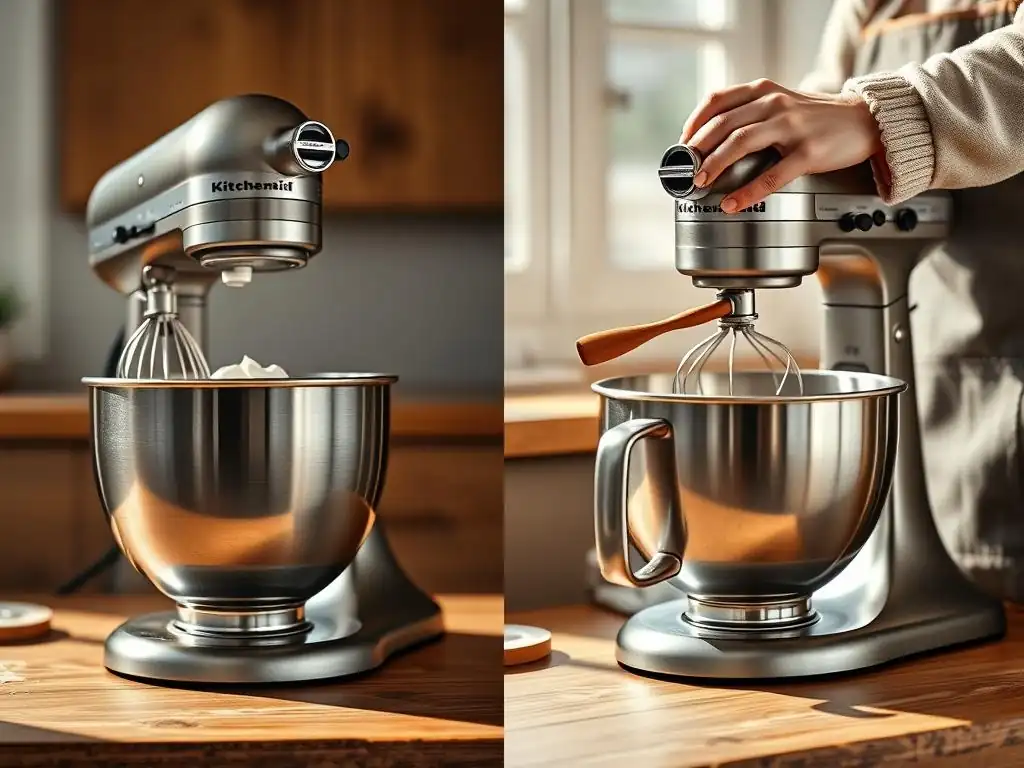
Tilt-head mixers win on immediate accessibility. The ability to simply tilt the head back makes adding ingredients, scraping the bowl, and changing attachments incredibly easy and intuitive. Cleaning the bowl and attachments is also straightforward.
Bowl-lift mixers require lowering the bowl to add ingredients or change attachments. Scraping the bowl can be slightly less convenient as the head doesn't tilt away completely. However, the mechanism is simple to operate. Both styles have attachments that are generally dishwasher safe, and the main unit requires only a wipe-down. For quick, easy interaction during mixing, the tilt-head has a slight edge.
Price and Value: Finding the Best Stand Mixer for Your Budget
Generally speaking, bowl-lift stand mixers tend to have a higher price point than tilt-head models, largely due to their more powerful motors, larger capacity, and heavier-duty construction. They represent a greater initial investment.
However, if your baking involves frequent heavy doughs or large batches, the added power, stability, and capacity of a bowl-lift stand mixer offer significant value in terms of performance and potential longevity under stress. For bakers with standard needs, a tilt-head provides excellent value and versatility at a typically lower cost. Consider the stand mixer bowl lift as an investment for serious volume and power needs.
Choosing the Right Stand Mixer for Your Baking Needs: A Comprehensive Guide
Selecting the perfect stand mixer involves more than just picking a style. It requires a careful consideration of your personal baking habits, kitchen setup, and budget.
Considering Your Baking Habits: How Often and What Do You Bake?
Think about how frequently you bake and the types of recipes you prepare most often. Are you a weekend baker who enjoys making a batch of cookies or a single cake? A tilt-head mixer is likely sufficient and offers great convenience for these tasks.
Do you bake bread weekly, prepare multiple desserts for events, or feed a large family? If you're constantly doubling recipes or tackling stiff doughs, the power and capacity of a bowl-lift stand mixer will be a significant advantage and save you time and effort. Your typical volume and ingredient density are key factors.
Evaluating Your Kitchen Space: Size and Storage Considerations
Stand mixers are countertop appliances and take up significant space. Tilt-head models, when the head is down, are generally shorter but often deeper than bowl-lift models. They require vertical clearance to tilt the head back (often needing an extra 17-20 inches above the base).
Bowl-lift models have a fixed height which is typically taller than a tilt-head with its head down, but they don't require extra vertical space for operation. They can also be slightly wider. Measure the space under your cabinets and consider where the mixer will live – on the counter or stored away – to ensure the chosen style fits comfortably.
Assessing Your Budget: Investing in Quality and Performance
Stand mixers are a significant kitchen investment, with prices ranging from a couple of hundred dollars to well over $600 for premium models. Determine how much you are willing to spend, but remember that investing in a quality machine that matches your needs will pay off in performance and durability over time.
Consider not just the initial price but also the long-term value. If a bowl-lift stand mixer saves you time and effort on tasks you do frequently, its higher cost might be justified. Conversely, if a tilt-head meets all your needs, there's no reason to overspend on a model with capabilities you won't use.
Exploring Available Attachments: Expanding Your Stand Mixer's Capabilities
Both tilt-head and bowl-lift stand mixers typically feature a power hub that can accommodate a wide array of attachments sold separately, such as pasta makers, meat grinders, spiralizers, and juicers. The availability and compatibility of these attachments are generally consistent across styles within the same brand.
If you plan to use your stand mixer for more than just mixing (e.g., making fresh pasta frequently), check which attachments are available for the specific model you are considering. This can add significant versatility to your appliance, regardless of whether you choose a tilt-head or a stand mixer bowl lift.
Real-World Baking Scenarios: Which Stand Mixer Style Excels?
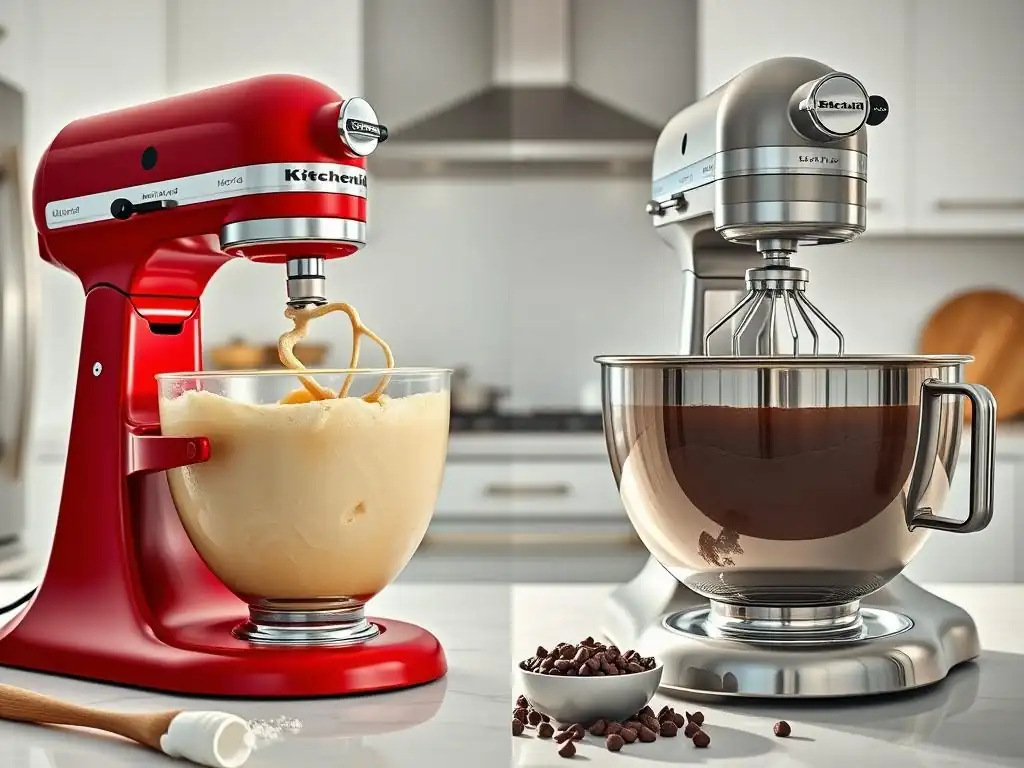
Different baking tasks put different demands on a stand mixer. Looking at specific examples can help clarify which style is better suited for various applications.
For typical cake batters and cookie doughs made in standard home batch sizes (e.g., using 3-4 cups of flour), a tilt-head stand mixer is incredibly convenient. The ease of tilting the head allows you to quickly add sugar gradually while creaming butter, easily scrape down the sides to ensure no dry pockets of flour remain, and effortlessly incorporate chocolate chips or nuts at the end.
The power level of most tilt-head mixers is perfectly adequate for these medium-density mixes. While a bowl-lift can certainly perform these tasks, the tilt-head's accessibility makes the process slightly more fluid for these common, everyday baking projects.
Kneading Bread Dough: Bowl-Lift Stand Mixer Superiority
When it comes to kneading yeast dough, especially for rustic breads or multiple loaves, the bowl-lift stand mixer shines. The process requires significant power and stability to develop gluten effectively. The fixed head and robust motor of a bowl-lift mixer can handle the resistance of stiff dough for the necessary kneading time (often 8-10 minutes or more) without overheating or excessive movement on the counter.
Attempting to knead large or very stiff doughs in a tilt-head mixer can sometimes cause the head to bounce or strain the motor. For serious bread bakers who work with dough regularly, the stand mixer bowl lift design provides the necessary power and stability for consistent results.
Making Large Batches of Frosting: Bowl-Lift Stand Mixer Efficiency
If you're decorating a multi-tier cake or making cupcakes for a large party, you'll likely need a substantial amount of frosting. The larger bowl capacity of a bowl-lift stand mixer is ideal for whipping up big batches of buttercream or cream cheese frosting in one go.
A 6-quart bowl can easily accommodate the ingredients for enough frosting to generously cover a large cake or dozens of cupcakes, whereas a 4.5-quart tilt-head bowl might require making frosting in two separate batches. The power is also beneficial for creaming large volumes of butter and sugar efficiently. A stand mixer bowl lift simplifies high-volume tasks.
Whipping Cream and Meringue: Tilt-Head Stand Mixer Precision
For tasks requiring careful monitoring of consistency, like whipping cream to soft or stiff peaks or making delicate meringue, the easy access of a tilt-head mixer is a significant advantage. You can quickly lift the head to check the texture, scrape down any unwhipped portions from the sides, or add sugar gradually without interrupting the process for long.
While bowl-lift mixers can certainly whip effectively, the ability to quickly check progress by simply tilting the head back makes fine-tuning consistency slightly easier with a tilt-head model. The standard power is also more than sufficient for these lighter tasks.
Maximizing Your Stand Mixer Investment: Tips and Tricks for Both Styles
Once you've chosen your stand mixer, proper care and use will ensure it serves you well for years to come, regardless of whether it's a tilt-head or a stand mixer bowl lift.
Proper Maintenance and Care: Extending the Life of Your Stand Mixer
Regular cleaning is crucial. Always unplug the mixer before cleaning. Wipe down the main unit with a damp cloth. Wash the bowl and attachments promptly after use; most are dishwasher safe, but check your manual. For metal attachments, hand-drying immediately can prevent spotting or tarnishing.
Avoid submerging the mixer base in water. If the motor ever sounds strained or the unit feels unusually hot, stop operation and consult the manual or manufacturer support. Proper care of your stand mixer bowl lift or tilt-head model ensures longevity.
Utilizing Attachments Effectively: Expanding Your Baking Repertoire
Don't forget about the power hub! Exploring the range of available attachments can transform your stand mixer into a versatile kitchen machine. A pasta roller and cutter can make fresh pasta a breeze, a food grinder can prepare meats for sausages or burgers, and a spiralizer can create vegetable noodles.
Consider which attachments align with your culinary interests beyond baking. Investing in one or two useful attachments can significantly expand the functionality and value you get from your stand mixer.
Troubleshooting Common Stand Mixer Issues: Ensuring Optimal Performance
If your mixer struggles with a heavy load, it might be overloaded. Check your manual for the maximum capacity for flour or dough. If the mixer vibrates excessively, ensure it's on a stable, flat surface and that the bowl is properly locked in place (either tilted down or lifted up and secured).
If the beater isn't reaching the bottom of the bowl, many models allow for height adjustment using a screw on the neck of the mixer head or the bowl support. Refer to your manual for specific instructions. Addressing these common issues ensures your stand mixer performs optimally.
Stand Mixer Bowl Lift vs. Tilt-Head: Conclusion - Making the Best Choice for You
Deciding between a tilt-head and a bowl-lift stand mixer ultimately comes down to aligning the mixer's capabilities with your specific baking needs and kitchen constraints. Both styles are powerful and versatile tools that can greatly enhance your baking experience.
Final Recommendations: Tailoring Your Decision to Your Specific Needs.
For the everyday home baker who makes standard batches of cookies, cakes, and lighter doughs and values ease of access and compact vertical storage, a tilt-head stand mixer is likely the ideal choice. Its user-friendly design makes common tasks effortless.
For the frequent or serious baker who regularly tackles large batches, dense doughs like bread or bagels, or heavy mixes, the power, stability, and capacity of a bowl-lift stand mixer are invaluable. While less convenient for quick scraping, the stand mixer bowl lift is built to handle demanding tasks with confidence and durability. Consider your typical recipes, batch sizes, available space, and budget to make the best investment for your baking journey.
Frequently Asked Questions
What is the main difference between a tilt-head and a bowl-lift stand mixer?
The primary difference lies in their design and operation. Tilt-head mixers pivot the head back to access the bowl, while bowl-lift mixers use a lever to raise the bowl to the mixing attachment.
Which type of stand mixer, tilt-head or bowl-lift, is generally better for handling large batches of dough?
Bowl-lift mixers are typically better suited for larger batches and heavy-duty mixing due to their more stable design and powerful motors. Tilt-head models are generally preferred for smaller batches.
Are tilt-head or bowl-lift stand mixers easier to store?
Tilt-head mixers are often more compact and easier to store because they are generally smaller in overall size. Bowl-lift mixers can be taller and heavier.
What are the advantages of a bowl-lift stand mixer?
Bowl-lift stand mixers offer greater stability when mixing heavy ingredients and often have more powerful motors, making them ideal for professional or frequent bakers.
Which type of stand mixer is generally more affordable, tilt-head or bowl-lift?
Tilt-head stand mixers are usually more budget-friendly than bowl-lift models, making them a good option for beginner bakers or those with lighter mixing needs.
Final Reflection: The Perfect Mix: Choosing Your Stand Mixer Soulmate
The debate between tilt-head and bowl-lift stand mixers rages on, and understanding the nuances of each design is more crucial than ever in today's busy kitchens. The right choice isn't just about aesthetics; it's about efficiency, longevity, and finding the perfect tool to elevate your baking game. This decision impacts not only your baking experience but also the overall lifespan and functionality of your kitchen appliance.
The evolution of the stand mixer, from a simple kitchen aid to a culinary powerhouse, reflects our changing relationship with food and cooking. We demand more from our appliances, seeking both power and precision. The choice between tilt-head and bowl-lift speaks to this desire for personalized functionality. The best tool is the one that best fits the hand that wields it,
a sentiment that perfectly encapsulates the importance of choosing the right stand mixer for your individual needs and baking style. This isn't just about choosing a machine; it's about choosing a partner in your culinary journey.
So, as you consider your next baking project, remember the insights shared in this article. Take the time to assess your baking habits, the space in your kitchen, and the types of recipes you frequently make. Don't just buy a stand mixer; invest in a tool that will empower you to create culinary masterpieces for years to come. The perfect mix isn't just about ingredients; it's about finding the perfect harmony between you and your kitchen equipment. Choose wisely, and happy baking!
Unlock Your Baking Potential: Which Mixer is Right for You?
Thanks for taking the time to explore the world of stand mixers with us! You've now got the knowledge to choose the perfect tool to elevate your baking game. Ready to take the next step?
- Make your choice! Now that you understand the key differences between Tilt-Head and Bowl-Lift mixers, head back to our product pages and find the perfect fit for your kitchen and baking style. Consider your budget and most-used recipes to make the best decision for your baking needs.
- Share your choice! Tell us in the comments below which mixer you've selected (or are leaning towards) and why! Let's inspire each other!
- Explore recipes: Once you've got your new mixer, dive into our extensive recipe collection to try out some exciting new bakes that are perfectly suited to your new appliance.
What delicious creation will you whip up first with your new stand mixer?