
From Hollows to Fullness: Solving Macaron Shell Mysteries

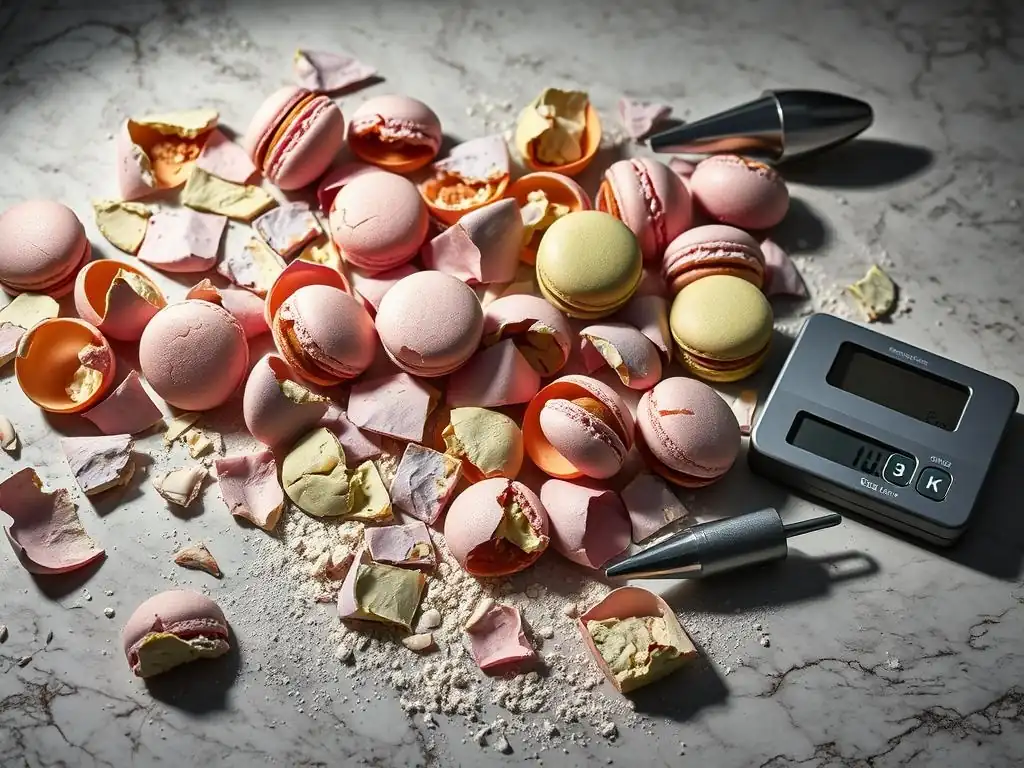
Welcome to BakeWithEase, where baking becomes a joy, not a chore! Ever wondered why your macaron shells are more crack than delight? We're diving deep into the frustrating, yet fixable, world of macaron shell cracking problems in our latest article. Uncover the secrets to achieving perfectly smooth, glossy shells and bid farewell to those dreaded cracks. Ready to unlock the macaron code? Let's get baking!
- Mastering Macarons: Achieving Perfect Shells
- Introduction: The Art of Macaron Baking
- Common Macaron Shell Problems
- The Science of Macaron Shells
- Troubleshooting Cracking
- Addressing Hollowing
- Step-by-Step Guide to Perfect Shells
- Advanced Techniques
- Conclusion: Achieving Macaron Mastery
-
Frequently Asked Questions
- What are the most common causes of macaron shells cracking?
- How can I prevent hollow macaron shells?
- What role does humidity play in macaron baking success?
- What type of meringue is best for preventing cracking: French, Italian, or Swiss?
- What are some troubleshooting tips for macaron shell feet that are too small or non-existent?
- Final Reflection: The Enduring Allure of the Perfect Macaron Shell
- Unlock Your Macaron Mastery!
Mastering Macarons: Achieving Perfect Shells
Introduction: The Art of Macaron Baking
The Macaron's Appeal: A Delicate Balance
Macarons, those delicate, airy confections, have captivated bakers and dessert lovers worldwide. Their signature look – smooth, crisp shells perched atop a ruffled "foot" or pied – combined with a creamy filling, makes them a true work of edible art. Achieving this perfect balance requires precision and patience, making the journey of mastering macarons both challenging and incredibly rewarding. While the simple list of ingredients might seem straightforward – almond flour, sugar, and egg whites – the technique involved is what truly sets macaron baking apart.
The allure of macarons lies not just in their taste and texture, but also in their vibrant colors and endless flavor possibilities. From classic vanilla and chocolate to adventurous passion fruit and pistachio, the creativity is boundless. However, many bakers encounter frustrating hurdles on their path to perfection, with issues like macaron shells cracking problems, hollow centers, and uneven feet being common culprits. Understanding the science behind these delicate cookies is the first step towards consistently beautiful and delicious results.
Common Macaron Shell Problems
Cracking
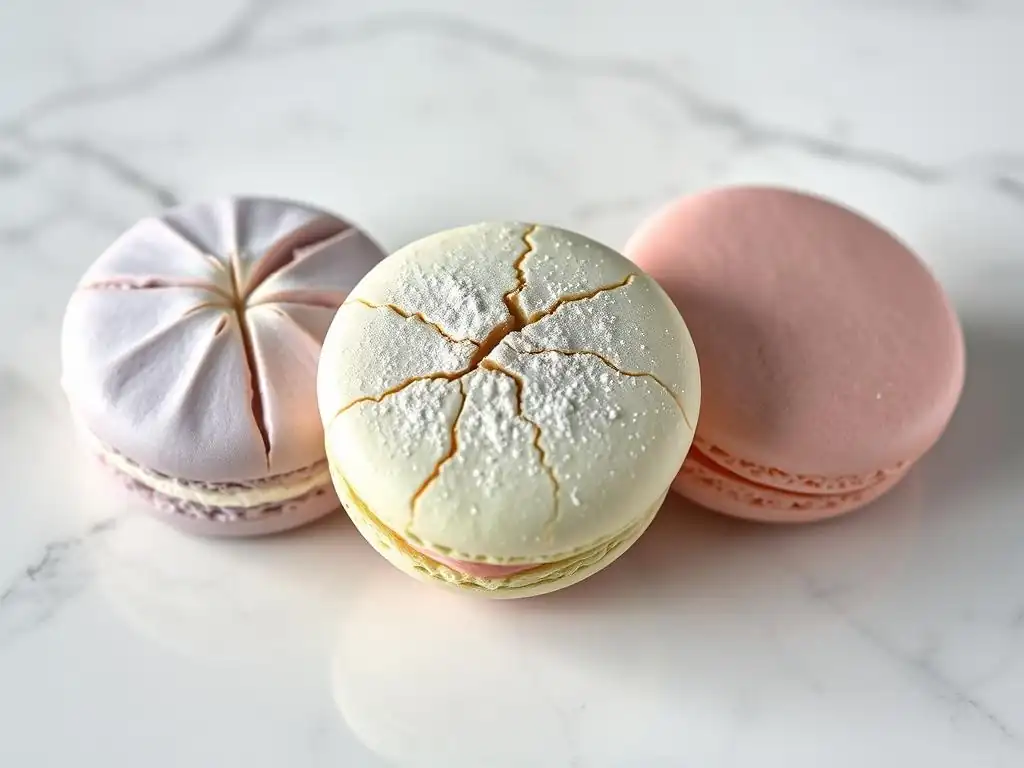
One of the most disheartening sights for a macaron baker is pulling a tray from the oven only to find cracked shells. Macaron shells cracking problems are incredibly common and can stem from a variety of factors, often related to sudden expansion or instability during baking. For instance, an oven temperature that is too high can cause the outer layer of the macaron to set too quickly while the inside is still expanding rapidly, leading to fissures across the surface.
Another significant contributor to macaron shells cracking problems is insufficient resting time before baking. The rest period allows a thin skin to form on the surface of the piped batter. This skin provides structure and stability, helping the macaron rise evenly and form its characteristic foot without cracking. If the skin hasn't fully formed, the expanding gases inside the macaron have no controlled escape route, forcing cracks through the top.
Hollowing
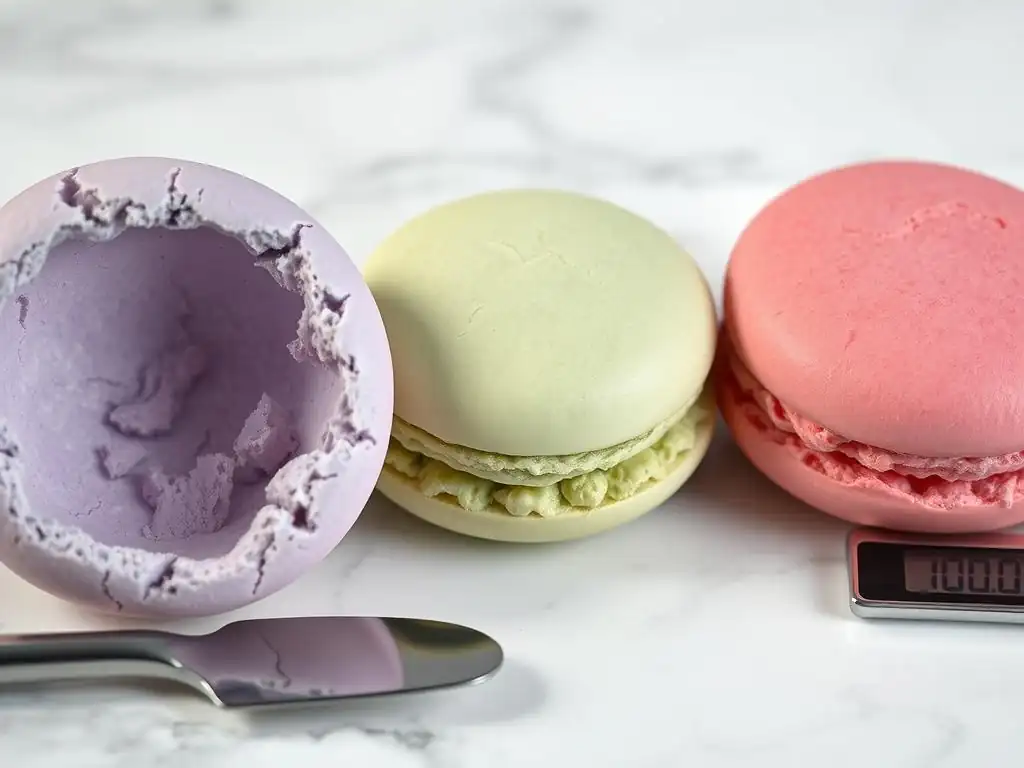
Hollow macaron shells are another frequent frustration. This occurs when the outer shell bakes and hardens before the interior structure has fully developed or dried out sufficiently. As the macaron cools, the unsupported shell collapses slightly inwards, leaving an empty space between the top crust and the bottom foot. While a slight gap is sometimes acceptable, a completely hollow shell indicates a significant issue in the baking or preparation process.
Several factors can contribute to hollowing. Over-whipping the meringue can incorporate too much air, which expands rapidly in the oven and then collapses upon cooling. Conversely, under-mixing the batter during the macaronage stage can leave large air pockets that contribute to uneven expansion and subsequent hollowing. Even baking time and temperature play a crucial role; baking at too high a temperature or for too short a time can lead to a set exterior but an undercooked, moist interior prone to collapsing.
Other Imperfections: Rough Shells, Lack of Feet
Beyond cracking and hollowing, other imperfections plague aspiring macaron masters. Rough, bumpy shells, instead of the desired smooth surface, often point to issues with the almond flour or the macaronage process. Using almond flour that isn't finely ground or contains large pieces will inevitably result in a textured shell. Similarly, under-mixing the batter can leave unincorporated dry ingredients or air bubbles that mar the smooth finish.
The absence of the distinctive "foot" is another common problem. The foot forms when the outer skin sets during the rest period, forcing the expanding batter underneath to lift and spread outwards just above the baking sheet. If the skin doesn't form properly (due to high humidity or insufficient rest) or if the oven temperature is too low, the macaron may spread horizontally from the start without lifting, resulting in flat shells with no feet.
The Science of Macaron Shells
Key Ingredients and Their Functions
Successful macaron baking hinges on understanding how the few key ingredients interact. Each component plays a vital role in creating the unique texture and structure of the macaron shell. Precision in weighing and preparing these ingredients is paramount; even slight deviations can impact the final outcome.
The primary dry ingredients, almond flour and powdered sugar, provide structure and sweetness. The egg whites, when whipped, form the meringue that gives the macarons their lift and airy texture. Granulated sugar is often used to stabilize the meringue, contributing to its volume and strength.
Almond Flour: Fineness and Fat Content
Almond flour forms the backbone of the macaron shell structure. Its fineness is critical; coarse flour leads to bumpy shells. Many bakers pulse store-bought almond flour with powdered sugar in a food processor to achieve an even finer consistency, often sifting the mixture afterwards to remove any larger pieces. For example, sifting through a mesh sieve with openings of approximately 0.5 mm is a common recommendation.
The fat content in almond flour also plays a role. Too much oil released from the almonds (often from over-processing) can affect the batter consistency and baking. Using blanched, finely ground almond flour specifically marketed for baking often yields the best results, as it typically has a consistent texture and lower residual moisture.
Egg Whites: Meringue Structure and Stability
Egg whites are the leavening agent in macarons, forming the essential meringue. When whipped, the proteins in the egg whites denature and trap air bubbles, creating a stable foam. The quality and freshness of the egg whites matter; some bakers prefer to use "aged" egg whites (separated a day or two in advance and stored covered in the refrigerator) as they believe it improves meringue stability, though this is debated.
The volume and stability of the meringue directly impact the macaron's rise and texture. A properly whipped meringue, reaching stiff peaks, provides the necessary structure to support the macaron shell during baking. Using clean, grease-free equipment is non-negotiable, as even trace amounts of fat can prevent the egg whites from whipping properly.
Sugar: Granulated vs. Powdered
Sugar serves multiple purposes in macarons: sweetness, structure, and contributing to the smooth surface. Powdered sugar is combined with almond flour to form the dry ingredients, contributing to the smooth texture and helping to dry out the shells during resting. Using confectioners' sugar that contains cornstarch (an anti-caking agent) is generally acceptable, but some purists prefer starch-free powdered sugar.
Granulated sugar is typically used to create the meringue, often heated into a syrup for Italian or Swiss methods or gradually added to whipping egg whites for the French method. It stabilizes the protein structure of the meringue, allowing it to hold more air and preventing it from collapsing. The ratio of granulated sugar to egg whites is crucial for meringue stability; a typical ratio might be around 1:1 or 1:1.5 by weight, depending on the meringue method.
Macaronage: Achieving the Ideal Batter Consistency
Macaronage is perhaps the most critical and often most daunting step in macaron making. This is the process of folding the dry ingredients (almond flour and powdered sugar) into the meringue. The goal is to deflate the meringue just enough to create a flowing, lava-like batter that is neither too stiff nor too runny.
Proper macaronage ensures that the air bubbles in the meringue are evenly distributed and some are gently deflated, leading to a smooth batter that spreads slightly after piping and forms the characteristic foot. Over-mixing will deflate the batter too much, resulting in flat, footless macarons. Under-mixing will leave the batter too stiff, leading to lopsided shells or shells that don't spread properly and can contribute to macaron shells cracking problems.
Visual Indicators of Proper Macaronage
The ideal macaron batter consistency is often described using the "lava" or "ribbon" test. When lifted with a spatula, the batter should flow slowly and continuously like molten lava, forming a ribbon that falls back into the bowl and slowly reabsorbs into the mass. This indicates the perfect balance between air retention and flow.
Another visual cue is the ability to draw a figure eight with the batter falling from the spatula without the stream breaking. If the batter breaks frequently or seems clumpy, it's likely under-mixed. If it flows too quickly and doesn't hold any shape, it's over-mixed. Achieving this sweet spot often takes practice and careful observation.
Avoiding Over-Mixing and Under-Mixing
To avoid over-mixing, fold the batter using a scraping and folding motion with a flexible spatula. Start by incorporating the dry ingredients roughly, then continue folding until the batter just reaches the desired consistency. Stop mixing as soon as the ribbon stage is achieved; the batter will continue to loosen slightly as you transfer it to a piping bag.
Under-mixing is less common but can also cause problems like uneven texture or lopsided shells. If the batter is too stiff, continue folding gently for a few more strokes until it achieves the correct flow. It's better to err slightly on the side of under-mixing than to risk over-mixing, as an under-mixed batter might still produce acceptable shells, while an over-mixed one almost certainly won't.
Troubleshooting Cracking
Oven Temperature and Baking Time
Incorrect oven temperature is a leading cause of macaron shells cracking problems. If the oven is too hot, the macaron surface sets too quickly, and the rapidly expanding steam inside has nowhere to go but out through cracks. Conversely, if the oven is too cool, the macaron may spread too much and fail to develop a foot or crack due to under-baking.
Most macaron recipes suggest baking temperatures between 280°F and 320°F (approximately 135°C to 160°C). A common starting point is around 300°F (150°C). Baking time typically ranges from 12 to 20 minutes, depending on the size of the macarons and the specific oven. The shells should be firm to the touch and not wobble when gently pushed.
Oven Calibration for Accurate Baking
Oven temperatures can vary significantly from the dial setting, sometimes by as much as 25-50°F (approximately 15-30°C). Using an oven thermometer is highly recommended to ensure the temperature is accurate. Calibrating your oven or simply knowing how much it deviates allows you to adjust the setting accordingly.
If your oven runs hot, try lowering the temperature by 10-20°F (6-12°C). If it runs cool, increase it. Uneven heating within the oven is also common; using a baking stone or steel can help distribute heat more evenly, and rotating the baking sheet halfway through the baking time can ensure consistent results and mitigate macaron shells cracking problems caused by hot spots.
Baking Time Adjustments Based on Macaron Size
Baking time is directly related to the size of the piped macarons. Smaller macarons (say, 1 inch in diameter) will bake faster than larger ones (2 inches or more). As a general guideline, 1.5-inch macarons might take 14-16 minutes at 300°F (150°C), while 2-inch macarons could require 16-18 minutes.
The best way to determine doneness is by gently touching a shell. It should feel firm and stable on its foot. If it wobbles or feels soft, it needs more time. Over-baking can lead to brittle shells, while under-baking contributes to hollowing and shells sticking to the mat.
Humidity Control
Humidity is a macaron baker's nemesis and a major factor contributing to macaron shells cracking problems and lack of feet. High humidity levels prevent the macaron shells from forming a proper skin during the resting period. Without this protective skin, the expanding gases burst through the surface during baking, causing cracks.
Ideal humidity for macaron making is typically below 40-50%. Baking on a rainy or very humid day significantly increases the chances of failure. While you can't control the weather, you can take steps to mitigate its effects within your baking environment.
Baking Strategies for Humid Conditions
If you must bake on a humid day, try extending the resting time significantly. While 30-60 minutes is common in dry conditions, humid environments might require 1.5 to 3 hours or even longer for a skin to form. Test the skin by gently touching a shell; if it feels dry and doesn't stick to your finger, it's ready.
Another strategy is to use a lower oven temperature and bake for a longer time. This slower drying process can help the shell set more gradually. Some bakers even slightly open the oven door a crack during the last few minutes of baking to allow moisture to escape, though this can sometimes affect heat distribution.
Dehumidification Techniques
To actively combat humidity, consider using a dehumidifier in your kitchen for several hours before and during baking. Running an air conditioner also helps reduce humidity. Avoid boiling water or running dishwashers in the vicinity while your macarons are resting or baking.
Ensuring your ingredients, particularly almond flour and powdered sugar, are stored in airtight containers is also helpful, as they can absorb moisture from the air. Some bakers even gently warm their dry ingredients in a low oven (around 150°F/65°C) for a short period before mixing to ensure they are completely dry, though this requires caution not to toast the almond flour.
Meringue Stability
The quality and stability of your meringue are fundamental to successful macarons. An unstable meringue can lead to a host of problems, including macaron shells cracking problems, flat shells, and uneven feet. The type of meringue used (French, Italian, or Swiss) influences stability, with Italian and Swiss methods generally producing more stable meringues than the French method.
Regardless of the method, achieving stiff peaks is crucial. Stiff peaks mean the meringue holds its shape firmly when the whisk is lifted, with the tip standing straight up or curling slightly without drooping. Under-whipped meringue won't provide enough lift or structure, while over-whipping can cause the proteins to break down, leading to a grainy or unstable foam.
Meringue Types: French, Italian, and Swiss
- French Meringue: Raw granulated sugar is gradually added to whipping egg whites. Simplest method, but least stable. Prone to being finicky, especially for beginners tackling macaron shells cracking problems.
- Italian Meringue: Hot sugar syrup (heated to ~240°F/115°C) is slowly streamed into whipping egg whites. Most stable meringue, resulting in consistently smooth shells and reliable feet. Requires a candy thermometer.
- Swiss Meringue: Egg whites and sugar are heated together over a double boiler until the sugar dissolves (~140°F/60°C), then whipped. More stable than French, less so than Italian. Easier than Italian as it doesn't require handling hot syrup directly streamed into the mixer.
Many beginners find success starting with the Italian meringue method due to its inherent stability, which offers a bit more buffer against common errors like over-mixing during macaronage or slight oven temperature fluctuations.
Achieving Stiff Peaks
To achieve stiff peaks, start with clean, grease-free equipment. Whisk egg whites on medium speed until foamy, then gradually increase speed. If using the French method, add sugar slowly once soft peaks form. Continue whipping on medium-high or high speed until the meringue is glossy and forms stiff peaks.
Be careful not to over-whip. Over-whipped meringue can look curdled or grainy. While some recipes say to whip until the meringue "breaks," this is often too far for macarons. Stop as soon as stiff, glossy peaks are achieved. The meringue should look smooth and marshmallow-like.
Addressing Hollowing
Causes of Hollow Shells
Hollow shells are a frustrating issue, resulting in macarons that lack the satisfying chewy interior. The primary cause is typically uneven drying or setting between the outer shell and the interior structure during baking. This can be due to air pockets, insufficient drying, or incorrect oven conditions.
Another factor is the rapid expansion of air pockets within the batter during baking, which then collapse upon cooling if the internal structure hasn't set properly. This is often linked to issues during the macaronage phase or problems with the meringue.
Air Pocket Formation
Large air pockets can be introduced during the meringue whipping process if not done correctly, or they can be trapped during macaronage if the dry ingredients aren't fully incorporated or if the batter is under-mixed. When piping, large air bubbles can also get trapped. Tapping the trays firmly on the counter after piping is essential to release these trapped air bubbles and help the macarons settle evenly.
Failing to tap the tray adequately can leave significant air bubbles in the batter. As these expand in the oven, they create voids. Even if the shell looks perfect from the outside, it can be completely hollow within.
Uneven Baking
Uneven baking, often caused by hot spots in the oven or incorrect temperature/time, can lead to the top and sides of the macaron setting before the interior has cooked through. If the outside sets too quickly, the moisture and steam inside can's escape gradually, leading to a void when the macaron cools and contracts.
Baking at too high a temperature for too short a time is a common culprit for hollows. The outside looks done, but the inside is still moist. Conversely, baking at too low a temperature might not provide enough initial heat to lift the macaron properly, also contributing to poor internal structure.
Preventing Hollows
Preventing hollows involves a combination of careful technique at every stage. From preparing the ingredients to baking, each step contributes to a solid, full shell. While some bakers accept a slight air pocket, a completely hollow shell is usually avoidable.
Key preventive measures include ensuring a stable meringue, proper macaronage, adequate resting time, and correct oven temperature and baking time. Addressing potential macaron shells cracking problems often goes hand-in-hand with preventing hollows, as both can stem from similar underlying issues.
Aging Egg Whites
Some bakers swear by aging egg whites to prevent hollows. This involves separating the whites from the yolks 1-2 days in advance and storing them in a covered container in the refrigerator. The theory is that aging slightly dehydrates the whites, improving their whipping ability and resulting in a more stable meringue.
While scientific evidence on the benefits of aging specifically for hollows is debated, using room-temperature egg whites is universally recommended. Cold egg whites do not whip to their full volume and stability, which can impact the final macaron structure. Let separated whites sit at room temperature for at least 30-60 minutes before whipping.
Resting Macarons to Form a Skin
The resting period after piping is critical for preventing hollows, just as it is for preventing macaron shells cracking problems. As the macarons rest at room temperature, moisture evaporates from the surface, forming a thin, dry skin. This skin acts as a barrier, allowing the macaron to rise upwards and form a foot rather than spreading outwards or cracking.
The required resting time varies greatly depending on humidity. In dry conditions, 30-60 minutes might suffice. In humid conditions, it could take 2-3 hours or even longer. The shells are ready to bake when you can gently touch the surface without any batter sticking to your finger.
Low and Slow Baking
Baking macarons low and slow helps the interior cook and dry out gradually as the shell sets. A temperature around 300°F (150°C) is often recommended. This allows the macaron to rise and form its foot, and gives the inside time to structure itself before the outside becomes too rigid.
Experiment with your oven to find the optimal temperature and time. If you consistently get hollows, try lowering the temperature by 10-15°F (6-8°C) and increasing the baking time by a few minutes. Ensure the macarons are completely cool before attempting to lift them from the baking mat, as cooling finishes the cooking process slightly and helps prevent the shell from collapsing.
Step-by-Step Guide to Perfect Shells
Achieving perfect macaron shells consistently requires attention to detail at every stage. This guide outlines the key steps, emphasizing precision and technique to help you avoid common issues like macaron shells cracking problems and hollows.
- Prepare Ingredients: Weigh all ingredients precisely using a digital scale. Separate egg whites in advance if aging. Ensure all equipment is spotlessly clean and grease-free.
- Prepare Dry Ingredients: Pulse almond flour and powdered sugar together in a food processor for 10-15 seconds if needed for fineness. Sift the mixture into a bowl, discarding any large pieces. Repeat sifting if necessary for an extra smooth shell.
- Whip Meringue: Whip room-temperature egg whites. If using French, gradually add granulated sugar once foamy. If Italian or Swiss, prepare meringue according to method instructions, ensuring stiff, glossy peaks.
- Master Macaronage: Add the dry ingredients to the meringue in 2-3 additions. Using a spatula, gently fold the mixture, scraping down the sides and bottom of the bowl. Continue folding until the batter reaches the "lava" or "ribbon" consistency.
- Pipe Consistent Macarons: Transfer batter to a piping bag fitted with a round tip (e.g., 1A or 12). Pipe uniform circles onto a baking sheet lined with parchment paper or a silicone mat (like Silpat). Hold the bag perpendicular to the tray.
- Skin Formation Through Resting: Firmly tap the baking sheet several times on the counter to release air bubbles. Use a toothpick to pop any visible surface bubbles. Let the piped macarons rest in a draft-free area until a dry skin forms (test by gently touching). This is crucial for preventing macaron shells cracking problems.
- Baking Temperature and Time: Preheat your oven to the optimal temperature (e.g., 300°F/150°C). Bake one tray at a time in the center of the oven for the appropriate time (e.g., 14-18 minutes). Rotate the tray halfway through if your oven has hot spots.
- Cooling and Filling: Once baked, the shells should be firm and lift easily from the mat. Slide the mat onto a wire rack to cool completely before attempting to remove the shells. Once cool, match up same-sized shells and pipe your desired filling onto one shell before sandwiching with another.
Advanced Techniques
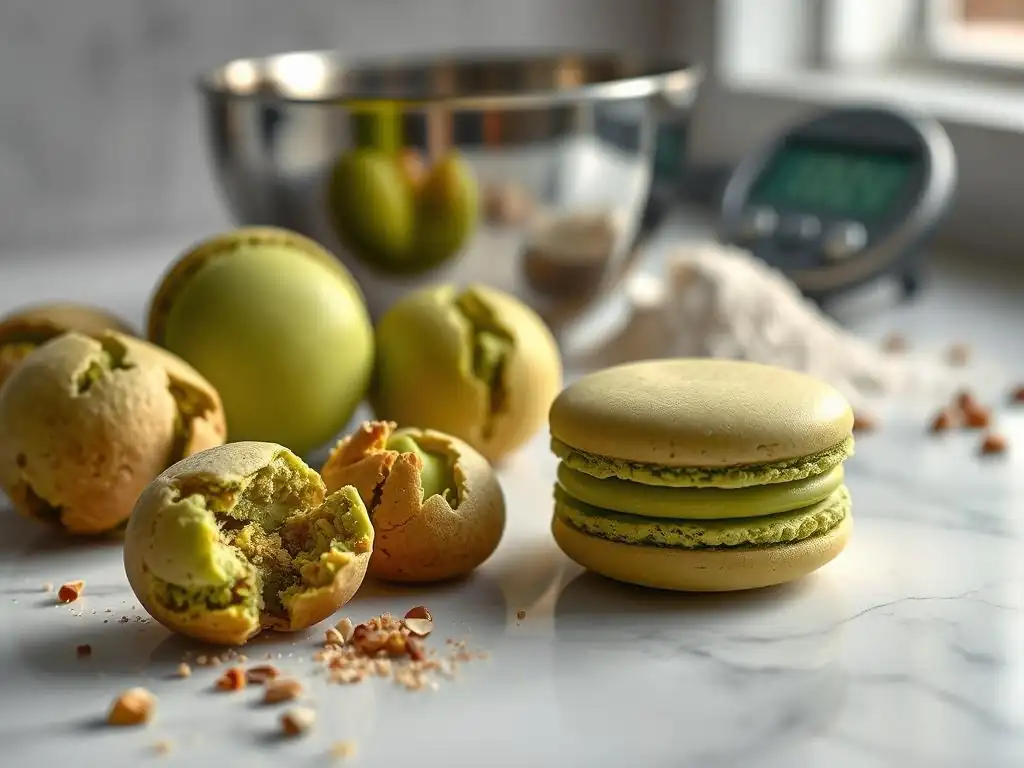
Once you've mastered the basics and consistently produce beautiful, full shells, you can explore more advanced aspects of macaron making.
Flavor and Color Variations
Adding flavorings and colorings opens up a world of creativity. Use gel or powder food coloring for vibrant hues, as liquid coloring can add too much moisture. Add extracts or flavorings carefully during the macaronage stage or to the filling. For example, adding 1 teaspoon of vanilla extract to a batch using 100g of egg whites is common. Incorporating freeze-dried fruit powder into the dry ingredients (substituting a small amount of almond flour/sugar) is another way to add intense flavor and natural color.
Creative Macaron Designs
Beyond simple circles, you can pipe different shapes (hearts, stars) or even create multi-colored swirls. This requires more advanced piping skills and potentially different tips. Stenciling designs onto the rested shells with cocoa powder or edible glitter before baking is another way to add visual flair.
Troubleshooting Common Issues
Even experienced bakers encounter issues. Keeping a baking journal to record ingredients, weights, humidity, oven temperature, and results can help identify patterns and troubleshoot persistent macaron shells cracking problems or hollows. Don't be discouraged by imperfect batches; every attempt is a learning opportunity.
Conclusion: Achieving Macaron Mastery
Mastering macarons is a journey that requires patience, practice, and a willingness to learn from mistakes. While macaron shells cracking problems, hollows, and other imperfections are common hurdles, understanding the science behind the process and paying close attention to technique can dramatically improve your results. Each perfect shell is a testament to your growing skill and dedication.
Don't give up! Even slight adjustments to your method – perhaps resting longer on a humid day, calibrating your oven, or refining your macaronage – can make a significant difference. The satisfaction of biting into a homemade macaron with a crisp shell, chewy interior, and delicious filling is well worth the effort.
Resources for Continued Learning
- Consult reputable baking books focused specifically on macarons.
- Watch video tutorials from experienced macaron bakers to visualize techniques like macaronage and piping.
- Join online baking communities or forums dedicated to macarons to ask questions and share experiences with fellow bakers tackling macaron shells cracking problems.
- Experiment with different meringue methods (French, Italian, Swiss) to find which works best for your environment and skill level.
- Keep detailed notes of your attempts to track variables and identify what works and what doesn't.
Frequently Asked Questions
What are the most common causes of macaron shells cracking?
Cracking is often due to excessive oven heat or a too-thin shell. Also, improper resting time before baking can lead to cracking.
How can I prevent hollow macaron shells?
Hollows are often caused by uneven baking temperatures or insufficient meringue stability. Ensuring the meringue is stiff and the oven temperature is consistent is crucial.
What role does humidity play in macaron baking success?
High humidity can significantly impact macaron shells. It affects the drying process and can lead to sticky shells and cracking.
What type of meringue is best for preventing cracking: French, Italian, or Swiss?
While each has its pros and cons, Italian meringue is often considered the most stable and can help prevent cracking due to its cooked sugar syrup.
What are some troubleshooting tips for macaron shell feet that are too small or non-existent?
Small or non-existent feet can indicate undermixing of the macaronage or an oven that isn't hot enough. Proper macaronage consistency and oven temperature are key.
Final Reflection: The Enduring Allure of the Perfect Macaron Shell
The quest for the flawless macaron shell remains a vibrant challenge in the baking world, a testament to the delicate balance between science and artistry. Cracked shells, once a source of frustration, now represent a pathway to deeper understanding – a journey of experimentation and refinement that ultimately rewards the persistent baker with unparalleled satisfaction.
The pursuit of the perfect macaron has transcended mere culinary skill; it's become a symbol of precision, patience, and the rewarding nature of mastering a complex technique. The subtle nuances of meringue consistency, the precise timing of drying, and the ever-present threat of humidity all contribute to the ongoing fascination. The macaron is a small thing, but it demands perfection.
– This unspoken sentiment resonates deeply with every baker who has wrestled with these delicate confections.
So, reader, I invite you to embrace the challenges inherent in macaron-making. Don't be discouraged by cracked shells; instead, view them as valuable lessons, stepping stones on your path to mastery. Each failed batch brings you closer to understanding the intricate dance of ingredients and technique, ultimately leading to the exquisite reward of a perfectly smooth, crisp, and flawlessly colored macaron shell. The journey is as important as the destination, and the satisfaction of a perfectly executed macaron is a testament to your dedication and perseverance.
Unlock Your Macaron Mastery!
Thanks for joining me on this macaron journey! You've now unlocked some key secrets to achieving perfectly smooth, flawlessly filled shells. Ready to put your newfound knowledge into practice?
- Bake a batch of your own macarons today! Use the techniques we've discussed to create your dream macarons – and don't be afraid to experiment!
- Share your macaron creations with us on social media! Tag #BakeWithEaseMacarons and show off your beautiful results.
- Join our online community forum to connect with other bakers, share tips, and ask any lingering questions you might have.
So, tell us… what flavor combination will you tackle first to test your newfound macaron mastery?