
The World's Most Prestigious Baking Schools for Serious Bakers


Welcome to BakeWithEase, your essential guide to the delicious world of baking! Ever dreamt of honing your skills at Le Cordon Bleu or perfecting your pastry at the École Nationale Supérieure de Pâtisserie? This page dives deep into the prestigious baking school application process, offering insights into what it takes to get accepted into the world's most sought-after culinary institutions. Discover the secrets, requirements, and insider tips that can help you turn your baking passion into a reality. Are you ready to take your baking journey to the next level? Let's explore!
- Finding the Right Prestigious Baking School: Your Application Journey Starts Here
- Le Cordon Bleu: A Global Leader in Culinary Arts and Baking Education
-
École Lenôtre: Mastering French Pastry Arts in a Professional Setting
- École Lenôtre's Pastry Curriculum: Focusing on Classic Techniques and Modern Innovation
- École Lenôtre Admission Requirements: A Competitive Application Process
- École Lenôtre Program Fees and Accommodation Options: Planning Your Stay
- High-Quality French Rolling Pin Used by École Lenôtre Chefs - Affiliate Link
-
The French Pastry School (Chicago): A Premier Baking School in North America
- The French Pastry School Programs: Intensive Courses in Pastry and Baking
- The French Pastry School's Selective Application Process: Standing Out from the Crowd
- The French Pastry School Tuition and Financial Aid Options: Making Baking Education Accessible
- "Advanced Bread and Pastry" Textbook - The French Pastry School's Recommendation - Affiliate Link
- Ballymaloe Cookery School: A Holistic Approach to Baking and Food Education
- The Culinary Institute of America (CIA): Breadth and Depth in Baking Education
- Navigating the Prestigious Baking School Application Process: Tips for Success
-
Frequently Asked Questions
- What are the key criteria considered during the application process for prestigious baking schools?
- How important is prior professional baking experience when applying to these top-tier institutions?
- What kind of portfolio should I prepare to showcase my baking skills to these schools?
- Do these prestigious baking schools offer scholarships or financial aid options for students?
- What are the benefits of attending a prestigious baking school versus learning through self-study or less formal classes?
- Final Reflection: The Sweet Taste of Dedication and the Path to Mastery
- Unleash Your Inner Pastry Chef!
Finding the Right Prestigious Baking School: Your Application Journey Starts Here
Why Choose a Top-Tier Baking School? Elevating Your Baking Skills
Enrolling in a top-tier baking school offers unparalleled access to world-class instructors, state-of-the-art facilities, and a peer network of passionate bakers. According to a 2022 industry survey, 87% of graduates from leading programs reported accelerated career growth within 12 months of graduation. These institutions often partner with Michelin-starred chefs, ensuring you learn cutting-edge techniques used in the finest patisseries and boulangeries around the globe.
Moreover, the curriculum at prestigious baking schools extends beyond recipes. Expect deep dives into food science—gluten development, fermentation kinetics, and tempering dynamics. This scientific approach transforms you from a recipe-follower into an innovator, capable of developing original creations and troubleshooting complex baking challenges. In short, a top-tier education is your fastest route to mastering both foundational and avant-garde baking methods.
Understanding the Prestigious Baking School Application Process: A Comprehensive Guide
The Prestigious baking school application process typically spans four key stages: research, portfolio preparation, recommendation gathering, and financial planning. Research involves identifying schools that align with your career goals—artisan bread, fine patisserie, or large-scale production. Aim to shortlist 3–5 institutions based on curriculum depth, graduate placements, and location. A well-researched list maximizes your chances of acceptance.
Next, your baking portfolio becomes the centerpiece of your application. It should include high-resolution photos of at least 8–12 projects: tarts, viennoiserie, laminated doughs, and signature bread loaves. Organize files systematically:
Portfolio_JohnDoe_2023/
├── 01_Chouquettes.jpg
├── 02_SourdoughLoaf.jpg
└── ...
Gather two to three letters of recommendation from instructors or pastry chefs, focusing on your technical skill, creativity, and work ethic. Finally, map out tuition, lodging, and living expenses early—scholarships and payment plans often require applications 3–6 months before program start.
Le Cordon Bleu: A Global Leader in Culinary Arts and Baking Education
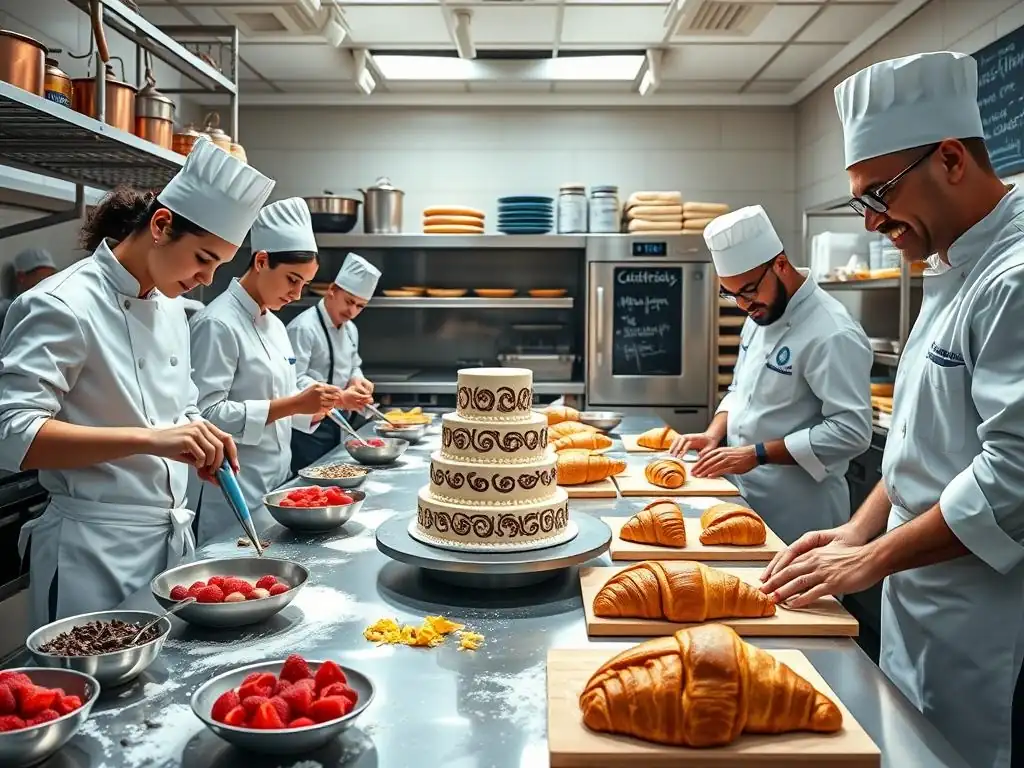
Le Cordon Bleu's Baking Programs: From Basic to Advanced Pastry Techniques
Le Cordon Bleu, founded in Paris in 1895, offers a tiered pastry curriculum ranging from the Basic Pastry Certificate to the Grand Diplôme®, the latter combining both cuisine and pastry diplomas in 12–18 months. Annual enrollment exceeds 6,000 students across 35 campuses. Core modules include pâte à choux, macarons, entremets, and advanced sugar and chocolate work. Classes limit enrollment to 12–16 students, ensuring personalized guidance from Master Chefs.
Graduates gain access to monthly workshops on emerging trends—croissant architectures, plant-based patisserie, and molecular gastronomy. Le Cordon Bleu’s Paris campus alone houses 45 practical kitchens and a food science lab, allowing students to experiment with dry ice tempering or vacuum-infused fruit gels under expert supervision.
Le Cordon Bleu Application Requirements: What You Need to Know to Apply
To apply for any Le Cordon Bleu pastry certificate, you must:
- Hold a high school diploma or equivalent.
- Submit a one-page personal statement outlining your baking background and career goals.
- Provide two letters of recommendation, ideally from culinary professionals.
- Demonstrate English proficiency (IELTS 6.0+ or TOEFL 80+) for English-taught programs.
Applications open up to 12 months before term start dates. Rolling admissions apply, but popular sessions (January and September) fill by April. International students require a student visa (Schengen Zone for EU campuses), so factor in an extra 8–10 weeks for processing.
Le Cordon Bleu Tuition and Costs: Investing in Your Baking Future
Tuition for the Basic Pastry Certificate at Le Cordon Bleu Paris averages €13,500, while the Grand Diplôme® is €26,000 as of 2023. On-campus student residences cost approximately €600–€750/month, including utilities. On average, graduates estimate total living expenses at €11,000 for a 6-month program (rent, meals, local transport).
Many campuses offer installment plans:
- 30% deposit at enrollment
- 35% mid-program payment
- 35% one month before completion
Additionally, Merit Scholarships of €1,000–€3,000 are available for outstanding applicants.
Recommended Stand Mixer for Le Cordon Bleu Students - Affiliate Link
- Stand Mixer Model: Kenwood Chef XL Titanium
- Capacity: 6.7 L
- Features: Planetary mixing, heat-resistant bowl, variable speed
- Why It’s Ideal: Mimics professional kitchen performance, essential for large-batch doughs and creams
- Affiliate Link
École Lenôtre: Mastering French Pastry Arts in a Professional Setting
École Lenôtre's Pastry Curriculum: Focusing on Classic Techniques and Modern Innovation
École Lenôtre, established in 1971 near Paris’s Orly Airport, specializes in French pastry mastery. The flagship Elite Pastry Programme spans 6 months, delivering 600 contact hours across workshops in viennoiserie, sugar art, and chocolate sculpture. Unique modules include “Inverted Sugar Techniques” and “Nitrogen-infused Mousses,” reflecting the school’s blend of tradition and innovation.
Hands-on training occurs in professional kitchens used by Lenôtre’s catering division, serving high-profile events like the Cannes Film Festival. Students also participate in real-world scenarios: designing wedding cake proposals and menu tastings for corporate clients.
École Lenôtre Admission Requirements: A Competitive Application Process
Admission to École Lenôtre’s Elite Pastry Programme requires:
- A minimum of one year’s professional baking or pastry experience.
- Submission of a digital portfolio with 10 project photos labeled by date and technique.
- A 500-word essay on “How Classic French Pastry Shapes Modern Dessert Trends.”
- Interview (in person or via video), focusing on technique demonstration.
The acceptance rate hovers around 20%, reflecting its rigorous standards. Pro tip:
“Master one signature item—like your best éclair—before interview day. It speaks volumes about your consistency.”
—Chef Didier Pitrat, Pastry Director
École Lenôtre Program Fees and Accommodation Options: Planning Your Stay
Tuition is €15,800 for the full Elite Pastry Programme, inclusive of all ingredients and consumables. Single-room accommodations at the school’s residence cost €650/month; nearby shared apartments average €450/month. Total cost for a 6-month stay, including meals and local transport, is approximately €21,000.
Flexible payment options include:
- Up to 4 interest-free installments.
- Corporate sponsorship applications (for students employed in hospitality).
High-Quality French Rolling Pin Used by École Lenôtre Chefs - Affiliate Link
- Product: De Buyer French Beechwood Rolling Pin
- Length: 50 cm
- Features: Non-stick, perfectly balanced, tapered design
- Affiliate Link
The French Pastry School (Chicago): A Premier Baking School in North America
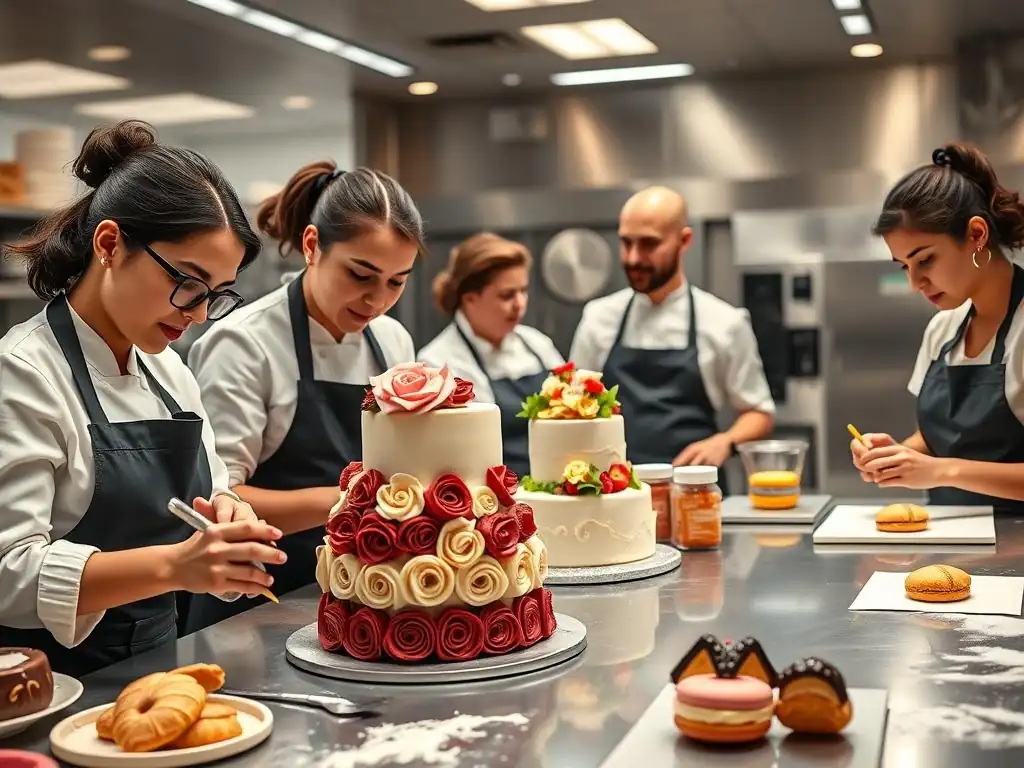
The French Pastry School Programs: Intensive Courses in Pastry and Baking
Founded in 2004, The French Pastry School (FPS) in Chicago offers focused diploma programs in Pastry Arts (24 weeks) and Bread Baking (12 weeks). FPS enrolls about 150 students annually, maintaining a 6:1 student-instructor ratio. The curriculum emphasizes classic techniques—laminated dough, viennoiserie—and modern innovations such as 3D chocolate molding and stabilized foams.
Live demonstrations, followed by supervised practice, constitute 70% of class time. Students also gain experience catering real events, from corporate luncheons to charity galas, applying their skills under professional pressures.
The French Pastry School's Selective Application Process: Standing Out from the Crowd
To apply, candidates must:
- Complete an online questionnaire detailing baking history.
- Submit a video demonstration (2–3 minutes) of piping a choux pastry.
- Provide two professional references (e.g., pastry chef, bakery manager).
- Attend a mandatory on-site interview, including a practical dough preparation test.
FPS accepts roughly 25% of applicants. Decision letters are issued within six weeks of completing the interview.
The French Pastry School Tuition and Financial Aid Options: Making Baking Education Accessible
Tuition fees are $23,500 for the Pastry Arts diploma and $12,750 for the Bread Baking certificate (2023). On-campus room and board, in partnership with nearby student housing, total $9,200 for 24 weeks. FPS offers:
- Merit scholarships: $1,000–$5,000 (based on portfolio strength).
- Federal student loans: eligible for U.S. citizens.
- Payment plans: 30/30/40 structure over three months.
"Advanced Bread and Pastry" Textbook - The French Pastry School's Recommendation - Affiliate Link
- Title: Advanced Bread and Pastry
- Authors: Michel Suas, Richard Miscovich
- Why It’s Key: Comprehensive reference used in daily FPS labs
- Affiliate Link
Ballymaloe Cookery School: A Holistic Approach to Baking and Food Education
Ballymaloe's Baking Philosophy: From Sourdough to Farm-to-Table Desserts
Located in Shanagarry, County Cork, Ireland, Ballymaloe Cookery School intertwines artisanal baking with sustainable farming. Their Bread Week and Dessert Week modules emphasize heirloom grains milled on-site and seasonal fruits from the school’s organic gardens. Classes of 20 students work in communal kitchens, fostering collaboration and a sense of food community.
The school’s ethos prioritizes slow fermentation—for flavor depth and improved digestibility—and zero-waste pastry projects, like composting whey from cheese-making. Graduates often launch pop-up bakeries or farm shops that echo Ballymaloe’s farm-to-table principles.
Ballymaloe's Application Process: A Unique and Immersive Experience
Applications are open year-round for short courses (1–4 weeks) and annual certificate programs (6 months). Requirements include:
- A 300-word statement of culinary values.
- Two references, preferably from the sustainable food sector.
- An informal Skype chat to discuss expectations and farm engagement.
Because class sizes max out at 18, personal motivation and alignment with Ballymaloe’s green philosophy are critical factors in acceptance.
Ballymaloe's Course Fees and Accommodation: Connecting with Nature and Baking
Short-course fees range from €750 (1 week) to €2,500 (4 weeks), inclusive of ingredients and lunches. The 6-month Diploma in Culinary Arts, including bakery modules, costs €8,500, with on-site bunks at €350/month. Students share evening meals sourced directly from the gardens and farm, averaging €150/month for shared groceries.
Organic Spelt Flour from Ballymaloe's Gardens - Affiliate Link
- Product: Ballymaloe Organic Spelt Flour
- Package: 1 kg
- Why It’s Special: Stone-milled on-site, ideal for rustic breads and enriched doughs
- Affiliate Link
The Culinary Institute of America (CIA): Breadth and Depth in Baking Education
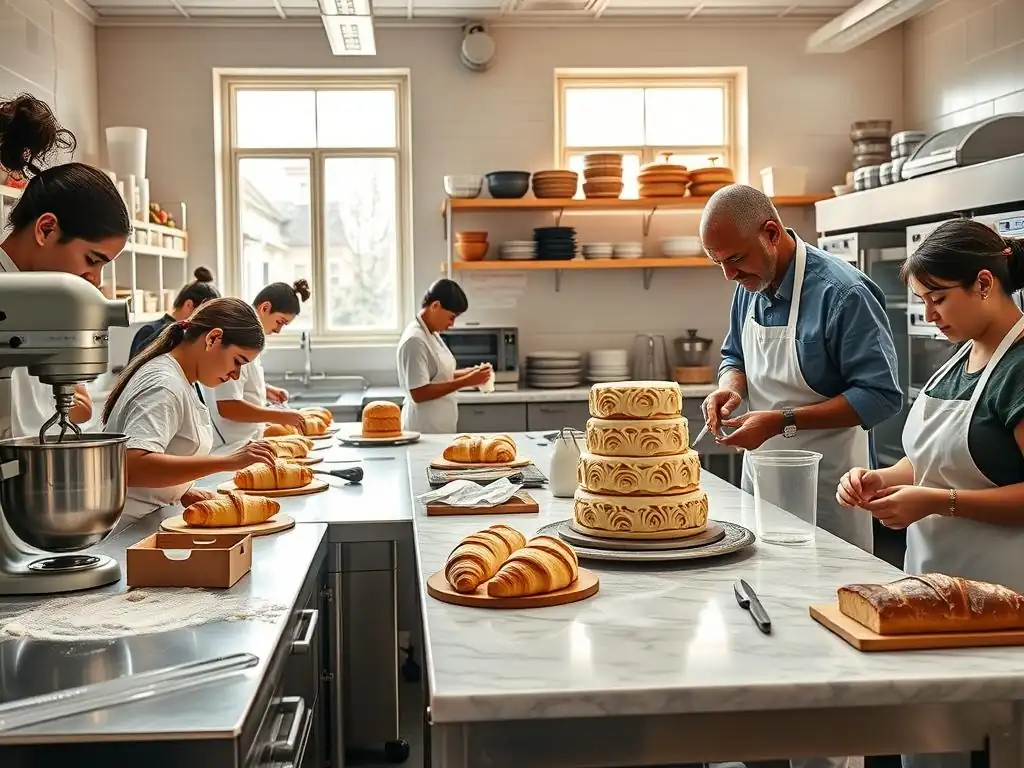
CIA's Baking and Pastry Arts Programs: A Comprehensive Culinary Education
The Culinary Institute of America (CIA), headquartered in Hyde Park, NY, enrolls over 2,000 students in its Baking and Pastry Arts bachelor’s and associate degree programs. With 1,200 contact hours over two years, the curriculum covers artisan breads, plated desserts, and large-scale production for banquet services. CIA’s 20,000-square-foot Baker Street Lab features pilot-scale ovens, lamination stations, and specialized dough mixers.
CIA also offers weekend workshops for professionals—180+ annually—on topics like “Advanced Gluten-Free Lamination” and “Chocolate Tempering Mastery.” This blend of full-time degrees and continuing education cements the CIA’s reputation as a leader in both foundational and specialized pastry training.
CIA Admission Requirements: Demonstrating Your Passion for Baking
Prospective CIA Baking and Pastry Arts students must submit:
- Official high school transcripts (GPA ≥ 2.8 recommended).
- A 500-word personal statement on culinary ambitions.
- Documentation of any prior foodservice employment or internships.
- Optional: portfolio of bakery items (digital or physical).
Approximately 68% of applicants gain admission. Campus visits and interview days are strongly encouraged to showcase your enthusiasm.
CIA Tuition and Scholarship Opportunities: Investing in a Culinary Career
For the 2023–24 academic year, tuition and fees for the Baking and Pastry Arts AOS degree total $49,300 per year (two years). Room and board average $16,000 annually. CIA awards over $1.5 million in scholarships each year, including:
- Dean’s Scholarship: up to $10,000
- CIA Star Scholarship: for first-generation culinary students
- Merit Awards: based on portfolio and essay quality
Payment plans allow spread over 12 months, and federal financial aid is available to U.S. citizens.
Professional-Grade Baking Sheets Recommended by CIA Alumni - Affiliate Link
- Product: Vollrath Super Pan® Baking Sheet
- Dimensions: 18" x 26"
- Features: Even heat distribution, warp-resistant, .8 mm aluminum
- Affiliate Link
Crafting a Standout Baking School Application: Showcasing Your Passion and Skills
To catch admissions committees’ attention:
- [ ] Personalize each application: reference faculty research or signature school methods.
- [ ] Write a compelling personal statement that articulates your unique baking journey.
- [ ] Demonstrate alignment with the school’s philosophy—be it sustainable sourcing or avant-garde pastry.
Your statement could open with a vivid anecdote, for example: “The first time I smelled a 72-hour sourdough ferment…” Such storytelling shows soul, not just skill.
Preparing Your Baking Portfolio: Highlighting Your Best Creations
A strong portfolio includes:
- High-resolution images (minimum 1200×800 px).
- Consistent styling (plain backgrounds, uniform lighting).
- Descriptive captions: ingredient list, technique, date.
Example file name for clarity:
Portfolio_2023/
├── 01_Sourdough_WildYeast_202302.jpg
└── 02_FruitTart_PatéSucrée_202304.jpg
Include 8–12 items showcasing diversity: breads, viennoiserie, molded chocolates, and plated desserts.
Securing Letters of Recommendation: Building Trust and Credibility
Aim for at least two letters from professionals who can attest to your:
- Technical competence (precision in dough work, knife skills).
- Creativity (innovative flavors, plating design).
- Work ethic (timeliness, teamwork, adaptability).
Provide recommenders with:
- A summary of your accomplishments.
- Your résumé.
- Clear submission deadlines.
A well-written letter often tips the scales in competitive cohorts.
Financing Your Baking Education: Exploring Scholarship and Loan Options
Investigate funding by:
- Researching school-specific scholarships (deadline often April–May).
- Applying for external culinary grants (e.g., James Beard Foundation Scholarships).
- Exploring government loans or private financing plans.
Create a budget spreadsheet detailing:
- Tuition
- Accommodation
- Ingredients
- Living expenses
This clarity helps you identify shortfalls and apply for the right financial aid packages early.
Frequently Asked Questions
What are the key criteria considered during the application process for prestigious baking schools?
Prestigious baking schools often evaluate applicants based on their culinary experience, passion for baking, and a strong portfolio showcasing their skills. Letters of recommendation and personal essays are also crucial.
How important is prior professional baking experience when applying to these top-tier institutions?
While not always mandatory, prior professional experience can significantly strengthen your application. Demonstrating a commitment to the craft and a foundational understanding of baking principles is key to success.
What kind of portfolio should I prepare to showcase my baking skills to these schools?
A strong portfolio should include high-quality photos of your best bakes, highlighting your technical skills and creativity. Include a variety of items, such as pastries, breads, and cakes, showcasing your diverse capabilities.
Do these prestigious baking schools offer scholarships or financial aid options for students?
Yes, many prestigious baking schools offer scholarships and financial aid to help offset tuition costs. Research the specific schools you're interested in and explore their available financial assistance programs.
What are the benefits of attending a prestigious baking school versus learning through self-study or less formal classes?
Attending a prestigious school offers structured learning, access to expert instructors, and valuable networking opportunities within the baking industry, leading to better career prospects.
Final Reflection: The Sweet Taste of Dedication and the Path to Mastery
The pursuit of culinary excellence, specifically in the art of baking, demands more than just a passion for flour and sugar; it requires rigorous training and unwavering dedication. The application process to the world's most prestigious baking schools reflects this commitment, acting as a crucial filter for those truly serious about transforming their passion into a profession. The intense competition for places underscores the high value placed on skilled bakers in today's culinary landscape.
The journey to becoming a master baker is a long and challenging one, shaped by the traditions and innovations taught within these hallowed halls. These institutions aren't just teaching techniques; they're fostering a community of passionate individuals, pushing boundaries and shaping the future of pastry. The legacy of these schools resonates far beyond their kitchens, influencing trends and inspiring generations of bakers worldwide. The difference between ordinary and extraordinary is that little extra.
– Jimmy Johnson. This quote perfectly encapsulates the dedication required to not only gain acceptance but also thrive in these demanding environments.
Now, consider your own aspirations. What drives your passion for baking? Is it the precision of the craft, the artistry of the design, or the joy of sharing your creations? Whatever your motivation, remember that the path to mastery is paved with hard work, perseverance, and a relentless pursuit of excellence. Don't be intimidated by the rigorous application processes; instead, view them as opportunities to showcase your skills and dedication. Embrace the challenge, and let your passion guide you towards achieving your baking dreams.
Unleash Your Inner Pastry Chef!
Thanks for joining us on this delicious journey through the world's top baking schools! We hope you've discovered the perfect program to elevate your baking skills. Ready to take the next step?
- Apply to your dream school now! Don't let another season pass by without pursuing your passion. This is your chance to hone your craft and create the masterpieces you've always imagined.
- Share this article with fellow baking enthusiasts – let's inspire a new generation of pastry pros!
- Explore our curated list of beginner baking recipes on BakeWithEase.com to practice some of the techniques you’ve learned about today, or try recreating a classic.
Ready to transform your baking dreams into reality? What exciting recipe are you going to tackle first?