
Mastering the Crave: Navigating France's Incredible Pastry Scene

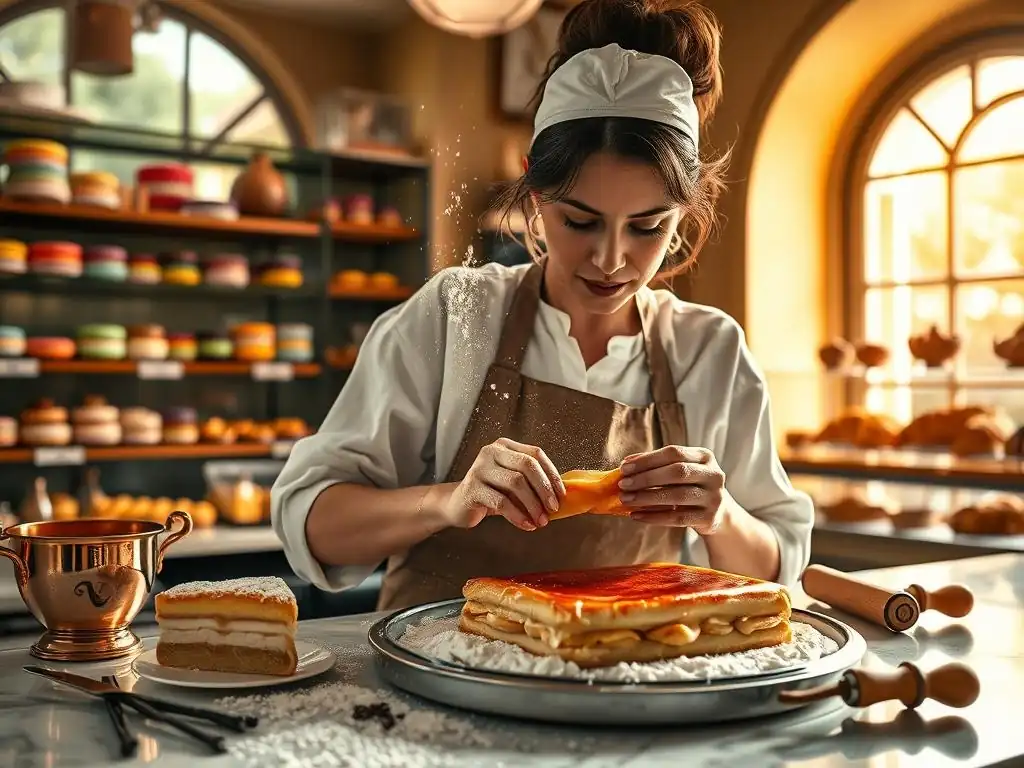
Welcome to BakeWithEase, your passport to the captivating world of baking! Ever dreamt of recreating those exquisite pastries you savored in a Parisian patisserie? This isn't just about recipes; it's about unlocking the secrets. In this article, we'll delve into essential French pastry baking techniques that will elevate your skills and bring a taste of France to your kitchen. Ready to discover the magic behind flaky croissants and decadent éclairs?
- Discover the Best French Pastry Baking Techniques & Destinations
- Top French Pastry Baking Experiences in France
- Essential Tools for Mastering French Pastry Baking Techniques at Home
- Tips and Tricks for Success with French Pastry Baking Techniques
- Conclusion: Your Journey to Mastering French Pastry Baking Techniques.
-
Frequently Asked Questions
- What are some essential French pastry baking techniques every beginner should learn?
- Where can I find easy-to-follow recipes for classic French pastries?
- What makes French pastry baking different from other baking styles?
- What are some common mistakes to avoid when starting with French pastry baking?
- How can I improve my French pastry baking skills over time?
- Final Reflection: The Enduring Allure of French Pastry
- Unleash Your Inner Pâtissier: Take the Next Step in Your French Pastry Journey
Discover the Best French Pastry Baking Techniques & Destinations
Unveiling the Secrets of Authentic French Pastry Baking
Mastering French pastry baking techniques is a journey into a world of precision, artistry, and incredible flavor. At its heart lies a deep understanding of fundamental principles, passed down through generations of pâtissiers. Unlike some baking styles that allow for improvisation, French pastry often demands exact measurements and meticulous execution.
Consider the classic croissant: achieving those ethereal, flaky layers requires a specific process of lamination, involving precise chilling times and multiple folds of butter and dough. A typical recipe might call for folding the dough at least three times, creating hundreds of delicate layers that puff up in the oven.
This dedication to detail extends to ingredients. French butter, with its higher fat content (often 82% or more compared to around 80% in some other regions), is crucial for achieving the desired richness and texture in pastries like brioche or puff pastry. Sugars are carefully selected based on their crystal size and impact on texture and sweetness.
Even the temperature of the kitchen and the dough itself are critical factors, often requiring tools like digital thermometers to ensure success. Learning these core French pastry baking techniques is the first step to recreating that authentic taste and texture found in the finest Parisian pâtisseries.
Top French Pastry Baking Experiences in France
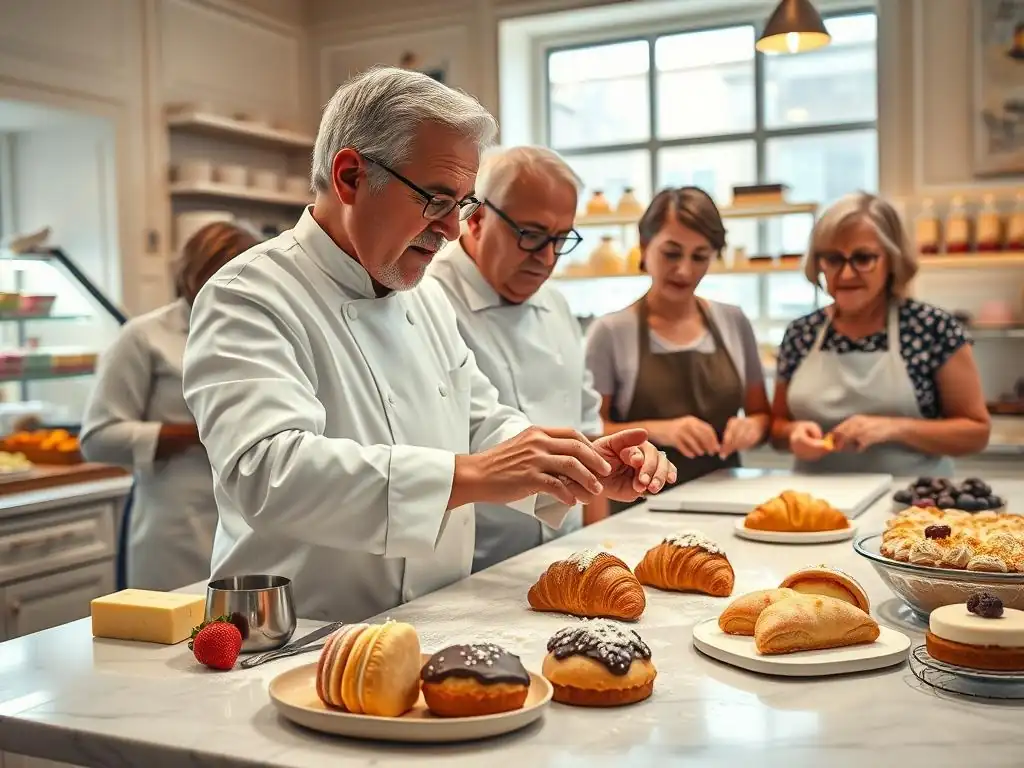
Option 1: Parisian Pastry School Immersion - Le Cordon Bleu Paris
For those serious about delving deep into French pastry baking techniques, an intensive program at a renowned institution like Le Cordon Bleu Paris offers an unparalleled experience. Their Diplôme de Pâtisserie program, for instance, typically spans several months, covering everything from classic tarts and creams to complex chocolate work and decorative techniques. Students spend hundreds of hours in hands-on practical sessions, often working in small groups under the guidance of experienced chefs.
These immersive courses provide direct exposure to the rigorous standards of French pâtisserie. You learn the 'whys' behind the 'hows' – understanding emulsion science in ganaches, the role of gluten development in choux pastry, or the precise cooking temperatures for sugar work. While a full diploma is a significant commitment, shorter workshops focusing on specific skills like macaron making or viennoiserie are also available, offering a taste of professional-level French pastry baking techniques in just a few days.
Option 2: Macaron Mastery in Lyon - Valrhona École du Grand Chocolat
Lyon, often considered the gastronomic capital of France, is also home to exceptional chocolate expertise, making it an ideal place to master chocolate-centric pastries like the macaron. The Valrhona École du Grand Chocolat offers specialized courses focused on chocolate and pastry. Their macaron workshops, for example, delve into the nuances of creating perfect shells – achieving the desired 'foot' (the ruffled base) and smooth top, controlling color, and ensuring proper texture.
These workshops emphasize the importance of high-quality ingredients, particularly the type of almond flour and, of course, the chocolate used for fillings. Participants gain practical experience with techniques like the Italian meringue method (often preferred for stable macaron shells) versus the French method, understanding their differences and applications. Learning in this environment, surrounded by chocolate professionals, provides unique insights into the interplay between chocolate tempering, ganache consistency, and overall macaron success, honing specific French pastry baking techniques related to these delicate treats.
Option 3: Croissant Perfection in Brittany - Maison Georges Larnicol
While found throughout France, the croissant holds a special place, and learning its creation in a region known for its rich butter, like Brittany, offers a unique perspective. Maison Georges Larnicol, a renowned chocolatier and confectioner originating from Brittany, sometimes offers workshops or demonstrations that highlight regional specialties, including the beloved Kouign-amann and, by extension, the techniques behind laminated doughs used in croissants.
Focusing on the foundational French pastry baking techniques for viennoiserie here means appreciating the quality of local butter and the specific climate's impact on dough handling. Workshops might cover the ideal temperature for rolling out the dough (often cited around 10-15°C or 50-59°F), the number of turns required (typically 3-4 single turns or 2 double turns), and the proofing conditions necessary for a light, airy result. Experiencing this process in a traditional setting connects you directly to the regional heritage of these iconic pastries.
Option 4: Éclair Excellence in Bordeaux - Bordelais Pastry Workshop
Bordeaux, famous for its wines, also boasts a vibrant culinary scene where pastries, including the elegant éclair, are perfected. Local pastry workshops in the Bordelais region often offer hands-on classes dedicated to mastering choux pastry – the base for éclairs, profiteroles, and gougères. These classes break down the process: cooking the pâte à choux correctly on the stove until it forms a film on the bottom of the pan, incorporating the eggs gradually, and piping the shapes evenly.
Beyond the choux itself, these workshops teach the art of filling and glazing éclairs. This involves creating smooth, stable pastry creams (crème pâtissière), flavored creams, or mousses, and preparing glossy glazes, often tempered chocolate or fondant icing. Participants learn piping techniques for filling without collapsing the shell and achieving a professional finish on the glaze. Focusing on the éclair provides a deep dive into several core French pastry baking techniques, from cooked doughs to classic fillings and finishes.
Essential Tools for Mastering French Pastry Baking Techniques at Home
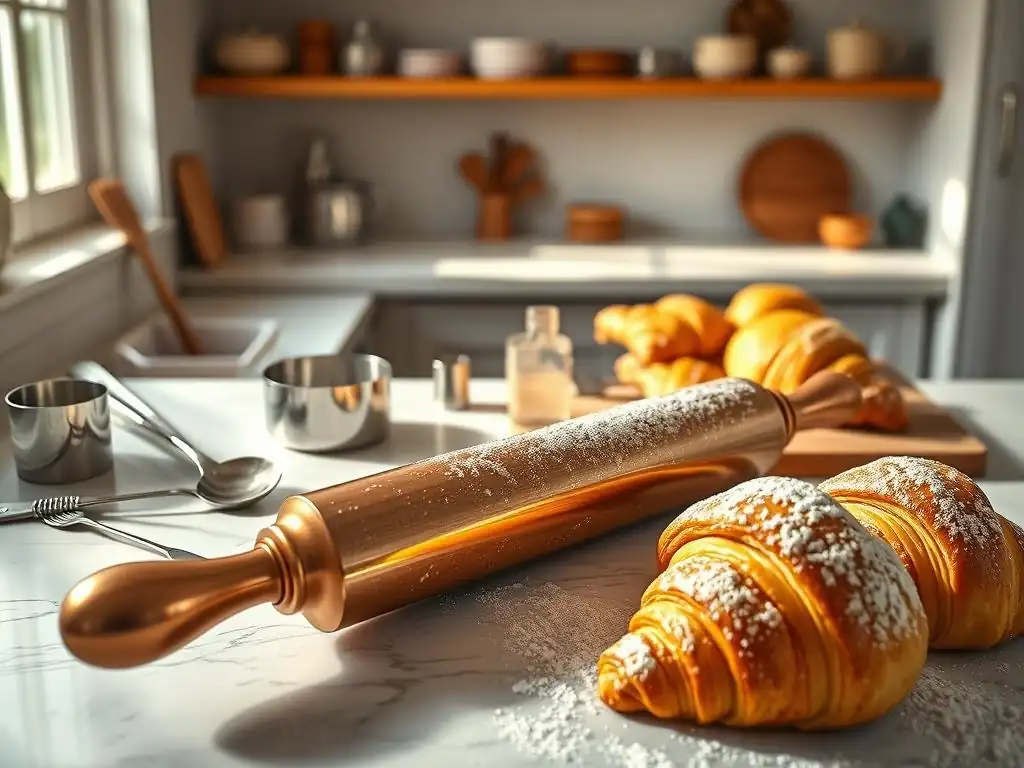
Stand Mixer
A quality stand mixer is arguably one of the most valuable investments for anyone serious about mastering French pastry baking techniques at home. Tasks like kneading brioche dough until it reaches proper gluten development, whipping meringue to stiff peaks for macarons or soufflés, or creaming butter and sugar for cakes become significantly easier and more consistent. The powerful motor and various attachments (like the dough hook, whisk, and paddle) handle tasks that would be arduous or impossible by hand, ensuring ingredients are incorporated correctly and textures are developed properly.
For instance, achieving the elastic yet tender crumb of a traditional brioche requires extensive kneading – often 10-15 minutes or more in a stand mixer at medium speed – something difficult to replicate manually. Similarly, stable meringues for delicate mousses or tart toppings require consistent, high-speed whipping over several minutes. While not strictly mandatory for all French pastry, a stand mixer greatly enhances efficiency, consistency, and the ability to tackle more complex recipes, making advanced French pastry baking techniques more accessible.
Pastry Mat
A non-stick pastry mat is an indispensable tool for handling various French doughs and batters, particularly those that are sticky or require precise measurements and rolling. Made from silicone or similar materials, these mats often feature measurement guides (circles for tarts, grids for cutting squares or strips) that help ensure uniformity in size and shape – a hallmark of professional French pastries. They provide a clean, non-stick surface that requires minimal flour, preventing the dough from drying out or becoming tough.
Using a pastry mat is particularly beneficial when working with laminated doughs like puff pastry or croissant dough. The non-stick surface allows you to roll out the dough thinly and evenly without it sticking to the counter, making the folding process much smoother. For delicate tasks like piping meringue shapes or chocolate decorations, placing parchment paper or a silicone mat on top of the pastry mat provides a stable base. This simple tool streamlines many French pastry baking techniques, from rolling dough to assembling complex structures.
Piping Bags and Tips
Piping bags and a selection of tips are essential for adding professional flair and precision to many French pastries. From filling éclairs and cream puffs with pastry cream to decorating cakes with buttercream or piping intricate meringue shapes, piping allows for controlled placement and elegant presentation. Piping tips come in various shapes and sizes – round tips for choux pastry and macarons, star tips for decorative borders, and special tips for filling pastries.
Reusable silicone or canvas bags and disposable plastic bags each have their advantages, but the ability to control the flow and shape of batters, creams, and frostings is key. Mastering the correct pressure and angle when piping is a French pastry baking technique in itself, requiring practice to achieve smooth, consistent lines or dollops. Whether creating uniform macarons (aiming for circles typically 3-5 cm in diameter) or swirling topping onto a tart, piping tools elevate both the process and the final appearance.
Pastry Thermometer
Accuracy is paramount in French pastry baking techniques, and a pastry thermometer is crucial for monitoring temperatures in various applications. This includes checking the temperature of sugar syrups for meringues or nougatines, ensuring chocolate is correctly tempered, or verifying the internal temperature of baked goods like brioche or cakes for doneness. Different types exist, from candy thermometers for high sugar temperatures to instant-read digital thermometers for doughs and internal temperatures.
For instance, achieving a stable Italian meringue requires pouring hot sugar syrup (cooked to a specific temperature, often 118-121°C or 244-250°F) into whipping egg whites. Tempering chocolate for a glossy, snap-able finish involves heating, cooling, and reheating chocolate to precise temperature ranges (e.g., dark chocolate is typically heated to ~50°C, cooled to ~28-29°C, then reheated slightly to ~31-32°C). Relying on guesswork for these critical temperature points can lead to failed results. A pastry thermometer ensures these French pastry baking techniques are executed with the required precision.
Tips and Tricks for Success with French Pastry Baking Techniques
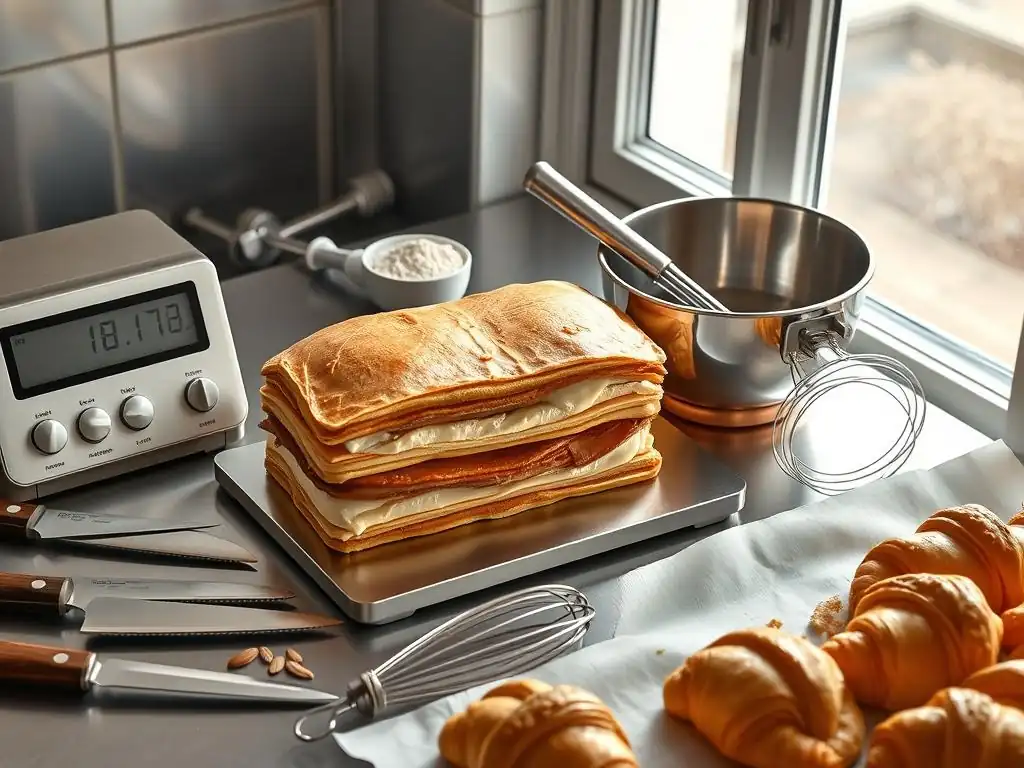
Understanding the Importance of Ingredients
The quality and type of ingredients used are foundational to successful French pastry baking techniques. As mentioned, high-fat butter is critical for lamination and richness. The type of flour matters too; some recipes call for specific protein levels to achieve the desired structure or tenderness. For example, a tender cake might use a lower protein cake flour, while a strong bread dough requires higher protein bread flour. Even the temperature of ingredients, particularly butter and eggs, is often specified in recipes because it impacts how they combine and react.
Beyond core ingredients, understanding the role of flavorings and stabilizers is key. High-quality vanilla beans or extracts, fresh fruit purees, and premium chocolate make a significant difference in taste. Ingredients like gelatin or pectin are used precisely to create specific textures in mousses, gelees, and fruit fillings. Paying close attention to the ingredient list and sourcing the best quality available within your budget is a crucial step in elevating your French pastry baking techniques and achieving authentic flavors.
Mastering the Lamination Process
Lamination is a cornerstone of many iconic French pastries, including croissants, puff pastry ( pâte feuilletée), and Kouign-amann. It involves repeatedly folding a block of cold butter into a dough, creating alternating layers of fat and dough. As the pastry bakes, the water in the butter turns to steam, separating the layers of dough to create that characteristic flaky texture. This process requires patience, precise temperature control, and careful handling.
Achieving perfect lamination involves specific French pastry baking techniques: keeping the butter and dough cold throughout the process (often chilling for 30-60 minutes between folds), rolling evenly to maintain consistent layer thickness, and executing clean folds. A typical puff pastry might require 6 'single' turns, creating hundreds of layers. Rushing the chilling or allowing the butter to melt can result in a greasy, dense pastry instead of a light, airy one. Practice is key to mastering this delicate balance of temperature, rolling, and folding.
The Art of Tempering Chocolate
Tempering chocolate is a fundamental French pastry baking technique for creating glossy, snap-able chocolate coatings, decorations, and confections. Untempered chocolate, when it sets, can be dull, streaky, and soft. Tempering involves carefully melting and cooling chocolate to specific temperatures to stabilize the cocoa butter crystals. This ensures that the chocolate sets with a smooth, shiny surface, a firm texture, and a satisfying snap when broken.
There are several methods for tempering, including the tabling method (spreading chocolate on a cool surface like marble), the seeding method (adding solid tempered chocolate 'seeds' to melted chocolate), and using a tempering machine. Each method relies on hitting precise temperature points unique to dark, milk, and white chocolate. For example, dark chocolate is typically tempered around 31-32°C (88-90°F). Mastering this technique is essential for pastries requiring a professional chocolate finish, like éclairs, tarts, or chocolate decorations.
Conclusion: Your Journey to Mastering French Pastry Baking Techniques.
Embarking on the path to mastering French pastry baking techniques is a rewarding endeavor that opens the door to creating truly exquisite desserts and baked goods. From understanding the foundational principles of precise measurement and ingredient quality to tackling complex processes like lamination and tempering chocolate, each step builds your skill set. Whether you dream of perfecting the flaky croissant, the delicate macaron, or the elegant éclair, the journey is filled with learning and delicious results.
Exploring immersive experiences in France offers invaluable hands-on knowledge and cultural context, while equipping your home kitchen with essential tools provides the means to practice and refine your skills daily. Remember that patience and attention to detail are your greatest allies. By focusing on the core French pastry baking techniques discussed – from ingredient selection and preparation to specific methods for different doughs and finishes – you can confidently recreate the magic of a French pâtisserie in your own home. Continue to experiment, learn from each bake, and savor the process of creating something truly beautiful and delicious.
Frequently Asked Questions
What are some essential French pastry baking techniques every beginner should learn?
Basic techniques include mastering pâte à choux (cream puff dough), pâte sablée (shortcrust pastry), and understanding the importance of precise measurements. These are foundational for many French pastries.
Where can I find easy-to-follow recipes for classic French pastries?
BakeWithEase.com offers step-by-step guides and simple recipes specifically designed for bakers of all levels, ensuring success even for beginners.
What makes French pastry baking different from other baking styles?
French pastry often emphasizes precise techniques and high-quality ingredients, resulting in delicate textures and complex flavors. It requires patience and attention to detail.
What are some common mistakes to avoid when starting with French pastry baking?
Common mistakes include inaccurate measurements, overmixing doughs, and not chilling ingredients properly. These can significantly affect the final product.
How can I improve my French pastry baking skills over time?
Practice is key! Start with simple recipes, focus on mastering fundamental techniques, and don't be afraid to experiment and learn from your mistakes.
Final Reflection: The Enduring Allure of French Pastry
The meticulous artistry of French pastry baking isn't just a culinary tradition; it's a testament to human creativity and dedication, a skill that continues to captivate and inspire across the globe. The techniques detailed in this article, from the precise measurements and folding techniques to the delicate balancing of flavors and textures, represent a legacy passed down through generations, a legacy that remains incredibly relevant in today's dynamic food landscape. The demand for authentic French pastries, and the desire to master their creation, is as strong as ever.
The journey through the world of French pastry, as explored in this article, has been a deeply enriching one. It's a world where precision meets passion, where tradition intertwines with innovation. The art of baking is more than just a recipe; it's a feeling, a memory, a story waiting to be told.
This quote perfectly encapsulates the emotional connection that many feel towards the craft, a connection that transcends mere consumption and becomes a powerful form of cultural expression. The enduring popularity of French pastries speaks volumes about our inherent desire for beauty, craftsmanship, and the simple pleasure of a perfectly executed treat.
Now, it's your turn. Consider the techniques discussed – the pâte à choux, the feuilleté, the delicate balance of sugar and butter – and think about how you can apply the principles of precision, patience, and passion to your own pursuits, whether in the kitchen or beyond. Embrace the challenge, experiment with new flavors and techniques, and discover the joy of creating something beautiful and delicious. The world of French pastry awaits your exploration – dare to master the crave.
Unleash Your Inner Pâtissier: Take the Next Step in Your French Pastry Journey
Thanks for exploring the delightful world of French pastries with us! We hope you've gained a newfound appreciation for the artistry and dedication behind these incredible treats. Now it's time to put your newfound knowledge into action.
- Start baking! Try one of the recipes mentioned in the article – even a simple croissant will unlock a whole new level of appreciation. We believe in starting small and building confidence.
- Share your creations! Post a picture of your masterpiece on social media and tag us – we’d love to see your baking journey unfold! Use #BakeWithEaseFrance.
- Dive deeper! Explore our extensive recipe library on bakewithease.com for even more French pastry inspiration – we have everything from classic éclairs to modern macarons.
So, which delectable French pastry will you conquer first?