
Baking Tourism in France: Where to Eat and Learn Pastry Secrets

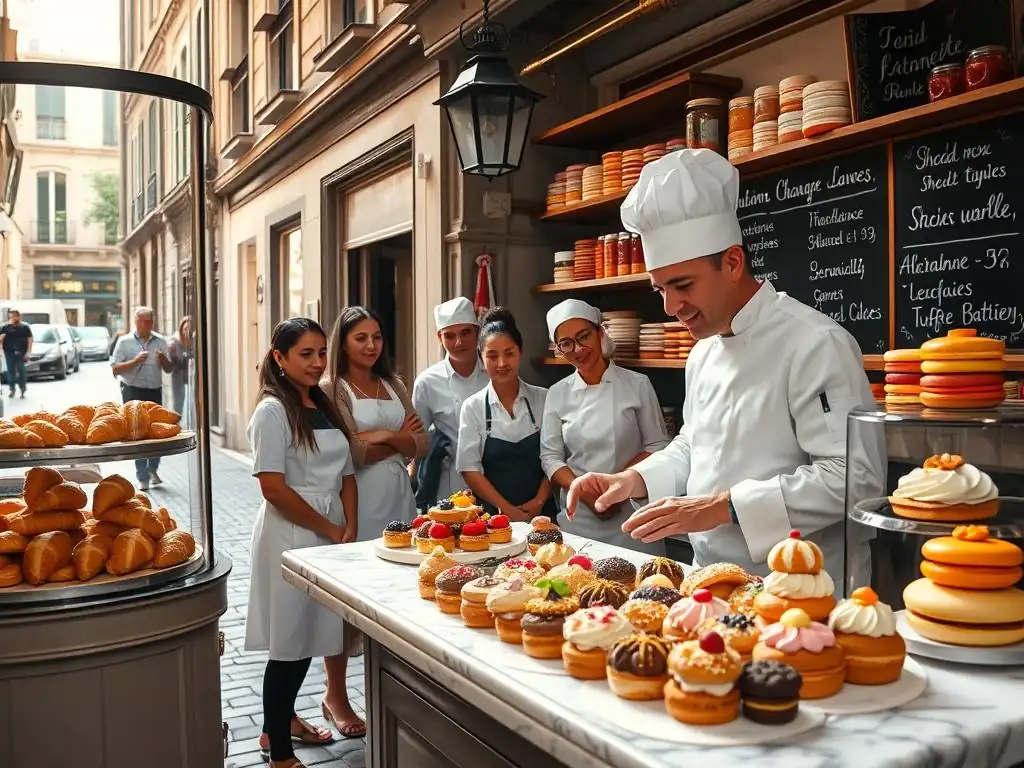
Welcome to BakeWithEase, your passport to the delicious world of baking! Are you dreaming of flaky croissants and delicate macarons? This week, we're whisking you away to France! Discover the magic of baking tourism and uncover the secrets of France pastry classes for beginners. Intrigued? Let's explore the best places to eat and learn, transforming you from a novice into a pastry pro. Your French baking adventure starts now...
- Baking Tourism in France: A Beginner's Guide to Pastry Classes & Sweet Treats
- Discovering France's Sweet Side: Introductory Pastry Classes
-
The Best Introductory Pastry Classes in France: A Curated Guide
- Option 1: École Ritz Escoffier (Paris): Beginner Macaron Workshop
- Option 2: Valrhona École du Grand Chocolat (Lyon): Croissant & Viennoiserie Basics
- Option 3: Cook'n With Class (Paris): Éclair and Choux Pastry Fundamentals
- Option 4: Le Cordon Bleu (Paris): Introduction to French Pastry Techniques (Online)
- Mastering French Baking: Essential Tools and High-Quality Ingredients
- Beyond the Classroom: Exploring France's Pastry Scene
- Tips for Planning Your Baking Trip to France
- Conclusion: Embark on Your French Pastry Adventure
-
Frequently Asked Questions
- What are the benefits of taking France pastry classes for beginners, according to BakeWithEase?
- Where in France does BakeWithEase recommend beginners look for pastry classes?
- What types of pastries can beginners expect to learn in France pastry classes mentioned by BakeWithEase?
- What kind of prior baking experience is needed to take a France pastry class for beginners, according to BakeWithEase?
- How can I find reputable France pastry classes for beginners based on BakeWithEase's advice?
- Final Reflection: The Sweet Taste of Discovery and French Pastry
- Unlock Your Inner Pâtissier: Start Your French Baking Adventure!
Baking Tourism in France: A Beginner's Guide to Pastry Classes & Sweet Treats
Discovering France's Sweet Side: Introductory Pastry Classes
Why France is a Baker's Paradise: An Overview of French Patisserie
France boasts over 35,000 patisseries nationwide, serving more than 22 million tourists annually who seek the authentic taste of croissants, éclairs, and macarons. From the historic windows of Ladurée on the Champs-Élysées to the avant-garde flavor combinations at Pierre Hermé, French patisserie blends centuries-old tradition with modern innovation. UNESCO even recognizes French gastronomic meals as an intangible cultural heritage, underlining the country’s dedication to refined culinary arts.
The terroir of France supplies world-class dairy, flour, and cocoa, giving pastry chefs the best raw materials: Normandy butters with 84% fat content, T55 wheat flour milled in La Meunerie, and single-origin Valrhona chocolate. This perfect alignment of ingredient quality and storied technique is why France pastry classes for beginners thrive here—allowing novices to learn time-honored methods directly from masters like Gaston Lenôtre or Dominique Ansel.
The Best Introductory Pastry Classes in France: A Curated Guide
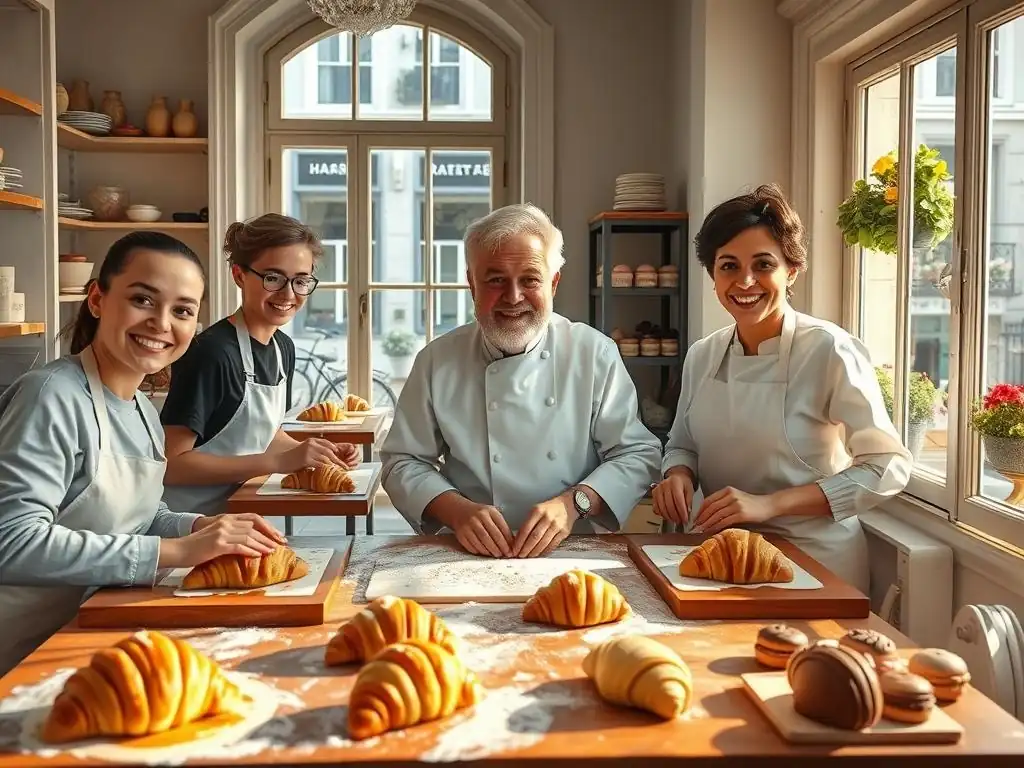
Option 1: École Ritz Escoffier (Paris): Beginner Macaron Workshop
The Ritz Escoffier’s 3-hour macaron workshop, priced at approximately €120 per person, welcomes groups of up to 12 students. Under the guidance of Chef François Perret, you’ll measure ingredients on digital scales (precision ±1 g), prepare ganache fillings in copper bowls, and master the elusive macaronage technique. By the end, participants craft a dozen macarons in six classic flavors—from pistachio to caramel au beurre salé.
Held in a restored Louis XVI-style kitchen within the Ritz Hotel, this course also includes:
- A brief historical overview of Parisian macaron salons
- Hands-on practice of piping, drying, and sandwiching
- A tasting session with tea pairings
Option 2: Valrhona École du Grand Chocolat (Lyon): Croissant & Viennoiserie Basics
Located in Tain-l’Hermitage near Lyon, the Valrhona school offers a 4-hour viennoiserie course for €110, capped at 8 participants. Emphasizing French butter layers and lamination techniques, you’ll shape:
- Classic croissants (25 folds for perfect flakiness)
- Pain au chocolat (with 72% cacao Valrhona beads)
- Brioche feuilletée (a hybrid between brioche and laminated dough)
Participants also tour the Valrhona chocolate factory—sampling single-origin bars—and receive a signed copy of Secrets of the Grand Chocolat by Chef Frédéric Bau.
Option 3: Cook'n With Class (Paris): Éclair and Choux Pastry Fundamentals
Cook’n With Class delivers a 2.5-hour choux pastry workshop in the Marais district for €95, teaching:
- Éclair piping with 12-mm stainless-steel nozzles
- Crème pâtissière infusions (vanilla bean, coffee, and passion fruit)
- Craquelin techniques to create crackled finishes
After baking, you’ll dip éclairs in tempered chocolate and assemble them into a to-go box. The course includes a walking tour to Richard Lenoir market, where students buy fresh eggs and local flour—a true farm-to-tray experience.
Option 4: Le Cordon Bleu (Paris): Introduction to French Pastry Techniques (Online)
For €50 per module, Le Cordon Bleu’s online pastry series caters to remote learners worldwide. Each module features:
module:
  title: "Classic Puff Pastry"
  duration: 1.5h video + 3h practical
  tools_required:
    - rolling_pin
    - bench_scraper
    - digital_scale
With over 35,000 alumni, the program covers pâte à choux, pâte feuilletée, and tempering chocolate—complete with live Q&A sessions and downloadable recipe PDFs.
Mastering French Baking: Essential Tools and High-Quality Ingredients
Recommended Baking Tools for Beginners: Elevate Your Skills
Equipping your kitchen with precision tools pays dividends:
- Digital kitchen scale (accuracy ±1 g) for consistent dough hydration
- Oven thermometer to maintain exact baking temperatures (180 °C–200 °C)
- High-quality silicone mats (such as Silpat) to prevent sticking
Supplement with:
- A 2-piece piping set (round and star tips)
- Danish bench scraper for dough handling
- Stainless-steel mixing bowls (1 L and 3 L)
# Example piped choux pastry command list
1. Preheat oven to 200°C
2. Heat milk & water
3. Add butter and flour
4. Cook to form panade
5. Cool, add eggs one at a time
6. Pipe onto Silpat
7. Bake 20–25 minutes
Key Ingredients for Authentic French Pastries: Sourcing Quality Flavors
The backbone of an authentic recipe lies in premium components:
- Flour: Type 45 for cakes, Type 55 for breads and viennoiserie
- Butter: AOP Isigny-Ste-Mère or Beurre Charente-Poitou (>82% milk fat)
- Chocolate: Callebaut or Valrhona couverture (minimum 70% cocoa)
Supplement with:
- Vanilla pods from Madagascar (0.5 g bean per 50 g sugar)
- Organic free-range eggs for richer color and texture
Sources such as La Grande Épicerie de Paris or online shops like BienManger.com make these easy to acquire.
Beyond the Classroom: Exploring France's Pastry Scene
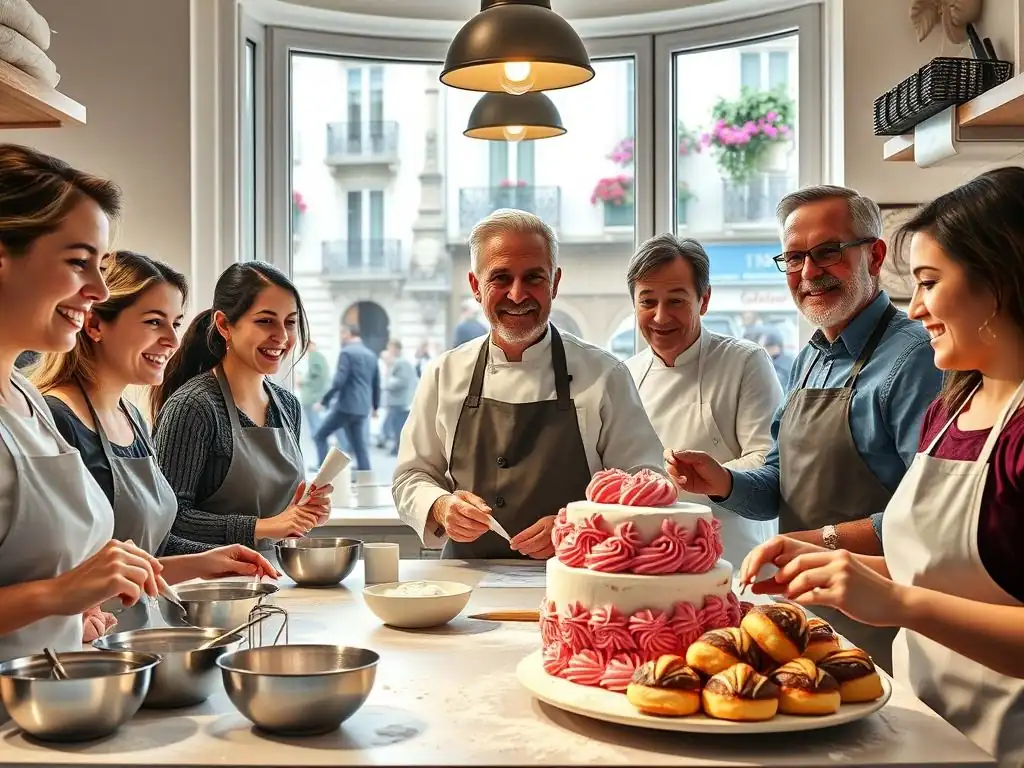
Must-Visit Patisseries in Paris: Indulge in Exquisite Creations
Parisian patisseries are art galleries in sugar form. Don’t miss:
- Pierre Hermé (53 Rue Bonaparte): Computation of 100+ flavor permutations for Ispahan macarons
- Ladurée (75 Avenue des Champs-Élysées): Original rose, violet, and vanilla-filled macarons since 1862
- Dominique Ansel (25 Rue des Rosiers): Inventor of the cronut, selling 2,000 units weekly
- Stohrer (51 Rue Montorgueil): Oldest pastry shop, serving Baba au Rhum since 1730
Each boutique offers signature pastries that illustrate the region’s culinary evolution.
Regional Pastry Specialties: A Taste of France's Diverse Baking Traditions
France’s regions yield unique confections:
- Brittany’s Kouign-amann: A sugar-butter laminated cake, with 8 layers traditionally
- Saint-Tropez’s Tarte Tropézienne: A brioche crown filled with crème mousseline, invented in 1955
- Basque Country’s Gâteau Basque: Dense almond cake with black cherry jam
Sampling these reveals how local ingredients and history shape each delicacy.
Tips for Planning Your Baking Trip to France
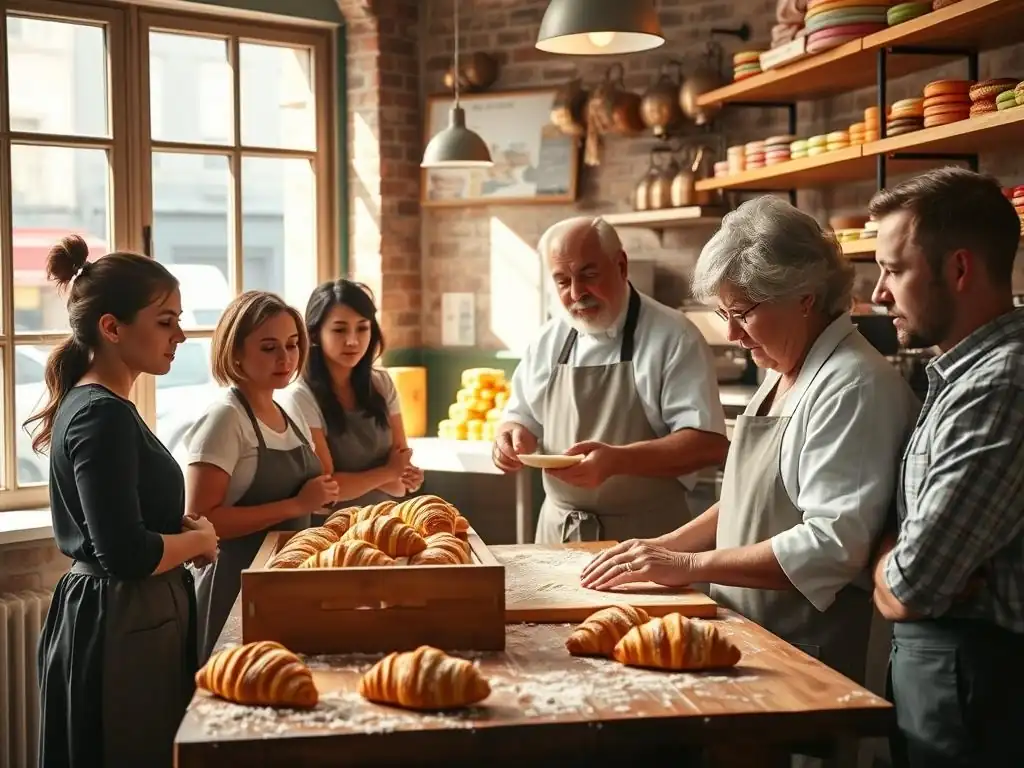
Finding the Right Pastry Class: Consider Your Skill Level and Interests
Choosing a course hinges on your background:
- Beginners should start with macarons or choux pastry, requiring minimal equipment and easy-to-follow steps
- Intermediate bakers can tackle laminated dough workshops for croissants and danishes
- Language options vary; many schools offer bilingual instruction in English and French
Compare class sizes (4–12 students), durations (2–4 hours), and certificates of completion if you wish to enhance your résumé.
Booking Accommodation: Staying Near Patisseries and Cooking Schools
Aim for neighborhoods rich in culinary heritage:
- Le Marais (Paris 3e & 4e): €120–€180/night, steps from Cook’n With Class and Stohrer
- Saint-Germain-des-Prés (Paris 6e): €150–€200/night, close to Ritz Escoffier
- Vieux-Lyon: €80–€130/night, ideal for Valrhona courses and riverfront strolls
Consider Airbnb apartments with kitchenettes; practicing choux pastry in your flat can reinforce class lessons.
France’s transport network is efficient and extensive:
- SNCF high-speed trains (TGV) connect Paris to Lyon in 2 hours and Marseille in 3 hours
- Paris Métro: 14 lines, average fare €1.90 per ride—purchase a carnet of 10 tickets for discounts
- Vélib’ bike share for short trips (first 30 minutes free) and Intercités routes for regional access
Plan a France Rail Pass if you travel extensively; it covers 8 days within a month for €320 in second class.
Conclusion: Embark on Your French Pastry Adventure
France offers a seamless blend of hands-on learning and sensory exploration. By enrolling in France pastry classes for beginners, you delve into techniques perfected over centuries, from the lamination of viennoiserie to the delicate folding of macarons. Coupled with visits to storied patisseries and regional specialties, your journey becomes a tapestry of taste and tradition.
Whether you refine your skills at the Ritz Escoffier or whip up éclairs with Cook’n With Class, every whisk and fold brings you closer to the heart of French gastronomy. Pack your aprons, sharpen your palette, and prepare to transform from novice baker to confident pastry artisan— à la française.
Frequently Asked Questions
What are the benefits of taking France pastry classes for beginners, according to BakeWithEase?
Taking France pastry classes for beginners allows you to master fundamental baking techniques directly from experts, learn about authentic French ingredients, and experience the cultural significance of pastry.
Where in France does BakeWithEase recommend beginners look for pastry classes?
While BakeWithEase doesn't endorse specific locations, we suggest researching classes in regions like Paris, Brittany, and Lyon, known for their rich pastry traditions.
What types of pastries can beginners expect to learn in France pastry classes mentioned by BakeWithEase?
Beginners can typically expect to learn classic pastries like croissants, pain au chocolat, and macarons, focusing on basic techniques and flavor profiles.
What kind of prior baking experience is needed to take a France pastry class for beginners, according to BakeWithEase?
Most France pastry classes for beginners require no prior baking experience. The classes are designed to teach fundamental skills from the very beginning.
How can I find reputable France pastry classes for beginners based on BakeWithEase's advice?
Research classes online, read reviews and testimonials, and check for certifications or affiliations with established culinary schools. Look for classes that emphasize hands-on learning.
Final Reflection: The Sweet Taste of Discovery and French Pastry
The allure of French pastry transcends mere culinary indulgence; it's a journey into history, artistry, and cultural immersion. This exploration of baking tourism in France reveals a vibrant landscape of opportunities for aspiring pastry chefs, from beginner to enthusiast, to connect with a rich tradition and hone their skills. The increasing popularity of these classes speaks volumes about the enduring power of this craft and its ability to connect people across cultures.
The impact of French pastry on the global culinary scene is undeniable, influencing techniques and inspiring countless bakers worldwide. Its influence extends beyond the kitchen, shaping social gatherings, celebrations, and even national identity. As Julia Child famously said, People who love to eat are always the best people.
This sentiment perfectly captures the spirit of these baking experiences – a shared passion that fosters connection and creates lasting memories, far beyond the delicious results. The joy of mastering a delicate croissant or a perfectly piped macaron is amplified by the setting, the shared experience, and the knowledge passed down through generations.
Now, it's your turn. Consider what inspires you about the art of French pastry. Perhaps it's the precision, the creativity, or the simple pleasure of sharing something delicious with loved ones. Don't let this inspiration fade. Find a class, embrace the challenge, and experience the magic of French pastry firsthand. Let the scent of warm butter and sugar guide you on your own sweet adventure. The world of French baking awaits.
Unlock Your Inner Pâtissier: Start Your French Baking Adventure!
Thanks for joining us on this delicious journey through the world of French baking! We hope you've discovered some inspiring places and techniques to tantalize your taste buds and ignite your passion for pastry. Ready to take the next step?
- Begin planning your French baking getaway: Research the bakeries and pastry schools mentioned in the article and start crafting your ideal itinerary. Imagine yourself mastering the secrets of a classic croissant!
- Share your baking dreams: Tell us in the comments which French pastry you're most excited to try – or maybe even recreate! Let's inspire each other.
- Subscribe to our newsletter: Get exclusive recipes, tips, and travel inspiration delivered straight to your inbox, so you can continue your culinary exploration.
What unique French pastry will you master first on your baking adventure?