
Pretzel Perfection: The Art and Tradition Behind Germany's Iconic Laugengebäck

Welcome to BakeWithEase!
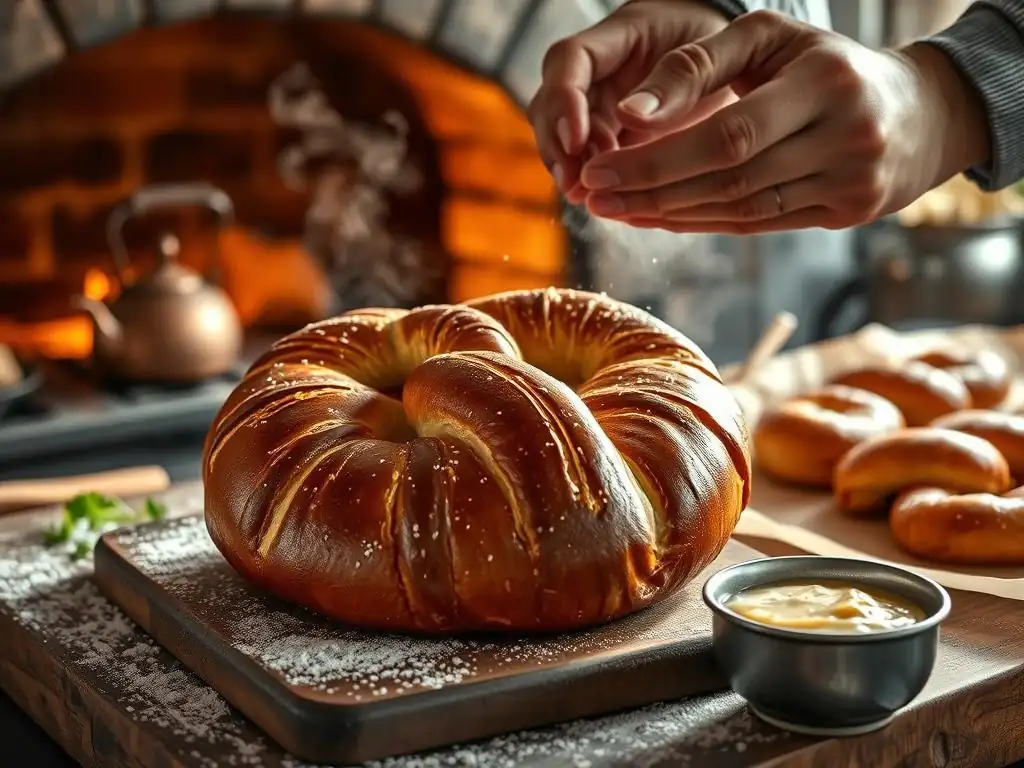
Ever wondered how to achieve that perfectly chewy interior and deep-brown crust of an authentic German pretzel? Dive into our easy-to-follow German pretzel recipe, and unlock the secrets behind this iconic Laugengebäck. More than just a recipe, we'll explore the art and tradition that makes this simple bake so special. Ready to embark on a delicious journey to pretzel perfection?
- Unlocking the Secrets of Authentic German Pretzels: An Easy Bake Guide
- German Pretzel Recipe Easy Bake: A Step-by-Step Guide for Home Bakers
- Elevate Your Pretzel Game: Variations and Expert Tips
- Troubleshooting Your German Pretzel Bake: Common Issues and Solutions
- Baking Tourism: Experiencing Authentic Pretzels in Germany
- From Our Kitchen to Yours: Share Your German Pretzel Creations!
-
Frequently Asked Questions
- How easy is this German pretzel recipe for beginner bakers?
- What makes this German pretzel recipe "easy bake" compared to other recipes?
- What are the key ingredients needed for this "German pretzel recipe easy bake"?
- Does this "German pretzel recipe easy bake" cover the traditional lye bath process, and if so, how is it made easier?
- Can this "German pretzel recipe easy bake" be adapted for different dietary needs, such as gluten-free?
- Final Reflection: The Enduring Allure of the Laugengebäck
- Unleash Your Inner Bäcker: Craft Your Own Laugengebäck!
Unlocking the Secrets of Authentic German Pretzels: An Easy Bake Guide
Exploring the Rich History of Laugengebäck: From Monastery to Modern Bakery
The story of Laugengebäck begins in the 7th century when Benedictine monks in southern Germany discovered that dipping dough in a basic lye solution produced a distinctive crust and flavor. By the 12th century, this technique had migrated from monastery kitchens to urban bakeries in Bavaria, where salaried guild bakers perfected the art. In Munich alone, pretzel stands serve an estimated 1.5 billion pretzels every year, a testament to how deeply embedded they are in German culture.
Over time, what was once a monastic specialty became a street food staple, featured at beer gardens, Oktoberfest, and daily bakery counters. By the 19th century, German immigrants brought Laugengebäck to the United States, where “pretzel men” roamed city streets selling freshly baked sticks twisted into loops. Today, traditional bakeries in Nuremberg and Stuttgart still adhere to century-old lye recipes, preserving that authentic taste and golden-brown sheen.
Why German Pretzels are Unique: The Science Behind the Perfect Bake
The secret to a pretzel’s distinctive chew and glossy crust lies in the alkaline bath—typically food-grade sodium hydroxide with a pH around 13. When the dough meets this lye solution, it undergoes a rapid Maillard reaction once baked, locking in that deep mahogany color and subtle nutty aroma. Unlike a simple baking soda dip ( pH ~9), lye creates a stronger, more consistent crust and flavor profile that’s impossible to achieve with mild bases alone.
Moreover, German pretzels rely on a precise flour-protein ratio (12–14% gluten) to balance elasticity and structure. This ensures the dough stretches just enough to form the classic double-loop shape without tearing. Combined with coarse sea salt, which draws out moisture and emphasizes flavor, every bite of Laugengebäck delivers a unique contrast between soft interior and crisp exterior—a trademark of German baking science.
German Pretzel Recipe Easy Bake: A Step-by-Step Guide for Home Bakers
Gathering Your Ingredients: Essential Items for Authentic Laugengebäck
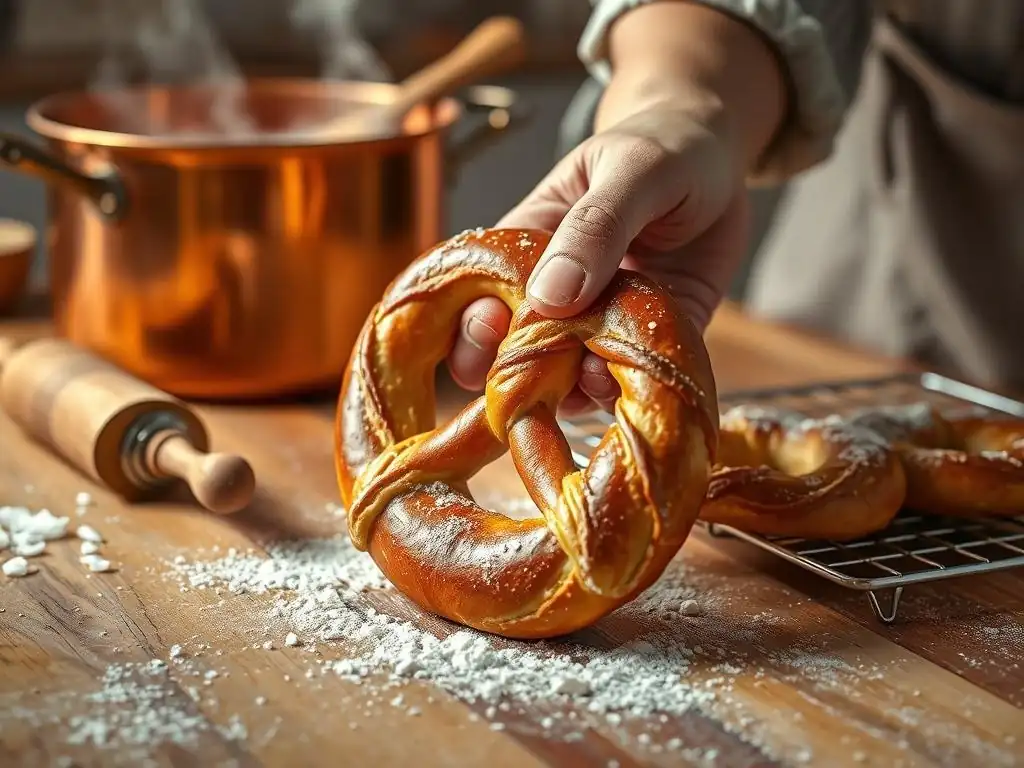
Authentic flavor begins with quality supplies. German-style bread flour with 13% protein content forms the backbone of your dough, giving it strength and chewiness. For that unmistakable sheen and deep color, use food-grade sodium hydroxide—widely available from specialty baking suppliers—and always follow safety guidelines.
A small amount of malt syrup (around 2 tablespoons per 500 g flour) enhances caramelization, while coarse sea salt lends crunch and balances the slight bitterness from the lye bath. If you’re wary of handling lye, baking soda can serve as a gentler alternative, yielding a lighter crust and milder flavor.
- High-quality bread flour (500 g)
- German-style pretzel lye (food-grade sodium hydroxide) (Safety Precautions Emphasized)
- Malt syrup or malt extract (2 Tbsp)
- Baking Soda: For a less intense lye bath (optional substitution)
- Coarse sea salt (1 Tbsp to sprinkle)
Mastering the Dough: Kneading and Shaping the Perfect Pretzel
Developing gluten correctly is crucial for German pretzels. A stand mixer fitted with a dough hook saves time and ensures consistent kneading at 100 rpm for about 8 minutes. The dough should be smooth, supple, and slightly tacky but not sticky.
For those who prefer a hands-on approach, hand-kneading fosters a tactile connection to tradition. Press and fold the dough on a lightly floured surface for 10 minutes, using the heel of your hand to stretch and fold. Aim for a windowpane test—when you can stretch a small piece into a translucent sheet, you’ve achieved optimal gluten development.
- Using a stand mixer for effortless kneading
- Hand-kneading techniques for a traditional touch: Tips and tricks for achieving optimal dough texture
- Shaping the classic pretzel form: Step-by-step visual guide
The Lye Bath: Achieving the Signature Pretzel Crust
Immersing shaped pretzels in a lye solution is where the magic happens. The alkaline environment alters the surface proteins, setting the crust and enabling that deep-brown hue. Soak each pretzel for 20 seconds on each side, then let excess drip off before transferring to the baking sheet.
Safety cannot be overstated. Always wear chemical-resistant gloves, long sleeves, and safety goggles when handling sodium hydroxide. Work in a well-ventilated area and have vinegar on hand to neutralize any spills. If you prefer a milder crust, prepare a baking soda bath by heating 1 L water with 3 Tbsp baking soda until dissolved, then proceed as usual.
- Understanding the science behind the lye bath: How it creates the distinct flavor and color
- Safety first: Handling lye safely and effectively (with product recommendations for protective gear)
- Alternative methods: Baking soda bath for a less intense flavor
Baking to Perfection: Achieving the Golden-Brown Finish
Preheat your oven to 220 °C (428 °F) and position a rack in the center. For home ovens that run hot, start at 210 °C (410 °F) and adjust based on results. Bake pretzels for 12–15 minutes, rotating the sheet halfway through to ensure even browning.
Watch the color closely—the difference between perfect and overdone is mere seconds. Aim for a glossy, deep brown surface. Immediately after removing from the oven, sprinkle with an extra pinch of coarse salt while the crust is still hot and slightly tacky. This final flourish enhances both taste and texture.
- Oven temperature and baking time: Finding the sweet spot for your oven
- Achieving the perfect color: Monitoring and adjusting baking time
- Adding the finishing touch: Coarse salt application for flavor and texture
# Quick German Pretzel Recipe Easy Bake Summary
1. Mix 500 g bread flour, 1 tsp salt, 7 g yeast, 300 ml water
2. Knead until smooth (8–10 min)
3. Let rise 60 min at 25 °C
4. Shape and dip in lye/baking soda bath
5. Bake 220 °C for 12–15 min
6. Sprinkle salt, cool, enjoy!
Elevate Your Pretzel Game: Variations and Expert Tips
Exploring Regional Variations of German Pretzels: Bavarian vs. Swabian
Bavarian pretzels are characterized by their soft, pillow-like interior and thick, doughy arms. They’re often larger—around 120 g each—and served warm alongside weisswurst and sweet mustard. In contrast, Swabian pretzels, popular in Stuttgart, are flatter with a more pronounced crust, offering a firmer bite and slightly chewier center.
Beyond shape and texture, regional water hardness influences the final product. Bavaria’s softer water yields a milder crust, while Baden-Württemberg’s harder water intensifies the flavor and browning. If your tap water is very soft, a pinch of calcium chloride can mimic the mineral content and produce more authentic results.
Adding Flavor Twists: Experimenting with Seeds, Herbs, and Spices
Infuse your homemade pretzels with creative toppings that complement the traditional base. A sprinkle of caraway seeds (Kümmel) adds a warm, anise-like note that pairs beautifully with dark rye breads and hearty stews. For a modern twist, try Everything Bagel seasoning—a blend of sesame, poppy, garlic, and onion that brings global flair to a German classic.
Herbs like rosemary or thyme can be finely chopped and mixed into the dough for an aromatic crust, while cracked black pepper gives a subtle kick. If sweet-savvy is your style, dust freshly baked pretzels with cinnamon sugar for a dessert variation that’s perfect with a cup of coffee.
- Caraway seeds: A classic German pretzel topping
- Everything Bagel seasoning: A modern twist on a traditional flavor
Perfect Pairings: What to Serve with Your Homemade German Pretzels
Nothing complements a soft German pretzel like a chilled, malty lager. For a traditional Bavarian experience, choose a Helles or Dunkel beer, with its gentle sweetness balancing the salty crunch. If you prefer non-alcoholic options, a tart apple spritzer or sparkling elderflower lemonade provides a refreshing contrast.
Obatzda—a creamy Bavarian cheese spread made from Camembert, butter, and paprika—is the gold standard accompaniment. For heat lovers, pair with a range of mustards from mild Bavarian sweet mustard to robust Düsseldorf sharp mustard. These condiments highlight the pretzel’s natural flavors and turn a simple snack into a feast.
- Traditional German beer: Recommendations for complementary brews
- Obatzda cheese spread: A classic Bavarian accompaniment
- Mustard varieties: Exploring different mustard flavors
Troubleshooting Your German Pretzel Bake: Common Issues and Solutions
Dough Too Sticky? Solutions and Preventative Measures
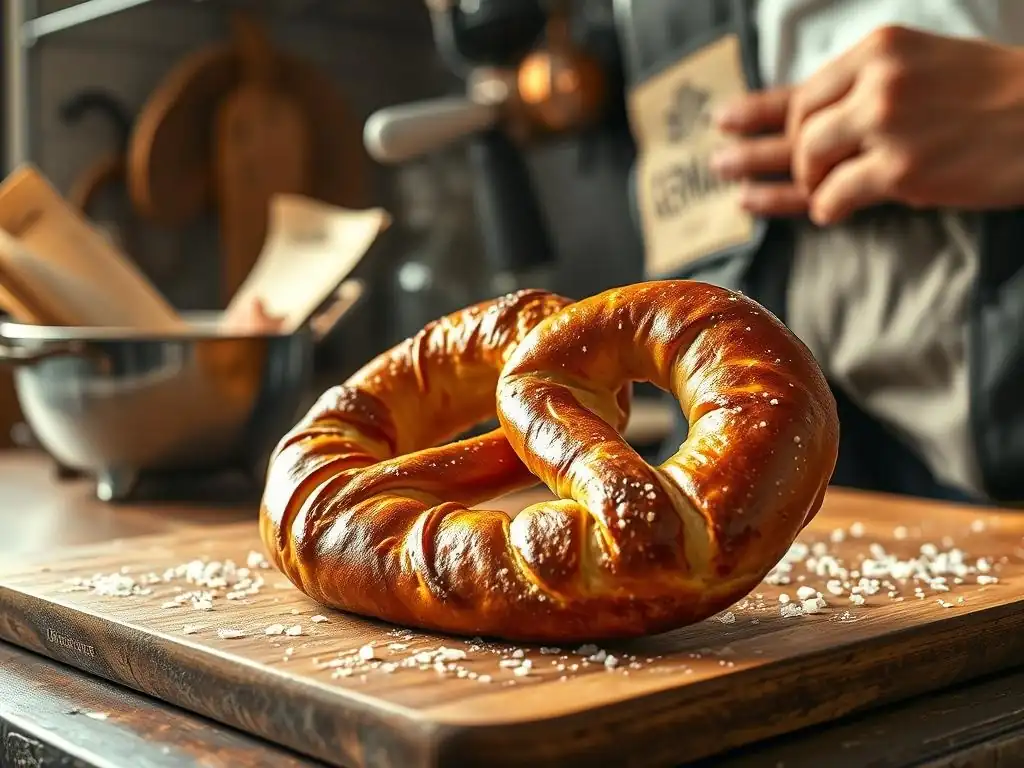
Overly hydrated dough can result from measurement errors or high-humidity environments. If your dough sticks excessively, add flour 1 Tbsp at a time until it’s manageable, being careful not to overshoot 530 g total. For future batches, weigh ingredients using a digital scale ( ±1 g accuracy) rather than relying on volume measures.
Alternatively, chill the dough for 15 minutes before shaping—colder dough is firmer and easier to handle. Dust your work surface lightly with flour or use a bench scraper to prevent sticking without compromising gluten development.
Pretzel Not Browning Properly? Adjusting Your Baking Technique
If your pretzels emerge pale, verify your oven temperature with an independent probe thermometer—most home ovens deviate by up to 10 °C. Increase the temperature by 5 °C next time, or extend baking by 1–2 minutes. Position a small oven-safe pan of water on the bottom rack to introduce humidity, which can enhance crust coloration.
Also, confirm the potency of your lye solution. A solution weaker than 4% (40 g NaOH per 1 L water) yields a lighter crust. For consistent results, measure lye by weight and stir thoroughly until fully dissolved.
Lye Bath Concerns? Addressing Safety and Effectiveness
If the crust lacks gloss or the flavor is bland, your bath may be too cool. Aim for a solution temperature of 25–30 °C. Always stir gently before dipping to keep concentration uniform. If you experience skin or eye irritation, rinse immediately with plenty of water and neutralize with diluted vinegar.
For bakers allergic to sodium hydroxide, switch to a baking soda bath: dissolve 60 g baking soda in 1 L water and bake at 220 °C for 15 minutes. While the flavor is milder, you’ll still achieve a respectable brown crust and classic shape.
Baking Tourism: Experiencing Authentic Pretzels in Germany

Must-Visit Bakeries in Bavaria: A Pretzel Pilgrimage
Munich’s iconic Hofbräuhaus may be famous for beer, but its on-site bakery churns out soft pretzels as big as salad plates. In Nuremberg, Fürther Laugenbäckerei uses a secret family lye recipe dating to 1883, turning out an estimated 250,000 pretzels per week. Stuttgart’s Bäckerei Lutz offers a Swabian twist—slightly flatter, chewier pretzels served alongside local Maultaschen dumplings.
For a hidden gem, head to Regensburg’s city center where Bäckerei Rill has been a family-run institution since 1902. Here, pretzels are hand-twisted every morning at 4 a.m., ensuring that by 7 a.m., the streets are filled with the aroma of freshly baked Laugengebäck.
German Baking Classes and Workshops: Enhance Your Skills
Hands-on workshops provide invaluable insight into German techniques. At the Bavarian Bakery School in Munich, a half-day “Pretzel & Brot” class covers lye safety, dough lamination, and Bavarian salt selection. In Dresden, Germany’s Culinary Academy offers a week-long course where participants bake their own sourdough, pretzels, and traditional stollen under master bakers.
For a more immersive experience, join a small-group tour in Bamberg, combining visits to artisanal bakeries, malt mills, and local breweries. Not only will you bake side by side with professionals, but you’ll also taste regional variations like Franconian “Schäuferla” pretzels served with roast pork.
We’d love to see how your German pretzel recipe easy bake turned out! Snap a photo of your golden-brown Laugengebäck, tag it with #BakeWithEasePretzels, and drop your favorite pairing or twist in the comments below. Happy baking—and may every twist be perfectly shaped!
Frequently Asked Questions
How easy is this German pretzel recipe for beginner bakers?
This BakeWithEase recipe is designed with beginners in mind. It focuses on simple steps and easy-to-find ingredients, making it an approachable starting point for your pretzel baking journey.
What makes this German pretzel recipe "easy bake" compared to other recipes?
The recipe streamlines the traditional process, omitting overly complex techniques. We prioritize clear instructions and common baking tools to ensure a successful outcome for all skill levels.
What are the key ingredients needed for this "German pretzel recipe easy bake"?
You'll need basic baking staples such as flour, yeast, salt, and water, along with a crucial ingredient for the characteristic pretzel flavor: baking soda or lye (with appropriate safety precautions, of course!).
Does this "German pretzel recipe easy bake" cover the traditional lye bath process, and if so, how is it made easier?
Yes, the recipe addresses the lye bath, essential for the pretzel's crust. We offer a safer and simpler alternative using baking soda to achieve a similar result without the hazards of working with lye.
Can this "German pretzel recipe easy bake" be adapted for different dietary needs, such as gluten-free?
While the core recipe uses wheat flour, BakeWithEase encourages experimentation. Adapting to gluten-free flour will require adjustments to the recipe, and may not achieve the same texture, but it's a possible modification for those with dietary restrictions.
Final Reflection: The Enduring Allure of the Laugengebäck
The simple pretzel, a seemingly humble baked good, holds a surprisingly complex history and cultural significance that resonates deeply with German identity and continues to captivate palates worldwide. Its enduring popularity, evident in the countless variations and the persistent search for the "perfect" recipe, speaks volumes about its timeless appeal. From simple street food to sophisticated bakery creations, the pretzel's versatility ensures its place at the table, both literally and figuratively.
The journey through the art and tradition of Laugengebäck has been a fascinating exploration of culinary heritage, revealing the deep connection between food, culture, and community. The process, from the precise shaping to the characteristic lye bath, is a testament to the dedication and skill passed down through generations. Food is symbolic of love when words are inadequate.
– Alan D. Wolfelt. This quote perfectly encapsulates the emotional weight and shared experience associated with the simple act of baking and sharing a pretzel. It's more than just a snack; it's a symbol of connection and tradition.
Now, armed with a deeper understanding of the pretzel's history and the techniques behind its creation, I encourage you to embark on your own pretzel-making adventure. Don't be intimidated by the seemingly complex process; embrace the challenge and the joy of creating something delicious and meaningful. Experiment with different recipes, share your creations with loved ones, and discover the satisfaction of connecting with a culinary tradition that spans centuries. The perfect pretzel awaits your touch.
Unleash Your Inner Bäcker: Craft Your Own Laugengebäck!
Thanks for joining us on this delicious journey through the world of Laugengebäck! We hope you’ve gained a new appreciation for the artistry and tradition behind this iconic German treat. Now it's time to put your newfound knowledge to the test!
- Bake your own Laugengebäck: Use the recipe inspiration from the article and experiment with different seasonings or shapes. This is your chance to become a true Laugengebäck artisan!
- Share your creations: Post pictures of your baking journey on social media and tag us! Let's inspire others to embrace the magic of homemade pretzels.
- Discover more baking adventures: Explore our website for other delicious recipes and baking tips, and find your next culinary challenge.
Ready to share your Laugengebäck triumph? What unique twist will you add to your next batch?