
Beyond the Bakery: Recreating French Pastry Magic at Home

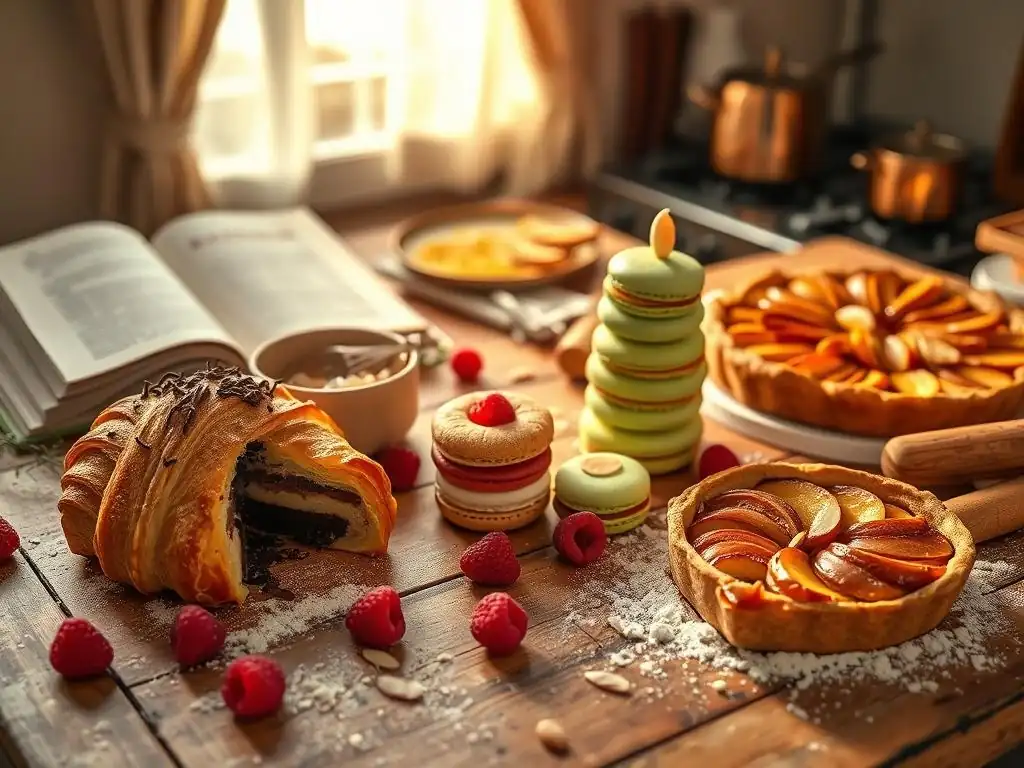
Welcome to BakeWithEase, your passport to the delectable world of baking! Ever dreamed of crafting those exquisite French pastries you admire in bakery windows? This week, we're unlocking the secrets to bringing that magic into your own kitchen. Dive into our curated selection of French pastry recipes for home and discover that even the most elegant creations are within your reach. Are you ready to transform your baking skills and impress your friends with authentic, homemade delights? Let's get started!
- Beyond the Bakery: Recreating French Pastry Magic at Home with BakeWithEase
- Introduction to French Pastry Recipes for Home Bakers
- Essential Equipment for Making French Pastries at Home
- Mastering Basic French Pastry Techniques for Home Baking
- Delicious French Pastry Recipes to Try at Home
- Tips and Tricks for Successful Home-Baked French Pastries
- Elevating Your French Pastry Baking Skills
- Conclusion: Embrace the Joy of French Pastry Recipes for Home
-
Frequently Asked Questions
- What makes French pastries seem so intimidating to bake at home?
- Where can I find reliable French pastry recipes adapted for home bakers?
- What are some essential ingredients to keep on hand for baking French pastries at home?
- Are there any specific tools that BakeWithEase.com recommends for making French pastries?
- How does BakeWithEase.com help beginners overcome common challenges in French pastry baking?
- Final Reflection: The Sweet Symphony of Home Baking
- Unleash Your Inner Pâtissier: Bake Your Own French Delights!
Beyond the Bakery: Recreating French Pastry Magic at Home with BakeWithEase
Introduction to French Pastry Recipes for Home Bakers
Discovering the Allure of Homemade French Pastries
There's a certain mystique surrounding French pastries. Think of the flaky layers of a croissant, the delicate shell of a macaron, or the rich creaminess of a crème brûlée. These iconic desserts and viennoiseries often seem reserved for professional patisseries, crafted by chefs with years of training.
However, the truth is that many beloved French pastry recipes for home bakers are entirely achievable in a standard kitchen. With the right guidance and a little practice, you can bring a taste of Paris right into your own home, impressing friends and family with your newfound skills. The process of creating these beautiful treats can be incredibly rewarding, offering a delightful challenge and a delicious payoff.
Embarking on the journey of making French pastry recipes for home is more than just baking; it's an exploration of technique, precision, and patience. Unlike some more forgiving baking styles, French pastries often rely on specific methods and ingredient ratios. Mastering these fundamentals, such as creating a stable meringue or achieving the perfect lamination for puff pastry, unlocks a world of possibilities.
It's about understanding the science behind the bake, from the emulsification of eggs and butter to the precise temperature needed for caramelization. As you delve deeper, you'll find that many seemingly complex pastries are built upon a few core techniques, making the learning curve less daunting than it might initially appear.
Why Bake French Pastries at Home? [Cost Savings & Creative Expression]
One of the most compelling reasons to try French pastry recipes for home is the significant cost saving compared to purchasing them from a bakery. A single, beautifully crafted éclair from a high-end patisserie might cost anywhere from $5 to $10, sometimes even more depending on the location and complexity. However, the ingredients to make a batch of six or eight éclairs at home typically cost a fraction of that, perhaps totaling $8-$12.
This allows you to enjoy these luxurious treats more frequently without breaking the bank. Over time, the savings from baking your favorite French pastries at home can add up considerably, especially if you're a regular consumer of these delicacies.
Beyond the financial benefits, baking French pastry recipes for home offers unparalleled creative expression. While classic recipes provide a solid foundation, the home kitchen is a canvas for experimentation. You can customize flavors, fillings, and decorations to suit your personal taste or dietary needs. Want a passionfruit crème pâtissière instead of vanilla? Go for it!
Prefer dark chocolate ganache over milk chocolate? The choice is yours. This creative freedom allows you to put your unique stamp on traditional recipes, making each creation truly your own. It's an opportunity to play with textures, colors, and flavor combinations, turning a standard recipe into a personalized masterpiece.
Essential Equipment for Making French Pastries at Home
Must-Have Baking Tools for French Treats
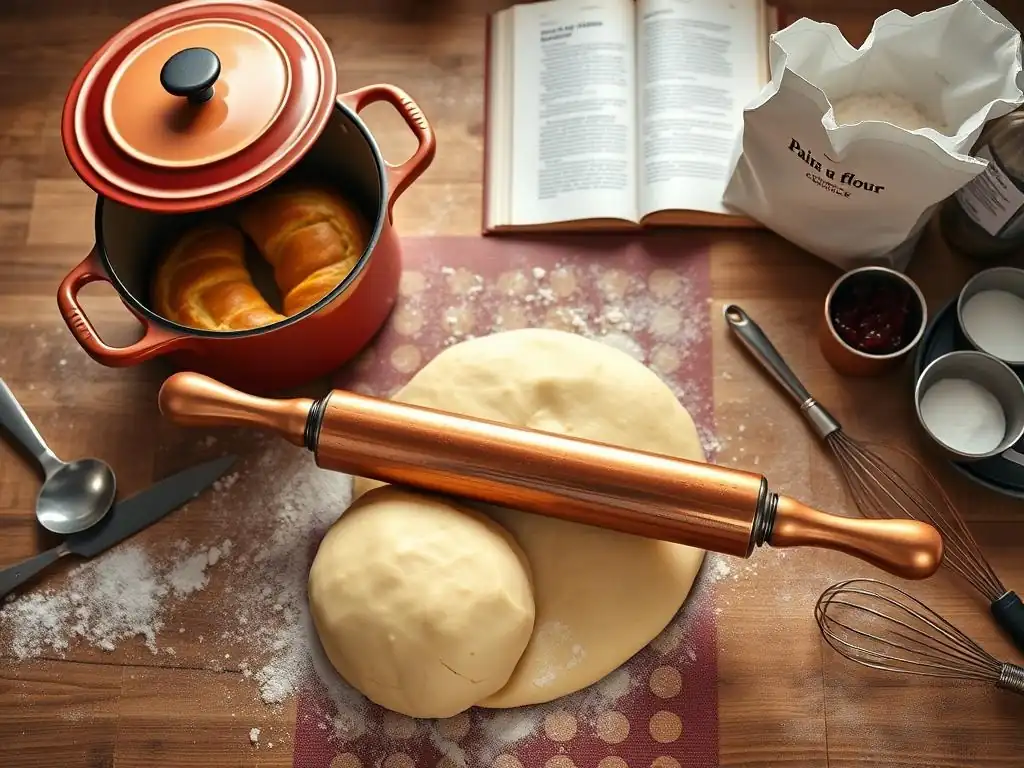
Having the right tools can make a significant difference when tackling French pastry recipes for home. While you don't need a professional kitchen setup, a few key items can simplify techniques and improve results. A good set of mixing bowls in various sizes is fundamental for preparing different components like doughs, fillings, and meringues. Measuring cups and spoons are essential for accuracy, but for many French recipes, a digital scale is even more crucial, as European recipes often rely on weight measurements for consistency. Parchment paper or silicone baking mats are invaluable for preventing sticking and ensuring even baking.
Other helpful tools include a whisk (both balloon and flat), spatulas (rubber and offset), and a pastry brush. For techniques like piping choux pastry or decorating cakes, a set of piping bags and various tips is indispensable. A fine-mesh sieve is useful for sifting flour or powdered sugar, ensuring a smooth texture. For recipes involving sugar work or custards, a candy thermometer can help you reach precise temperatures. While not strictly essential for all French pastry recipes for home, these tools are common across many different types and will serve you well as you expand your baking repertoire.
Investing in Quality: [Stand Mixer, Digital Scale, Pastry Mat]
While some tools can be budget-friendly, investing in a few quality items can significantly enhance your French pastry baking experience. A stand mixer, for example, is a game-changer for tasks like whipping meringues to stiff peaks, kneading brioche dough, or creaming butter and sugar for cakes. While a hand mixer works for some tasks, a stand mixer provides consistent power and frees up your hands for other steps, which is particularly helpful when following complex French pastry recipes for home. A sturdy stand mixer with different attachments (whisk, paddle, dough hook) can handle a wide range of tasks efficiently.
A digital scale is arguably the most important investment for anyone serious about French pastry recipes for home. Baking is a science, and precision is key, especially with delicate items like macarons or laminated doughs. Measuring ingredients by weight (grams or ounces) is far more accurate than by volume (cups), as factors like how densely flour is packed can vary significantly.
A good digital scale is relatively inexpensive and will pay for itself in consistently successful bakes. Lastly, a silicone pastry mat with measurements can be incredibly useful for rolling out doughs to specific sizes and thicknesses without sticking, making tasks like preparing tart shells or puff pastry much easier.
Mastering Basic French Pastry Techniques for Home Baking
The Foundation of French Pastry: [Pâte à Choux, Crème Pâtissière, Meringue]
Many classic French pastry recipes for home are built upon a foundation of core techniques and base preparations. Mastering these fundamentals is key to unlocking a vast array of desserts. Pâte à Choux, or choux pastry, is a versatile dough used for éclairs, cream puffs (profiteroles), and gougères. It's unique because it's cooked twice – first on the stovetop to form a paste, then baked to puff up into a hollow shell perfect for filling. Understanding the correct consistency of the stovetop dough and the proper baking temperature is crucial for achieving that signature light and airy structure.
Crème Pâtissière, or pastry cream, is another cornerstone. This rich, thick custard is used as a filling for tarts, éclairs, mille-feuille, and many other pastries. Made from milk, sugar, egg yolks, and a thickener like cornstarch or flour, achieving the perfect smooth, lump-free consistency requires careful whisking and temperature control. Overheating can curdle the eggs, while undercooking results in a runny cream.
Finally, Meringue, a mixture of whipped egg whites and sugar, forms the basis for many French desserts like lemon meringue pie, pavlova, and macarons. Different types of meringue (French, Swiss, Italian) require specific techniques regarding sugar temperature and mixing method, each yielding a different texture and stability. Mastering these three foundational elements will significantly expand your ability to tackle various French pastry recipes for home.
Step-by-Step Guides to Key French Pastry Techniques
Perfecting Pâte à Choux: A Beginner's Guide
Creating perfect pâte à choux starts with heating water, butter, and a pinch of salt (and sometimes a little sugar) in a saucepan until the butter is melted and the mixture comes to a rolling boil. Once boiling, remove the pan from the heat and quickly add all the flour at once. Stir vigorously with a wooden spoon until the mixture comes together to form a smooth ball that pulls away from the sides of the pan.
Return the pan to low heat and cook for another minute or two, stirring constantly, to dry out the dough slightly. This step is crucial for developing gluten and ensuring the pastry puffs correctly later.
Next, transfer the dough to a mixing bowl (or a stand mixer fitted with the paddle attachment) and let it cool slightly for a few minutes. Then, add the eggs one at a time, mixing thoroughly after each addition until it is fully incorporated before adding the next. The dough will look like it's separating at first, but keep mixing, and it will come back together.
The final consistency should be smooth, glossy, and pipeable – it should hold its shape when piped but be soft enough to fall slowly off a spoon in a "V" shape. Pipe the choux onto a baking sheet and bake in a preheated oven.
Baking involves starting at a higher temperature to encourage puffing, then reducing the heat to dry out the shells and make them firm. Resist the urge to open the oven door during the initial high-heat phase, as this can cause the pastries to collapse.
Mastering Crème Pâtissière: Achieving the Perfect Consistency
To make crème pâtissière, begin by whisking egg yolks and sugar together until pale and creamy. Whisk in a thickener, typically cornstarch or flour, until well combined and no lumps remain. In a separate saucepan, gently heat milk (sometimes with vanilla bean or extract) until it just simmers – do not boil. While whisking the egg mixture constantly, slowly pour about half of the hot milk into the egg mixture. This process, called tempering, gradually warms the egg yolks and prevents them from scrambling when added to the remaining hot milk.
Pour the tempered egg mixture back into the saucepan with the remaining hot milk. Return the pan to medium heat and cook, whisking continuously and vigorously, especially getting into the corners of the pan, until the mixture thickens considerably. It should reach a pudding-like consistency and bubble gently for about 30-60 seconds to ensure the starch is fully cooked and the cream is stable. This vigorous whisking is key to preventing lumps.
Once thickened, remove from the heat, stir in butter if desired for richness and gloss, and strain the cream through a fine-mesh sieve into a clean bowl to remove any potential lumps or cooked bits of egg. Cover the surface of the cream directly with plastic wrap to prevent a skin from forming as it cools. Chill thoroughly in the refrigerator before using as a filling in your French pastry recipes for home.
Creating Light and Airy Meringue: Tips and Tricks
The secret to light and airy meringue lies in whipping egg whites correctly and incorporating sugar gradually. Start with clean, dry equipment – any trace of fat or moisture can prevent the egg whites from whipping properly. Use room temperature egg whites, as they whip to a greater volume than cold ones. Begin whipping the egg whites on medium speed until they become foamy. At this stage, you can add a pinch of cream of tartar or a few drops of lemon juice or vinegar; the acidity helps stabilize the egg whites.
Once the egg whites reach soft peaks (they hold a gentle curve when the whisk is lifted), gradually start adding the sugar, a tablespoon or two at a time, while continuing to whip. Allow each addition of sugar to dissolve before adding the next. This gradual process is crucial for creating a stable, glossy meringue.
Increase the speed to high and continue whipping until stiff, glossy peaks form. When you lift the whisk, the peaks should stand straight up and look shiny. Rub a little meringue between your fingers; you shouldn't feel any grittiness from undissolved sugar.
Different types of meringue (French, Swiss, Italian) vary in how the sugar is added (raw, dissolved in heated egg whites, or as a hot sugar syrup), affecting their stability and texture. French meringue is the simplest but least stable; Swiss meringue is more stable, and Italian meringue, made with hot syrup, is the most stable and often used for mousses or frostings because it's cooked.
Delicious French Pastry Recipes to Try at Home
Classic French Pastry Recipes for the Home Kitchen
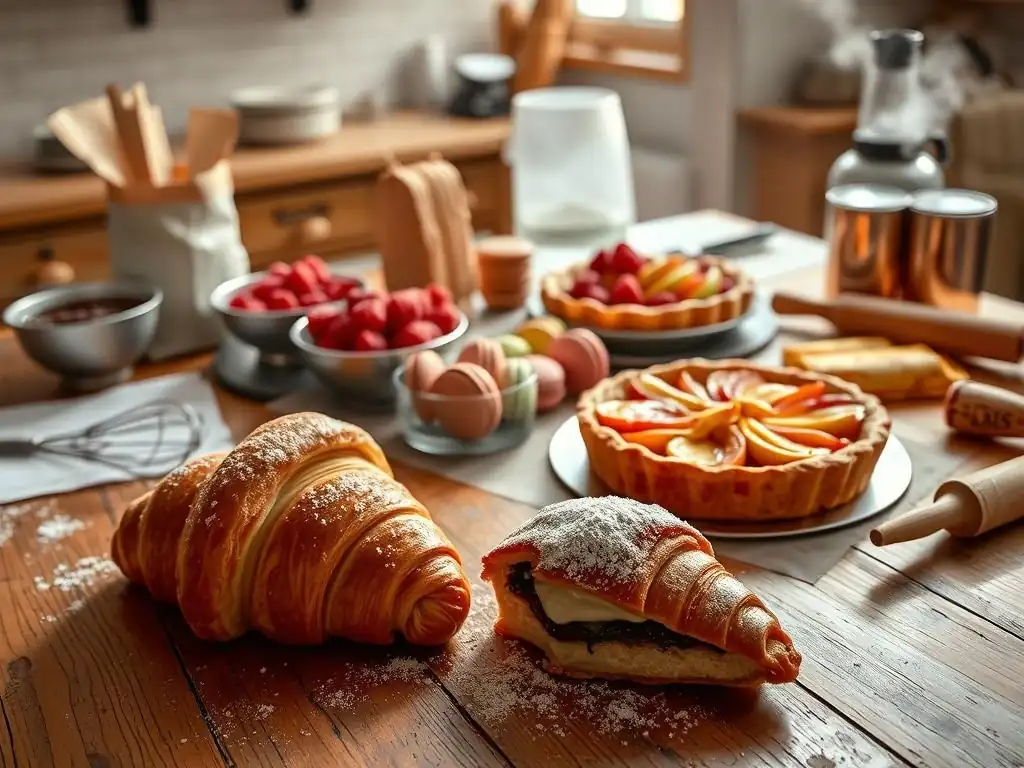
Embarking on French pastry recipes for home doesn't have to be intimidating. Many beloved classics are surprisingly accessible, requiring fundamental techniques you can master with practice. These recipes provide a fantastic starting point for building confidence in your baking skills while yielding delicious results that taste like they came straight from a Parisian bakery. Starting with foundational recipes like Pain au Chocolat, Crème brûlée, and Madeleines allows you to practice key techniques such as working with dough, making custards, and achieving the perfect texture.
These classic French pastry recipes for home are popular for a reason – they are universally loved and offer a wonderful introduction to the flavors and textures characteristic of French patisserie. They often use readily available ingredients and don't require highly specialized equipment beyond the basics. By successfully creating these treats, you'll gain the confidence and foundational knowledge needed to tackle more complex French pastry recipes for home down the line.
Recipe: Pain au Chocolat
Ingredients for Pain au Chocolat
To make classic Pain au Chocolat (chocolate croissants) using a simplified method suitable for home bakers, you will need:
- 1 sheet of store-bought puff pastry (ensure it's all-butter for best flavor)
- 1 egg, beaten (for egg wash)
- Approximately 8-12 sticks of dark chocolate (specifically designed for baking, often called batons de chocolat), each about 3-4 inches long. You can use good quality chocolate bars cut into similar sized pieces if baking sticks are unavailable.
This recipe simplifies the process by using ready-made puff pastry, allowing you to focus on the shaping and baking. While making puff pastry from scratch is a rewarding challenge for more advanced bakers, using a quality store-bought version makes French pastry recipes for home like this much more approachable for beginners. The key is to use an all-butter pastry, as this provides the authentic flaky texture and rich flavor characteristic of traditional Pain au Chocolat.
Step-by-Step Pain au Chocolat Baking Instructions
- Preheat your oven to 400°F (200°C). Line a baking sheet with parchment paper.
- Unroll the sheet of puff pastry onto a lightly floured surface. If it's folded, gently unfold it.
- Using a sharp knife or pizza cutter, cut the pastry sheet into rectangles. A standard sheet might yield 4-6 rectangles, depending on its size and how wide you want your finished pastries. Aim for rectangles roughly 4-5 inches wide by 6-7 inches long.
- Place a chocolate stick (or two, depending on preference and pastry width) along one of the shorter edges of each rectangle, about half an inch from the edge.
- Roll the pastry tightly around the chocolate stick, stopping halfway. Place a second chocolate stick just above the rolled portion.
- Continue rolling the pastry until the seam is underneath. Gently press the seam to seal it.
- Place the shaped Pain au Chocolat onto the prepared baking sheet, seam-side down. Leave ample space between each pastry as they will puff up significantly.
- Brush the tops and sides of each pastry with the beaten egg wash. This helps create a golden, shiny crust.
- Bake for 15-20 minutes, or until the pastries are deeply golden brown and puffed up.
- Let them cool slightly on the baking sheet before transferring to a wire rack. Serve warm for the best experience.
Recipe: Crème brûlée
Ingredients for Crème brûlée
For a classic Crème brûlée recipe suitable for making at home, you will need just a few simple ingredients:
- 2 cups heavy cream
- 1/2 cup granulated sugar, divided (about 1/4 cup for the custard, 1/4 cup for the topping)
- 5 large egg yolks
- 1 teaspoon vanilla extract
- A pinch of salt
These basic ingredients come together to create a luxurious, smooth custard. The quality of the heavy cream and egg yolks is important for achieving the desired richness and texture. Using real vanilla extract provides a much better flavor than artificial vanilla. This simple list makes Crème brûlée one of the most accessible French pastry recipes for home bakers looking to try a classic dessert.
Baking and Assembling Crème brûlée
- Preheat your oven to 325°F (160°C). Find a baking dish large enough to hold your ramekins (typically 4-6 standard ramekins).
- In a medium saucepan, heat the heavy cream, half of the sugar (1/4 cup), and the pinch of salt over medium heat until it just simmers around the edges. Do not boil. Remove from heat and stir in the vanilla extract.
- In a separate bowl, whisk the egg yolks until they are lightly colored. Slowly temper the egg yolks by gradually whisking about half of the hot cream mixture into the yolks. This warms the yolks gently.
- Pour the tempered egg mixture back into the saucepan with the remaining hot cream. Whisk constantly over low heat for 2-3 minutes, until the mixture is slightly thickened and coats the back of a spoon, but do not let it boil.
- Strain the custard through a fine-mesh sieve into a clean bowl or directly into the ramekins. This removes any potential lumps or cooked bits of egg, ensuring a smooth texture.
- Divide the custard evenly among the ramekins. Place the filled ramekins in the large baking dish.
- Carefully pour hot water into the baking dish around the ramekins, creating a water bath (bain-marie). The water should come about halfway up the sides of the ramekins. This ensures the custards bake gently and evenly.
- Bake for 30-40 minutes, or until the edges of the custards are set but the centers are still slightly wobbly.
- Remove the ramekins from the water bath and let them cool completely on a wire rack. Once cooled, cover them tightly with plastic wrap and refrigerate for at least 4 hours, or preferably overnight, to allow them to set fully.
- Just before serving, sprinkle an even layer of the remaining sugar (1/4 cup) over the surface of each chilled custard.
- Use a kitchen torch to caramelize the sugar until it forms a hard, amber crust. Move the torch flame back and forth evenly to prevent burning. Alternatively, you can place the ramekins under a hot broiler for a minute or two, watching constantly, until the sugar melts and caramelizes.
- Let the Crème brûlée sit for a minute or two to allow the sugar crust to harden before serving.
Recipe: Lemon Madeleines
Ingredients for Lemon Madeleines
To bake delightful Lemon Madeleines, those iconic shell-shaped sponge cakes, you'll need the following ingredients:
- 1/2 cup (1 stick) unsalted butter, melted and cooled slightly, plus more for greasing the pan
- 2 large eggs, at room temperature
- 1/2 cup granulated sugar
- 1 teaspoon vanilla extract
- Zest of 1 large lemon (about 1 tablespoon)
- 1 cup all-purpose flour, plus more for dusting the pan
- 1 teaspoon baking powder
- 1/4 teaspoon salt
- Powdered sugar for dusting (optional)
Madeleines are a simple yet elegant French pastry recipe for home, essentially a génoise-style sponge cake baked in a special mold. The key to their texture is incorporating air into the eggs and not overmixing the batter once the dry ingredients are added. Lemon zest provides a bright, classic flavor, though other flavorings can be used.
Creating Beautiful Lemon Madeleines at Home
- Generously butter and flour a Madeleine pan. Tap out any excess flour. This step is crucial for getting the characteristic shell shape to release cleanly. Place the prepared pan in the refrigerator while you make the batter.
- In a large bowl, whisk together the eggs, granulated sugar, and vanilla extract until well combined.
- Using a hand mixer or stand mixer with the whisk attachment, beat the egg mixture on high speed for 5-7 minutes, or until it is very thick, pale yellow, and has tripled in volume. This is the step where air is incorporated to give the Madeleines their light texture.
- Gently fold in the lemon zest.
- In a separate small bowl, whisk together the flour, baking powder, and salt.
- Sift the dry ingredients over the egg mixture and gently fold them in using a spatula, being careful not to deflate the mixture. Fold until just combined; do not overmix.
- Drizzle the slightly cooled melted butter down the side of the bowl and gently fold it in until just incorporated. Again, avoid overmixing.
- Cover the bowl with plastic wrap and refrigerate the batter for at least 30 minutes (or up to several hours). Chilling the batter helps create the signature "hump" on the back of the Madeleine and makes it easier to handle.
- Preheat your oven to 375°F (190°C).
- Spoon about 1 tablespoon of chilled batter into the center of each mold cavity in the cold pan. Do not spread the batter; it will spread as it bakes.
- Bake for 10-13 minutes, or until the edges are golden brown and the centers spring back when gently touched. You should see the characteristic hump form during baking.
- Immediately invert the pan onto a wire rack to release the Madeleines. If any stick, gently loosen them with an offset spatula.
- Let the Madeleines cool slightly on the rack. Dust with powdered sugar just before serving, if desired. Madeleines are best enjoyed fresh.
Exploring More Advanced French Pastry Recipes
Once you've mastered the basics and feel comfortable with foundational techniques, you might be ready to tackle some more advanced French pastry recipes for home. These often involve multiple components, more precise techniques, or require careful timing. Recipes like Macarons or Tarte Tatin offer a rewarding challenge and the opportunity to refine your skills further. Success with these recipes demonstrates a significant step up in your home baking journey.
Tackling advanced French pastry recipes for home is not just about following a recipe; it's about understanding the nuances of ingredients and techniques. For example, making perfect macarons requires careful control of meringue consistency, macaronage (the folding technique), and baking temperature. Tarte Tatin requires perfecting caramel and handling delicate puff pastry. These recipes push you to be more precise and patient, ultimately making you a more skilled baker. While they may seem daunting at first, breaking them down into steps and practicing each component can make them much more manageable.
Recipe: Macarons - A Detailed Guide
Macarons are perhaps the most iconic and notoriously finicky French pastry recipes for home. They consist of two delicate almond meringue shells sandwiched together with a filling. Success relies heavily on precision and technique. You'll typically need superfine almond flour, powdered sugar, egg whites (aged for a day or two at room temperature is often recommended for better structure), and granulated sugar, plus food coloring if desired. The filling can be ganache, buttercream, or jam.
The process involves making a meringue (Italian meringue, made with hot sugar syrup, is often preferred for stability but Swiss or French can work), folding the sifted dry ingredients (almond flour and powdered sugar) into the meringue using a technique called "macaronage." This folding step is critical – under-mixed batter won't spread correctly, and over-mixed batter will be too runny and won't form feet. The batter is then piped onto baking sheets and left to rest at room temperature until a skin forms (this can take 30-60 minutes or more depending on humidity), which is essential for the "feet" to develop in the oven.
Baking requires a precise temperature, often lower than other cookies, to ensure they cook through without browning too much. Troubleshooting macarons is a common experience; factors like oven temperature fluctuations, humidity, and incorrect macaronage are frequent culprits for issues like cracked shells or no feet.
Recipe: Tarte Tatin - An Upside-Down Apple Tart
Tarte Tatin is a classic French dessert where apples are caramelized in butter and sugar before being topped with puff pastry and baked upside down. After baking, the tart is inverted, revealing the beautiful, glossy caramelized apples. While it seems simple, achieving a perfect caramel and a crisp pastry base requires attention to detail. Ingredients typically include apples (firm varieties like Granny Smith or Honeycrisp work well), butter, sugar, and either homemade or high-quality store-bought puff pastry.
The process begins with making the caramel directly in an oven-safe skillet (traditionally cast iron). Sugar is melted and caramelized, then butter is added carefully. Sliced apples are arranged tightly over the caramel, often in a decorative pattern. The skillet is then placed on the stovetop to cook the apples slightly and allow the caramel to thicken.
Meanwhile, a round of puff pastry is cut to fit just inside the skillet. The pastry is placed over the apples, and the skillet is transferred to the oven to bake until the pastry is golden brown and puffed. After baking, the tart must cool slightly before being carefully inverted onto a serving plate. The hot caramel and apples can be tricky to handle, making this one of the more adventurous French pastry recipes for home.
Tips and Tricks for Successful Home-Baked French Pastries
Common Mistakes to Avoid When Baking French Pastries
Baking French pastry recipes for home can sometimes feel like navigating a minefield of potential errors, but being aware of common pitfalls can help you avoid them. One frequent mistake is not measuring ingredients accurately, especially with recipes that rely on precise ratios like macarons or custards. Using a digital scale for weight measurements is highly recommended. Another common issue is overmixing doughs or batters; for example, overmixing cake batter can lead to tough Madeleines, and overworking puff pastry dough can prevent proper lamination.
Temperature control is also paramount. Using ingredients that are too cold (like butter for puff pastry) or too warm (like egg whites for meringue) can negatively impact the outcome. Similarly, oven temperature is critical.
Ovens can fluctuate, so using an oven thermometer is a good idea to ensure accuracy. Not allowing components to cool or chill properly before assembling is another mistake; for instance, trying to fill hot choux pastries or using warm pastry cream will result in a soggy mess. Finally, impatience is a baker's enemy in French pastry; techniques like chilling dough, resting meringue batter, or allowing custards to set take time and cannot be rushed without compromising the final product.
Achieving Professional Results in Your Home Kitchen
Achieving professional-looking and tasting results with French pastry recipes for home is attainable with attention to detail and practice. Focusing on the fundamentals is key – master the basic techniques like whisking egg whites to the correct peak, laminating dough correctly, or cooking custard until it's perfectly smooth. Using high-quality ingredients, such as European-style butter for its higher fat content or fine-quality chocolate, can significantly enhance the flavor and texture of your pastries.
Presentation matters in French patisserie. Taking the time to neatly pipe choux pastry, arrange fruit decoratively on a tart, or apply a smooth glaze elevates the final look. Investing in a few helpful tools like piping bags and tips, an offset spatula for smoothing, or specific molds (like a Madeleine pan or tart rings) can improve precision and aesthetics.
Finally, practicing patience and learning from mistakes are crucial. Every baker has failures; the key is to understand what went wrong and apply that knowledge to the next attempt. Watching tutorials or reading detailed guides on specific techniques can also provide valuable insights for perfecting your French pastry recipes for home.
Storage Solutions for Your Homemade French Pastries
Proper storage is essential to maintain the quality and freshness of your homemade French pastry recipes for home. Most pastries containing cream or custard fillings, like éclairs, cream puffs filled with crème pâtissière, or Crème brûlée, must be stored in the refrigerator. They should be placed in an airtight container to prevent them from drying out or absorbing odors from other food. These types of pastries are generally best consumed within 1-2 days.
Dry pastries like Madeleines or financiers can be stored at room temperature in an airtight container for 2-3 days, but they are truly best enjoyed the day they are baked. Croissants and Pain au Chocolat are also best eaten fresh, but if you need to store them, place them in a paper bag (to preserve crispness) inside a plastic bag or airtight container at room temperature for a day. For longer storage, many baked French pastries (like un-filled choux shells or baked tart shells) can be frozen in airtight containers or well-wrapped.
Baked goods containing high amounts of butter, like puff pastry items, freeze relatively well. Thaw them at room temperature or gently rewarm in a low oven to crisp them up. Custard-filled items generally do not freeze well as the texture can become watery upon thawing.
Elevating Your French Pastry Baking Skills
Resources for Further Learning and Inspiration [Baking Blogs, YouTube Channels]
Expanding your knowledge and finding inspiration is a great way to elevate your French pastry recipes for home. The internet offers a wealth of resources. Countless baking blogs dedicated to French patisserie provide detailed recipes, step-by-step photos, and troubleshooting tips. Many experienced home bakers and professionals share their insights online, offering variations on classic recipes and techniques for tackling more challenging pastries. Look for blogs that focus specifically on French baking for the home cook.
YouTube channels are another invaluable resource, offering visual demonstrations of techniques that can be difficult to grasp from text alone. Seeing how dough should look at different stages, the proper way to fold meringue, or how to pipe intricate shapes can make a significant difference in your understanding and execution of French pastry recipes for home.
Many professional pastry chefs and skilled home bakers have channels where they share their expertise, often breaking down complex processes into manageable steps. Exploring these resources can provide endless inspiration for your next baking project and help you refine your skills by learning from others' experiences and demonstrations.
Joining the BakeWithEase Community for Support and Tips
You don't have to navigate the world of French pastry recipes for home alone. Joining a community of fellow bakers provides invaluable support, encouragement, and practical tips. The BakeWithEase community is designed for bakers of all levels, offering a space to share successes, ask questions about challenges, and learn from others' experiences. Connecting with people who are also passionate about baking, especially those tackling similar French pastry recipes for home, can make the learning process more enjoyable and less frustrating.
Within the BakeWithEase community, you can find forums or groups dedicated to specific types of baking, like French pastries. Here, you can get advice on troubleshooting common issues like flat macarons or tough choux pastry, discover new recipe variations, and celebrate your baking triumphs. Sharing photos of your creations can also be incredibly motivating and provide opportunities for constructive feedback. Being part of a supportive community enhances your learning experience and provides a sense of camaraderie as you explore the rewarding world of French pastry recipes for home.
Conclusion: Embrace the Joy of French Pastry Recipes for Home
Your Journey to Becoming a Home Pastry Chef with BakeWithEase.
Stepping into the world of French pastry recipes for home is a rewarding journey filled with learning, patience, and delicious outcomes. It's about more than just following instructions; it's about understanding ingredients, mastering techniques, and finding joy in the process of creating something beautiful and tasty from scratch. Whether you start with simple Madeleines or dive straight into the challenge of macarons, each successful bake is a testament to your growing skill and dedication. The satisfaction of pulling a tray of golden croissants or perfectly caramelized Tarte Tatin from your own oven is immense.
BakeWithEase is here to support you every step of the way on your path to becoming a confident home pastry chef. Our resources, from beginner-friendly guides to more advanced recipe explorations, are designed to demystify French pastry recipes for home and make them accessible to everyone. Embrace the challenge, learn from your mistakes, and most importantly, have fun!
The magic of French patisserie isn't confined to professional kitchens; it can be recreated right in your home, allowing you to share the joy and deliciousness of these classic treats with those you love. Start your baking adventure today and discover the home pastry chef within you.
Frequently Asked Questions
What makes French pastries seem so intimidating to bake at home?
Many think French pastries are difficult due to their complex techniques and perceived need for specialized equipment. However, BakeWithEase.com simplifies these recipes.
Where can I find reliable French pastry recipes adapted for home bakers?
BakeWithEase.com offers a variety of French pastry recipes specifically designed for home kitchens, focusing on easy-to-find ingredients and clear instructions.
What are some essential ingredients to keep on hand for baking French pastries at home?
Key ingredients include high-quality butter, unbleached flour, and fresh eggs. Having these basics allows you to tackle many French pastry recipes.
Are there any specific tools that BakeWithEase.com recommends for making French pastries?
While some tools are helpful, BakeWithEase.com emphasizes that many French pastries can be made with basic kitchen equipment. A rolling pin and mixing bowls are often sufficient.
How does BakeWithEase.com help beginners overcome common challenges in French pastry baking?
We provide step-by-step guides and troubleshooting tips to address potential issues, ensuring success even for those new to French pastry baking.
Final Reflection: The Sweet Symphony of Home Baking
The enduring allure of French pastries transcends mere culinary skill; it's a journey into artistry, tradition, and the simple joy of creating something beautiful. From the delicate layers of a mille-feuille to the rich, creamy heart of a crème brûlée, these recipes, once considered the exclusive domain of professional pâtissiers, are now accessible to anyone with a passion and a little patience. This accessibility empowers home bakers to experience the magic firsthand, fostering a deeper appreciation for the craft and the ingredients involved.
The impact of recreating these iconic treats extends beyond the kitchen; it's a connection to a rich culinary heritage. It's about embracing the meticulous techniques, understanding the nuances of flavor, and sharing the resulting masterpieces with loved ones. This process fosters a sense of accomplishment and pride, reminding us of the power of creating something meaningful with our own hands. The best things in life are homemade.
This simple sentiment resonates deeply when considering the satisfaction derived from successfully mastering a challenging French pastry recipe.
Now, it's your turn to embrace the challenge. Don't be intimidated by the seemingly complex techniques; approach each recipe with curiosity and a willingness to learn. Experiment, adapt, and most importantly, enjoy the process. The journey of mastering French pastry at home is as rewarding as the delectable results. Let the sweet symphony of flour, butter, and sugar fill your kitchen, and share the magic you create with those you cherish. The world awaits your next culinary masterpiece.
Unleash Your Inner Pâtissier: Bake Your Own French Delights!
Thanks for joining us on this delicious journey into the world of French pastries! We hope you've gained the confidence and inspiration to tackle these tempting treats yourself. Now it's time to put your newfound knowledge into action.
- Try your hand at one of the recipes mentioned: Start small, perhaps with the classic Madeleines, and build your confidence from there. You'll be amazed at what you can create!
- Share your baking triumphs (and even your mishaps!): We’d love to see your creations! Tag us on social media – let's build a vibrant baking community together.
- Explore our other French pastry recipes: Discover more delightful recipes and techniques to expand your baking repertoire. There's a whole world of deliciousness waiting to be explored!
What incredible French pastry will you create first, and what unique twist will you add to make it your own?