
Baking Baguettes Without a Baking Stone: Alternatives

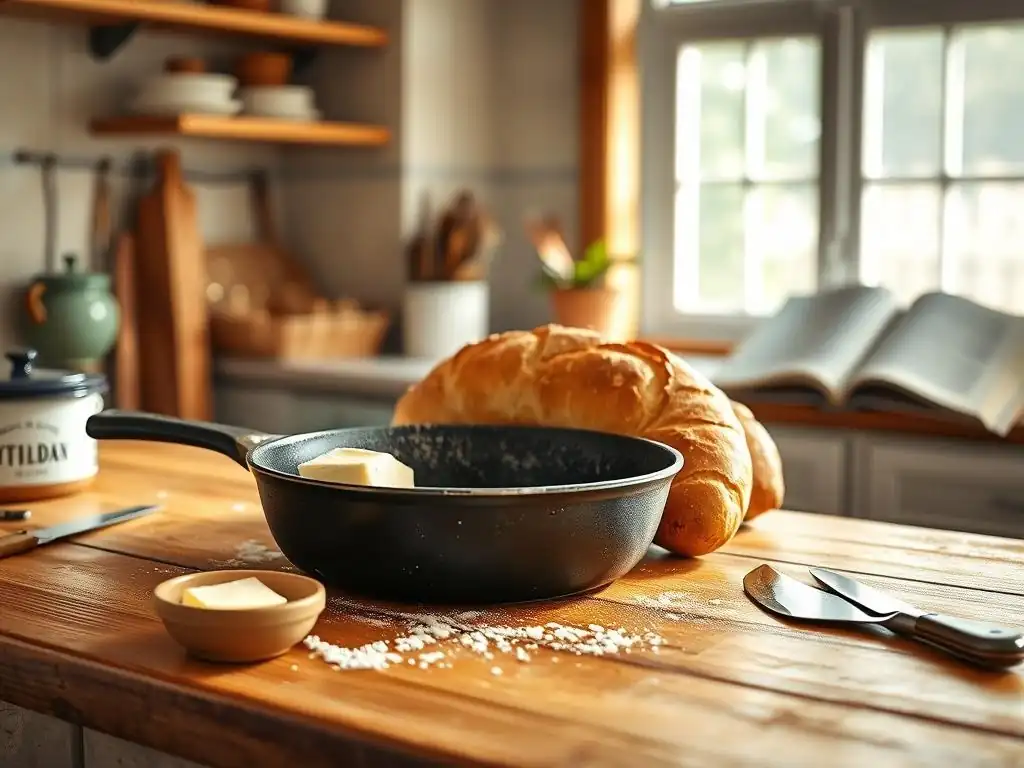
Welcome to BakeWithEase, your guide to unlocking delicious possibilities in the kitchen! Ever dreamt of that perfect, crusty baguette but hesitated because you don't have a baking stone? Think again! This week, we're demystifying the process with our easy baguette recipe no stone, revealing surprisingly simple alternatives that will have you enjoying freshly baked bread in no time. Intrigued? Discover the secrets and start baking now!
- Baking Baguettes Without a Baking Stone: Alternatives for Home Bakers
- Introduction: Achieving Artisan Baguettes at Home
- Understanding the Role of a Baking Stone
- Alternatives to a Baking Stone
- Enhancing Crust and Crumb: Essential Techniques
- Troubleshooting Common Issues
- Simple Baguette Recipe
- Conclusion: Mastering Baguette Baking at Home
-
Frequently Asked Questions
- How can I bake a baguette at home without a baking stone?
- What is the best way to create steam in my oven for baguette baking if I don't have a baking stone?
- What kind of baking sheet material works best as a baking stone alternative for baguettes?
- How long should I preheat my baking sheet or cast iron pan before baking baguettes without a stone?
- What's the best way to handle the baguette dough when transferring it to a baking sheet instead of a stone?
- Final Reflection: The Humble Baguette, Stone-Free
- Unleash Your Inner Boulanger: Bake the Perfect Baguette Tonight!
Baking Baguettes Without a Baking Stone: Alternatives for Home Bakers
Introduction: Achieving Artisan Baguettes at Home
The Challenge of Baking Baguettes Without Specialized Equipment
Baking authentic baguettes at home can feel daunting, especially when many recipes call for specialized equipment like a baking stone. The traditional baguette, with its crisp, golden crust and airy, open crumb, is often associated with the intense, even heat a stone provides. For home bakers just starting out or those who don't want to invest in bulky equipment, finding a reliable method to achieve similar results without a stone presents a common hurdle. Many beginners wonder if an easy baguette recipe no stone is truly possible while still producing a quality loaf.
The primary challenge lies in replicating the thermal mass and heat distribution properties of a baking stone. A stone absorbs and radiates heat evenly, providing a powerful burst of heat to the dough upon contact, which is crucial for oven spring and crust development.
Without this, baguettes baked on a standard thin metal sheet can brown too quickly on the bottom, lack sufficient lift, and develop a less satisfying crust. However, with the right techniques and a few clever alternatives, achieving delicious, crusty baguettes is well within reach for the home kitchen, proving that an easy baguette recipe no stone isn't just a dream.
Why a Baking Stone is Typically Recommended
A baking stone, typically made from ceramic, cordierite, or even steel, serves several key purposes in high-temperature baking. Its main function is to absorb a significant amount of heat during the oven's preheating phase. When the dough is placed on the hot stone, this stored heat is rapidly transferred to the base of the loaf. This intense initial heat causes a rapid expansion of the dough (oven spring) and helps set the structure quickly, preventing the loaf from spreading too much.
Beyond the initial heat boost, the thermal mass of the stone helps maintain a stable oven temperature, counteracting the drop in temperature that occurs when the oven door is opened and cold dough is introduced. This consistent, high heat environment is ideal for developing a thin, crisp crust and a well-structured interior crumb. While a stone is the gold standard for many artisan bakers, understanding why it's recommended helps us find effective alternatives for an easy baguette recipe no stone.
Simplifying Baguette Baking for Home Bakers
The good news is that you absolutely do not need a baking stone to bake delicious baguettes at home. Many effective methods exist that utilize common kitchen items to achieve excellent results. The goal is to mimic the key functions of a baking stone: providing initial heat and promoting steam. By focusing on techniques that maximize oven spring and encourage crust development using readily available equipment, home bakers can confidently tackle an easy baguette recipe no stone.
Our focus will be on practical, accessible methods that make baking baguettes achievable for everyone. We'll explore using standard baking sheets in different ways, leveraging the power of a Dutch oven, and incorporating simple techniques to create steam. These approaches demystify the process and demonstrate that an easy baguette recipe no stone is not only possible but can yield results comparable to those achieved with specialized equipment, bringing the joy of fresh, homemade baguettes to your table.
Understanding the Role of a Baking Stone
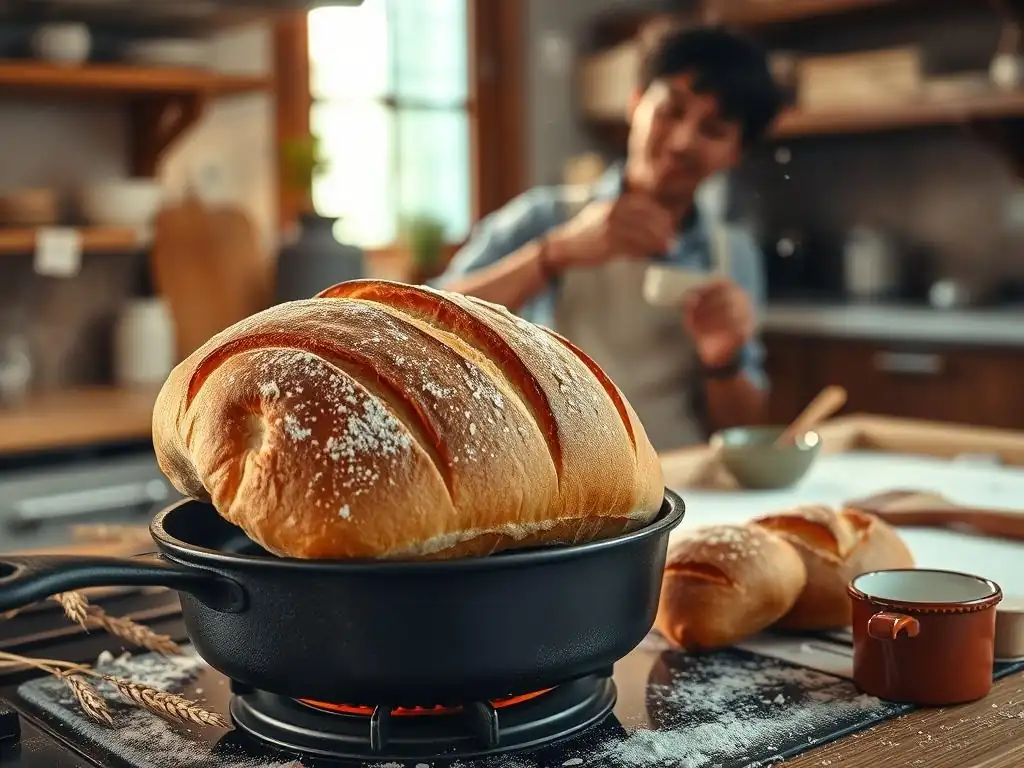
Heat Distribution and Crust Formation
A baking stone excels at heat distribution because its material, whether ceramic, cordierite, or steel, has a high thermal mass. This means it can absorb and retain a large amount of heat. When the oven is preheated, typically to temperatures ranging from 450°F to 500°F (230°C to 260°C) for baguettes, the stone gets incredibly hot.
Placing the dough directly onto this superheated surface provides an intense burst of heat from below. This rapid heat transfer is critical for initiating oven spring, causing the water in the dough to quickly turn to steam and expand the loaf dramatically in the first few minutes of baking.
Furthermore, the porous nature of some baking stones helps draw moisture away from the bottom crust, contributing to a crispier finish. Steel plates, another popular alternative to traditional stones, offer even faster heat transfer due to steel's higher conductivity. Both materials provide a stable, hot surface that ensures the bottom of the baguette bakes evenly and develops a desirable crust, preventing the soggy bottom that can occur on a cooler, thinner surface. Understanding these principles is key to finding effective alternatives for an easy baguette recipe no stone.
Achieving a Crisp Crust and Open Crumb
The combination of intense initial heat and sustained high temperature provided by a baking stone is paramount for developing both a crisp crust and an open crumb structure in baguettes. The rapid oven spring, facilitated by the hot stone, creates a light and airy interior (the crumb). Simultaneously, the high radiant heat from the stone and the oven environment helps to quickly set the outer layer of the dough. This rapid setting of the crust, combined with the presence of steam in the oven, allows the interior to continue expanding without the crust hardening prematurely.
As the baking progresses, the crust continues to brown and crisp up due to the Maillard reaction and caramelization, which are accelerated at high temperatures. The stable heat from the stone ensures this process happens evenly across the bottom of the loaf. Without this stable, high-temperature base, the crust might develop unevenly, or the loaf might not achieve its full potential for rise and openness. While achieving this perfect balance without a stone requires attention to detail, it's certainly possible with an easy baguette recipe no stone that incorporates alternative techniques.
Alternatives to a Baking Stone
Baking Baguettes on a Baking Sheet
One of the simplest and most accessible alternatives to a baking stone is using a standard metal baking sheet. While a thin sheet doesn't have the thermal mass of a stone, it can still produce decent results, especially when paired with other techniques to enhance crust development and oven spring. This is often the starting point for an easy baguette recipe no stone.
To use a baking sheet effectively, you'll need to take steps to maximize its heat transfer and manage moisture. Preheating the baking sheet can help, though it won't retain heat as well as a stone. Using parchment paper can prevent sticking and make transferring the dough easier. While the bottom crust might not be as intensely browned or crisp as on a stone, a well-managed bake on a baking sheet can still yield satisfying baguettes.
Preparing Your Baking Sheet
Preparation is key when using a regular baking sheet for baguettes. First, choose a sturdy, heavy-gauge baking sheet if possible, as thicker metal retains heat slightly better than thin ones. Line the baking sheet with parchment paper. This serves two purposes: it prevents the dough from sticking to the pan, which is crucial for the delicate baguette shape, and it makes transferring the shaped baguettes from your proofing surface (like a couche or floured towel) onto the sheet much easier.
Some bakers recommend preheating the baking sheet in the oven before placing the dough on it. To do this safely, preheat your oven with the baking sheet inside for at least 20-30 minutes at the target baking temperature (e.g., 475°F or 245°C). Carefully slide the parchment paper with the proofed baguettes onto the hot sheet. This method provides a bit more initial heat transfer to the base compared to starting with a cold sheet, contributing to better oven spring and a crispier bottom crust in your easy baguette recipe no stone.
Tips for a Crispy Crust on a Baking Sheet
Achieving a truly crispy crust on a baking sheet requires attention to both heat and steam. Since the sheet doesn't provide the same intense radiant heat from below as a stone, ensuring the oven is fully preheated is vital. Aim for at least 30-45 minutes of preheating time at your recipe's specified temperature (often 450-475°F or 230-245°C). This saturates the oven with heat.
Secondly, incorporating steam is critical. While we'll discuss steam techniques later, creating a steamy environment in the first 10-15 minutes of baking is essential regardless of your baking surface. This keeps the crust pliable, allowing the loaf to expand fully before the crust hardens. Without sufficient steam, the crust sets too early, resulting in less oven spring and a denser crumb. Combining a well-preheated sheet with effective steam generation is key to a successful easy baguette recipe no stone baked this way.
Using an Inverted Baking Sheet
An inverted baking sheet can serve as a surprisingly effective makeshift baking surface, mimicking some of the properties of a baking stone. By flipping a sturdy baking sheet upside down, you create a flat, lip-free surface. This allows you to slide the proofed baguettes directly onto the hot metal surface, similar to how you would load them onto a stone.
This method improves upon using a right-side-up sheet because the lack of a lip makes transferring the delicate dough much easier. You can use a pizza peel or even another piece of cardboard or a cutting board dusted with cornmeal or semolina to slide the baguettes onto the preheated inverted sheet. This direct contact with the hot metal provides a better heat transfer to the base of the loaf compared to placing them on a cold sheet or even a preheated one with parchment underneath.
Mimicking a Baking Stone
Using an inverted baking sheet primarily mimics the loading process of a baking stone, allowing for a clean slide of the dough onto a hot surface. While it doesn't possess the same thermal mass as a stone, preheating the inverted sheet thoroughly helps. Place the inverted sheet in the oven while it preheats, ensuring it gets as hot as possible. A preheating time of 45-60 minutes at temperatures like 475°F (245°C) is recommended to get the metal sufficiently hot.
When you slide the proofed baguettes onto this hot, flat surface, they receive a more immediate heat boost from the base than they would on a cold sheet. This encourages better initial oven spring. While the heat retention won't match a stone, this method, combined with good steam, is a significant step up from simply placing dough on a cold baking sheet and is a great technique for an easy baguette recipe no stone.
Step-by-Step Guide
Here's a simple guide for using an inverted baking sheet:
- Preheat: Place a sturdy metal baking sheet upside down in your oven. Preheat the oven to your recipe's specified temperature (e.g., 475°F / 245°C) and let it preheat for at least 45-60 minutes with the sheet inside.
- Prepare Dough: While the oven preheats, shape and proof your baguette dough on a floured surface, such as a baker's couche or a tea towel heavily dusted with flour or semolina, separated by folds to maintain shape.
- Prepare to Transfer: Have your method for transferring ready – a pizza peel, a thin cutting board, or even sturdy cardboard, dusted generously with cornmeal or semolina to prevent sticking. Gently flip the proofed baguettes onto this transfer surface, making sure the seam or bottom is facing up if they proofed seam-down. Score the baguettes quickly.
- Load: Carefully open the oven door and slide the baguettes from your transfer surface directly onto the hot, inverted baking sheet. Work relatively quickly but safely to minimize heat loss.
- Add Steam: Immediately after loading, add steam to the oven (see "The Importance of Steam" section for methods).
- Bake: Close the oven door and bake according to your recipe's instructions, typically starting at a high temperature with steam, then reducing temperature and removing steam.
This method is a practical way to achieve better results when looking for an easy baguette recipe no stone.
The Dutch Oven Technique
While traditionally used for round loaves (boules), the Dutch oven technique can be adapted for baking shorter baguettes, particularly if you have an oval-shaped Dutch oven or are baking demi-baguettes. This method is highly effective because it traps the dough's own steam, creating the ideal moist environment for excellent oven spring and crust development in the initial baking phase.
The heavy cast iron (or other material) of the Dutch oven acts like a mini-oven within your oven, providing both radiant heat from all sides and, crucially, containing the steam released by the dough. This results in a thin, crispy crust and a well-risen loaf, often mimicking the results of a professional deck oven better than open-oven methods without a stone. It's an excellent technique for an easy baguette recipe no stone, especially for beginners, as it simplifies steam management.
Harnessing Steam in a Dutch Oven
The primary advantage of the Dutch oven technique is its ability to effortlessly harness steam. When you place the dough into a preheated Dutch oven and immediately cover it with the lid, the moisture evaporating from the dough during the first 15-20 minutes of baking is trapped inside. This creates a high-humidity environment around the loaf.
This steamy environment is critical because it keeps the surface of the dough moist and pliable. If the crust dries out too quickly, it hardens and restricts the dough's ability to expand during oven spring. By keeping the crust soft, the steam allows the loaf to achieve maximum volume.
After the initial steaming period (usually 15-20 minutes), you remove the lid. This allows the steam to escape, and the dry, high heat of the oven can then work on the now fully expanded loaf to brown and crisp the crust. This two-stage baking process is highly effective for developing both crumb and crust.
Adjusting Your Recipe for Dutch Oven Baking
Adapting a standard baguette recipe for a Dutch oven is straightforward. You'll typically preheat the empty Dutch oven with the lid inside the oven to the target baking temperature (e.g., 475°F / 245°C) for at least 30-60 minutes. Carefully transfer the proofed baguette(s) into the hot Dutch oven. If baking multiple shorter baguettes, you might place them side-by-side in a large oval or round pot.
Bake covered for the first 15-20 minutes. Then, carefully remove the lid and continue baking for another 15-25 minutes, or until the crust is deeply golden brown and the internal temperature reaches about 200-210°F (93-99°C). You might need to adjust the total baking time compared to an open-oven method. This technique is particularly well-suited for an easy baguette recipe no stone because it simplifies the often tricky process of creating sufficient steam in a home oven.
Enhancing Crust and Crumb: Essential Techniques
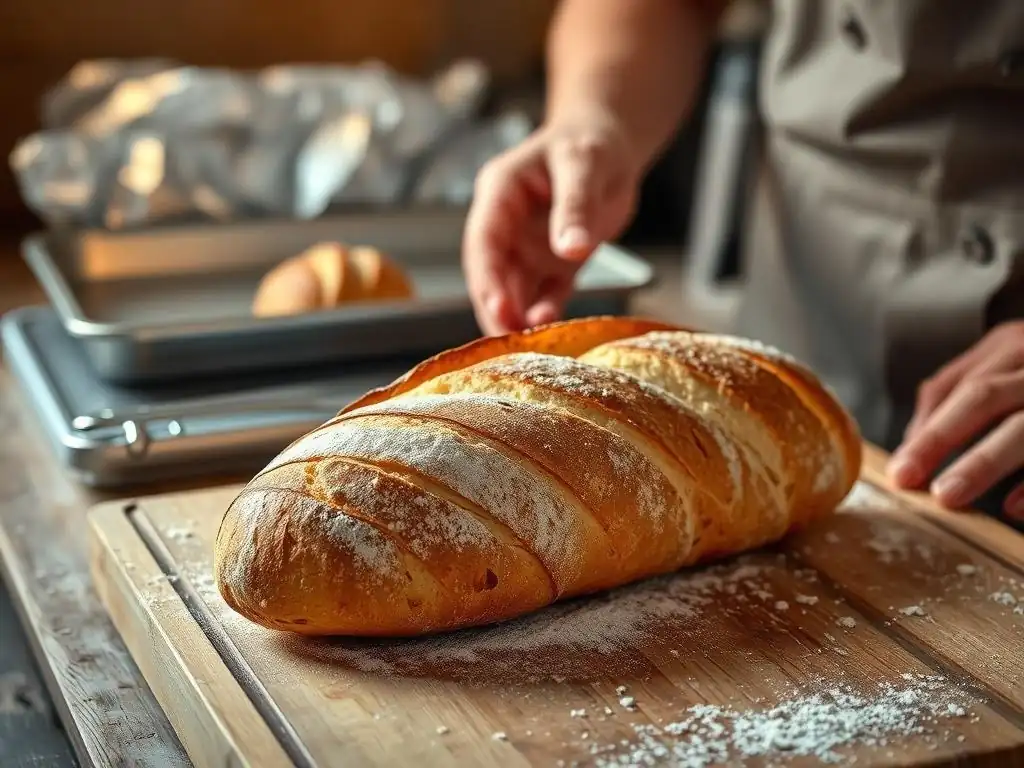
The Importance of Steam
Steam is arguably the single most important factor for achieving a professional-quality crust and crumb in baguettes, regardless of whether you use a baking stone or an alternative. As discussed, steam keeps the crust soft during the initial phase of baking, allowing the dough to expand fully. Without sufficient steam, the crust will set prematurely, resulting in a smaller, denser loaf with a thick, hard crust instead of a thin, crisp one.
The ideal steaming period is typically the first 10-15 minutes of baking. During this time, the oven temperature is high, and the dough undergoes its maximum oven spring. Once the loaf has achieved its desired volume, the steam should be removed to allow the crust to dry out and crisp up. Mastering steam generation is crucial for any easy baguette recipe no stone aiming for artisan results.
Creating a Steamy Oven Environment
There are several effective ways to create steam in a home oven when not using a Dutch oven. A common method is to place a metal tray or cast-iron pan on the bottom rack of the oven while it preheats. Just before loading the baguettes, carefully pour 1 cup (about 240ml) of hot or boiling water into this hot tray. This will instantly create a burst of steam. Be extremely cautious when doing this to avoid burns.
Another technique is to use lava rocks, crumpled foil, or nuts and bolts in the steam pan, as these materials provide more surface area for water to turn into steam. Some bakers also spray the oven walls with water using a clean spray bottle, though this provides less consistent steam and can potentially damage oven elements over time. Using a preheated steam pan with hot water is generally the most recommended method for an easy baguette recipe no stone baked on a sheet.
Shaping Techniques
Proper shaping is fundamental to baguette baking. A well-shaped baguette has tension on the surface, which helps it hold its structure and contributes to a good oven spring and an open crumb. The goal is to create an elongated loaf with a relatively uniform thickness, tapering slightly at the ends.
Effective shaping involves degassing the dough gently, folding it onto itself multiple times to build tension, and then rolling it into its final elongated shape. Over-handling or tearing the dough should be avoided. A common technique involves folding the dough into thirds, then folding it in half lengthwise and sealing the seam tightly. This process creates layers and surface tension. Consistent shaping across multiple baguettes ensures they bake evenly and look appealing.
Achieving Consistent Shape and Size
To achieve consistent shape and size, especially when baking multiple baguettes on a baking sheet, it's helpful to divide your dough accurately. Use a scale to weigh out equal portions of dough for each baguette. For a standard home oven, baking two or three baguettes at a time is often manageable.
During the final shaping, pay attention to creating an even thickness along the length of the loaf. Rolling the dough gently from the center outwards helps achieve this. Proofing the shaped baguettes on a baker's couche (a piece of linen or canvas) or floured tea towels with folds between them is crucial. This support prevents them from spreading sideways during the final proof, helping them maintain their elongated shape and rise upwards. This step is vital for any baguette recipe, including an easy baguette recipe no stone.
Dough Hydration
Dough hydration refers to the ratio of water to flour in a recipe, typically expressed as a percentage of the flour weight. Baguette doughs are often relatively high in hydration, frequently ranging from 70% to 80% or even higher. This high water content plays a significant role in the final texture of the crumb.
Higher hydration doughs tend to produce a more open, airy crumb structure with irregular holes, which is characteristic of artisan baguettes. The extra water turns to steam during baking, contributing to oven spring and creating those desirable large pockets in the interior. However, high hydration doughs can be stickier and more challenging to handle and shape, requiring practice and confidence.
How Hydration Affects Crumb Structure
The amount of water in your dough directly impacts how the gluten network develops and how the dough behaves during fermentation and baking. In a high-hydration dough (e.g., 75% hydration), the flour is more fully hydrated, allowing enzymes to break down starches more effectively and providing more "food" for the yeast. This leads to vigorous fermentation and gas production.
During baking, the high water content rapidly turns to steam, expanding the air pockets formed during fermentation and proofing. This rapid expansion creates the open, irregular structure known as the crumb. A lower hydration dough (e.g., 60-65%) is easier to handle but typically results in a tighter, more uniform crumb. For an easy baguette recipe no stone, starting with a moderate hydration (perhaps 70-72%) might be best to balance ease of handling with good crumb development.
Troubleshooting Common Issues
Baguettes Spreading Too Thinly
If your baguettes are spreading out wide and flat instead of rising upwards, several factors could be at play. The most common causes include insufficient surface tension from shaping, over-proofing, or lack of support during proofing. Dough that lacks proper tension will collapse under its own weight during proofing and baking.
To address this, ensure you are building enough tension during the shaping process by folding the dough tightly and sealing the seam well. Don't skip or rush the pre-shaping step if your recipe includes it. Secondly, monitor your proofing time carefully; over-proofed dough loses its structure.
Proofing on a floured couche or floured tea towels with folds provides essential support to help the baguettes hold their shape vertically. Lastly, ensure your oven is fully preheated and you are using an effective method for initial heat transfer (like a preheated inverted sheet or Dutch oven) combined with sufficient steam; a lack of initial heat can cause the loaf to spread before the crust sets.
Achieving a Dark, Crispy Crust
A pale or soft crust can be disappointing. To get that desirable dark, crispy finish, focus on high temperatures and sufficient baking time. Ensure your oven is accurately calibrated and preheated thoroughly, ideally for 45-60 minutes, to the specified temperature (often 450-475°F / 230-245°C). This ensures maximum radiant heat.
Make sure you are generating adequate steam during the first part of the bake (10-15 minutes). This allows the crust to remain pliable and expand fully. After the steaming phase, remove the steam source (or lid of the Dutch oven) and continue baking at the high temperature. Don't be afraid to bake until the crust is a deep golden brown, approaching chestnut color.
This indicates that the sugars have caramelized sufficiently, contributing to flavor and crispness. If the baguettes are browning too quickly on top but not getting dark enough on the bottom (common on thinner baking sheets), you might need to lower the oven rack slightly or finish baking directly on the oven rack for the last few minutes (carefully! ).
Avoiding a Doughy Interior
A doughy or gummy interior is usually a sign of underbaking. While the crust might look done, the inside hasn't reached the correct internal temperature to fully cook and set the crumb structure. The target internal temperature for fully baked bread is typically between 200°F and 210°F (93-99°C).
To ensure your baguettes are cooked through, use an instant-read thermometer to check the internal temperature. Insert it into the center of the loaf from the bottom or end. If the crust is browning too fast before the interior is done, you can loosely tent the baguettes with foil for the remainder of the baking time. Also, ensure your dough is properly fermented and proofed; under-fermented dough can bake up dense. Using an easy baguette recipe no stone with clear temperature and time guidelines, and checking the internal temperature, will help prevent this issue.
Simple Baguette Recipe
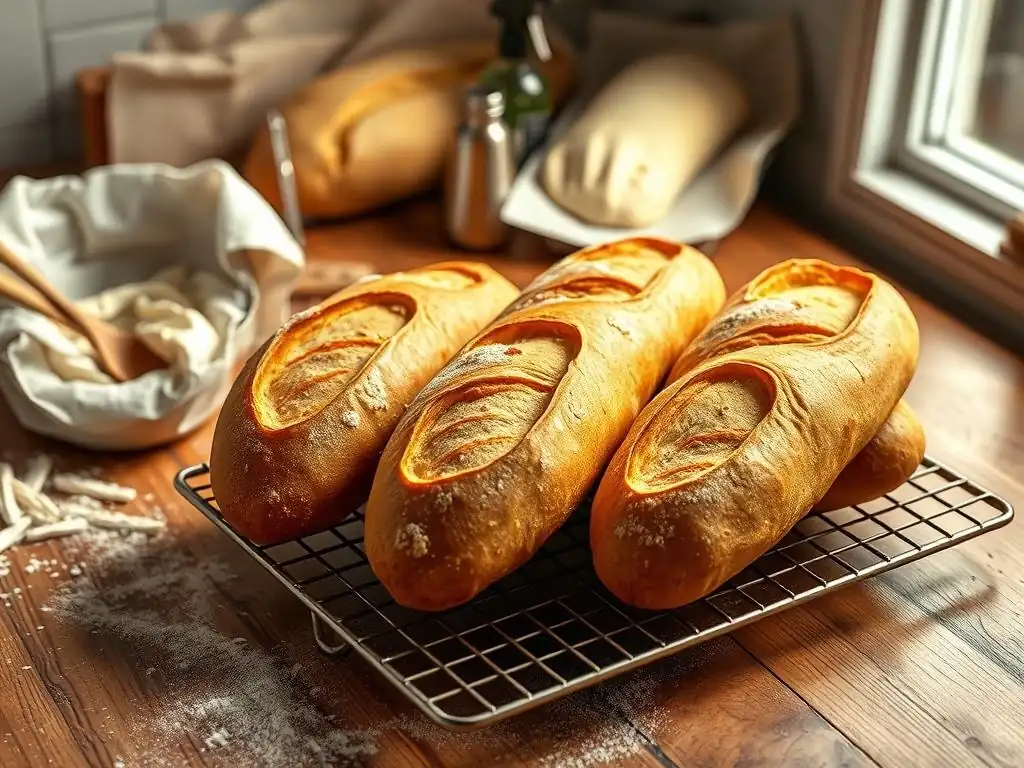
Here is a straightforward recipe designed for home bakers, perfect for trying out the baking sheet or inverted sheet methods. This provides an easy baguette recipe no stone foundation.
Ingredients
- 500g Bread Flour (about 4 cups)
- 375g Lukewarm Water (about 1 ½ cups + 2 tbsp, 75% hydration)
- 10g Salt (about 1 ½ tsp)
- 2g Instant Yeast (about ½ tsp)
Note: Using lukewarm water helps activate the instant yeast quickly.
Instructions: Dough Preparation to Baking
- Mix: In a large bowl, whisk together the flour, salt, and instant yeast. Add the lukewarm water and mix with a spoon or spatula until a shaggy dough forms and no dry flour remains.
- Autolyse (Optional but Recommended): Cover the bowl and let the dough rest for 20-30 minutes. This step, called autolyse, allows the flour to fully hydrate and gluten development to begin naturally.
- Knead/Develop: After the rest, perform a series of stretch and folds over the next 1.5 to 2 hours. Every 30 minutes, wet your hands slightly, grab one side of the dough, stretch it up, and fold it over the center. Rotate the bowl and repeat 3-4 times. The dough will become smoother and more elastic with each set.
- Bulk Fermentation: Cover the bowl and let the dough ferment at room temperature until it has visibly increased in volume (about 50-75%) and is bubbly. This can take 2-3 hours depending on room temperature.
- Divide & Preshape: Gently turn the dough out onto a lightly floured surface. Divide the dough into 2 or 3 equal pieces (depending on your desired baguette size and oven capacity). Gently shape each piece into a rough log or rectangle, creating surface tension. Cover and let rest for 20 minutes.
- Shape: Shape each preshaped piece into a baguette (see Shaping Techniques section).
- Proof: Place the shaped baguettes on a well-floured baker's couche or floured tea towels separated by folds. Cover loosely with plastic wrap or a light towel. Proof at room temperature for 45-75 minutes, or until they are puffy but still hold their shape and spring back slowly when gently poked. Meanwhile, preheat your oven and chosen baking surface (inverted sheet, baking sheet, or Dutch oven).
- Preheat Oven & Surface: Preheat your oven to 475°F (245°C) with your chosen baking surface inside. If using a steam pan, place it on the bottom rack. Preheat for at least 45-60 minutes.
- Load & Score: Carefully transfer the proofed baguettes to your hot baking surface (slide onto inverted sheet, place on preheated sheet with parchment, or carefully lower into preheated Dutch oven). Score the tops of the baguettes quickly and confidently with a sharp knife or lame.
- Steam: If not using a Dutch oven, carefully pour hot water into the preheated steam pan on the bottom rack (about 1 cup / 240ml). Close the oven door immediately.
- Bake (Steaming Phase): Bake at 475°F (245°C) for 15 minutes with steam (or with the Dutch oven lid on).
- Bake (Dry Heat Phase): Carefully remove the steam pan (or Dutch oven lid). Reduce the oven temperature to 450°F (230°C). Continue baking for another 15-25 minutes, or until the crust is a deep golden brown and the internal temperature is 200-210°F (93-99°C).
- Cool: Transfer the baked baguettes to a wire rack to cool completely before slicing (at least 30-60 minutes).
Baking Time and Temperature Adjustments
The provided baking times and temperatures are general guidelines and may need adjustments based on your specific oven and chosen baking method. Ovens can vary significantly in temperature accuracy, sometimes by as much as 25-50°F (15-30°C). Using an oven thermometer can help you verify your oven's true temperature.
If using a standard baking sheet, you might find the bottoms brown slower than the tops. You may need to bake for a few extra minutes or try finishing the bake directly on the oven rack after removing the sheet (with caution!). If using a Dutch oven, the total baking time might be slightly shorter due to the more efficient heat transfer.
Always rely on visual cues (deep golden brown crust) and internal temperature (200-210°F / 93-99°C) to determine doneness, rather than strictly adhering to the clock. Practice with this easy baguette recipe no stone will help you understand your oven's quirks.
Conclusion: Mastering Baguette Baking at Home
Enjoying Freshly Baked Baguettes
There is immense satisfaction in pulling warm, crusty baguettes from your own oven. The aroma filling your kitchen is unbeatable, and the taste and texture of a freshly baked baguette are far superior to anything you can buy. Whether you achieve it using a baking stone or one of the excellent alternatives discussed, mastering an easy baguette recipe no stone opens up a world of possibilities for enjoying simple, delicious bread at home.
Slice into your cooled baguette to reveal the open, airy crumb you worked to achieve. Serve it simply with butter, use it for sandwiches, make bruschetta, or dip it into soup. The effort put into baking is rewarded with a versatile and incredibly tasty result. Don't be discouraged if your first few attempts aren't perfect; baking is a skill that improves with practice.
Further Exploration of Bread Baking Techniques
Having successfully baked baguettes without a baking stone, you've demonstrated that specialized equipment isn't always necessary to produce great bread. This opens the door to exploring other artisan bread techniques. You might delve deeper into sourdough baking, experiment with different flour types (like whole wheat or rye), or try shaping other types of loaves like boules or batards.
Consider experimenting with longer, cold fermentation periods in the refrigerator, which can significantly enhance the flavor and texture of your bread. Explore different steam methods or even consider investing in a baking stone or steel down the line if you find yourself baking frequently. Each loaf baked is a learning experience, building your intuition and skill as a baker. Continue to experiment, refine your techniques, and enjoy the rewarding process of baking delicious bread at home.
Frequently Asked Questions
How can I bake a baguette at home without a baking stone?
You can achieve a crispy crust without a stone by using a baking sheet or an inverted cast iron pan. Preheating these alternatives is crucial for similar results.
What is the best way to create steam in my oven for baguette baking if I don't have a baking stone?
Creating steam is essential for a good crust. You can achieve this by placing a hot pan of water on the oven's bottom rack during the initial baking phase.
What kind of baking sheet material works best as a baking stone alternative for baguettes?
A heavy-duty baking sheet made of aluminum or steel is recommended. These materials distribute heat more evenly than thinner alternatives, mimicking a baking stone's effect.
How long should I preheat my baking sheet or cast iron pan before baking baguettes without a stone?
Preheat your chosen alternative for at least 30-60 minutes at the oven's highest temperature. This ensures it's hot enough to provide the necessary heat for crust development.
What's the best way to handle the baguette dough when transferring it to a baking sheet instead of a stone?
Use parchment paper to line the baking sheet. This allows for easy transfer of the delicate baguette dough without deflating it and prevents sticking.
Final Reflection: The Humble Baguette, Stone-Free
The pursuit of the perfect baguette, once confined to professional bakers with specialized equipment, is now accessible to everyone. This article has demonstrated that achieving a crisp crust and airy crumb isn't contingent on owning a baking stone; resourcefulness and a few clever techniques can yield equally delicious results. The ease and affordability of these alternatives democratize the art of baguette baking, bringing the joy of freshly baked bread to kitchens worldwide.
The journey of baking, much like life itself, is about adapting and overcoming challenges. The simple baguette, a staple of French culture, represents more than just a delicious bread; it embodies a spirit of ingenuity and resourcefulness. Its enduring popularity speaks to its timeless appeal and the universal human desire for connection through shared culinary experiences. Bread is the staff of life.
This simple statement holds profound truth, highlighting the fundamental role bread plays in our sustenance and cultural heritage. The accessibility of this recipe, therefore, expands this heritage, allowing more people to participate in this fundamental act of creation.
Now, I invite you to embrace the spirit of experimentation. Don't be intimidated by the seemingly complex process of baguette baking. Try one of the alternative methods outlined in this article, and experience the satisfaction of crafting your own delicious, crusty loaf. The journey may involve a few missteps, but the reward – the aroma of freshly baked bread filling your kitchen, the satisfying crunch of the crust, and the taste of a perfectly crafted baguette – is well worth the effort. So, gather your ingredients, choose your method, and embark on your own baguette baking adventure!
Unleash Your Inner Boulanger: Bake the Perfect Baguette Tonight!
Thanks for joining us on this baguette baking adventure! We hope you now feel confident tackling this classic bread, even without a baking stone. Ready to take your skills to the next level?
- Master the Art of Steam: Try our recommended steam-injection method – it's the secret to that perfect crust. Let's see your results! Share your photos on social media with #BakeWithEaseBaguette.
- Experiment with Different Flours: Explore the subtle flavor differences between different types of flour. What will you discover?
- Join our Baking Community: Share your experience (and your successes!) in the comments below – let's help each other create amazing bread!
So, what exciting baguette variations will you bake next?