
Caramel Magic: Topping Choux with Spun Sugar (Intermediate Fun)

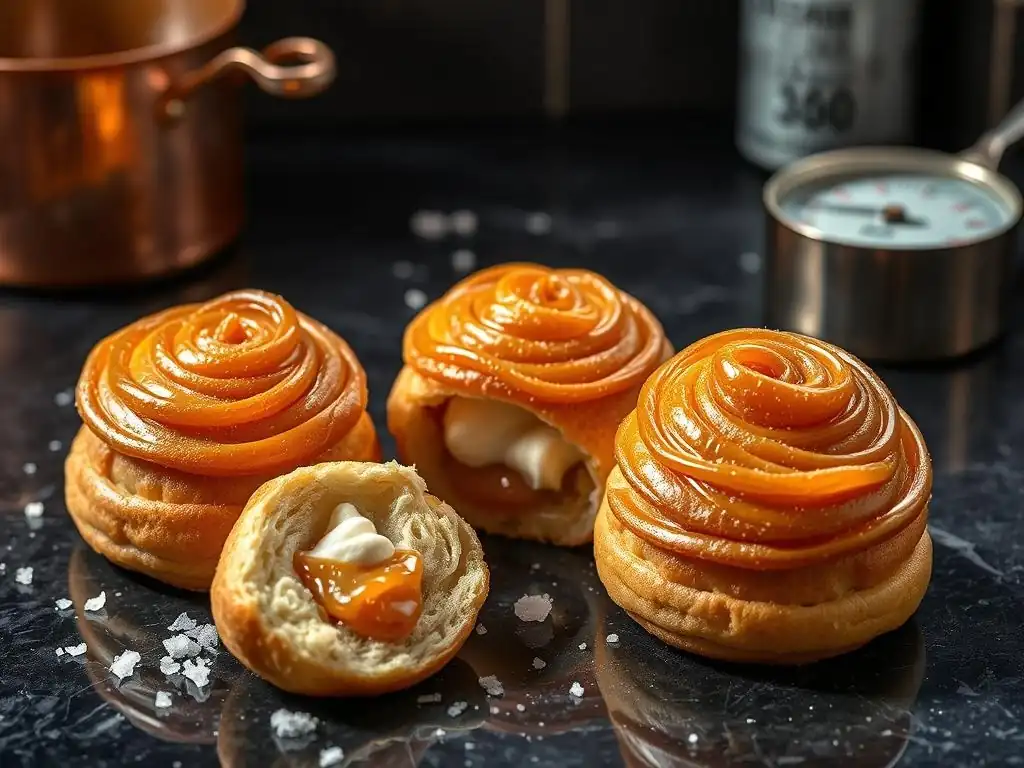
Welcome to BakeWithEase, your trusted companion in the delightful world of baking! Ready to elevate your skills? Dive into our guide on creating a show-stopping Spun Sugar Caramel Choux Pastry. This intermediate-level adventure will unlock a world of delicate sweetness and impressive techniques. Curious how to craft that mesmerizing web of caramel? Let's get started and transform your choux into a masterpiece!
- Introduction to Spun Sugar Caramel Choux: Elevating Your Baking
- Understanding Choux Pastry: A Quick Recap for Intermediate Bakers
- Creating the Perfect Caramel for Spun Sugar
- Spun Sugar Technique: From Caramel to Delicate Threads
- Assembling Your Spun Sugar Caramel Choux Pastries
- Variations and Creative Ideas for Spun Sugar Choux
- Storing and Serving Your Spun Sugar Caramel Choux
- Conclusion: Mastering Spun Sugar Caramel Choux and Beyond
-
Frequently Asked Questions
- What is choux pastry and what makes it unique?
- What is spun sugar and why is it used as a topping for choux?
- What level of baking experience is needed to make choux pastry with spun sugar?
- What are some common mistakes to avoid when making spun sugar?
- Where can I find simple choux pastry recipes if I'm a beginner?
- Final Reflection: The Enduring Allure of Caramel Magic
- Unleash Your Inner Pastry Chef: Master Caramel Magic!
Introduction to Spun Sugar Caramel Choux: Elevating Your Baking
BakeWithEase Presents: A Delightful Choux Pastry Adventure
Welcome back to BakeWithEase! If you've already mastered the basics of choux pastry – those delightful, airy puffs perfect for cream fillings or savory bites – you're ready to step up your game. Today, we're diving into the magical world of spun sugar to create an absolutely stunning topping for your choux.
This technique might seem intimidating at first glance, but with patience and practice, you'll be creating delicate, ethereal strands of caramel that transform simple choux buns into edible works of art. Mastering the art of spun sugar caramel choux pastry is a truly rewarding experience, adding a touch of elegance and crunch that elevates the humble choux to patisserie-level perfection.
This guide is designed for the intermediate baker looking to expand their skills beyond the basics. We'll walk you through not just the spun sugar process itself, but also the critical steps leading up to it, ensuring your choux base is perfect and your caramel is just right. Get ready to impress yourself and your guests with these beautiful, delicate creations. It's a technique that requires precision and confidence, but the result – a light, crispy choux topped with shimmering, delicate caramel threads – is well worth the effort.
Mastering the Art of Spun Sugar Topping for Choux
Adding a spun sugar caramel choux topping is the ultimate flourish for your pastries. It provides a dramatic visual element and a delightful textural contrast – the crispness of the choux shell, the smooth filling, and the brittle, sweet snap of the caramel threads. While it requires careful attention to detail, particularly with temperature, the process is fundamentally simple: melting sugar into a specific type of caramel and then manipulating it into fine threads. This technique is often seen on elaborate French pastries like Croquembouche, but it's entirely achievable in a home kitchen.
The key to successful spun sugar lies in achieving the correct caramel stage – specifically, the hard crack stage – and working quickly before the caramel cools and hardens. We'll discuss the precise temperatures and visual cues to look for. Furthermore, the environment plays a significant role; low humidity is your best friend when working with spun sugar, as moisture can quickly make your delicate threads sticky and limp. By understanding these factors and practicing the spinning motion, you'll be well on your way to creating beautiful, stable spun sugar toppings for your caramel choux pastry.
Understanding Choux Pastry: A Quick Recap for Intermediate Bakers
Essential Choux Pastry Ingredients and Techniques
Before we even think about spun sugar caramel choux, we need a perfect choux pastry base. The foundation of choux pastry, or pâte à choux, is surprisingly simple, typically involving just four main ingredients: water or milk, butter, flour, and eggs. The magic happens in the technique. You start by heating the liquid and butter together until the butter is melted and the mixture is simmering.
Then, you add the flour all at once and stir vigorously over medium heat. This cooks the flour and forms a thick paste, known as the panade. Cooking the panade for a minute or two (often described as drying out the paste) is crucial; it gelatinizes the starch in the flour, allowing it to absorb more moisture later from the eggs and contributing to the pastry's structure.
After cooling the panade slightly, the eggs are incorporated one by one. This is arguably the most critical step. The eggs provide the necessary moisture and leavening power. As the choux bakes, the water in the dough turns to steam, which is trapped by the cooked flour and protein structure created by the eggs, causing the pastry to puff dramatically.
The consistency of the dough is paramount; it should be smooth and glossy, falling from a spoon in a V-shape (the "bird's beak" test). Too few eggs, and the pastry won't rise properly; too many, and it will collapse. A standard ratio might be around 250g water/milk, 100g butter, 150g flour, and 4-5 large eggs (approximately 200-250g).
Avoiding Common Choux Pastry Pitfalls Before Adding Caramel
Even experienced bakers can run into issues with choux pastry, and resolving them before adding a delicate spun sugar topping is essential for a successful spun sugar caramel choux pastry. One common pitfall is not cooking the panade long enough. If the flour isn't properly cooked and dried out, the dough will be too wet, resulting in pastries that don't puff well or collapse after baking.
You want a thin film to form on the bottom of the pot during this stage. Another frequent issue is adding the eggs when the panade is too hot; this can scramble the eggs, ruining the texture of the dough. Always let the panade cool for a few minutes until it's warm to the touch, not hot.
Overmixing the eggs can also lead to problems, developing too much gluten and resulting in tough pastries. Mix just until the eggs are incorporated and the dough reaches the correct consistency. Finally, proper baking is vital. Choux pastry needs to bake at a relatively high temperature initially (around 200°C or 400°F) to create a strong shell, and then at a lower temperature (around 180°C or 350°F) to dry out the inside without burning the outside.
Opening the oven door too early can cause the pastries to collapse. Ensure they are golden brown and feel light and hollow before removing them. A well-baked choux pastry is the perfect canvas for your caramel choux topping.
Creating the Perfect Caramel for Spun Sugar
Choosing the Right Sugar for Your Spun Caramel
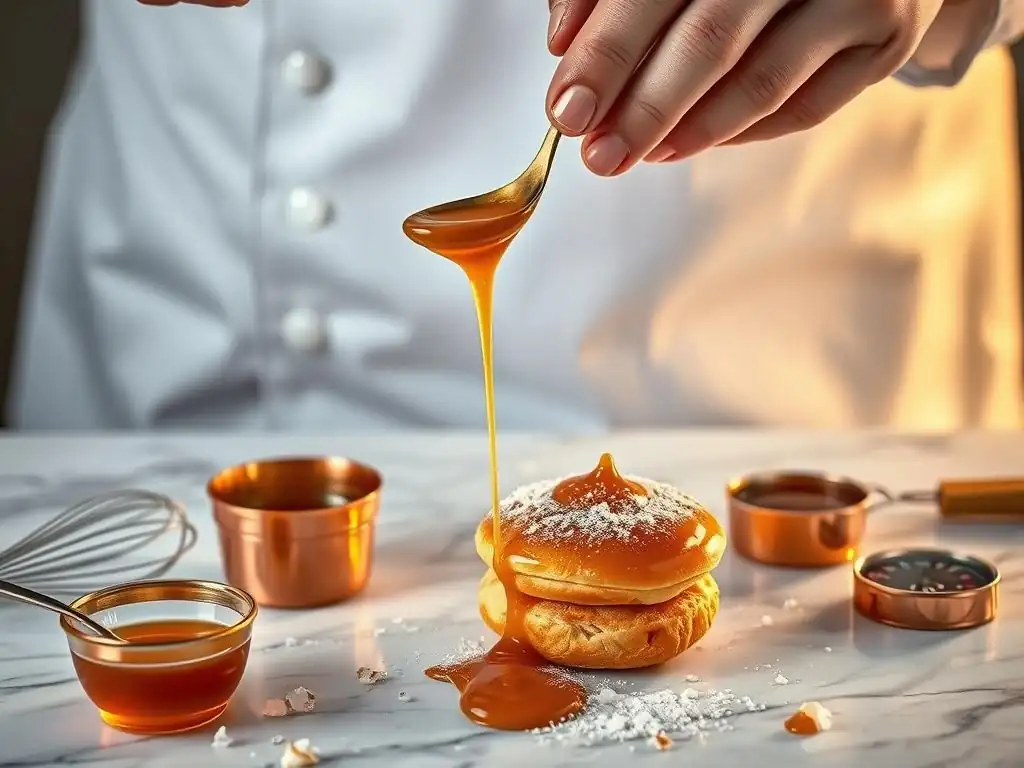
The foundation of beautiful spun sugar is, of course, sugar. For spun caramel, granulated white sugar is typically the best choice. Its pure sucrose content ensures a clean, clear caramel flavor and color when heated properly. Avoid using brown sugar, powdered sugar, or specialty sugars like muscovado, as their impurities or added ingredients can interfere with the caramelization process and make it difficult to achieve the hard crack stage necessary for spinning. The crystalline structure of granulated sugar melts smoothly and caramelizes predictably, which is crucial for the delicate art of creating spun sugar caramel choux.
While some recipes might suggest adding a small amount of corn syrup or glucose syrup, it's not strictly necessary for spun sugar if you are careful. However, adding a tablespoon or two of corn syrup per cup of sugar can act as an 'invert sugar,' helping to prevent crystallization.
If you're new to caramel making or baking in a humid environment, adding corn syrup can provide a little insurance against the sugar seizing up into solid lumps. Ultimately, pure granulated sugar is the classic choice, but a little glucose can make the process more forgiving for your caramel choux topping.
The Importance of Temperature Control in Caramel Making
Temperature is everything when making caramel, especially for spun sugar. Unlike caramel sauces or soft caramels, spun sugar requires the sugar syrup to reach a very high temperature – specifically, the hard crack stage. This stage occurs between approximately 160°C and 170°C (320°F and 338°F). At this temperature, the sugar is fully caramelized, all the water has evaporated, and when dropped into cold water, it forms brittle, hard threads or shards. This brittleness is precisely what allows you to spin the sugar into fine, delicate strands for your spun sugar caramel choux pastry.
Using a reliable candy thermometer is highly recommended, if not essential, for achieving the correct temperature accurately. Visual cues can be helpful, but they are less precise. At the hard crack stage, the caramel will be a deep amber color.
Heating the sugar beyond this temperature range risks burning the caramel, resulting in a bitter, unpleasant taste and dark color. Heating it below this range (e.g., to the soft crack stage around 132-143°C) will result in caramel that is too soft and pliable to spin into fine threads; it will simply clump. Precision in temperature is the key to success for your caramel choux topping.
Achieving a Smooth and Golden Caramel for Spun Sugar
Creating a smooth, golden caramel free of crystals is crucial for beautiful spun sugar. There are two main methods for making caramel: the dry method and the wet method. For spun sugar, the wet method (dissolving the sugar in a small amount of water before heating) is often preferred as it helps prevent crystallization. Start by combining your granulated sugar with just enough water to moisten it thoroughly – typically about 1/4 to 1/3 cup of water per cup of sugar.
Heat this mixture gently over medium heat, stirring only until the sugar is dissolved. Once dissolved, stop stirring. Stirring after the sugar dissolves can cause sugar crystals to form on the sides of the pan, which can then seed the entire batch and cause it to crystallize.
As the mixture heats, it will first become clear, then bubble and start to color around the edges. Swirl the pan gently to encourage even coloring, but avoid stirring. Some bakers also like to brush down the sides of the pan with a wet pastry brush during the initial heating to dissolve any stray sugar crystals. Continue heating without stirring until the caramel reaches the target temperature (160-170°C) and is a beautiful deep amber color.
Remove it immediately from the heat. You now have the perfect base for your spun sugar caramel choux topping. Work quickly from this point, as the caramel will cool and harden rapidly.
Spun Sugar Technique: From Caramel to Delicate Threads
Essential Tools for Creating Spun Sugar
To create delicate spun sugar threads for your spun sugar caramel choux pastry, you don't need a lot of fancy equipment, but a few specific tools will make the process much easier and more effective. The most common setup involves two elevated objects (like cans, bottles, or even chair backs) placed about 1-2 feet apart, with a surface covered in parchment paper or a silicone mat underneath to catch the drips. You'll suspend your hand or a tool between these objects to create the threads.
For the spinning itself, you have a few options. Some bakers prefer to use their fingers, dipping them into the caramel and quickly waving them back and forth over the gap. Be extremely cautious if using this method, as hot caramel causes severe burns. A safer and more controlled method is to use a whisk or a fork.
Dip the tines of the fork or the loops of the whisk into the hot caramel, letting the excess drip off briefly, and then quickly move the tool back and forth over the gap between your elevated objects. The fine strands of caramel will stretch and fall onto the parchment paper below, creating the spun sugar nest. A candy thermometer is, as mentioned, essential for the caramel making itself.
Step-by-Step Guide to Spinning Sugar for Choux Topping
Once your caramel has reached the hard crack stage (160-170°C) and is a rich amber color, remove it from the heat and let it sit for just 30 seconds to a minute. This allows it to cool very slightly, making it thick enough to spin but still liquid. Set up your spinning station with the elevated objects and covered surface.
- Dip: Carefully dip the tines of your fork or the loops of your whisk into the warm caramel. Lift it out, allowing the initial drips to fall back into the pot.
- Spin: Hold the tool about 1-2 feet above your covered surface, between your elevated objects. Move your hand or the tool back and forth quickly in a continuous motion. Fine strands of caramel will stretch and fall, creating a web.
- Collect: Continue spinning until you have a sufficient amount of threads. The threads will collect on the parchment or mat.
- Shape: Gently gather the spun sugar threads into loose nests or bundles. Work quickly but carefully, as the threads are delicate and can break easily. Avoid compacting them too much.
- Repeat: If the caramel in the pot becomes too hard to spin, you can gently rewarm it over very low heat for just a moment, but be careful not to burn it.
Practice makes perfect with this technique. Your first attempts might result in thicker strands, but with a steady hand and the correct caramel consistency, you'll soon be producing beautiful, fine threads for your spun sugar caramel choux.
Troubleshooting Common Spun Sugar Problems: Humidity, Crystallization, and More
Working with spun sugar presents a few common challenges. The biggest enemy is humidity. Moisture in the air is readily absorbed by the hygroscopic sugar threads, causing them to become sticky, clump together, and eventually dissolve. For the best results, make spun sugar on a dry day. If you must bake on a humid day, work quickly and consider using a dehumidifier in your kitchen. Proper storage (discussed later) is also critical.
Crystallization of the caramel is another frequent issue. This happens when sugar crystals form in the caramel, causing it to seize up into a grainy, solid mass instead of a smooth liquid. As mentioned, avoiding stirring after the sugar dissolves in the wet method, or adding a little corn syrup, can help prevent this. If crystallization occurs, you may need to start over.
Overheating the caramel will result in a bitter, burnt taste and dark color; there's no fixing burnt sugar, so discard it and start fresh, paying close attention to your thermometer. If the caramel cools too much while you're spinning, it will produce thick, coarse strands or be impossible to spin. A brief, gentle rewarming can help, but avoid overheating. Patience and attention to detail are key to overcoming these hurdles and creating beautiful caramel choux topping.
Assembling Your Spun Sugar Caramel Choux Pastries
Allowing Choux Pastries to Cool Properly Before Topping
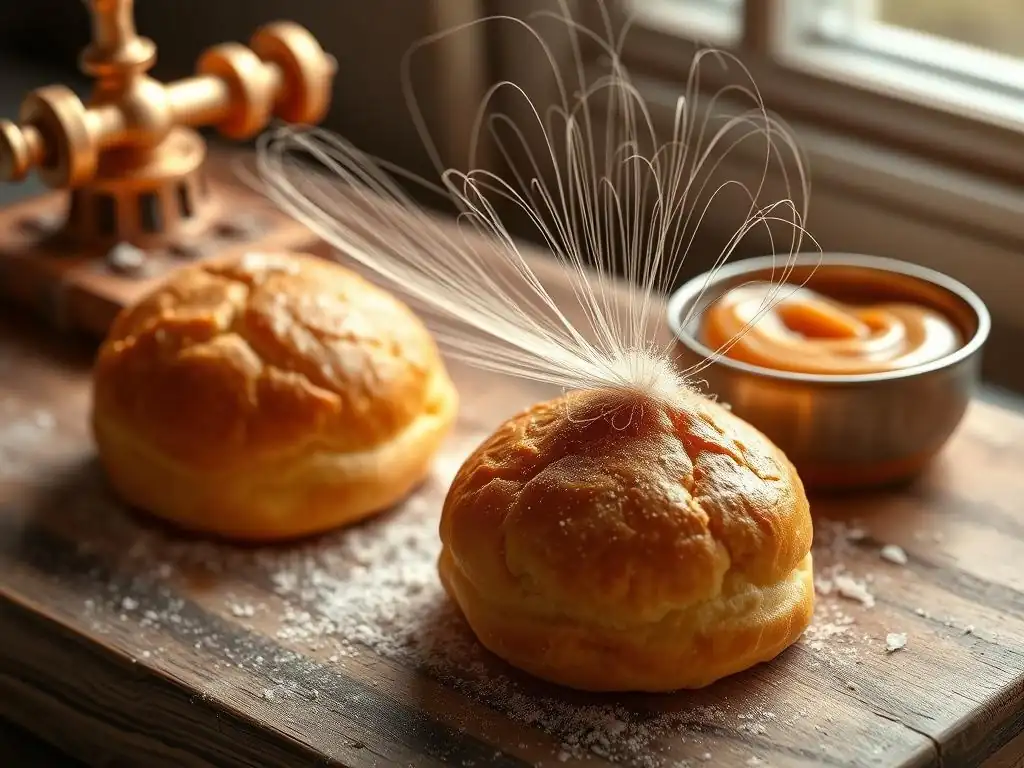
Before you even think about adding the delicate spun sugar, your choux pastries must be completely cool. Placing spun sugar onto warm or hot choux will cause the caramel threads to melt immediately, resulting in a sticky mess rather than a beautiful, airy topping. After removing your baked choux from the oven, place them on a wire rack to cool completely.
This allows steam to escape, preventing the pastries from becoming soggy and ensuring they are firm enough to handle during the topping process. Depending on their size and your kitchen temperature, this cooling process can take anywhere from 30 minutes to over an hour.
Ensure the choux buns are filled before adding the spun sugar. Common fillings include pastry cream, whipped cream, or diplomat cream. The filling adds weight and stability to the choux, making it easier to handle when applying the spun sugar. A cooled, filled choux pastry provides a stable, cool base for the fragile caramel threads, ensuring your spun sugar caramel choux holds its shape and the topping remains light and crisp.
Gently Applying Spun Sugar to Choux Buns
Once your choux pastries are filled and completely cooled, and you have created your nests or bundles of spun sugar, it's time for assembly. This step requires a gentle touch. Take a cooled, filled choux bun in one hand. With the other hand, carefully pick up a bundle of spun sugar. The spun sugar is very fragile, so handle it lightly to avoid crushing the delicate threads.
Gently place or press the spun sugar bundle onto the top of the choux pastry. You can lightly twist the spun sugar as you apply it to create height and volume. The natural slight tackiness of the spun sugar threads where they intersect will help them hold together and adhere somewhat to the choux, especially if the choux surface has a slight bit of moisture from the filling or just from cooling.
You aren't gluing it on; you're simply resting and slightly shaping the spun sugar onto the pastry. Work with individual choux buns, topping them one by one just before serving for the best results. This final step transforms your filled choux into a stunning spun sugar caramel choux pastry.
Tips for Creating a Visually Stunning Spun Sugar Presentation
Creating a visually stunning spun sugar caramel choux presentation is all about volume, shape, and placement. Don't be afraid to make relatively large nests of spun sugar; they are mostly air and will look impressive. When gathering the spun sugar threads from your spinning surface, try to create loose, airy bundles rather than compact balls. Think of creating a bird's nest or a cloud.
As you apply the spun sugar to the choux, consider the overall shape. You can aim for a neat, rounded dome of spun sugar on top of each bun, or you can create more abstract, gravity-defying shapes by gently twisting and pulling the threads upwards as you place them. For a dramatic effect, you can even create a single large spun sugar structure and carefully place it over a small pyramid of filled choux buns, classic for a Croquembouche variation.
Ensure the spun sugar looks light and ethereal, showcasing the delicate threads. The contrast between the golden-brown choux and the shimmering golden caramel threads is inherently beautiful.
Variations and Creative Ideas for Spun Sugar Choux
Adding Flavor Extracts to Your Spun Sugar Caramel
While classic spun sugar is pure caramelized sugar, you can add flavor extracts to infuse your spun sugar caramel choux with extra notes. Add a few drops of a heat-stable extract after you remove the caramel from the heat, just before you start spinning. Be cautious, as adding liquid to hot caramel can cause it to seize or sputter. Use extracts like vanilla, almond, orange, or even a hint of coffee extract. Start with a small amount, as the flavor will be concentrated.
For example, adding 1/4 teaspoon of pure vanilla extract or almond extract to a batch made with 1 cup of sugar can impart a subtle, delightful aroma and taste to the spun sugar threads. Ensure the extract is added carefully, away from your face, and stirred in gently with a heat-resistant spatula. This simple addition can make your caramel choux topping even more unique and tailored to the filling you've chosen for your pastries.
Experimenting with Different Colors in Your Spun Sugar
Adding color to spun sugar can create vibrant and eye-catching spun sugar caramel choux creations. Use high-quality, concentrated gel or powder food coloring, as liquid colors can add too much moisture and affect the caramel's consistency. Add the coloring after the caramel has reached the desired temperature and you've removed it from the heat, similar to adding flavor extracts. Stir it in quickly and carefully.
A tiny amount of red gel color can create a beautiful ruby-red spun sugar, while blue or green can add a whimsical touch. Remember that the caramel itself is already golden-brown, so the added color will mix with this base hue. A touch of red might look more like amber or reddish-gold, for instance. Experiment with small batches to see how the colors develop. Ensure the coloring is thoroughly mixed before you begin spinning. Colorful spun sugar can make your caramel choux pastry stand out on any dessert table.
Other Caramel-Based Toppings for Choux Pastry: Caramel Glaze, Caramel Crème
While spun sugar is spectacular, there are other delicious caramel-based toppings for choux pastry if you're looking for alternatives or complementary textures for your caramel choux topping. A simple caramel glaze is made by cooking sugar to the caramel stage (often softer than hard crack, around 140-150°C), then carefully whisking in warm cream or butter. This creates a pourable or dippable glaze that hardens to a shiny, chewy coating. It's less dramatic than spun sugar but adds a rich caramel flavor and a different texture.
Another option is a caramel crème. This could be a caramel-flavored pastry cream used as a filling or a richer caramel sauce incorporated into a whipped cream or buttercream to use as a topping or filling. For instance, making a classic caramel sauce by cooking sugar to an amber color (around 160°C) and then whisking in warm heavy cream and butter, then allowing it to cool and thicken, provides a luscious, pourable caramel that can be drizzled generously over filled choux buns. These variations offer different levels of complexity and texture, expanding your caramel choux pastry repertoire.
Storing and Serving Your Spun Sugar Caramel Choux
Best Practices for Storing Spun Sugar Topped Choux
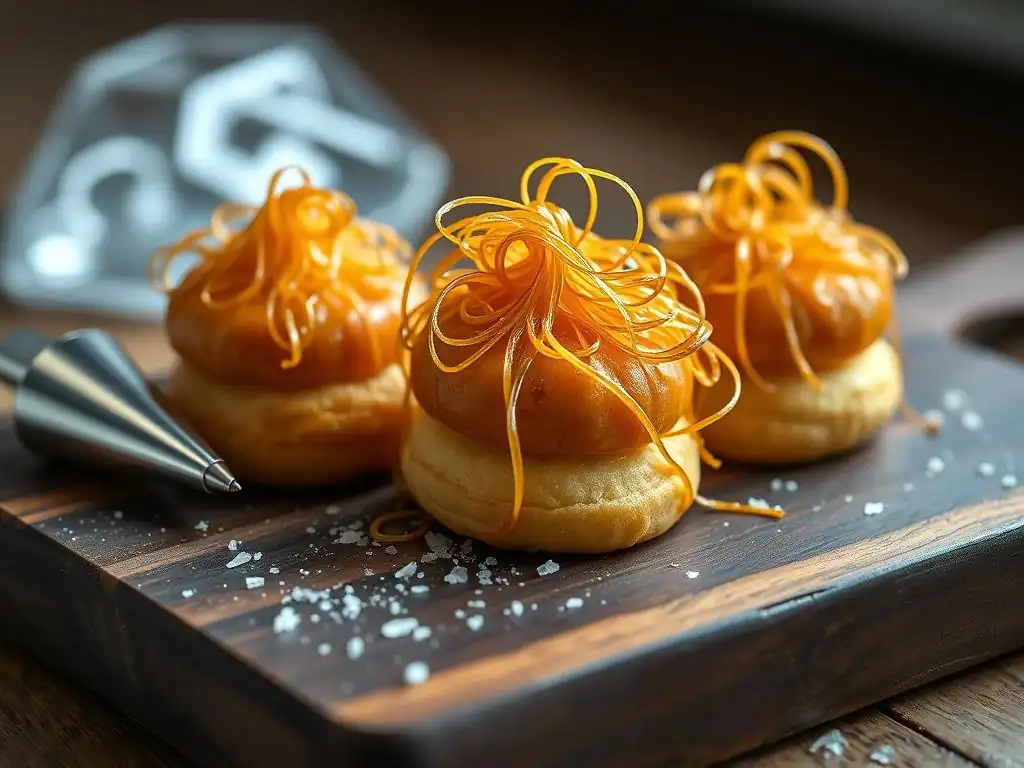
Storing spun sugar caramel choux pastry is tricky because the spun sugar is highly susceptible to moisture. Ideally, spun sugar should be added to the choux just before serving. If you need to prepare components in advance, store the unfilled choux shells and the filling separately. The spun sugar itself is best made the day it will be used, preferably in low humidity.
If you absolutely must store assembled pastries with spun sugar, the best method is to place them in an airtight container at room temperature in a very dry environment. Avoid refrigeration, as the humidity inside a refrigerator will quickly cause the spun sugar to melt and become sticky, ruining its delicate structure. Even stored perfectly, spun sugar will degrade over time due to ambient moisture. Aim to serve within a few hours of assembly for the most impressive result. Store leftover plain spun sugar threads in an airtight container with desiccant packets if possible, but their lifespan is limited.
Tips for Serving Fresh and Delicious Caramel Choux Pastries
Serving spun sugar caramel choux at its freshest is key to showcasing both the crisp choux and the delicate, brittle spun sugar. Assemble the pastries with the spun sugar topping no more than 1-2 hours before you plan to serve them. This ensures the spun sugar remains light, airy, and crunchy.
Present the pastries on a platter where the light can catch the shimmering caramel threads. Because the spun sugar is fragile, handle the pastries carefully when moving them. Guests should also be advised to handle them gently. The combination of the crisp choux, creamy filling, and the delicate snap of the spun sugar is a delightful sensory experience. Serve them alongside coffee or tea for a perfect treat. The effort put into creating these beautiful caramel choux topping pastries is truly appreciated when they are enjoyed fresh.
Conclusion: Mastering Spun Sugar Caramel Choux and Beyond
Expanding Your Choux Pastry Repertoire with BakeWithEase
Congratulations on taking on the challenge of spun sugar caramel choux pastry! Mastering spun sugar is a significant step in expanding your baking skills, opening doors to more elaborate patisserie techniques. The principles learned here – precise temperature control in sugar work, careful handling of delicate components, and understanding how environment affects sugar – are applicable to many other advanced desserts. With your newfound confidence in working with hot sugar and creating decorative elements, you can explore other techniques like making caramel cages, pulling sugar ribbons, or creating hard candy decorations.
Your journey with choux pastry doesn't end here either. BakeWithEase offers resources for countless choux variations, from classic éclairs and profiteroles to savory gougères and impressive Paris-Brest rings. Combining your perfect choux base with different fillings, glazes, and toppings like the caramel choux topping you've just mastered allows for endless creativity in the kitchen. Keep practicing, keep experimenting, and keep baking!
The Sweet Satisfaction of Homemade Spun Sugar Caramel Delights
There is undeniable satisfaction in creating something as beautiful and seemingly complex as spun sugar caramel choux. From the moment the choux puffs in the oven to the delicate art of spinning sugar threads, each step is a testament to your growing skill and patience as a baker. The final result – a stunning pastry topped with shimmering, gossamer caramel – is incredibly rewarding.
Sharing these homemade delights with friends and family brings its own joy. The "oohs" and "aahs" you'll receive are well-deserved praise for tackling an intermediate technique and executing it successfully. Remember the tips for serving them fresh to maximize their impact. So go forth, practice your spun sugar technique, perfect your choux, and enjoy the sweet, crunchy magic of your very own spun sugar caramel choux pastry creations!
Frequently Asked Questions
What is choux pastry and what makes it unique?
Choux pastry is a light, airy dough made from butter, water, flour, and eggs. It's unique because it's cooked twice: once on the stovetop and again in the oven, resulting in a hollow center ideal for fillings. Its high moisture content is crucial for the steam-based rising process.
What is spun sugar and why is it used as a topping for choux?
Spun sugar is created by melting sugar and then pulling it into thin, delicate strands. It's used as a topping to add a beautiful and crisp textural contrast to the soft choux pastry, creating a visually stunning and elegant dessert.
What level of baking experience is needed to make choux pastry with spun sugar?
While choux pastry itself isn't overly complicated, adding spun sugar requires some patience and skill. This recipe is best suited for intermediate bakers comfortable with making pastry and working with hot sugar.
What are some common mistakes to avoid when making spun sugar?
A common mistake is overheating the sugar, which can cause it to burn and become bitter. Also, working in a humid environment can make the spun sugar sticky and prone to dissolving. Monitor the sugar's temperature carefully and work in a dry, cool space.
Where can I find simple choux pastry recipes if I'm a beginner?
BakeWithEase.com offers a wide range of recipes, including simple choux pastry recipes for beginners. Just search for "beginner-friendly choux pastry" on the site for step-by-step instructions.
Final Reflection: The Enduring Allure of Caramel Magic
The delicate art of spun sugar, when draped over the airy perfection of choux pastry, transcends mere confectionery; it becomes a testament to culinary creativity and the enduring power of simple elegance. This article explored the seemingly complex process of creating this beautiful dessert, breaking it down into manageable steps for intermediate bakers. But the true magic lies not just in the technique, but in the experience – the joy of creation, the satisfaction of mastering a new skill, and the sheer delight of sharing the finished product.
The influence of handcrafted desserts, like spun sugar caramel choux, on our cultural landscape is undeniable. They represent more than just a sweet treat; they symbolize artistry, patience, and a dedication to quality. They evoke memories of childhood treats, celebratory gatherings, and moments of pure indulgence. The simplest things are often the most beautiful,
a sentiment perfectly captured by the understated elegance of this dessert. The process itself, demanding focus and precision, offers a meditative counterpoint to our increasingly fast-paced lives.
Now, I invite you to consider your own culinary adventures. Perhaps this article has inspired you to try your hand at spun sugar, or maybe it's ignited a passion for exploring other intricate baking techniques. Regardless, remember the core message: Embrace the challenge, savor the process, and delight in the creation of something beautiful and delicious. The world needs more moments of caramel magic, and you have the power to create them.
Unleash Your Inner Pastry Chef: Master Caramel Magic!
Thanks for joining us on this delicious journey into the world of spun sugar and choux pastry! We hope you've gained valuable tips and tricks to elevate your baking game. Ready to take your skills to the next level?
- Try the Caramel Choux recipe today! We're confident you'll amaze yourself (and your friends!). Don't forget to snap a picture and share your creations.
- Share your caramel-making triumphs (or challenges!) in the comments below. Let's learn from each other's experiences.
- Experiment with different flavor combinations. What delicious caramel flavor profile will you create next?
So, are you ready to dive into the sweet world of spun sugar and perfectly crafted choux? Let's hear your baking plans!